Is a 5000-Watt Wind Turbine Right for Your Home? The Definitive Guide to Residential Wind Power
Dreaming of harnessing the wind to power your home? A 5000-watt (5kW) wind turbine sounds like a powerful solution, offering the promise of energy independence and lower utility bills. But is it truly a viable option for *your home? You’re not alone in wondering. Many homeowners are looking for sustainable ways to cut costs and reduce their carbon footprint, and wind power often enters the conversation alongside solar.
Table of Contents
- Is a 5000-Watt Wind Turbine Right for Your Home? The Definitive Guide to Residential Wind Power
- What Exactly is a 5000-Watt (5kW) Wind Turbine?
- Can a 5kW Wind Turbine Really Power a Home? The Short Answer & The Nuances
- The Benefits of Harnessing Wind Power at Home
- The Realities: Challenges and Considerations
- Wind Speed Requirements: The Non-Negotiable Factor
- Location and Zoning Regulations
- Noise Concerns
- Visual Impact
- Maintenance
- Initial Cost and Return on Investment (ROI)
- How Much Does a 5000-Watt Wind Turbine System Cost?
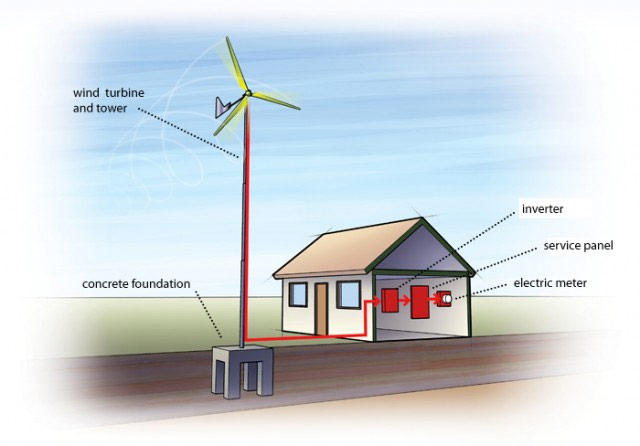
- Key Components of a 5kW Home Wind Turbine System
- Installation: What to Expect
- Vertical Axis vs. Horizontal Axis: Which is Best for You?
- Wind vs. Solar: The Ultimate Home Renewable Energy Showdown
- Is Your Home a Good Candidate for a 5kW Wind Turbine? A Checklist
- Making the Decision: Next Steps
Let’s cut through the marketing hype and get down to the practical realities. This guide will help you understand if a 5kW wind turbine is a smart investment for your property, covering everything from costs and installation to benefits, drawbacks, and how it stacks up against other renewable options.
What Exactly is a 5000-Watt (5kW) Wind Turbine?
First, let’s define what we’re talking about. A 5000-watt (or 5-kilowatt, 5kW) wind turbine refers to its rated power output. This is the maximum electrical power the turbine is designed to generate under optimal wind conditions. To put it in perspective, 5kW is a significant amount of power – enough to run several major appliances simultaneously or a substantial portion of an average home’s needs.
For context, the average American home uses roughly 886 kWh (kilowatt-hours) of electricity per month. A 5kW turbine, running at its rated capacity for a full hour, would produce 5 kWh. So, theoretically, if your turbine operated at peak capacity for about 177 hours a month (less than 6 hours a day), it could meet that average consumption. But as you’ll discover, it’s rarely that straightforward.
Can a 5kW Wind Turbine Really Power a Home? The Short Answer & The Nuances
The short answer: Yes, a 5kW wind turbine can* generate enough energy to power an average American home, or at least significantly offset its electricity consumption.
The nuanced answer: It depends entirely on your specific circumstances. A 5kW turbine is a substantial investment, and its effectiveness hinges on several critical factors:
- Average Wind Speed: This is the absolute biggest determinant. If you don’t have consistent, strong winds, even the best turbine won’t produce much.
- Your Home’s Energy Consumption: Do you use more or less than the average? High energy users might still need supplemental power.
- System Design: Is it grid-tied (connected to the utility grid), off-grid (completely independent with battery storage), or a hybrid?
- Turbine Efficiency & Up-time: How often is the turbine actually spinning and generating power effectively?
Many homes find a 5kW system, especially when paired with battery storage or a grid-tie connection, can drastically reduce or even eliminate their reliance on grid electricity.
The Benefits of Harnessing Wind Power at Home
Opting for a residential wind turbine isn’t just about the technology; it’s about the lifestyle and environmental impact. Here’s why homeowners consider it:

- Significant Energy Bill Reduction: This is often the primary driver. Generating your own electricity means buying less from the utility company, leading to substantial savings over time.
- Energy Independence: Less reliant on the grid means more control over your energy supply and greater resilience during power outages, especially with a battery backup system.
- Environmental Friendliness: Wind is a clean, renewable energy source. It produces no greenhouse gas emissions, helping you reduce your carbon footprint and contribute to a healthier planet.
- Potential for Net Metering: In many areas, if your turbine produces more electricity than you consume, you can sell the excess back to the grid, earning credits or even cash.
- Complementary to Solar: Wind often blows strongest when the sun isn’t shining (e.g., at night or on cloudy, stormy days). This makes wind an excellent complement to a solar PV system, providing a more consistent renewable energy supply.
The Realities: Challenges and Considerations
While the benefits are compelling, a 5kW wind turbine isn’t for everyone. It’s crucial to understand the potential hurdles:
Wind Speed Requirements: The Non-Negotiable Factor
This cannot be stressed enough: wind speed is paramount. Small wind turbines need an average annual wind speed of at least 10 mph (4.5 m/s) to be economically viable. Ideally, you want speeds closer to 12-15 mph (5.4-6.7 m/s) for optimal performance. Anything less, and the return on your investment drastically diminishes. You’ll need a professional site assessment to accurately measure your property’s wind resource.
Location and Zoning Regulations
This is often the biggest bureaucratic hurdle. Before you even think about buying a turbine, research your local zoning ordinances, building codes, and homeowners’ association (HOA) rules. You’ll likely encounter:
- Height Restrictions: Turbines need to be tall enough to catch unobstructed wind, often requiring towers of 60-120 feet. Many localities have limits on structure height.
- Setback Requirements: Rules dictating how far the turbine must be from property lines, roads, and other structures.
- Permitting Process: Expect a detailed application process, often requiring engineering drawings, noise studies, and environmental impact assessments.
Noise Concerns
Modern small wind turbines are significantly quieter than older models, but they are not silent. You will hear a low hum or whooshing sound, especially on very windy days. The noise level depends on the turbine’s design, size, and proximity to your home and neighbors. While often compared to the ambient sound of wind rustling through trees, it’s a factor to consider for both your peace and your neighbors’.
Visual Impact
A tall wind turbine is a prominent structure. For some, it’s a symbol of sustainability; for others, it’s an eyesore. Consider how it will look on your property and how it might impact your neighbors’ views. Aesthetics play a role in permitting and community acceptance.
Maintenance
While relatively low-maintenance, wind turbines aren’t ‘install-and-forget’ systems. They require periodic inspections, lubrication, and potential repairs, especially after severe weather. This often means hiring a specialized technician, which adds to the long-term cost.
Initial Cost and Return on Investment (ROI)
The upfront investment for a 5kW system is substantial. While it can pay for itself over time through energy savings, the payback period can be long, often 10-20 years, depending on your energy costs, wind resource, and available incentives.
How Much Does a 5000-Watt Wind Turbine System Cost?
The cost of a 5kW home wind turbine system can vary widely based on the turbine model, tower height, battery storage needs, inverter quality, and installation labor. Generally, you can expect an investment ranging from $20,000 to $50,000 or more for a complete, professionally installed system.
Here’s a breakdown of the typical cost components:

| Component | Estimated Cost Range | Notes |
|---|---|---|
| 5kW Wind Turbine Head | $5,000 – $15,000 | High-quality, durable models cost more. |
| Tower (60-120 ft) | $4,000 – $12,000 | Guyed towers are cheaper; freestanding are more expensive. |
| Inverter & Charge Controller | $2,000 – $5,000 | Converts DC to AC, regulates charge. |
| Battery Bank (if off-grid/hybrid) | $5,000 – $15,000+ | Significant cost for energy storage; depends on capacity. |
| Installation & Labor | $4,000 – $8,000+ | Includes site assessment, foundation, wiring, crane use. |
| Permits & Inspections | $500 – $2,000 | Varies greatly by location. |
| Total Estimated Cost | $20,000 – $50,000+ | Before incentives. |
Don’t forget to look into federal, state, and local incentives. The federal Investment Tax Credit (ITC), for instance, often applies to small wind turbines, offering a significant percentage back on your total system cost. Some states and municipalities also have their own rebates or grant programs.
Key Components of a 5kW Home Wind Turbine System
Understanding the parts of a wind power system helps clarify the overall setup:
- The Turbine Head (Blades, Nacelle, Generator): This is the visible part that converts wind energy into rotational energy, which then drives a generator to produce electricity.
- The Tower: Supports the turbine head at a height where it can capture optimal, unobstructed wind. Taller towers mean more consistent, stronger winds.
- Charge Controller: Manages the electricity flowing from the turbine, ensuring the batteries (if present) are charged correctly and preventing overcharging.
- Inverter: Converts the direct current (DC) electricity produced by the turbine and stored in batteries into alternating current (AC) electricity, which is what your home appliances use.
- Battery Bank (Optional, for off-grid or hybrid systems): Stores excess electricity generated by the turbine for use when the wind isn’t blowing or at night. Crucial for energy independence.
Home wind systems can be configured in a few ways:
- Grid-Tied: Connected to the utility grid. You use turbine power first, then draw from the grid if needed. Excess power can be sold back. No batteries are typically required, but you lose power during grid outages unless you have a specific inverter with battery backup.
- Off-Grid: Completely independent of the utility grid. Requires a robust battery bank to store power for calm periods. Ideal for remote locations but higher upfront costs and more complex sizing.
- Hybrid: Combines grid-tie functionality with a battery bank. Offers the best of both worlds: energy independence, backup power during outages, and the ability to sell excess power.
Installation: What to Expect
Installing a 5kW wind turbine is a significant construction project, not a DIY task. Here’s a general overview of the process:
- Site Assessment & Wind Resource Analysis: A qualified installer will evaluate your property for optimal turbine placement, assess wind speeds, and identify any obstructions. This is a crucial first step.
- Permitting & Approvals: This involves submitting plans to local authorities, securing building permits, and potentially getting approvals from HOAs or historical review boards. This phase can be time-consuming.
- Foundation Work: A robust concrete foundation is required to support the turbine tower.
- Tower Erection: The tower is assembled and then raised into place, often using a crane.
- Turbine Assembly & Installation: The turbine head is mounted onto the tower.
- Electrical Wiring: The turbine is connected to the charge controller, inverter, battery bank (if applicable), and your home’s electrical panel.
- Commissioning & Testing: The system is powered up, tested, and fine-tuned to ensure proper operation and safety.
- Interconnection Agreement (for Grid-Tied Systems): Final approval from your utility company to connect your system to their grid.
Always use certified, experienced installers. Proper installation is critical for safety, efficiency, and the longevity of your system.
Vertical Axis vs. Horizontal Axis: Which is Best for You?
When looking at small wind turbines, you’ll primarily encounter two types:
- Horizontal Axis Wind Turbines (HAWTs): These are the most common type, resembling traditional windmills with blades rotating on a horizontal axis. They are highly efficient and generally produce more power per dollar in strong, consistent winds.
- Vertical Axis Wind Turbines (VAWTs): These have blades that rotate around a vertical axis. They are less common for residential use but have some unique advantages, such as operating in turbulent winds, no need to yaw into the wind, and often a smaller footprint.
Here’s a quick comparison for home use:
| Feature | Horizontal Axis Wind Turbines (HAWT) | Vertical Axis Wind Turbines (VAWT) |
|---|---|---|
| Efficiency | Generally higher, especially in steady winds. | Lower overall efficiency for the same rotor swept area. |
| Wind Direction | Must yaw (rotate) to face the wind. | Omnidirectional; works with wind from any direction. |
| Start-up Wind Speed | Typically requires higher wind speeds to start. | Often lower start-up speeds, better in light winds. |
| Noise | Can be noticeable; depends on design and location. | Generally quieter due to lower rotational speeds. |
| Maintenance | Generator and gearbox at top of tower require crane access. | Generator and gearbox at ground level, easier access. |
| Aesthetics | Traditional ‘windmill’ look, can be visually dominant. | Often perceived as more modern or less intrusive. |
For most homeowners seeking maximum power output, a HAWT is often the preferred choice, assuming suitable wind conditions and space. VAWTs might be considered in more constrained or turbulent wind environments.
Wind vs. Solar: The Ultimate Home Renewable Energy Showdown
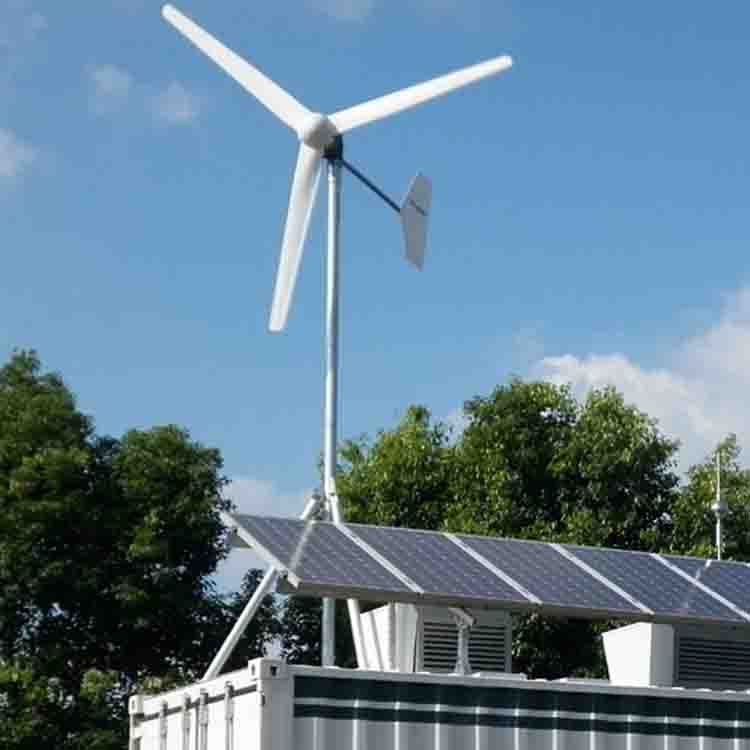
Many homeowners considering a 5kW wind turbine also look at solar panels. Both are excellent renewable energy sources, but they have distinct characteristics:
| Feature | 5kW Home Wind Turbine | 5kW Home Solar PV System |
|---|---|---|
| Energy Source | Wind Speed | Sunlight (Irradiance) |
| Location Needs | Open space, high average wind speeds, minimal obstructions. Requires tall tower. | Unshaded roof or ground space, facing south (in Northern Hemisphere). No tall tower. |
| Power Generation Times | Any time wind blows (day/night, cloudy/clear). Often stronger in winter. | Daylight hours, peak around midday. Less in winter. |
| Permitting Complexity | More complex due to height, noise, and visual impact. | Generally simpler, well-established processes. |
| Noise | Low hum/whoosh can be present. | Virtually silent. |
| Aesthetics | Large, prominent structure on a tall tower. | Panels on roof or ground; generally less intrusive. |
| Typical Cost (Installed) | $20,000 – $50,000+ | $15,000 – $25,000 (before incentives) |
| Maintenance | Periodic inspections, lubrication, potential repairs. | Minimal; occasional cleaning, inverter checks. |
For most residential applications, solar PV is often simpler, cheaper, and has fewer regulatory hurdles. However, if you live in a genuinely windy area with open space and less sunshine (or strong winds at night), a wind turbine can be an excellent choice, potentially outperforming solar during certain periods. Many forward-thinking homeowners opt for a hybrid wind-solar system to maximize energy generation throughout the year.
Is Your Home a Good Candidate for a 5kW Wind Turbine? A Checklist
Before you get too far into the process, run through this quick eligibility checklist:
- Do you have consistent, strong winds? (Average annual wind speed > 10 mph is essential).
- Do you have ample open space? (Enough for a tall tower, away from obstructions and property lines).
- Are local zoning laws and HOA rules favorable? (Are tall structures allowed? What are the setback limits?).
- Do you have a substantial budget? (Are you prepared for a $20,000-$50,000+ investment?).
- Are your energy needs significant? (A 5kW system is often overkill for very low-consumption homes).
- Are you prepared for a potentially longer installation and permitting process?
If you answered ‘no’ to several of these, a 5kW wind turbine might not be the most practical or cost-effective solution for your home.
Making the Decision: Next Steps
If you’ve read this far and feel a 5kW wind turbine could be a fit for your home, congratulations! You’re ready for the next, more detailed steps:
- Get a Professional Site Assessment: This is non-negotiable. A qualified wind energy consultant will use specialized equipment to measure your site’s actual wind resource, assess obstructions, and recommend optimal turbine placement and tower height.
- Consult Local Authorities: Talk to your planning department, zoning office, and HOA (if applicable) early in the process to understand all requirements and potential roadblocks.
- Obtain Multiple Quotes: Contact several reputable wind turbine installers. Ensure their quotes are comprehensive and include all components, installation, permitting assistance, and warranty details.
- Understand the Warranty and Support: A turbine is a long-term investment. Ensure the manufacturer and installer offer solid warranties and accessible support.
- Calculate Your ROI: With accurate quotes and energy usage data, you can calculate the potential payback period for your investment, factoring in any available incentives.
A 5000-watt wind turbine for home use is a powerful tool for energy independence, but it demands careful consideration and the right environmental conditions. With thorough research and professional guidance, you can determine if harnessing the wind is the right path for your sustainable home.
Frequently Asked Questions
How much power can a 5000-watt wind turbine actually generate for a home?
A 5000-watt (5kW) wind turbine is rated for its maximum output under optimal conditions. In reality, the actual energy generated (in kWh) depends heavily on your location’s average annual wind speed, the turbine’s efficiency, and how often the wind blows strongly enough. With sufficient wind (e.g., 10-15 mph average), a 5kW turbine can significantly offset or even fully power an average home’s electricity needs, which is around 886 kWh per month.
What is the typical cost of installing a 5kW wind turbine for home use?
The total installed cost for a 5kW home wind turbine system can range from $20,000 to $50,000 or more. This includes the turbine itself, the tower, inverter, charge controller, batteries (if off-grid or hybrid), foundation work, electrical wiring, permitting, and labor. Prices vary based on component quality, tower height, and regional installation costs.
What are the most important factors to consider before buying a 5000-watt wind turbine?
The three most critical factors are: 1) Your site’s average annual wind speed (ideally 10+ mph), 2) Local zoning ordinances and homeowners’ association (HOA) rules regarding height restrictions, setbacks, and permitting, and 3) The significant upfront investment and potential return on investment. A professional site assessment is essential.
Are residential wind turbines noisy?
Modern small wind turbines are much quieter than older models, but they are not entirely silent. You may hear a low hum or whooshing sound, particularly on very windy days. The noise level depends on the turbine’s design, proximity to living areas, and the local ambient noise. It’s often compared to the sound of wind rustling through trees.
How does a 5kW wind turbine compare to a 5kW solar panel system for home energy?
Solar PV systems are generally simpler to install, have fewer regulatory hurdles, and are often cheaper upfront (a 5kW solar system typically costs $15,000-$25,000 installed). Wind turbines excel in consistently windy areas, can generate power day and night, and often complement solar well. Solar is dependent on daylight, while wind can be stronger in winter months or at night. The best solution for many homes is a hybrid wind-solar system.
Do I need batteries with a 5000-watt wind turbine system?
It depends on your system type. If your turbine is grid-tied (connected to the utility grid), you typically don’t need batteries for daily operation, as the grid acts as your backup and storage. However, if you want backup power during grid outages or are building an off-grid system, a substantial battery bank is essential to store excess energy for when the wind isn’t blowing.

)