
Commercial-Scale Offshore Wind Projects: Powering America’s Future
The tide is turning, and America’s energy future is riding on a powerful, unseen force: wind. Specifically, commercial-scale offshore wind turbine projects are emerging as a cornerstone of the nation’s clean energy transition. This isn’t just about a few turbines bobbing in the ocean; it’s about massive infrastructure undertakings, monumental investments, and a bold commitment to sustainable power that will shape our economy and environment for generations. If you’re wondering what defines these colossal ventures, why they’re so critical, and what it takes to bring them to life, you’re in the right place.
Table of Contents
- Commercial-Scale Offshore Wind Projects: Powering America’s Future
- What Defines a “Commercial-Scale” Offshore Wind Project?
- The Imperative: Why Offshore Wind is Crucial for the US
- America’s Offshore Wind Pioneers: Key Projects and Their Impact
- Vineyard Wind 1 (Massachusetts)
- South Fork Wind (New York)
- Revolution Wind (Rhode Island & Connecticut)
- Block Island Wind Farm (Rhode Island)
- Emerging Giants: Empire Wind & Sunrise Wind (New York), and Maryland/Delaware Initiatives
- The Blueprint: How a Commercial Offshore Wind Farm Comes to Life
- Site Selection & Permitting: Navigating Complex Waters
- Design & Technology: Engineering Marvels at Sea
- Construction & Installation: A Logistical Colossus
- Operation & Maintenance: Keeping the Power Flowing
- Beyond the Turbines: Economic Catalyst and Job Creation
- The Road Ahead: Challenges and Opportunities for US Offshore Wind
- Supply Chain and Infrastructure Bottlenecks
- Environmental & Social Considerations
- Interconnection and Grid Modernization
- Cost, Financing, and Policy Stability
- The Promise of Floating Offshore Wind
- Why This Matters to You: A Stake in the Future
We’re talking about projects designed to power hundreds of thousands of homes, create entirely new industries, and significantly slash carbon emissions. It’s a complex, challenging, yet incredibly rewarding endeavor. Let’s pull back the curtain on this burgeoning sector and explore how the US is building a formidable offshore wind industry from the ground up.
What Defines a “Commercial-Scale” Offshore Wind Project?
When we say “commercial-scale,” we’re distinguishing these projects from smaller, experimental, or demonstration initiatives. A commercial-scale offshore wind farm is a large-scale industrial operation designed for significant, long-term power generation and profitable electricity sales to the grid. Here’s what sets them apart:
- Gigantic Capacity: Typically, these projects aim for hundreds of megawatts (MW) or even gigawatts (GW) of generating capacity, enough to power hundreds of thousands of homes.
- Numerous Turbines: Instead of just a handful, you’ll find dozens, sometimes over a hundred, massive turbines spaced across a designated lease area.
- Strategic Grid Interconnection: They require robust, high-voltage submarine export cables to transmit power efficiently to onshore substations and integrate it into regional power grids.
- Long-Term Investment & Operation: These are multi-billion-dollar investments with a projected operational lifespan of 25-30 years or more, demanding sophisticated maintenance strategies.
- Economic & Environmental Impact: They are designed to deliver substantial economic benefits (jobs, supply chain development) and significant environmental benefits (CO2 reduction, air quality improvement) at a regional and national level.
Think of it as the difference between a small garden plot and a massive agricultural farm – both grow food, but the scale of impact and complexity is fundamentally different.
The Imperative: Why Offshore Wind is Crucial for the US
The push for commercial-scale offshore wind isn’t just an option; it’s a necessity driven by multiple urgent factors:
Energy Independence and Security: Relying less on volatile global fossil fuel markets and more on domestic, renewable resources enhances national energy security. Offshore wind offers a stable, predictable energy source generated right off our own shores.
Climate Change Mitigation: Burning fossil fuels is the primary driver of climate change. Offshore wind produces zero carbon emissions during operation, making it a powerful tool in combating global warming and meeting ambitious climate goals.
Economic Growth and Job Creation: The burgeoning offshore wind industry is a magnet for investment, leading to thousands of high-paying jobs – from engineers and technicians to manufacturing workers and port operators. It revitalizes coastal communities and builds a new American industrial base.

Meeting Coastal Power Demand: Many of America’s largest population centers are on the coasts. Offshore wind farms are often located close to these demand centers, providing a consistent, clean power supply where it’s needed most, reducing the need for lengthy overland transmission lines.
Harnessing a Vast Resource: The US boasts immense offshore wind resources, particularly along the Atlantic, Pacific, and Gulf coasts. These winds are often stronger and more consistent than onshore winds, leading to higher capacity factors and more reliable electricity generation.
America’s Offshore Wind Pioneers: Key Projects and Their Impact
The US is rapidly catching up to Europe’s decades of offshore wind development. Here’s a look at the groundbreaking projects defining America’s journey into commercial-scale offshore wind:
Vineyard Wind 1 (Massachusetts)
As the nation’s first utility-scale offshore wind energy project, Vineyard Wind 1 is a true trailblazer. Located over 15 miles off the coast of Martha’s Vineyard, this project is designed to generate 806 megawatts (MW) of clean electricity. That’s enough to power over 400,000 homes annually in Massachusetts. Its completion marks a monumental step in demonstrating the feasibility and scale of offshore wind in the US, overcoming numerous regulatory and logistical hurdles.
South Fork Wind (New York)
New York’s first offshore wind farm, South Fork Wind, is providing 132 MW of clean energy to Long Island. With 12 turbines, it’s powering approximately 70,000 homes. This project is critical for supporting New York’s ambitious clean energy goals and for relieving power constraints on the east end of Long Island.
Revolution Wind (Rhode Island & Connecticut)
This project is poised to deliver 704 MW of clean energy to Rhode Island and Connecticut, powering over 350,000 homes across both states. Revolution Wind represents a significant regional collaboration, promising thousands of jobs and substantial investments in port infrastructure, including over $100 million dedicated to improvements at ProvPort, Quonset, and State Pier. It underscores the multi-state benefits and economic ripple effects of these large-scale developments.
Block Island Wind Farm (Rhode Island)
While smaller in scale at 30 MW (powering about 17,000 homes), the Block Island Wind Farm holds the distinction of being America’s first commercial offshore wind farm, operational since late 2016. Its success paved the way for larger utility-scale projects, proving the technology and demonstrating operational viability in US waters. It was a critical proof-of-concept that helped build confidence in the industry.
Emerging Giants: Empire Wind & Sunrise Wind (New York), and Maryland/Delaware Initiatives
The pipeline of projects is robust. New York is also developing Empire Wind (two projects, totaling over 2 GW capacity) and Sunrise Wind (over 900 MW). Along the Mid-Atlantic, projects like US Wind (off Maryland/Delaware) and others approved by the Bureau of Ocean Energy Management (BOEM) are advancing, collectively representing thousands of megawatts of future clean energy. These projects are larger, incorporate newer turbine technology, and demonstrate the rapid scaling of the industry.
| Project Name | Location (State) | Capacity (MW) | Homes Powered (Est.) | Status/Significance |
|---|---|---|---|---|
| Vineyard Wind 1 | Massachusetts | 806 | 400,000+ | Nation’s first utility-scale project. |
| South Fork Wind | New York | 132 | 70,000 | NY’s first offshore wind farm. |
| Revolution Wind | RI & CT | 704 | 350,000+ | Significant multi-state project. |
| Block Island Wind Farm | Rhode Island | 30 | 17,000 | America’s first commercial offshore wind farm. |
| Empire Wind 1 & 2 | New York | ~2076 | ~1,000,000 | Large-scale projects under development. |
| Sunrise Wind | New York | 924 | ~600,000 | Significant pipeline project for NY. |
| US Wind (MarWind) | Maryland | ~800-1100 | ~300,000 | Approved project in the Mid-Atlantic. |
The Blueprint: How a Commercial Offshore Wind Farm Comes to Life
Developing an offshore wind farm is a complex, multi-year process that requires immense coordination, technological prowess, and financial backing. It’s a true marathon, not a sprint.
Site Selection & Permitting: Navigating Complex Waters
This is arguably the longest and most critical phase. The Bureau of Ocean Energy Management (BOEM) within the Department of the Interior leads the federal leasing process, auctioning off vast tracts of the Outer Continental Shelf. Once a lease is secured, extensive environmental impact assessments, geological surveys, and consultations with numerous stakeholders – including commercial fisheries, shipping lanes, and military operations – begin. This rigorous process ensures minimal impact and maximum benefit, involving federal, state, and local agencies.
Design & Technology: Engineering Marvels at Sea
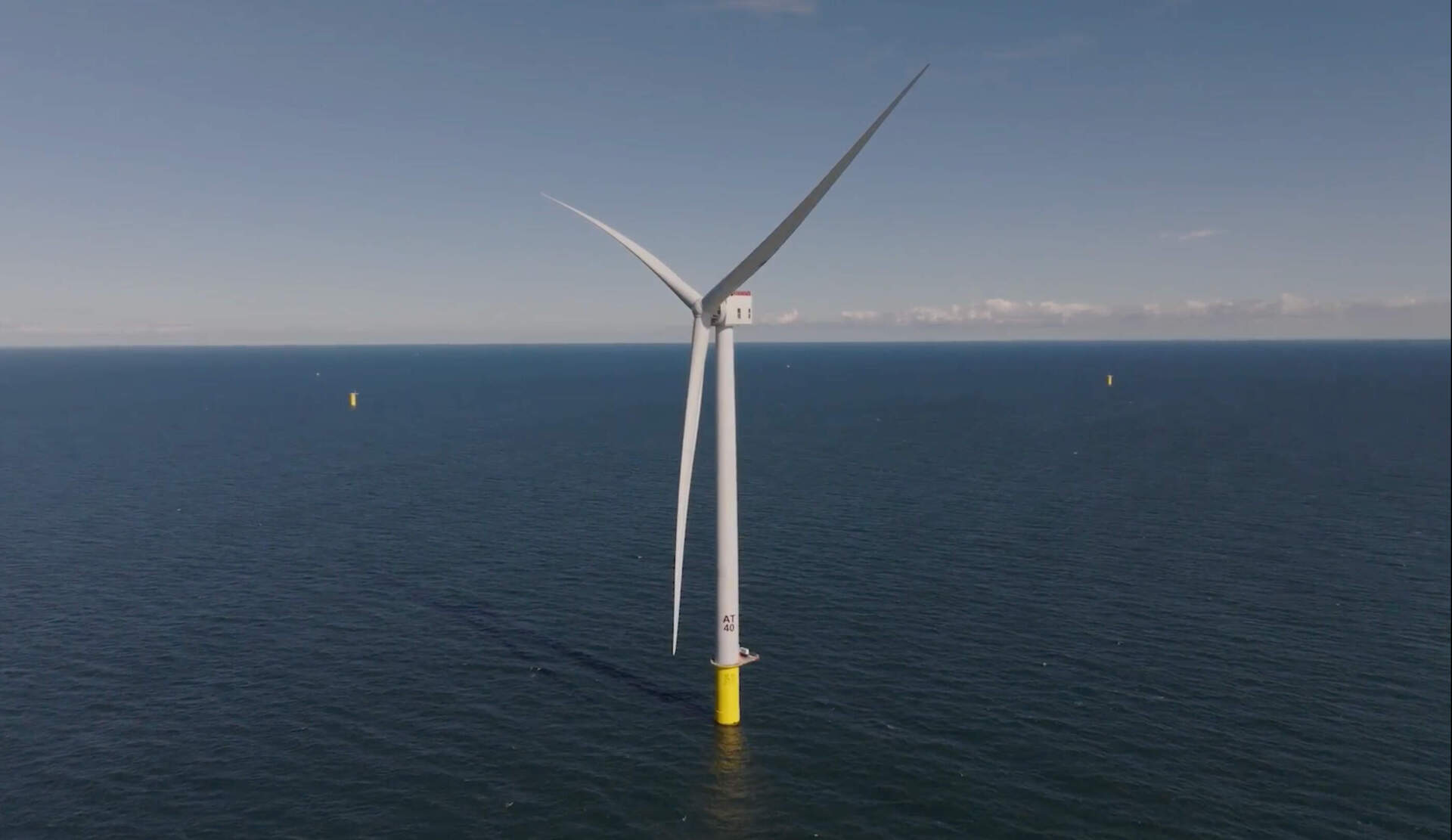
Once a site is approved, the engineering marvels begin. Developers select the appropriate turbine technology, which continues to grow in size and power output (e.g., 15+ MW per turbine). The choice of foundation type is critical: fixed-bottom foundations (like monopiles or jacket structures) are common in shallower waters, while floating foundations (such as semi-submersibles or spar buoys) are gaining traction for deeper waters. Subsea cables, substations, and onshore grid connections are meticulously designed to ensure efficient power transfer.
Construction & Installation: A Logistical Colossus
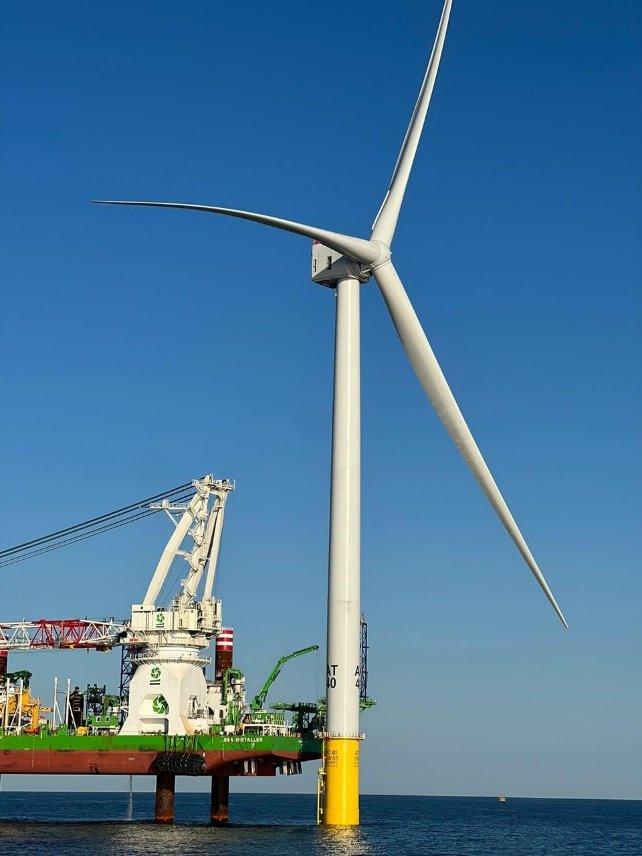
This phase is a ballet of specialized vessels and heavy machinery. Giant installation vessels transport turbine components – towers, nacelles, and blades – to the offshore site. Foundations are driven or anchored into the seabed, followed by the careful assembly of the turbines. Subsea cables are laid from the wind farm to an onshore interconnection point, a significant civil engineering feat in itself. Port infrastructure plays a crucial role here, needing robust quaysides and ample laydown areas for assembly.
Operation & Maintenance: Keeping the Power Flowing
Once commissioned, the wind farm enters its operational phase, typically spanning 25-30 years. This involves continuous monitoring from onshore control centers, predictive maintenance, and routine repairs performed by highly skilled technicians transported by specialized crew transfer vessels (CTVs) or larger service operation vessels (SOVs). The harsh marine environment means components must be incredibly durable and accessible for maintenance, ensuring consistent power generation.
Beyond the Turbines: Economic Catalyst and Job Creation
The economic benefits of commercial-scale offshore wind projects extend far beyond simply producing electricity. They act as powerful catalysts for regional economic development and job creation.
- Direct Job Creation: Thousands of jobs are generated in engineering, project management, specialized maritime operations, turbine manufacturing, assembly, installation, and long-term operations and maintenance. These are often high-paying, skilled positions.
- Indirect & Induced Jobs: The ripple effect extends to supporting industries like logistics, port services, hospitality, environmental consulting, and advanced materials manufacturing.
- Port Revitalization: Coastal ports, some of which have seen decline, are being transformed into staging areas for turbine components, manufacturing hubs, and O&M bases, requiring significant infrastructure investment.
- Supply Chain Development: The demand for specialized components (blades, towers, foundations, cables) is driving the establishment or expansion of domestic manufacturing capabilities, reducing reliance on foreign imports.
- Community Benefits: Projects often include community benefit agreements, providing local funding for education, training, and infrastructure, as well as significant tax revenue for host communities.
| Area of Impact | Specific Benefit | Example |
|---|---|---|
| Job Creation | Thousands of direct and indirect jobs | Engineers, technicians, crane operators, vessel crews, manufacturing workers. |
| Infrastructure Investment | Port upgrades, manufacturing facilities | ProvPort, Quonset Point, and State Pier investments for Revolution Wind. |
| Supply Chain | Domestic manufacturing & assembly | Developing US-based facilities for turbine components and foundations. |
| Economic Output | Billions in economic activity | Revolution Wind estimates over $100 million in local investments. |
| Community Support | Local funds, tax revenue, workforce training | Funding for educational programs and community projects near wind farm sites. |
The Road Ahead: Challenges and Opportunities for US Offshore Wind
While the momentum for US offshore wind is undeniable, the path forward is not without its hurdles. Understanding these challenges is key to ensuring the industry’s sustainable growth.
Supply Chain and Infrastructure Bottlenecks
Building an entirely new industry from scratch requires massive infrastructure. The US currently lacks a sufficient number of specialized installation vessels, port facilities capable of handling the colossal components, and a robust domestic manufacturing base for turbines, blades, and foundations. Developing this supply chain is a race against time and demand.
Environmental & Social Considerations
Offshore wind projects must coexist with sensitive marine ecosystems and existing ocean users. Concerns about potential impacts on marine mammals (like the North Atlantic Right Whale), migratory birds, commercial fishing grounds, and the visual landscape require careful study, mitigation strategies, and ongoing dialogue with stakeholders. Permitting processes are designed to address these, but they add to project timelines and complexity.
Interconnection and Grid Modernization
Getting vast amounts of electricity from offshore wind farms to where it’s needed on land requires significant upgrades to the onshore transmission grid. This includes new substations, upgraded lines, and enhanced grid reliability to handle intermittent renewable energy. Coordinating these upgrades across multiple states and utilities is a substantial engineering and regulatory challenge.
Cost, Financing, and Policy Stability
Offshore wind projects are incredibly capital-intensive, with upfront costs in the billions. While the long-term cost of energy from offshore wind is decreasing, securing financing requires stable, long-term government policies and incentives. Changes in policy or market conditions can create uncertainty, making investment more challenging.
The Promise of Floating Offshore Wind
Despite the challenges, immense opportunities lie ahead. One of the most exciting is the advancement of floating offshore wind technology. This innovation will unlock access to deeper waters, especially off the West Coast and in the Gulf of Maine, where fixed-bottom foundations are not feasible. Floating platforms can tap into vast, high-quality wind resources, significantly expanding the potential for offshore wind in the US.
Why This Matters to You: A Stake in the Future
The rise of commercial-scale offshore wind isn’t just a story for energy experts or policymakers. It impacts you directly. It means:
- Cleaner Air: Less reliance on fossil fuels translates to fewer pollutants in the air you breathe.
- Stable Energy Prices: Once built, the ‘fuel’ for wind energy is free, helping to stabilize electricity costs over the long term.
- Economic Opportunity: New jobs and industries strengthen local economies and provide diverse career paths.
- Energy Security: A more resilient and independent energy supply for the nation.
- Climate Action: A tangible step towards a sustainable future for our planet.
Commercial-scale offshore wind is more than just technology; it’s a testament to human ingenuity and our collective commitment to a sustainable future. As projects like Vineyard Wind 1 and Revolution Wind come online, they’re not just spinning turbines; they’re turning the page to a new chapter in American energy.
Frequently Asked Questions
What is a commercial-scale offshore wind turbine project?
A commercial-scale offshore wind turbine project is a large-scale industrial undertaking designed to generate significant amounts of electricity (typically hundreds of megawatts or more) for sale to the power grid. It involves numerous large turbines, substantial financial investment, and a long operational lifespan (25-30 years), aiming for broad economic and environmental impact, distinct from smaller pilot or research projects.
How many commercial offshore wind projects are currently operating in the US?
As of early 2024, the US has the Block Island Wind Farm (30 MW, operational since 2016) and South Fork Wind (132 MW, operational in 2024) fully commercial. Vineyard Wind 1 (806 MW) is completing construction and beginning operations, marking the nation’s first utility-scale project, with others like Revolution Wind following closely behind.
What are the biggest challenges facing US commercial offshore wind development?
Key challenges include building a robust domestic supply chain and port infrastructure, navigating complex environmental permitting and stakeholder concerns (e.g., fisheries, marine life), upgrading the onshore transmission grid to integrate offshore power, and securing stable, long-term financing amidst high upfront costs.
How do offshore wind projects benefit the US economy?
Offshore wind projects drive significant economic growth by creating thousands of high-paying jobs (engineering, manufacturing, operations), revitalizing coastal ports through infrastructure investments, fostering a new domestic manufacturing supply chain, and generating substantial tax revenue for local communities.
What is the future outlook for offshore wind in the US?
The future is highly promising, with ambitious federal and state goals aiming for tens of gigawatts of offshore wind capacity by 2030 and beyond. This growth will be fueled by technological advancements, especially in floating offshore wind for deeper waters, and continued policy support, positioning the US as a major global player in the sector.
What is the difference between fixed-bottom and floating offshore wind foundations?
Fixed-bottom foundations (like monopiles or jacket structures) are directly secured to the seabed and are typically used in shallower waters (up to 60 meters deep). Floating foundations, on the other hand, are buoyant structures tethered to the seabed, allowing turbines to be deployed in much deeper waters where fixed-bottom solutions are not feasible or economical.
