
Wind Turbine In My Garden: Your Definitive Guide to Home Wind Power
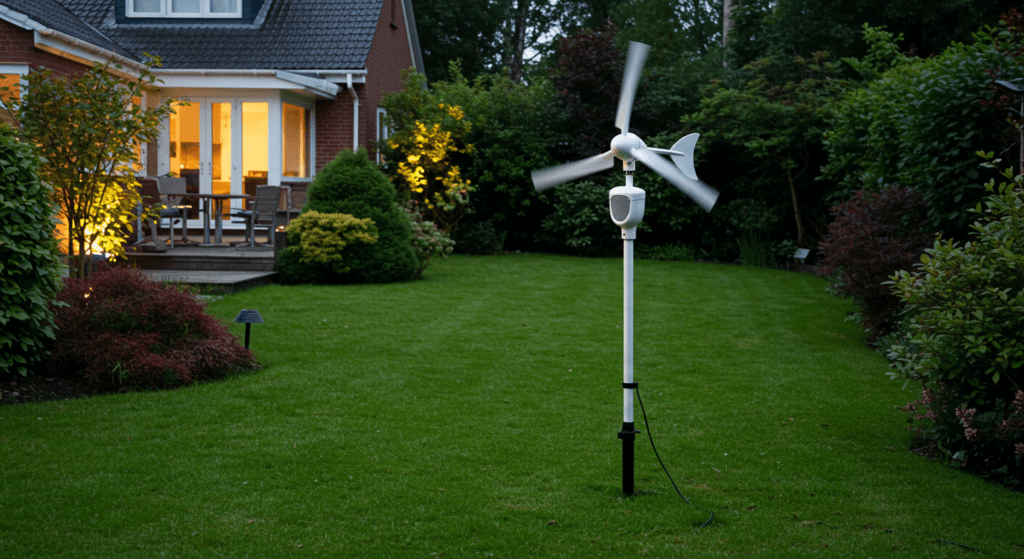
Picture this: a sleek, quiet wind turbine gently spinning in your backyard, generating clean energy for your home, slashing your electricity bills, and giving you a warm, fuzzy feeling of self-sufficiency. It’s a tempting vision, isn’t it? The idea of a personal wind turbine in your garden is a dream for many aspiring eco-conscious homeowners.
Table of Contents
- Wind Turbine In My Garden: Your Definitive Guide to Home Wind Power
- Is a Wind Turbine for Your Garden a Realistic Dream? (The Hard Truth First)
- Understanding the Core Challenge: Wind Resource
- Dispelling Common Myths about Small Wind Turbines
- Assessing Your Garden’s Wind Potential: A Step-by-Step Guide
- Step 1: Preliminary Wind Resource Check
- Step 2: Identifying Obstructions and Turbulence Zones
- Step 3: Calculating Your Energy Needs
- Types of Small Wind Turbines Suitable for Residential Use
- Horizontal Axis Wind Turbines (HAWTs)
- Vertical Axis Wind Turbines (VAWTs)
- Micro-Turbines vs. Small Turbines
- The Cost of Going Green: What Does a Garden Wind Turbine Really Cost?
- Turbine Unit Cost
- Tower and Foundation Costs
- Inverter and Balance of System (BOS) Components
- Installation Labor (Professional vs. DIY Savings)
- Permitting and Interconnection Fees
- Navigating Permits, Zoning, and Local Regulations (Don’t Skip This!)
- Zoning Ordinances and Height Restrictions
- Building Permits and Structural Integrity
- Noise Ordinances and Visual Impact Assessments
- Homeowner Association (HOA) Rules
- Grid Interconnection Agreements (for grid-tied systems)
- How to Research Your Local Regulations
- Installation: From Foundation to First Spin
- Site Selection (Revisiting the Best Spot)
- Foundation Work
- Tower Assembly and Erection
- Turbine Mounting and Wiring
- Electrical Connections and Safety
- Grid-Tied vs. Off-Grid Systems: What You Need to Know
- Maintenance, Safety, and Longevity of Your Home Wind Turbine
- Routine Checks and Inspections
- Blade Cleaning and Bearing Lubrication
- Safety Shut-off Systems
- Expected Lifespan and Warranty
- Wind vs. Solar: A Garden Power Showdown
- Complementary or Competing?
- Space Requirements and Aesthetics
- Cost Per Watt and ROI
- Performance in Different Climates/Seasons
- The Verdict: Is a Wind Turbine in Your Garden Right for You?
But let’s be honest, the reality is often more complex than the dream. While large-scale wind farms are undeniably powerful, bringing that technology down to a residential garden scale presents unique challenges and considerations. Before you start scouting for the perfect spot, let’s cut through the hype and explore whether a wind turbine in your garden is a realistic, cost-effective, and practical path to energy independence.
Is a Wind Turbine for Your Garden a Realistic Dream? (The Hard Truth First)
Here’s the deal: not every garden is a suitable candidate for a wind turbine. While the romantic notion of harnessing the breeze is appealing, several factors often stand between the dream and its practical execution.
Understanding the Core Challenge: Wind Resource
The single most critical factor for any wind turbine, big or small, is the wind itself. It’s not just about feeling a breeze; it’s about consistent, unobstructed, and sufficiently strong wind.
- What Defines a Good Wind Site? A truly good site has an average wind speed of at least 10-12 mph (4.5-5.5 m/s) at the turbine’s hub height. This isn’t just a peak gust; it’s the average over months and years.
- Why "My Garden" is Often Tricky: Residential areas are notorious for what’s called "ground turbulence." Trees, buildings, fences, and even minor terrain changes disrupt smooth airflow, creating eddies and unpredictable wind patterns. Turbines need smooth, laminar flow to operate efficiently and safely. A garden, by its nature, is often surrounded by these exact obstructions.
Dispelling Common Myths about Small Wind Turbines
- Myth 1: They’re Just Mini Versions of Commercial Giants. While they share principles, residential turbines are fundamentally different in scale, output, and often, design. They are far less efficient per dollar invested than their utility-scale counterparts.
- Myth 2: "Any" Wind is Enough. Not true. Turbines have cut-in speeds (the minimum wind speed to start generating power) and rated speeds (the wind speed at which they produce their maximum power). Below cut-in, they’re just pretty garden ornaments.
- Myth 3: Easy DIY Project. While some micro-turbines might seem simple, installing a system capable of powering a significant portion of your home involves serious electrical work, heavy lifting, structural engineering for the tower, and complex permitting. This is not a weekend warrior project for most homeowners.
Assessing Your Garden’s Wind Potential: A Step-by-Step Guide
Before you even look at turbine models, you need to conduct a serious reconnaissance of your backyard. This isn’t just about guessing; it’s about data.
Step 1: Preliminary Wind Resource Check
Start with readily available information:
- Local Weather Data (Online Resources): Websites like the National Renewable Energy Laboratory (NREL) Wind Prospector tool or local airport weather stations can provide historical average wind speeds for your general area. Be aware these are often measured at higher altitudes and might not reflect ground-level conditions in your garden.
- Anemometer Readings: For a more accurate picture, consider installing a professional-grade anemometer (wind speed meter) at the proposed hub height for at least a year. Short-term readings (a few weeks or months) can be misleading due to seasonal variations. This is the gold standard for site assessment.
Step 2: Identifying Obstructions and Turbulence Zones
This is where your garden’s specific layout comes into play.
- Trees, Buildings, Terrain: Walk around your property and identify anything within a few hundred feet that could block or disrupt wind flow. This includes your house, your neighbor’s house, tall trees, sheds, and even dense fences.
- Rule of Thumb: A small wind turbine‘s tower should ideally elevate the turbine’s blades at least 20 feet higher than any obstruction (like trees or buildings) within a 500-foot radius. For optimum performance, aim for 30 feet above. This is crucial for avoiding turbulence, which not only reduces efficiency but can also stress and damage the turbine over time.
Step 3: Calculating Your Energy Needs
How much power do you actually need? A wind turbine should be sized to meet a significant portion of your electricity demand, but rarely 100% of it, especially for small residential setups.
- Reviewing Electricity Bills: Look at your past 12 months of electricity bills. Note your average monthly kWh (kilowatt-hour) consumption. This will give you a target number for how much energy you’d like your turbine to offset.
- Matching Turbine Output to Consumption: Residential wind turbines are typically rated in kilowatts (kW), representing their maximum power output. A 1-5 kW turbine is common for homes. To estimate yearly output, multiply the rated power by the number of hours in a year (8760) and then by the turbine’s capacity factor (which can be as low as 15-30% for small residential units due to inconsistent wind).
Table: Typical Home Energy Consumption (USA)
| Household Size | Average Monthly kWh | Estimated Annual kWh |
|---|---|---|
| Single Person | ~400-600 kWh | ~4,800-7,200 kWh |
| Couple | ~600-800 kWh | ~7,200-9,600 kWh |
| Family (3-4 people) | ~800-1,200 kWh | ~9,600-14,400 kWh |
| Large Family / High Usage | 1,200+ kWh | 14,400+ kWh |
Types of Small Wind Turbines Suitable for Residential Use
When we talk about "small" wind turbines, we’re generally referring to units with a rated capacity between 400 watts (micro-turbines) and 100 kilowatts. For a typical residential garden, you’ll likely be looking at the lower end of that spectrum, usually 1kW to 5kW.
Horizontal Axis Wind Turbines (HAWTs)
These are what most people envision when they think of a wind turbine – the classic "propeller" style.
- Traditional Look, Efficiency: HAWTs are highly efficient at capturing wind energy when aligned correctly with the wind direction. They typically have two or three blades and often use a yaw mechanism to turn into the wind.
- Noise, Visual Impact Considerations: Their rapid rotation and larger sweep area can generate more audible noise (a "whooshing" sound) and have a greater visual presence, which can be a concern in densely populated residential areas. They also require higher towers to clear obstructions, adding to their visual impact.
Vertical Axis Wind Turbines (VAWTs)
VAWTs are less common but are gaining traction for urban and suburban applications due to some distinct advantages.

- Omni-directional, Quieter, Lower Vibration: VAWTs don’t need to turn into the wind, as they can capture wind from any direction. Their main rotating components are typically at ground level or lower on the tower, which can reduce noise and vibration. This makes them potentially more suitable for turbulent, lower-to-the-ground wind conditions often found in gardens.
- Lower Efficiency, Specific Designs: Generally, VAWTs are less efficient than HAWTs of comparable size. However, newer helical (like the Darrieus or Savonius types) and other innovative designs are improving efficiency and aesthetic appeal for residential settings.
Micro-Turbines vs. Small Turbines
- Micro-Turbines (Under 1 kW): These are often hobbyist-level or designed for very specific, low-power applications like charging batteries for RVs, boats, or remote cabins. They typically won’t make a significant dent in a grid-tied home’s electricity bill.
- Small Turbines (1 kW – 100 kW): This is the category for most residential home wind power. A 2-5 kW turbine is often considered the sweet spot for homes aiming to offset a noticeable portion of their energy usage, assuming a good wind resource.
Table: HAWT vs. VAWT for Residential Gardens
| Feature | Horizontal Axis Wind Turbine (HAWT) | Vertical Axis Wind Turbine (VAWT) |
|---|---|---|
| Typical Appearance | Propeller-like, blades at top of tower | Egg-beater, helical, or cup-shaped blades |
| Wind Direction | Must face into the wind (yaw mechanism) | Omni-directional; operates regardless of wind direction |
| Efficiency | Generally higher in consistent, smooth wind | Generally lower, but improving; better in turbulent wind |
| Noise & Vibration | Can be more noticeable due to blade tip speed, needs higher towers | Often quieter, less vibration; lower rotating mass |
| Suitable for Garden | Requires significant clear space, higher towers; better for rural | Potentially better for urban/suburban, lower height tolerance |
| Maintenance | Requires lowering or climbing tower for most tasks | Easier access to main components near ground level |
The Cost of Going Green: What Does a Garden Wind Turbine Really Cost?
This is often the sobering reality check. Small wind turbines are not cheap, and their payback period can be longer than solar, depending on your wind resource and electricity rates. Expect a significant upfront investment.
Turbine Unit Cost
The turbine itself will range from a few thousand dollars for a 1 kW unit to $20,000 – $30,000+ for a 5-10 kW system. Factors include brand, quality, efficiency, and features.
Tower and Foundation Costs
This is often underestimated. The tower is crucial for getting the turbine into clean, high-speed wind. Towers can be guyed (supported by cables) or self-supporting (freestanding). Foundations must be robust. Costs for a suitable tower and foundation can range from $5,000 to $15,000 or more, depending on height, material, and ground conditions.
Inverter and Balance of System (BOS) Components
You’ll need an inverter to convert the turbine’s raw power into usable AC electricity for your home or the grid. For off-grid systems, you’ll also need a battery bank, charge controller, and additional wiring. These components can add $3,000 – $10,000+.
Installation Labor (Professional vs. DIY Savings)
Unless you’re a qualified electrician and structural engineer, professional installation is highly recommended. This can easily add another $5,000 – $15,000 to the total cost. DIY can save labor costs but carries significant risks if not done correctly.
Permitting and Interconnection Fees
Expect to pay hundreds, possibly even thousands, for permits, inspections, and utility interconnection fees. These vary widely by location.
Table: Estimated Cost Breakdown for a 1-5kW Residential Wind Turbine
| Cost Component | Estimated Range (USD) | Notes |
|---|---|---|
| Turbine Unit (1-5 kW) | $4,000 – $25,000 | Depends on size, brand, type (HAWT/VAWT) |
| Tower & Foundation | $5,000 – $15,000 | Height, type (guyed/self-supporting), ground conditions |
| Inverter & BOS | $3,000 – $10,000 | Includes wiring, safety disconnects; more for off-grid batteries |
| Installation Labor | $5,000 – $15,000 | Professional installation recommended for safety & compliance |
| Permits & Fees | $500 – $2,500 | Varies by municipality, utility interconnection fees |
| Total Estimated Cost | $17,500 – $67,500 | Significant investment; ROI depends on wind resource & incentives |
Keep in mind that federal, state, and local incentives (like the federal Investment Tax Credit) can help offset these costs.
Navigating Permits, Zoning, and Local Regulations (Don’t Skip This!)
This is arguably the biggest hurdle for residential wind turbine projects, especially in urban or suburban "garden" settings. Local regulations are often designed for larger structures and may not be friendly to tall, rotating machinery.
Zoning Ordinances and Height Restrictions
- Setbacks and Minimum Lot Sizes: Many municipalities have strict rules about how close a structure can be to property lines. Turbines, due to their height and potential for blade throw, often have significantly larger setback requirements than fences or sheds. Some areas may require minimum lot sizes that rule out most residential properties entirely.
- Height Restrictions: Building height limits are common. If your local code says no structure can be over 35 feet, but your turbine needs a 60-foot tower to clear obstructions, you have a problem. Variances are possible but can be a long, costly, and uncertain process.
Building Permits and Structural Integrity
Any structure over a certain height or with significant moving parts will require a building permit. This means submitting detailed plans for the tower, foundation, and electrical connections, often requiring professional engineering stamps to ensure safety and structural integrity.
Noise Ordinances and Visual Impact Assessments
- Noise: While small turbines are quieter than their large counterparts, they do produce noise. Most residential areas have noise limits, especially at night. Neighbors might object.
- Visual Impact: A turbine, even a small one, is a prominent feature. Your local planning department or HOA may require visual impact studies or have specific aesthetic guidelines.
Homeowner Association (HOA) Rules
If you live in a community with an HOA, their rules can be even more restrictive than municipal zoning. Many HOAs have blanket bans on exterior structures or specific height limits that would preclude a wind turbine. Check these bylaws thoroughly before proceeding.
Grid Interconnection Agreements (for grid-tied systems)
If you plan to connect your turbine to the utility grid (to sell excess power back or draw power when the wind isn’t blowing), you’ll need an interconnection agreement with your local utility company. This involves applications, inspections, and potentially specialized equipment like a bidirectional meter.

How to Research Your Local Regulations
Don’t guess! The first step after your wind assessment is to contact your local:
- Planning Department or Zoning Office: Inquire about specific ordinances regarding wind energy systems, height restrictions, setbacks, and required permits.
- Building Department: Understand the structural requirements for towers and foundations.
- Utility Company: Discuss interconnection policies, net metering, and any specific requirements for grid-tied systems.
- Homeowner Association (if applicable): Obtain a copy of their Covenants, Conditions, and Restrictions (CC&Rs).
Installation: From Foundation to First Spin
Assuming you’ve successfully navigated the permitting maze and secured financing, it’s time for the physical installation. This is where precision and safety are paramount.
Site Selection (Revisiting the Best Spot)
Based on your wind assessment and regulatory approvals, finalize the exact location. It must provide the best possible wind resource while adhering to all setback requirements.
Foundation Work
A robust concrete foundation is essential to anchor the tower and withstand wind loads. The size and depth will depend on the turbine’s weight, tower height, and local soil conditions. This often requires excavation and rebar work.
Tower Assembly and Erection
The tower components are assembled, either on the ground and then raised with a crane (for tilt-up towers) or built section by section (for freestanding lattice towers). This is a job for experienced professionals with specialized equipment.
Turbine Mounting and Wiring
Once the tower is stable, the turbine head (nacelle, blades, generator) is mounted. This delicate operation requires careful handling. Electrical wiring connects the turbine to the control panel at the base of the tower and then down to the inverter and main electrical panel.
Electrical Connections and Safety
All electrical work must comply with the National Electrical Code (NEC) and local utility standards. This includes proper grounding, overcurrent protection, and disconnect switches. A qualified electrician is indispensable here.
Grid-Tied vs. Off-Grid Systems: What You Need to Know
- Batteries for Off-Grid: If you’re completely disconnected from the utility grid, you’ll need a sizable battery bank to store excess energy generated when the wind blows and provide power when it doesn’t. This significantly increases cost and complexity.
- Net Metering for Grid-Tied: Most residential systems are grid-tied. This means your turbine supplements your grid power, and any excess generation can be "sold" back to the utility via net metering (if available in your area). When your turbine isn’t producing enough, you draw power from the grid as usual. This offers the best balance of reliability and cost-effectiveness for most homes.
Maintenance, Safety, and Longevity of Your Home Wind Turbine
Like any mechanical system, a wind turbine requires ongoing care to ensure safe and efficient operation.
Routine Checks and Inspections
Periodically, you’ll need to inspect the blades for damage, check the tower for corrosion or loose guy wires (if applicable), and ensure all electrical connections are secure. Many manufacturers recommend annual professional inspections.
Blade Cleaning and Bearing Lubrication
Dust, dirt, and even insects can accumulate on blades, reducing aerodynamic efficiency. Bearings and other moving parts may require lubrication to prevent wear and ensure smooth operation.
Safety Shut-off Systems
Modern turbines have automatic braking or furling mechanisms to protect them during high winds. Ensure these are functioning correctly. Manual disconnects should also be easily accessible for maintenance or emergencies.
Expected Lifespan and Warranty
A well-maintained small wind turbine can last 20-25 years, similar to solar panels. However, specific components like inverters or batteries (for off-grid systems) may need replacement sooner. Always understand the warranty on your turbine and its components.
Wind vs. Solar: A Garden Power Showdown
It’s natural to compare wind to solar when considering renewable energy for your home, especially if space in your "garden" is limited. Often, they aren’t competing technologies but complementary ones.
Complementary or Competing?
In many regions, wind resources are strongest during certain seasons (e.g., winter) or times of day (e.g., night) when solar production is low. A hybrid wind-solar system can provide a more consistent energy supply than either technology alone. However, for a single, primary source in a small garden, you’ll likely choose one.
Space Requirements and Aesthetics
- Solar: Requires roof space or ground space for panels. Generally low profile, less visually intrusive than a tall turbine. No moving parts, so no noise.
- Wind: Requires a tall tower and significant clear air space. More visually prominent and can be noisier.
Cost Per Watt and ROI
Currently, solar panels generally offer a lower cost per watt of installed capacity and often a quicker return on investment (ROI) for residential applications in most parts of the US, especially given abundant sunshine and mature incentive programs. Wind’s ROI is highly dependent on an exceptional wind resource and local incentives.
Performance in Different Climates/Seasons
- Solar: Performs best on clear, sunny days. Output reduces on cloudy days and is zero at night. Less affected by cold temperatures (can even increase efficiency slightly).
- Wind: Performs best on windy days and nights. Output can be consistent regardless of time of day or cloud cover, making it a good complement to solar.
Table: Wind Turbine vs. Solar Panels for Residential Energy
| Feature | Small Wind Turbine | Solar Panels |
|---|---|---|
| Primary Resource | Consistent, unobstructed wind | Direct sunlight |
| Space Requirement | Tall tower, large clear air space (500ft radius) | Roof space or ground space (unshaded) |
| Aesthetic Impact | High (tall structure, moving blades) | Low (flat panels on roof or ground) |
| Noise | Moderate to low "whooshing" sound | None |
| Typical Cost/Watt | Higher for residential scale | Lower, more competitive |
| Performance Cycle | Day & Night, often stronger in winter | Daylight hours only, strongest in summer |
| Permitting Complexity | High (height, noise, visual impact, structural) | Moderate (structural, electrical, some aesthetic) |
The Verdict: Is a Wind Turbine in Your Garden Right for You?
So, after all this, should you put a wind turbine in your garden? The honest answer is: probably not for most suburban or urban homeowners. For a small residential property, the hurdles are significant:
- Wind Resource: Most gardens simply don’t have the consistent, unobstructed wind needed for a turbine to be effective.
- Cost: The high upfront investment, combined with potentially lower output in less-than-ideal locations, often leads to a very long payback period.
- Regulations: Zoning, height restrictions, and HOA rules frequently make residential wind turbine installation impossible or prohibitively difficult.
- Aesthetics & Noise: The visual impact and potential noise can be deal-breakers for you or your neighbors.
However, if you live in a truly rural area with abundant, consistent wind, a large property with no nearby obstructions, and favorable local regulations, then a small wind turbine *could* be a viable part of your renewable energy strategy. In such cases, it could work beautifully, perhaps even in conjunction with solar, to provide robust energy independence.
For the average homeowner with a typical garden, solar panels are almost always a more practical, cost-effective, and less intrusive option. But if your heart is set on wind, arm yourself with data, be prepared for a thorough permitting process, and seek out experienced professionals who specialize in small wind energy systems to guide you every step of the way.
Frequently Asked Questions
Are small wind turbines worth it for a typical home?
For most typical homes in suburban or urban gardens, small wind turbines are often not worth the significant investment due to insufficient wind resources, high costs, and complex local regulations. They are generally more viable in rural areas with consistent, unobstructed wind and larger properties.
How much energy can a residential wind turbine generate?
A typical residential wind turbine (1-5 kW) can generate anywhere from 2,000 to 15,000 kWh per year, depending heavily on the turbine’s size, efficiency, and the consistency of the wind resource at its specific location. This is often enough to offset a significant portion, but rarely 100%, of a home’s electricity needs.
What is the minimum wind speed required for a home wind turbine?
Most small wind turbines have a ‘cut-in speed’ of about 6-9 mph (3-4 m/s), meaning they only start producing electricity at or above this speed. For effective and economic power generation, an average annual wind speed of at least 10-12 mph (4.5-5.5 m/s) at the turbine’s hub height is generally recommended.
Do I need a permit to install a wind turbine in my garden?
Yes, almost certainly. Installing a wind turbine requires building permits, zoning approval, and potentially special use permits due to height restrictions, setback requirements, noise ordinances, and visual impact considerations. You will also need an interconnection agreement with your utility for grid-tied systems. Local regulations vary widely, so always check with your municipal planning department and utility company.
How much noise do small wind turbines make?
Small wind turbines are generally quieter than large utility-scale turbines. Most produce a ‘whooshing’ sound, typically in the 40-60 decibel range at close distances, which is comparable to a refrigerator or quiet conversation. However, perceived noise can vary, and local noise ordinances are a common concern in residential areas.
Can a wind turbine power my entire house?
While theoretically possible, it’s rare for a single small wind turbine to power an entire typical American home 100% of the time, especially without battery storage or grid connection. Their output fluctuates with wind speed, meaning you’d likely need supplemental power from the grid or a robust off-grid battery bank and possibly other renewable sources like solar to achieve full energy independence.
What’s the difference between HAWT and VAWT for home use?
Horizontal Axis Wind Turbines (HAWTs) are the classic propeller-style, generally more efficient in consistent wind, but can be noisier and require taller towers. Vertical Axis Wind Turbines (VAWTs) are often quieter, omni-directional (don’t need to turn into the wind), and better suited for turbulent, lower-to-the-ground winds common in urban or suburban settings, though typically less efficient overall.
