
Wind Turbine Systems for Home Use: Your Complete Guide to Powering Your Property
Tired of rising electricity bills? Craving true energy independence, even when the sun isn’t shining? You’re not alone. Home wind turbine systems are sparking curiosity in many homeowners looking for sustainable, cost-effective ways to power their lives. But let’s be honest: the world of residential wind power can feel like a gust of complex information. Is it a pipe dream, or a real solution for your home?
Table of Contents
- Wind Turbine Systems for Home Use: Your Complete Guide to Powering Your Property
- Is Home Wind Power Right for You? The Crucial First Steps
- Assessing Your Wind Resource: Is Your Property Windy Enough?
- Understanding Your Energy Needs: How Much Power Do You Really Use?
- Location, Zoning, and Permits: The Bureaucracy of Wind
- Demystifying Home Wind Turbines: Types, Sizes, and How They Work
- Horizontal Axis Wind Turbines (HAWTs): The Classic Windmill Look
- Vertical Axis Wind Turbines (VAWTs): The Sleeker, Urban-Friendly Option
- Grid-Tied vs. Off-Grid Systems: Connecting to the Power
- Key Components of a Home Wind System
- What Size Wind Turbine Do You Need? Matching Power to Demand
- Calculating Your Ideal Turbine Size (kW)
- Real-World Examples: What Different Sizes Can Power
- The Real Cost of Home Wind Power: Installation, Maintenance, and ROI
- Upfront Costs: Breaking Down the Investment
- Operating & Maintenance Costs: The Long Game
- Incentives and Rebates: Lowering Your Investment
- Return on Investment (ROI): When Does it Pay Off?
- Wind vs. Solar: Which Renewable is Right for Your Home?
- Complementary or Competing?
- Hybrid Systems: The Best of Both Worlds
- What to Look for When Buying a Home Wind Turbine System
- Certification and Warranties
- Noise Levels and Aesthetics
- Durability and Weather Resistance
- Finding a Reputable Installer
- The Future of Home Wind Power: What’s Next?
- Bladeless Turbines (Vortex): Innovation on the Horizon
- Smaller, More Efficient Designs and Smart Home Integration
- Conclusion: Making an Informed Decision for Your Energy Future
This isn’t a fluffy sales pitch. This guide cuts through the noise, tackling common skepticism head-on and giving you the straight talk you need to make an informed decision. We’ll explore if a wind turbine makes sense for your property, how much it really costs, and what you need to know before taking the leap. Let’s get started.
Is Home Wind Power Right for You? The Crucial First Steps
Before you even think about turbine types or wattage, you need to understand one thing: wind power is highly site-specific. What works for one property might be a complete waste of money for another. Here’s how to honestly assess your home’s potential.
Assessing Your Wind Resource: Is Your Property Windy Enough?
This is arguably the most critical factor. Without sufficient, consistent wind, your turbine is just an expensive lawn ornament. Don’t just rely on a breezy day; you need data.
- Average Annual Wind Speed: For a small wind turbine to be economically viable, you’re generally looking for an average annual wind speed of at least 10-12 miles per hour (mph). Anything less, and the energy production likely won’t justify the investment.
- Obstructions are the Enemy: Trees, hills, tall buildings, and even your own house can create turbulence and block wind flow. Turbines need clear, unobstructed wind to operate efficiently. The ideal placement is typically 30 feet higher than any obstruction within a 500-foot radius.
- Online Wind Maps and Data: Several online resources (like the U.S. Department of Energy’s WINDExchange maps) can give you a preliminary idea of wind speeds in your area. However, these are general. For a precise assessment, a professional site analysis, sometimes involving an anemometer (wind speed meter) installed on your property, is often recommended.
Think of it this way: a turbine’s power output increases dramatically with wind speed. Doubling the wind speed can result in eight times the power output. So, a few extra mph makes a huge difference.
Understanding Your Energy Needs: How Much Power Do You Really Use?
Your goal is to match your turbine’s output to your energy consumption. Over-sizing means paying for capacity you don’t need; under-sizing means you’re still heavily reliant on the grid.
- Kilowatt-Hours (kWh) per Month: Dig out your electricity bills. Most bills show your monthly kWh consumption. Average U.S. homes use around 800-1,000 kWh per month, but this varies wildly based on climate, home size, and habits.
- Calculating Daily Consumption: Divide your monthly kWh by 30 to get a daily average. This helps in understanding the scale of the system you’d need.
- Energy Efficiency First: The cheapest kWh is the one you don’t use. Before investing in any renewable energy system, focus on making your home as energy-efficient as possible. Seal drafts, upgrade insulation, switch to LED lighting, and consider ENERGY STAR appliances. Reducing your overall demand means you can potentially install a smaller, less expensive wind system.
Location, Zoning, and Permits: The Bureaucracy of Wind
Even with perfect wind and a clear site, local regulations can stop your project dead in its tracks. This is one of those crucial ‘wish I knew earlier’ points.
- Local Ordinances: Many municipalities have strict rules regarding building height, noise, and setbacks from property lines. Some areas may prohibit residential wind turbines altogether, especially in densely populated suburban or urban zones.
- Height Restrictions: Turbines need to be tall to catch clean, laminar wind, but local rules often limit tower heights. You might need a variance or special permit if your ideal tower height exceeds typical limits.
- Noise Concerns: While modern turbines are much quieter than older models, they still produce some noise, especially HAWTs. Local noise ordinances might apply.
- Permitting Process: Expect to apply for building permits, electrical permits, and potentially special use permits. The process can be lengthy and involve fees, engineering reviews, and public hearings. Start by contacting your local planning department or zoning board early in your research.
Demystifying Home Wind Turbines: Types, Sizes, and How They Work
Now that you’ve assessed your site, let’s explore the machinery itself. There are two primary types of home wind turbines, each with distinct advantages and disadvantages.
Horizontal Axis Wind Turbines (HAWTs): The Classic Windmill Look
These are what most people visualize when they think of a wind turbine – tall towers with propeller-like blades. They are the dominant design in utility-scale wind farms for a reason.
- Description: HAWTs have blades that rotate around a horizontal axis, parallel to the ground. They typically have 2 or 3 blades and must yaw (turn) to face the wind.
- Efficiency: Generally, HAWTs are more efficient at capturing wind energy than VAWTs because their blades are constantly perpendicular to the wind flow, maximizing lift.
- Pros:
- High Efficiency: Excellent power production in consistent, unidirectional wind.
- Proven Technology: Decades of development mean reliable performance and readily available components.
- Good for Strong Winds: Designed to perform well in higher wind speeds.
- Cons:
- Visual Impact: Can be seen as an eyesore due to their height and rotating blades.
- Noise: While reduced, still produce mechanical and aerodynamic noise, which can be a concern for neighbors.
- Needs Consistent Wind Direction: Requires a yaw mechanism to turn into the wind, adding complexity.
- Bird and Bat Collision Risk: A well-documented, though often exaggerated, concern.
Vertical Axis Wind Turbines (VAWTs): The Sleeker, Urban-Friendly Option
VAWTs are less common but are gaining traction, especially for urban and suburban applications, thanks to their unique design.
- Description: VAWTs have blades that rotate around a vertical axis, perpendicular to the ground. They come in various designs, such as Savonius (S-shaped scoops) and Darrieus (egg-beater shape).
- Omni-Directional: They don’t need to turn to face the wind, making them suitable for turbulent, shifting wind conditions.
- Pros:
- Less Noise: Generally quieter due to lower tip speeds and ground-level components.
- Lower Visual Impact: Can be perceived as more aesthetically pleasing due to their unique shapes and often lower profile.
- Omni-Directional Wind Capture: Performs well in turbulent or shifting wind conditions often found closer to the ground or within built environments.
- Bird-Friendly: Slower-moving blades make them less of a hazard to birds and bats.
- Easier Maintenance: Generator and gearbox are often at ground level, simplifying access for repairs.
- Cons:
- Lower Efficiency: Typically less efficient at converting wind energy into electricity compared to HAWTs of similar size.
- Starting Torque: Some designs require a ‘kick’ to start spinning in low winds.
- Less Proven: The residential VAWT market is newer, with fewer long-term performance track records for specific models.
Grid-Tied vs. Off-Grid Systems: Connecting to the Power
How do you plan to use the power your turbine generates? This choice significantly impacts your system’s design and cost.
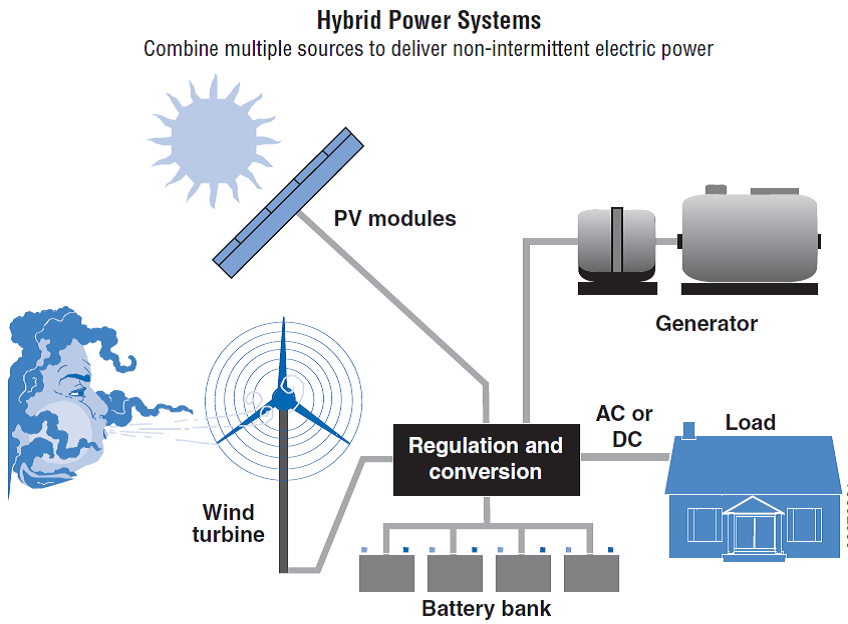
- Grid-Tied Systems:
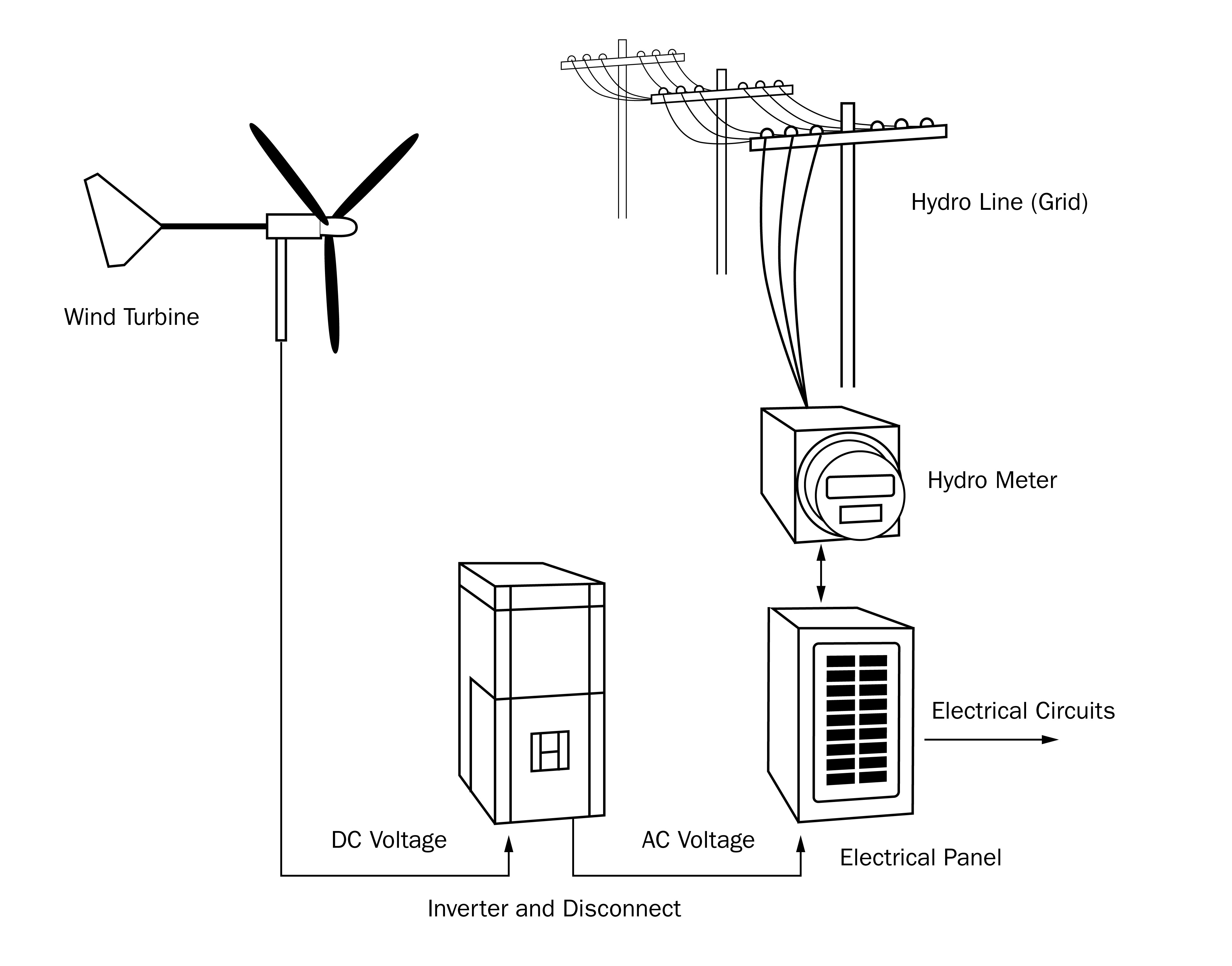
- Description: Your wind turbine is connected to your home’s electrical system, which is also connected to the public utility grid.
- Benefits: When your turbine produces more power than you need, the excess can be fed back into the grid, often earning you credits (net metering) on your electricity bill. When your turbine isn’t producing enough (no wind), you draw power from the grid. This eliminates the need for expensive battery storage.
- Considerations: Requires approval from your utility company and often specialized grid-tie inverters. You still pay a monthly connection fee to the utility.
- Off-Grid Systems:
- Description: Your home is completely independent of the utility grid. All power comes from your wind turbine (and often solar panels) and is stored in batteries.
- Benefits: Complete energy independence, no electricity bills, ideal for remote locations where grid extension is too costly.
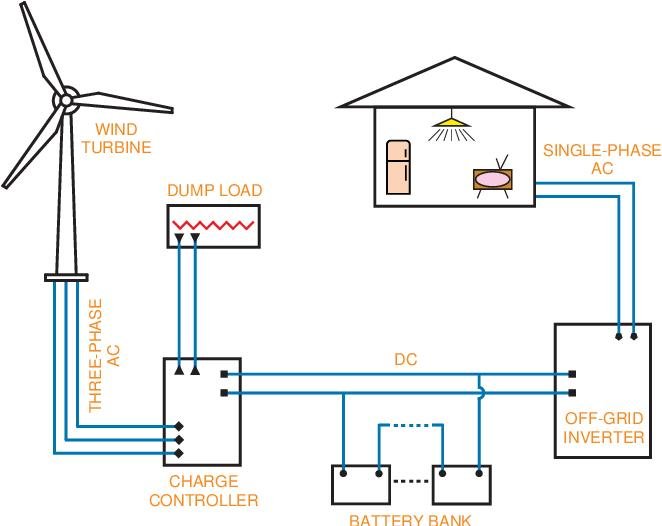
- Considerations: Requires a large, expensive battery bank to store energy for periods of low wind. You’ll need a backup generator for prolonged low-wind periods or high demand. This is a much more complex and costly setup than grid-tied.
Key Components of a Home Wind System
Regardless of type, most systems share core components:
- Turbine/Blades: The part that captures the wind’s kinetic energy.
- Generator: Converts the mechanical energy of the spinning blades into electrical energy.
- Tower: Lifts the turbine to a height where it can access cleaner, stronger winds. Tower height is critical for performance.
- Charge Controller: Regulates the voltage and current from the turbine to prevent overcharging batteries (in off-grid systems) or overloading grid-tie inverters.
- Inverter: Converts the DC (direct current) electricity generated by the turbine into AC (alternating current) electricity usable by your home appliances and the grid.
- Batteries (Off-Grid): Store excess energy for use when the wind isn’t blowing.
What Size Wind Turbine Do You Need? Matching Power to Demand
Choosing the right size is crucial for both performance and cost-effectiveness. Home wind turbines are typically rated in kilowatts (kW) – their maximum power output.
Calculating Your Ideal Turbine Size (kW)
This isn’t an exact science, as wind is variable, but you can get a good estimate. A common rule of thumb is to look for a turbine that can generate 1.5 to 2 times your average monthly kWh consumption, to account for fluctuations and less-than-ideal wind days.
For example, if your home uses 900 kWh per month, you’d aim for a turbine that can produce around 1,350-1,800 kWh per month in your specific wind conditions. You then work backward from the turbine’s rated power and its expected output at your site’s average wind speed.
Real-World Examples: What Different Sizes Can Power
Here’s a general idea of what different turbine sizes can achieve:
- Small (500W – 2 kW): Ideal for supplemental power, charging batteries for off-grid cabins, RVs, or small remote lighting systems. Will significantly reduce, but likely not eliminate, a typical home’s grid dependency.
- Medium (2 kW – 10 kW): Can meet a significant portion or even all of a moderate-sized home’s electricity needs in a good wind resource area. This is the sweet spot for many residential grid-tied systems.
- Large (10 kW+): Suitable for larger, energy-intensive homes or small businesses looking for near-complete energy independence or the ability to sell substantial excess power back to the grid.
Remember, these are estimates. A 5 kW turbine in a low-wind area might produce less than a 2 kW turbine in a consistently windy location. Site assessment is key!
| Turbine Size (kW) | Avg. Annual Output (kWh) @ 12 mph | Typical Home Application | Est. Cost Range (Turbine Only) |
|---|---|---|---|
| 0.5 – 2 kW | 1,000 – 4,000 kWh | Small supplement, RVs, cabins, remote lighting | $1,500 – $7,000 |
| 2 – 5 kW | 4,000 – 10,000 kWh | Significant portion of average home’s needs | $7,000 – $25,000 |
| 5 – 10 kW | 10,000 – 20,000 kWh | Most or all of average to large home’s needs | $25,000 – $50,000 |
| 10 kW+ | 20,000+ kWh | Large energy-intensive homes, small farms/businesses | $50,000 – $80,000+ |
*Note: Annual output and costs are estimates and vary widely based on specific turbine model, tower height, installation complexity, and local wind resources.
The Real Cost of Home Wind Power: Installation, Maintenance, and ROI
Let’s talk money. A home wind turbine system is a significant investment. Understanding the full financial picture – not just the sticker price – is vital.
Upfront Costs: Breaking Down the Investment
The total cost of a residential wind turbine system can range from $15,000 to $80,000 or more, depending on size, type, and installation complexity. Here’s what goes into that figure:
- Turbine Itself: This is the core component, as detailed in the table above.
- Tower: Crucial for performance, but also a major cost factor. Taller towers cost more due to materials and installation challenges.
- Balance of System (BOS) Components: Inverters, charge controllers, wiring, disconnects, grounding equipment.
- Batteries (for off-grid or hybrid systems): A significant additional expense, often thousands to tens of thousands of dollars, with a lifespan typically shorter than the turbine.
- Installation Labor: Erecting a tower and installing electrical components requires specialized skills and equipment, contributing a substantial portion to the total cost.
- Permitting and Site Prep Fees: Don’t forget the cost of engineering reviews, environmental assessments, and local permits.
- Foundation: A robust concrete foundation is necessary to support the tower, which is another significant civil engineering cost.
Operating & Maintenance Costs: The Long Game
It’s not a set-it-and-forget-it system. Like any mechanical system, wind turbines require ongoing care.
- Annual Inspections: Recommended for checking bolts, wiring, blade integrity, and lubrication.
- Minor Repairs: Occasional replacement of small components like fuses, sensors, or tightening connections.
- Major Component Replacement: Over decades, parts like bearings, inverters, or even blades might need replacing. Batteries in off-grid systems will need replacement every 5-15 years.
- Estimated Annual Costs: Budget 1-3% of the initial system cost annually for maintenance and potential repairs.
Incentives and Rebates: Lowering Your Investment
Good news! Various programs can significantly reduce the net cost of your system.
- Federal Investment Tax Credit (ITC): Currently, a substantial tax credit (typically 30% for systems placed in service by a certain date, check IRS for current rates) is available for residential renewable energy systems, including small wind turbines. This is a dollar-for-dollar reduction in your income tax liability.
- State and Local Programs: Many states, counties, and even utility companies offer their own incentives, rebates, or property tax exemptions for renewable energy installations. Check the Database of State Incentives for Renewables & Efficiency (DSIRE) for details specific to your area.
- Net Metering: While not a direct upfront saving, net metering policies in many states allow you to receive credit for excess electricity you feed back into the grid, effectively reducing your electricity bills.
Return on Investment (ROI): When Does it Pay Off?
The payback period for a residential wind turbine system can vary widely, from 5-15 years or more. Factors influencing ROI include:
- Wind Resource: Higher, more consistent wind speeds mean more electricity generated, faster savings.
- Electricity Rates: If you live in an area with high electricity prices, your savings will be greater, leading to a quicker payback.
- System Cost & Incentives: Lower upfront costs (thanks to rebates and tax credits) accelerate the ROI.
- Maintenance Costs: High maintenance expenses can prolong the payback period.
Beyond financial returns, consider the environmental benefits (reduced carbon footprint, reliance on fossil fuels) and the value of energy independence and increased property value. These are harder to quantify but often equally important to homeowners.
Wind vs. Solar: Which Renewable is Right for Your Home?
Often, homeowners consider both wind and solar. They are both fantastic renewable energy sources, but they have different strengths and weaknesses.
Complementary or Competing?
In many regions, wind and solar are actually complementary. Wind speeds are often higher at night and during winter months, while solar production peaks during sunny summer days. This natural synergy makes a hybrid wind-solar system with battery storage an incredibly robust solution for maximizing energy independence and grid resilience.
| Feature | Wind Power for Home Use | Solar Power for Home Use |
|---|---|---|
| Primary Resource Needed | Consistent, unobstructed wind (10-12+ mph avg.) | Ample sunlight (minimal shading) |
| Land/Space Requirement | Significant land for tower setback, clear wind path | Roof space or ground mount (less vertical impact) |
| Availability | Day and night, often stronger in winter | Daylight hours only, stronger in summer |
| Visual Impact | Tall tower, rotating blades (can be prominent) | Panels on roof or ground (generally less prominent) |
| Noise | Can produce audible noise (especially HAWTs) | Virtually silent |
| Maintenance | More mechanical parts, requires regular inspection | Minimal, occasional cleaning, fewer moving parts |
| Cost per Watt (Installed) | Generally higher for small residential systems | Generally lower and more competitive |
Hybrid Systems: The Best of Both Worlds
For ultimate reliability and energy independence, combining wind and solar with battery storage is often the ideal solution. When the sun isn’t shining, the wind might be blowing, and vice-versa. This diversification helps ensure a more consistent power supply, reducing reliance on the grid or a backup generator.
What to Look for When Buying a Home Wind Turbine System
Once you’ve decided a wind turbine is a viable option, it’s time to choose the right equipment and installer.
Certification and Warranties
Look for turbines that meet recognized industry standards. In the U.S., the Small Wind Certification Council (SWCC) provides certification for small wind turbines, ensuring they meet performance and safety standards. This offers a level of assurance about the turbine’s quality and stated power output.
Always check the manufacturer’s warranty. A good warranty covers the turbine for 5-10 years, offering peace of mind regarding manufacturing defects and major component failures. Understand what parts are covered and for how long.
Noise Levels and Aesthetics
Turbine noise is measured in decibels (dB). Research the dB rating of any model you consider, especially at varying wind speeds. Compare this to common sounds (e.g., a quiet library is around 40 dB, normal conversation is 60 dB). While modern turbines are quieter, noise can still be a concern for you and your neighbors, especially for HAWTs. Consider the visual impact too; a turbine becomes a permanent feature of your landscape.
Durability and Weather Resistance
Your turbine will endure the elements year-round. Ensure the model you choose is built to withstand local weather conditions, including high wind survival speeds, ice, and extreme temperatures. Look for high-quality, corrosion-resistant materials.
Finding a Reputable Installer
A well-designed and properly installed system is critical for safety, performance, and longevity. Do your homework:
- Local Expertise: Choose an installer with experience specifically in residential wind turbine installations in your region. They’ll be familiar with local zoning laws, permitting processes, and prevailing wind conditions.
- Licensing and Insurance: Verify that the installer is properly licensed and insured.
- References: Ask for references from past customers and actually call them. Inquire about their experience with the installation process, system performance, and after-sales support.
- Comprehensive Quotes: Get multiple quotes that clearly itemize all costs, including equipment, installation, permitting, and estimated maintenance.
The Future of Home Wind Power: What’s Next?
The renewable energy landscape is constantly evolving, and home wind power is no exception.
Bladeless Turbines (Vortex): Innovation on the Horizon
Companies like Vortex Bladeless are developing radically different designs that don’t use spinning blades at all. Instead, they harness wind energy through oscillation (vibration). These systems promise:
- Quieter Operation: No blade swoosh means less noise.
- Lower Maintenance: Fewer moving parts to wear out.
- Increased Safety: No exposed blades.
- Bird-Friendly: Reduced risk of wildlife collisions.
While still emerging, these technologies could make home wind power viable for a much broader range of properties, especially in more densely populated areas where traditional turbines are impractical.
Smaller, More Efficient Designs and Smart Home Integration
Expect to see continued advancements in turbine efficiency, allowing smaller units to produce more power. Integration with smart home systems will become more common, allowing homeowners to monitor performance, optimize energy usage, and even predict output based on weather forecasts, maximizing the benefits of their investment.
Conclusion: Making an Informed Decision for Your Energy Future
Investing in a home wind turbine system is a big decision, but it’s one that offers significant rewards – from reduced electricity bills and a smaller carbon footprint to true energy independence. It’s not for everyone, and it demands careful consideration of your property’s unique characteristics and local regulations.
By assessing your wind resource, understanding your energy needs, navigating permits, and choosing the right system and installer, you can harness the power of the wind to create a more sustainable and resilient future for your home. Take the time to do your research, get professional assessments, and ask tough questions. Your energy independence might just be a gust of wind away.
Frequently Asked Questions
Are small home wind turbines really worth it?
Small home wind turbines can be very worth it for homes in consistently windy locations with high electricity rates, especially when paired with incentives like federal tax credits. However, they are highly site-specific. It’s crucial to conduct a thorough wind resource assessment and compare costs against projected energy savings. They might not be suitable for all properties, especially those with low wind speeds or significant obstructions.
How much does a typical home wind turbine system cost?
The total installed cost for a home wind turbine system can range widely from $15,000 for smaller supplemental systems up to $80,000 or more for larger, whole-home solutions. This includes the turbine, tower, inverter, balance of system components, installation labor, and permitting fees. Costs vary significantly based on turbine size, tower height, and whether it’s a grid-tied or off-grid system (which requires expensive batteries).
What’s the difference between horizontal and vertical axis wind turbines?
Horizontal Axis Wind Turbines (HAWTs) have blades that rotate parallel to the ground, like traditional windmills. They are generally more efficient in consistent, unidirectional wind but can be noisier and have a larger visual impact. Vertical Axis Wind Turbines (VAWTs) have blades rotating perpendicular to the ground. They are quieter, omni-directional (don’t need to turn to face the wind), and often considered more aesthetically pleasing, making them suitable for turbulent or urban environments, though typically less efficient overall.
Can I go completely off-grid with a home wind turbine?
Yes, it is possible to go completely off-grid with a home wind turbine system, especially when combined with solar panels and a robust battery storage bank. However, this is significantly more complex and expensive than a grid-tied system. An off-grid setup requires careful sizing to ensure enough stored power for periods of low wind and often includes a backup generator for extreme conditions.
How much noise do residential wind turbines make?
Modern residential wind turbines are much quieter than older models, but they still produce some noise. Horizontal Axis Wind Turbines (HAWTs) tend to be louder due to blade tip speed and mechanical components in the nacelle, though good models aim for noise levels comparable to a quiet refrigerator at typical wind speeds. Vertical Axis Wind Turbines (VAWTs) are generally quieter due to lower tip speeds and ground-level components. Noise levels are a critical consideration for local zoning and neighbor relations.
How long do home wind turbines last and what maintenance do they require?
A well-maintained home wind turbine system can last 20-25 years or more. Key components like the tower might last even longer. Maintenance typically involves annual inspections (checking bolts, wiring, blade integrity, lubrication), and occasional replacement of wear-and-tear parts like bearings, inverters, or batteries (for off-grid systems). Budgeting 1-3% of the initial system cost annually for maintenance is a good practice.
Do I need strong winds all the time for a home wind turbine to be effective?
You don’t need strong winds ‘all the time,’ but you do need consistent average annual wind speeds to make a home wind turbine effective and economically viable. An average annual wind speed of at least 10-12 mph is generally recommended. Turbines are designed to operate across a range of wind speeds, starting to produce power at low speeds (cut-in speed) and reaching maximum output at higher speeds (rated speed).
