
Powering Your Home with Wind: A Comprehensive Guide to Connecting a Wind Turbine
Dreaming of slashing your electricity bills, achieving energy independence, or simply reducing your carbon footprint? A home wind turbine could be a game-changer. But let’s be honest, the idea of ‘connecting a wind turbine to your house’ sounds intimidating, right? Wires, inverters, permits… where do you even begin?
Table of Contents
- Powering Your Home with Wind: A Comprehensive Guide to Connecting a Wind Turbine
- Is a Home Wind Turbine Right for You?
- Understanding Your Energy Needs
- The Critical Factor: Wind Resource Assessment
- Zoning, Permitting, and Local Regulations
- Choosing Your Wind Turbine: Types and Considerations
- Horizontal Axis Wind Turbines (HAWTs) vs. Vertical Axis Wind Turbines (VAWTs)
- Sizing Your Turbine: What Kilowatt Do You Need?
- Key Components of a Home Wind System (Beyond the Turbine)
- The Installation Journey: From Site Prep to Power Generation
- Site Selection and Foundation Preparation
- Tower Assembly and Erection
- Mounting the Turbine
- The Heart of the Matter: Connecting Your Wind Turbine to Your House
- System Architectures: Grid-Tied vs. Off-Grid vs. Hybrid
- Grid-Tied Connection: Feeding Power Back
- Off-Grid Connection: Standalone Power Independence
- Hybrid Systems: Best of Both Worlds (Wind & Solar Integration)
- Safety First: Essential Electrical and Structural Precautions
- Professional Electrician Requirement
- Grounding and Lightning Protection
- Emergency Disconnects
- Costs, Incentives, and ROI: Making the Financial Case
- Initial Investment: Turbine, Tower, Installation, Electrical
- Maintenance Costs
- Government Incentives and Rebates
- Calculating Your Payback Period
- Living with Wind Power: Maintenance and Troubleshooting
- Routine Checks and Servicing
- Common Issues and Solutions
- Your Sustainable Future Starts Now
Forget the jargon and the overwhelming technicalities. This guide cuts through the noise to give you a clear, actionable roadmap. We’re going to walk you through everything, from figuring out if wind power is even feasible for your property to the nitty-gritty of electrical connections, whether you’re going grid-tied, off-grid, or integrating with an existing solar setup. No fluff, just practical, human-first advice to help you harness the power of the wind.
Is a Home Wind Turbine Right for You?
Before you even think about buying a turbine, let’s get real about feasibility. This isn’t a one-size-fits-all solution. Several critical factors determine if a home wind system will truly benefit you.
Understanding Your Energy Needs
First, you need to know how much electricity your home actually consumes. Grab your utility bills from the past 12 months. Look for your average monthly kilowatt-hour (kWh) usage. This number is your baseline. A small residential turbine might produce anywhere from 400 kWh to 1000 kWh per month, depending on its size and, crucially, your wind resource. Knowing your needs helps you determine the right turbine size, preventing both undersizing (not enough power) and oversizing (unnecessary expense).
The Critical Factor: Wind Resource Assessment
This is arguably the single most important determinant. A wind turbine is useless without sufficient, consistent wind. Don’t just guess; you need data.
- Online Resources: Start with resources like the U.S. Department of Energy’s WINDExchange website. They offer wind maps and data to give you a preliminary idea of your area’s wind potential.
- Local Observation: Pay attention to wind patterns on your property. Are there tall trees or buildings that might block wind? Wind is often faster at higher elevations and in open areas.
- Professional Site Assessment: For serious consideration, hire a professional. They can install an anemometer (a wind speed measuring device) on a temporary tower for several months to gather accurate, on-site data. This removes all guesswork.
Generally, you need an average annual wind speed of at least 10-12 mph (4.5-5.4 m/s) for a small residential turbine to be economically viable. The higher, the better.
| Average Annual Wind Speed | Economic Viability for Home Wind | Action Recommended |
|---|---|---|
| Less than 10 mph (4.5 m/s) | Low. Unlikely to be cost-effective for primary power. | Consider other renewables (e.g., solar) or energy efficiency upgrades. |
| 10-12 mph (4.5-5.4 m/s) | Moderate. Potentially viable, but thorough assessment needed. | Professional site assessment strongly recommended. |
| 12-14 mph (5.4-6.3 m/s) | Good. High likelihood of being economically viable. | Proceed with detailed planning and component selection. |
| Above 14 mph (6.3 m/s) | Excellent. Strong economic returns likely. | Ideal conditions for residential wind power. |
Zoning, Permitting, and Local Regulations
This is where many DIY dreams hit a snag. Before you invest a dime, research your local zoning ordinances. Wind turbines are often subject to:
- Height Restrictions: Most municipalities have limits on structure height, and turbine towers can be quite tall.
- Setback Requirements: How far must the turbine be from property lines, roads, and other structures?
- Noise Ordinances: While modern turbines are much quieter, some areas have strict noise limits.
- Permitting Process: You’ll almost certainly need building permits, electrical permits, and possibly environmental reviews. Be prepared for paperwork and potential delays.
- Homeowners Association (HOA) Rules: If you live in an HOA, check their covenants carefully. They often have restrictions on external structures.
Pro Tip: Contact your local planning department early in the process. They can provide specific guidelines and help you navigate the permitting labyrinth.
Choosing Your Wind Turbine: Types and Considerations
Not all turbines are created equal. For residential use, you’ll primarily encounter two main types, each with its pros and cons.
Horizontal Axis Wind Turbines (HAWTs) vs. Vertical Axis Wind Turbines (VAWTs)
Understanding the differences will help you select the best fit for your specific site and goals.
| Feature | Horizontal Axis Wind Turbines (HAWTs) | Vertical Axis Wind Turbines (VAWTs) |
|---|---|---|
| Appearance | Traditional ‘windmill’ look, blades spin like a propeller. | Often egg-beater or ‘H’ shaped blades, spin vertically. |
| Efficiency | Generally more efficient at converting wind energy. | Typically less efficient than HAWTs of comparable size. |
| Wind Direction | Requires a yaw mechanism to face into the wind. | Omni-directional; captures wind from any direction without reorientation. |
| Noise Levels | Can produce noticeable noise, especially larger models. | Generally quieter due to lower tip speeds and vertical rotation. |
| Turbulence Tolerance | Less tolerant of turbulent or gusty wind conditions. | Better suited for turbulent environments (e.g., urban settings). |
| Maintenance | Key components (generator, gearbox) are at the top of the tower, making maintenance more complex. | Generator and gearbox often at the base, simplifying maintenance. |
| Cost | Varies widely by size and brand. | Can be comparable or slightly higher per kWh due to lower efficiency. |
For most rural or open residential areas with consistent wind, HAWTs are often the go-to due to their higher efficiency. For urban or suburban settings with more turbulent winds or where visual impact/noise is a major concern, VAWTs might be a better (though less common) choice.
Sizing Your Turbine: What Kilowatt Do You Need?
Residential turbines typically range from 1 kW to 10 kW. The ideal size depends on your average monthly electricity consumption and your local average wind speed. Remember our discussion on your energy needs? That’s where this comes in. A 5 kW turbine in a good wind resource area could meet a significant portion of an average American home’s electricity needs. Always consult with a qualified wind energy professional to correctly size your system based on your specific usage and wind data.
Key Components of a Home Wind System (Beyond the Turbine)
The turbine itself is just one piece of the puzzle. To actually power your home, you’ll need a few other critical components:
- Tower: This elevates the turbine into cleaner, faster, less turbulent air. Taller is almost always better. Common types include guyed lattice towers, self-supporting lattice towers, and monopole towers.
- Charge Controller (or Diversion Load Controller): This regulates the power coming from the turbine to prevent overcharging batteries (in off-grid/hybrid systems) or to divert excess power to a resistive load (like a water heater element) when not needed. For grid-tied systems, it often integrates into the inverter.
- Inverter: This is the brain of your electrical connection.
- Grid-Tied Inverter: Converts the turbine’s DC (Direct Current) output into AC (Alternating Current) that matches your home’s electrical system and the utility grid. It synchronizes with the grid’s frequency and voltage.
- Off-Grid Inverter: Converts DC from batteries into usable AC for your home.
- Hybrid Inverter: Can manage power flow from multiple sources (wind, solar, grid, batteries) and intelligently switch between them.
- Battery Bank (For Off-grid/Hybrid Systems): Stores excess energy generated by the turbine for use when the wind isn’t blowing. Essential for energy independence.
- Disconnection Switch & Safety Equipment: An accessible manual disconnect switch is crucial for safety and maintenance, allowing the turbine to be isolated from the home’s electrical system. Overcurrent protection (circuit breakers/fuses) is also vital.
- Wiring: Appropriately sized wiring to carry the turbine’s power safely from the tower to your power electronics and then to your home.
The Installation Journey: From Site Prep to Power Generation
While the actual connection is what you’re here for, a successful connection relies on a sound installation. This isn’t a DIY project for most homeowners; it involves heavy equipment, electrical expertise, and working at heights. Always consult or hire certified professionals.
Site Selection and Foundation Preparation
You’ve done your wind assessment, now finalize the exact tower location. It should be:
- Upwind of obstacles (trees, buildings) by at least 100 feet.
- Accessible for maintenance and installation equipment.
- Clear of underground utilities.
The tower foundation is critical. It must withstand the turbine’s weight and significant wind loads. This typically involves digging a deep hole, installing rebar, and pouring a substantial concrete pad. Engineering specifications are paramount here.
Tower Assembly and Erection
Depending on the tower type (guyed vs. freestanding) and height, this involves assembling tower sections on the ground, then using a crane or specialized gin pole system to raise it into place and secure it to the foundation. This is a highly specialized task requiring heavy machinery and skilled operators.
Mounting the Turbine
Once the tower is stable, the turbine head (blades, generator, nacelle) is lifted and mounted at the top. This again requires cranes or other lifting mechanisms and precise alignment. After mounting, the electrical wiring from the turbine’s generator is run down the tower to the base, usually through conduit to protect it from the elements.
The Heart of the Matter: Connecting Your Wind Turbine to Your House
This is where your wind turbine truly becomes a power source for your home. The connection method depends on your overall energy strategy.
System Architectures: Grid-Tied vs. Off-Grid vs. Hybrid
Your choice of system architecture dictates how your turbine interacts with your home and the utility grid.
| System Type | Description | Pros | Cons |
|---|---|---|---|
| Grid-Tied | Connected to the utility grid; turbine supplements grid power and can send excess power back. No batteries typically. | Lower initial cost (no batteries); Net Metering benefits; reliable backup from grid. | No power during grid outages; still reliant on utility company. |
| Off-Grid | Completely independent from the utility grid. Requires battery bank for energy storage. | Total energy independence; power during grid outages. | Higher initial cost (batteries); requires careful energy management; potential for power shortages. |
| Hybrid | Combines grid connection with battery storage. Often integrates wind and solar. | Grid backup and Net Metering; battery backup during outages; optimal renewable energy usage. | Highest initial cost due to grid-tie components and batteries; complex system management. |
Grid-Tied Connection: Feeding Power Back
This is the most common residential setup in areas with a reliable grid and net metering policies. Here’s the general flow:
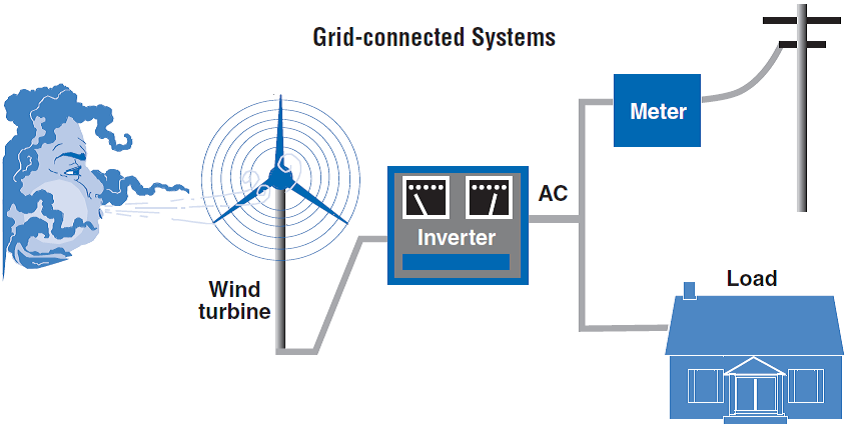
- Wiring from Turbine to Power Electronics: The DC power from the wind turbine (often 48V or higher) travels via appropriately sized electrical conduit and wiring to a dedicated junction box or directly to the charge controller/inverter at the base of the tower or inside a utility shed.
- Charge Controller (if applicable): If the turbine’s output needs regulation before the inverter, a charge controller manages this. Some modern grid-tie inverters have integrated MPPT (Maximum Power Point Tracking) controllers designed for wind, making a separate charge controller redundant.
- Grid-Tied Inverter: The inverter takes the DC power, converts it to AC, and meticulously matches its voltage and frequency to that of the utility grid (e.g., 240V AC, 60 Hz in the US). It also contains safety features like anti-islanding protection, which automatically shuts down the inverter if the grid goes down, preventing power from being fed into a dead grid line (a hazard for utility workers).
- Connecting the Inverter to Your Home’s Electrical Panel (Tie-in Point): The AC output from the inverter is then wired into your main electrical service panel (breaker box). This usually requires a dedicated circuit breaker. This is a critical step that must be performed by a licensed electrician to ensure safety, code compliance, and proper integration with your home’s existing wiring.
- Net Metering Explained: Once connected, your home draws power from the turbine first. If the turbine produces more than you’re using, the excess power is sent back to the grid, and your utility meter effectively spins backward (or records credits). When the turbine isn’t producing enough, you draw power from the grid as usual. This arrangement (Net Metering) is essential for making grid-tied wind economically viable.
Off-Grid Connection: Standalone Power Independence
For remote properties or those seeking complete independence, an off-grid system is the answer. It requires battery storage.
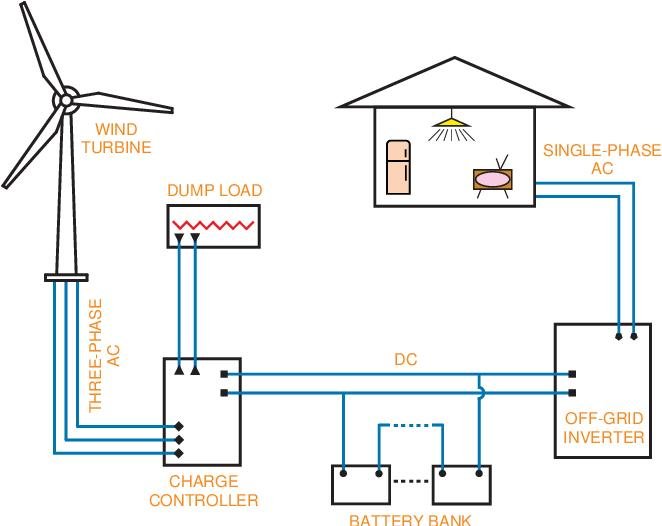
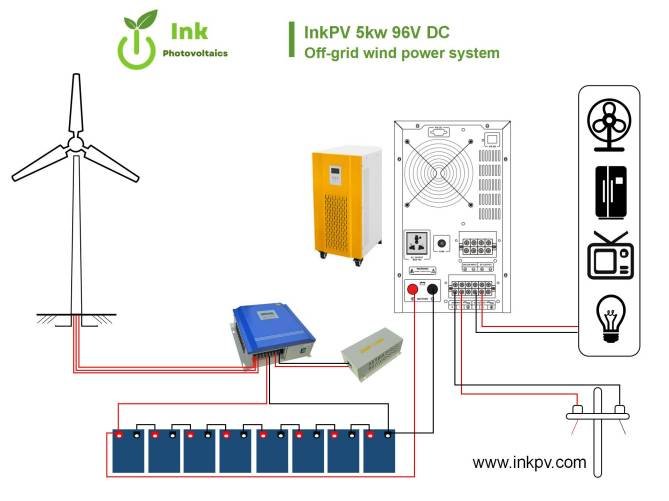
- Wiring to Charge Controller: DC power from the turbine runs to a wind-specific charge controller. This controller is vital for protecting your battery bank from overcharging and ensuring a stable charge. Many wind charge controllers also include a ‘diversion load’ feature, which redirects excess power (when batteries are full) to a heating element or other resistive load to dissipate energy safely.
- Connecting to Battery Bank: The charge controller’s output is wired directly to your battery bank. Battery banks are typically made up of multiple deep-cycle batteries (e.g., 12V, 24V, or 48V systems) connected in series or parallel to achieve the desired voltage and amp-hour capacity. This is where your energy storage lives.
- Off-Grid Inverter for AC Appliances: An off-grid inverter then draws DC power from the battery bank and converts it into usable AC power for your home’s appliances. These inverters are often robust and designed to handle surges.
- Connecting to Home’s Sub-Panel: The AC output from the off-grid inverter is connected to a dedicated sub-panel in your home, which then feeds your home’s circuits. Since you’re not connected to the grid, there’s no utility tie-in.
- Generator Backup Integration: Many off-grid systems include a backup generator (gas, propane, diesel). The generator can be wired into the system (often through the inverter or a dedicated transfer switch) to charge batteries or directly power the home during prolonged low-wind periods or high demand.
Hybrid Systems: Best of Both Worlds (Wind & Solar Integration)
Combining wind and solar offers exceptional reliability because they are often complementary: sunny days can be calm, and windy days can be cloudy. Integrating them requires careful planning, especially if you have an existing solar setup.
- Multiple Renewable Inputs: Both your wind turbine and solar panels will have their own charge controllers. For simple systems, these might feed into separate battery banks or combine their DC outputs into a common bus bar before going to a single, large battery bank.
- Hybrid Inverter: The most elegant solution is often a hybrid inverter. These advanced inverters are designed to handle multiple DC inputs (from wind charge controller and solar charge controller/MPPT), manage battery charging, provide AC power to the home, and intelligently interact with the utility grid (if grid-tied).
- Managing Multiple Renewable Sources: A key aspect is prioritizing power. The hybrid inverter system might be programmed to use wind power first, then solar, then batteries, and finally the grid (if tied). It can also export excess power to the grid when batteries are full.
- Specific Considerations for Existing Solar Setups:
- Shared Battery Bank: If you’re adding wind to an existing off-grid solar system, the wind turbine’s charge controller can often be wired to the same battery bank your solar inverter uses. Ensure your battery bank is adequately sized to handle the increased charging and discharging.
- Shared Hybrid Inverter: If you have a grid-tied solar system and want to add wind *and* batteries, you might need to upgrade to a hybrid inverter that can accommodate both renewable inputs and manage grid interaction/battery backup. This often means replacing your existing solar inverter or adding a second, specialized inverter for the wind component that can communicate with the solar inverter.
- Separate Systems: In some cases, especially if your existing solar is a simple grid-tied system without batteries, it might be simpler (though less integrated) to install the wind turbine as a completely separate grid-tied system with its own inverter, effectively having two independent renewable generation sources feeding your home.
Regardless of the system, all wiring must be installed according to the National Electrical Code (NEC) and local regulations. This includes proper wire sizing, conduit, overcurrent protection, and grounding.
Safety First: Essential Electrical and Structural Precautions
Working with high voltage, heavy machinery, and towering structures carries significant risks. Never cut corners on safety.
Professional Electrician Requirement
Unless you are a licensed and experienced electrician with specific knowledge of renewable energy systems, do not attempt the electrical connection yourself. A qualified professional will ensure your system is:
- Code Compliant: Meets all local and national electrical codes.
- Safe: Correctly wired, grounded, and protected against faults.
- Efficient: Optimized for performance and longevity.
- Approved: Passes inspection by local authorities and utility companies.
Grounding and Lightning Protection
A tall metal tower is a lightning rod. Proper grounding is non-negotiable. This involves driving grounding rods deep into the earth near the tower and connecting them to the tower structure and all electrical components. Additionally, surge protectors should be installed on critical electrical lines to protect your equipment from lightning strikes and grid surges.
Emergency Disconnects
Install clearly labeled emergency disconnect switches at the base of the tower and near the inverter/main electrical panel. These switches allow you to quickly and safely shut down the turbine’s power generation in an emergency, during severe storms, or for maintenance.
Costs, Incentives, and ROI: Making the Financial Case
Let’s talk money. A home wind turbine is a significant investment, but often with long-term returns.
Initial Investment: Turbine, Tower, Installation, Electrical
The total cost for a residential wind system can range from $10,000 to $70,000 or more, depending on turbine size, tower height, system complexity (grid-tied vs. off-grid with batteries), site preparation, and labor costs. Here’s a rough breakdown:
- Turbine & Tower: Often the largest component, ranging from $5,000 to $30,000+.
- Inverter & Electrical Components: $2,000 to $10,000, significantly more for battery banks in off-grid/hybrid systems.
- Installation (Foundation, Tower Erection, Wiring): Can be $5,000 to $20,000+, depending on site conditions and labor.
- Permits & Professional Assessments: $500 to $2,000+.
Maintenance Costs
Wind turbines are mechanical devices and require maintenance. Expect annual checks (lubrication, bolt tightening, electrical inspection) and occasional component replacements (blades, bearings, controller). Budget around 1-3% of the initial system cost per year for maintenance.
Government Incentives and Rebates
This is where you can significantly offset your costs:
- Federal Investment Tax Credit (ITC): As of late 2023, the federal government offers a 30% tax credit for residential wind energy systems. This is a direct reduction of your tax liability, not just a deduction. It’s a huge benefit!
- State & Local Incentives: Many states, counties, and even utility companies offer additional rebates, grants, or property tax exemptions for renewable energy installations. Check the DSIRE database (Database of State Incentives for Renewables & Efficiency) for specifics in your area.
Calculating Your Payback Period
Your return on investment (ROI) is determined by how much you save on electricity bills vs. your upfront and ongoing costs. With good wind resources and available incentives, payback periods can range from 8 to 20 years. This is a long-term investment that provides energy security and environmental benefits long after the financial payback.
Living with Wind Power: Maintenance and Troubleshooting
Once your turbine is up and running, it generally operates quietly in the background. But like any mechanical system, it needs a little love.
Routine Checks and Servicing
- Annual Visual Inspection: Look for loose bolts, frayed wires, blade damage, or corrosion.
- Component Lubrication: As per manufacturer guidelines.
- Battery Maintenance (Off-Grid/Hybrid): If you have lead-acid batteries, ensure proper watering and cleaning of terminals.
- Professional Inspection: Consider a professional inspection every 3-5 years, or if you notice any changes in performance or unusual noises.
Common Issues and Solutions
- Low Power Output: Could be insufficient wind, icing on blades, a component malfunction, or even a dirty turbine. Check wind conditions, inspect for physical obstructions.
- Unusual Noises: Often indicates a bearing issue or loose component. Requires immediate professional attention to prevent further damage.
- System Shutdowns: Modern inverters and controllers have diagnostic codes. Check the display for error messages and consult your manual. Could be a grid issue (for grid-tied), battery issue, or internal fault.
Your Sustainable Future Starts Now
Connecting a wind turbine to your house is a significant undertaking, but it’s an incredibly rewarding one. It’s a tangible step towards energy independence, lower bills, and a healthier planet. By understanding the critical factors, choosing the right system, and working with qualified professionals, you can confidently harness the power of the wind and integrate it seamlessly into your home’s energy profile. The future is windy, and it can start right in your backyard.
Frequently Asked Questions
Can I connect a wind turbine directly to my house’s electrical outlet?
No, absolutely not. Connecting a wind turbine directly to an outlet is extremely dangerous and can cause severe damage to your electrical system, pose a fire hazard, and even electrocute utility workers if you’re grid-tied. Wind turbines produce DC power that needs to be properly converted to AC power by an inverter and integrated into your home’s main electrical panel with appropriate safety devices and professional installation.
How much does it cost to connect a wind turbine to my house?
The total cost varies significantly based on turbine size, tower height, system complexity (grid-tied vs. off-grid with batteries), installation labor, and local permitting. Expect a range from $10,000 to $70,000 or more for a complete residential system. However, federal tax credits (like the 30% ITC) and state incentives can substantially reduce the net cost.
Do I need batteries if I connect my wind turbine to the grid?
Typically, a grid-tied wind system does not require batteries. Instead, it uses the utility grid as a ‘virtual battery’ through a process called net metering. When your turbine produces excess power, it’s sent to the grid, and you receive credits. When the turbine isn’t producing enough, you draw power from the grid. However, if you want backup power during grid outages, you’ll need a hybrid system that includes batteries.
Can I combine a wind turbine with my existing solar panel system?
Yes, absolutely! Combining wind and solar creates a highly reliable hybrid system. Wind and solar often complement each other, as windy days can be cloudy, and sunny days can be calm. Integration typically involves separate charge controllers for each source feeding into a shared battery bank or a specialized hybrid inverter that can manage both inputs and their interaction with your home and the grid.
What permits and approvals do I need to install a wind turbine?
You will almost certainly need building permits, electrical permits, and possibly zoning variances from your local municipality. Height restrictions, setback requirements, and noise ordinances are common concerns. It’s crucial to contact your local planning department and utility company early in the process to understand all requirements and ensure compliance.
How do I know if my property has enough wind for a turbine?
The most important factor is your average annual wind speed. You need at least 10-12 mph (4.5-5.4 m/s) to be economically viable. You can start with online wind maps (like those from the U.S. Department of Energy), but for an accurate assessment, consider hiring a professional to conduct a site-specific wind resource assessment using an anemometer on your property.
Is connecting a wind turbine a DIY project?
While some very small, low-voltage turbines might be partially DIY for experienced individuals, connecting a full-scale residential wind turbine to your house’s electrical system is definitely NOT a DIY project. It involves heavy equipment for tower erection, high-voltage electrical work, complex wiring, safety measures, and adherence to strict codes. Always hire licensed electricians and certified wind energy professionals for installation and connection.
