
Connecting a Wind Turbine to Your House: The Definitive Homeowner’s Guide
Dreaming of harnessing the wind to power your home? You’re not alone. The idea of reducing your carbon footprint, achieving energy independence, and cutting down on utility bills is incredibly appealing. But let’s be upfront: connecting a wind turbine to your house isn’t as simple as plugging in an appliance. It’s a significant project that requires careful planning, a solid understanding of electrical systems, and often, professional expertise.
Table of Contents
- Connecting a Wind Turbine to Your House: The Definitive Homeowner’s Guide
- Is Residential Wind Power Right for You? The Crucial First Steps
- Assessing Your Wind Resource: Don’t Guess, Measure!
- Zoning, Permitting, and HOAs: Navigating the Red Tape
- Grid-Tied vs. Off-Grid: Which System Fits Your Needs?
- Sizing Your System: What Capacity Do You Really Need?
- Choosing Your Turbine: Types and Considerations
- Horizontal Axis Wind Turbines (HAWTs)
- Vertical Axis Wind Turbines (VAWTs)
- Key Factors for Turbine Selection
- The Core Components: What You Need Beyond the Blades
- The Tower: Height, Stability, and Safety
- Charge Controller: Protecting Your System
- Inverter: Turning DC into AC for Your Home
- Battery Bank (for Off-Grid or Hybrid Systems): Storing Your Energy
- Electrical Disconnects & Circuit Breakers: Safety First!
- Step-by-Step: Connecting Your Wind Turbine to Your Home’s Electrical System (Professional Guidance is Key!)
- Step 1: Site Preparation & Foundation
- Step 2: Tower Assembly & Erection
- Step 3: Mounting the Turbine
- Step 4: Wiring the Turbine to the Charge Controller
- Step 5: Connecting the Charge Controller to the Battery Bank (If Applicable)
- Step 6: Integrating the Inverter
- Step 7: Interconnecting with the Grid (Grid-Tied Systems Only)
- Step 8: System Commissioning & Testing
- Costs, Incentives, and ROI: Making Financial Sense
- Upfront Costs: Breaking Down the Investment
- Government Incentives and Rebates
- Calculating Your Return on Investment (ROI)
- Maintenance, Safety, and Troubleshooting
- Routine Maintenance Tasks
- Essential Safety Precautions
- Common Issues and How to Address Them
- The Future of Home Wind Power: What’s Next?
This guide will walk you through everything you need to know, from assessing your property’s wind potential to understanding the complex electrical connections and navigating local regulations. We’ll cover the essential components, the installation process, costs, and what to expect, ensuring you’re well-equipped to make an informed decision.
Is Residential Wind Power Right for You? The Crucial First Steps
Before you even think about buying a turbine, you need to determine if your property is truly suitable for wind energy. This isn’t just about desire; it’s about practicality and physics.
Assessing Your Wind Resource: Don’t Guess, Measure!
A wind turbine is only as good as the wind it catches. Many homeowners underestimate this crucial factor. You need consistent, strong wind, not just occasional breezes.
- Local Wind Maps & Data: Start with publicly available data from government agencies or meteorological services. These can give you a general idea of average wind speeds in your area.
- On-Site Measurement: For a truly accurate assessment, consider installing an anemometer (a wind speed measuring device) on your property at the proposed turbine height for at least 6-12 months. This provides real-world data specific to your microclimate.
- Obstructions: Trees, buildings, hills – anything upwind can create turbulence and reduce the efficiency of your turbine. The general rule is that a turbine should be at least 30 feet higher than any obstacle within 300 feet.
Most small wind turbines need an average wind speed of at least 10-12 mph (4.5-5.5 m/s) to be economically viable. Anything less, and your turbine might not generate enough electricity to justify the investment.
Zoning, Permitting, and HOAs: Navigating the Red Tape
This is often the most overlooked and frustrating step. Wind turbines are subject to local ordinances that vary wildly from one town to the next.
- Zoning Laws: Check with your local planning or zoning department. They’ll have regulations regarding building height, setbacks (distance from property lines), noise levels, and sometimes even visual aesthetics.
- Permitting: You’ll almost certainly need a building permit and an electrical permit. The application process can be lengthy and require detailed plans.
- Homeowners’ Associations (HOAs): If you live in a community with an HOA, their covenants might restrict or prohibit wind turbines. Always check these rules first.
- Neighbor Concerns: Be prepared to address concerns from neighbors regarding noise, visual impact, and potential property value changes. Open communication can go a long way.
Don’t skip this step. Ignoring regulations can lead to costly fines, mandatory removal of your turbine, or legal battles.
Grid-Tied vs. Off-Grid: Which System Fits Your Needs?
How you connect your wind turbine depends on whether you want to remain connected to the utility grid or go completely independent.
| Feature | Grid-Tied System | Off-Grid System |
|---|---|---|
| Connection to Utility Grid | Yes, connected and synchronized. | No, entirely independent. |
| Energy Storage | Typically no batteries (net metering sends excess to grid). Some hybrid systems include batteries for backup. | Mandatory battery bank to store excess energy. |
| Backup Power | Grid acts as backup. If grid goes down, turbine often shuts off for safety unless special inverter with battery backup is used. | Batteries provide backup when wind is low. Generator often used as secondary backup. |
| Cost & Complexity | Lower initial cost (no large battery bank), but requires utility approvals and interconnection agreements. | Higher initial cost (large battery bank), but no utility fees or reliance. Requires careful sizing for energy autonomy. |
| Ideal For | Homeowners wanting to reduce bills and carbon footprint, with reliable grid access. | Remote properties, those seeking complete energy independence, or areas with unreliable grid. |
Sizing Your System: What Capacity Do You Really Need?
The size of your wind turbine (measured in kilowatts, kW) directly relates to how much power it can generate and how much of your home’s electricity needs it can meet.
- Calculate Your Energy Needs: Look at past utility bills to find your average monthly kilowatt-hour (kWh) consumption. A typical U.S. home uses about 900 kWh per month.
- Turbine Output: Wind turbine manufacturers provide estimated annual energy output (kWh/year) based on average wind speeds. This will help you match a turbine to your specific usage.
- Consider Supplementing: For most residential applications, a small wind turbine might supplement your energy needs, not entirely replace them, especially in grid-tied systems. Going 100% off-grid requires a much larger, more expensive system and often a hybrid setup (wind + solar).
Choosing Your Turbine: Types and Considerations
Small wind turbines primarily come in two flavors, each with its own advantages and disadvantages.
Horizontal Axis Wind Turbines (HAWTs)
These are what most people visualize: the classic propeller-style turbines, typically with 2 or 3 blades. They are the most common and efficient type for generating electricity from wind.
- Pros: Generally more efficient at converting wind into electricity, mature technology, proven track record.
- Cons: Require a yaw mechanism to turn into the wind, can be noisy, visually more prominent, higher tower height usually needed to avoid turbulence.
Vertical Axis Wind Turbines (VAWTs)
VAWTs have blades that rotate around a vertical axis. They often look like eggbeaters or have Savonius (S-shaped) rotors.
- Pros: Don’t need to orient into the wind, often quieter, can be mounted closer to the ground or on buildings (though building mounts are generally not recommended due to vibration), better in turbulent wind conditions.
- Cons: Generally less efficient than HAWTs for the same swept area, higher initial cost per watt, still relatively niche in residential applications.
Key Factors for Turbine Selection
Beyond the axis type, consider these technical specifications:
- Rated Power: The maximum power output (e.g., 1 kW, 5 kW) at a specific wind speed.
- Cut-in Speed: The minimum wind speed required for the turbine to start generating power. Lower is better.
- Rated Wind Speed: The wind speed at which the turbine reaches its maximum (rated) power output.
- Survival Speed: The maximum wind speed the turbine can withstand without damage. Crucial for areas with severe weather.
- Noise Output: Measured in decibels (dB), this can be a major factor for residential areas.
- Durability & Warranty: Look for reputable manufacturers with good warranties.
| Feature | HAWTs (Horizontal Axis) | VAWTs (Vertical Axis) |
|---|---|---|
| Efficiency | Generally higher, more energy capture. | Generally lower, less common for primary power. |
| Wind Direction | Must face into the wind (uses a yaw system). | Omnidirectional, no need to orient. |
| Noise | Can be louder, especially at higher speeds. | Typically quieter, less mechanical noise. |
| Mounting | Requires tall towers away from turbulence. | Can operate closer to ground, some building-mounted (with vibration concerns). |
| Aesthetics | Traditional ‘windmill’ look, can be imposing. | Often perceived as more modern or less intrusive. |
| Maintenance | Yaw mechanism, gearbox (if present), blades. | Bearings, fewer complex moving parts. |
The Core Components: What You Need Beyond the Blades
The turbine itself is just one piece of the puzzle. A complete wind energy system requires several other critical components to function safely and efficiently with your home’s electrical system.
The Tower: Height, Stability, and Safety
The tower elevates the turbine into clear, unobstructed wind. Its height and structural integrity are paramount.
- Guyed Towers: Less expensive, require a larger footprint for guy wires, and are often made to be tilted down for maintenance.
- Free-Standing (Self-Supporting) Towers: More expensive, require a robust foundation, but take up less ground space and generally look cleaner.
Tower installation is not a DIY job for most homeowners. It involves heavy lifting, specialized equipment (like cranes), and complex structural engineering to withstand high winds and vibrations. Professional installation is highly recommended.
Charge Controller: Protecting Your System
A charge controller is a vital safety and efficiency device. Wind turbines can generate variable voltage and current depending on wind speed.
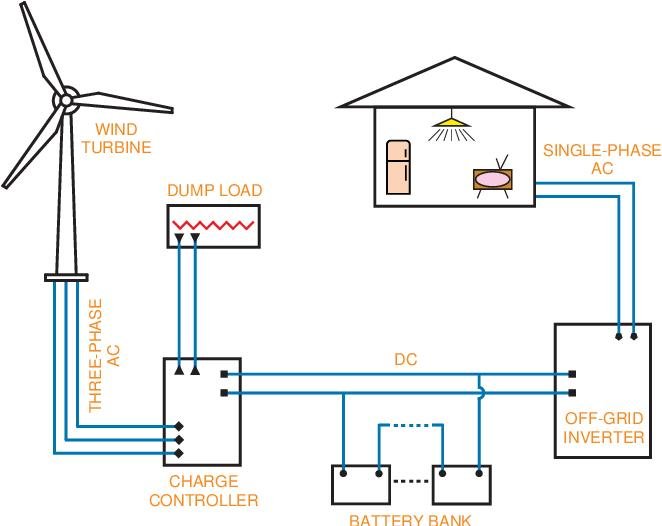
- Function: It regulates the power coming from the turbine to prevent overcharging of batteries (in off-grid/hybrid systems) and to ensure a stable output.
- Diversion Load: Many wind turbine charge controllers include a ‘diversion load’ feature, which routes excess power to a resistive heater when batteries are full or when the grid connection is lost (for grid-tied turbines without battery backup), preventing the turbine from overspeeding and self-destructing.
Inverter: Turning DC into AC for Your Home
Wind turbines typically produce Direct Current (DC) power. Your home, however, runs on Alternating Current (AC) power. An inverter converts the DC electricity from the turbine (or battery bank) into usable AC electricity.
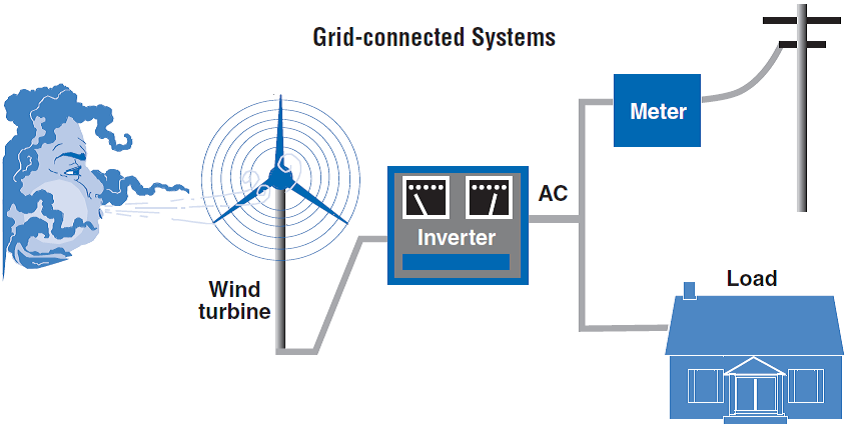
- Grid-Tied Inverters: Synchronize the turbine’s output with the utility grid’s frequency and voltage. They typically shut down if the grid goes down (anti-islanding feature) for safety.
- Off-Grid Inverters: Create an independent AC mini-grid for your home, drawing power from batteries. They are often more robust and can handle higher surge loads.
- Hybrid Inverters: Can manage power from multiple sources (wind, solar, batteries, grid) and provide backup power during outages.
Battery Bank (for Off-Grid or Hybrid Systems): Storing Your Energy
If you’re going off-grid or want backup power, you’ll need a battery bank to store the electricity generated by your turbine when the wind is blowing, so you have power when it’s calm.
- Types: Deep-cycle lead-acid (the most common and cost-effective), lithium-ion (more expensive but lighter, longer lasting, and more efficient), and others.
- Capacity: Sized based on your daily energy consumption and the desired ‘autonomy’ (how many days you can run on batteries without wind or a generator).
- Maintenance: Lead-acid batteries require regular maintenance (watering, checking specific gravity), while lithium-ion are largely maintenance-free.
Battery systems add significant cost and complexity, but they are essential for energy independence.
Electrical Disconnects & Circuit Breakers: Safety First!
Integrating a wind system into your home’s electrical panel requires multiple safety devices:
- AC Disconnect: A manual switch to completely cut off the AC power from the inverter to your home’s main electrical panel. Required for grid-tied systems by utility companies and electrical codes.
- DC Disconnect: A switch to isolate the DC power from the turbine to the charge controller/inverter.
- Circuit Breakers & Fuses: Overcurrent protection for all major circuits within the wind system, protecting components and preventing fires.
These components are critical for safe operation, maintenance, and emergency shutdown.
Step-by-Step: Connecting Your Wind Turbine to Your Home’s Electrical System (Professional Guidance is Key!)
This section outlines the general steps involved. However, it cannot be stressed enough: installing and connecting a wind turbine to your home’s electrical system involves high voltages and complex wiring. This is a job for licensed electricians and certified wind turbine installers. Attempting DIY electrical work without proper training can result in serious injury or death, and may void warranties or insurance policies.
Step 1: Site Preparation & Foundation
Once permits are secured, the physical work begins.
- Clear the Site: Ensure the area around the tower foundation is clear of debris, vegetation, and anything that could obstruct construction or maintenance.
- Digging the Foundation: A structural engineer will design the foundation based on soil type, tower size, and local wind loads. This typically involves digging a deep hole and pouring a substantial reinforced concrete pad.
- Conduit Installation: Before pouring concrete, underground conduit for electrical cables must be laid from the tower base to the location of the charge controller and inverter, typically near your main electrical panel.
Step 2: Tower Assembly & Erection
This is where specialized equipment becomes essential.
- Assembly: The tower sections are assembled on the ground according to manufacturer specifications.
- Erection: A crane is typically used to raise free-standing towers, or a gin pole system for tilt-up guyed towers. This is a hazardous operation requiring experienced professionals.
Step 3: Mounting the Turbine
With the tower safely erected, the turbine itself can be installed.
- Nacelle Installation: The main body of the turbine (nacelle), containing the generator and other mechanisms, is hoisted and bolted onto the top of the tower.
- Blade Assembly: The blades are then carefully attached to the nacelle’s hub. This entire process is done at height, requiring proper safety gear and training.
Step 4: Wiring the Turbine to the Charge Controller
The electrical journey begins here.
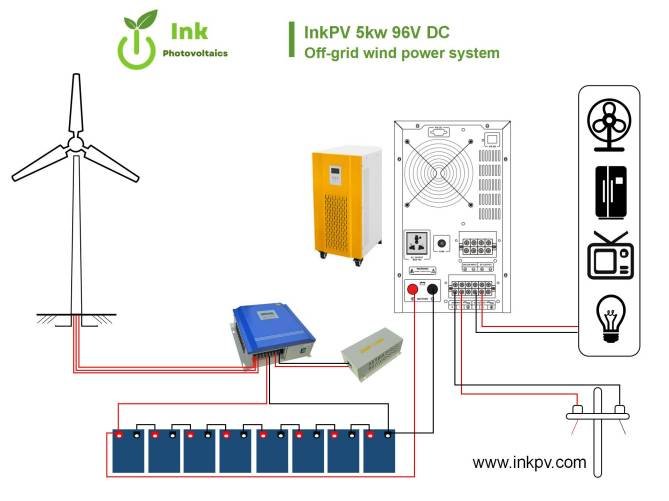
- DC Wiring: The DC output cables from the turbine run down the tower, through the underground conduit, and connect to the input terminals of the charge controller.
- Cable Sizing: Proper cable sizing is critical to minimize voltage drop and safely carry the current from the turbine. This is determined by the turbine’s output, cable length, and voltage.
- Conduit & Protection: All wiring must be run in appropriate conduit for protection against weather and physical damage.
Step 5: Connecting the Charge Controller to the Battery Bank (If Applicable)
For off-grid or hybrid systems, the charge controller regulates power to the batteries.
- Battery Bank Wiring: The output of the charge controller connects directly to your battery bank. Batteries are wired in series and/or parallel to achieve the desired voltage and capacity (e.g., 12V, 24V, 48V system).
- Fusing: In-line fuses or circuit breakers are installed on the positive battery cable closest to the battery bank to protect against short circuits.
Step 6: Integrating the Inverter
The inverter is the bridge between your DC power source and your home’s AC loads.
- Off-Grid/Hybrid: If you have a battery bank, the inverter draws DC power from the batteries and converts it to AC power for your home. It connects to a sub-panel or directly to specific loads.
- Grid-Tied (No Batteries): The turbine’s DC output goes directly to a grid-tie inverter (often via an optimizer or micro-inverter for smaller systems), which converts it to AC and sends it to your main electrical panel.
- Grounding: Proper grounding of the entire system (turbine, tower, charge controller, inverter, and electrical panels) is essential for safety and surge protection.
Step 7: Interconnecting with the Grid (Grid-Tied Systems Only)
This is where your professional electrician truly shines.
- Main Service Panel: The AC output from the inverter is connected to a dedicated circuit breaker in your home’s main electrical service panel.
- Net Metering: Your utility company will likely install a bidirectional meter (net meter) that measures both the electricity you draw from the grid and the excess electricity your turbine feeds back into it. This allows you to get credit for the power you generate.
- Utility Approval: The utility company must inspect and approve your system before you can legally connect and operate it. They ensure it meets their safety and interconnection standards.
Step 8: System Commissioning & Testing
Once all connections are made and approved, it’s time to bring the system online.
- Initial Checks: A certified installer will perform thorough voltage, current, and continuity checks on all wiring.
- Start-up Sequence: The system is powered up step-by-step, monitoring output and ensuring all components are functioning correctly.
- Monitoring: Many systems include monitoring software or displays that allow you to track power generation and system performance.
Costs, Incentives, and ROI: Making Financial Sense
A residential wind turbine is a significant investment, but various factors can make it more affordable.
Upfront Costs: Breaking Down the Investment
The cost varies greatly depending on turbine size, tower type, system complexity (grid-tied vs. off-grid), and installation labor rates.
- Turbine: A 1-5 kW turbine can range from $3,000 to $20,000+.
- Tower: $1,000 to $10,000+ depending on height and type.
- Balance of System (BOS): Inverter, charge controller, wiring, disconnects, foundation materials: $2,000 to $10,000+.
- Battery Bank (for Off-Grid): A substantial battery bank can easily add $5,000 to $20,000+.
- Installation Labor: Professional installation can add another $5,000 to $15,000+, depending on complexity and regional rates.
- Permitting & Engineering: Hundreds to thousands of dollars.
Total installed costs for a typical 1-5 kW residential system can range from $15,000 to $80,000 or more. Off-grid systems are typically at the higher end.
Government Incentives and Rebates
Don’t overlook financial assistance!
- Federal Tax Credit: The Investment Tax Credit (ITC) for renewable energy systems, including small wind turbines, can provide a significant percentage (e.g., 30%) of the system cost as a tax credit. This is a major financial benefit.
- State & Local Programs: Many states, counties, and even utility companies offer their own rebates, grants, or property tax exemptions for renewable energy installations. Check the Database of State Incentives for Renewables & Efficiency (DSIRE) for information specific to your area.
- Net Metering: While not a direct incentive, net metering allows you to essentially sell excess electricity back to the grid, reducing your bills and improving your ROI.
Calculating Your Return on Investment (ROI)
ROI for a wind turbine isn’t always purely financial; it includes energy independence and environmental benefits. However, a rough financial calculation involves:
- Annual Energy Savings: (Annual kWh produced * Cost per kWh from utility)
- Payback Period: (Total System Cost – Incentives) / Annual Energy Savings
Payback periods for small wind systems can vary widely, from 5-20 years, depending on wind resource, system cost, electricity rates, and incentives. Be realistic about your expectations.
Maintenance, Safety, and Troubleshooting
Like any mechanical system, a wind turbine requires regular attention to ensure long life and safe operation.
Routine Maintenance Tasks
- Annual Inspections: Visually inspect blades for cracks or damage, check tower guy wires (if applicable) for tension, look for loose bolts or connections.
- Lubrication: Some turbines require periodic lubrication of moving parts (e.g., yaw bearings, gearbox if present). Follow manufacturer guidelines.
- Cleaning: Keep the turbine blades clean from dirt, ice, or insect buildup to maintain efficiency.
- Electrical Checks: Have a qualified electrician check wiring, connections, and battery health (if applicable) every few years.
Essential Safety Precautions
- Lock-Out/Tag-Out: Always disconnect and lock out power to the turbine before performing any maintenance.
- Working at Height: Never attempt to climb a tower without proper safety equipment, training, and a spotter. Use professional tower climbers for any work at height.
- Electrical Safety: Treat all electrical components as live. Only qualified electricians should work on the wiring.
- Storm Preparation: Know how to shut down your turbine safely during severe weather if your system doesn’t have an automatic braking mechanism.
Common Issues and How to Address Them
- Low Power Output: Check for insufficient wind, dirty blades, turbine not facing wind (HAWTs), or component malfunction (charge controller, inverter).
- Excessive Noise or Vibration: Could indicate imbalanced blades, loose components, or bearing wear. Requires immediate inspection by a professional.
- Battery Issues (Off-Grid): Poor battery performance often points to improper charging, sulfation, or end-of-life batteries. Regular maintenance and monitoring are key.
- System Shutdowns: Inverters often shut down due to grid instability (grid-tied), over/under voltage, or fault conditions. Consult your inverter manual and an electrician.
The Future of Home Wind Power: What’s Next?
While solar energy has seen faster adoption in residential settings, wind technology continues to evolve. Advances in material science are leading to quieter, more efficient blades. Smart controls and hybrid systems (combining wind with solar and battery storage) are becoming more sophisticated, allowing homeowners to maximize renewable energy generation regardless of weather conditions. As microgrid technology develops, residential wind turbines will play an increasingly integrated role in sustainable home energy solutions.
Connecting a wind turbine to your house is a powerful statement about your commitment to sustainable living. While the path is paved with technical and regulatory hurdles, the rewards of cleaner energy, reduced bills, and greater energy independence can be immensely satisfying. Take your time, do your research, and always partner with qualified professionals to ensure a safe, efficient, and successful installation.
Frequently Asked Questions
Is it realistic to power my entire house with a small wind turbine?
For most typical U.S. homes, a small residential wind turbine (1-5 kW) is unlikely to power your entire house 100% of the time. It will significantly supplement your energy needs, reducing reliance on the grid and lowering bills. Achieving full energy independence usually requires a larger system, often combined with solar panels and a substantial battery bank to cover periods of low wind.
How much does it cost to connect a wind turbine to my house?
The total installed cost for a small residential wind turbine system can range from $15,000 to over $80,000. This includes the turbine, tower, foundation, balance of system components (inverter, charge controller, wiring), installation labor, and permitting. Off-grid systems with battery banks are typically more expensive.
Do I need a battery bank for my home wind turbine?
It depends on your system type. If you have a grid-tied system with net metering, you typically don’t need batteries, as the grid acts as your storage by taking excess power and providing power when your turbine isn’t generating enough. For off-grid systems or hybrid grid-tied systems that provide backup power during outages, a battery bank is essential to store generated electricity.
What kind of permits do I need to install a wind turbine?
You will almost certainly need local building permits and electrical permits. You’ll also need to check local zoning ordinances for height restrictions, setback requirements, and noise regulations. If you’re connecting to the grid, your utility company will require specific interconnection agreements and inspections. Always consult your local planning department and utility early in the process.
Can I install a wind turbine on my roof?
Generally, mounting a wind turbine directly on a residential roof is not recommended. Roof-mounted turbines can transmit significant vibrations and noise into the home. They also often suffer from turbulence caused by the roofline itself, severely reducing efficiency. Turbines perform best on tall, free-standing towers that elevate them into clear, unobstructed wind.
How long do residential wind turbines last and what maintenance do they require?
A well-maintained residential wind turbine can last 20-25 years or more. Maintenance typically involves annual visual inspections for blade damage and loose components, checking guy wire tension (for guyed towers), and periodic lubrication according to manufacturer specifications. Electrical components should be checked by a qualified electrician every few years. Always follow the manufacturer’s maintenance schedule.
Are there incentives for installing a home wind turbine?
Yes, many incentives exist. The U.S. federal government offers an Investment Tax Credit (ITC) for small wind energy systems, providing a significant tax credit. Many states, local governments, and even utility companies offer additional rebates, grants, or property tax incentives. Check resources like the Database of State Incentives for Renewables & Efficiency (DSIRE) for specific programs in your area.
