
Home Vertical Wind Turbine Kits: Your Realistic Guide to Sustainable Energy
Are you eyeing a vertical wind turbine for your home, hoping to tap into clean, renewable energy? Before you dive headfirst into the world of small-scale wind power, let’s get real. Vertical Axis Wind Turbines (VAWTs) come with a lot of promise – they’re often seen as the sleek, quiet cousin to the more traditional propeller-style turbines. But like any emerging technology for residential use, they also come with a fair bit of skepticism and a healthy dose of questions.
Table of Contents
- Home Vertical Wind Turbine Kits: Your Realistic Guide to Sustainable Energy
- What Exactly Are Home Vertical Wind Turbine Kits?
- Vertical vs. Horizontal: Understanding the Difference
- What’s Included in a Typical VAWT Kit?
- The Allure of Vertical Axis Wind Turbines (VAWTs) for Homes
- Key Benefits:
- Why They’re Different (and Potentially Better for Some Homes)
- The Hard Truth: Realistic Expectations and Limitations
- Power Output: Don’t Expect a Power Plant
- Cost vs. Output: The ROI Challenge
- Site Requirements: Wind Speed is King
- Zoning and Permits: Local Hurdles
- Is a Home VAWT Kit Right for YOU? (Crucial Site Assessment)
- Step 1: Evaluate Your Wind Resource
- Step 2: Space and Installation Considerations
- Step 3: Local Regulations and HOA Rules
- Types of Home Vertical Wind Turbine Kits: A Comparison
- Savonius vs. Darrieus (Brief Explanation)
- Power Output Ranges
- What to Look For When Buying a VAWT Kit
- Durability and Materials
- Controller and Inverter Quality
- Ease of Installation (DIY vs. Professional)
- Warranty and Support
- Integration with Solar and Battery Storage (Hybrid Systems)
- Installation & Maintenance: What You Need to Know
- DIY or Pro? Weighing Your Options
- Tower/Mounting Options (Roof vs. Pole)
- Essential Maintenance Tasks
- Costs, Savings, and Return on Investment (ROI)
- Initial Investment: Breaking Down the Price Tag
- Potential Savings: How Much Can You Really Offset?
- The Long-Term View: Is It Worth It?
- Incentives and Rebates
- Making the Decision: Is a VAWT Kit Your Path to Energy Independence?
- Weighing Pros and Cons for Your Specific Situation
- The Hybrid Advantage: Pairing Wind with Solar
Many homeowners dream of energy independence, and a VAWT kit can seem like an attractive piece of that puzzle. But how effective are they, really? What does a ‘kit’ even include? And can you realistically power your home with one? This guide cuts through the noise, separating hype from reality, to give you an unbiased, human-first look at home vertical wind turbine kits. Let’s find out if one is truly right for you.
What Exactly Are Home Vertical Wind Turbine Kits?
At its core, a home vertical wind turbine kit is a bundled solution designed to help homeowners generate their own electricity from the wind. Unlike the giant, three-bladed turbines you see on wind farms, these are much smaller, intended for residential properties. The ‘vertical’ part refers to the axis of rotation – the blades spin around a vertical shaft, which gives them a distinct look and some unique characteristics compared to their horizontal counterparts.
Vertical vs. Horizontal: Understanding the Difference
Think of it this way:
- Horizontal Axis Wind Turbines (HAWTs): These are the classic ‘windmills’ with propeller-like blades that face into the wind. They need to turn to face the wind, typically require higher wind speeds to start generating power, and are generally more efficient at scale.
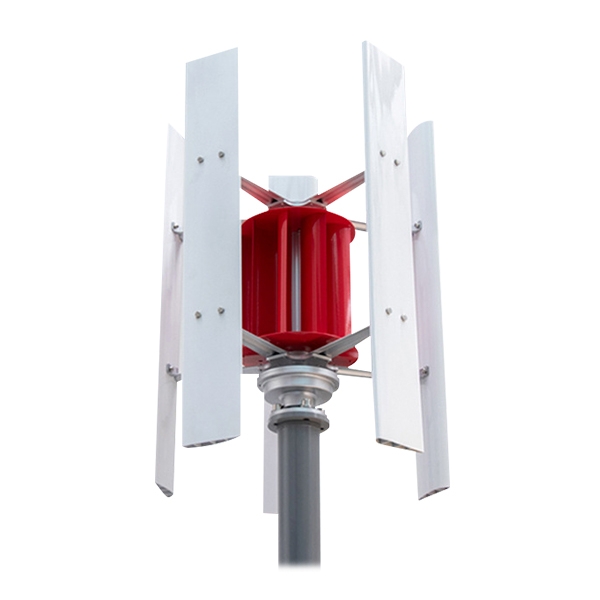
- Vertical Axis Wind Turbines (VAWTs): These have blades that rotate around a vertical shaft, often resembling an egg beater (Darrieus type) or a series of scoops (Savonius type). They don’t need to orient themselves to the wind, can start generating power at lower wind speeds, and tend to be quieter.
For home use, VAWTs often get attention because of their perceived aesthetic advantages and their ability to operate in more turbulent, less consistent wind conditions – something common in urban or suburban settings.
What’s Included in a Typical VAWT Kit?
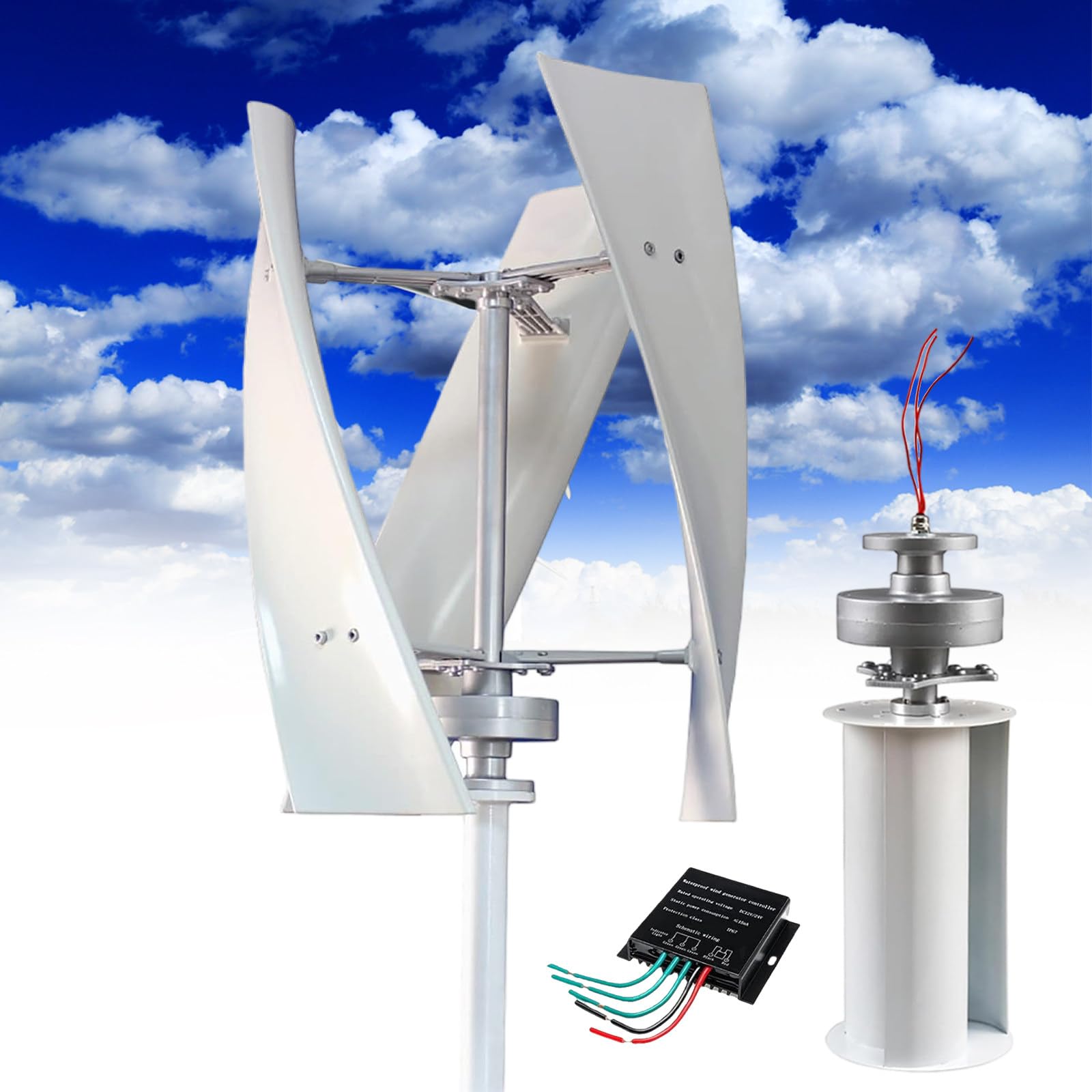
When you buy a ‘kit,’ you’re generally getting more than just the turbine itself. A comprehensive kit usually includes:
- The Vertical Wind Turbine: The heart of the system, with its blades and generator.
- Charge Controller: This device regulates the power coming from the turbine to prevent overcharging batteries and ensures a stable output.
- Inverter: If you plan to use the generated DC power for AC home appliances or connect to the grid, an inverter converts DC electricity to AC.
- Tower or Mounting Hardware: This could be a freestanding pole or hardware for roof mounting. Crucial for getting the turbine into sufficient airflow.
- Cables and Wiring: To connect all the components safely and efficiently.
- (Optional) Battery Bank: For off-grid systems or to store excess energy generated for later use.
The Allure of Vertical Axis Wind Turbines (VAWTs) for Homes
So, why are VAWTs gaining traction for residential applications? They offer several compelling advantages that make them a unique option for homeowners looking to embrace renewable energy.
Key Benefits:
- Quiet Operation: This is a big one for residential areas. VAWTs generally produce less noise than HAWTs, making them more neighbor-friendly. The main source of noise often comes from the generator or gearbox, rather than the blades slicing through the air.
- Better in Turbulent Winds (Urban/Suburban): HAWTs perform best in smooth, steady wind flow. VAWTs, however, are less sensitive to changes in wind direction and can handle the gusty, turbulent winds often found around buildings and trees in populated areas. They don’t need to pivot into the wind.
- Lower Start-Up Wind Speeds: Many VAWTs are designed to begin generating power at lower wind speeds than comparable HAWTs. This means more hours of generation throughout the day, even with lighter breezes.
- Aesthetics: While beauty is in the eye of the beholder, many find the sleek, often sculptural design of VAWTs more visually appealing or less intrusive than traditional propeller turbines.
- Safer for Wildlife (Potentially): Due to their slower rotational speeds and different blade structure, VAWTs are often considered to pose less of a risk to birds and bats compared to fast-spinning HAWTs, though this is still an area of ongoing research.
- Easier Maintenance: Because the generator and gearbox are often located at ground level (for some designs), maintenance can be simpler and safer, without needing to climb a tall tower.
Why They’re Different (and Potentially Better for Some Homes)
The core difference lies in their operational flexibility. While HAWTs prioritize efficiency in ideal conditions, VAWTs offer resilience in less-than-ideal, real-world home environments. If you live in an area with variable wind patterns, or where noise and visual impact are major concerns, a VAWT might seem like a more viable option than a traditional turbine.
The Hard Truth: Realistic Expectations and Limitations
Okay, now for the honest conversation. While VAWTs have their advantages, it’s crucial to approach them with realistic expectations. This isn’t just about selling you a dream; it’s about giving you the full picture so you can make an informed decision.
Power Output: Don’t Expect a Power Plant
Let’s be blunt: a single small home VAWT kit is unlikely to power your entire house, especially if you have high energy demands. Many residential kits range from a few hundred watts to a few kilowatts (e.g., 400W to 5kW or 10kW for larger residential systems). A typical U.S. home uses around 800-1000 kWh per month. To generate that much from a 1kW turbine running 24/7 (which it won’t), you’d need roughly 30 days * 24 hours * 1kW = 720 kWh. Wind is intermittent, so continuous output is a myth. They are best viewed as a supplement to your grid power, or as part of a hybrid system.
Cost vs. Output: The ROI Challenge
The upfront cost of a home VAWT kit can range significantly, from a few hundred dollars for very small, experimental units to upwards of $10,000 – $20,000+ for a robust, grid-tied system (including installation). When you consider the relatively modest power output for most residential setups, the financial return on investment can be a long game. Unlike solar, which has seen significant price drops and widespread incentives, residential wind power‘s ROI often requires a very specific set of favorable conditions.
Site Requirements: Wind Speed is King
Even though VAWTs can operate in lower and more turbulent winds, they still need *enough* wind to be effective. The power generated by a wind turbine is proportional to the cube of the wind speed (P = ½ρAv³). This means if the wind speed doubles, the power output increases eightfold! If your average wind speed is consistently below 10-12 mph, a wind turbine, vertical or horizontal, will likely be a disappointing investment. Obstructions like trees and buildings can drastically reduce effective wind speed and create turbulence, which further impacts performance.
Zoning and Permits: Local Hurdles
Before you even think about buying, you MUST check local zoning laws, homeowner association (HOA) rules, and permitting requirements. Many municipalities have height restrictions, setback requirements, or outright bans on residential wind turbines. HOAs can be particularly strict about visible structures. Failing to do your homework here could lead to costly fines or the forced removal of your system.
Is a Home VAWT Kit Right for YOU? (Crucial Site Assessment)
Don’t fall for marketing hype. The most important step in considering a home VAWT kit is a thorough and honest assessment of your specific property and situation. Here’s how to approach it:
Step 1: Evaluate Your Wind Resource
This is the absolute cornerstone of any successful home wind energy project. Without sufficient wind, your turbine is just an expensive lawn ornament.
- Average Wind Speed: This isn’t just about ‘how windy it feels.’ You need data. Sites like the National Renewable Energy Laboratory (NREL) or local weather stations can provide generalized wind maps. For a more precise measurement, you might consider installing an anemometer (wind meter) on your property for several months. Aim for an average wind speed of at least 10-12 mph (4.5-5.5 m/s) at your proposed turbine height.
- Obstructions: Look around. Are there tall trees, other buildings, or geographical features (hills, valleys) that could block or disrupt wind flow? Turbines need to be installed significantly higher than any nearby obstructions – ideally 20-30 feet above anything within 300 feet. The higher, the better, for cleaner, stronger wind.
Step 2: Space and Installation Considerations
Even though VAWTs are compact, they still require space.
- Ground Mount: A pole-mounted turbine needs a stable foundation and clear access for installation and maintenance. Consider the footprint of guy wires if applicable.
- Roof Mount: While some small VAWTs can be roof-mounted, this comes with structural considerations, potential vibration issues, and often less optimal wind resources compared to a tall pole. Consult a structural engineer if considering this.
- Setbacks: Local regulations will dictate how far your turbine must be from property lines, other buildings, and power lines.
Step 3: Local Regulations and HOA Rules
We can’t stress this enough: check before you buy! Visit your local planning department and review your HOA bylaws. Understanding the legal landscape upfront can save you significant headaches and financial loss.
Types of Home Vertical Wind Turbine Kits: A Comparison
VAWTs aren’t a one-size-fits-all solution. They come in different designs, each with its own characteristics. The two most common types are Savonius and Darrieus, or hybrid combinations of both.
Savonius vs. Darrieus (Brief Explanation)
- Savonius Turbines: These typically have S-shaped blades or scoops that capture wind like a cup. They have high starting torque (meaning they spin up easily in low wind) but are generally less efficient at converting wind energy to electricity compared to Darrieus designs.
- Darrieus Turbines: These often have thin, airfoil blades (like airplane wings) that resemble an eggbeater or H-shape. They are more efficient than Savonius but usually require an external force to start spinning (though modern designs have overcome this with improved aerodynamics).
Power Output Ranges
Residential VAWT kits typically fall into these power categories:
- Small Scale (100W – 1kW): Often used for charging batteries in RVs, boats, or for small off-grid applications like lighting sheds. Don’t expect these to make a dent in your home’s main electricity bill.
- Mid-Scale (1kW – 5kW): These can significantly offset a portion of a home’s energy use, especially in conjunction with solar or grid-tied. They might power essential loads or reduce your reliance on the grid during windy periods.
- Larger Residential (5kW – 10kW+): These are serious investments, often suitable for larger homes with high energy demands and excellent wind resources, potentially aiming for significant energy independence or even net-metering.
Here’s a comparative look at what you might expect from different home VAWT kits:
| Power Output (Rated) | Estimated Kit Cost Range (USD) | Best Use Case | Key Considerations |
|---|---|---|---|
| 100W – 500W | $300 – $1,500 | Small battery charging (RV, shed, remote camera), experimental projects. | Minimal home impact, often DIY friendly, low power offset. |
| 1kW – 3kW | $2,000 – $8,000 | Partial home energy offset, supplementary to grid, off-grid cabins, hybrid systems. | Requires good wind resource, professional installation often recommended, can significantly reduce grid reliance. |
| 5kW – 10kW+ | $10,000 – $25,000+ | Significant home energy offset, grid-tie with potential for net-metering, energy independence for larger homes. | High investment, critical wind resource, professional installation and permitting essential, strong ROI potential in very windy areas. |
What to Look For When Buying a VAWT Kit
Once you’ve determined a VAWT might be viable for your property, it’s time to sift through the options. Not all kits are created equal.
Durability and Materials
Your turbine will be exposed to the elements 24/7. Look for robust construction:
- Blades: Fiberglass, carbon fiber, or high-grade aluminum are common. They should be resistant to UV, extreme temperatures, and fatigue.
- Housing: Corrosion-resistant materials are essential, especially if you live near the coast.
- Bearings: High-quality, sealed bearings ensure smooth, quiet operation and longevity.
Controller and Inverter Quality
These are the brains of your system. A good charge controller will protect your batteries and turbine, while a reliable inverter is critical for converting power safely and efficiently for home use or grid connection. Look for recognized brands and safety certifications.
Ease of Installation (DIY vs. Professional)
Some smaller kits are marketed as DIY-friendly, but always consider your skill level and safety. For larger systems, professional installation is almost always recommended to ensure proper setup, safety, and compliance with codes. A kit that offers clear instructions and good technical support is a plus.
Warranty and Support
A reputable manufacturer will stand behind their product. Look for a strong warranty on the turbine and its components. Good customer support is invaluable if you encounter issues down the line.
Integration with Solar and Battery Storage (Hybrid Systems)
For most homeowners, the most effective renewable energy strategy is a hybrid system. Pairing a VAWT with solar panels and a battery storage system creates a more resilient and consistent power supply. Wind power is often strongest when solar is weakest (at night, during cloudy weather, or in winter). Ask if the kit is designed to easily integrate into such a setup.
Installation & Maintenance: What You Need to Know
Getting your VAWT kit up and running and keeping it that way involves more than just plugging it in.
DIY or Pro? Weighing Your Options
While a small, low-power VAWT for a shed might be a DIY project for a handy homeowner, anything generating significant power for your home or connecting to your electrical system should ideally be installed by a qualified professional. This ensures:
- Safety: Working with heights, heavy equipment, and electricity carries risks.
- Efficiency: Proper siting and electrical connections optimize performance.
- Compliance: Ensures your system meets all local building codes and electrical standards.
- Warranty: Some warranties may be voided by improper self-installation.
Tower/Mounting Options (Roof vs. Pole)
The choice of mounting impacts performance and cost:
- Pole Mount: Generally preferred for better wind access, as you can elevate the turbine above obstructions. Requires a solid foundation and potentially guy wires.
- Roof Mount: More discreet but often suffers from turbulent wind near the roofline. Requires structural analysis to ensure your roof can support the weight and handle potential vibrations.
Essential Maintenance Tasks
VAWTs are generally low maintenance, but they’re not ‘install and forget’ systems. Expect to perform:
- Annual Visual Inspections: Check for loose bolts, damaged blades, worn cables, or corrosion.
- Lubrication: Some models may require periodic lubrication of bearings.
- Controller/Inverter Checks: Ensure all electrical components are functioning correctly and that connections are secure.
- Cleaning: Keep blades free of excessive dirt or debris, which can impact efficiency.
Costs, Savings, and Return on Investment (ROI)
Let’s talk money. This is often the deciding factor for many homeowners.
Initial Investment: Breaking Down the Price Tag
The total cost for a home VAWT kit can be broken down into:
- The Kit Itself: As discussed, ranges from hundreds to tens of thousands.
- Installation: If hiring professionals, this can add 20-50% to the equipment cost.
- Permits and Fees: Varies by location, but can include application fees, engineering reviews, and inspection costs.
- Foundation/Tower: Materials and labor for a robust mounting structure.
- Electrical Work: Connecting the system to your home’s electrical panel or battery bank.
Potential Savings: How Much Can You Really Offset?
Your savings will depend heavily on:
- Your Wind Resource: More wind = more generation = more savings.
- Electricity Rates: If you pay high rates per kWh, your savings will be more impactful.
- System Size and Efficiency: A larger, more efficient system will naturally generate more power.
- Grid-Tie vs. Off-Grid: Grid-tied systems can potentially sell excess power back to the utility (net metering), while off-grid systems reduce or eliminate utility bills entirely but require significant battery storage.
The Long-Term View: Is It Worth It?
For many, the ROI isn’t purely financial. It’s also about:
- Energy Independence: The satisfaction and security of generating your own power.
- Environmental Impact: Reducing your carbon footprint and contributing to clean energy.
- Property Value: While hard to quantify directly, renewable energy systems can add appeal to your home.
A purely financial payback period for a residential VAWT can be 10-20+ years, depending on all the factors above. Compare this to solar, which often has shorter payback periods due to more mature technology and widespread incentives.

Incentives and Rebates
Don’t forget to research federal, state, and local incentives. The federal Investment Tax Credit (ITC) often applies to small wind turbines, offering a percentage of the cost back as a tax credit. Many states and utilities also offer their own rebates or grant programs. These can significantly improve your ROI.
Making the Decision: Is a VAWT Kit Your Path to Energy Independence?
Choosing a home vertical wind turbine kit is a significant decision. It’s not a silver bullet for every home, but for the right property and the right expectations, it can be a valuable part of a sustainable energy future.
Weighing Pros and Cons for Your Specific Situation
Revisit your site assessment. Consider your budget, your desire for energy independence, and your local regulations. Be honest about your wind resource. If you have consistently strong, unobstructed wind, and you’re prepared for the investment, a VAWT could be a fantastic addition.
The Hybrid Advantage: Pairing Wind with Solar
For most homeowners seeking maximum energy resilience and offset, a hybrid wind-solar-battery system is often the sweet spot. Solar excels during sunny days, while wind can pick up at night or on cloudy, windy days. Combining them smooths out your energy generation profile, making you less reliant on any single source or the grid.
Ultimately, a home vertical wind turbine kit can empower you to take control of a portion of your energy needs. Just remember to temper enthusiasm with a healthy dose of realism, thorough research, and a commitment to understanding your unique environment.
Frequently Asked Questions
How much power can a home vertical wind turbine kit generate?
Home VAWT kits typically range from a few hundred watts (e.g., 100W-500W) for small charging needs to several kilowatts (e.g., 1kW-10kW) for significant home energy offset. The actual power generated depends heavily on your average wind speed, the turbine’s size and efficiency, and local site conditions. Most residential VAWTs are designed to supplement, rather than fully replace, grid power.
Are vertical wind turbines noisy?
Generally, vertical axis wind turbines (VAWTs) are considered quieter than traditional horizontal axis wind turbines (HAWTs). Their slower rotational speeds and blade designs often result in less aerodynamic noise. However, some mechanical noise from the generator or gearbox can still be present, especially in larger units. The level of noise is typically well within acceptable limits for residential areas.
How much do home vertical wind turbine kits cost?
The cost of a home VAWT kit varies widely. Small kits (100W-500W) might cost a few hundred to $1,500. Mid-range (1kW-3kW) kits can be $2,000-$8,000, while larger residential systems (5kW-10kW+) can range from $10,000 to over $25,000, not including installation. Professional installation, permits, and additional equipment like batteries can add significantly to the overall expense.
Can I install a vertical wind turbine myself?
Very small, low-power VAWT kits (e.g., for RVs or sheds) might be suitable for DIY installation by a homeowner with strong technical skills. However, for any system designed to integrate with your home’s electrical system or larger power generation, professional installation is strongly recommended. This ensures safety, compliance with electrical codes, optimal performance, and adherence to manufacturer warranties.
How long do vertical wind turbines last?
With proper installation and regular maintenance, a good quality home vertical wind turbine can last 15 to 25 years. Key factors influencing lifespan include the quality of components (blades, bearings, generator, controller), exposure to harsh weather conditions, and adherence to maintenance schedules. Warranties often cover components for 5-10 years.
Do I need a battery bank with a VAWT kit?
Whether you need a battery bank depends on your system’s design. If you’re building an off-grid system, a battery bank is essential to store generated power for use when the wind isn’t blowing. For grid-tied systems (where excess power is sent to the utility), a battery bank is optional but can provide backup power during outages and enhance energy independence by storing energy for personal use during peak demand.
