
Installing a Wind Turbine at Home: Your Definitive Guide to DIY Power
Dreaming of ditching the utility bill and harnessing the wind to power your home? You’re not alone. The allure of energy independence and a greener footprint makes residential wind turbines incredibly appealing. But here’s the tough truth: installing a wind turbine at home isn’t quite as straightforward as putting up a new shed. It’s a significant investment, a complex project, and it demands careful consideration of your specific location, local regulations, and energy needs.
Table of Contents
- Installing a Wind Turbine at Home: Your Definitive Guide to DIY Power
- Is a Home Wind Turbine Right for You? The Honest Assessment
- Understanding Your Wind Resource: The Crucial First Step
- Pros and Cons of Residential Wind Power
- Wind vs. Solar: Which Renewable is Best for Your Home?
- Pre-Installation Checklist: Laying the Groundwork for Success
- Navigating Zoning Laws and Permitting
- Sizing Your Turbine: How Much Power Do You Really Need?
- Choosing the Right Turbine Type
- Budgeting for Your Home Wind System: Costs and Incentives
- The Installation Journey: Step-by-Step Guide
- Step 1: Site Preparation and Foundation
- Step 2: Tower Assembly and Erection
- Step 3: Mounting the Turbine
- Step 4: Electrical Wiring and Components
- Step 5: System Testing and Commissioning
- Step 6: Grid Interconnection (If Applicable)
- Living with Your Home Wind Turbine: Maintenance and Safety
- Routine Maintenance
- Safety Considerations
- The Future of Home Wind Power: Is It Worth the Effort?
This isn’t just a DIY guide; it’s a realistic roadmap. We’re going to dive deep, from assessing if a wind turbine is even viable for your property, through the nitty-gritty of permits and costs, all the way to the actual installation steps and what to expect post-setup. If you’re serious about capturing the wind, this is where you start.
Is a Home Wind Turbine Right for You? The Honest Assessment
Before you even think about buying a wrench, you need to ask yourself if your home is a good candidate for wind power. This isn’t just about enthusiasm; it’s about physics, economics, and practicality.
Understanding Your Wind Resource: The Crucial First Step
Wind turbines need one thing above all else: wind. Consistent, strong, unobstructed wind. Without it, your investment will be little more than an expensive lawn ornament.
- Unobstructed Airflow: Think about your property. Are there tall trees, other buildings, hills, or dense urban structures nearby? Any obstruction within several hundred feet can create turbulence and reduce the wind’s effective power, significantly hindering your turbine’s performance. The general rule is to place the turbine’s rotor at least 30 feet higher than any obstacle within a 500-foot radius.
- Average Wind Speed: This is perhaps the most critical factor. Small wind turbines typically need an average annual wind speed of at least 9-10 mph (4.0-4.5 meters per second) to be economically viable. Less than that, and you’re likely not generating enough power to justify the cost.
- How to Assess: While online wind maps can give you a general idea, they’re often based on regional data and don’t account for your specific microclimate. For a truly accurate assessment, consider hiring a professional to conduct a site-specific wind resource assessment using an anemometer. This will measure actual wind speeds and patterns at the proposed turbine height over several months.
Don’t skip this step. An accurate wind assessment can save you tens of thousands of dollars and countless headaches.
Pros and Cons of Residential Wind Power
Like any energy solution, home wind turbines come with their own set of advantages and disadvantages. Let’s break them down:
| Advantages of Home Wind Turbines | Disadvantages of Home Wind Turbines |
|---|---|
| Reduced or Eliminated Electricity Bills: Generate your own power and significantly cut or even zero out your monthly energy costs. | High Upfront Cost: Initial investment can range from $10,000 to $70,000+, making it a substantial financial commitment. |
| Energy Independence: Less reliance on the grid, providing security during outages. | Intermittency of Wind: Power generation is entirely dependent on wind availability, which can fluctuate daily and seasonally. |
| Environmental Benefits: Produces clean, renewable energy with no greenhouse gas emissions during operation. | Noise Concerns: Turbines can generate some noise, which may be a nuisance to neighbors or residents, especially for larger models. |
| Potential for Selling Excess Power: With grid-tied systems and net metering, you can sell surplus electricity back to the grid. | Visual Impact: Towers and blades can be visually intrusive, leading to aesthetic objections in some communities. |
| Long Lifespan: Well-maintained systems can last 20-25 years or more. | Complex Permitting & Zoning: Strict local regulations often require extensive permits, approvals, and may have height/setback restrictions. |
| Complements Other Renewables: Can effectively pair with solar panels for a more consistent energy supply (wind often blows when the sun isn’t shining). | Maintenance Requirements: Requires periodic inspection, lubrication, and potential repairs, often needing specialized equipment. |
Wind vs. Solar: Which Renewable is Best for Your Home?
It’s natural to compare wind to solar, especially since both aim for renewable home energy. They often get pitted against each other, but the truth is, they’re often complementary. However, for most residential situations, one might be a clearer winner.
| Feature | Home Wind Turbine | Residential Solar Panels |
|---|---|---|
| Resource Dependence | Consistent, unobstructed wind (min. 9-10 mph annual average). | Ample sunlight, clear roof space (southern exposure ideal). |
| Space Requirements | Significant land area for tower, guy wires, and setback requirements. | Roof space or ground mount (typically less overall footprint than wind). |
| Cost (per kW) | Generally higher upfront cost per kilowatt installed ($4,000-$8,000+). | Generally lower upfront cost per kilowatt installed ($2,500-$4,000+). |
| Installation Complexity | Higher complexity, involves heavy equipment (cranes), deep foundations, tall structures. | Moderate complexity, typically roof work or ground mounting, less heavy equipment. |
| Permitting Challenges | Often more challenging due to height, noise, and visual impact restrictions. | Generally simpler, though structural and electrical permits are required. |
| Best Application | Rural properties with strong, consistent wind and ample land. | Most residential properties with good sun exposure, urban or rural. |
For most homeowners, solar panels represent a more accessible and often more cost-effective entry into renewable energy due to lower installation costs, fewer permitting hurdles, and broader applicability. Wind turbines typically make sense for those with specific, ideal wind resources and enough land to accommodate the tower and necessary setbacks.
Pre-Installation Checklist: Laying the Groundwork for Success
If you’ve determined your site has the wind potential, congratulations! Now, let’s get into the crucial planning stages that will make or break your project.
Navigating Zoning Laws and Permitting
This is where many DIY dreams hit a wall. Local regulations can be incredibly strict. Do not start digging or ordering equipment until you have all necessary approvals.
- Local Ordinances: Contact your county or municipal planning department. Ask about specific ordinances regarding small wind energy systems. Key areas to inquire about include: zoning restrictions, height limitations (turbines often require variances), setback requirements (distance from property lines and structures), noise limits, and visual impact assessments.
- Building Permits: You’ll almost certainly need a building permit for the tower foundation and structure, and electrical permits for all wiring and grid interconnection.
- Interconnection Agreements: If you plan to connect your turbine to the grid (grid-tied), you’ll need an agreement with your utility company. They’ll have specific requirements for safety, power quality, and net metering.
- Professional Assistance: Given the complexity, consider hiring a local expert or a specialized renewable energy consultant to help navigate the permitting process. It can save you immense time and frustration.
Sizing Your Turbine: How Much Power Do You Really Need?
The size of your turbine (its rated power output in kilowatts, kW) depends directly on your electricity consumption. Oversize it, and you’ve spent too much. Undersize it, and you won’t meet your goals.
- Calculate Your Energy Consumption: Look at your past utility bills. Determine your average monthly and annual kilowatt-hour (kWh) usage. Most homes in the US use between 800-1,200 kWh per month.
- Consider Your Goals: Do you want to offset 100% of your usage, or just a portion? Do you plan to add electric vehicles or other high-demand appliances?
- Turbine Capacity vs. Actual Output: A turbine’s rated power (e.g., 5 kW) is its maximum output in ideal wind conditions. Its actual annual energy production (in kWh) will be lower due to fluctuating wind speeds. Manufacturers provide power curves and estimated annual kWh outputs based on different average wind speeds. Match these estimates to your energy needs.
- Grid-Tied vs. Off-Grid: For grid-tied systems, you might only need to offset a portion of your usage, relying on the grid for the rest. For off-grid, you’ll need enough generation to cover 100% of your usage, plus storage (batteries), and often a backup generator.
Choosing the Right Turbine Type
Small wind turbines primarily come in two flavors:
- Horizontal Axis Wind Turbines (HAWTs): These are what most people visualize – propeller-like blades rotating around a horizontal axis. They are generally more efficient at capturing wind energy but require proper orientation into the wind.
- Vertical Axis Wind Turbines (VAWTs): These have blades that rotate around a vertical axis. They are less common for residential use but have the advantage of being omni-directional (don’t need to point into the wind) and can be less noisy. However, they are typically less efficient than HAWTs for the same rotor area.
| Feature | Horizontal Axis Wind Turbines (HAWTs) | Vertical Axis Wind Turbines (VAWTs) |
|---|---|---|
| Appearance | Classic ‘propeller’ look, 2 or 3 blades. | Egg-beater (Darrieus) or S-shaped (Savonius) designs. |
| Efficiency | Generally higher aerodynamic efficiency, better power output for given size. | Lower efficiency compared to HAWTs of similar swept area. |
| Wind Direction | Must face into the wind (requires a yaw mechanism). | Omni-directional, works regardless of wind direction. |
| Noise | Can be louder due to blade tip speed and gearbox. | Generally quieter due to lower rotational speeds. |
| Installation | Turbine components are high on the tower, requires lifting gear. | Generator can be at ground level, simplifying maintenance. |
| Turbulence Tolerance | More sensitive to turbulent wind, requires higher mounting. | Better performance in turbulent, gusty conditions (e.g., urban environments). |
Budgeting for Your Home Wind System: Costs and Incentives
The cost of a residential wind turbine system can vary wildly based on size, turbine type, tower height, installation complexity, and whether it’s grid-tied or off-grid with batteries.
| Component/Service | Estimated Cost Range (Residential, 1-10 kW) |
|---|---|
| Turbine (bare unit) | $5,000 – $30,000 |
| Tower (80-120 ft) | $3,000 – $15,000 |
| Inverter/Charge Controller | $1,000 – $5,000 |
| Battery Bank (for off-grid/hybrid) | $5,000 – $20,000+ |
| Foundation Materials & Labor | $2,000 – $10,000 |
| Wiring, Conduits, Electrical Panels | $1,500 – $7,000 |
| Permits, Engineering, Site Assessment | $500 – $5,000+ |
| Crane Rental & Professional Install Labor | $3,000 – $15,000+ |
| TOTAL ESTIMATED SYSTEM COST (fully installed) | $20,000 – $70,000+ |
These are rough estimates; your actual costs will vary. Many states and the federal government offer incentives, such as tax credits (like the Investment Tax Credit), grants, or rebates for renewable energy installations. Research these programs thoroughly, as they can significantly reduce your net cost.
The Installation Journey: Step-by-Step Guide
Once you’ve done your homework, secured permits, and purchased your system, it’s time for the physical work. This is a large-scale construction project, not a weekend DIY. While we’ll outline the steps, professional help is highly recommended, especially for tower erection and electrical work.
Step 1: Site Preparation and Foundation
The foundation is literally the anchor of your entire system. It must be robust enough to withstand high winds and the dynamic forces of the turbine.
- Clear the Area: Ensure the chosen site is clear of all obstructions, debris, and underground utilities. Mark the exact spot for the tower.
- Excavation: Dig a hole to the engineered specifications for your tower type. This could be a substantial excavation, often 8-10 feet in diameter and several feet deep, depending on soil conditions and tower size.
- Rebar and Formwork: Install a cage of steel rebar according to structural engineering plans. Build formwork to shape the concrete pour.
- Anchor Bolts: Precisely set the anchor bolts for the tower base into the rebar cage before the concrete pour. These must be perfectly aligned and plumb.
- Concrete Pour: Pour high-strength concrete into the excavation, ensuring it’s properly vibrated to eliminate air pockets. Allow adequate time for curing (often several weeks) before proceeding.
Step 2: Tower Assembly and Erection
The tower gets the turbine into optimal wind, away from ground-level turbulence. There are different tower types:

- Guyed Towers: Less expensive but require a larger footprint for guy wire anchors.
- Freestanding (Self-Supporting) Towers: More expensive, but need less land.
- Tilt-Up Towers: Designed to be lowered for maintenance, simplifying service but requiring specialized winches or hydraulic systems.
Assembly involves bolting together sections of the tower, often on the ground. Erection is the most dangerous and complex part of the installation. For anything but the smallest microturbines, a professional crew with a crane is essential. Trying to hoist a tall, heavy tower yourself is extremely hazardous.
Step 3: Mounting the Turbine
Once the tower is securely in place and cured, the turbine components can be attached:
- Nacelle: This is the housing for the generator, gearbox (if any), and yaw mechanism. It’s lifted and bolted to the top of the tower.
- Blades: The blades are typically attached to the nacelle’s hub once it’s atop the tower, or sometimes pre-assembled on the ground and lifted as a single unit (depending on turbine size).
- Tail Vane (for HAWTs): If applicable, the tail vane helps orient the turbine into the wind.
- Wiring: The power cables from the turbine’s generator are run down through the tower’s interior.
Again, a crane and experienced personnel are crucial for this phase, ensuring components are safely lifted and secured at height.
Step 4: Electrical Wiring and Components
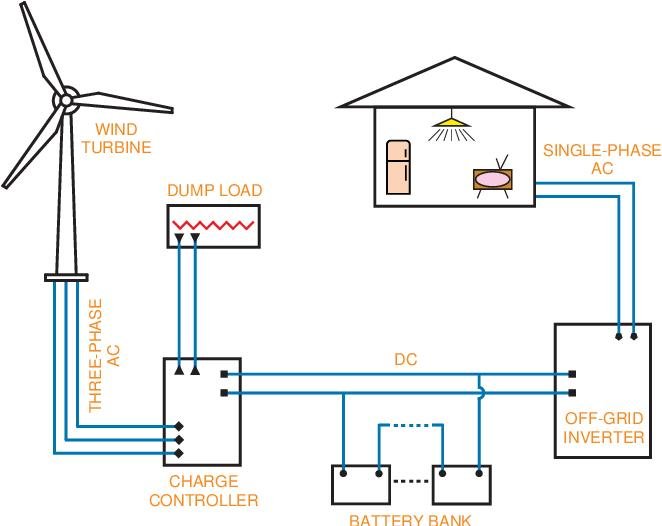
This is where your wind power gets converted into usable electricity for your home. All electrical work must be performed by a licensed electrician to ensure safety, compliance with electrical codes, and proper functioning.
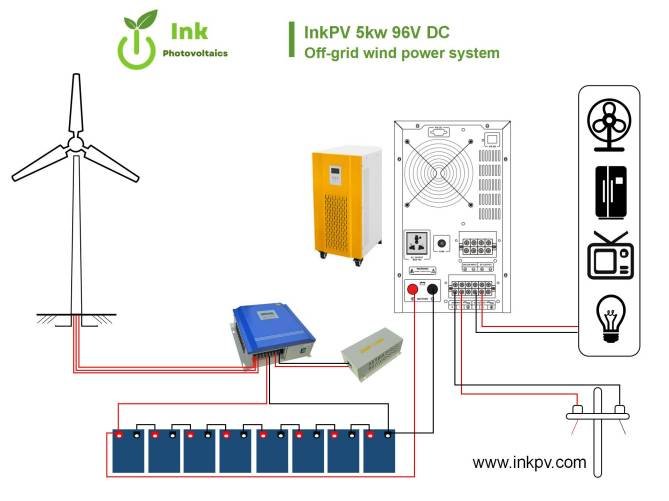
- Wiring from Turbine: The DC power generated by the turbine travels down the tower to a charge controller (for battery systems) or directly to an inverter (for grid-tied systems).
- Charge Controller (Off-Grid/Hybrid): Regulates the power flowing to your battery bank, preventing overcharging.
- Inverter: Converts the DC power from the turbine (or batteries) into AC power, which is what your home appliances use. For grid-tied systems, it also synchronizes with the utility grid’s frequency and voltage.
- Battery Bank (Off-Grid/Hybrid): Stores excess energy for use when the wind isn’t blowing. This is a significant additional cost and maintenance item.
- Circuit Breaker Panel: For grid-tied systems, the inverter connects to your home’s main electrical panel, typically through a dedicated circuit breaker.
- Grounding: Proper grounding of the entire system (tower, turbine, electrical components) is absolutely essential for safety and lightning protection.
Step 5: System Testing and Commissioning
Once everything is physically installed and wired, the system undergoes testing.
- Initial Checks: Verify all connections, ensure safety mechanisms are in place, and perform continuity tests.
- Start-Up Sequence: Follow the manufacturer’s instructions for the initial start-up. Monitor voltage, current, and power output.
- Performance Monitoring: Install a monitoring system to track your turbine’s performance, kWh generation, and system health over time. This helps ensure it’s operating as expected.
Step 6: Grid Interconnection (If Applicable)
For grid-tied systems, the final step is getting permission from your utility company to energize and connect to their grid. This usually involves:
- Utility Inspection: The utility company will send an inspector to verify that your system meets their safety and technical requirements.
- Final Electrical Inspection: Local electrical inspectors will also sign off on the installation.
- Net Metering: Once approved, your utility will typically install a bi-directional meter that tracks both the electricity you consume from the grid and the excess electricity your turbine feeds back into it.
Living with Your Home Wind Turbine: Maintenance and Safety
An installed turbine isn’t a ‘set it and forget it’ system. Like any complex machinery, it requires ongoing care.
Routine Maintenance
Regular maintenance ensures longevity and optimal performance.
- Annual Inspections: Visually inspect blades for cracks or damage, check tower guy wires for tension (if applicable), and look for loose bolts or corrosion.
- Lubrication: Some turbines require periodic lubrication of bearings or gearboxes according to manufacturer guidelines.
- Electrical Checks: Have a licensed electrician check wiring, connections, and grounding points every few years.
- Storm Preparation: Know how to safely shut down and secure your turbine in anticipation of severe weather.
Safety Considerations
Safety should always be paramount when dealing with tall structures and high voltage.
- Moving Parts: Never approach an operating turbine. Keep children and pets away from the base of the tower.
- Electrical Hazards: Only qualified electricians should work on the electrical components of the system.
- Tower Stability: Ensure the tower is regularly inspected for structural integrity.
- Professional Servicing: For any major repairs or complex maintenance at height, always hire certified professionals. Don’t attempt to climb the tower yourself without proper training, equipment, and safety protocols.
The Future of Home Wind Power: Is It Worth the Effort?
Installing a home wind turbine is undeniably a challenging and significant undertaking. It’s not a decision to be made lightly, and it’s certainly not the right fit for every home. However, for those with the ideal wind resource, the necessary space, the financial capacity, and a deep commitment to energy independence, it can be an incredibly rewarding investment.
The key takeaway is diligent preparation. Thoroughly assess your wind resource, understand the complex permitting landscape, accurately calculate your energy needs, and budget realistically. Don’t be afraid to consult with multiple experts – from wind assessors to structural engineers and licensed electricians. Their insights are invaluable in turning your dream of home wind power into a safe, efficient, and sustainable reality.
Frequently Asked Questions
How much does it cost to install a home wind turbine?
The total installed cost for a residential wind turbine system (1-10 kW) can range from $20,000 to $70,000 or more. This includes the turbine itself, tower, inverter, potentially batteries, foundation work, electrical wiring, permits, and professional installation labor including crane rental.
Is a home wind turbine a good investment compared to solar panels?
For most residential properties, solar panels are generally a more cost-effective and simpler investment due to lower upfront costs, easier permitting, and broader applicability. Home wind turbines require specific, strong, and consistent wind resources, significant land for the tower and setbacks, and a larger initial investment to be truly economically viable. However, in ideal locations, they can be highly effective, especially when paired with solar.
What is the minimum wind speed required for a residential wind turbine?
To be economically viable, a small residential wind turbine typically requires an average annual wind speed of at least 9-10 mph (4.0-4.5 meters per second) at the proposed turbine height. Below this, the energy production might not justify the high installation cost.
Do I need permits to install a wind turbine at my home?
Yes, absolutely. You will almost certainly need various permits, including building permits for the tower foundation and structure, electrical permits, and often zoning variances due to height, noise, and setback requirements. If grid-tied, an interconnection agreement with your utility is also mandatory. It’s crucial to research and secure all necessary approvals before starting any work.
Can I install a wind turbine myself, or do I need professional help?
While some very small microturbines might be DIY-friendly, for most residential systems (1 kW or larger), professional assistance is highly recommended, and often mandatory for certain phases. Key areas requiring professionals include: site assessment, structural engineering for the foundation, crane operation for tower erection, and all electrical wiring and grid interconnection, which must be done by a licensed electrician.
What are the main differences between Horizontal Axis (HAWT) and Vertical Axis (VAWT) wind turbines?
HAWTs (propeller-style) are generally more efficient, require a yaw mechanism to face the wind, and are better suited for open, consistent wind. VAWTs (egg-beater or S-shaped) are omni-directional, often quieter, and can perform better in turbulent wind conditions, but are typically less efficient for a given swept area compared to HAWTs. HAWTs are more common for residential power generation.
