
How Much Energy Does a Wind Turbine Really Produce? Your Definitive Guide
Ever looked at those towering wind turbines spinning gracefully on the horizon and wondered, “Just how much electricity do they *actually make?” You’re not alone. It’s a question at the heart of understanding renewable energy and its potential to power our lives. The short answer? A surprising amount – enough to energize thousands of homes from a single utility-scale turbine. But the real story is far more nuanced, involving everything from the turbine’s size and location to the very air it spins through.
Table of Contents
- How Much Energy Does a Wind Turbine Really Produce? Your Definitive Guide
- Understanding Wind Turbine Power: Capacity vs. Actual Output
- Megawatts (MW) vs. Kilowatt-Hours (kWh): What’s the Difference?
- The Critical Role of Capacity Factor
- So, How Much Energy Does an Average Wind Turbine Generate?
- Factors That Dictate a Wind Turbine’s Energy Production
- Turbine Size and Design (Rotor Diameter, Hub Height)
- Wind Speed and Consistency: Location, Location, Location
- Onshore vs. Offshore Wind: A Clear Power Advantage
- Technological Advancements and Maintenance
- Delving Deeper: Energy Output by Turbine Scale
- Utility-Scale Wind Turbines: Powering Communities
- Commercial/Community Wind Turbines: Local Powerhouses
- Small & Residential Wind Turbines: Personal Power (and Reality Check)
- The Bigger Picture: Wind Energy’s Contribution to the Grid
- The Future is Windy: Innovations in Wind Energy Production
- Is Wind Energy Right for You or Your Community?
Let’s cut through the jargon and get to the core of wind power generation. We’ll explore the factors that supercharge (or limit) a turbine’s output, break down the numbers for different scales, and look at what this clean energy source means for your home and the planet.
Understanding Wind Turbine Power: Capacity vs. Actual Output
Before we dive into the big numbers, it’s crucial to grasp a couple of fundamental concepts. Turbines are often rated by their capacity, but their actual output is what truly matters.
Megawatts (MW) vs. Kilowatt-Hours (kWh): What’s the Difference?
Think of it like this: your car has a certain horsepower (its capacity), but how much fuel it consumes (its actual output over time) depends on how and where you drive it. In electricity, it’s similar:
- Megawatt (MW): This is a unit of power, representing how much electricity a turbine could* produce at its peak. A typical utility-scale wind turbine today ranges from 2 MW to 6 MW, with some offshore giants exceeding 15 MW.
- Kilowatt-hour (kWh): This is a unit of energy, representing the actual amount of electricity produced or consumed over a period. It’s what you see on your electricity bill. A 1 MW turbine operating for one hour produces 1,000 kWh. Over a year, this adds up to millions of kWh.
The Critical Role of Capacity Factor
A wind turbine doesn’t operate at its maximum capacity (its MW rating) 24/7. The wind doesn’t always blow at the perfect speed, and sometimes turbines need maintenance. This is where the capacity factor comes in.
The capacity factor is the ratio of the actual energy produced by a turbine over a period (usually a year) to the maximum possible energy it could have produced if it ran at full capacity continuously. For modern utility-scale wind turbines in the U.S., the average capacity factor often ranges from 35% to 50%, and even higher for some offshore projects. This means if a 3 MW turbine has a 40% capacity factor, it’s effectively producing power as if it were a 1.2 MW turbine running constantly.
So, How Much Energy Does an Average Wind Turbine Generate?
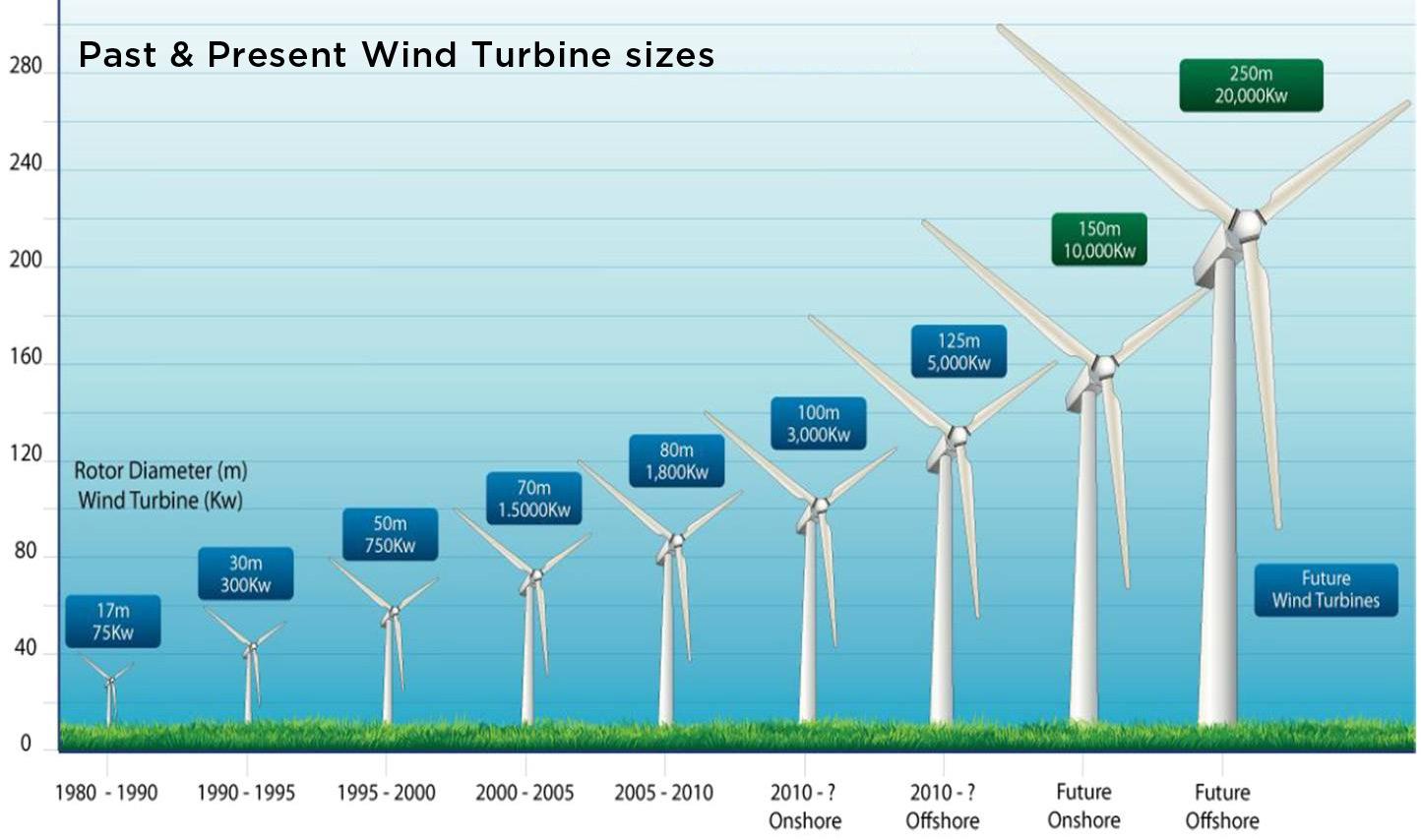
Let’s talk numbers for the utility-scale turbines that dominate our wind farms. These are the workhorses of the renewable energy revolution. An average newly installed onshore wind turbine in the U.S. typically has a capacity of around 2.5 to 3.5 megawatts (MW).
With a typical capacity factor of 40-50%, a single 3 MW turbine can produce approximately 10 to 13 million kilowatt-hours (kWh) of electricity annually. To put that into perspective for an average American home:
- The U.S. Energy Information Administration (EIA) reports that the average residential customer uses about 10,632 kWh per year (as of recent data).
- This means one modern 3 MW wind turbine can generate enough electricity to power roughly 900 to 1,200 average American homes for an entire year.
Offshore turbines, due to stronger and more consistent winds, can have even higher capacity factors and larger capacities, powering even more homes.
Here’s a quick reference table to visualize the output of typical utility-scale turbines:
| Turbine Capacity (MW) | Typical Capacity Factor (%) | Annual Energy Production (Million kWh) | Homes Powered Annually (Approx. U.S. Average) |
|---|---|---|---|
| 2.5 (Onshore) | 40% | 8.76 | ~820 |
| 3.0 (Onshore) | 45% | 11.84 | ~1,110 |
| 6.0 (Offshore) | 50% | 26.28 | ~2,470 |
| 10.0 (Offshore) | 55% | 48.18 | ~4,530 |
Factors That Dictate a Wind Turbine’s Energy Production
It’s not just about spinning blades; a complex interplay of environmental and engineering factors determines how much power a wind turbine can truly deliver. Understanding these elements is key to optimizing wind farm performance.
Turbine Size and Design (Rotor Diameter, Hub Height)
This might seem obvious, but bigger really is better when it comes to capturing wind energy. The two most critical dimensions are:
- Rotor Diameter: The swept area of the blades is proportional to the square of the rotor diameter. A small increase in blade length means a significantly larger area to capture wind, drastically increasing energy capture. Modern utility-scale turbines have rotor diameters often exceeding 100 meters (over 300 feet)!
- Hub Height: The taller the tower, the higher the blades reach. Wind speeds generally increase with altitude, and there’s less ground-level turbulence. Taller turbines access stronger, more consistent winds, leading to higher capacity factors.
Wind Speed and Consistency: Location, Location, Location
This is the absolute bedrock of wind power. The amount of power in the wind is proportional to the cube of the wind speed. This isn’t a typo: if the wind speed doubles, the potential power increases by eight times (2 x 2 x 2 = 8)!
- Cut-in Speed: The minimum wind speed (typically 6-9 mph) required for a turbine to start generating electricity.
- Rated Speed: The wind speed (typically 25-35 mph) at which a turbine reaches its maximum, rated power output.
- Cut-out Speed: The maximum wind speed (typically 50-60 mph) at which a turbine safely shuts down to prevent damage.
Areas with consistently high average wind speeds, like the Great Plains or offshore coastal regions, are prime locations for wind farms because they deliver higher and more reliable energy production.
Onshore vs. Offshore Wind: A Clear Power Advantage
Offshore wind farms are gaining significant traction, and for good reason: the wind over open water is generally stronger, steadier, and less turbulent than on land. This translates directly to higher capacity factors and greater energy output for offshore turbines compared to their onshore counterparts of similar size. While more expensive to build and maintain, the increased generation can offset these costs.
Technological Advancements and Maintenance
Modern turbines are engineering marvels. Advances in blade aerodynamics, generator efficiency, and intelligent control systems (which can adjust blade pitch and yaw to optimize performance for varying wind conditions) significantly boost energy capture. Regular, proactive maintenance also plays a crucial role in ensuring turbines operate efficiently and minimize downtime, maximizing their annual energy production.
Delving Deeper: Energy Output by Turbine Scale
Not all wind turbines are created equal. Their energy output varies dramatically depending on their intended application, from powering individual properties to entire cities.

Utility-Scale Wind Turbines: Powering Communities
These are the behemoths you typically see in large wind farms. With capacities ranging from 2 MW to over 15 MW, they are designed to feed electricity directly into the national grid. As discussed, a single 3 MW onshore turbine can power 900-1,200 homes annually, and offshore turbines can power thousands more. The largest offshore turbines currently being developed can individually power tens of thousands of homes.
Commercial/Community Wind Turbines: Local Powerhouses
Falling between residential and utility-scale, these turbines typically range from 100 kW to 1 MW. They might be used to power a large farm, a school, a factory, or a small community. While not powering entire cities, they offer significant local energy independence and cost savings.
Small & Residential Wind Turbines: Personal Power (and Reality Check)
For homeowners or small businesses looking to generate their own power, small wind turbines are an option. These typically range from 400 watts (W) to 100 kilowatts (kW). While they can contribute to your energy needs, it’s crucial to have realistic expectations:
- A small 1.5 kW residential turbine might produce 2,000-4,000 kWh per year in a good wind resource, covering a fraction of an average U.S. home’s usage.
- A 10 kW turbine, suitable for a larger property or small farm, could generate 10,000-20,000 kWh annually, potentially covering all or most of an average home’s consumption.
The effectiveness of small wind depends heavily on your specific wind resource, local zoning laws, and grid-connection possibilities.
Here’s a comparison of estimated annual energy outputs across different turbine scales:
| Turbine Scale | Typical Capacity Range | Estimated Annual Energy Production (kWh) | Primary Application |
|---|---|---|---|
| Small/Residential | 400 W – 10 kW | 1,000 – 20,000 kWh | Individual homes, small businesses, off-grid systems |
| Commercial/Community | 10 kW – 1 MW | 20,000 – 4,000,000 kWh | Large farms, schools, factories, small municipal projects |
| Utility-Scale (Onshore) | 2 MW – 6 MW | 7,000,000 – 20,000,000+ kWh | Large-scale power generation for the electrical grid |
| Utility-Scale (Offshore) | 6 MW – 18+ MW | 25,000,000 – 80,000,000+ kWh | Large-scale power generation for major population centers |
The Bigger Picture: Wind Energy’s Contribution to the Grid
It’s clear that individual turbines are powerful, but what does this mean for our national energy landscape? The U.S. wind industry has grown exponentially. According to the EIA, wind power consistently ranks as one of the largest sources of renewable electricity generation in the United States, often second only to hydropower.
In recent years, wind has contributed well over 10% of the total utility-scale electricity generation in the U.S. This isn’t just a number; it translates to substantial benefits:
- Reduced Carbon Emissions: Every kWh generated by wind displaces electricity that would otherwise come from fossil fuels, significantly lowering greenhouse gas emissions.
- Energy Independence: Harnessing domestic wind resources reduces reliance on imported fuels, enhancing national energy security.
- Economic Benefits: Wind farms create jobs in manufacturing, installation, operation, and maintenance, often bringing economic vitality to rural communities.
The Future is Windy: Innovations in Wind Energy Production
The impressive figures we’ve discussed are just the beginning. The wind industry is constantly innovating, pushing the boundaries of what’s possible:
- Even Larger Turbines: The trend towards larger, more powerful turbines with longer blades and taller towers continues, especially in offshore environments, maximizing energy capture per installation.
- Floating Offshore Wind: This groundbreaking technology allows turbines to be deployed in deeper waters farther from shore, accessing even stronger and more consistent winds, and opening up vast new areas for wind development.
- Advanced Materials and AI: Lighter, stronger blade materials, coupled with AI-driven predictive maintenance and operational optimization, are continually improving efficiency and reducing costs.
- Hybrid Systems: Integrating wind with solar, battery storage, and smart grid technologies creates more stable and reliable renewable energy systems.
Is Wind Energy Right for You or Your Community?
If you’re considering wind power for your property, start with a professional wind resource assessment. This will tell you if your location has sufficient, consistent wind to make a small turbine economically viable. For communities and larger projects, feasibility studies are even more extensive, considering grid connections, environmental impacts, and public acceptance.
The sheer amount of energy a single wind turbine can produce is a testament to human ingenuity and the power of nature. From powering a significant portion of the national grid to offering a viable clean energy solution for specific applications, wind turbines are vital players in our journey towards a sustainable future.
So, the next time you see those magnificent structures, remember they’re not just aesthetic additions to the landscape; they’re generating millions of kilowatt-hours of clean electricity, quietly powering our homes and industries, one gust at a time. The answer to “how much energy?” is a resounding: “A whole lot, and it’s only getting better.”
Frequently Asked Questions
How much does a residential wind turbine typically cost?
The cost of a residential wind turbine varies widely based on size, capacity (e.g., 1 kW to 10 kW), installation complexity, and location. Small turbines (1-5 kW) can range from $10,000 to $50,000 installed, while larger residential systems (10 kW+) can exceed $70,000. This cost can often be offset by federal and local incentives.
Can a single wind turbine power my entire home?
Yes, a single wind turbine *can* power an entire home, but it depends on the size of the turbine, the average wind speed at your location, and your home’s energy consumption. A well-placed 5-10 kW residential turbine in an area with good wind resources could potentially cover the electricity needs of an average American home (around 10,000 kWh/year).
What’s the minimum wind speed required for a turbine to generate electricity?
Most wind turbines have a ‘cut-in speed’ of approximately 6 to 9 miles per hour (mph) (about 2.5 to 4 meters per second). Below this speed, there isn’t enough kinetic energy in the wind to effectively turn the blades and generate power. Turbines typically reach their maximum power output (rated speed) at much higher wind speeds, often 25-35 mph.
How does extreme weather affect a wind turbine’s energy output?
Extreme weather can both boost and hinder output. High winds up to a certain point (the ‘rated speed’) increase energy generation. However, if wind speeds exceed the ‘cut-out speed’ (typically 50-60 mph), turbines are designed to automatically shut down for safety, reducing output to zero. Icing, severe storms, or lightning can also cause temporary shutdowns or damage, impacting long-term production.
Do wind turbines store energy, or is it used immediately?
Generally, individual wind turbines do not store the energy they produce. The electricity generated is fed directly into the electrical grid for immediate use. For situations requiring consistent power when the wind isn’t blowing, grid-scale battery storage systems or other forms of energy storage (like pumped hydro) are increasingly integrated with wind farms to provide a more stable power supply.
How do offshore wind turbines compare in energy output to onshore ones?
Offshore wind turbines typically produce significantly more energy than onshore turbines of similar capacity. This is due to stronger, more consistent, and less turbulent winds found over open water. They also often have higher capacity factors (e.g., 50-60% vs. 35-50% for onshore) and are generally larger in size, leading to greater overall annual electricity generation.
What is the ‘capacity factor’ of a wind turbine, and why does it matter?
The capacity factor is a crucial metric that indicates how often a power plant, like a wind turbine, actually operates compared to its maximum potential. It’s the ratio of actual energy produced over a period to the maximum possible energy if it ran at full capacity continuously. It matters because it provides a realistic measure of a turbine’s efficiency and actual contribution to the grid, accounting for varying wind conditions and maintenance.
