
Domestic Wind Turbine Power Output: Your Guide to Home Energy Generation
Dreaming of energy independence? Tired of rising electricity bills? A domestic wind turbine could be the answer, but understanding its real-world power output is crucial before you commit. It’s not just about a number on a spec sheet; it’s about how much actual, usable electricity that turbine can generate for your specific home.
Table of Contents
- Domestic Wind Turbine Power Output: Your Guide to Home Energy Generation
- What Does “Power Output” Really Mean for Your Home?
- Demystifying Key Terms: Kilowatts (kW) vs. Kilowatt-hours (kWh)
- Understanding Capacity Factor: The Real-World Output
- Residential Wind Turbine Sizes and Their Typical Power Output
- Micro Wind Turbines (Under 1kW): Small Scale, Specific Uses
- Small Wind Turbines (1kW to 10kW): Powering the Average Home
- Larger Residential Systems (10kW+): For Energy-Intensive Needs
- Factors That Significantly Impact Your Home Wind Turbine’s Output
- Wind Speed: The Driver of Production
- Turbine Siting and Tower Height: Getting Above the Obstacles
- Blade Design and Rotor Diameter: Bigger is (Usually) Better
- Turbine Efficiency and Maintenance: Keeping Your System Optimal
- Local Climate and Terrain: Beyond Just Average Wind Speed
- System Integration: Battery Storage and Grid-Tied Solutions
- How Much Wind Power Does an Average US Home Need?
- Calculating Your Home’s Energy Needs: A Practical Approach
- Matching Turbine Output to Consumption: Setting Realistic Goals
- The Financial Side: Cost, Savings, and ROI for Domestic Wind
- Initial Investment: Turbines, Towers, Installation
- Understanding Operating Costs and Maintenance
- Potential Savings and Payback Period
- Incentives and Rebates: Lowering Your Upfront Costs
- Is a Domestic Wind Turbine Right For You? Key Considerations
- Zoning and Permitting: Local Regulations Matter
- Noise and Visual Impact: Being a Good Neighbor
- Hybrid Systems (Wind + Solar): The Best of Both Worlds?
- Maximizing Your Domestic Wind Turbine’s Performance
- Professional Site Assessment: Don’t Guess, Measure.
- Regular Maintenance and Monitoring
- Integrating with Energy Storage
- Conclusion: Harnessing the Wind for Your Home
This guide cuts through the technical jargon to give you the clear, practical insights you need. We’ll explore what makes a home wind turbine tick, how much power you can realistically expect, and what factors truly influence its performance right in your backyard.
What Does “Power Output” Really Mean for Your Home?
When you look at wind turbines, you’ll see terms like kilowatts and kilowatt-hours. These aren’t just fancy words; they’re fundamental to understanding how much energy your home can get from the wind. Let’s break them down.
Demystifying Key Terms: Kilowatts (kW) vs. Kilowatt-hours (kWh)
Think of it like this:
- Kilowatt (kW): This is a measure of power. It’s the turbine’s instantaneous ability to produce electricity. Imagine it as the speed of a car. A 5 kW turbine can produce 5 kilowatts of power at any given moment (under ideal conditions).
- Kilowatt-hour (kWh): This is a measure of energy. It’s the amount of electricity produced (or consumed) over time. This is what your utility company bills you for. Imagine it as the distance a car travels. If your 5 kW turbine runs at full power for one hour, it produces 5 kWh of energy. A typical U.S. home uses around 800-1000 kWh per month.
So, while a turbine might be rated for a certain kW, what you really care about for your home is its total kWh production over a day, a month, or a year.
Understanding Capacity Factor: The Real-World Output
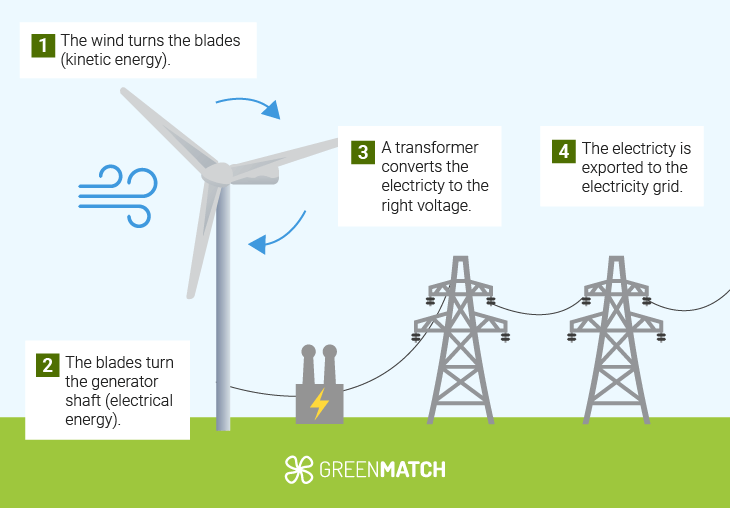
A wind turbine’s “rated power” (e.g., 5 kW) is its maximum output under optimal conditions (a specific, high wind speed). But wind doesn’t blow constantly at that perfect speed. This is where the capacity factor comes in.
The capacity factor is the ratio of the actual energy output over a period to the maximum possible energy output if the turbine operated at its full rated power for the entire period. For domestic wind turbines, capacity factors typically range from 20% to 35%, significantly lower than the 40-50%+ seen in large utility-scale wind farms. This is because home sites often have less consistent wind and smaller turbines are less efficient at very low wind speeds.
A 5 kW turbine with a 25% capacity factor will, on average, produce the same energy over a year as a 1.25 kW turbine running continuously (5 kW * 0.25 = 1.25 kW average power). This factor is critical for setting realistic expectations.
Residential Wind Turbine Sizes and Their Typical Power Output
Domestic wind turbines come in a range of sizes, each suitable for different energy needs and wind conditions. Let’s look at common categories and their typical output, keeping in mind that actual performance will vary based on your specific site.
| Turbine Size (Rated Power) | Typical Annual Energy Output (kWh) | What It Can Power (Examples) | Approximate System Cost (USD) |
|---|---|---|---|
| Micro (400W – 1kW) | 875 – 2,190 kWh | Battery charging, small off-grid cabins, supplemental power for RVs or boats, lighting, phone charging. | $1,000 – $5,000 (unit only) |
| Small (1kW – 5kW) | 2,190 – 10,950 kWh | Partial power for an average home, full power for a small, energy-efficient home in good wind. Can significantly offset utility bills. | $10,000 – $30,000+ (installed) |
| Medium (5kW – 15kW) | 10,950 – 32,850 kWh | Can fully power an average to large home, potentially with surplus for selling back to the grid, or power small businesses/farms. | $30,000 – $70,000+ (installed) |
Estimates based on a conservative 25% capacity factor and average wind conditions. Actual output will vary significantly based on your specific site, wind resources, and turbine efficiency.
**Costs are approximate and can vary widely based on turbine quality, tower type, installation complexity, battery storage, and local labor rates. These do not include potential incentives or rebates.
Micro Wind Turbines (Under 1kW): Small Scale, Specific Uses
These tiny turbines are often portable and ideal for niche applications. They won’t power your entire house, but they’re perfect for:
- Charging batteries for off-grid lighting or small electronics.
- Supplementing power for RVs, boats, or remote surveillance cameras.
- Educational projects or very small, specific loads.
Don’t expect them to put a dent in your household electricity bill, but they offer genuine portability and basic energy independence.
Small Wind Turbines (1kW to 10kW): Powering the Average Home
This is the sweet spot for many homeowners. A well-sited 5 kW turbine, for example, can produce around 10,950 kWh annually, which is roughly the average annual electricity consumption of a U.S. residential customer. Systems in this range are designed to:
- Significantly reduce or even eliminate your monthly electricity bill.
- Provide power for most household appliances, heating, and cooling (depending on climate).
- Be integrated with the grid (grid-tied) or used in an off-grid system with battery storage.
These require careful planning, including proper tower height and a professional site assessment, to maximize their potential.
Larger Residential Systems (10kW+): For Energy-Intensive Needs
If you have a very large home, run energy-intensive equipment (like a home workshop or electric vehicle charging), or own a small farm, a 10 kW or larger turbine might be appropriate. These systems can generate substantial amounts of electricity, potentially creating a surplus that can be sold back to the utility grid (net metering). However, they also come with higher initial costs, larger space requirements, and more stringent permitting processes.
Factors That Significantly Impact Your Home Wind Turbine’s Output
It’s not just the turbine’s size that dictates its output. Several critical factors, many of them site-specific, will directly affect how much electricity your domestic wind system actually produces.
Wind Speed: The Driver of Production
This is the absolute most important factor. Wind turbine power output is not linear with wind speed; it’s proportional to the cube of the wind speed. What does that mean for you?
- If the wind speed doubles, the power output increases by eight times (2 x 2 x 2 = 8).
- A slight increase in average wind speed can lead to a huge jump in energy production.
Most small turbines start producing power (cut-in speed) at around 6-9 mph (2.5-4 m/s) and reach their rated power at 25-35 mph. If your average wind speed is too low, even the best turbine won’t perform well.
Turbine Siting and Tower Height: Getting Above the Obstacles
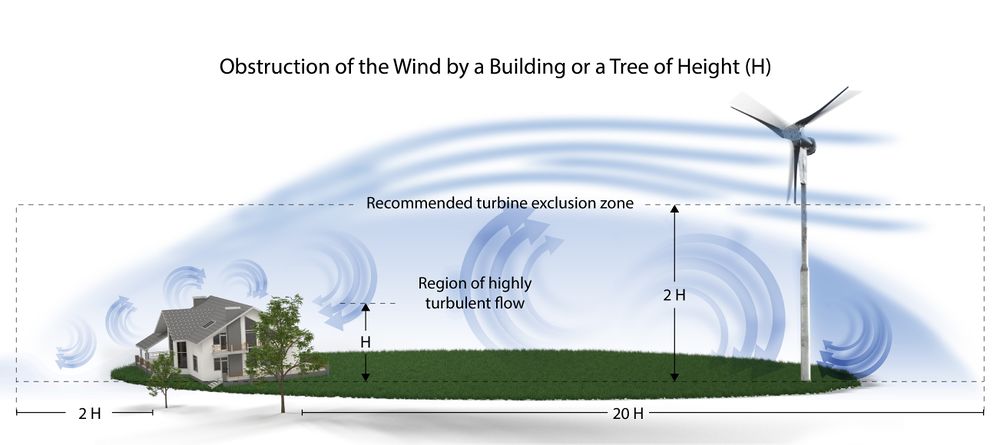
Where you place your turbine and how high its tower is are incredibly important. Obstacles like trees, buildings, and uneven terrain create wind turbulence and reduce wind speed near the ground. You need to get your turbine’s rotor blades above this turbulent air. A good rule of thumb is that the bottom of the rotor should be at least 30 feet higher than any obstacle within 500 feet.
A taller tower often means significantly more consistent and faster wind, leading to disproportionately higher energy production. This is often the most cost-effective way to increase output.
Blade Design and Rotor Diameter: Bigger is (Usually) Better
The rotor diameter (the swept area of the blades) is another critical factor. The amount of wind energy a turbine can capture is proportional to the square of its rotor diameter. So, doubling the blade length (and thus rotor diameter) would increase the captured energy by four times.
Longer blades sweep a larger area, capturing more wind. Modern blade designs are also highly aerodynamic, optimizing energy capture at various wind speeds.
Turbine Efficiency and Maintenance: Keeping Your System Optimal
Like any mechanical system, wind turbines have efficiencies. The Betz Limit states that a wind turbine can only capture a maximum of 59.3% of the kinetic energy from the wind. Real-world turbines typically operate at 30-50% efficiency.
Beyond design efficiency, regular maintenance is key. Keeping blades clean, checking moving parts, and ensuring the system is free of obstructions will prevent efficiency losses and prolong the turbine’s lifespan.
Local Climate and Terrain: Beyond Just Average Wind Speed
While average wind speed is important, the consistency and quality of that wind matter. A location with occasional very high winds but long periods of calm might produce less annual energy than a site with consistently moderate winds. Hills, valleys, and coastlines can create unique wind patterns that require expert assessment.
System Integration: Battery Storage and Grid-Tied Solutions
The wind’s variability means your turbine might produce more power than you need at certain times and less at others. This is where system integration comes in:
- Battery Storage: Allows you to store excess energy generated during windy periods and use it when the wind dies down or demand is high. Essential for off-grid systems.
- Grid-Tied Systems (with Net Metering): Connects your turbine to the utility grid. When your turbine produces more power than you use, the surplus is fed back into the grid, and you often receive credits on your electricity bill (net metering). When your turbine produces less, you draw power from the grid. This is the most common and often most cost-effective setup for urban and suburban homes.
Proper integration ensures that the variable output of your wind turbine is effectively managed to meet your home’s consistent energy needs.
How Much Wind Power Does an Average US Home Need?
To determine what size domestic wind turbine you need, you first have to know your own energy consumption. According to the U.S. Energy Information Administration (EIA), the average residential customer in the U.S. uses about 880 kWh of electricity per month, which translates to roughly 10,600 kWh per year.
However, this is just an average. Your actual needs could be significantly higher or lower depending on:
- The size of your home.
- Your climate (heating and cooling demands).
- The efficiency of your appliances and insulation.
- Number of occupants and lifestyle choices.
Calculating Your Home’s Energy Needs: A Practical Approach
The easiest way to figure out your home’s energy consumption is to look at your past utility bills. Most bills clearly show your monthly kWh usage. Try to gather data for at least a full year to account for seasonal variations (e.g., higher usage in summer for AC, higher in winter for heating if electric).
If you’re building a new home or don’t have historical data, you can estimate by listing all your major appliances, their wattage, and how many hours per day/week they’re typically used. However, utility bills are far more accurate.
Matching Turbine Output to Consumption: Setting Realistic Goals
Once you know your annual kWh consumption, you can compare it to the typical annual output of different domestic wind turbines (as seen in our table above). Keep these goals in mind:
- Full Offset: If you want to cover 100% of your energy needs with wind, you’ll need a turbine system whose annual kWh output at your specific site matches or exceeds your home’s annual consumption. This often requires a larger turbine or an exceptionally windy location.
- Supplemental Power: Many homeowners opt for a smaller system to offset a significant portion of their bill, but not necessarily all of it. This can still lead to substantial savings and reduced environmental impact without the higher upfront cost of a full offset system.
- Off-Grid: If you’re going completely off-grid, your system must be sized to meet 100% of your peak demand, with a robust battery bank to store energy for periods of low wind. This requires a more complex design and often a larger turbine than a grid-tied system for the same home.
The Financial Side: Cost, Savings, and ROI for Domestic Wind
Investing in a domestic wind turbine is a significant financial decision. Understanding the costs, potential savings, and return on investment (ROI) is crucial.
Initial Investment: Turbines, Towers, Installation
The total cost of a domestic wind turbine system includes several components:
- The Turbine Unit Itself: This is the main piece of equipment.
- Tower: Critical for getting the turbine into good wind. Taller towers cost more.
- Inverter and Electrical Components: To convert the turbine’s DC power to AC power usable by your home and the grid.
- Battery Storage (for Off-Grid or Hybrid Systems): Adds significant cost but provides energy independence.
- Installation: Labor costs for site preparation, foundation, tower erection, and electrical wiring.
- Permitting and Site Assessment: Don’t forget these essential upfront costs.
As indicated in the table, a typical 5 kW installed residential system can range from $20,000 to $50,000+ depending on complexity and location.
Understanding Operating Costs and Maintenance
Domestic wind turbines are generally low-maintenance, but they aren’t maintenance-free. You can expect:
- Routine Checks: Annual or bi-annual visual inspections.
- Blade Cleaning: Periodically to maintain efficiency.
- Component Wear: After 10-15 years, some major components (like bearings or even blades) might need replacement.
- Insurance: Often an additional cost for property owners.
Overall, operating costs are relatively low compared to the energy savings, but they should be factored into your long-term financial planning.
Potential Savings and Payback Period
Your savings will directly correspond to how much electricity your turbine produces and your local electricity rates. If your turbine generates 10,000 kWh per year and your electricity costs $0.15/kWh, you save $1,500 annually.
The payback period (how long it takes for your savings to equal your initial investment) can vary widely, from 5-7 years in very windy areas with high electricity rates and good incentives, to 15+ years in less ideal scenarios. High upfront costs are the primary barrier, but the long lifespan (20+ years) of a well-maintained system means significant lifetime savings.
Incentives and Rebates: Lowering Your Upfront Costs
Don’t overlook financial incentives! These can dramatically improve your ROI:
- Federal Tax Credits: The U.S. federal government often offers a significant investment tax credit (ITC) for renewable energy systems, including small wind. This can be a direct credit against your federal taxes.
- State and Local Incentives: Many states, counties, and even utility companies offer their own rebates, grants, or property tax exemptions for installing wind power.
- Net Metering: Allows you to sell excess electricity back to the grid, earning credits or direct payments.
Research available incentives thoroughly, as they can reduce your net costs by 20-30% or more, making wind power a much more viable option.
Is a Domestic Wind Turbine Right For You? Key Considerations
Before installing a wind turbine, it’s vital to assess the practicalities beyond just power output and cost.
Zoning and Permitting: Local Regulations Matter
This is often the biggest hurdle for homeowners. Many local municipalities have strict regulations regarding:
- Tower Height: Limits on how tall your structure can be.
- Setbacks: Minimum distances from property lines, roads, and other structures.
- Noise: Regulations on decibel levels at property lines.
- Aesthetics: Some communities have rules about visible structures.
It’s crucial to contact your local planning or zoning department early in your research phase to understand what’s permissible in your area. This will help you avoid costly mistakes or denied permits.
Noise and Visual Impact: Being a Good Neighbor
Modern wind turbines are much quieter than older models, but they are not silent. The sound is often described as a ‘whooshing’ similar to wind through trees. However, if your property is close to neighbors, or if the turbine is not well-maintained, noise can be a concern. Consider the visual impact as well; a large tower and spinning blades can change the aesthetic of your property and potentially impact neighbor relations.
Hybrid Systems (Wind + Solar): The Best of Both Worlds?
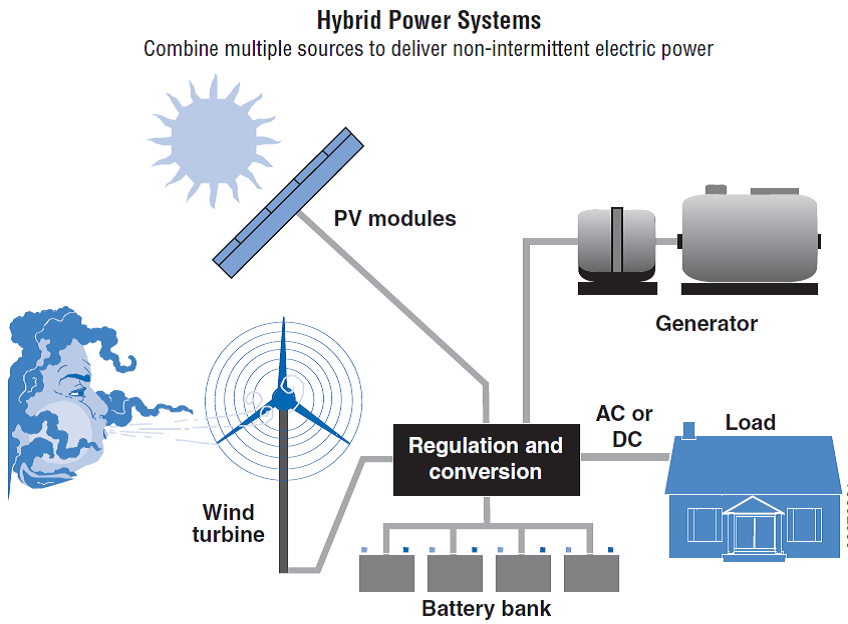
For ultimate energy independence and reliability, many homeowners consider a hybrid wind and solar power system. Why?
- Complementary Production: Wind often blows more strongly in winter and at night, while solar panels produce most during sunny summer days. Combining them smooths out your overall energy production.
- Increased Reliability: If one resource is low, the other can often compensate.
- Optimized Storage: A single battery bank can store energy from both sources, making your storage investment more efficient.
A well-designed hybrid system can offer superior energy security and a more consistent power supply than either technology alone.
Maximizing Your Domestic Wind Turbine’s Performance
Once you’ve decided to move forward, these steps will help ensure you get the most out of your investment.
Professional Site Assessment: Don’t Guess, Measure.
This cannot be stressed enough. A qualified wind energy professional will conduct an in-depth analysis of your property’s wind resources. This includes:
- Using anemometers (wind speed measuring devices) at potential tower heights.
- Analyzing local terrain, obstacles, and historical wind data.
- Providing an accurate estimate of your potential annual energy production (AEP).
This assessment is the single best way to predict your domestic wind turbine’s actual power output and ensure your investment is sound.
Regular Maintenance and Monitoring
Just like your car, your wind turbine needs care. Follow the manufacturer’s recommended maintenance schedule. This typically includes:
- Visual inspections of blades, tower, and connections.
- Checking for loose bolts or wear.
- Lubricating moving parts (if applicable).
- Monitoring performance data to catch issues early.
A well-maintained turbine will last longer and operate more efficiently, maximizing its power output over its lifespan.
Integrating with Energy Storage
Even for grid-tied systems, integrating with battery storage can be a smart move. It allows you to:
- Store excess wind energy to use during peak electricity rates (time-of-use arbitrage).
- Provide backup power during grid outages.
- Further reduce reliance on grid electricity.
As battery technology advances and costs decrease, incorporating storage becomes an increasingly attractive option for homeowners seeking greater energy independence and resilience.
Conclusion: Harnessing the Wind for Your Home
The promise of domestic wind power is compelling: clean energy, reduced bills, and greater energy independence. While the upfront investment and site-specific considerations require careful planning, the potential rewards are substantial. By understanding what drives a domestic wind turbine’s power output, realistically assessing your home’s needs and your property’s wind resources, and taking advantage of available incentives, you can make an informed decision that truly empowers your home with the energy of the wind.
Frequently Asked Questions
How much power can a small wind turbine generate for a home?
A small residential wind turbine, typically ranging from 1kW to 10kW in rated power, can generate anywhere from 2,000 to over 20,000 kWh annually. A well-sited 5kW turbine, for instance, can produce around 10,950 kWh per year, which is roughly the average annual electricity consumption for a U.S. home.
What is the average wind speed needed for a domestic wind turbine to be effective?
Most domestic wind turbines require an average annual wind speed of at least 8-10 mph (3.5-4.5 m/s) to be economically viable. Turbines typically start producing power (cut-in speed) around 6-9 mph, but higher, consistent wind speeds significantly increase output due to the cubic relationship between wind speed and power.
How does capacity factor affect a home wind turbine’s output?
The capacity factor represents the actual energy produced compared to the theoretical maximum. For domestic wind turbines, it typically ranges from 20% to 35%, meaning a 5kW turbine with a 25% capacity factor will only produce the equivalent of 1.25kW on average throughout the year. It’s crucial for setting realistic expectations for annual energy production.
Can a domestic wind turbine power an entire house?
Yes, a properly sized and sited domestic wind turbine can absolutely power an entire house, especially if combined with battery storage or a grid-tied system. For an average U.S. home using about 10,600 kWh/year, a 5kW turbine in a good wind resource can often meet or exceed this demand.
What are the main factors influencing domestic wind turbine power output?
The primary factors are wind speed (the most critical, as output is cubic to speed), turbine siting and tower height (getting above turbulence), blade design and rotor diameter, turbine efficiency, and local climate/terrain. Proper site assessment is vital for accurate prediction.
How much does a domestic wind turbine system typically cost?
The installed cost of a domestic wind turbine system varies significantly. A 1kW-5kW system for an average home can range from $10,000 to $30,000+, while larger 5kW-15kW systems might cost $30,000 to $70,000+. These costs include the turbine, tower, inverter, installation, and potentially battery storage, often before incentives.
Are there incentives for installing domestic wind turbines in the USA?
Yes, there are often federal, state, and local incentives. The federal government frequently offers an Investment Tax Credit (ITC) for small wind systems. Many states and utility companies also provide rebates, grants, or net metering programs that allow you to sell excess power back to the grid, significantly reducing the net cost and improving the return on investment.
