
Best Home Wind Turbines for 2026: Your Definitive Guide to Cutting-Edge Power
Tired of rising electricity bills? Dreaming of energy independence and a smaller carbon footprint? You’re not alone. As we look towards 2026, home wind power isn’t just a niche alternative; it’s rapidly becoming a viable, smarter choice for homeowners across the USA. Forget outdated perceptions of noisy, inefficient giants. Today’s small-scale wind turbines are quieter, more efficient, and integrate seamlessly into modern homes, often alongside solar. This isn’t about just picking ‘a’ turbine; it’s about choosing the right cutting-edge solution that empowers your home with clean, consistent energy.
Table of Contents
- Best Home Wind Turbines for 2026: Your Definitive Guide to Cutting-Edge Power
- Why Home Wind Power is Smarter Than Ever in 2026
- Key Advancements Driving the Market
- The Cost-Saving & Environmental Imperative
- Decoding Home Wind Turbines: HAWT vs. VAWT for Your Home
- Horizontal-Axis Wind Turbines (HAWTs): The Classic Choice
- Vertical-Axis Wind Turbines (VAWTs): The Urban Advantage
- Our Top Picks: Best Home Wind Turbines for 2026 (By Power Output)
- Best for Micro-Energy Needs (100W – 500W)
- Illustrative Model 1: ‘AeroMini 300’ (HAWT)
- Illustrative Model 2: ‘WhisperVAWT 500’ (VAWT)
- Best for Supplemental Home Power (500W – 1500W)
- Illustrative Model 1: ‘PowerFlow 1200’ (HAWT)
- Illustrative Model 2: ‘EcoSpiral 1000’ (VAWT)
- Best for Significant Energy Offset (1500W – 5000W+)
- Illustrative Model 1: ‘WindMaster 3000 Pro’ (HAWT)
- Illustrative Model 2: ‘Sustainer 2000 Hybrid’ (HAWT/VAWT blend concept)
- The Essential Buyer’s Guide: Choosing Your Home Wind Turbine in 2026
- Step 1: Assess Your Wind Resource & Energy Needs
- Step 2: Understand System Components Beyond the Turbine
- Step 3: Navigating Permits, Zoning, and Regulations
- Step 4: Installation, Maintenance, and Safety
- Step 5: Budgeting for Your Wind System
- The Future is Now: What to Expect from Home Wind Turbines Beyond 2026
- Smart Grids & Hybrid Systems
- Material Innovations & Miniaturization
- Policy & Incentives Evolution
- Final Thoughts: Powering Your Home with the Wind
Why Home Wind Power is Smarter Than Ever in 2026
The renewable energy landscape is evolving at lightning speed, and home wind technology is no exception. What was considered advanced just a few years ago is now commonplace, paving the way for even more sophisticated systems designed specifically for residential use.
Key Advancements Driving the Market
- Improved Efficiency and Lower Cut-in Speeds: Modern turbines are engineered to generate power at much lower wind speeds, meaning more consistent output even in less-than-gale-force conditions. We’re seeing more turbines cutting in at 5-7 mph, significantly broadening their practical application.
- Quieter Operation: Noise was a major concern. Thanks to advanced blade designs, direct-drive generators, and better materials, many 2026 models are remarkably quiet, often blending into ambient background noise.
- Smarter Monitoring and Integration: Expect seamless integration with smart home systems, solar arrays, and battery storage solutions. Real-time performance data, remote monitoring, and intelligent energy management are becoming standard.
- Durable Materials and Easier Installation: Lightweight yet robust composites and simplified assembly processes mean turbines are more resilient and, in some cases, easier for qualified professionals to install.
The Cost-Saving & Environmental Imperative
Beyond the technological marvels, the core drivers remain the same: your wallet and the planet. Installing a home wind turbine by 2026 represents a significant investment with compelling long-term returns. You’re not just reducing your monthly electricity bill; you’re building equity in a resilient, independent energy system. Furthermore, every kilowatt-hour generated by your turbine is a kilowatt-hour that didn’t come from fossil fuels, directly contributing to a healthier environment.
Decoding Home Wind Turbines: HAWT vs. VAWT for Your Home
When you start researching, you’ll quickly encounter two primary types: Horizontal-Axis Wind Turbines (HAWTs) and Vertical-Axis Wind Turbines (VAWTs). Understanding their fundamental differences is crucial for making the right choice for your property.
Horizontal-Axis Wind Turbines (HAWTs): The Classic Choice
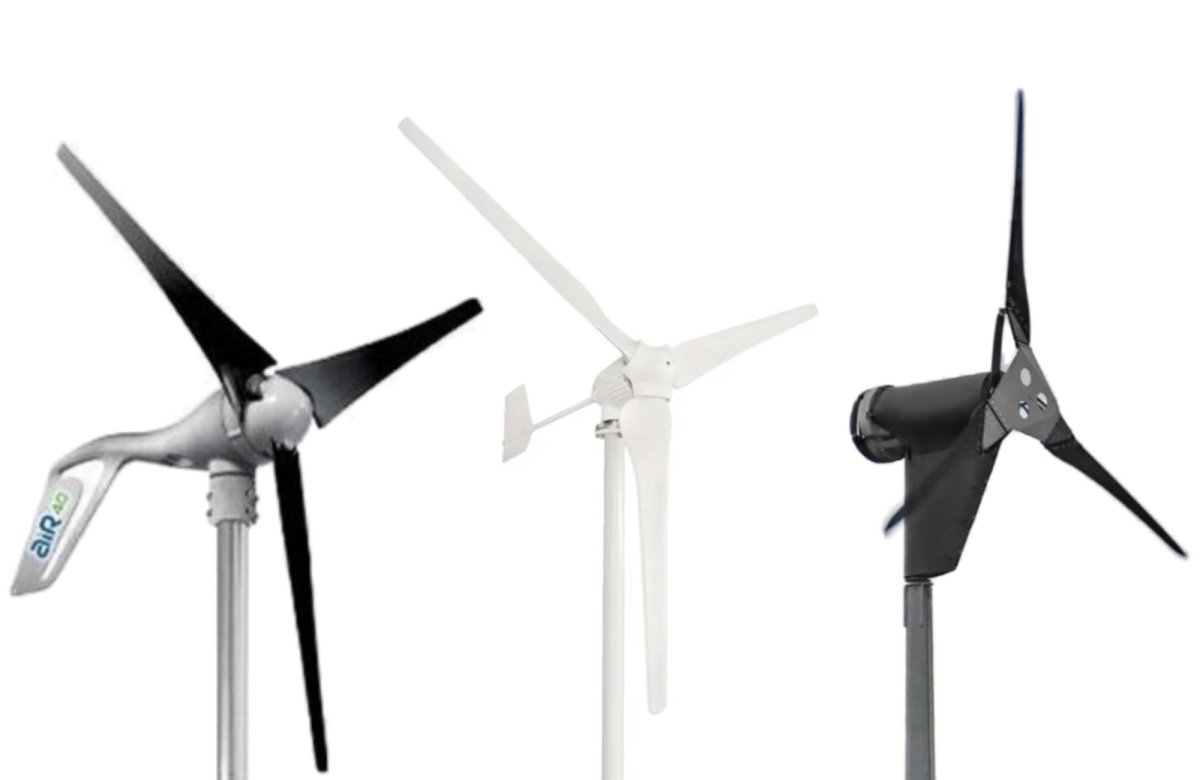
These are what most people picture: the iconic ‘propeller’ style turbines with blades that rotate around a horizontal axis, facing into the wind. They are highly efficient and are the dominant design for large-scale wind farms.
- Pros: Typically higher efficiency, excellent performance in consistent, unidirectional winds, mature and proven technology.
- Cons: Require a yaw mechanism to turn into the wind, generally need taller towers (which can be an aesthetic or zoning challenge), can be noisier at higher speeds, less effective in turbulent or constantly shifting wind conditions.
- Best Use Cases: Rural properties with open spaces, consistent wind patterns, and fewer nearby obstructions. Ideal where maximum energy capture is the priority.
Vertical-Axis Wind Turbines (VAWTs): The Urban Advantage
VAWTs, like the popular ‘egg-beater’ (Darrieus) or ‘scoop’ (Savonius) designs, have blades that rotate around a vertical axis. They are omnidirectional, meaning they capture wind from any direction without needing to adjust.
![Top 6 Home Wind Turbines [] Defintive Buyer's Guide ...](https://cdn.shopify.com/s/files/1/0034/8913/6751/files/automaxx1500_480x480.jpg?v=1627084321 "Top 6 Home Wind Turbines [] Defintive Buyer's Guide ...")
- Pros: Operate well in turbulent, shifting winds (common in urban/suburban areas), generally quieter, often aesthetically more compact and less intrusive, easier maintenance as generator is at ground level, lower tower requirements.
- Cons: Generally lower efficiency than HAWTs for the same rotor swept area, may require a ‘kick-start’ at very low wind speeds (though modern designs are improving), can be less common in higher power outputs for residential use.
- Best Use Cases: Suburban homes, rooftops, properties with turbulent or unpredictable wind, situations where aesthetics or noise are major concerns.
| Feature | Horizontal-Axis (HAWT) | Vertical-Axis (VAWT) |
|---|---|---|
| Efficiency | Generally higher, especially in steady winds | Moderate, performs better in turbulent wind |
| Wind Direction | Needs to face wind (yaw mechanism) | Omnidirectional (no yaw needed) |
| Noise | Can be noticeable at higher speeds, depends on model | Generally quieter, less infrasound |
| Space/Tower | Requires taller towers for optimal performance | Can use shorter towers, more compact footprint |
| Aesthetics | Classic ‘windmill’ look, can be prominent | Often considered more modern/artistic |
| Maintenance | Components at tower top (requires crane/lift) | Generator at ground level (easier access) |
Our Top Picks: Best Home Wind Turbines for 2026 (By Power Output)
Choosing the ‘best’ wind turbine isn’t a one-size-fits-all decision. It entirely depends on your energy needs, budget, local wind conditions, and space availability. Below, we’ve broken down our top recommendations for 2026 by typical power output, keeping in mind the advancements in efficiency and quiet operation. Please note: The specific models listed here are illustrative of the best-in-class performance you should expect by 2026, focusing on key features and capabilities.
Best for Micro-Energy Needs (100W – 500W)
These smaller turbines are perfect for supplemental charging, off-grid cabins, RVs, marine applications, or simply topping up a battery bank for critical loads. They are often easier to install and more budget-friendly.
Illustrative Model 1: ‘AeroMini 300’ (HAWT)
- Key Features: Compact design, ultra-low cut-in speed (5 mph), quiet operation thanks to optimized blade aerodynamics, robust marine-grade construction. Comes with an integrated charge controller.
- Pros: Excellent performance in light winds, highly portable, minimal noise output, very durable.
- Cons: Limited power output for primary home energy, requires a dedicated battery bank.
- Approximate Price Range: $400 – $800
Illustrative Model 2: ‘WhisperVAWT 500’ (VAWT)
- Key Features: Modern vertical-axis design, omnidirectional wind capture, silent magnetic levitation generator, ideal for urban rooftop mounting. Designed for seamless integration with small solar panels.
- Pros: Operates silently, performs well in turbulent urban winds, attractive modern aesthetic, easy maintenance.
- Cons: Slightly lower peak efficiency compared to HAWTs, higher upfront cost for its output class.
- Approximate Price Range: $700 – $1,200
| Model (Illustrative) | Rated Power (W) | Cut-in Speed (mph) | Noise Level (dB) | Price Range ($) | Key Features / Best Use |
|---|---|---|---|---|---|
| AeroMini 300 (HAWT) | 300 | 5 | ~35-40 | 400-800 | Compact, robust, excellent light wind performance for off-grid/RV. |
| WhisperVAWT 500 (VAWT) | 500 | 6 | ~30-38 | 700-1200 | Silent, urban-friendly, turbulent wind specialist, rooftop compatible. |
Best for Supplemental Home Power (500W – 1500W)
Moving up in power, these turbines are designed to significantly reduce your reliance on the grid, charge larger battery banks, and power more substantial home loads. They’re a great choice for homeowners looking for meaningful energy offset.
Illustrative Model 1: ‘PowerFlow 1200’ (HAWT)
- Key Features: High-performance blades, advanced MPPT charge controller, grid-tie optional, designed for minimal vibration and extended lifespan. Comes with comprehensive monitoring software.
- Pros: High energy yield, robust construction, versatile for grid-tied or off-grid systems, excellent ROI potential.
- Cons: Requires careful site assessment for optimal wind, professional installation recommended due to size.
- Approximate Price Range: $1,800 – $3,500
Illustrative Model 2: ‘EcoSpiral 1000’ (VAWT)
- Key Features: Unique helical Savonius design for maximum torque, low noise profile, robust against extreme weather, elegant aesthetic that blends into architectural designs. Direct-drive permanent magnet generator.
- Pros: Operates smoothly across a wide range of wind speeds, virtually silent, durable and low maintenance, good for properties with aesthetic considerations.
- Cons: Larger physical footprint for its power class than comparable HAWTs, potentially higher installation cost due to unique structure.
- Approximate Price Range: $2,500 – $4,500
| Model (Illustrative) | Rated Power (W) | Cut-in Speed (mph) | Noise Level (dB) | Price Range ($) | Key Features / Best Use |
|---|---|---|---|---|---|
| PowerFlow 1200 (HAWT) | 1200 | 7 | ~40-48 | 1800-3500 | High yield, grid-tie ready, robust for significant energy offset. |
| EcoSpiral 1000 (VAWT) | 1000 | 8 | ~35-42 | 2500-4500 | Silent, elegant, excellent in varied winds, low maintenance. |
Best for Significant Energy Offset (1500W – 5000W+)
For those serious about achieving near net-zero energy consumption or powering larger homes, these systems offer substantial output. These typically require more significant planning, professional installation, and may fall under more stringent local regulations.
Illustrative Model 1: ‘WindMaster 3000 Pro’ (HAWT)
- Key Features: Industrial-grade components scaled for residential use, advanced pitch control system for optimal output and safety in high winds, remote diagnostic capabilities, capable of powering entire home.
- Pros: Exceptional power generation, highly reliable, designed for longevity, can dramatically reduce or eliminate electricity bills.
- Cons: High upfront cost, requires a substantial tower, professional installation is mandatory, potential for noise at peak output.
- Approximate Price Range: $7,000 – $15,000+ (turbine only)
Illustrative Model 2: ‘Sustainer 2000 Hybrid’ (HAWT/VAWT blend concept)
- Key Features: Innovative hybrid design combining HAWT efficiency with VAWT stability in turbulent air, modular blades for easy replacement, advanced smart grid integration, designed for minimal visual impact.
- Pros: Best of both worlds in terms of efficiency and adaptability, excellent performance across a wide range of wind conditions, forward-thinking technology for 2026.
- Cons: Cutting-edge technology might mean higher initial cost and fewer installers familiar with the specific system.
- Approximate Price Range: $6,000 – $12,000+ (turbine only)
| Model (Illustrative) | Rated Power (W) | Cut-in Speed (mph) | Noise Level (dB) | Price Range ($) | Key Features / Best Use |
|---|---|---|---|---|---|
| WindMaster 3000 Pro (HAWT) | 3000 | 8 | ~45-55 | 7000-15000+ | High output, robust, grid-tie focused, for significant home energy. |
| Sustainer 2000 Hybrid (HAWT/VAWT Concept) | 2000 | 7 | ~40-50 | 6000-12000+ | Innovative, adapts to varied winds, high efficiency, smart integration. |
The Essential Buyer’s Guide: Choosing Your Home Wind Turbine in 2026
Selecting a home wind turbine is a significant decision. To ensure you make the best choice for your unique situation, follow these critical steps.
Step 1: Assess Your Wind Resource & Energy Needs
This is arguably the most crucial step. Without sufficient, consistent wind, even the best turbine won’t perform. You need to know:
- Average Wind Speed: Professional wind assessments can determine the average wind speed at your proposed turbine height. Many areas have online wind maps, but local measurements are best. A minimum average of 8-10 mph is often recommended for viable residential wind power.
- Turbulence and Obstructions: Tall buildings, trees, and uneven terrain can create turbulent wind, reducing efficiency and increasing wear. The higher you can get your turbine above obstructions (ideally 30 feet above anything within 500 feet), the better.
- Energy Consumption: Review your past electricity bills to understand your daily, monthly, and annual kilowatt-hour (kWh) usage. This helps determine the appropriate turbine size to meet your goals (e.g., partial offset vs. full energy independence).
Step 2: Understand System Components Beyond the Turbine
The turbine itself is just one part of a complete wind energy system:
![Top 6 Home Wind Turbines [] Defintive Buyer's Guide ...](https://shopsolarkits.com/cdn/shop/articles/Top_6_Home_Wind_Turbines_2021_Defintive_Buyer_s_Guide_6e4f929c-0f62-46db-8ec8-872bce2f85a0.png?v=1634350989 "Top 6 Home Wind Turbines [] Defintive Buyer's Guide ...")
- Tower: Essential for elevating the turbine into optimal wind. Options include guyed (guy wires for support) and self-supporting (freestanding) towers. Height is critical.
- Charge Controller: Regulates the voltage and current from the turbine to your batteries, preventing overcharging and damage.
- Inverter: Converts the DC electricity generated by the turbine (and stored in batteries) into AC electricity usable by your home appliances.
- Battery Bank: For off-grid systems or grid-tied systems with backup, batteries store excess energy for when the wind isn’t blowing.
- Grid-tied vs. Off-grid: Decide if you want to remain connected to the utility grid (and potentially sell excess power back) or be completely independent. Hybrid systems (wind + solar + battery + grid-tie) are becoming increasingly popular.
Step 3: Navigating Permits, Zoning, and Regulations
Local regulations vary wildly by municipality and even by Homeowners’ Association (HOA). This is where many DIY projects hit roadblocks.
- Zoning Laws: Check your local planning department for rules on tower height, setbacks from property lines, noise limits, and general approval processes for wind energy systems.
- Permits: You will almost certainly need building permits, electrical permits, and possibly environmental assessments.
- Professional Expertise: An experienced installer will be familiar with local codes and can guide you through the permitting labyrinth. Don’t skip this step!
Step 4: Installation, Maintenance, and Safety
Installation is not a DIY task for most residential turbines, especially larger ones. It involves heavy lifting, electrical work, and working at heights.
- Professional Installation: Highly recommended for safety, efficiency, and compliance. Certified installers ensure your system is optimized and safe.
- Maintenance: Modern turbines require less maintenance than older models, but regular checks (annual visual inspection, occasional lubrication, tension checks for guyed towers) are still necessary to ensure longevity and peak performance.
- Safety: This includes proper grounding, lightning protection, and emergency shutdown mechanisms.
Step 5: Budgeting for Your Wind System
Beyond the turbine itself, consider the full financial picture:
- Upfront Costs: Turbine, tower, batteries, inverter, charge controller, wiring, installation labor, permits, and potentially a professional wind assessment.
- Incentives: Research federal, state, and local incentives. The federal Investment Tax Credit (ITC) often applies to residential wind systems, and many states offer additional rebates or tax credits. These can significantly offset your initial investment.
- Long-Term Savings: Factor in the reduction in your electricity bills and the increased value of your property.
The Future is Now: What to Expect from Home Wind Turbines Beyond 2026
The innovation isn’t slowing down. As we look beyond 2026, home wind power will become even more integrated, efficient, and accessible.
Smart Grids & Hybrid Systems
Expect deeper integration with smart home energy management systems, allowing your turbine, solar panels, battery storage, and even electric vehicle charging to work in perfect harmony. Predictive analytics will optimize energy generation and consumption based on weather forecasts and usage patterns, making your home a truly smart energy hub.
Material Innovations & Miniaturization
Advancements in lightweight composites, self-healing materials, and even bladeless designs (still largely experimental, but promising) will lead to even more durable, efficient, and visually subtle turbines. We’ll likely see higher power outputs from smaller footprints.
Policy & Incentives Evolution
As climate goals intensify, expect more robust government incentives, streamlined permitting processes, and community-level initiatives to encourage residential renewable energy adoption. This could make home wind power even more financially attractive.
Final Thoughts: Powering Your Home with the Wind
Choosing the best home wind turbine for 2026 isn’t just about investing in a piece of equipment; it’s about investing in a sustainable future for your home and the planet. With careful planning, a thorough understanding of your needs and local conditions, and a focus on the latest technological advancements, you can harness the incredible power of the wind to dramatically reduce your energy bills and live a greener, more independent life. The wind is waiting; are you ready to catch it?
Frequently Asked Questions
How much wind do I need for a home wind turbine to be effective?
Generally, an average annual wind speed of at least 8-10 mph (3.5-4.5 m/s) is recommended for a home wind turbine to be a cost-effective investment. Many modern turbines can ‘cut in’ and start producing power at lower speeds (around 5-7 mph), but sustained higher winds are crucial for significant energy generation.
Are home wind turbines noisy?
Older models could be quite noisy, but 2026-era home wind turbines are significantly quieter. Many vertical-axis turbines (VAWTs) and newer horizontal-axis turbines (HAWTs) designed for residential use operate at sound levels comparable to ambient background noise, typically in the 35-50 decibel range, especially at reasonable distances from your home.
Can I go completely off-grid with a home wind turbine?
Yes, it’s possible, especially when combined with a robust battery bank and often supplemented by solar panels (a hybrid system). However, going completely off-grid requires careful planning, a large enough system to meet all your energy needs, and sufficient battery storage for periods of low wind. Many homeowners opt for grid-tied systems with battery backup for energy security and cost savings.
What is the typical lifespan of a residential wind turbine?
With proper installation and regular maintenance, a quality home wind turbine can last 20-25 years or even longer. Key components like bearings and electronics may need replacement over time, but the main structure and blades are designed for durability.
Do I need permits to install a home wind turbine?
Almost certainly. Zoning laws and building codes vary widely by municipality, state, and even Homeowners’ Association (HOA). You’ll likely need building permits, electrical permits, and possibly undergo environmental reviews. It’s crucial to research your local regulations and often best to work with a professional installer familiar with the local permitting process.
How much do home wind turbines cost?
The cost can vary significantly based on the turbine’s power output, type (HAWT vs. VAWT), brand, and the overall system components (tower, inverter, batteries, installation). Small micro-turbines (100-500W) might range from $400-$1,200, while larger systems (1.5kW-5kW) capable of significant home energy offset could cost $6,000-$15,000+ for the turbine itself, with total installed system costs potentially reaching $20,000-$50,000 depending on complexity and battery storage.
