
The Best Home Wind Turbines for 2026: Your Definitive Guide to Powering Your Property
Tired of rising electricity bills? Dreaming of energy independence? The year 2026 is shaping up to be a pivotal moment for homeowners looking to harness the power of wind. Advances in small wind turbine technology are making personal renewable energy more efficient, quieter, and more accessible than ever before. If you’ve been considering supplementing your home’s power or even going entirely off-grid, understanding the latest in home wind turbines is crucial.
Table of Contents
- The Best Home Wind Turbines for 2026: Your Definitive Guide to Powering Your Property
- What to Look for in a Home Wind Turbine in 2026: The Critical Factors
- Power Output (kW) & Energy Generation (kWh/year)
- Cut-in Speed & Survival Speed
- Rotor Type: Horizontal-Axis (HAWT) vs. Vertical-Axis (VAWT)
- Noise Levels: The Unspoken Consideration
- Durability & Maintenance Needs
- System Integration: Grid-Tie, Off-Grid, and Hybrid Options
- Cost & Return on Investment (ROI)
- Permitting & Local Regulations
- Top Picks: Best Home Wind Turbines for 2026 (Detailed Comparison)
- Deep Dive: The Compact Vertical-Axis Turbine (VAWT)
- Deep Dive: The Mid-Sized Horizontal-Axis Turbine (HAWT)
- Beyond the Turbine: Building Your Home Wind Energy System
- Site Assessment: Is Your Home Right for Wind Power?
- Inverters & Batteries: The Brains and Storage of Your System
- Hybrid Systems: The Power of Wind and Solar Combined
- Installation & Permitting: Navigating the Red Tape
- The Future of Home Wind Power: What’s Next for 2026 and Beyond
- Advancements in Efficiency and Materials
- Quieter Designs and Aesthetics
- Smart Home Integration
- Making the Decision: Is a Home Wind Turbine Right for You?
Forget the massive, noisy turbines of yesteryear. Today’s home wind solutions are smarter, more integrated, and designed with your property in mind. This guide cuts through the noise (pun intended) to give you a clear, actionable roadmap to choosing the best home wind turbine for 2026, ensuring you invest in a system that delivers real value for years to come.
What to Look for in a Home Wind Turbine in 2026: The Critical Factors
Choosing a wind turbine isn’t like buying a new appliance. It’s a significant investment in your home’s future. To make an informed decision, you need to understand the key specifications and features that truly matter for residential applications.
Power Output (kW) & Energy Generation (kWh/year)
This is the heart of any wind turbine discussion. Rated Power (kW) tells you the maximum electricity the turbine can produce under ideal wind conditions. However, the more important figure for homeowners is annual energy generation (kWh/year), which estimates how much electricity the turbine will actually produce over a year, factoring in typical wind speeds at your location. Aim for a turbine that can meet a significant portion of your average daily electricity consumption.
Cut-in Speed & Survival Speed
These two metrics define a turbine’s operational range:
- Cut-in Speed: This is the minimum wind speed required for the turbine to start generating electricity. For residential use, a lower cut-in speed (e.g., 5-7 mph) is generally better, as it means the turbine will produce power more often, especially in areas with moderate winds.
- Survival Speed: This is the maximum wind speed the turbine can withstand without being damaged. This is critical for areas prone to severe storms or high winds. Modern turbines are designed to handle very high survival speeds, often over 100 mph.
Rotor Type: Horizontal-Axis (HAWT) vs. Vertical-Axis (VAWT)
The two main types offer distinct advantages for homeowners:
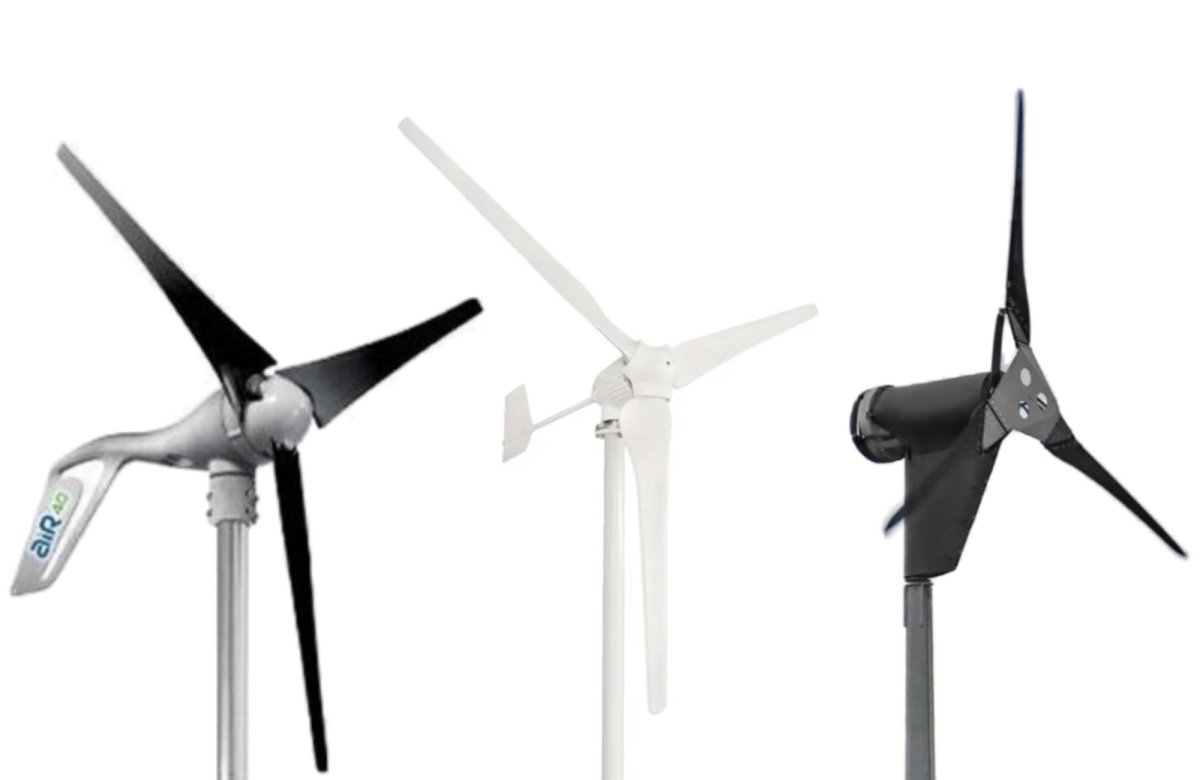
- Horizontal-Axis Wind Turbines (HAWTs): These are the classic ‘windmill’ shape, with blades that rotate horizontally, similar to aircraft propellers.
- Pros: Generally more efficient at converting wind into electricity, especially in consistent, unidirectional winds. They are the most common type for larger-scale wind power.
- Cons: Require a tall tower, need to yaw (turn) to face the wind, can be noisier, and have a larger visual footprint. Less effective in turbulent, gusty winds.
- Vertical-Axis Wind Turbines (VAWTs): These designs feature blades that rotate around a vertical axis. They often look like eggbeaters or Savonius rotors.
- Pros: Operate well in turbulent, omnidirectional winds (common in urban/suburban environments), don’t need to yaw, can be installed closer to the ground, generally quieter, and can have a smaller visual impact.
- Cons: Typically less efficient than HAWTs at the same scale, and might require higher overall wind speeds to reach peak efficiency.
For 2026, we’re seeing significant advancements in VAWT efficiency, making them increasingly competitive for residential settings, especially where space or aesthetics are a concern.
Noise Levels: The Unspoken Consideration
Noise is a major concern for residential wind turbines. Older models could be quite loud, leading to neighbor complaints. Modern designs, particularly VAWTs, are significantly quieter. Look for turbines with noise ratings below 45-50 decibels (dB) at their typical operating speed. For reference, a refrigerator hums at about 35-40 dB, while normal conversation is around 60 dB.
![Top 6 Home Wind Turbines [] Defintive Buyer's Guide ...](https://cdn.shopify.com/s/files/1/0034/8913/6751/files/automaxx1500_480x480.jpg?v=1627084321 "Top 6 Home Wind Turbines [] Defintive Buyer's Guide ...")
Durability & Maintenance Needs
A home wind turbine is built to last, often with a lifespan of 20-25 years. Look for robust construction materials (e.g., marine-grade aluminum, carbon fiber composite blades) that can withstand harsh weather. Maintenance should be minimal, typically involving an annual inspection and occasional lubrication. Avoid systems that require frequent or complex servicing.
System Integration: Grid-Tie, Off-Grid, and Hybrid Options
How will your turbine connect to your home’s power system?
- Grid-Tied: Connects to the public utility grid. When your turbine produces more power than you use, the excess goes back to the grid (often earning you credits). When it produces less, you draw from the grid. This is the most common setup for homes.
- Off-Grid: Independent of the utility grid, relying entirely on your turbine, battery storage, and often a backup generator. Ideal for remote properties.
- Hybrid Systems: The best of both worlds, combining a wind turbine with solar panels and battery storage. This provides a more consistent power supply, as wind and solar often complement each other (e.g., windy winter days, sunny summer days). For 2026, hybrid systems are becoming the gold standard for residential energy resilience.
Cost & Return on Investment (ROI)
The upfront cost of a home wind turbine system can range from $3,000 to $30,000+, depending on size, type, installation complexity, and whether you include battery storage. However, consider the long-term savings on electricity bills. Many homeowners see an ROI within 7-15 years, especially with available federal and state incentives (tax credits, rebates). Calculate your potential savings based on your current electricity rates and the turbine’s estimated annual output.
Permitting & Local Regulations
This is often the trickiest part. Local zoning laws and homeowner association (HOA) rules vary widely regarding wind turbine installation. You’ll likely need permits for tower height, setback requirements, and noise. Start by contacting your local planning department early in the process. Many municipalities are streamlining processes for renewable energy, but it still requires due diligence.
Top Picks: Best Home Wind Turbines for 2026 (Detailed Comparison)
While specific models constantly evolve, here are archetypes of the best home wind turbines you’ll find in 2026, designed to meet diverse homeowner needs. We’ve focused on models balancing efficiency, quiet operation, and integration capabilities.
| Feature | Compact VAWT (Urban/Suburban Focus) | Mid-Sized HAWT (Open Space Efficiency) | Low-Wind VAWT (Quiet & Consistent) | Robust HAWT (High-Wind Resilience) |
|---|---|---|---|---|
| Rated Power (kW) | 0.5 – 1.5 kW | 2.0 – 5.0 kW | 1.0 – 2.5 kW | 3.0 – 10.0 kW |
| Cut-in Speed (mph) | 6 – 8 mph | 7 – 9 mph | 5 – 7 mph | 8 – 10 mph |
| Rotor Diameter/Height (ft) | 3 – 5 ft (Diameter) | 8 – 15 ft (Diameter) | 6 – 10 ft (Height) | 10 – 20 ft (Diameter) |
| Noise Level (dB) | 35 – 45 dB | 45 – 55 dB | 30 – 40 dB | 50 – 60 dB |
| Avg. Turbine Cost (USD) | $2,000 – $6,000 | $8,000 – $18,000 | $4,000 – $10,000 | $15,000 – $35,000 |
| Best For | Small energy needs, hybrid systems, urban/suburban lots, low visual impact. | Larger homes, consistent winds, properties with ample space, grid-tied. | Areas with turbulent but consistent low wind, noise-sensitive locations, off-grid cabins. | Rural properties, high energy demands, very windy locations, extreme weather. |
Deep Dive: The Compact Vertical-Axis Turbine (VAWT)
These smaller, often aesthetically pleasing VAWTs are gaining immense popularity for residential settings. They excel in turbulent, lower wind speed environments common in suburban or even urban areas where a tall HAWT might be impractical or prohibited. Their quieter operation and ability to capture wind from any direction without needing to orient themselves make them ideal for integration with rooftop solar or as a standalone supplement on smaller lots. Look for models with advanced magnetic levitation generators for even smoother, quieter operation and reduced wear.
Deep Dive: The Mid-Sized Horizontal-Axis Turbine (HAWT)
For homeowners with a larger property and consistent, unobstructed wind resources, the mid-sized HAWT remains a highly efficient choice. These turbines offer a strong power output suitable for significantly reducing or eliminating a household’s electricity bill. Advances in blade design and direct-drive generators have minimized maintenance and improved reliability. While they require a taller tower and more space, their established track record for efficiency in ideal conditions makes them a top contender for genuine energy independence.
Beyond the Turbine: Building Your Home Wind Energy System
The turbine is just one piece of the puzzle. A successful home wind power system requires careful planning and selection of complementary components.
Site Assessment: Is Your Home Right for Wind Power?
Before you even think about models, you need to understand your wind resource. This means:
- Wind Speed: The average annual wind speed at your location is paramount. Tools like the National Renewable Energy Laboratory (NREL) wind maps can give you an idea, but an on-site wind assessment (anemometer) provides the most accurate data.
- Obstructions: Trees, buildings, hills – anything that blocks or creates turbulence in the wind flow will reduce your turbine’s efficiency. Turbines should ideally be installed at least 20-30 feet higher than any obstruction within a 500-foot radius.
- Space: You need sufficient clear space for the turbine tower, guy wires (for some models), and safe operation.
A professional site assessment is highly recommended to determine the optimal turbine size and placement for your specific property.
Inverters & Batteries: The Brains and Storage of Your System
Every wind energy system needs an inverter to convert the turbine’s raw DC (direct current) electricity into usable AC (alternating current) for your home and the grid. For 2026, look for smart inverters with advanced monitoring capabilities and seamless integration with battery storage.
Battery storage is becoming increasingly vital. It allows you to store excess power generated during windy periods and use it when the wind dies down or at night. Modern lithium-ion battery banks are efficient, long-lasting, and compact, making them an excellent investment for energy resilience and maximizing your self-consumption.
Hybrid Systems: The Power of Wind and Solar Combined
For ultimate energy independence and reliability, a hybrid wind and solar system is hard to beat. Solar panels produce most effectively during sunny days, while wind turbines often produce more power during stormy or cloudy weather, and at night. This complementary relationship smooths out power generation fluctuations, reducing reliance on the grid and making your system more robust. Smart energy management systems in 2026 can intelligently prioritize and balance power generation from both sources.
Installation & Permitting: Navigating the Red Tape
Unless you’re an experienced electrical and structural engineer, professional installation is a must for safety and optimal performance. Certified installers understand local building codes, electrical requirements, and the nuances of turbine mounting. They will also be invaluable in navigating the permitting process, which can be complex. Be prepared for a process that involves zoning applications, structural reviews, and electrical inspections.
The Future of Home Wind Power: What’s Next for 2026 and Beyond
The wind energy sector is dynamic, and 2026 is just a glimpse of what’s to come for residential systems.
Advancements in Efficiency and Materials
Expect to see lighter, stronger, and more aerodynamic blade designs, often utilizing advanced composites. Generators are becoming more efficient, extracting more power from lower wind speeds. We’re also seeing innovations in bladeless or ducted turbine designs that promise even quieter operation and unique aesthetics, though they are still maturing for mainstream home use.
Quieter Designs and Aesthetics
Noise reduction remains a top priority. Future turbines will leverage advanced materials and fluid dynamics to minimize acoustic output further. Designers are also focusing on aesthetics, creating turbines that are less obtrusive or even integrate artfully into architectural designs, making them more acceptable in residential communities.
Smart Home Integration
Your 2026 home wind turbine won’t just generate power; it will be a smart device. Expect seamless integration with smart home energy management systems, allowing you to monitor production, consumption, and battery levels via apps, automate energy usage based on generation, and even interact with smart grids for optimized performance and financial benefits.
![Top 6 Home Wind Turbines [] Defintive Buyer's Guide ...](https://cdn.shopify.com/s/files/1/0034/8913/6751/files/Top_6_Home_Wind_Turbines_2021_Defintive_Buyer_s_Guide.png?v=1634338357 "Top 6 Home Wind Turbines [] Defintive Buyer's Guide ...")
Making the Decision: Is a Home Wind Turbine Right for You?
Investing in a home wind turbine for 2026 is a commitment to a sustainable and potentially more affordable energy future. It’s not for every home, but for those with suitable wind resources and a desire for greater energy independence, the benefits are compelling.
Start with a thorough site assessment, research the specific models that align with your needs and local conditions, and consult with reputable installers. The technology is here, the incentives are often available, and the potential for long-term savings and environmental impact reduction is significant. Take control of your energy future – the wind is waiting.
Frequently Asked Questions
How much does a home wind turbine typically cost in 2026?
The cost of a home wind turbine system in 2026 can range widely, typically from $3,000 for smaller, supplementary units up to $30,000 or more for larger, robust systems including installation, battery storage, and smart inverters. Factors like turbine type, power output, tower height, and local permitting fees all influence the final price. Don’t forget to factor in potential federal tax credits and state incentives which can significantly reduce the net cost.
Are home wind turbines noisy?
Modern home wind turbines, especially Vertical-Axis Wind Turbines (VAWTs), are significantly quieter than older models. Many are designed to operate between 30-45 decibels (dB), which is comparable to a refrigerator hum or quiet conversation. Horizontal-Axis Wind Turbines (HAWTs) can be slightly louder but advancements in blade design and direct-drive mechanisms are continuously reducing noise output. Site placement and tower height also play a role in how perceived noise impacts your property and neighbors.
How much wind do I need for a home wind turbine to be effective?
For a home wind turbine to be effective, you generally need an average annual wind speed of at least 10-12 miles per hour (mph) at your desired turbine height. Turbines have a ‘cut-in speed’ (the minimum speed to start generating power), often around 5-9 mph. While they’ll produce some power at lower speeds, consistent moderate to high winds are necessary for significant energy generation and a good return on investment. A professional site assessment using an anemometer is crucial for accurate data.
Can I combine a wind turbine with solar panels for my home?
Absolutely, and it’s highly recommended! Combining a wind turbine with solar panels (a hybrid system) is an excellent strategy for achieving greater energy independence and consistency. Wind and solar often complement each other, with wind generation typically higher during cloudy, stormy, or nighttime conditions when solar output is low. This creates a more reliable and robust energy supply for your home, maximizing self-consumption and reducing reliance on the grid.
What is the lifespan and maintenance required for a home wind turbine?
A well-maintained home wind turbine typically has a lifespan of 20-25 years or even longer. Modern turbines are designed for durability with robust materials. Maintenance is generally minimal, usually involving an annual inspection of components like blades, bearings, and electrical connections. Some manufacturers recommend occasional lubrication or tension checks. Always follow the manufacturer’s specific maintenance schedule to ensure longevity and optimal performance.
Do I need permits to install a home wind turbine?
Yes, almost certainly. You will need to obtain permits from your local planning and zoning departments before installing a home wind turbine. Regulations vary widely by municipality and can cover aspects like tower height, setback requirements from property lines, noise levels, and aesthetic considerations. Homeowner association (HOA) rules may also apply. It’s essential to research and understand all local regulations and acquire necessary permits early in your planning process, often with the help of your installer.
What’s the difference between HAWT and VAWT for homeowners?
Horizontal-Axis Wind Turbines (HAWTs) are the classic ‘propeller’ style, generally more efficient in consistent, unidirectional winds but require taller towers and can be noisier. Vertical-Axis Wind Turbines (VAWTs) are often quieter, work well in turbulent, omnidirectional winds common in urban/suburban areas, and have a smaller visual footprint, making them increasingly popular for residential use where space or aesthetics are a concern, despite often being slightly less efficient at peak.
