
Vertical Wind Turbines for Sailboats: The Definitive Guide to Powering Your Vessel
Dreaming of truly independent sailing, free from the constant hum of a diesel generator or the endless hunt for shore power? For many sailors, achieving true energy self-sufficiency is the ultimate freedom. But let’s be honest, powering your vessel solely with renewables, especially in varying marine conditions, presents unique challenges.
Table of Contents
- Vertical Wind Turbines for Sailboats: The Definitive Guide to Powering Your Vessel
- Why a Vertical Wind Turbine? Unpacking the Marine Advantage
- HAWT vs. VAWT: Why the Vertical Axis Makes Sense at Sea
- The Core Benefits of VAWTs for Sailboats
- Types of Vertical Axis Wind Turbines for Marine Use
- Savonius Turbines: Robust and Reliable
- Darrieus Turbines: Efficient and Evolving
- Helical VAWTs (Hybrid Designs): The Best of Both Worlds?
- What to Look For: Key Features & Specifications for Your Sailboat VAWT
- Power Output (Watts): Matching Your Needs
- Durability & Marine-Grade Construction
- Noise Level & Vibration
- Mounting Options & Footprint
- Starting Wind Speed (m/s or knots)
- Controller & Battery Integration
- Installation & Integration: Making it Work on Your Sailboat
- Choosing the Right Location
- Mounting Hardware & Stability
- Wiring & Electrical System Considerations
- Integration with Solar and Other Charging Systems
- Real-World Performance & Expectations: What Sailors Need to Know
- Wind Conditions and Actual Output
- Maintenance and Longevity
- Cost-Benefit Analysis
- Debunking Myths & Common Concerns
- The Future of Marine VAWTs
- Conclusion: Charting a Course to Energy Independence
Traditional wind generators often come with compromises: noisy operation that disturbs the peace of an anchorage, a large footprint that clashes with your boat’s lines, or a need for constant reorientation in shifting winds. If you’ve been searching for a quieter, more efficient, and aesthetically pleasing solution, you’re in the right place. Vertical Axis Wind Turbines (VAWTs) are emerging as a game-changer for sailboats, offering a compelling alternative to their horizontal counterparts.
This guide will cut through the noise (pun intended) and equip you with everything you need to know about integrating a VAWT into your sailboat’s energy system. We’ll explore why these innovative turbines are gaining traction, what types are available, and how to choose and install the perfect one to keep your batteries topped up, silently and reliably.
Why a Vertical Wind Turbine? Unpacking the Marine Advantage
When it comes to harnessing wind energy on a sailboat, not all turbines are created equal. The unique environment of a vessel at sea – confined space, unpredictable wind directions, and the crucial need for peace and quiet – makes the choice of generator paramount. This is where VAWTs truly shine, often outperforming traditional Horizontal Axis Wind Turbines (HAWTs) in marine applications.
HAWT vs. VAWT: Why the Vertical Axis Makes Sense at Sea
Let’s break down the fundamental differences and why a VAWT might be the superior choice for your sailing adventures.
| Feature | Horizontal Axis Wind Turbine (HAWT) | Vertical Axis Wind Turbine (VAWT) |
|---|---|---|
| Wind Directionality | Requires a yaw mechanism to orient into the wind; less efficient in shifting or turbulent winds. | Omni-directional; captures wind from any direction without reorientation, ideal for rolly anchorages or variable winds. |
| Noise & Vibration | Can be quite noisy, especially at higher wind speeds, due to blade tip speed and gearbox noise. Significant vibration transfer. | Generally much quieter due to lower blade tip speeds and a more stable rotation. Less vibration. |
| Starting Wind Speed | Typically requires higher wind speeds (3-5 m/s) to start generating power. | Many models have lower starting wind speeds (as low as 2 m/s), meaning more power generation in light breezes. |
| Footprint & Safety | Large rotating blades can be a safety hazard (especially for lines, sails, or crew) and require significant clearance. | More compact, vertical design with blades closer to the mast or mounting pole, reducing hazard and aesthetic impact. |
| Maintenance | Yaw mechanism, brushes, and slip rings can require regular attention. | Often simpler designs with fewer moving parts (no yaw), potentially lower maintenance. |
| Aesthetics | Can be visually intrusive on a sailboat’s stern or mast. | Often perceived as more aesthetically pleasing and integrated due to vertical design. |
The Core Benefits of VAWTs for Sailboats
- Omni-directional Wind Capture: This is perhaps the most significant advantage for sailors. Unlike HAWTs, which need to be pointed into the wind, VAWTs capture wind from any direction. No yawing, no complex mechanisms, just constant power generation even if your boat swings on anchor or the wind shifts during a squall.
- Lower Starting Wind Speeds: Many VAWT designs are engineered to begin producing power in lighter breezes, often as low as 2-3 m/s (4-6 knots). This means more usable power generation during those calm, pleasant days at anchor when a HAWT might still be idle.
- Reduced Noise and Vibration: This is a critical factor for comfort on board. VAWTs typically have lower blade tip speeds and often utilize direct-drive generators, significantly reducing the whirring noise and vibration commonly associated with HAWTs. Enjoying a quiet evening in the cockpit without a generator droning is a huge win.
- Compact Footprint and Safer Design: With their vertical orientation, VAWTs often occupy a smaller horizontal footprint on deck or at the stern. The blades are generally closer to the mast or mounting pole, reducing the risk of accidental contact with sails, lines, or crew members.
- Aesthetic Appeal: While subjective, many sailors find the sleek, vertical lines of a VAWT more visually appealing and less intrusive than the propeller-like design of a HAWT. They can integrate more harmoniously with the boat’s rigging and profile.
Types of Vertical Axis Wind Turbines for Marine Use
While all VAWTs share the vertical axis design, there are distinct types, each with its own characteristics that make them suitable for different marine applications. Understanding these differences is key to making the right choice for your sailboat.
Savonius Turbines: Robust and Reliable
Picture two or three scoops or half-cylinders stacked vertically. That’s essentially a Savonius turbine. They are characterized by their simple, drag-based design. The wind pushes against the concave side of the blades, causing rotation.
- Pros: Excellent self-starting capability, even in very light and turbulent winds. High torque, making them robust. Relatively simple and durable construction.
- Cons: Generally lower efficiency compared to other VAWT types and HAWTs. They convert less of the wind’s energy into electricity. Can be larger for a given power output.
- Best For: Situations where consistent power in light, unpredictable, or turbulent wind is prioritized over maximum efficiency, such as in busy anchorages or coastal cruising.
Darrieus Turbines: Efficient and Evolving
Darrieus turbines are recognizable by their sleek, often egg-beater or H-shaped blades. These are lift-based turbines, meaning they harness the lift generated by the wind passing over their aerofoil-shaped blades, similar to how an airplane wing works.

- Pros: Higher efficiency than Savonius turbines, especially in stronger, more consistent winds. Can generate significant power for their size.
- Cons: Typically not self-starting, requiring an external kick (like a small motor or a Savonius component) to get them spinning. Can be prone to higher vibration at certain RPMs without proper design.
- Best For: Open ocean sailing with more consistent wind, where maximizing power generation per footprint is crucial.
Helical VAWTs (Hybrid Designs): The Best of Both Worlds?
Many modern marine VAWTs are variations or hybrids, with helical (corkscrew-like) blades being a popular design. These often combine elements of Savonius and Darrieus principles, aiming to optimize performance.
- Pros: Often self-starting due to their curved blade design. Can offer a good balance of efficiency and low noise. The helical twist can help distribute aerodynamic stress, reducing vibration and improving structural integrity.
- Cons: More complex manufacturing, which can lead to higher costs.
- Best For: A wide range of marine applications, offering a versatile solution that balances self-starting, efficiency, and quiet operation.
| VAWT Type | Starting Wind Speed | Peak Efficiency | Noise Profile | Complexity | Typical Use Case (Marine) |
|---|---|---|---|---|---|
| Savonius | Very Low (2-3 m/s) | Low-Moderate (15-20%) | Very Quiet | Simple, Robust | Turbulent, light winds, anchorages. |
| Darrieus | Moderate-High (4-6 m/s, often requires assist) | High (30-40%) | Moderate (can have specific resonance) | More Complex | Consistent, stronger winds, offshore cruising. |
| Helical (Hybrid) | Low-Moderate (3-4 m/s) | Moderate-High (25-35%) | Very Quiet | Moderate | General marine use, balances pros of both types. |
What to Look For: Key Features & Specifications for Your Sailboat VAWT
Choosing the right VAWT isn’t just about picking a type; it’s about matching specific features to your boat’s needs, your cruising style, and your budget. Here’s a breakdown of the critical factors to consider.
Power Output (Watts): Matching Your Needs
This is probably the first number you’ll look at. VAWTs are rated in watts, typically peak output at a specific wind speed (e.g., 400W at 13 m/s). It’s crucial to understand a few things:
- Rated vs. Real-World: The rated power is usually achieved at higher wind speeds than you might experience on average. For a typical sailboat, consistently getting 400W out of a 400W turbine might be unrealistic.
- Your Daily Consumption: Calculate your average daily energy consumption in Amp-hours (Ah). This will tell you how much power you *really* need to generate to keep up. Remember, 12V * Watts = Amps, so a 100W output at 12V is roughly 8.3 Amps.
- Wind Curve: Look for a turbine’s power curve graph. This shows you the actual output at various wind speeds, which is far more informative than just the peak rating.
Durability & Marine-Grade Construction
The marine environment is brutal. Saltwater, UV radiation, high winds, and vibration will test any piece of equipment. Your VAWT must be built to withstand it all.
- Materials: Look for components made from marine-grade aluminum, stainless steel (316L is preferred), and UV-stabilized, high-impact plastics. Inferior materials will corrode or degrade quickly.
- Corrosion Resistance: Are all fasteners, bearings, and electrical connections sealed and protected against saltwater ingress?
- Waterproof Rating: An IP rating (e.g., IP67) indicates resistance to dust and water. The higher the number, the better the protection.
- Bearings: High-quality, sealed, maintenance-free bearings are essential for longevity and smooth operation.
Noise Level & Vibration
As highlighted in many sailor forums, noise is a major deal-breaker for wind generators. VAWTs generally excel here, but some are quieter than others.
- dB Ratings: Some manufacturers provide decibel ratings at certain wind speeds. Compare these carefully. Below 40dB is generally considered very quiet.
- Design Features: Helical blade designs, direct-drive generators (no noisy gears), and robust mounting systems all contribute to reduced noise and vibration.
- Mounting: Proper mounting with vibration-dampening materials can further minimize noise transmission to the boat’s hull.
Mounting Options & Footprint
Space on a sailboat is precious. Consider where you plan to install the turbine and how its size and weight will impact your vessel.
- Stern Pole Mount: The most common option, allowing the turbine to be clear of sails and rigging. Ensure your stern pole is adequately reinforced for the weight and dynamic forces of the turbine in strong winds.
- Mast Mount: Less common for VAWTs but possible for smaller units. Requires careful consideration of mast strength and potential interference with sails or electronics.
- Deck Mount: Rarely ideal due to space constraints and potential hazards, but some compact units could be considered.
- Dimensions & Weight: Pay attention to the overall diameter, height, and weight. Lighter units put less stress on mounting hardware and have less impact on boat trim.
Starting Wind Speed (m/s or knots)
This specification tells you the minimum wind speed required for the turbine to *begin generating power. A lower starting wind speed means more power generation in light breezes, which are common in many cruising grounds and anchorages. Look for turbines that start producing at 2-3 m/s (4-6 knots).
Controller & Battery Integration
The turbine itself is only one part of the system. The charge controller is vital for protecting your batteries and optimizing power transfer.
- MPPT Charge Controller: A Maximum Power Point Tracking (MPPT) controller will optimize the power harvested from the turbine in varying wind conditions, ensuring your batteries receive the maximum charge.
- Overcharge & Over-speed Protection: Essential features to prevent damage to your batteries (from overcharging) and the turbine itself (from spinning too fast in gale-force winds). Many systems include an automatic braking mechanism.
- Battery Compatibility: Ensure the controller is compatible with your battery bank’s voltage (12V or 24V) and chemistry (lead-acid, AGM, LiFePO4).
Installation & Integration: Making it Work on Your Sailboat
A great VAWT won’t perform if it’s not installed correctly. Proper planning and execution are crucial for safety, efficiency, and longevity.
Choosing the Right Location
Placement is everything for wind generators. You need clear, unobstructed airflow.
- Minimize Wind Shadow: Avoid placing the turbine where it will be in the wind shadow of your mast, sails, radar arch, or bimini. The stern on a dedicated pole is usually the best bet, as it often provides the cleanest airflow.
- Safety Clearances: Ensure there’s ample clearance around the rotating blades to prevent accidental contact with crew, lines, or other equipment, especially during lively conditions at sea.
- Consider Roll & Pitch: Remember your boat moves! The turbine needs to operate effectively through all angles of heel, roll, and pitch.
Mounting Hardware & Stability
Your mounting system needs to be incredibly robust. Wind generators exert significant forces, particularly in strong gusts. A poorly mounted turbine is not only inefficient but also a major safety hazard.
- Reinforcement: The deck or transom where the mounting pole is attached must be adequately reinforced to handle the dynamic loads. Backing plates are often necessary.
- Stays: A sturdy pole with multiple stays (e.g., fore and aft, and athwartships) provides crucial stability and reduces vibration.
- Vibration Dampening: Rubber gaskets or isolators between the mounting pole and the boat can help reduce the transmission of any residual vibration into the hull.
Wiring & Electrical System Considerations
Proper wiring is critical for both performance and safety. Don’t skimp here.
- Cable Sizing: Use appropriately sized marine-grade wire to minimize voltage drop, especially over longer runs from the turbine to the battery bank. Consult wire gauge charts based on current and distance.
- Fusing & Circuit Breakers: Install appropriate fuses or circuit breakers close to the battery bank and near the charge controller to protect your system from overcurrents.
- Connections: All electrical connections must be marine-grade, crimped securely, and protected from corrosion (heat shrink, dielectric grease).
- Grounding: Ensure the turbine and its mounting system are properly grounded to prevent stray current and lightning damage.
Integration with Solar and Other Charging Systems
The best energy systems are often hybrid. Combining a VAWT with other charging sources maximizes your energy independence.
- Solar Panels: Wind and solar often complement each other beautifully. Solar performs best on sunny, calm days, while wind turbines excel when the sun isn’t shining or when it’s cloudy and breezy. A dedicated solar charge controller will run in parallel with your wind turbine’s controller.
- Engine Alternator: Your engine alternator remains a primary charging source, but reducing reliance on it saves fuel and engine hours.
- Dedicated Energy Monitor: Install a smart energy monitor (e.g., Victron BMV series) to track your power consumption and generation. This helps you understand your energy budget and optimize your charging sources.
Real-World Performance & Expectations: What Sailors Need to Know
While VAWTs offer many advantages, it’s important to approach them with realistic expectations. No single energy source is a silver bullet for every situation.
Wind Conditions and Actual Output
The performance of any wind turbine is highly dependent on wind speed. Power output increases exponentially with wind speed. This means that a slight increase in wind can result in a significant boost in power.
- Average Wind Speed Matters More: Don’t just look at peak output. Consider the average wind speed in your cruising areas. A turbine with good performance in light winds (low starting speed) might be more valuable than one with a high peak output that rarely sees those conditions.
- Turbulent vs. Laminar Flow: While VAWTs handle turbulent wind better than HAWTs, consistent, laminar airflow will always yield the best results.
Maintenance and Longevity
Even with marine-grade construction, a VAWT will require some attention to ensure a long lifespan.
- Routine Checks: Periodically inspect blades for cracks or damage, check all mounting bolts for tightness, and examine wiring connections for corrosion.
- Bearing Replacement: Bearings are wear items. Depending on the turbine’s design and usage, they may need replacement every few years. Choose models with easily serviceable bearings.
- Cleaning: Salt spray and dirt can accumulate on blades, reducing efficiency. A gentle wash with fresh water can keep them clean.
Cost-Benefit Analysis
A VAWT is an investment. Weigh the upfront cost against the long-term benefits.
- Initial Investment: VAWTs can range from a few hundred to several thousand dollars, depending on power output and features. Don’t forget the cost of mounting hardware, wiring, and potentially professional installation.
- Fuel Savings: Reducing your reliance on a diesel generator or engine for charging translates directly into fuel savings.
- Silent Operation & Independence: The intangible benefits of quiet anchorages, reduced engine hours, and the peace of mind that comes with energy independence are often priceless for many cruisers.
- Environmental Impact: Generating clean energy reduces your carbon footprint, aligning with a more sustainable cruising lifestyle.
Debunking Myths & Common Concerns
It’s easy to get caught up in online debates and misinformation when researching marine energy solutions. Let’s address some common concerns about VAWTs head-on.
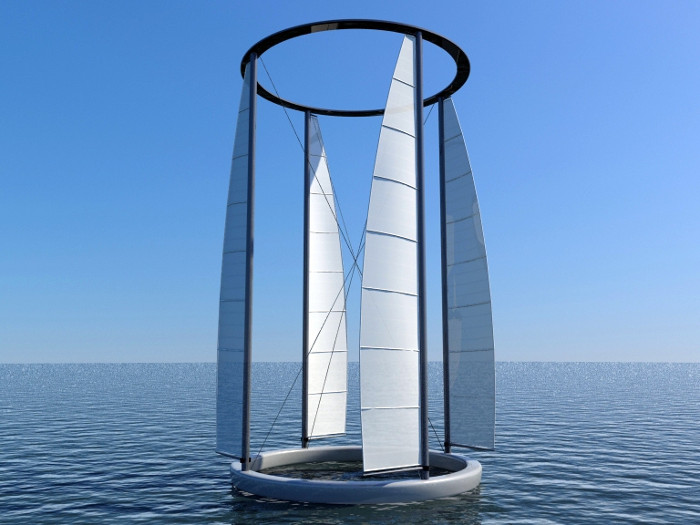
- “VAWTs aren’t as efficient as HAWTs”: While true in a laboratory setting for peak theoretical efficiency, this often overlooks the real-world performance on a boat. HAWTs require constant yawing into the wind and struggle in turbulent conditions. VAWTs, with their omni-directional capability and lower starting speeds, can often deliver more usable Amp-hours over a 24-hour period in typical marine conditions, especially at anchor or in shifting winds.
- “They still make noise”: No turbine is completely silent. However, VAWTs are significantly quieter* than most HAWTs. The noise profile is typically a low hum rather than a high-pitched whine or propeller chop. The crucial difference is the frequency and intensity of the sound, which makes VAWTs far less intrusive.
- “They’re too expensive”: Like any marine electronics, there’s a range. While some high-end VAWTs can be a significant investment, the cost-benefit analysis (fuel savings, reduced engine wear, comfort) often justifies it in the long run. Consider the total cost of ownership, not just the purchase price.
The Future of Marine VAWTs
The technology behind VAWTs is continuously evolving. We’re seeing innovations in blade design (like advanced helical shapes), lighter and more durable materials, and smarter electronics. Expect to see:
- Increased Efficiency: Ongoing research is pushing the boundaries of VAWT aerodynamic efficiency.
- Smarter Integration: Better communication between VAWT controllers, solar charge controllers, and battery monitors for seamless, optimized energy management.
- Modular Designs: Easier installation and maintenance through more modular and user-friendly designs.
These advancements promise even more reliable, quieter, and higher-performing vertical wind turbines for the sailboats of tomorrow.
Conclusion: Charting a Course to Energy Independence
A vertical wind turbine for your sailboat isn’t just another gadget; it’s a statement of independence, a commitment to a quieter cruising experience, and a smart investment in your vessel’s energy future. By understanding the distinct advantages of VAWTs, the different types available, and the key factors for selection and installation, you’re now equipped to make an informed decision.
Wave goodbye to the constant drone of the engine and embrace the silent, sustainable power of the wind. With a well-chosen and properly installed VAWT, you’ll not only keep your batteries topped up but also enhance your overall sailing experience, allowing you to linger longer in tranquil anchorages and explore further afield, all while harnessing the power of nature.
Frequently Asked Questions
Are vertical wind turbines actually quieter than horizontal ones on a sailboat?
Yes, generally. Vertical Axis Wind Turbines (VAWTs) typically operate at lower blade tip speeds and often use direct-drive generators, which significantly reduces the high-pitched whine and vibration common with Horizontal Axis Wind Turbines (HAWTs). While no turbine is entirely silent, VAWTs produce a much softer, less intrusive hum, greatly enhancing comfort on board, especially at anchor.
How much power can a vertical wind turbine generate for a sailboat?
Power output varies greatly depending on the turbine’s size, design, and crucially, the actual wind speed. Most marine VAWTs are rated between 100W and 600W at specific wind speeds (e.g., 10-13 m/s). However, real-world average output at typical cruising wind speeds (e.g., 5-8 m/s) will be lower. It’s essential to look at the power curve, not just the peak rating, and match it to your boat’s daily energy consumption (in Amp-hours).
What’s the main advantage of a VAWT over a HAWT for marine use?
The primary advantage for sailboats is their omni-directional wind capture. VAWTs don’t need to reorient into the wind, meaning they constantly generate power even when the wind shifts direction rapidly, the boat swings at anchor, or during turbulent conditions. They also typically have lower starting wind speeds and a more compact, safer footprint.
Are VAWTs less efficient than HAWTs?
In a controlled, theoretical environment with consistent, unidirectional wind, HAWTs often have higher peak aerodynamic efficiency. However, in the real-world, dynamic marine environment, VAWTs can often deliver comparable or even more *usable* Amp-hours over a 24-hour period due to their ability to capture wind from any direction, perform better in turbulent winds, and start generating at lower wind speeds, thus producing power for more hours in a day.
What are the key factors for choosing a good marine VAWT?
Look for marine-grade construction (stainless steel, UV-resistant plastics), low starting wind speed, quiet operation (dB ratings), a robust and stable mounting system, and compatibility with your battery bank’s voltage and chemistry. An MPPT charge controller with overcharge and over-speed protection is also crucial for system longevity and battery health.
Can a VAWT replace my diesel generator entirely?
For many, a VAWT serves as an excellent primary charging source, significantly reducing reliance on a diesel generator or engine. However, for continuous high-load appliances (like air conditioning or heavy cooking), or during prolonged periods of no wind, a VAWT alone might not be sufficient. Combining it with solar panels and retaining a generator for backup or peak loads often creates the most robust and practical hybrid energy system for a sailboat.
