
RV Wind And Solar Power Systems: The Ultimate Guide to Off-Grid Freedom
Dreaming of waking up to breathtaking views without the constant hum of a generator? Imagine powering your RV adventures with clean, quiet, and limitless energy. That’s the promise of RV wind and solar power systems, unlocking true off-grid freedom for your travels.
Table of Contents
- RV Wind And Solar Power Systems: The Ultimate Guide to Off-Grid Freedom
- Why Go Off-Grid with Wind & Solar in Your RV?
- The Allure of Unrestricted Adventure
- Cost Savings on the Road
- Environmental Responsibility
- Understanding RV Solar Power Systems
- How RV Solar Works (The Basics)
- Key Components of an RV Solar Setup
- Pros and Cons of RV Solar Power
- Diving Into RV Wind Power Systems
- How RV Wind Turbines Generate Power
- Essential Components of an RV Wind System
- Pros and Cons of RV Wind Power
- The Best of Both Worlds: Hybrid RV Wind and Solar Systems
- Why Combine Wind and Solar? (Complementary Strengths)
- How a Hybrid System Works (Integration)
- Designing Your Hybrid System: Key Considerations
- Energy Audit: Calculating Your RV’s Power Needs
- Sizing Your System: Panels, Turbine, and Battery Bank
- Location, Location, Location: Wind vs. Sun Exposure
- System Expandability
- Essential Components for Any RV Renewable Energy System
- Batteries: The Heart of Your Off-Grid Power
- Inverters: Converting DC to AC Power
- Charge Controllers: Protecting Your Batteries
- Wiring, Fuses, and Safety First
- Installation & Maintenance: What You Need to Know
- DIY vs. Professional Installation
- Mounting Solar Panels on Your RV
- Installing a Wind Turbine (Challenges & Best Practices)
- Regular Maintenance for Longevity
- Real-World Considerations & Maximizing Efficiency
- Weather Dependencies (Clouds, Wind Speed)
- Understanding Your Energy Consumption Habits
- Monitoring Your System (Battery Monitors, App Integration)
- System Upgrades and Expansion
- Costs and ROI: Investing in RV Renewable Energy
- Initial Investment Breakdown
- Long-Term Savings and Value
- Potential for Resale Value Increase
- Is an RV Wind and Solar System Right for You?
- Assess Your Travel Style
- Evaluate Your Power Demands
- Consider Your Budget and Technical Comfort
For too long, RVers have relied on noisy generators or campground hookups. But with advancements in renewable energy, you can now harness the power of the sun and the wind to keep your lights on, your fridge cold, and your devices charged, no matter how far off the beaten path you roam. This guide isn’t just about solar panels; it’s about understanding the synergy of wind and solar, giving you the knowledge to design a robust, reliable power system that truly fits your adventurous lifestyle.
Why Go Off-Grid with Wind & Solar in Your RV?
Embracing renewable energy in your RV isn’t just a trend; it’s a lifestyle upgrade. It changes how you experience the open road, offering tangible benefits that enhance your adventures.
The Allure of Unrestricted Adventure
Picture this: you’ve found a pristine, remote campsite far from any power hookups. With an RV wind and solar system, you can stay there for days, even weeks, without worrying about draining your batteries or needing to move. This freedom opens up a world of possibilities, allowing you to explore national forests, BLM land, and hidden gems that traditional RVers might miss.
Cost Savings on the Road
While there’s an initial investment, the long-term savings are substantial. You’ll drastically reduce or eliminate campground fees for electrical hookups and slash your fuel consumption for generators. Over time, your renewable energy system pays for itself, putting more money back into your adventure budget.
Environmental Responsibility
Choosing wind and solar means opting for clean energy. You’ll reduce your carbon footprint, minimize noise pollution in nature, and contribute to a healthier planet. It’s a choice that aligns with the very spirit of enjoying the great outdoors responsibly.
Understanding RV Solar Power Systems
Solar power is often the first thing RVers consider for off-grid energy, and for good reason. It’s mature, reliable, and generally quiet. But there’s more to it than just slapping a panel on your roof.
How RV Solar Works (The Basics)
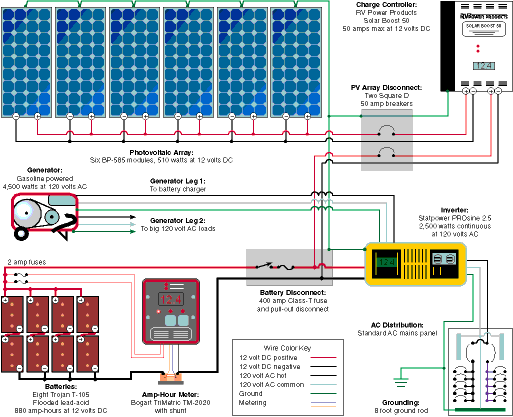
At its core, an RV solar system captures sunlight using photovoltaic (PV) panels. These panels convert solar energy into direct current (DC) electricity. This DC power then flows through a charge controller, which regulates the voltage and amperage, ensuring your batteries are charged safely and efficiently. The stored energy in your battery bank can then power your 12V DC appliances directly or be converted to 120V AC power (like household outlets) via an inverter for larger appliances.
Key Components of an RV Solar Setup
- Solar Panels: These are your energy collectors. They come in various types and sizes.
- Charge Controller: Essential for protecting your batteries from overcharging and optimizing the charging process.
- Batteries: The backbone of your system, storing the energy generated.
- Inverter: Converts DC power from your batteries into usable AC power for standard appliances.
- Mounting Hardware & Wiring: Securely attaches panels to your RV and connects all components.
Let’s break down panel types quickly:
| Panel Type | Pros | Cons | Best For |
|---|---|---|---|
| Monocrystalline | Highest efficiency, better in low light, durable. | Most expensive, rigid, can be bulky. | Fixed rooftop installations, maximizing power in limited space. |
| Polycrystalline | More affordable than mono, good performance. | Lower efficiency than mono, slightly larger footprint for same power. | Budget-conscious setups, ample roof space. |
| Flexible/Thin Film | Lightweight, can conform to curved surfaces, easy to install. | Lowest efficiency, shorter lifespan, performs poorly in high heat. | Smaller RVs, curved roofs, portable setups. |
Pros and Cons of RV Solar Power
Pros:
- Silent Operation: No noise, perfect for quiet campsites.
- Low Maintenance: Generally, just occasional cleaning.
- Widespread Availability: Components are easy to find.
- Passive Energy: Works automatically when the sun is out.
Cons:
- Weather Dependent: Clouds, rain, shade severely impact output.
- Space Intensive: Requires significant roof space for higher wattage.
- Daytime Production: Generates power only when the sun is shining.
- Angle Limitations: Fixed panels can’t always optimize sun exposure.
Diving Into RV Wind Power Systems
While less common than solar, wind power offers a powerful complement, especially when the sun isn’t cooperating. It’s an often-overlooked secret weapon for true energy independence.

How RV Wind Turbines Generate Power
An RV wind turbine harnesses the kinetic energy of moving air. Its blades spin in the wind, turning a generator that produces DC electricity. Similar to solar, this DC power then goes through a wind charge controller to regulate voltage before being stored in your battery bank. When the wind blows, your batteries charge, providing power even at night or on cloudy days.
Essential Components of an RV Wind System
- Wind Turbine: The propeller-like device that captures wind energy.
- Wind Charge Controller: Manages the power from the turbine to the batteries, preventing overcharging and safely dissipating excess energy.
- Batteries: Just like solar, these store the generated power.
- Tower/Mounting System: Crucial for elevating the turbine above obstructions (like your RV itself) to catch clean, laminar wind flow. This can be a telescoping mast, a fixed pole, or even a portable setup.
- Inverter: (Optional, if you need AC power) Converts stored DC energy to AC.
Pros and Cons of RV Wind Power
| Aspect | Pros | Cons |
|---|---|---|
| Power Generation | Generates power 24/7 with wind, including cloudy days and nights. Less reliant on direct sun. | Highly dependent on consistent wind speeds. Low wind = no power. |
| Space & Portability | Smaller footprint for power output compared to solar (though height is needed). Portable options available. | Requires a tall mounting solution, potentially obstructing views or being complex to deploy/stow. |
| Noise | Generally quiet at low to moderate wind speeds. | Can produce noticeable noise (whirring) at higher wind speeds, which can be an issue in quiet areas or for neighbors. |
| Maintenance | Relatively low. | Moving parts (blades, bearings) require more inspection than static solar panels. |
The Best of Both Worlds: Hybrid RV Wind and Solar Systems
Here’s where true energy independence shines. Combining wind and solar systems for your RV isn’t just about adding more power; it’s about creating a robust, resilient energy source that minimizes reliance on any single weather condition.
Why Combine Wind and Solar? (Complementary Strengths)
Think about it: when it’s cloudy or rainy, solar output plummets. But often, those are precisely the conditions where wind speeds pick up. Conversely, on a calm, sunny day, your solar panels will be working overtime while the wind turbine might be still. A hybrid system leverages these complementary strengths:
- Reduced Reliance on Single Weather Conditions: You’re less vulnerable to a long stretch of cloudy days or windless periods.
- Increased Overall Energy Production: Maximize energy capture across a wider range of environmental conditions.
- Faster Battery Recharging: Batteries charge more consistently and quickly thanks to dual input sources.
- Greater Flexibility for Campsite Selection: You’re not forced to chase the sun or seek out windy ridges; you’re prepared for both.
How a Hybrid System Works (Integration)
A hybrid system integrates both solar panels and a wind turbine, feeding their generated power into a shared battery bank. This usually involves two separate charge controllers (one for solar, one for wind) that are both connected to your battery bank. The battery bank then supplies power to your inverter (if you need AC power) and directly to your DC appliances. Modern systems often use sophisticated monitoring to help you balance and track energy input from both sources.
Designing Your Hybrid System: Key Considerations
Building a hybrid system requires careful planning. It’s not just about buying components; it’s about understanding your needs and how the system will meet them.
Energy Audit: Calculating Your RV’s Power Needs
This is the absolute first step. You can’t size a system without knowing your daily consumption. Here’s how:
- List All Appliances: Every light, fan, pump, TV, laptop, charging brick – everything you use.
- Find Wattage: Look for the wattage (W) rating on each appliance. If it’s only amps (A) and volts (V), multiply A x V to get W (e.g., 5A x 12V = 60W).
- Estimate Daily Use: How many hours per day (or per week, then average daily) do you use each appliance?
- Calculate Watt-Hours (Wh) per Appliance: Wattage x Hours of Use = Watt-Hours.
- Sum Total Daily Wh: Add up all the daily Wh for a total average daily consumption.
- Add a Buffer: Always factor in an extra 10-20% for inefficiencies, cloudy days, or unexpected usage.
Example: A 100W laptop used for 3 hours a day is 300 Wh/day. A 12V RV fridge might draw 50W continuously, so 50W x 24h = 1200 Wh/day. Your total daily consumption might be 2000 Wh (2 kWh).
Sizing Your System: Panels, Turbine, and Battery Bank
Once you have your daily Wh, you can start sizing:
- Battery Bank: This is typically sized to provide 2-3 days of autonomy (power without recharge). For 2000 Wh/day, you’d need 4000-6000 Wh of usable battery capacity. Remember, lead-acid batteries should only be discharged to 50%, while lithium can go to 80-100%.
- Solar Panels: To replenish 2000 Wh/day, assuming 4-6 peak sun hours, you’d divide 2000 Wh by 4-6 hours, needing roughly 330-500W of solar panels.
- Wind Turbine: Wind turbine output varies greatly with wind speed. A 400W turbine might produce 1000-1500 Wh/day in a good, consistent breeze (10-15 mph average).
The goal isn’t necessarily to have each source cover 100% of your needs, but for their combined output to meet and exceed your daily consumption, especially when conditions favor one over the other.
Location, Location, Location: Wind vs. Sun Exposure
Your typical camping style heavily influences system design. If you spend a lot of time in open, windy areas (deserts, coasts), a larger wind component makes sense. If you primarily camp in sunny, forested areas, solar will be your primary workhorse, perhaps supplemented by a small, easily deployable portable wind turbine for open spots.
System Expandability
Consider future needs. Can you easily add more solar panels? Is your charge controller capable of handling additional input? Planning for expandability prevents costly overhauls later.
Essential Components for Any RV Renewable Energy System
Regardless of whether you go solar, wind, or hybrid, several core components are universally critical for a reliable system.
Batteries: The Heart of Your Off-Grid Power
Your battery bank is where the energy you collect is stored, making it the most critical component for sustained off-grid living. Choosing the right battery type is paramount.
| Battery Type | Pros | Cons | Ideal For |
|---|---|---|---|
| Flooded Lead-Acid (FLA) | Least expensive upfront, widely available. | Requires regular maintenance (watering), must be vented, heavy, can only use 50% capacity. | Budget-conscious RVers willing to perform maintenance. |
| Absorbed Glass Mat (AGM) | Maintenance-free, sealed (no venting needed), better cold weather performance, 50% usable capacity. | More expensive than FLA, sensitive to overcharging, heavy. | RVers wanting a step up from FLA without going lithium. |
| Lithium Iron Phosphate (LiFePO4) | Lightweight, compact, very long lifespan, 80-100% usable capacity, fast charging, no maintenance. | Highest upfront cost. Requires compatible charge controllers/inverters. | Serious boondockers, full-timers, those prioritizing performance and longevity. |
Inverters: Converting DC to AC Power
Most RV appliances run on 12V DC power (lights, water pump), but many common household items (coffee makers, microwaves, laptops) require 120V AC power. An inverter converts the DC power stored in your batteries into usable AC power. For sensitive electronics, a pure sine wave inverter is highly recommended. Avoid cheaper modified sine wave inverters, which can damage some devices.
Charge Controllers: Protecting Your Batteries
Both solar and wind systems require a charge controller. For solar, you’ll choose between PWM (Pulse Width Modulation), which is simpler and cheaper but less efficient, and MPPT (Maximum Power Point Tracking), which is more expensive but significantly more efficient, especially in varied conditions. For wind, specific wind charge controllers are designed to handle the variable output of a turbine and safely dump excess energy to prevent overcharging.
Wiring, Fuses, and Safety First
Correctly sized wiring and appropriate fusing are paramount for safety and system efficiency. Undersized wires can lead to voltage drop (power loss) and pose a fire hazard. Always consult wiring diagrams and adhere to electrical codes or best practices for RV installations.
Installation & Maintenance: What You Need to Know
Bringing your RV wind and solar vision to life involves either a DIY approach or professional help, and ongoing care to keep it running smoothly.
DIY vs. Professional Installation
Many RVers successfully install solar panels themselves, especially with pre-assembled kits. Wind turbine installation can be more complex due to mounting requirements and ensuring proper clearances. If you’re comfortable with electrical work and understand wiring diagrams, a DIY approach can save money. However, if you’re unsure, or dealing with a complex hybrid system, investing in professional installation ensures safety, optimal performance, and often comes with warranties.
Mounting Solar Panels on Your RV
Solar panels are typically mounted on the RV roof. Fixed mounts are common for permanent installations, while tilt mounts allow you to angle the panels for better sun exposure, boosting output by 20-30%. Consider roof strength, shading from AC units or vents, and ensuring a watertight seal for all penetrations.
Installing a Wind Turbine (Challenges & Best Practices)
Wind turbines need to be mounted high enough to clear obstructions and catch clean, laminar wind. This means a sturdy mast or pole, often 10-15 feet above the RV roof. Deployable masts are popular for RVs, allowing you to raise the turbine at camp and lower it for travel. Noise and vibration isolation are key considerations, as is choosing a location away from living areas. Always ensure the turbine is securely anchored and that blades have ample clearance.
Regular Maintenance for Longevity
- Solar Panels: Keep them clean from dirt, dust, and leaves. Check wiring connections periodically for corrosion.
- Wind Turbine: Inspect blades for damage, check for loose fasteners, and listen for unusual noises. Some turbines require occasional bearing lubrication.
- Batteries: For FLA batteries, check water levels regularly. Keep all battery terminals clean and tight.
- Wiring & Connections: Inspect all electrical connections for signs of corrosion or loosening.
Real-World Considerations & Maximizing Efficiency
Even the best-designed system needs careful management and an understanding of its limitations.
Weather Dependencies (Clouds, Wind Speed)
This is where the hybrid system truly shines. On sunny, calm days, solar dominates. On cloudy, windy days, the turbine picks up the slack. Understanding your local weather patterns and campsite microclimates will help you predict output and manage consumption. A long stretch of *both* cloudy and calm weather will still require careful power management, or perhaps a backup generator for those rare occasions.
Understanding Your Energy Consumption Habits
Your system will perform best if you’re mindful of how you use power. Embrace energy-efficient appliances (LED lights, DC-powered fans), unplug chargers when not in use, and consider running high-draw appliances (microwaves, hair dryers) sparingly or during peak solar/wind production.
Monitoring Your System (Battery Monitors, App Integration)
A good battery monitor is indispensable. It tells you your battery’s state of charge, current draw, and how much power is going in. Many modern charge controllers and inverters offer Bluetooth or Wi-Fi connectivity, allowing you to monitor your system’s performance via an app on your phone or tablet. This real-time data helps you make informed decisions about your power usage.
System Upgrades and Expansion
As your power needs evolve, you might want to add more panels, upgrade to a larger turbine, or increase your battery bank capacity. Designing your initial system with future expansion in mind (e.g., oversized charge controller, ample wiring) will save you headaches and money down the road.
Costs and ROI: Investing in RV Renewable Energy
The upfront cost of an RV wind and solar power system can seem significant, but it’s an investment in freedom, convenience, and long-term savings.

Initial Investment Breakdown
A basic solar kit (100-200W, controller, wiring) might start at $300-$600. A more robust solar-only system (400-800W, MPPT controller, 200Ah LiFePO4 battery, 2000W inverter) could easily range from $2,500 to $7,000+. Adding a wind turbine (300-600W with mount and controller) might add another $800-$2,000. Professional installation can add 20-50% to the component costs. Your battery choice (Lithium vs. Lead-Acid) will be one of the biggest cost drivers.
Long-Term Savings and Value
The return on investment comes from eliminating or drastically reducing campground electrical fees, generator fuel costs, and the hassle of finding hookups. For full-time RVers, these savings can quickly add up, often paying for the system within a few years. Plus, there’s the intangible value of peace of mind and true energy independence.
Potential for Resale Value Increase
A well-installed, high-quality renewable energy system can significantly increase the resale value and appeal of your RV, making it a more attractive option for future buyers looking for off-grid capabilities.
Is an RV Wind and Solar System Right for You?
Deciding to invest in a wind and solar setup for your RV is a personal choice based on your specific needs and travel style.
Assess Your Travel Style
Do you prefer established campgrounds with hookups, or do you crave remote boondocking? If the latter, especially in diverse environments, a hybrid system is a game-changer. If you only occasionally camp without hookups, a smaller solar-only setup might suffice.
Evaluate Your Power Demands
Are you a minimalist who only needs to charge a phone and run LED lights, or do you work remotely, relying on laptops, Starlink, and power-hungry appliances? Your daily Watt-hour consumption will be the primary driver of system size and cost.
Consider Your Budget and Technical Comfort
Be realistic about your budget for both initial setup and potential professional installation. Also, consider your comfort level with understanding and maintaining electrical systems. While not rocket science, a basic understanding goes a long way in ensuring your system runs optimally.
Embracing RV wind and solar power systems means embracing a new level of freedom and self-sufficiency on the road. It’s an investment in your adventures, allowing you to explore further, stay longer, and truly connect with nature, all while enjoying the comforts of home. The open road is calling – answer it with power.
Frequently Asked Questions
What’s the main advantage of a hybrid RV wind and solar system over just solar?
A hybrid system offers superior reliability and consistent power generation by combining the strengths of both sources. Solar excels on sunny, calm days, while wind turbines generate power even at night or on cloudy, windy days. This synergy ensures more stable battery charging and reduces dependence on a single weather condition, leading to greater energy independence for RVers.
How do I calculate how much solar and wind power I need for my RV?
Start with an energy audit. List every appliance you use, its wattage, and how many hours per day you use it to calculate your total daily Watt-hour (Wh) consumption. Then, factor in 10-20% buffer for inefficiencies. Your battery bank should be sized to provide 2-3 days of autonomy (e.g., 2-3x your daily Wh). Solar panel wattage and wind turbine output are then chosen to replenish this daily consumption, considering peak sun hours and average wind speeds in your typical camping locations.
Are RV wind turbines noisy, and will they bother my neighbors?
The noise level of RV wind turbines varies by model and wind speed. At low to moderate wind speeds, many modern turbines are relatively quiet. However, at higher wind speeds, they can produce a noticeable whirring sound. It’s an important consideration, especially in quiet campgrounds or residential areas. Proper mounting and choosing a reputable, lower-noise model can help mitigate this.
What’s the best battery type for an RV wind and solar system?
For optimal performance and longevity in a serious off-grid or hybrid system, Lithium Iron Phosphate (LiFePO4) batteries are generally considered the best. They offer high usable capacity (80-100%), are lightweight, have a very long cycle life, and charge quickly. While they have a higher upfront cost, their performance and lifespan often justify the investment over traditional lead-acid (Flooded or AGM) batteries.
Can I install an RV wind and solar system myself, or do I need a professional?
Many RVers with basic electrical knowledge can successfully install solar panels themselves, especially with pre-packaged kits. Adding a wind turbine, however, can be more complex due to mounting requirements and ensuring proper clearances. For a comprehensive hybrid system, if you’re not comfortable with electrical wiring, roof penetrations, or high-mast installations, hiring a professional ensures safety, optimal performance, and proper system integration.
How do weather conditions affect a hybrid RV wind and solar system?
Weather affects both components, but a hybrid system thrives on this diversity. On cloudy days or at night, solar output is low or zero, but wind can still generate power. On calm, sunny days, solar excels while the turbine might be still. This complementary nature means your system is more resilient and provides more consistent power over time, reducing the impact of any single adverse weather condition.
