
Unlock Energy Independence: The Definitive Guide to Home Wind and Solar Power Kits
Are you tired of soaring electricity bills and feeling dependent on the grid? Imagine a future where your home generates its own clean, abundant power. Home wind and solar power kits are making this dream a reality for savvy homeowners across the USA. It’s not just for cabins in the woods anymore; increasingly, suburban and even urban homes are leveraging this powerful combination.
Table of Contents
- Unlock Energy Independence: The Definitive Guide to Home Wind and Solar Power Kits
- What Are Home Wind And Solar Power Kits, Anyway?
- The Dynamic Duo: How Hybrid Systems Work Together
- Key Components of a Home Hybrid System
- Why Go Hybrid? The Undeniable Advantages of Wind & Solar Power
- Consistent Power Output (Even When the Sun Doesn’t Shine)
- Enhanced Energy Independence & Grid Resilience
- Significant Long-Term Savings & ROI
- Reduced Carbon Footprint
- Potential for Rebates and Incentives
- Decoding Kit Types: Which Hybrid System Is Right For Your Home?
- Off-Grid Kits: Total Self-Sufficiency
- Grid-Tied (Grid-Interactive) Kits: The Best of Both Worlds
- Hybrid Kits for Backup Power: Peace of Mind
- Sizing Your System: How Much Power Do You Really Need?
- Assessing Your Energy Consumption (The Nitty-Gritty)
- Factors Influencing Kit Size (Wind Speeds, Sunlight, Roof Space)
- What to Look For in a Quality Home Wind and Solar Power Kit
- Reputable Brands & Component Quality
- System Integration & Compatibility
- Warranties & Customer Support
- Expandability for Future Needs
- Installation: DIY or Pro? What You Need to Know
- Evaluating Your DIY Skills & Safety
- Permitting and Regulations: Don’t Skip This!
- When to Call in the Experts
- Costs, ROI, and Incentives: Making the Numbers Work For You
- Initial Investment: What to Expect
- Understanding Your Return on Investment (ROI)
- Federal, State, and Local Incentives (USA Specific)
- Maintaining Your Hybrid Power System for Peak Performance
- Routine Checks for Solar Panels
- Wind Turbine Maintenance Essentials
- Battery Bank Care & Longevity
- Common Misconceptions About Home Wind and Solar Power Kits
- “They’re too expensive for the average homeowner.”
- “They’re unreliable.”
- “Installation is impossible for DIYers.”
- Embrace Your Energy Future
This guide will demystify hybrid renewable energy systems, helping you understand their profound benefits, how they work in harmony, and how to choose the perfect kit for your unique energy independence journey. We’ll cut through the jargon and give you actionable insights so you can make an informed decision for your home and your wallet.
What Are Home Wind And Solar Power Kits, Anyway?
At its core, a home wind and solar power kit is a pre-packaged system designed to harness both wind and solar energy to generate electricity for your home. Unlike systems that rely solely on one source, these hybrid kits offer a more robust and consistent power supply by leveraging the strengths of both technologies.
The Dynamic Duo: How Hybrid Systems Work Together
Think of it this way: when the sun isn’t shining brightly (cloudy days, night-time, winter), the wind might be blowing. Conversely, on calm, sunny days, your solar panels will be working overtime. A hybrid system capitalizes on these complementary patterns. While solar power generally peaks during daylight hours, wind power can be strong at night or during stormy weather. This synergy leads to a more reliable and continuous energy output, reducing reliance on the grid or preventing power outages.
Key Components of a Home Hybrid System
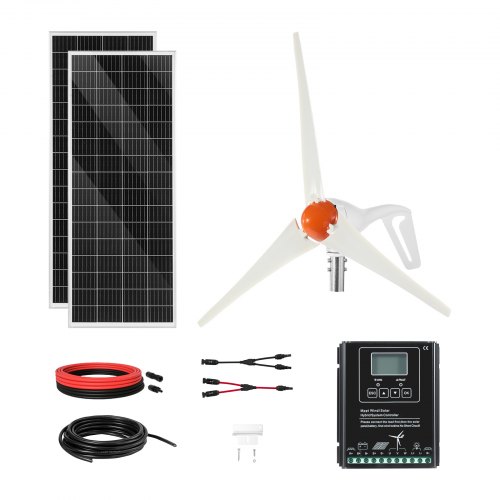
To really understand these kits, let’s break down the essential components you’ll find:
- Solar Panels (PV): These are the familiar flat panels that convert sunlight into direct current (DC) electricity. The more panels you have, and the more efficient they are, the more solar power you’ll generate.
- Wind Turbine Generator: This is the vertical or horizontal axis turbine that converts the kinetic energy of wind into mechanical power, which then drives a generator to produce electricity (also DC).
- Charge Controller (MPPT & PWM): This crucial device regulates the voltage and current coming from both the solar panels and the wind turbine, ensuring your batteries are charged safely and efficiently without overcharging. MPPT (Maximum Power Point Tracking) controllers are generally more efficient, especially for larger systems.
- Battery Bank (Energy Storage): This is where the generated electricity is stored for later use, particularly when the sun isn’t shining or the wind isn’t blowing. Common types include lead-acid (flooded, GEL, AGM) and lithium-ion batteries.
- Inverter (DC to AC): Most home appliances run on alternating current (AC) electricity. The inverter takes the DC power from your batteries (or directly from the panels/turbine if grid-tied) and converts it into usable AC power for your home.
- Mounting Hardware & Wiring: This includes all the structural components to secure your solar panels (roof or ground mounts) and wind turbine (mast or tower), along with the necessary cables and connectors to link all components.
- Safety Disconnects: Essential for maintenance and emergencies, these allow you to safely shut down different parts of the system.
Why Go Hybrid? The Undeniable Advantages of Wind & Solar Power
So, why combine these two powerful forces? The benefits are compelling, particularly if you’re serious about energy independence and long-term savings.
Consistent Power Output (Even When the Sun Doesn’t Shine)
This is the big one. Solar panels are fantastic on sunny days, but what about cloudy weeks or short winter days? Wind turbines can pick up the slack. Many regions experience strong winds when it’s overcast or during cooler months, providing a buffer against solar intermittency. This complementarity means a more stable and reliable power supply for your home.
Enhanced Energy Independence & Grid Resilience
Whether you’re aiming to go completely off-grid or simply want a robust backup system, hybrid kits offer superior energy independence. You’re less beholden to utility companies, fluctuating electricity prices, and grid outages. Imagine your neighbors being without power during a storm, while your lights stay on and your fridge stays cold – that’s the peace of mind a hybrid system delivers.
Significant Long-Term Savings & ROI
While the initial investment can feel substantial, the long-term savings are often enormous. By generating your own electricity, you dramatically reduce or even eliminate your monthly utility bills. With rising energy costs, this becomes an increasingly attractive proposition. Furthermore, many systems significantly increase your property value.
Reduced Carbon Footprint
This one’s a no-brainer. Harnessing clean, renewable energy from the wind and sun means you’re reducing your reliance on fossil fuels, cutting down on greenhouse gas emissions, and contributing directly to a healthier planet. It’s a tangible way to make a difference.
Potential for Rebates and Incentives
The U.S. federal government, many states, and even local municipalities offer significant incentives for homeowners who install renewable energy systems. These can come in the form of tax credits, rebates, or grants, substantially reducing your upfront costs and improving your return on investment.
Decoding Kit Types: Which Hybrid System Is Right For Your Home?
Not all hybrid kits are created equal. Your choice will largely depend on your goals: Do you want complete self-sufficiency, or just to lower your utility bill and have backup power? Let’s explore the main types.

Off-Grid Kits: Total Self-Sufficiency
If you’re dreaming of a life entirely disconnected from the utility grid, an off-grid hybrid kit is your answer. These systems are designed to be your sole power source, meaning they must generate and store enough electricity to meet 100% of your household’s needs. They typically feature larger battery banks and may require more robust components to ensure consistent power supply without any grid backup.
Grid-Tied (Grid-Interactive) Kits: The Best of Both Worlds
This is often the most popular choice for urban and suburban homeowners. A grid-tied hybrid system remains connected to the utility grid. When your system generates more power than you need, the excess can be fed back into the grid, often earning you credits (net metering). When your system isn’t producing enough, you can draw power from the grid. This setup offers the best of both worlds: reduced utility bills and grid reliability, although you generally won’t have power during a grid outage unless you add specific battery backup components.
Hybrid Kits for Backup Power: Peace of Mind
Many homeowners are primarily concerned with reliable backup power during outages. These kits are often smaller, focusing on critical loads (fridge, lights, medical devices) during grid failures. They usually include a battery bank and an automatic transfer switch to seamlessly shift your home’s power source from the grid to your hybrid system when the utility goes down. While they might not power your entire home indefinitely, they provide essential comfort and safety.
To help you visualize the differences, here’s a comparison:
| Feature | Off-Grid Hybrid Kit | Grid-Tied Hybrid Kit | Backup Power Hybrid Kit |
|---|---|---|---|
| Primary Goal | Complete energy independence | Reduce utility bills, grid connection | Reliable power during outages |
| Grid Connection | None | Yes, feeds excess power | Yes, but isolates during outage |
| Battery Bank Size | Large (days of autonomy) | Optional, for backup/self-consumption | Medium (hours/critical loads) |
| Complexity | High | Medium to High | Medium |
| Cost | Highest (large batteries) | Moderate to High | Moderate |
| Ideal For | Remote homes, cabins, total self-reliance | Most residential homes, reduce bills, net metering | Homes in outage-prone areas, critical load backup |
Sizing Your System: How Much Power Do You Really Need?
This is where the rubber meets the road. Choosing the right size kit is critical for satisfaction and efficiency. Too small, and you’ll constantly run out of power; too large, and you’ve overspent. Don’t worry, it’s not as intimidating as it sounds.
Assessing Your Energy Consumption (The Nitty-Gritty)
Your utility bill is your best friend here. Look for your average monthly kilowatt-hour (kWh) usage. Ideally, you want to review a full year’s worth of bills to account for seasonal variations. Many online calculators can help, but a good rule of thumb is to list all your appliances and estimate their wattage and how many hours per day they run. This will give you your daily energy load in Watt-hours (Wh).
For example, a typical American home uses around 893 kWh per month, which translates to roughly 29.7 kWh per day. This is a crucial number for sizing.
Factors Influencing Kit Size (Wind Speeds, Sunlight, Roof Space)
Beyond your energy consumption, several environmental factors will dictate the specific components of your kit:
- Average Wind Speeds: Crucial for wind turbine performance. Sites with an average wind speed of 10 mph (4.5 m/s) or higher are generally good candidates. Anything less, and the turbine might not contribute significantly.
- Sunlight Availability (Solar Insolation): This refers to the amount of solar radiation your location receives. Websites like the National Renewable Energy Laboratory (NREL) provide solar maps to help you assess your area’s potential.
- Available Roof Space/Ground Space: Do you have enough unobstructed area on your roof or property for solar panels and a wind turbine tower? Shade from trees or buildings can drastically reduce solar panel output.
- Local Regulations: Zoning laws, HOA rules, and building codes might dictate turbine height, setback from property lines, and panel placement.
Here’s a simplified table to give you a rough idea of kit sizing based on average US home consumption:
| Home Size/Usage | Daily Energy Needs (Wh) | Recommended Hybrid Kit Size (Approx. Watts) | Typical Application |
|---|---|---|---|
| Small (RV, tiny home, critical backup) | 500 – 3,000 Wh | 300 – 1,000 Watts | Lighting, phone charging, small appliances |
| Medium (Small cabin, moderate backup) | 3,000 – 10,000 Wh | 1,000 – 3,000 Watts | Fridge, some lights, entertainment, small well pump |
| Large (Average home, significant off-grid) | 10,000 – 30,000 Wh | 3,000 – 8,000 Watts | Most home appliances, heating/cooling support |
| Extra Large (Large home, heavy usage) | 30,000+ Wh | 8,000+ Watts | Full home energy independence, multiple large appliances |
Remember, these are rough estimates. A professional assessment is always recommended for precise sizing.
What to Look For in a Quality Home Wind and Solar Power Kit
With so many options on the market, how do you sort the wheat from the chaff? Focus on these critical aspects:
Reputable Brands & Component Quality
Don’t skimp on quality. Research brands known for reliability and performance. This applies to solar panels, wind turbines, batteries, and inverters. Look for certifications (like UL listing for electrical components) and read reviews. A cheap component can lead to poor performance, frequent failures, and potentially dangerous situations.
System Integration & Compatibility
The beauty of a kit is that components are *designed to work together. Ensure the charge controller is compatible with both the solar array and the wind turbine’s output. The inverter should match your battery bank’s voltage and your home’s AC requirements. A well-integrated system runs more efficiently and is easier to manage.

Warranties & Customer Support
Renewable energy systems are a long-term investment. What kind of warranties are offered on the panels (performance and product), turbine, batteries, and inverter? Good customer support from the kit provider can be invaluable if you encounter technical issues or need replacement parts down the line.
Expandability for Future Needs
Life changes. You might add an electric vehicle, expand your home, or simply find your energy needs increasing. Consider kits that allow for easy expansion – can you add more solar panels, another wind turbine, or more battery capacity in the future without replacing the entire core system?
Installation: DIY or Pro? What You Need to Know
This is often the biggest hurdle for homeowners. Can you install a hybrid kit yourself, or should you call in the cavalry?
Evaluating Your DIY Skills & Safety
Smaller, simpler kits (e.g., for RVs or basic backup) might be within the capabilities of a handy homeowner. However, installing a full home system involves electrical wiring, working at heights (for panels and especially wind turbines), and potentially heavy lifting. If you’re not experienced with electrical work, structural mounting, and safety protocols, DIY could be dangerous and lead to costly mistakes. Be honest with yourself about your comfort level and expertise.
Permitting and Regulations: Don’t Skip This!
This is absolutely critical. Most municipalities require permits for installing renewable energy systems, especially grid-tied ones. There are often strict building codes, electrical codes, and zoning regulations to follow. Your utility company will also have requirements for connecting to their grid. Failing to get proper permits can lead to fines, forced removal, or even make your home uninsurable. Always check with your local planning department and utility provider before starting any work.
When to Call in the Experts
For most full home wind and solar power kits, professional installation is the safest and most reliable option. Qualified installers:
- Ensure correct sizing and optimal placement for maximum energy production.
- Handle all permitting and inspections.
- Guarantee the system is installed safely and up to code.
- Often provide better warranties and long-term support.
While DIY saves on labor costs, the peace of mind and expertise of a professional are often worth the investment.
Costs, ROI, and Incentives: Making the Numbers Work For You
Let’s talk money. Understanding the financial aspects is key to making this investment truly pay off.
Initial Investment: What to Expect
The cost of home wind and solar power kits varies widely based on size, components, and whether you DIY or hire professionals. Small backup kits might start from a few thousand dollars, while a large, off-grid system for an entire home could easily be $25,000 to $70,000 or more, including installation. The wind turbine component often adds a significant cost, particularly for the tower and foundation.
Understanding Your Return on Investment (ROI)
Your ROI comes primarily from avoided electricity costs. The higher your current utility bills and the more efficient your system, the faster you’ll recoup your investment. Consider the lifespan of the components: solar panels often have 25+ year performance warranties, and quality wind turbines can last 20+ years with proper maintenance. Over this period, the savings can be substantial, often making the system pay for itself multiple times over.
Federal, State, and Local Incentives (USA Specific)
This is where you can significantly boost your ROI. In the USA, the primary federal incentive is the Investment Tax Credit (ITC), also known as the Residential Clean Energy Credit. It offers a 30% tax credit for eligible wind and solar energy systems installed in your home. This is a dollar-for-dollar reduction in your federal tax liability!
Beyond federal, many states offer their own incentives:
- State Tax Credits: Similar to federal, these reduce your state tax burden.
- Rebates: Direct payments or discounts on equipment from state programs or utility companies.
- Net Metering: Allows you to sell excess electricity back to the grid at a retail or near-retail rate.
- Property Tax Exemptions: Prevents your property taxes from increasing due to the added value of a renewable energy system.
- Sales Tax Exemptions: Waives sales tax on the purchase of equipment.
Always research the specific incentives available in your state and local area. Websites like DSIRE (Database of State Incentives for Renewables & Efficiency) are excellent resources.
Maintaining Your Hybrid Power System for Peak Performance
Like any complex system, a hybrid wind and solar kit requires some basic maintenance to ensure longevity and optimal performance. It’s not set-and-forget, but it’s also not overly demanding.
Routine Checks for Solar Panels
- Cleaning: Periodically clean your solar panels, especially if you live in a dusty area or one with heavy pollen. Dirt, leaves, and bird droppings can reduce efficiency. Use water and a soft brush; avoid harsh chemicals.
- Shading: Regularly check for new shading sources, like growing trees or new construction, and trim foliage as needed.
- Inspections: Annually inspect panels for cracks, loose wiring, or signs of animal nesting.
Wind Turbine Maintenance Essentials
- Blade Inspection: Check blades for cracks, chips, or damage, especially after severe weather.
- Tower Stability: Ensure the tower is secure and free from corrosion. Guy wires (if applicable) should be taut.
- Moving Parts: Some turbines require periodic lubrication of bearings. Check the manufacturer’s recommendations.
- Controller/Inverter Check: Monitor system readouts for any error messages or unusual performance indicators.
Battery Bank Care & Longevity
Batteries are often the most expensive component to replace, so proper care is crucial:
- Temperature Control: Keep batteries in a stable, temperate environment. Extreme heat or cold can shorten their lifespan.
- Water Levels (for Flooded Lead-Acid): If you have flooded lead-acid batteries, check and top up distilled water levels regularly.
- Charge Cycles: Avoid deep discharges whenever possible, as this reduces battery lifespan. Your charge controller should manage this, but monitoring helps.
- Terminal Inspection: Keep terminals clean and free of corrosion.
Common Misconceptions About Home Wind and Solar Power Kits
There’s a lot of misinformation out there. Let’s clear up a few common myths.
“They’re too expensive for the average homeowner.”
While the upfront cost is an investment, it’s becoming increasingly accessible. Between falling equipment prices, generous incentives, and the long-term savings on electricity bills, hybrid systems often have an attractive ROI, making them a financially sound decision for many homeowners.
“They’re unreliable.”
Modern wind turbines and solar panels are incredibly robust and designed for decades of reliable operation. The beauty of a hybrid system is its inherent redundancy – if one resource is low, the other can compensate, leading to more* reliability than a single-source system. With proper maintenance, these systems are highly dependable.
“Installation is impossible for DIYers.”
While complex installations (especially full home systems) are best left to professionals, smaller kits are designed with DIYers in mind. Many manufacturers provide detailed instructions, and online communities offer ample support. The key is to be realistic about your skills and adhere to all safety and regulatory guidelines.
Embrace Your Energy Future
Home wind and solar power kits offer a compelling path to energy independence, significant savings, and a reduced environmental impact. By understanding the components, choosing the right system for your needs, and knowing what to expect in terms of costs and maintenance, you’re well-equipped to make an informed decision.
The future of home energy is distributed, clean, and increasingly within your control. Take the first step today towards harnessing the boundless power of the wind and sun for your home.
Frequently Asked Questions
What is the primary benefit of a hybrid wind and solar power kit over a single-source system?
The primary benefit is enhanced reliability and consistency of power generation. Wind and solar resources are complementary; when the sun isn’t shining (e.g., at night or on cloudy days), the wind might be blowing, and vice-versa. This synergy ensures a more stable and continuous power supply, reducing reliance on the grid or the risk of power outages.
Are home wind and solar power kits difficult to install for a typical homeowner?
It depends on the kit’s size and complexity. Smaller kits for backup power or RVs might be suitable for experienced DIYers. However, full home systems, especially grid-tied ones, involve complex electrical wiring, structural mounting, and adherence to strict building codes and utility regulations. For these, professional installation is strongly recommended for safety, efficiency, and compliance.
How much do home wind and solar power kits typically cost?
Costs vary significantly based on system size, components, and installation method. Small backup kits can start from a few thousand dollars. A comprehensive off-grid or grid-tied system for an entire home, including installation, can range from $25,000 to $70,000 or more. Remember to factor in potential federal and state incentives that can reduce the net cost.
What kind of maintenance do hybrid wind and solar systems require?
Maintenance is generally low but essential for longevity. Solar panels require periodic cleaning and shading checks. Wind turbines need occasional blade inspections, tower stability checks, and sometimes lubrication. Battery banks, especially flooded lead-acid types, require regular water level checks and temperature management. All components should be monitored for optimal performance and any signs of damage.
Can I completely go off-grid with a home wind and solar power kit?
Yes, completely going off-grid is a primary application for many hybrid kits. These systems are designed to generate and store all the electricity your home needs without any connection to the utility grid. However, going fully off-grid requires careful sizing, typically larger battery banks, and a commitment to managing your energy consumption more actively.
What U.S. incentives are available for installing home wind and solar power kits?
The main federal incentive is the Residential Clean Energy Credit (formerly ITC), which offers a 30% tax credit on eligible wind and solar systems. Additionally, many states and local municipalities offer their own incentives, such as state tax credits, rebates, net metering programs (selling excess power back to the grid), and property or sales tax exemptions. Always check specific incentives for your location.
