
Home Solar and Wind Power Systems: Your Definitive Guide to Hybrid Renewable Energy
Dreaming of energy independence? Tired of volatile electricity bills? Imagine a home powered by nature’s rhythm – the sun by day, the wind by night, and often, both working in harmony. You’re not alone. More homeowners are looking to home solar and wind power systems to achieve energy security, reduce their carbon footprint, and take control of their utility costs.
Table of Contents
- Home Solar and Wind Power Systems: Your Definitive Guide to Hybrid Renewable Energy
- Are Home Solar and Wind Power Systems Right for Your Home? Unpacking the Hybrid Advantage
- Understanding Your Energy Needs: More Than Just KWH
- Location, Location, Location: Assessing Your Renewable Resource Potential
- The Cost-Benefit Equation: Beyond the Initial Investment
- How Hybrid Systems Work: The Synergy of Sun and Wind
- What is a Hybrid Solar-Wind System?
- Key Components of Your Home Hybrid Powerhouse
- The Undeniable Benefits of a Hybrid Setup
- Enhanced Reliability and Energy Security
- Optimal Resource Utilization
- Reduced Carbon Footprint and Environmental Impact
- Potential for Greater Energy Independence and Lower Bills
- The Realities: Challenges and Considerations for Homeowners
- Higher Upfront Costs and System Complexity
- Space Requirements and Aesthetic Concerns
- Permitting and Zoning Hurdles
- Maintenance and Longevity
- Breaking Down the Numbers: Cost, Savings, and ROI
- Initial Investment: What to Expect
- Government Incentives and Rebates
- Calculating Your Return on Investment (ROI)
- Planning Your Home Hybrid System: A Step-by-Step Approach
- Step 1: Assess Your Site and Energy Needs
- Step 2: Research Local Regulations and Incentives
- Step 3: Design Your System (Professional Consultation is Key)
- Step 4: Installation and Permitting
- Step 5: Ongoing Monitoring and Maintenance
- Solar vs. Wind vs. Hybrid: Which is Best for You?
- The Future of Home Renewable Energy: Innovation and Integration
- Final Thoughts: Powering Your Home, Your Way
But is a hybrid solar-wind system truly the right fit for *your property? How do these systems actually work together, and what’s the real cost? This isn’t just a guide; it’s your roadmap to understanding, evaluating, and potentially embracing a powerful, sustainable future for your home.
Are Home Solar and Wind Power Systems Right for Your Home? Unpacking the Hybrid Advantage
Before diving into the nuts and bolts, let’s address the most pressing question: Will a hybrid solar and wind system benefit you*? It’s not a one-size-fits-all solution, and a clear understanding of your specific circumstances is crucial.
Understanding Your Energy Needs: More Than Just KWH
The first step in any renewable energy journey is understanding your home’s energy consumption. This goes beyond looking at your monthly bill’s kilowatt-hour (KWH) total. You need to know:
- Average Daily Consumption: How much electricity do you use on a typical day?
- Peak Loads: When do you use the most electricity? Morning? Evening? Do you have energy-intensive appliances like an electric dryer or central air conditioning?
- Seasonal Variations: Does your usage spike in summer for AC or winter for heating?
Understanding these patterns helps size your system correctly, ensuring you generate enough power when you need it most.
Location, Location, Location: Assessing Your Renewable Resource Potential
This is where the magic (or lack thereof) happens. Your geographical location and property characteristics dictate the viability of solar, wind, or a combination.
- Solar Irradiation: How many peak sun hours does your roof receive? Are there significant shading issues from trees, neighboring buildings, or even your own chimneys? A south-facing, unshaded roof is ideal, but east/west orientations can still be productive.
- Wind Resource: This is often the trickiest part for homeowners. Wind speeds can vary dramatically even within a few miles.
- Average Wind Speed: For small-scale home wind turbines to be economically viable, you generally need an average wind speed of at least 10-12 mph (4.5-5.5 m/s) at the turbine’s hub height.
- Obstacles & Turbulence: Trees, hills, and buildings create wind turbulence, which can reduce turbine efficiency and even cause premature wear. Turbines need to be installed on a tall tower, typically at least 30 feet higher than any obstruction within 500 feet, to capture smooth, consistent wind. This is why small wind often struggles in suburban or urban environments.
A simple visual assessment can give you an initial idea, but a professional site assessment, including a wind resource study (often involving anemometers), is crucial for wind power.
Here’s a conceptual look at how increasing wind speed impacts potential turbine output:
| Average Wind Speed (MPH) | Small Wind Turbine Power Output (Relative) | Viability for Home Use |
|---|---|---|
| 0-7 | Very Low | Not Recommended |
| 8-11 | Low to Moderate | Marginal (consider carefully) |
| 12-15 | Moderate to High | Good Potential |
| 16+ | High to Excellent | Highly Recommended |
The Cost-Benefit Equation: Beyond the Initial Investment
Let’s be real: Cost is a significant factor. Hybrid systems often have a higher upfront investment than standalone solar or wind. However, the benefits can outweigh this for the right situation:
- Return on Investment (ROI): This calculates how long it takes for your energy savings and incentives to pay back the initial system cost.
- Incentives: Federal, state, and local programs (like tax credits, rebates, and Renewable Energy Credits) can significantly reduce your net cost.
- Property Value: Homes with renewable energy systems often see an increase in property value.
- Peace of Mind: The value of energy independence and knowing you’re protected during outages is hard to quantify, but very real.
How Hybrid Systems Work: The Synergy of Sun and Wind
The beauty of a hybrid system lies in its ability to harness two complementary renewable resources. Solar excels when the sun shines; wind can produce power day or night, regardless of cloud cover. When one resource is low, the other can pick up the slack, leading to more consistent power generation.
What is a Hybrid Solar-Wind System?
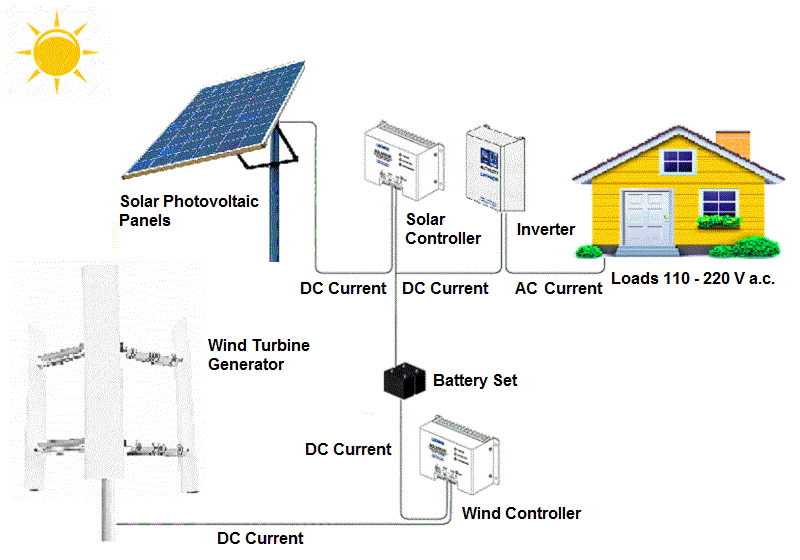
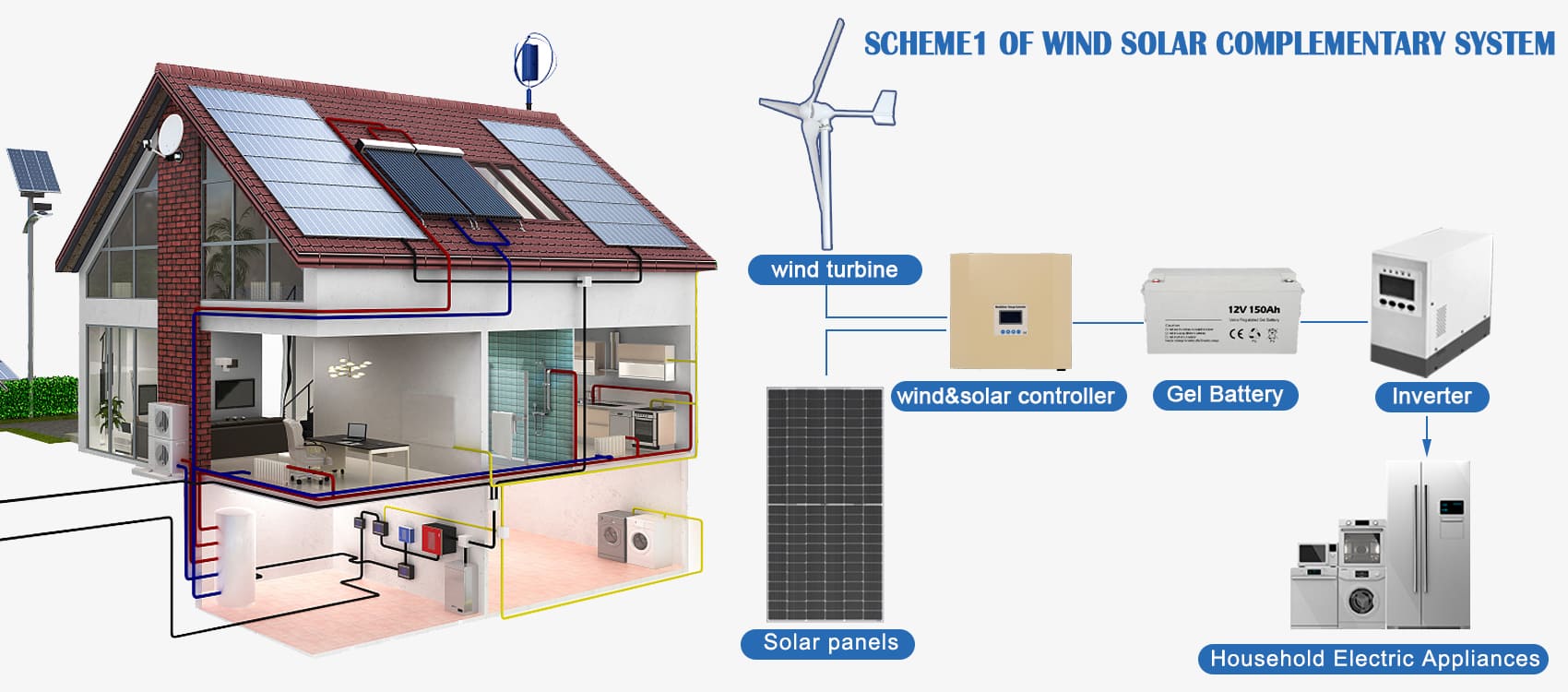
Simply put, a hybrid solar-wind system combines photovoltaic (PV) solar panels with a small wind turbine to generate electricity for your home. These systems are often coupled with battery storage to ensure a continuous power supply, even when both sun and wind are absent.
Key Components of Your Home Hybrid Powerhouse
Understanding the individual pieces helps you appreciate the system as a whole. Here’s what goes into a typical home solar and wind power system:
- Solar Panels (PV modules): These convert sunlight directly into DC (direct current) electricity. Panels vary in efficiency, durability, and aesthetics.
- Wind Turbines: These convert the kinetic energy of wind into mechanical energy, which then drives a generator to produce AC (alternating current) or DC electricity. Small home turbines typically range from 400W to 10kW.
- Horizontal-Axis Wind Turbines (HAWT): The most common type, resembling large utility-scale turbines. They are efficient but require a clear, high-wind path.
- Vertical-Axis Wind Turbines (VAWT): Often quieter and can perform better in turbulent wind conditions, making them potentially more suitable for some residential settings, though generally less efficient than HAWTs.
- Charge Controller: This crucial component regulates the voltage and current from both the solar panels and wind turbine to safely charge the battery bank. It prevents overcharging and can optimize power flow.
- Battery Bank: The heart of energy independence, batteries store excess electricity generated by the solar panels and wind turbine for use when production is low (e.g., at night, on cloudy days, or during calm periods).
- Types: Common types include lead-acid (flooded, sealed gel, AGM) and lithium-ion (LiFePO4 is popular for residential).
- Capacity: Measured in kilowatt-hours (KWH), determining how much energy can be stored.
- Depth of Discharge (DoD): How much of the battery’s capacity can be used before recharging is needed, impacting battery lifespan.
- Inverter: This device converts the DC electricity from the solar panels, wind turbine, and battery bank into AC electricity, which is what most home appliances use.
- Off-Grid Inverter: Powers your home entirely independent of the utility grid.
- Grid-Tied Inverter: Connects to the utility grid, allowing you to draw power from or send excess power back to the grid.
- Hybrid Inverter: Can manage power flow from multiple sources (solar, wind, grid, batteries) and intelligently switch between them.
- Balance of System (BOS): This encompasses all the other necessary components like wiring, mounting hardware for panels and turbines, safety disconnects, circuit breakers, and monitoring equipment.
Here’s a quick overview of how each component plays its part:
| Component | Primary Function | Key Consideration |
|---|---|---|
| Solar Panels | Convert sunlight to DC electricity | Efficiency, roof space, shading |
| Wind Turbine | Convert wind to AC/DC electricity | Average wind speed, tower height, zoning |
| Charge Controller | Regulates power to batteries | System voltage, MPPT vs. PWM |
| Battery Bank | Stores excess energy | Capacity, type, DoD, lifespan |
| Inverter | Converts DC to AC for home use | Off-grid/grid-tied/hybrid, power rating |
The Undeniable Benefits of a Hybrid Setup
Why go hybrid when you could just pick one? The combined approach often unlocks advantages neither standalone system can offer.
Enhanced Reliability and Energy Security
This is perhaps the biggest draw. Solar output drops on cloudy days or at night. Wind output fluctuates with wind speed. By combining them, you smooth out these intermittencies. If the sun isn’t shining, perhaps the wind is blowing. This redundancy leads to a more consistent power supply and greater energy security, especially when paired with battery storage. You’re less reliant on any single weather pattern.
Optimal Resource Utilization
Many regions experience seasonal complementarity: sunny summers with lighter winds, and windier winters with shorter daylight hours. A hybrid system capitalizes on these natural cycles, ensuring you’re generating power effectively year-round. You’re maximizing the renewable energy potential of your property at all times.
Reduced Carbon Footprint and Environmental Impact
Generating your own clean electricity significantly reduces your reliance on fossil fuels, cutting down on greenhouse gas emissions. It’s a tangible step toward a more sustainable lifestyle and contributing to a healthier planet.
Potential for Greater Energy Independence and Lower Bills
With a well-sized hybrid system, especially one with ample battery storage, you can dramatically decrease or even eliminate your dependence on the utility grid. This translates to substantial long-term savings on electricity bills and protection against future utility rate hikes. For remote properties, a hybrid system can be more cost-effective than extending power lines.
The Realities: Challenges and Considerations for Homeowners
While the benefits are compelling, it’s essential to approach hybrid systems with a realistic understanding of the potential hurdles.
Higher Upfront Costs and System Complexity
Combining two generation sources, along with sophisticated charge controllers, inverters, and battery banks, inherently means a higher initial investment compared to a standalone solar or wind system. The design and installation also require more specialized knowledge and coordination.
Space Requirements and Aesthetic Concerns
Solar panels need adequate, unshaded roof or ground space. Wind turbines require a tall tower and a significant clear area around them, which can be an aesthetic concern for some homeowners and might not be feasible in densely populated areas. The visual impact of a tall turbine tower can be a deterrent.
Permitting and Zoning Hurdles
Installing a hybrid system, particularly a wind turbine, often involves complex permitting processes. Local zoning laws might have height restrictions, setback requirements, noise ordinances, or even outright bans on residential wind turbines. Researching these regulations early is critical to avoid costly delays or outright rejection of your project.
Maintenance and Longevity
Both solar panels and wind turbines are designed for longevity, but they do require maintenance. Solar panels need occasional cleaning, and inverters have a lifespan of 10-15 years. Wind turbines, with their moving parts, require more regular inspection and maintenance, including bearing lubrication and blade checks. Batteries also have a finite lifespan and will need replacement, typically every 5-15 years depending on type and usage.

Breaking Down the Numbers: Cost, Savings, and ROI
Let’s talk dollars and cents. Understanding the financial implications is key to making an informed decision.
Initial Investment: What to Expect
The cost of a home solar and wind power system varies widely based on system size, component quality, installation complexity, and your location. Here are some general ranges (for a typical 5kW equivalent home system, excluding battery storage unless specified):
- Solar Panels (5kW system): $15,000 – $25,000 (before incentives)
- Small Wind Turbine (1kW – 5kW): $10,000 – $35,000 (including tower and installation)
- Battery Storage (10-20 kWh): $10,000 – $20,000+ (Lithium-ion)
- Hybrid Inverter & Balance of System: $5,000 – $15,000
A complete hybrid solar and wind power system (5kW solar + 2kW wind + 15kWh battery) could range from $40,000 to $95,000+ before incentives. These are rough estimates; always get multiple quotes from qualified installers.
Government Incentives and Rebates
These can significantly reduce your out-of-pocket costs:
- Federal Solar Investment Tax Credit (ITC): Currently, this offers a 30% tax credit for both solar PV and small wind projects. This is a dollar-for-dollar reduction in your federal tax liability.
- State and Local Incentives: Many states and municipalities offer additional rebates, tax credits, or property tax exemptions for renewable energy installations.
- Net Metering: For grid-tied systems, net metering policies allow you to sell excess electricity back to the grid, earning credits on your utility bill.
Calculating Your Return on Investment (ROI)
ROI for a hybrid system is often longer than for standalone solar due to the added complexity and cost of wind turbines. However, the enhanced reliability and energy independence can provide intangible benefits. To calculate your ROI, you’ll need to consider:
- Total System Cost (after incentives).
- Annual Energy Savings: How much you would have paid your utility company.
- Estimated Lifespan of Components: Solar panels (25-30 years), wind turbines (20-25 years), batteries (5-15 years).
A professional installer can provide a detailed financial analysis tailored to your specific situation.
| System Type | Estimated Upfront Cost (5kW equivalent, before incentives) | Average Annual Savings (Approximate) | Key Advantages |
|---|---|---|---|
| Standalone Solar PV | $15,000 – $25,000 | $800 – $2,000 | Lower upfront cost, less maintenance, widely applicable |
| Standalone Small Wind | $10,000 – $35,000 | $500 – $1,500 (highly dependent on wind resource) | Generates power at night/winter, good for windy, rural sites |
| Hybrid Solar + Wind (+ Battery) | $40,000 – $95,000+ | $1,500 – $4,000+ (highly variable) | Enhanced reliability, year-round generation, max energy independence |
Planning Your Home Hybrid System: A Step-by-Step Approach
Ready to move forward? Here’s a practical roadmap to guide you.
Step 1: Assess Your Site and Energy Needs
Revisit your energy bills. Conduct an initial visual inspection of your property for solar access and potential wind turbine placement. Consider what level of energy independence you desire (partial offset, full off-grid, backup power).
Step 2: Research Local Regulations and Incentives
Contact your local planning department and utility company. Ask about zoning laws for wind turbines, building permits for solar, interconnection agreements for grid-tied systems, and any available state or local incentives.
Step 3: Design Your System (Professional Consultation is Key)
This is where expert help is invaluable. A reputable installer will perform a detailed site assessment, analyze your energy profile, and design a system optimized for your specific conditions and goals. They’ll help you choose the right components and size everything appropriately.
Step 4: Installation and Permitting
Once the design is finalized and permits are secured, the installation process begins. Choose certified, experienced installers. For grid-tied systems, the utility company will inspect the installation and connect it to the grid. For off-grid systems, thorough testing will ensure everything functions as intended.
Step 5: Ongoing Monitoring and Maintenance
Most modern systems come with monitoring capabilities, allowing you to track energy production and consumption. Establish a regular maintenance schedule with your installer, especially for wind turbines and battery banks, to ensure optimal performance and longevity.
Solar vs. Wind vs. Hybrid: Which is Best for You?
To help solidify your decision, here’s a direct comparison:
| Feature | Standalone Solar PV | Standalone Small Wind | Hybrid Solar-Wind |
|---|---|---|---|
| Primary Resource | Sunlight | Wind | Sunlight & Wind |
| Generation Profile | Daytime, clear weather | Day & Night, windy conditions | Consistent (smoother output) |
| Space Needs | Roof or ground area for panels | Tall tower, clear buffer zone | Combination of both |
| Maintenance | Low (cleaning, inverter replacement) | Moderate (moving parts, periodic checks) | Moderate to High (both components) |
| Ideal Environment | Sunny climates, clear roofs | Consistently windy, open rural areas | Areas with good sun and decent wind resources, desire for max reliability |
| Permitting Complexity | Moderate | High (zoning, height limits) | High |
The Future of Home Renewable Energy: Innovation and Integration
The landscape of home renewable energy is constantly evolving. We’re seeing advancements in:
- Battery Technology: Denser, cheaper, longer-lasting batteries are making energy storage more accessible.
- Smart Home Integration: Systems are becoming more intelligent, optimizing energy usage based on weather forecasts, utility rates, and household demand.
- Microgrids: The concept of localized, self-sufficient energy grids, potentially powered by hybrid home systems, is gaining traction.
- Efficiency Gains: Solar panels continue to get more efficient, and wind turbine designs are being refined for quieter and more effective small-scale operation.
These innovations promise to make home solar and wind power systems even more attractive and effective in the years to come.
Final Thoughts: Powering Your Home, Your Way
Choosing a home solar and wind power system is a significant decision, but one that offers incredible rewards in terms of energy independence, environmental stewardship, and long-term financial savings. It’s about empowering yourself and your home with the clean, reliable energy of nature.
By carefully assessing your needs, understanding the technology, and working with knowledgeable professionals, you can confidently embark on this journey. The future of energy is here, and it’s powered by you.
Frequently Asked Questions
What is the primary benefit of a hybrid solar-wind system over a standalone system?
The primary benefit is enhanced reliability and consistent power generation. Solar panels perform best on sunny days, while wind turbines can produce electricity day or night, particularly in winter months when wind resources are often stronger. This complementarity smooths out intermittencies, ensuring a more stable power supply compared to relying on a single fluctuating source.
How do I know if my home is suitable for a wind turbine?
Suitability for a home wind turbine depends heavily on your average wind speed and the surrounding environment. You generally need consistent average wind speeds of 10-12 mph or higher at the turbine’s hub height. Obstructions like trees and buildings can create turbulence, reducing efficiency. A professional site assessment, including a wind resource analysis, is crucial to determine viability.
Are home solar and wind power systems expensive?
Yes, hybrid systems typically have a higher upfront cost than standalone solar or wind systems due to the complexity of integrating two power sources, a charge controller, inverter, and often battery storage. Initial costs can range from $40,000 to $95,000+ before incentives for a typical home system, but federal, state, and local incentives can significantly reduce the net cost.
What kind of maintenance do these systems require?
Solar panels require relatively low maintenance, mainly occasional cleaning. Wind turbines, with their moving parts, require more regular checks and maintenance, such as lubrication and blade inspections. Battery banks also have a finite lifespan (5-15 years) and will need replacement. It’s recommended to have professional maintenance checks annually.
Can I go completely off-grid with a home solar and wind system?
Yes, it is possible to go completely off-grid with a properly sized hybrid solar and wind system combined with a robust battery bank. However, designing an off-grid system requires meticulous planning to ensure sufficient power generation and storage for all your energy needs, especially during extended periods of low sun and wind.
How long do home solar and wind power systems last?
Solar panels typically have a lifespan of 25-30 years, often with performance guarantees. Small wind turbines are designed to last 20-25 years with proper maintenance. Inverters usually need replacement after 10-15 years, and battery banks generally last 5-15 years depending on the type and how they are used.
