
Vertical Wind Turbines For Homes: The Unbiased Homeowner’s Guide to Powering Your Property
Are you tired of skyrocketing electricity bills? Do you dream of a more sustainable, energy-independent home? For many homeowners, the idea of harnessing the wind’s power is incredibly appealing. You’ve likely seen traditional ‘windmill’ style turbines, but there’s another player gaining traction: the Vertical Axis Wind Turbine (VAWT).
Table of Contents
- Vertical Wind Turbines For Homes: The Unbiased Homeowner’s Guide to Powering Your Property
- What Are Vertical Wind Turbines (VAWTs) and How Do They Work?
- The Core Difference: VAWT vs. HAWT (Horizontal Axis Wind Turbines)
- Key Components of a Residential VAWT System
- Why Consider a Vertical Wind Turbine For Your Home? (The Unfiltered Pros)
- Urban & Suburban Suitability
- Lower Maintenance (Generally)
- Wildlife Friendliness
- Aesthetic Appeal
- Safer Installation & Servicing
- The Reality Check: What VAWTs Aren’t (And Why Some People Are Disappointed)
- Lower Efficiency at Scale
- Intermittency: It Still Relies on Wind
- Site Specificity is CRITICAL
- Cost vs. Output for Small-Scale
- VAWTs vs. HAWTs for Residential Use: A Head-to-Head Comparison
- Sizing Your Vertical Wind Turbine: How Much Power Do You Really Need?
- Calculating Your Home’s Energy Needs
- Understanding VAWT Power Ratings (Watts, kW)
- Wind Resource Assessment: The Non-Negotiable Step
- The True Cost of Going Vertical Wind: Beyond the Turbine Price Tag
- Turbine Unit Cost
- Installation Expenses
- Balance of System (BOS) Costs
- Permitting & Interconnection Fees
- Maintenance & Lifespan
- Incentives & Rebates
- Integrating VAWTs with Your Home Energy System: Hybrid is the Future
- VAWT + Solar: Maximizing Year-Round Generation
- VAWT + Battery Storage: Energy Independence and Backup Power
- Grid-Tied vs. Off-Grid Systems
- Finding the Right Vertical Wind Turbine For Your Home: What to Look For
- Power Output & Efficiency
- Cut-in Speed & Survival Speed
- Noise Level
- Durability & Warranty
- Manufacturer Reputation & Support
- Certifications
- Before You Buy: Critical Questions & Next Steps
But here’s the honest truth: while VAWTs offer some compelling advantages for residential settings, they also come with a fair share of misconceptions and challenges. Before you invest in what seems like a simple solution, let’s cut through the marketing hype and get real about whether a vertical wind turbine is truly the right fit for your home.
What Are Vertical Wind Turbines (VAWTs) and How Do They Work?
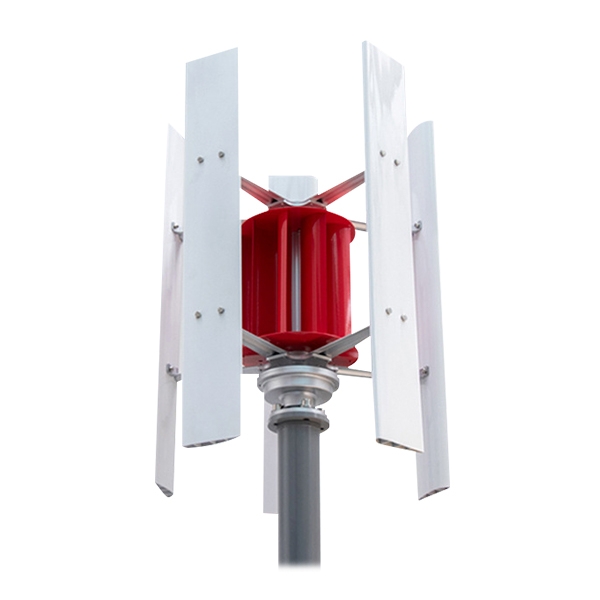
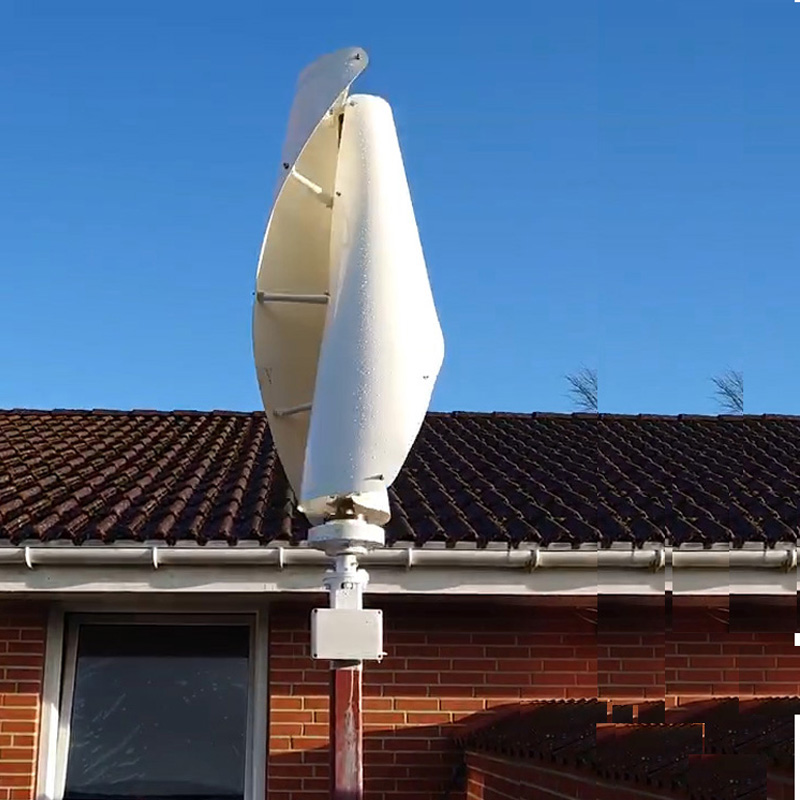
Unlike their more common, propeller-like cousins, Vertical Axis Wind Turbines (VAWTs) have blades that rotate around a vertical shaft. Think of them standing upright, spinning like a top, rather than facing into the wind like an airplane propeller. This fundamental difference gives them unique characteristics that are particularly interesting for residential applications.
There are two primary types of VAWTs you’ll encounter:
- Savonius Turbines: These look like cut-in-half oil barrels stacked on top of each other. They work on the principle of drag, where the wind pushes against the concave side of the blade, causing rotation. They excel at starting in low wind speeds but are generally less efficient at converting wind energy into electricity.
- Darrieus Turbines: These often have curved, egg-beater-like blades or straight blades that are angled (H-rotor or Gorlov helix designs). They rely on lift, similar to an airplane wing, making them more efficient than Savonius types. However, Darrieus turbines typically require an external force to start spinning (a ‘cut-in speed’).
The Core Difference: VAWT vs. HAWT (Horizontal Axis Wind Turbines)
To truly understand VAWTs, you need to compare them to Horizontal Axis Wind Turbines (HAWTs) – the classic three-bladed machines you see on wind farms. HAWTs have blades that rotate on a horizontal axis, similar to a plane’s propeller, and must always face into the wind to operate efficiently. This requires a yaw mechanism to constantly turn the turbine to catch the wind.
VAWTs, on the other hand, don’t need to orient themselves to the wind. Because their blades are arranged vertically, they can capture wind coming from any direction simultaneously. This omnidirectional capability is a game-changer for turbulent wind environments, like those often found in urban or suburban areas.
Key Components of a Residential VAWT System
A typical vertical wind power system for your home isn’t just the turbine itself. It’s a collection of integrated components designed to efficiently convert wind into usable electricity:
- Turbine Blades & Rotor: The visible part that catches the wind.
- Generator: Located at the base of the turbine (a key VAWT advantage!), it converts mechanical rotation into electrical energy.
- Tower/Mast: Supports the turbine at a sufficient height to catch consistent wind.
- Charge Controller: Regulates the power flowing from the turbine to your battery bank or inverter, protecting the system from overcharging.
- Inverter: Converts the DC (Direct Current) electricity generated by the turbine into AC (Alternating Current) electricity that your home appliances use, or that can be fed into the grid.
- Battery Bank (Optional): Stores excess energy for use when the wind isn’t blowing (essential for off-grid systems, beneficial for grid-tied with backup).
- Grid-Tie Equipment (Optional): Allows your system to connect to the existing utility grid, enabling net metering (selling excess power back).
Why Consider a Vertical Wind Turbine For Your Home? (The Unfiltered Pros)
So, why are more homeowners looking at VAWTs despite the dominance of solar panels and traditional HAWTs? Here’s where VAWTs truly shine for residential applications:
Urban & Suburban Suitability
This is arguably the biggest selling point for residential VAWTs. Traditional HAWTs need clear, consistent wind flow, which is rare in built-up areas due to buildings and trees creating turbulence. VAWTs, with their omnidirectional wind capture, are far more tolerant of turbulent, shifting winds. This makes them a more viable option for smaller lots or properties with nearby obstructions.
- Quieter Operation: Generally, VAWTs operate with significantly less noise than HAWTs. Their slower rotational speeds and blade designs produce a quieter hum, making them more neighbor-friendly and less intrusive for your own enjoyment of your property.
- Less Visual Impact: While still a visible structure, many VAWT designs are considered more aesthetically pleasing or less ‘industrial’ than propeller turbines. They often blend into the landscape better, which can be a significant factor for homeowners and local permitting.
Lower Maintenance (Generally)
Because the generator and most mechanical components are located at the base of the turbine, VAWTs offer easier, safer, and less costly maintenance. You don’t need specialized equipment or precarious climbs to access critical parts. This translates to lower long-term operating costs and less hassle for the homeowner.
Wildlife Friendliness
The slower rotation speeds and solid, vertical blade profiles of many VAWTs make them less of a threat to birds and bats compared to the rapidly spinning blades of HAWTs. While no system is entirely risk-free, VAWTs are generally considered a more eco-friendly option in terms of avian impact.

Aesthetic Appeal
Modern VAWT designs are often sleek, futuristic, and can even be seen as a statement piece for a contemporary home. This isn’t just about functionality; it’s about integrating renewable energy seamlessly into your home’s design.
Safer Installation & Servicing
Installation can be simpler and safer because heavy lifting equipment might not be needed for elevated components, unlike HAWTs where the generator and rotor are at the top of the tower. This can reduce initial installation costs and long-term servicing risks.
The Reality Check: What VAWTs Aren’t (And Why Some People Are Disappointed)
Now, let’s address the elephant in the room. The sentiment on forums like Reddit often highlights disappointment with small-scale wind turbines. It’s crucial to have realistic expectations:
Lower Efficiency at Scale
While great for turbulent winds, residential VAWTs generally have a lower power output per square meter of swept area compared to optimally sited, large HAWTs. This isn’t to say they’re useless, but they often produce less energy than you might expect for their physical footprint, especially compared to their industrial counterparts.
Intermittency: It Still Relies on Wind
No matter how clever the design, a wind turbine only generates power when the wind blows. This intermittency means a VAWT alone might not consistently meet all your home’s energy needs. This is why hybrid systems (wind + solar + battery) are often the most practical solution for true energy independence.
Site Specificity is CRITICAL
This cannot be stressed enough: not every property is suitable for a wind turbine, vertical or horizontal. Even VAWTs need a decent wind resource. A home surrounded by tall buildings or dense trees might not have sufficient wind speeds or consistent flow to make a turbine economically viable. Guessing your wind resource is a recipe for disappointment.
Cost vs. Output for Small-Scale
The core of the ‘small-scale wind turbines suck’ argument often comes down to economics. For many residential sites, the upfront cost of a small VAWT system, including installation and balance of system components, may not yield a compelling return on investment based purely on electricity generation, especially when compared to solar panels in areas with good sun exposure.
VAWTs vs. HAWTs for Residential Use: A Head-to-Head Comparison
Let’s break down the key differences to help you weigh your options:
| Feature | Vertical Axis Wind Turbine (VAWT) | Horizontal Axis Wind Turbine (HAWT) |
|---|---|---|
| Efficiency (at scale) | Generally lower per swept area, but efficient in turbulent wind. | Higher per swept area in ideal, laminar wind conditions. |
| Noise Level | Quieter operation due to slower speeds and design. | Can be noisy, especially older models or in high winds. |
| Wind Capture | Omnidirectional; captures wind from any direction. Ideal for turbulent wind. | Directional; requires a yaw system to face into the wind. Best for consistent wind. |
| Maintenance Access | Easier, as generator is typically at ground level. | Harder, as generator and most components are elevated. |
| Aesthetics | Often perceived as more modern, less intrusive. | Traditional ‘windmill’ look; can be visually prominent. |
| Wildlife Impact | Lower risk to birds and bats due to slower speeds and design. | Higher risk, especially with faster blade tip speeds. |
| Start-up Wind Speed (Cut-in) | Can be very low, especially for Savonius types. | Typically higher than some VAWTs, needs consistent push. |
Sizing Your Vertical Wind Turbine: How Much Power Do You Really Need?
This is where many homeowners get lost. Buying a 5kW turbine when you only need 1kW, or vice-versa, leads to either wasted money or unmet expectations. Proper sizing is paramount.
Calculating Your Home’s Energy Needs
Start by looking at your past electricity bills. Most bills show your monthly or annual energy consumption in kilowatt-hours (kWh). An average U.S. home uses around 900 kWh per month, but this varies wildly based on your climate, home size, and habits. Multiply your average daily kWh usage by 365 days to get your annual total. This gives you a baseline for how much energy you need to generate.
Understanding VAWT Power Ratings (Watts, kW)
Turbines are typically rated in Watts (W) or kilowatts (kW – 1000W) at a specific wind speed (e.g., a 1kW turbine rated at 12 m/s). This is the rated power output, not what it will constantly produce. A turbine rarely operates at its rated power because wind speeds are rarely constant or at their optimal level. Look for the turbine’s power curve, which shows its output at different wind speeds, and its annual energy production (AEP) at various average wind speeds.
Wind Resource Assessment: The Non-Negotiable Step
I cannot overstate this: you MUST assess your property’s wind resource accurately.
- Local Wind Maps: Government agencies (like the Department of Energy’s WINDExchange) offer online wind maps that can give you a general idea of your area’s wind potential.
- Anemometer Data: For a more precise assessment, consider installing an anemometer (a wind speed measuring device) on your property for several months to a year. This provides real-world data specific to your microclimate.
- Professional Site Survey: The gold standard. A reputable wind energy installer will conduct a detailed site assessment, considering local topography, obstructions, and historical wind data to determine the optimal turbine placement and expected energy yield. Skipping this step is a common and costly mistake.
The True Cost of Going Vertical Wind: Beyond the Turbine Price Tag
The cost of a vertical wind turbine system is far more than just the turbine itself. Understanding the full financial picture is crucial for a realistic investment decision.
Turbine Unit Cost
Residential VAWTs vary widely in price based on their power output, manufacturer, and features. You can expect to see prices ranging from:
- Small VAWTs (400W – 1kW): Typically $500 – $3,000 for the turbine head.
- Medium VAWTs (3kW – 5kW): Often $3,000 – $10,000.
- Larger VAWTs (10kW+): Can range from $10,000 to $30,000 or more.
Remember, these are just the turbine costs. For example, a 10kW TESUP Atlas mentioned in the SERP is just the turbine, not the installed system.
Installation Expenses
This is where costs can quickly add up:
- Tower/Mast: The cost of the tower itself, which can range from a few hundred to several thousand dollars depending on height and material.
- Foundation: A solid concrete foundation is essential for stability.
- Wiring & Electrical Work: Connecting the turbine to your home’s electrical system, including trenching for underground cables.
- Labor: Professional installation can add significantly to the total cost, but it ensures safety and proper functionality.
Balance of System (BOS) Costs
These are the necessary components beyond the turbine:
- Inverter: $500 – $3,000+ depending on size and features.
- Charge Controller: A few hundred to over a thousand dollars.
- Batteries (for off-grid or backup): This is a significant expense, potentially $5,000 – $20,000+ for a robust home battery bank.
- Grid-Tie Equipment: May include specialized meters or disconnects.
Permitting & Interconnection Fees
Local zoning laws and building codes vary wildly. You’ll likely need permits for tower height and electrical work. Your utility company will also have interconnection fees and requirements if you plan to tie into the grid. These can range from a few hundred to a couple of thousand dollars.
Maintenance & Lifespan
VAWTs generally require less maintenance than HAWTs, but they’re not maintenance-free. Expect occasional checks, lubrication, and potential replacement of wear parts (e.g., bearings) over their 20-25 year lifespan. Factor in potential costs for these over the years.
Incentives & Rebates
Don’t forget to research financial incentives! The U.S. federal government often offers tax credits for renewable energy installations. Many states and even local utilities also provide rebates or grants. These can significantly reduce your net cost and improve your return on investment.
Integrating VAWTs with Your Home Energy System: Hybrid is the Future
Given the intermittent nature of wind, relying solely on a VAWT might not be practical for consistent home power. This is where hybrid systems truly shine, offering greater reliability and energy independence.
VAWT + Solar: Maximizing Year-Round Generation
This is a powerful combination. Solar panels produce most efficiently during sunny days, while wind often picks up during cloudy weather, at night, or in different seasons. By combining a VAWT with solar, you can smooth out your energy production curve, ensuring more consistent power generation throughout the day and year. When one resource is low, the other can often compensate.
VAWT + Battery Storage: Energy Independence and Backup Power
Whether you combine wind with solar or just use a standalone VAWT, battery storage is critical for truly harnessing renewable energy. Batteries store excess electricity generated when the wind is blowing (or sun is shining) for use when the resource is unavailable. This provides reliable backup power during grid outages and can reduce your reliance on grid electricity, especially during peak demand times.
Grid-Tied vs. Off-Grid Systems
- Grid-Tied: Your VAWT system is connected to the utility grid. You use grid power when your turbine isn’t producing enough, and you can often sell excess power back to the utility (net metering). This is the most common and often most economical setup for homeowners.
- Off-Grid: Your home is completely independent of the utility grid. This requires a robust battery bank and often a backup generator (e.g., propane or diesel) to ensure continuous power. Off-grid systems are more complex and expensive but offer complete energy independence.
Finding the Right Vertical Wind Turbine For Your Home: What to Look For
If you’ve done your research, assessed your wind resource, and decided a VAWT is a good fit, here’s what to consider when evaluating specific models:
Power Output & Efficiency
Match the turbine’s rated power and its expected annual energy production to your calculated home energy needs. Don’t be swayed by just the peak power; look at its performance across a range of wind speeds.
Cut-in Speed & Survival Speed
- Cut-in Speed: This is the minimum wind speed required for the turbine to start generating electricity. Lower cut-in speeds mean more hours of generation.
- Survival Speed: The maximum wind speed the turbine can withstand without damage. Crucial for homes in areas prone to strong storms.
Noise Level
While VAWTs are generally quieter, some designs are quieter than others. Look for decibel ratings (dB) at various wind speeds, especially if you have close neighbors or want a peaceful backyard.
Durability & Warranty
Wind turbines are exposed to the elements 24/7. Look for robust construction materials (e.g., aluminum, reinforced composites) and a strong warranty on both the turbine and its components. A 20-year lifespan is often advertised, but a good warranty gives you peace of mind.
Manufacturer Reputation & Support
Research the company. Do they have a track record? Are there customer reviews that speak to their reliability and after-sales support? A strong manufacturer can make all the difference if issues arise.
Certifications
Look for turbines that meet recognized international standards, such as IEC (International Electrotechnical Commission) 61400-2 for small wind turbines. These certifications indicate the product has undergone rigorous testing for safety, performance, and durability.
Before You Buy: Critical Questions & Next Steps
Before you commit to purchasing a vertical wind turbine, ask yourself these vital questions:
- Is my property truly suitable? Have you had a professional wind resource assessment? Have you checked local zoning laws for height restrictions or noise ordinances?
- What are my energy goals? Do I want to supplement my grid power, achieve partial energy independence, or go completely off-grid? Your goals will dictate the system’s size and complexity.
- Have I explored all incentives? Federal, state, and local rebates or tax credits can significantly impact your total cost.
- Am I prepared for the full investment? Remember, it’s not just the turbine; it’s the tower, installation, electrical work, inverter, and potentially batteries.
My strongest advice: consult with a reputable, experienced wind energy professional. They can help you navigate the complexities, assess your specific situation, and design a system that genuinely meets your needs and budget. Don’t fall for unrealistic promises; invest in solid data and expert guidance.
Vertical wind turbines offer a compelling pathway to renewable energy for many homes, especially in areas where solar might be less effective or where aesthetics and noise are major concerns. But like any significant home investment, success lies in thorough research, realistic expectations, and expert planning. With the right approach, you can harness the wind and take a significant step towards a more sustainable future.
Frequently Asked Questions
Are vertical wind turbines good for home use?
Vertical wind turbines (VAWTs) can be good for home use, especially in urban or suburban environments with turbulent wind conditions. They are generally quieter, have a smaller visual footprint, and capture wind from any direction, making them more adaptable than traditional horizontal turbines. However, their efficiency per swept area is often lower, and a thorough site assessment for wind resources is crucial for their effectiveness.
How much energy can a residential vertical wind turbine generate?
The energy generated by a residential VAWT varies significantly based on its size (rated power, e.g., 400W to 10kW), the average wind speed at your location, and the turbine’s efficiency. A 5kW VAWT, for instance, won’t constantly produce 5kW; its actual output depends on the wind. It’s essential to look at the turbine’s power curve and projected Annual Energy Production (AEP) based on your specific wind resource rather than just its peak rating.
What is the typical cost of a vertical wind turbine system for a home?
The total cost of a vertical wind turbine system for a home typically ranges from $5,000 to $30,000+, depending on the turbine’s size, tower height, installation complexity, and whether you include a battery bank for storage. This includes the turbine itself, tower, inverter, charge controller, wiring, installation labor, and permitting fees. Incentives and rebates can help reduce the overall net cost.
Do vertical wind turbines require a lot of maintenance?
Compared to horizontal axis wind turbines, VAWTs generally require less maintenance. Their simpler design, fewer moving parts, and typically ground-level generator location make inspection and servicing easier and safer. However, they are not maintenance-free and will still require occasional checks, lubrication, and potential replacement of wear components over their lifespan.
Can I go completely off-grid with a vertical wind turbine?
While possible, relying solely on a VAWT for off-grid power is challenging due to wind intermittency. Most off-grid home systems combine a VAWT with other renewable sources like solar panels and a robust battery storage system. This hybrid approach ensures a more consistent power supply, as the wind and sun resources often complement each other, providing reliable energy even during periods of low wind or sunlight.
How quiet are vertical wind turbines for homes?
Vertical wind turbines are generally known for their quiet operation compared to traditional horizontal axis turbines. Their slower rotational speeds and blade designs typically produce a low hum or minimal noise, making them a more suitable option for residential areas where noise pollution is a concern for homeowners and neighbors. However, specific noise levels can vary between models and wind conditions.
