
Vertical Axis Wind Turbines for Your Home: The Complete Residential Guide
Considering a wind turbine for your home? You’ve likely stumbled upon the idea of a Vertical Axis Wind Turbine (VAWT). Unlike those towering, three-bladed giants you see on wind farms, VAWTs offer a different approach, often marketed as quieter, more compact, and better suited for urban or suburban environments. But is that truly the case? And more importantly, is a VAWT the right renewable energy solution for your home?
Table of Contents
- Vertical Axis Wind Turbines for Your Home: The Complete Residential Guide
- What Exactly is a Vertical Axis Wind Turbine (VAWT)?
- The Core Design: How VAWTs Capture Wind
- Types of VAWTs for Residential Use
- VAWTs vs. HAWTs: Why Go Vertical for Residential?
- The Real Advantages of Residential VAWTs
- The Truth About VAWT Limitations (Addressing the Skepticism)
- Is a Residential VAWT Right for Your Home? A Realistic Assessment
- Step 1: Evaluate Your Wind Resource
- Step 2: Assess Your Energy Needs
- Step 3: Consider Local Regulations & Zoning
- Step 4: Budgeting & ROI: The Financial Picture
- What to Look for When Choosing a Residential VAWT
- Installation & Maintenance: What Homeowners Need to Know
- Professional Installation is Key
- Ongoing Maintenance Checks
- Permitting Process
- The Future of Residential Wind Power: Innovations & Hybrid Systems
- Making the Smart Choice for Your Sustainable Home
It’s easy to get lost in the hype. Some claim VAWTs are the future of home energy, while others dismiss small-scale wind entirely. My goal here is to cut through the noise (pun intended) and provide you with a definitive, no-nonsense guide to residential VAWTs. We’ll explore their real advantages, confront their limitations head-on, and help you determine if this innovative technology can truly power your sustainable home.
What Exactly is a Vertical Axis Wind Turbine (VAWT)?
Before we dive into the nitty-gritty, let’s clarify what a VAWT is. Imagine a wind turbine where the main rotor shaft is set vertically, unlike the horizontal axis wind turbines (HAWTs) that resemble airplane propellers. This vertical orientation changes everything about how they capture wind and operate.
The Core Design: How VAWTs Capture Wind
VAWTs work by harnessing wind energy through blades that rotate around a vertical axis. Unlike HAWTs which need to ‘point’ into the wind, VAWTs are omnidirectional, meaning they can capture wind from any direction without needing to yaw or adjust. This makes them inherently simpler in some mechanical aspects.
Types of VAWTs for Residential Use
For residential applications, you’ll primarily encounter two main types of VAWTs:
- Savonius Turbines: These look like cut-in-half oil barrels (or an ‘S’ shape from above). They are drag-type devices, meaning they are pushed by the wind. They are known for their high starting torque (they can start spinning in very low winds) and simplicity, but generally have lower efficiency. They are often the least expensive and easiest to build.
- Darrieus Turbines: These are lift-type devices, often resembling an eggbeater or H-shape. They rely on aerodynamic lift, much like an airplane wing. Darrieus turbines are generally more efficient than Savonius designs but require higher wind speeds to start rotating and may need a small motor to get them going.
VAWTs vs. HAWTs: Why Go Vertical for Residential?
This is where the rubber meets the road. Most people are familiar with horizontal axis wind turbines. Why would a homeowner consider a VAWT instead? The differences are significant, especially in a residential context.
| Feature | Vertical Axis Wind Turbine (VAWT) | Horizontal Axis Wind Turbine (HAWT) |
|---|---|---|
| Orientation | Main rotor shaft is vertical. Blades rotate around it. | Main rotor shaft is horizontal. Blades face into the wind. |
| Wind Direction | Omnidirectional; captures wind from any direction. No yaw mechanism needed. | Needs to face into the wind; requires a yaw mechanism to track wind direction. |
| Noise Level | Generally quieter due to lower tip speeds and less aerodynamic turbulence. | Can be noisier, especially larger models, due to blade ‘whoosh’ and mechanical noise. |
| Efficiency (Energy Capture) | Typically lower peak efficiency compared to HAWTs of similar size. | Generally higher peak efficiency, especially in consistent, high wind. |
| Aesthetics | Often perceived as more modern, artistic, and less obtrusive. | More traditional ‘propeller’ look, which some find less aesthetically pleasing for residential use. |
| Start-up Wind Speed | Can often start generating power at lower wind speeds (cut-in speed). | May require slightly higher wind speeds to initiate rotation and generation. |
| Turbulent Wind Performance | Better suited for turbulent, unpredictable winds common in urban/suburban areas. | Performance can be significantly impacted by turbulence; best in smooth, consistent airflow. |
| Maintenance Accessibility | Generator and gearbox often located at ground level, simplifying maintenance. | Generator and gearbox usually at the top of the tower, requiring specialized equipment for maintenance. |
| Bird Safety | Slower tip speeds and visible rotor make them generally less hazardous to birds. | Faster blade tip speeds can pose a greater risk to birds and bats. |
The Real Advantages of Residential VAWTs
Given the comparison, it’s clear why VAWTs hold a particular appeal for homeowners. Let’s break down their key strengths:
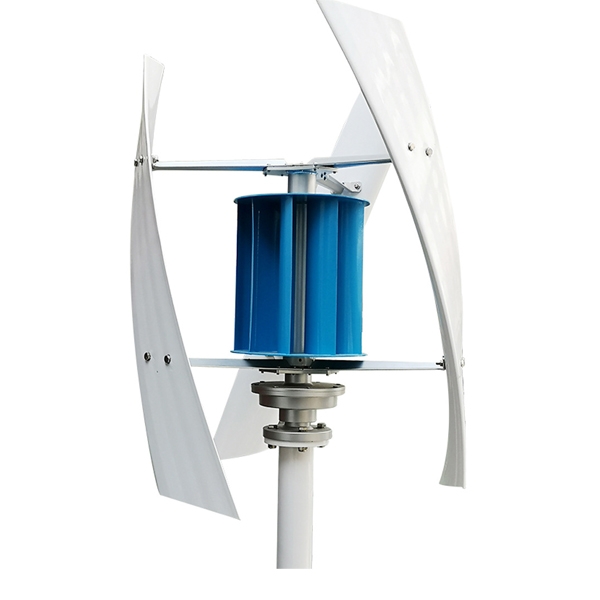
- Lower Noise Profile: This is perhaps the single most significant advantage for residential settings. VAWTs typically operate at lower rotational speeds and have fewer moving parts exposed to the wind, resulting in substantially less noise compared to HAWTs. In a neighborhood where quiet is valued, a VAWT’s ultra-quiet operation can be a deal-maker. Many manufacturers highlight ‘no noise’ features, and while not truly silent, they are dramatically quieter than traditional designs.
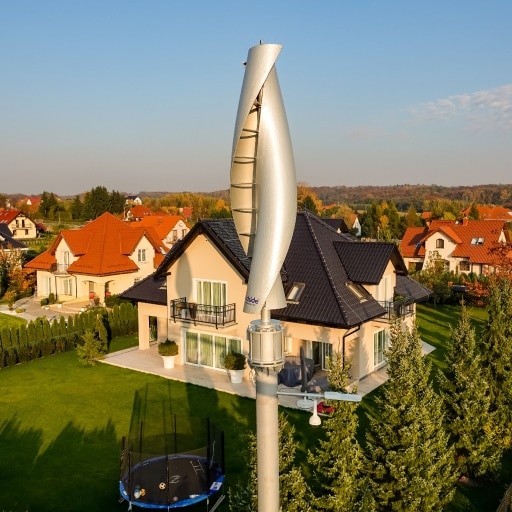
- Aesthetics & Footprint: Let’s be honest, those large propeller blades aren’t for everyone. VAWTs, with their often sleek, sculptural designs (like the ‘Atlas’ or ‘Windspire’ models), can be far more aesthetically pleasing. Their vertical design also means they often have a smaller overall footprint on your property, a boon for smaller lots or urban environments. They can look more like an artistic feature than a utilitarian piece of machinery.
- Performance in Turbulent Winds: This is a game-changer for non-ideal locations. Urban and suburban areas are notorious for turbulent, gusty winds caused by buildings and trees. HAWTs struggle in these conditions, constantly adjusting or ‘hunting’ for the wind. VAWTs, being omnidirectional and more forgiving of turbulence, can often perform better in these unpredictable airflow environments, capturing energy that a HAWT might miss. They also tend to have low cut-in speeds, meaning they start generating power even in a gentle breeze (e.g., 2-3 m/s).
- Safety & Maintenance Accessibility: With the generator, gearbox, and other critical components often located at or near ground level, VAWTs offer easier and safer access for maintenance and repairs. No need for specialized lifts or climbing high towers, which translates to lower maintenance costs and reduced safety risks.
- Bird Friendliness: While no turbine is entirely risk-free for wildlife, the slower rotational speeds and often more visible, compact design of VAWTs are generally considered less hazardous to birds and bats compared to the faster-moving, less visible blades of HAWTs.
The Truth About VAWT Limitations (Addressing the Skepticism)
Now, for the honest talk. It’s crucial to understand that VAWTs aren’t a magic bullet. The skepticism you see in places like Reddit (“Small scale wind turbines suck”) often stems from legitimate limitations. My goal isn’t to discourage you, but to provide a realistic picture.
- Efficiency & Power Output: This is the big one. Generally speaking, VAWTs tend to be less aerodynamically efficient than HAWTs. This means for a given size and wind speed, a HAWT will often generate more electricity. While VAWTs have improved significantly, they still produce less power per square meter of swept area. This translates to a higher cost per watt of generated power. You might need a larger VAWT to match the output of a smaller HAWT, or multiple VAWTs, which impacts space and cost.
- Cost Per Watt: Due to the generally lower efficiency, the upfront cost per kilowatt-hour (kWh) produced is often higher for VAWTs compared to HAWTs. While the individual unit price might seem appealing for a small VAWT, achieving significant residential power often requires multiple units or a larger, more expensive single unit. For example, a 5kW VAWT might cost upwards of $5,000 to $10,000+ for the unit alone, excluding installation and ancillary equipment.
- Site-Specific Requirements: While VAWTs handle turbulence better, they still need *wind*. A lot of it. The biggest mistake homeowners make is installing a wind turbine in a location with insufficient or inconsistent wind speeds. Wind speed is exponential in power generation (doubling the wind speed means eight times the power!), so even a slight drop in average wind dramatically impacts output. You can’t just stick a VAWT in your backyard and expect to power your whole house if you live in a sheltered valley.
Is a Residential VAWT Right for Your Home? A Realistic Assessment
So, how do you know if a VAWT makes sense for you? It’s not a decision to be taken lightly. Here’s a step-by-step guide to a realistic assessment:
Step 1: Evaluate Your Wind Resource
This is the MOST CRITICAL step. Forget looking at brochures; assess your actual wind. Professional wind studies, like those offered by some manufacturers (e.g., Windspire), are invaluable. Alternatively, you can install an anemometer (wind meter) at the proposed turbine height for several months to gather data. You’re looking for an average annual wind speed of at least 5-6 m/s (11-13 mph) for a residential VAWT to be economically viable. Anything less, and you’re likely better off with other renewable options.
Consider:
- Obstructions: Are there tall trees, buildings, or hills nearby that will block or create turbulence in the wind?
- Height: Can you install the turbine at a sufficient height to capture clean, unobstructed wind? Generally, the higher, the better.
Step 2: Assess Your Energy Needs
How much electricity do you actually use? Look at your electricity bills. An average U.S. home uses around 893 kWh per month (roughly 30 kWh per day). Most residential VAWTs are in the 750W to 10kW range. A 5kW VAWT, for example, operating at its rated power for 24 hours (which it won’t due to varying wind) would produce 120 kWh per day. Realistically, wind turbines operate at their rated power only a fraction of the time. You need to calculate your specific needs and match them to realistic turbine output.
| VAWT Rated Power (kW) | Typical Annual Output (kWh) | Approx. % of Average US Home Needs |
|---|---|---|
| 1 kW | 1,000 – 2,500 kWh | ~10-23% |
| 3 kW | 3,000 – 7,500 kWh | ~28-70% |
| 5 kW | 5,000 – 12,500 kWh | ~47-117% |
| 10 kW | 10,000 – 25,000 kWh | ~94-235% |
Output varies greatly depending on average wind speed, turbulence, and turbine model. These are estimates for good wind sites.
**Based on average US home consumption of ~10,715 kWh/year (EIA data).
Step 3: Consider Local Regulations & Zoning
This is often a major hurdle. Many municipalities have strict zoning laws regarding turbine height, setback from property lines, noise levels, and even aesthetic appearance. Before you get too far, check with your local planning department. You’ll likely need permits, and some areas may have outright bans or very restrictive rules on residential wind turbines. This is especially true for urban or densely populated suburban areas.
Step 4: Budgeting & ROI: The Financial Picture
A residential VAWT is an investment. Prices for the turbine alone can range from a few hundred dollars for very small units (unlikely to meet significant energy needs) to over $20,000 for a robust 10kW system. Add to that:
- Tower/Mounting System: Often hundreds to thousands.
- Inverter, Batteries (if off-grid), Charge Controller: Essential components, can add thousands.
- Installation: Professional installation is crucial and can cost as much as the turbine itself, depending on complexity.
- Permitting & Interconnection Fees: Can vary.
The total cost can easily reach $10,000 – $30,000+ for a system that genuinely offsets a significant portion of your energy use. Calculate the return on investment (ROI) by comparing your potential savings on electricity bills to the total upfront cost. Factor in any local, state, or federal incentives (tax credits, rebates) which can significantly improve ROI. For many, the ROI for a residential VAWT is longer than for a comparable solar PV system, particularly in areas with moderate wind resources.
What to Look for When Choosing a Residential VAWT
If you’ve done your homework and a VAWT still seems like a good fit, here’s what to prioritize when shopping:
- Power Output (Rated vs. Real-World): Manufacturers list a ‘rated power’ (e.g., 5kW, 10kW). This is the maximum output at a specific, often high, wind speed. More important is the turbine’s power curve (how much power it produces at various wind speeds) and its annual energy production (AEP) estimate for your average wind conditions. Don’t be swayed by just the peak number.
- Cut-in Speed & Cut-out Speed: The cut-in speed is the minimum wind speed required for the turbine to start generating electricity. For residential use, a low cut-in speed (e.g., 2-3 m/s or 4.5-6.7 mph) is highly desirable to maximize generation in lighter winds. The cut-out speed is the wind speed at which the turbine automatically shuts down for safety to prevent damage in extreme winds.
- Noise Level (dB): While VAWTs are generally quieter, look for specific decibel ratings (dB) at various wind speeds. For residential areas, aim for models that operate below 40-45 dB at common operating speeds.
- Durability & Warranty: Wind turbines are exposed to the elements 24/7. Look for robust construction, materials resistant to UV, corrosion, and extreme weather. A strong warranty (e.g., 5-10 years on major components) is a good indicator of manufacturer confidence.
- Integration with Existing Systems (Hybrid Solutions): Many homeowners find the best solution is a hybrid system, combining a VAWT with solar panels and battery storage. Wind and solar often complement each other: when it’s cloudy, it might be windy, and vice-versa. This can provide a more consistent and reliable power supply. Ensure the VAWT you choose can integrate seamlessly with other renewable energy components.
Installation & Maintenance: What Homeowners Need to Know
Professional Installation is Key
Unless you’re a certified electrician and experienced rigger, do not attempt to install a residential wind turbine yourself. This is a complex project involving electrical wiring, structural considerations for the tower, and potentially heavy lifting. A professional installer will ensure:
- Proper siting and foundation.
- Correct electrical connections and grid interconnection (if applicable).
- Compliance with all local building codes and safety standards.
- Optimal performance and longevity of the system.
Ongoing Maintenance Checks
While VAWTs often boast lower maintenance requirements than HAWTs, they still need attention. Expect annual or bi-annual checks that include:
- Inspecting blades for cracks or damage.
- Checking bolts and fasteners for tightness.
- Lubricating moving parts (if applicable).
- Verifying electrical connections and wiring.
- Monitoring output performance.
Many systems come with remote monitoring capabilities, allowing you to track performance from your smartphone or computer.
Permitting Process
As mentioned, permitting can be extensive. Be prepared to navigate:
- Building Permits: For the tower and foundation.
- Electrical Permits: For grid interconnection and wiring.
- Zoning Variances: If your property doesn’t meet standard setbacks or height restrictions.
- Utility Interconnection Agreements: Required if you plan to connect to the grid and potentially sell excess power back (net metering).
The Future of Residential Wind Power: Innovations & Hybrid Systems
The landscape of residential wind power is constantly evolving. While significant strides are being made, the future isn’t just about bigger or more efficient turbines; it’s about smarter integration.
- Smart Technology Integration: Imagine VAWTs that dynamically adjust their pitch or internal resistance based on real-time wind data and your home’s energy demand. Innovations in IoT (Internet of Things) and AI are making turbines more intelligent, optimizing their output and integrating seamlessly with smart home energy management systems.
- Solar-Wind Hybrid Systems: This is where residential renewable energy truly shines. Pairing a VAWT with rooftop solar panels and a robust battery storage system creates a resilient, diversified energy source. Solar power peaks during sunny days, while wind often picks up at night or on cloudy, windy days. This synergy provides a more consistent power supply, reduces reliance on the grid, and maximizes your energy independence. Many manufacturers are now designing systems explicitly for this type of hybrid integration.
Making the Smart Choice for Your Sustainable Home
Vertical Axis Wind Turbines offer an intriguing pathway to residential renewable energy, particularly for homeowners who value aesthetics, low noise, and performance in turbulent wind conditions. They are not, however, a ‘plug-and-play’ solution. Success hinges on a thorough understanding of your specific site’s wind resource, your energy needs, and the financial investment involved.

By realistically assessing the pros and cons, evaluating your property, and considering hybrid solutions, you can determine if a residential VAWT is the right piece of your sustainable energy puzzle. When chosen and installed correctly, a VAWT can be a valuable contributor to your home’s energy independence, a statement of your commitment to sustainability, and a quieter, more beautiful addition to your property.
n
Frequently Asked Questions
Are vertical axis wind turbines good for residential use?
Vertical Axis Wind Turbines (VAWTs) can be a good option for residential use, especially in urban or suburban areas with turbulent winds, due to their quieter operation, compact design, and ability to capture wind from any direction. However, they generally have lower efficiency and a higher cost per watt compared to Horizontal Axis Wind Turbines (HAWTs), making a thorough site assessment crucial.
How much power can a residential VAWT generate?
The power generated by a residential VAWT varies significantly based on its rated capacity, your average wind speed, and local turbulence. Small units (1kW) might generate 1,000-2,500 kWh annually, while larger systems (5kW-10kW) could produce 5,000-25,000 kWh per year. It’s essential to assess your actual energy needs and match them to realistic turbine output, not just the peak rated power.
How much does a vertical axis wind turbine cost for a home?
The cost of a residential VAWT system can range widely, from a few thousand dollars for smaller units to over $20,000-$30,000+ for larger 5-10kW systems, including the turbine, tower, inverter, batteries (if off-grid), and professional installation. This doesn’t include potential permitting fees. Always get a comprehensive quote that covers all components and services.
Are VAWTs noisy for residential areas?
No, VAWTs are generally known for their significantly lower noise profile compared to traditional HAWTs. Their slower rotational speeds and different aerodynamic design result in less acoustic output, making them a more neighborhood-friendly option. Many models are marketed as ‘ultra-quiet’ or ‘low noise,’ typically operating below 40-45 decibels at common wind speeds.
Do I need strong winds for a residential VAWT?
Yes, while VAWTs have lower ‘cut-in’ speeds (the minimum wind speed to start generating power) and perform better in turbulent winds than HAWTs, they still require a consistent and sufficient wind resource to be economically viable. An average annual wind speed of at least 5-6 m/s (11-13 mph) at the turbine’s proposed height is generally recommended for good power production.
Can I combine a VAWT with solar panels for my home?
Absolutely, and it’s often an ideal solution! Combining a VAWT with solar panels and battery storage creates a powerful ‘hybrid’ renewable energy system. Wind and solar typically complement each other, as wind speeds often increase when solar output decreases (e.g., at night or on cloudy days), providing a more reliable and consistent energy supply for your home.
What are the regulatory considerations for installing a residential VAWT?
Installing a residential VAWT requires navigating local zoning laws, building permits, and potentially electrical permits. Many municipalities have strict regulations regarding turbine height, setback from property lines, and noise levels. It’s crucial to check with your local planning department and utility company early in the process, as some areas may have very restrictive rules or even outright bans.
