
Small Wind Power Systems For Homes: Your Definitive Guide to Harnessing the Breeze
Thinking about a small wind turbine for your home? You’re not alone. The idea of generating your own clean electricity, day or night, free from utility bills, is incredibly appealing. But let’s be honest: while solar panels have become commonplace, home wind power still feels a bit mysterious, maybe even a little niche. Is it truly a viable option for the average homeowner in the USA? Or is it more trouble than it’s worth?
Table of Contents
- Small Wind Power Systems For Homes: Your Definitive Guide to Harnessing the Breeze
- Is Small Wind Power Right For Your Home? The Honest Truth.
- The Allure: Why Homeowners Consider Wind Energy
- Critical Factors: When Small Wind Makes Sense (and When It Doesn’t)
- Wind Resource Assessment: Is Your Property Windy Enough?
- Space Requirements
- Local Regulations: Zoning, Permits, and HOA Hell
- Energy Needs & Goals
- How Do Small Wind Turbines Actually Work for Your Home?
- The Basics: From Breeze to Kilowatt-Hour
- Key Components of a Home Wind System
- Types of Small Wind Turbines: Horizontal vs. Vertical Axis
- Horizontal Axis Wind Turbines (HAWTs)
- Vertical Axis Wind Turbines (VAWTs)
- Sizing Your System: How Much Power Do You Really Need?
- Calculating Your Home’s Energy Consumption
- Matching Turbine Output to Your Needs
- The Real Cost of Small Wind Power for Homes
- Initial Investment: Turbine, Tower, Installation
- Beyond the Purchase: Maintenance, Insurance, Lifespan
- Incentives & Savings: Federal Tax Credits, State Programs, RECs
- Wind vs. Solar: Which Renewable Energy is Best for You?
- Complementary Systems: The Hybrid Approach
- The Installation Process: What to Expect
- Site Assessment & Wind Resource Analysis
- Permitting & Zoning: Navigating Local Bureaucracy
- Professional Installation: Why it’s Crucial
- Living with Small Wind: Maintenance & Long-Term Considerations
- Routine Checks & Preventative Care
- Addressing Noise & Vibration Concerns
- Expected Lifespan & ROI Revisited
- Common Pitfalls and How to Avoid Them
- Overestimating Wind Resource
- Underestimating Costs & Regulations
- Choosing the Wrong System Size or Type
- Neglecting Maintenance
I get it. You’ve probably seen conflicting information, heard stories of turbines that don’t produce enough power, or been overwhelmed by technical jargon. My goal here is to cut through the noise, give you the unvarnished truth, and help you decide if a small wind power system makes sense for your specific situation. We’re going to cover everything from how they work and what they cost, to the critical factors that determine success and the common pitfalls to avoid. Let’s dive in.
Is Small Wind Power Right For Your Home? The Honest Truth.
Before we talk turbines and kilowatts, the most important question is whether your home is even a good candidate for wind energy. This isn’t a “one size fits all” solution. Unlike solar, which benefits almost everyone with a sunny roof, wind power has a few more prerequisites.
The Allure: Why Homeowners Consider Wind Energy
The appeal is undeniable. Here’s why many homeowners look to the wind:
- Energy Independence: Reduce reliance on the grid and utility companies.
- Lower Electricity Bills: Produce your own power, cutting down or eliminating monthly costs.
- Environmental Impact: Generate clean, renewable energy, reducing your carbon footprint.
- 24/7 Production (Potentially): Unlike solar, wind can generate power at night or on cloudy days, as long as the wind blows.
- Federal & Local Incentives: Significant tax credits and other programs can make systems more affordable.
Critical Factors: When Small Wind Makes Sense (and When It Doesn’t)
Here’s where we get real. The success of a small wind system hinges on a few non-negotiable elements:
Wind Resource Assessment: Is Your Property Windy Enough?
This is the absolute cornerstone. If you don’t have sufficient wind, a turbine is an expensive ornament. What does “sufficient” mean?
- Average Wind Speed: You typically need an average annual wind speed of at least 10 mph (4.5 m/s) at the turbine’s proposed hub height for a system to be economically viable. Areas with 12-14 mph averages are even better.
- Obstructions: Trees, buildings, hills – anything blocking the wind flow will create turbulence and reduce your turbine’s efficiency. You need clear, unobstructed wind flow. A good rule of thumb is that the bottom of your turbine blades should be at least 30 feet higher than any obstacle within a 500-foot radius.
- Site-Specific Data: Don’t just rely on regional wind maps. A professional site assessment using an anemometer (wind speed measuring device) is crucial. This is where many DIY attempts go wrong.
Space Requirements
Small wind turbines, especially traditional horizontal-axis ones, need space. We’re talking about a tower that can be anywhere from 30 to 120 feet tall, plus enough clearance for guy wires if you opt for a guyed tower. You’ll also need space for batteries and inverters if you’re going off-grid.
Local Regulations: Zoning, Permits, and HOA Hell
This is often the biggest hurdle. Many municipalities have strict zoning ordinances regarding tower height, setbacks from property lines, noise emissions, and aesthetic impact. Homeowners’ Associations (HOAs) can be even more restrictive. Before you even think about buying a turbine, research your local permitting process meticulously. Be prepared for potential pushback and a lengthy approval process.
Energy Needs & Goals
Are you looking to supplement your grid power, or go completely off-grid? Your goals will dictate the size and complexity of your system:
- Grid-Tied: Connects to the utility grid, allowing you to use grid power when the wind isn’t blowing and potentially sell excess power back (net metering). Most common for homes.
- Off-Grid (Stand-Alone): Requires batteries for energy storage and is ideal for remote properties where grid connection is expensive or unavailable. More complex and costly.
How Do Small Wind Turbines Actually Work for Your Home?
At its core, a wind turbine is remarkably simple: it converts the kinetic energy of wind into mechanical energy, and then into electricity. Let’s break down the process.
The Basics: From Breeze to Kilowatt-Hour
When wind blows across the turbine blades, it creates aerodynamic lift and drag, causing the rotor to spin. This spinning motion turns a shaft connected to a generator. Inside the generator, magnets spin past coils of wire, inducing an electric current. This raw electricity then goes through a charge controller (to regulate voltage), and an inverter (to convert DC power to AC power suitable for your home or the grid).
Key Components of a Home Wind System
A typical small wind electric system consists of several integrated parts:
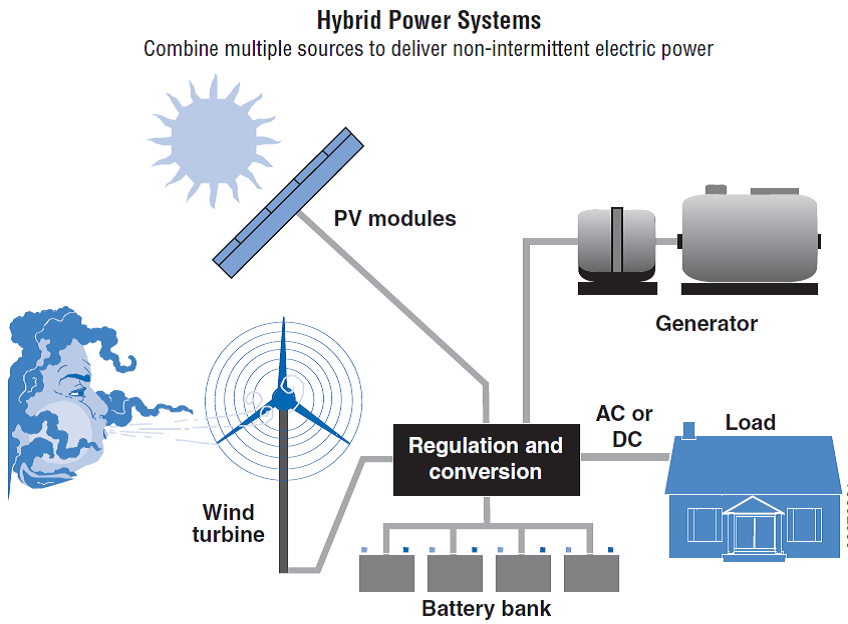
- Turbine: The main component, including the blades, rotor, and generator.
- Tower: Supports the turbine and lifts it to a height where it can access cleaner, faster wind. Towers can be freestanding (monopole or lattice) or guyed (supported by cables).
- Balance of System (BOS):
- Charge Controller: Protects batteries from overcharging (for off-grid systems).
- Inverter: Converts DC electricity produced by the turbine into AC electricity compatible with your home’s electrical system and the grid.
- Batteries (Optional): For off-grid systems, storing excess energy for use when the wind isn’t blowing.
- Wiring & Safety Disconnects: All the necessary electrical components to safely connect the system.
Types of Small Wind Turbines: Horizontal vs. Vertical Axis
Small wind turbines for homes generally fall into two categories, each with distinct advantages and disadvantages.
Horizontal Axis Wind Turbines (HAWTs)
These are what most people picture: the classic “pinwheel” design with two or three blades rotating on a horizontal axis, similar to large utility-scale turbines. They are the most common and generally most efficient type of small wind turbine.
Vertical Axis Wind Turbines (VAWTs)
VAWTs have blades that rotate around a vertical axis. They often look like eggbeaters (Darrieus) or scoops (Savonius). They are less common for residential power generation but have a few unique benefits.
Here’s a breakdown of the two types:
| Feature | Horizontal Axis Wind Turbines (HAWTs) | Vertical Axis Wind Turbines (VAWTs) |
|---|---|---|
| Appearance | Traditional propeller-style blades, typically 2 or 3 blades. | Eggbeater (Darrieus) or scoop (Savonius) designs. |
| Orientation to Wind | Must face into the wind (often use a tail fin or yaw mechanism). | Omni-directional; operates regardless of wind direction. |
| Efficiency | Generally higher efficiency for electricity generation. | Lower efficiency compared to HAWTs for equivalent swept area. |
| Starting Wind Speed | Requires a higher starting wind speed (typically 6-8 mph). | Can start generating at lower wind speeds (2-4 mph). |
| Noise | Can be louder due to blade tip speed, though modern designs are quieter. | Generally quieter due to lower rotational speeds. |
| Maintenance | Generator and gearbox (if present) are up on the tower, requiring more effort to access. | Generator and heavier components are often at ground level, simplifying maintenance. |
| Turbulence Tolerance | Less tolerant of turbulent, gusty winds; best in clear airflow. | More tolerant of turbulent winds, potentially better for urban or constrained sites. |
| Cost | Can be more expensive per kW of rated power due to complex design. | Often perceived as cheaper, but overall cost-effectiveness can be lower due to efficiency. |
Sizing Your System: How Much Power Do You Really Need?
“Small” is a relative term. For homes, turbines typically range from 400 watts to 20 kilowatts (kW). But how do you know what size is right for you?
Calculating Your Home’s Energy Consumption
First, you need to understand your own energy habits. Look at your past 12 months of electricity bills to find your average monthly kilowatt-hour (kWh) usage. This will give you a target. For example, the average U.S. home uses about 886 kWh per month (as of 2022 data).
Matching Turbine Output to Your Needs
Turbines are rated by their peak power output (e.g., 5 kW), but their actual energy production (kWh per month/year) depends heavily on your site’s average wind speed. A 5 kW turbine in an area with a 12 mph average wind speed will produce significantly more power than the same turbine in a 9 mph average wind speed.
A good rule of thumb is to look for turbines that can produce 1,000 to 1,500 kWh per year for every kW of rated power in a decent wind resource. So, if you use 886 kWh/month (approx. 10,632 kWh/year), you might need an 8-10 kW rated turbine to meet most of your demand.
It’s vital to work with a reputable installer who can perform a detailed wind resource assessment and energy audit to correctly size your system. Undersizing means you’re still relying heavily on the grid; oversizing means you’ve spent too much for power you don’t use.
The Real Cost of Small Wind Power for Homes
Let’s talk money. This is often where the dream meets reality. Small wind systems are an investment, and understanding the full financial picture is key.
Initial Investment: Turbine, Tower, Installation
The total installed cost for a small wind turbine system (1 kW to 10 kW) can range from $10,000 to $70,000 or more, before incentives. This figure varies widely based on:
- Turbine Size and Type: Larger turbines cost more. HAWTs can be pricier due to design complexity.
- Tower Height and Type: Taller towers are more expensive. Freestanding towers are more costly than guyed towers.
- Installation Complexity: Site access, ground conditions, electrical work, and crane rental can add up.
- Balance of System Components: Inverters, controllers, wiring, and especially batteries for off-grid systems.
- Permitting & Engineering Fees: These can be substantial depending on your locality.
| Component | Typical Cost Range (Approx.) | Notes |
|---|---|---|
| Turbine (1-10 kW) | $3,000 – $30,000 | Varies greatly by brand, size, and model. |
| Tower (30-120 ft) | $2,000 – $15,000 | Guyed towers are cheaper; freestanding are more expensive. |
| Inverter & Charge Controller | $1,500 – $5,000 | Essential for grid-tied or battery systems. |
| Batteries (for off-grid) | $5,000 – $20,000+ | Significant cost for stand-alone systems, ongoing replacement. |
| Installation Labor & Equipment | $3,000 – $10,000+ | Includes crane rental, trenching, electrical work. |
| Permitting & Engineering | $500 – $3,000+ | Depends heavily on local requirements. |
| Total Estimated Cost (Installed) | $10,000 – $70,000+ | Before any incentives. |
Beyond the Purchase: Maintenance, Insurance, Lifespan
It’s not just the upfront cost. Factor in:
- Maintenance: Regular checks, lubrication, occasional blade cleaning, and potential replacement of worn parts (e.g., bearings, brushes). Expect $100-$300 annually, plus larger costs every 5-10 years.
- Insurance: Ensure your homeowner’s policy covers the system.
- Lifespan: Well-maintained systems can last 20-25 years, but component failures can occur sooner.
Incentives & Savings: Federal Tax Credits, State Programs, RECs
This is where things get more attractive. The U.S. government and many states offer incentives:
 "Home Wind Turbines: When Do They Make Sense? | EnergySage")
- Federal Investment Tax Credit (ITC): Under the Inflation Reduction Act (IRA) of 2022, you can claim a 30% federal tax credit for small wind systems installed by December 31, 2032. This is a dollar-for-dollar reduction in your tax liability, not just a deduction.
- State & Local Incentives: Many states offer their own tax credits, rebates, or grants. Check resources like the DSIRE database (Database of State Incentives for Renewables & Efficiency) for specifics in your area.
- Net Metering: If you’re grid-tied, net metering allows you to send excess electricity back to the grid and receive credits on your utility bill, essentially “banking” your surplus generation.
- Renewable Energy Certificates (RECs): In some markets, you can sell RECs generated by your system, providing an additional revenue stream.
Wind vs. Solar: Which Renewable Energy is Best for You?
It’s the classic showdown in home renewable energy. While both offer clean power, they have distinct characteristics. Often, the best solution is a hybrid system combining both.
| Feature | Small Wind Power Systems | Solar PV Systems |
|---|---|---|
| Energy Source | Wind kinetic energy. | Sunlight (photons). |
| Production Profile | Can produce day/night, but intermittent based on wind speed. Often stronger in winter. | Daytime production only, peaks at midday, consistent based on sunlight. Often stronger in summer. |
| Space Required | Requires significant open land and tower height. | Primarily roof space or ground mount area. |
| Primary Site Factor | Consistent, unobstructed wind resource. | Ample, unobstructed sunlight (south-facing ideal). |
| Noise/Visual Impact | Can be a concern for some, especially larger units or in quiet areas. Visible tower. | Generally silent. Aesthetic concerns depend on roof visibility. |
| Maintenance | More moving parts, requires periodic inspection/lubrication. | Minimal, primarily cleaning and occasional inverter checks. |
| Cost (per Watt) | Typically higher per installed watt than solar due to tower and complexity. | Generally lower and declining. |
| Permitting Complexity | Often more complex due to height, setbacks, noise. | Simpler, but still requires structural and electrical permits. |
Complementary Systems: The Hybrid Approach
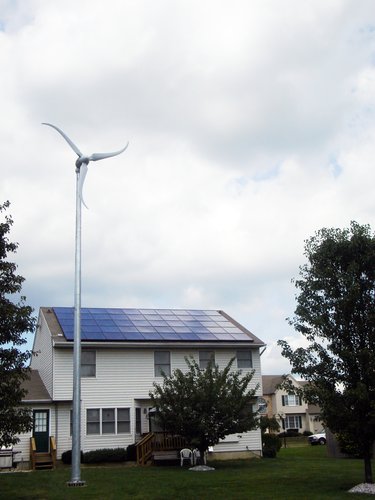
In many cases, the most resilient and efficient home energy system is a hybrid wind and solar setup. Why?
- Offsetting Intermittency: Wind is often stronger in winter and at night, while solar excels in summer and during the day. Combining them provides a more consistent, year-round energy supply.
- Optimized Energy Capture: You harness both available resources, maximizing your energy production.
- Reduced Battery Needs: With more consistent generation, the reliance on large (and expensive) battery banks can be reduced for off-grid systems.
The Installation Process: What to Expect
Once you’ve decided small wind is for you, the journey from decision to generation involves several critical steps.
Site Assessment & Wind Resource Analysis
This is where it all begins. A qualified professional will:
- Visit your property to assess topography, existing structures, trees, and other potential obstructions.
- Review historical wind data for your specific microclimate.
- Potentially install an anemometer for a temporary wind study to gather precise data for your site.
- Recommend the optimal turbine placement, tower height, and system size.
Permitting & Zoning: Navigating Local Bureaucracy
As mentioned, this can be the trickiest part. Your installer should be well-versed in local regulations, but you’ll likely be involved. This can include:
- Zoning Review: Ensuring your proposed system complies with land use regulations.
- Building Permits: For the tower foundation and structure.
- Electrical Permits: For the wiring and grid interconnection.
- Environmental Reviews: Addressing concerns about bird safety or visual impact.
- Neighbor & HOA Approval: Don’t underestimate the importance of clear communication and, sometimes, compromise.
Professional Installation: Why it’s Crucial
Unless you are an experienced electrician, structural engineer, and heavy equipment operator, this is NOT a DIY project. Professional installation ensures:
- Safety: Working at heights, with heavy equipment, and high voltage electricity is inherently dangerous.
- Proper Sizing & Design: An expert will ensure your system is correctly sized and designed for your specific needs and site conditions.
- Compliance: Adherence to all local building codes, electrical codes, and utility interconnection standards.
- Efficiency: Correct installation maximizes energy production and system longevity.
- Warranty Validity: Many turbine manufacturers require professional installation for their warranties to be valid.
Living with Small Wind: Maintenance & Long-Term Considerations
A small wind system isn’t a “set it and forget it” appliance. Like a car, it has moving parts and requires periodic care to perform optimally and safely.
Routine Checks & Preventative Care
A typical maintenance schedule might include:
- Annual Visual Inspection: Check for loose bolts, damaged blades, worn guy wires, and corrosion.
- Lubrication: Grease moving parts as recommended by the manufacturer.
- Blade Cleaning: Remove dirt, ice, or debris that can reduce efficiency.
- Electrical System Check: Inspect wiring, connections, and inverter functionality.
- Brake/Shutdown System Test: Ensure the safety brake works correctly for high winds or maintenance.
Many reputable installers offer maintenance contracts, which can be a wise investment.
Addressing Noise & Vibration Concerns
Modern small wind turbines are significantly quieter than older models, but they are not silent. The sound is often described as a “whooshing” or “whirring” sound, similar to a soft breeze through trees or a distant hum. The impact of noise depends heavily on:
- Turbine Design: VAWTs are generally quieter than HAWTs.
- Wind Speed: Louder in higher winds.
- Proximity to Homes: Setback distances are crucial.
- Ambient Noise: In a rural, quiet setting, any noise is more noticeable.
Vibration, if not properly managed during installation (e.g., proper tower foundation and isolation), can transmit through the ground. Again, professional installation is key to minimizing these issues.
Expected Lifespan & ROI Revisited
With proper maintenance, a quality small wind turbine system can last 20-25 years or more. However, components like batteries (if off-grid) have shorter lifespans (5-15 years) and will need replacement.
The Return on Investment (ROI) is highly site-specific. It depends on your initial costs, the consistency of your wind resource, the price of grid electricity in your area, and the available incentives. Payback periods can range from 10 to 20 years or more. For some, the primary motivation isn’t just financial ROI, but energy independence and environmental benefits.
Common Pitfalls and How to Avoid Them
Given the complexities, it’s easy to make mistakes. Here are some of the most common pitfalls and how to steer clear of them:
Overestimating Wind Resource
This is arguably the reason for disappointment. Wishful thinking about wind speed is a costly error.
Avoid: Relying on general wind maps or anecdotal observations.
Solution: Invest in a professional site assessment and, if possible, temporary anemometer data collection.
Underestimating Costs & Regulations
Surprise costs for permitting, foundation work, or unforeseen electrical upgrades can sink a project. Zoning battles can lead to significant delays or even cancellation.
Avoid: Not doing your homework on all potential costs and assuming a smooth regulatory process.
Solution: Get detailed quotes, factor in a contingency budget, and thoroughly research all local codes and permitting requirements upfront. Engage with local authorities early.
Choosing the Wrong System Size or Type
A system that’s too small won’t meet your needs, while one that’s too big is an inefficient use of capital. Opting for a VAWT in a high-wind, open area, or a HAWT in a very turbulent site, is mismatched.
Avoid: Guessing your energy needs or selecting a turbine based solely on aesthetics or low upfront cost.
Solution: Base your decision on a professional energy audit and wind assessment, and choose a turbine type suited to your specific site characteristics.
Neglecting Maintenance
A neglected system will fail prematurely, underperform, and could even become a safety hazard.
Avoid: Ignoring manufacturer recommendations or postponing inspections.
Solution: Establish a clear maintenance schedule, perform routine checks, or sign up for a service contract with your installer.
Small wind power systems for homes are a powerful, rewarding investment for the right property. They demand careful planning, a realistic assessment of your site, and a commitment to understanding the technology and its requirements. If you have a good wind resource, the space, and the patience for the regulatory process, harnessing the wind can be a significant step towards energy independence and a greener future. But don’t go into it lightly – do your homework, find expert help, and make an informed decision that truly works for your home.
Frequently Asked Questions
Are small wind turbines worth it for homes?
Small wind turbines can be very worth it for homes that have a consistent, unobstructed wind resource (average annual wind speed of 10+ mph) and ample space. They offer energy independence and environmental benefits, especially when combined with federal tax credits like the 30% ITC. However, they require a significant upfront investment, careful site assessment, and navigating local regulations, so viability is highly site-specific.
How much does a small wind power system cost for a home?
The total installed cost for a small home wind power system (1 kW to 10 kW) typically ranges from $10,000 to $70,000 or more before incentives. This includes the turbine, tower, inverter, balance of system components, and professional installation. Costs vary based on turbine size, tower height, installation complexity, and whether batteries are included for off-grid use.
How much electricity can a home wind turbine generate?
The electricity generated by a home wind turbine depends heavily on its rated power (e.g., 5 kW) and the average wind speed at your location. In a good wind resource, a 5 kW turbine might produce approximately 5,000 to 7,500 kWh per year. It’s crucial to have a professional wind resource assessment to get an accurate estimate for your specific property.
Are small wind turbines noisy?
Modern small wind turbines are much quieter than older models, often described as a “whooshing” or “whirring” sound. The noise level depends on the turbine’s design, wind speed, and distance from your home. Vertical Axis Wind Turbines (VAWTs) tend to be quieter than Horizontal Axis Wind Turbines (HAWTs). Proper siting and professional installation are key to minimizing any potential noise impact.
Can I combine wind and solar power for my home?
Absolutely! A hybrid wind and solar system is often considered the most robust and efficient home renewable energy solution. Wind power often produces more in winter and at night, while solar excels in summer and during the day. Combining them provides a more consistent, year-round energy supply and reduces reliance on battery storage for off-grid systems.
What are the biggest challenges of installing a home wind turbine?
The biggest challenges typically include securing adequate wind resources, navigating complex local zoning laws and permitting processes (especially for tower height), the significant upfront cost, and ensuring proper professional installation. Noise and visual impact can also be concerns that require careful planning and communication with neighbors or HOAs.
What kind of maintenance do small wind turbines need?
Small wind turbines require periodic maintenance, including annual visual inspections for wear and tear, lubrication of moving parts, occasional blade cleaning, and electrical system checks. It’s also important to test the safety brake system. Many installers offer maintenance contracts to ensure longevity and optimal performance.
Is there a federal tax credit for home wind power systems?
Yes, under the Inflation Reduction Act (IRA) of 2022, small wind power systems for homes are eligible for a 30% federal investment tax credit (ITC). This credit is a dollar-for-dollar reduction in your federal tax liability for systems installed by December 31, 2032.
