
Small Windmill Water Pump Kits: Your Complete Guide to Off-Grid Water Solutions
Struggling with high utility bills for your well pump? Tired of relying on the grid for your remote cabin’s water supply? Or maybe you’re just looking for a sustainable, off-grid solution to keep your livestock watered or garden thriving. If any of this resonates, then a small windmill water pump kit might be exactly what you need.
Table of Contents
- Small Windmill Water Pump Kits: Your Complete Guide to Off-Grid Water Solutions
- What Exactly is a Small Windmill Water Pump Kit?
- Beyond the Iconic Farm Windmill: Modern Kits Explained
- Mechanical vs. Electrical Systems: A Core Distinction
- Why Consider a Small Windmill Water Pump for Your Property?
- Key Benefits: The Wind in Your Sails
- Important Limitations: Don’t Let the Wind Fool You
- Key Components of a Typical Windmill Water Pump Kit
- Choosing the Right Small Windmill Water Pump Kit: A Step-by-Step Guide
- Step 1: Assess Your Water Needs
- Step 2: Evaluate Your Wind Resource
- Step 3: Determine Your Well or Water Source Depth
- Step 4: Mechanical vs. Electric: Which System Suits You?
- Step 5: Consider Storage Solutions
- Step 6: Budget and Local Regulations
- Installation Insights: What to Expect
- Site Selection and Tower Erection
- Connecting the Pump and Plumbing
- Electrical Wiring (if applicable)
- Testing Your System
- Maintenance and Longevity: Keeping Your Windmill Pumping
- Regular Checks and Lubrication
- Weather Preparedness
- Troubleshooting Common Issues
- The Hybrid Approach: Wind-Solar Water Pumping Kits
- Increased Reliability and 24/7 Pumping Potential
- Typical Hybrid Components
- Real-World Applications for Small Windmill Water Pumps
- Livestock Watering
- Garden and Small-Scale Irrigation
- Remote Cabin or Home Water Supply
- Pond Aeration
- Cost Considerations: Investing in Wind Power
- Initial Kit Cost Ranges
- Installation Costs (DIY vs. Professional)
- Long-Term Savings and ROI
These ingenious systems harness the power of the wind – a free and abundant resource – to pump water from wells, ponds, or even rainwater collection systems. Far from being relicts of the past, modern kits combine traditional reliability with contemporary efficiency, offering independence and significant long-term savings.
What Exactly is a Small Windmill Water Pump Kit?
When you hear “windmill water pump,” you might picture the iconic, towering structures on old farms. While those traditional designs are still viable (and incredibly robust!), a “kit” implies a more accessible, often scaled-down, and pre-packaged solution designed for easier installation and diverse applications.
Beyond the Iconic Farm Windmill: Modern Kits Explained
A small windmill water pump kit isn’t just a windmill. It’s a complete system bundled together, simplifying the process of setting up an autonomous water supply. These kits typically include the wind turbine assembly (the blades and head), the tower, the pumping mechanism, and sometimes even the necessary piping or wellhead components.
The beauty of these kits is their holistic nature. Instead of sourcing individual components, you get a cohesive package designed to work together, minimizing compatibility headaches and often coming with detailed installation instructions.
Mechanical vs. Electrical Systems: A Core Distinction
This is where things get interesting and is a critical choice point for anyone considering a kit. Small windmill water pumps generally fall into two categories:
- Mechanical Windmills (Direct Drive): These are the classic setup. The rotation of the windmill blades directly drives a piston pump located in the well or at the surface via a rod system. They are incredibly simple, require no electricity, and are notoriously reliable with minimal moving parts. Think Aermotor, but scaled down.
- Electrical Wind Turbines (Indirect Drive): Here, the wind turbine generates electricity. This electricity then powers a standard electric submersible pump or surface pump. This system offers more flexibility, as the pump doesn’t have to be directly under the turbine, and the electricity can also be stored in batteries for pumping when the wind isn’t blowing.
Why Consider a Small Windmill Water Pump for Your Property?
The allure of harnessing the wind for water extends beyond just aesthetics. There are tangible benefits, but like any system, they come with certain limitations.
Key Benefits: The Wind in Your Sails
- Off-Grid Independence: This is perhaps the biggest draw. Free yourself from the electrical grid, especially in remote locations where grid power is expensive or unavailable.
- Low Operating Costs: Once installed, the fuel (wind) is absolutely free. You’ll save significantly on electricity bills compared to a conventional electric pump.
- Environmental Friendliness: Wind power is a clean, renewable energy source. No carbon emissions, no fossil fuels.
- Reliability (Mechanical Systems): Direct mechanical pumps are incredibly robust and have fewer complex electronic components to fail. They can often operate for decades with proper maintenance.
- Scalability: “Small” doesn’t mean inefficient. These kits can provide sufficient water for various applications, from a few gallons per day to hundreds.
Important Limitations: Don’t Let the Wind Fool You
- Wind Dependence: This is obvious but crucial. If there’s no wind, there’s no pumping. This necessitates water storage or a hybrid system.
- Initial Investment: The upfront cost of a quality kit and professional installation can be significant, though the long-term savings often justify it.
- Site-Specific Needs: Not every location is ideal. Good wind resource and suitable well conditions are paramount.
- Maintenance: While robust, mechanical systems need occasional lubrication and inspection. Electrical systems have more components that could require attention.
- Intermittency: Unlike solar, which is predictable during the day, wind can be highly variable.
Key Components of a Typical Windmill Water Pump Kit
Understanding what goes into a kit helps you appreciate its function and make informed decisions. Here’s a breakdown:
| Component | Description | System Type | Importance |
|---|---|---|---|
| Wind Turbine Head (Rotor & Tail) | The blades catch the wind; the tail vane directs it. Converts wind energy into rotational energy. | Both (Mechanical & Electrical) | Primary energy capture unit. Blade design impacts efficiency. |
| Tower | Supports the turbine head, lifting it to catch optimal wind. Can be self-supporting or guyed. | Both | Height is critical for accessing consistent wind. Must be robust. |
| Pumping Mechanism | For mechanical: Rod pump (piston type). For electrical: Submersible or surface pump. | Both | Extracts water. Sizing depends on well depth and desired flow. |
| Well Casing Adapter / Wellhead | Interface between the well and the pump mechanism, sealing the well. | Both | Ensures proper well sealing and pump connection. |
| Piping and Fittings | Delivers water from the pump to its destination (storage tank, trough, etc.). | Both | Proper sizing prevents friction loss; durable materials are essential. |
| Storage Tank (often optional, but recommended) | Holds pumped water, ensuring supply during calm periods. | Both | Crucial for consistent water availability, mitigating wind intermittency. |
| Electrical Components (for electric systems only) | Generator/Alternator, Charge Controller, Batteries (optional), Inverter (if AC pump). | Electrical | Convert wind energy to usable electricity for the pump. Enables storage and wider pump choices. |
Choosing the Right Small Windmill Water Pump Kit: A Step-by-Step Guide
This isn’t a one-size-fits-all purchase. Getting the right kit requires careful consideration of your specific needs and environmental conditions.
Step 1: Assess Your Water Needs
How much water do you actually need? Are you watering a small garden, a few cattle, or providing water for an entire remote household? Calculate your daily water demand in gallons per day (GPD) and also consider peak flow rates (gallons per minute, GPM) if you need water quickly for certain tasks.
- Livestock: Estimate gallons per animal per day.
- Gardening: Consider square footage and plant types.
- Household: Average household usage (e.g., 50-80 GPD per person).
Step 2: Evaluate Your Wind Resource
This is paramount. A windmill needs wind! You need a site with a decent average wind speed (typically 7-10 mph minimum for efficient operation) and minimal obstructions (trees, buildings). Tall towers help get above ground-level turbulence.
Local wind maps or anemometer readings can give you a clearer picture. Don’t guess; accurate wind data prevents disappointment.
Step 3: Determine Your Well or Water Source Depth
The total “pumping lift” is crucial. This includes:
- Static Water Level: The depth from the ground surface to the resting water level in your well.
- Drawdown: How much the water level drops when you pump.
- Delivery Head: The vertical distance you need to lift the water above ground level to a storage tank or usage point.
A pump rated for a 200-foot well won’t work efficiently if your static water level is 150 feet and you need to lift it another 50 feet to a tank. Get your well driller’s report or measure accurately.
Step 4: Mechanical vs. Electric: Which System Suits You?
Let’s break down the two main types to help you decide:
| Feature | Mechanical Windmill Pump | Electrical Wind Turbine & Pump |
|---|---|---|
| Complexity | Low (Direct mechanical linkage) | Higher (Generator, controller, batteries, pump motor) |
| Power Source | Pure wind energy, direct mechanical action | Wind converted to electricity to power an electric pump |
| Pumping Depth | Excellent for deep wells (often 100-600+ ft) | Good for moderate to deep wells (up to 400-600 ft) |
| Flow Rate | Lower, but consistent (e.g., 1-5 GPM), designed for storage. | Can be higher (5-20+ GPM), depending on turbine and pump size. |
| Maintenance | Generally low; occasional lubrication, rod inspection. | Higher; battery checks, electrical connections, pump motor. |
| Cost (Initial) | Moderate to High (due to robust mechanical parts) | Moderate to High (turbine, electronics, pump) |
| Versatility | Limited to pumping water directly. | Electricity can be used for other purposes if batteries are present. |
For sheer simplicity and deep wells, mechanical often wins. For flexibility, higher flow, and integration with other off-grid systems, electrical is preferred.
Step 5: Consider Storage Solutions
Because wind is intermittent, a water storage tank is almost always essential. Your windmill will pump whenever the wind blows, and this water needs a place to go until you need it. Sizing your tank to hold 3-5 days of your typical water demand is a good starting point. This ensures you have water even during extended calm periods.
Step 6: Budget and Local Regulations
Small windmill water pump kits can range from a few thousand dollars for basic setups to upwards of $10,000-$20,000 for complete, high-capacity systems with professional installation. Always factor in installation costs. Check with your local planning department for any necessary permits or zoning restrictions for tower height and placement.
Installation Insights: What to Expect
Installing a windmill can be a significant undertaking, especially for taller towers. While some kits are designed for DIY, others truly benefit from professional expertise.
Site Selection and Tower Erection
Choose a site free of obstructions, providing good access to the well or water source, and away from power lines. Tower erection is often the most challenging part, requiring heavy equipment and a team for safety. Many kits come with detailed manuals, but consider hiring a contractor experienced in tower installation.
Connecting the Pump and Plumbing
This involves lowering the pump into the well (for submersible or rod pumps) and connecting the water lines to your storage tank or distribution system. Proper sealing of the wellhead is crucial to prevent contamination.

Electrical Wiring (if applicable)
For electrical systems, wiring the turbine generator to the charge controller, batteries, and the pump requires basic electrical knowledge and adherence to safety codes. If you’re not comfortable with electrical work, this is definitely a job for a qualified electrician.
Testing Your System
Once everything is in place, thoroughly test the system. Check for leaks, ensure the pump is drawing water, and monitor the water flow rate to confirm it meets your expectations.
Maintenance and Longevity: Keeping Your Windmill Pumping
Small windmill water pumps are built for durability, but they aren’t entirely maintenance-free. Regular care extends their lifespan and ensures consistent performance.
Regular Checks and Lubrication
- Mechanical Systems: The gearbox and pumping mechanism usually require lubrication (grease or oil) every 6-12 months. Inspect the connecting rods, pivot points, and tower bolts for wear or looseness.
- Electrical Systems: Check battery terminals for corrosion, ensure wiring is secure, and inspect the turbine blades for damage.
Weather Preparedness
In areas prone to severe storms or freezing temperatures, ensure your system is prepared. Some mechanical windmills have a manual furling mechanism to turn the head out of strong winds. For all systems, ensure water lines are either below the frost line or can be drained to prevent freezing and bursting.
Troubleshooting Common Issues
Most common problems relate to lack of wind (requiring patience or a hybrid system), leaks in plumbing, or blockages. For mechanical pumps, a broken pump rod is a possibility. For electrical, issues can stem from battery degradation or controller malfunctions. A good understanding of your kit’s manual will be your best friend.
The Hybrid Approach: Wind-Solar Water Pumping Kits
One of the most effective ways to mitigate the intermittency of wind is to combine it with another renewable source: solar power. A wind-solar hybrid water pumping kit offers the best of both worlds.
Increased Reliability and 24/7 Pumping Potential
Often, when the sun isn’t shining brightly (e.g., cloudy days or winter), wind speeds are higher. Conversely, on calm, sunny days, solar panels are at their peak. By integrating both, you get a more consistent energy supply for your pump, potentially enabling 24/7 water availability without oversized storage tanks.
Typical Hybrid Components
- Wind Turbine: Generates electricity from wind.
- Solar Panels: Generates electricity from sunlight.
- Hybrid Charge Controller: Manages charging from both sources into a battery bank.
- Battery Bank: Stores excess electricity for use when neither wind nor sun is optimal.
- Electric Water Pump: Powered by the combined energy.
Real-World Applications for Small Windmill Water Pumps
These versatile systems are ideal for a range of uses where grid power is either absent or cost-prohibitive.
Livestock Watering
A classic application. Windmills reliably pump water to remote pastures, ensuring animals have a consistent water supply without the need for long power lines or manual hauling.
Garden and Small-Scale Irrigation
For hobby farms, large gardens, or small orchards, a windmill pump can provide all the water needed, reducing reliance on municipal water or expensive electric pumps.
Remote Cabin or Home Water Supply
Off-grid living often means generating your own power and water. A windmill kit is a perfect fit, providing fresh well water for household use, especially when paired with a robust storage system.

Pond Aeration
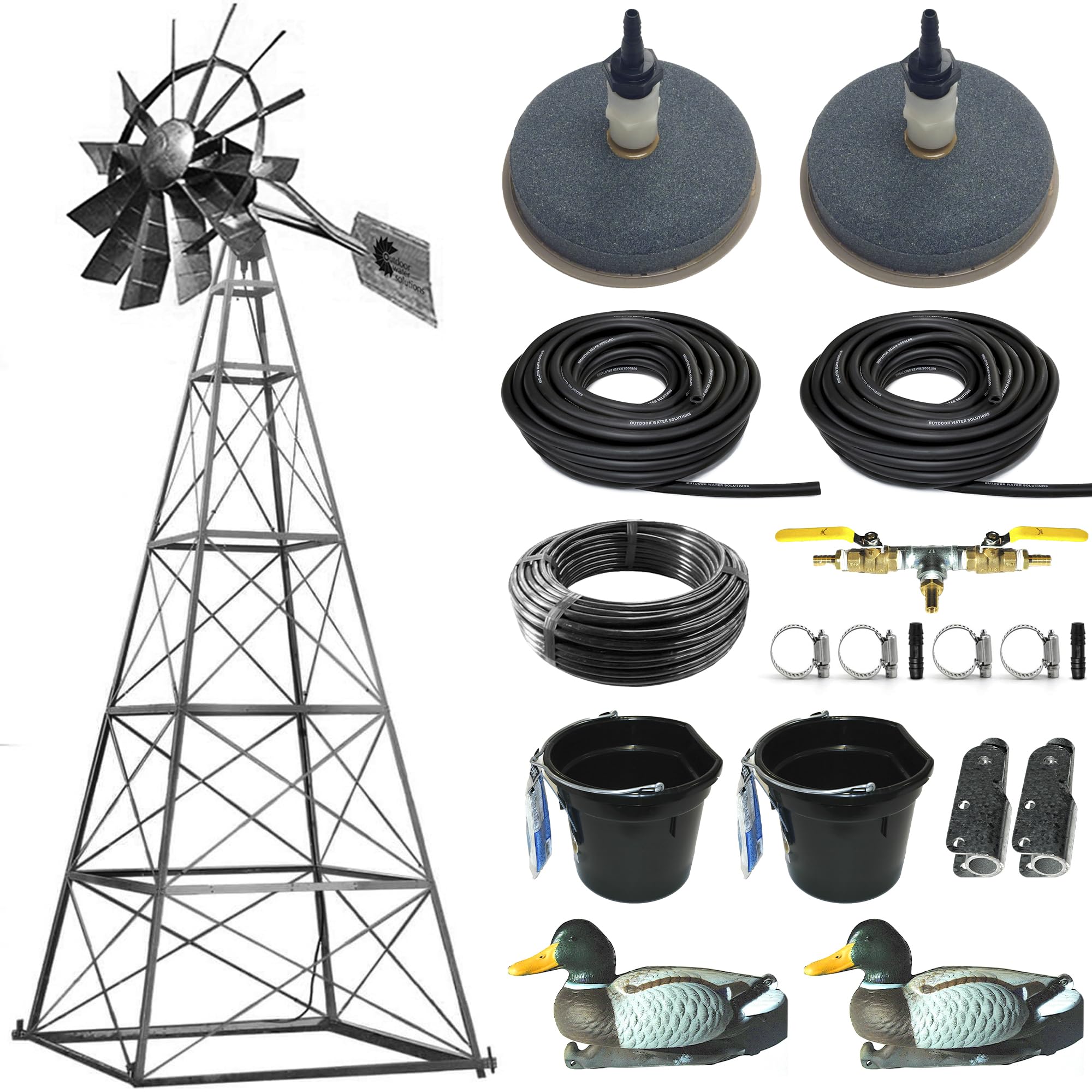
While not strictly a “water pump” in the traditional sense, wind-powered pond aerators use a similar concept. They use a small wind turbine to drive an air compressor, which then bubbles air into a pond. This improves water quality, reduces algae, and promotes a healthy aquatic ecosystem – a smart, electricity-free solution for pond management.
Cost Considerations: Investing in Wind Power
Understanding the financial aspect is key to making a wise investment.
Initial Kit Cost Ranges
- Basic Mechanical Kits (10-20 ft tower, shallow well): $2,000 – $6,000
- Medium Mechanical Kits (20-40 ft tower, deeper well): $6,000 – $12,000+
- Small Electrical Wind Turbine + Pump Kits (low wattage): $3,000 – $8,000 (without battery storage)
- Hybrid Wind-Solar Kits (with battery storage): $8,000 – $20,000+
These are rough estimates and can vary widely based on brand, quality, pumping depth, and included features.
Installation Costs (DIY vs. Professional)
If you’re handy and have the necessary equipment, DIY installation can save thousands. However, for taller towers or complex electrical systems, professional installation can add another $2,000 – $10,000 to the total cost. Prioritize safety and proper function over cutting corners.
Long-Term Savings and ROI
While the initial cost can be substantial, the long-term savings on electricity bills (or the cost of bringing grid power to a remote site) can offer an attractive return on investment over the system’s lifespan, which can be 20-30 years for well-maintained mechanical systems.
A small windmill water pump kit is more than just a piece of equipment; it’s an investment in independence, sustainability, and reliability. By carefully assessing your needs, understanding the available options, and planning for proper installation and maintenance, you can harness the timeless power of the wind to secure your water future.
Frequently Asked Questions
How much wind is needed for a small windmill water pump to operate?
Most small windmill water pumps begin to operate efficiently at wind speeds of 7-10 mph (11-16 km/h). Performance increases significantly with higher wind speeds, but continuous, moderate wind is more beneficial than intermittent strong gusts.
Can a small windmill water pump work in deep wells?
Yes, especially traditional mechanical windmill pumps are renowned for their ability to lift water from very deep wells, often hundreds of feet. Their slow, steady pumping action is highly effective for high-head, low-flow applications.
Do I need a storage tank with a windmill water pump?
A water storage tank is highly recommended, if not essential. Since wind is intermittent, the tank allows the windmill to pump water whenever the wind blows, storing it for use during calm periods or peak demand, ensuring a consistent water supply.
What’s the difference between a mechanical and an electrical windmill water pump?
A mechanical system directly uses wind energy to power a piston pump via a rod, requiring no electricity. An electrical system uses a wind turbine to generate electricity, which then powers a standard electric water pump. Electrical systems offer more flexibility but are more complex.
How much does a small windmill water pump kit cost?
Costs vary widely based on type, size, depth rating, and features. Basic mechanical kits might range from $2,000 to $6,000, while more complex electrical or hybrid wind-solar kits with battery storage can cost $8,000 to over $20,000, not including installation.
What kind of maintenance do these systems require?
Mechanical systems typically need occasional lubrication (grease/oil) every 6-12 months and inspection of moving parts and tower bolts. Electrical systems require checking battery terminals, wiring, and turbine blades for damage. Both benefit from general inspections for leaks and structural integrity.
