
Small Wind Turbine For Home: Your Definitive Guide to Harnessing the Wind
Dreaming of energy independence? Imagine a world where your home powers itself, free from fluctuating utility bills and grid reliance. Small wind turbines for homes promise a slice of that freedom, offering a compelling vision of sustainable living. But here’s the honest truth right upfront: while incredibly appealing, they aren’t a one-size-fits-all solution.
Table of Contents
- Small Wind Turbine For Home: Your Definitive Guide to Harnessing the Wind
- Is a Small Wind Turbine Right For Your Home? The Honest Truth
- The Myth vs. Reality: What You See Isn’t Always What You Get
- Key Considerations for Homeowners: Your Decision Framework
- Wind Resource: The Absolute Factor
- Space & Zoning: How Much Land Do You Need?
- Energy Needs & Goals: Grid-Tied, Off-Grid, or Supplemental?
- Noise & Visual Impact: Be a Good Neighbor
- Cost vs. Benefit: A Realistic Look at ROI
- Understanding Small Home Wind Turbines: Types & Technology
- Horizontal Axis Wind Turbines (HAWTs)
- Vertical Axis Wind Turbines (VAWTs)
- HAWT vs. VAWT: Which is Better for Your Home?
- Key Components of a Small Wind System
- What Size Wind Turbine Do You Actually Need?
- Calculating Your Energy Consumption
- Matching Turbine Output to Your Needs
- Factors Influencing Actual Power Production
- Small Wind Turbine Cost: A Realistic Breakdown
- Initial Investment: What You’ll Pay Upfront
- Installation Costs: Labor, Equipment, & Site Prep
- Permitting & Interconnection Fees: Don’t Forget the Paperwork
- Maintenance Costs: Keeping It Spinning
- The Site Assessment: Don’t Skip This Crucial Step
- Why It’s Critical: Avoid Expensive Mistakes
- What a Site Assessment Involves
- DIY vs. Professional Assessment: When to Call an Expert
- Installation & Permitting: Navigating the Red Tape
- Local Zoning Laws: The First Gauntlet
- Building Permits: Structural & Electrical Safety
- Grid Interconnection Agreements: For the Grid-Tied Homeowner
- Finding Qualified Installers: Don’t Cut Corners Here
- Grid-Tied vs. Off-Grid vs. Hybrid: Which System is For You?
- Grid-Tied Systems: The Most Common Choice
- Off-Grid Systems: True Energy Independence
- Hybrid (Wind + Solar) Systems: The Best of Both Worlds
- Small Wind vs. Solar: A Head-to-Head Comparison
- When Wind Shines
- When Solar Excels
- The Power of Hybrid: Why They Often Work Best Together
- Maximizing Your Small Wind Turbine’s Efficiency & Lifespan
- Regular Maintenance: What to Check, When to Call a Pro
- Monitoring Performance: How to Ensure It’s Working Optimally
- Common Issues & Troubleshooting
- Is a Small Wind Turbine Worth It For Your Home? The Verdict.
For the right home in the right location, a small wind turbine can be a powerful, eco-friendly investment. It can slash your electricity bills, reduce your carbon footprint, and provide reliable power, especially when integrated with other renewable sources. However, their effectiveness hinges on a few critical factors, and understanding these nuances is key to avoiding costly mistakes and genuinely harnessing the wind’s potential.
Is a Small Wind Turbine Right For Your Home? The Honest Truth
Before you get swept away by the idea of spinning blades, let’s talk brass tacks. The internet is awash with dazzling product shots and promises, but the reality for residential wind power is more nuanced. Small wind turbines can be incredibly effective, but only under specific circumstances.
The Myth vs. Reality: What You See Isn’t Always What You Get
Many homeowners are quickly disillusioned by small wind turbines because their expectations are out of sync with reality. Here’s why:
- Myth: Any small turbine can power my whole house. Reality: Most small turbines are designed for supplemental power, specific loads (like charging batteries), or truly off-grid homes with significant wind resources.
- Myth: They work great in my backyard. Reality: Urban and suburban environments often lack the consistent, unobstructed wind needed for efficient power generation. Wind is turbulent and blocked by buildings and trees.
- Myth: They’re silent. Reality: While modern turbines are much quieter, they still produce some noise, which can be a concern for neighbors or close-proximity living.
Key Considerations for Homeowners: Your Decision Framework
To determine if a small wind turbine makes sense for your home, ask yourself these crucial questions:
Wind Resource: The Absolute Factor
This is non-negotiable. If you don’t have consistent, strong wind, a turbine is an expensive ornament. We’re talking average wind speeds of at least 10 mph (4.5 m/s), ideally higher, at the proposed turbine height. Wind speeds often increase significantly with height and decrease with proximity to obstructions.
Space & Zoning: How Much Land Do You Need?
Small wind turbines require space – not just for the turbine itself, but for its tower and the necessary setback from property lines, buildings, and trees. Local zoning laws often dictate minimum tower heights, which means you’ll need a sizeable parcel of land. Think rural or semi-rural properties.
Energy Needs & Goals: Grid-Tied, Off-Grid, or Supplemental?
- Grid-Tied: Connected to the utility grid, often with net metering, allowing you to sell excess power back.
- Off-Grid: Completely independent from the utility, requiring battery storage.
- Supplemental: Used to offset some of your electricity usage, often in conjunction with solar or grid power.
Your goal will dictate the system size and complexity.
Noise & Visual Impact: Be a Good Neighbor
While often exaggerated, turbine noise and visual impact are legitimate concerns. Modern turbines are designed for quiet operation, but a faint hum or whoosh can be audible close up. Their height means they are visible, which can be an issue in some communities or for neighbors.
Cost vs. Benefit: A Realistic Look at ROI
Small wind turbines are a significant investment. Their economic viability depends on your local electricity rates, available incentives (tax credits, rebates), installation costs, and, crucially, the amount of wind at your site. For many, the return on investment might be long-term, and primary motivations are often environmental or energy independence.
Understanding Small Home Wind Turbines: Types & Technology
Not all wind turbines are created equal. For residential use, you’ll primarily encounter two main designs, each with distinct advantages and disadvantages.
Horizontal Axis Wind Turbines (HAWTs)
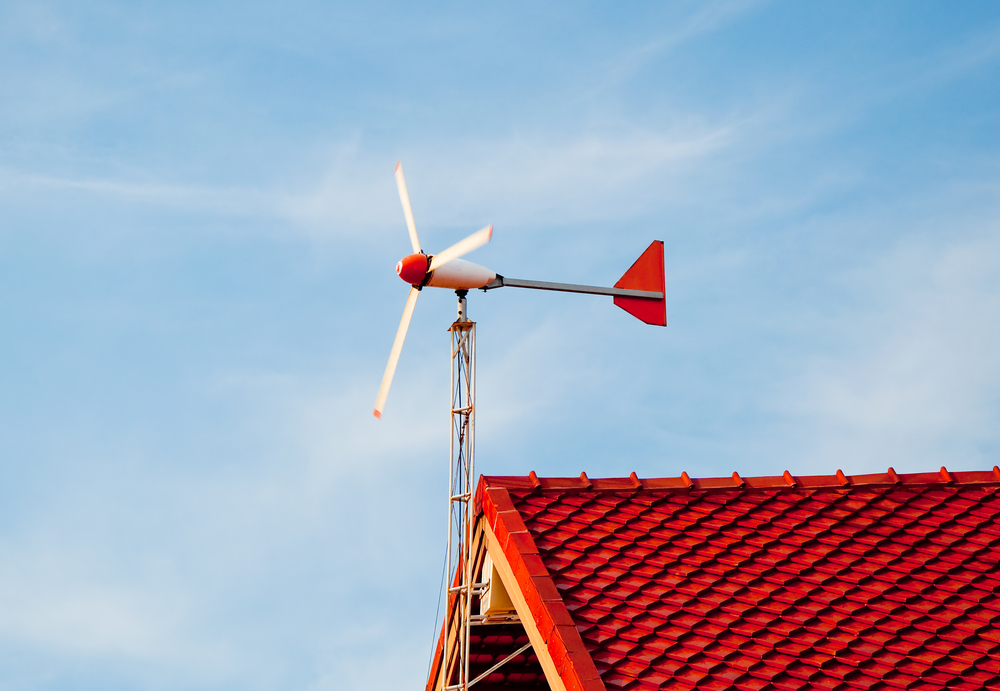
These are what most people visualize when they think of a wind turbine – propeller-like blades mounted on a horizontal shaft. Large utility-scale turbines are HAWTs, but smaller versions are available for homes.
- Description: Typically 2 or 3 blades that spin horizontally, facing into the wind. They usually require a tail vane to orient them into the wind direction.
- Common Uses: Grid-tied residential systems, off-grid cabins, water pumping, telecommunication towers.
- Pros: Generally more efficient at converting wind energy into electricity due to their aerodynamic design. Well-established technology.
- Cons: Require a yaw mechanism to turn into the wind. Can be taller and potentially noisier than VAWTs. Performance can be affected by turbulent wind.
Vertical Axis Wind Turbines (VAWTs)
VAWTs have blades that rotate around a vertical axis. They often have a distinctive, less traditional appearance.
- Description: Blades (often Savonius or Darrieus designs) rotate vertically. They are omnidirectional, meaning they don’t need to turn into the wind.
- Common Uses: Urban settings (due to lower profile and potentially less noise), small supplemental power, aesthetic appeal.
- Pros: Omnidirectional (no yaw mechanism needed). Can be mounted closer to the ground. Potentially quieter and less visually intrusive. Better at handling turbulent wind from multiple directions.
- Cons: Generally less efficient than HAWTs for a given swept area. Can have lower starting torque.
HAWT vs. VAWT: Which is Better for Your Home?
Choosing between HAWT and VAWT often comes down to your specific site, priorities, and wind conditions.
| Feature | Horizontal Axis Wind Turbines (HAWTs) | Vertical Axis Wind Turbines (VAWTs) |
|---|---|---|
| Efficiency (Energy Capture) | Generally higher, especially in consistent wind. | Lower overall efficiency for the same swept area. |
| Wind Direction | Must orient into the wind (requires yaw mechanism). | Omnidirectional, captures wind from any direction. |
| Turbulence Tolerance | Less tolerant of turbulent or gusty wind. | Better performance in turbulent wind conditions. |
| Noise Levels | Can be slightly noisier at higher wind speeds. | Often perceived as quieter due to lower rotational speeds. |
| Aesthetics & Footprint | More traditional windmill look, often taller. | Lower profile, sometimes considered more aesthetically pleasing. |
| Maintenance | Components often higher up the tower, potentially harder to access. | Generator often at the base, easier access for maintenance. |
Key Components of a Small Wind System
Beyond the turbine itself, a complete system typically includes:
- Turbine Blades & Generator: The core, converting wind into electricity.
- Tower: Lifts the turbine to optimal wind height. Crucial for performance.
- Charge Controller: Regulates power flow, especially for battery charging.
- Inverter: Converts DC electricity from the turbine (and batteries) to AC electricity suitable for home use or the grid.
- Batteries (for off-grid/hybrid): Store excess power for use during low wind periods.
- Wiring & Safety Disconnects: Essential electrical infrastructure.
What Size Wind Turbine Do You Actually Need?
This isn’t a game of ‘bigger is always better.’ The right size turbine is one that matches your energy consumption and your available wind resource without being overkill or undersized. Oversized means wasted money; undersized means unmet expectations.
Calculating Your Energy Consumption
Grab your electricity bills! Look for your average monthly (or annual) kilowatt-hour (kWh) usage. This number is your baseline. A typical US home uses around 900 kWh per month, but yours could be much higher or lower depending on your appliances, insulation, and habits.
- Annual kWh (from bill) / 8,760 hours (in a year) = Average hourly kWh.
- Divide your total annual kWh by 12 to get average monthly kWh.
Matching Turbine Output to Your Needs
Turbine manufacturers provide a “rated power” (e.g., 1 kW, 5 kW). This is the maximum power it can produce at a specific, high wind speed (often 25-30 mph). Crucially, a turbine rarely operates at its rated power.
You need to understand the turbine’s power curve, which shows its output at various wind speeds. Look for turbines that start generating power at low wind speeds (cut-in speed) and can handle the maximum wind speeds in your area without shutting down (cut-out speed).
Factors Influencing Actual Power Production
- Average Wind Speed: This is paramount. A small increase in average wind speed results in a disproportionately larger increase in power output (wind power is proportional to the cube of wind speed).
- Turbine Height: Taller towers generally access stronger, less turbulent wind. Doubling tower height can increase power output by 15-25%.
- Rotor Diameter: Larger blades sweep a larger area, capturing more wind.
- Site Topography & Obstructions: Hills, trees, and buildings create wind shadows and turbulence, drastically reducing efficiency.
For a typical home, you’d likely look at turbines in the 1 kW to 10 kW range, but a precise calculation requires a professional site assessment.
Small Wind Turbine Cost: A Realistic Breakdown
Let’s talk dollars and cents. A small wind turbine system is a significant investment. Understanding the various cost components will help you budget realistically and evaluate potential returns.
Initial Investment: What You’ll Pay Upfront
The price tag isn’t just the turbine itself. It’s a system. Here’s a breakdown:
- Turbine Unit Cost: This is the generator and blades. Prices vary widely based on size, brand, and technology.
- Tower: A critical, often underestimated cost. Towers can be self-supporting (freestanding) or guyed (supported by cables). Guyed towers are cheaper but require more land.
- Inverter: Converts the turbine’s DC output to AC for home use or grid connection.
- Charge Controller: Essential for battery-based systems to prevent overcharging.
- Batteries (for off-grid/hybrid): A major expense for energy storage. Lithium-ion is popular but costly; lead-acid is cheaper but requires more maintenance.
- Wiring & Electrical Components: Cables, disconnects, fuses, breakers.
Installation Costs: Labor, Equipment, & Site Prep
This isn’t a DIY project for most. Professional installation is almost always required.
- Foundation: For the tower, this involves excavation and concrete.
- Crane/Lifting Equipment: Especially for taller towers and larger turbines.
- Electrical Work: Connecting the turbine to your home’s electrical panel or battery bank, and to the grid (if applicable).
- Labor: Skilled technicians and electricians are needed.
Permitting & Interconnection Fees: Don’t Forget the Paperwork
These can add up and are often overlooked in initial estimates.
- Building Permits: Required by your local municipality for the tower and electrical work.
- Zoning Variances: If your proposed tower height or setback doesn’t meet local codes.
- Grid Interconnection Fees: Your utility company will charge for connecting a grid-tied system.
Maintenance Costs: Keeping It Spinning
Like any mechanical system, turbines require periodic maintenance:
- Annual Checks: Inspecting blades, tower, wiring, bolts, and lubrication.
- Component Replacement: Bearings, brushes (on some generators), or even blades after many years.
| Cost Component | Estimated Range (1-5 kW System, USD) | Notes |
|---|---|---|
| Turbine Unit (blades & generator) | $3,000 – $15,000 | Varies by size, brand, and type (HAWT vs. VAWT). |
| Tower (materials & foundation) | $5,000 – $20,000 | Guyed towers generally cheaper than self-supporting. Height and load are key. |
| Inverter & Charge Controller | $1,000 – $5,000 | Dependent on system size and features (grid-tied vs. off-grid). |
| Battery Bank (for off-grid/hybrid) | $4,000 – $20,000+ | Significant cost; varies by capacity, chemistry (lead-acid vs. lithium). |
| Installation Labor | $5,000 – $15,000 | Includes electricians, crane operators, general labor. Highly variable. |
| Permitting & Interconnection Fees | $500 – $2,500 | Varies widely by municipality and utility. |
| Total Estimated System Cost | $18,500 – $77,500+ | This is a rough estimate; always get detailed quotes. |
Keep in mind that federal and state incentives (like the Investment Tax Credit for renewables) can significantly reduce these upfront costs.
The Site Assessment: Don’t Skip This Crucial Step
Seriously, if there’s one takeaway from this guide, it’s this: a thorough site assessment is paramount. Ignoring this step is the fastest way to turn your wind turbine dream into a costly, underperforming nightmare.
Why It’s Critical: Avoid Expensive Mistakes
Your property’s unique characteristics dictate whether a wind turbine will be economically viable and perform as expected. Without a proper assessment, you’re essentially guessing, and that’s a risky bet with a five-figure investment.
What a Site Assessment Involves
A professional site assessment will typically cover:

- Wind Mapping & Resource Analysis: Using historical weather data, nearby airport data, and potentially on-site anemometer (wind meter) measurements to determine average wind speeds and prevailing wind directions at various heights. This will include modeling the impact of local topography.
- Obstruction Analysis: Identifying trees, buildings, hills, and other structures that could create turbulence or block wind flow. The general rule is that a turbine tower should be at least 20 feet higher than any obstruction within 500 feet.
- Topography Review: How local landscape features might funnel or disrupt wind.
- Zoning & Permitting Review: Checking local regulations for setbacks, height limits, noise ordinances, and permit requirements.
- Interconnection Feasibility: For grid-tied systems, assessing the existing electrical infrastructure and proximity to utility lines.
- Structural & Geotechnical Considerations: Ensuring the ground can support the tower foundation.
DIY vs. Professional Assessment: When to Call an Expert
You can do some preliminary investigation yourself (e.g., checking online wind maps, observing wind patterns on your property, looking at local zoning codes). However, for a serious investment, a professional site assessment is highly recommended. These experts have the tools and experience to accurately predict performance and identify potential issues that could make or break your project.
Installation & Permitting: Navigating the Red Tape
Once you’ve determined a small wind turbine is viable for your site, the next hurdle is getting it installed and permitted. This phase often involves more bureaucracy than you might expect, but it’s essential for safety and compliance.
Local Zoning Laws: The First Gauntlet
Before you even think about buying, check with your local planning department. Zoning ordinances often dictate:
- Setbacks: Minimum distances from property lines, roads, and buildings.
- Height Restrictions: Caps on how tall structures (including wind turbine towers) can be.
- Noise Ordinances: Regulations on sound levels.
- Aesthetic Controls: Some communities have rules about visual impact, especially in historic districts.
You might need to apply for a variance if your plans don’t perfectly align with existing codes, which can add time and cost.
Building Permits: Structural & Electrical Safety
A wind turbine tower is a significant structure, and the electrical connections are complex. You’ll need permits for:
- Structural Integrity: Ensuring the tower and foundation are engineered to withstand local wind loads.
- Electrical Codes: All wiring and connections must meet the National Electrical Code (NEC) and any local amendments.
Grid Interconnection Agreements: For the Grid-Tied Homeowner
If you’re connecting to the utility grid, you’ll need to work with your local utility company. This involves:
- Application Process: Submitting plans and technical specifications.
- Safety Requirements: Ensuring your system has appropriate disconnects and protection to prevent back-feeding the grid when it’s down.
- Net Metering Agreement: Establishing how you’ll be credited for excess power you send to the grid.
Finding Qualified Installers: Don’t Cut Corners Here
This is not a job for a general handyman. Look for installers with:
- NABCEP Certification: (North American Board of Certified Energy Practitioners) for wind energy.
- Experience: Specific experience with small wind turbine installations.
- References: Check their past work and client satisfaction.
- Insurance & Licensing: Ensure they are properly insured and licensed for electrical and construction work in your state.
Grid-Tied vs. Off-Grid vs. Hybrid: Which System is For You?
Your choice of system configuration dictates how your wind turbine interacts with your home’s power needs and the existing utility infrastructure.
Grid-Tied Systems: The Most Common Choice
This is where your wind turbine is connected to both your home’s electrical panel and the utility grid. It’s often the most practical and cost-effective option for homeowners.
- How it Works: The turbine generates power; if you use less than you produce, the excess goes to the grid (often via net metering). If you need more power than your turbine generates (e.g., low wind), you draw from the grid.
- Pros: No need for expensive battery storage. You can sell excess electricity. Grid acts as a virtually unlimited backup.
- Cons: You’re still reliant on the grid; if the grid goes down, your system typically shuts off (for safety reasons) unless you have specific battery backup with an automatic transfer switch.
- Best Use Case: Homes with access to a reliable grid and favorable net metering policies, seeking to reduce utility bills and environmental impact.
Off-Grid Systems: True Energy Independence
For remote homes or those desiring complete self-sufficiency, an off-grid system severs ties with the utility company.
- How it Works: All power comes from the wind turbine (and often solar panels) and is stored in a battery bank. An inverter converts stored DC power to AC for home use.
- Pros: Complete energy independence. No utility bills. Ideal for remote locations where grid extension is prohibitively expensive.
- Cons: Requires a large, expensive battery bank. You must carefully manage your energy consumption. Backup generator usually needed for extended low-wind periods.
- Best Use Case: Remote cabins, tiny homes, or areas without grid access; those prioritizing complete autonomy.
Hybrid (Wind + Solar) Systems: The Best of Both Worlds
Combining wind and solar offers a robust and resilient energy solution, leveraging the strengths of each technology.
- How it Works: Solar panels generate power during sunny days; wind turbines generate power day and night, often excelling in winter or during stormy weather when solar might be less productive. Both feed into a common inverter and battery bank.
- Pros: Increased reliability and consistency. Compensates for the intermittency of each source (e.g., wind at night, solar in summer). Can be grid-tied or off-grid.
- Cons: Higher initial complexity and cost than a single-source system.
- Best Use Case: Any homeowner seeking maximum energy reliability, especially in areas with good wind and sun, and those looking for grid resilience or full off-grid capability.
| System Type | Pros | Cons | Best Use Cases |
|---|---|---|---|
| Grid-Tied | No batteries needed, sell excess power, grid as backup. | Still reliant on grid (shuts off during outages), utility fees. | Urban/suburban homes, good net metering, lower initial cost. |
| Off-Grid | Complete energy independence, no utility bills. | High battery cost, requires careful energy management, backup generator often needed. | Remote locations, desire for full autonomy, no grid access. |
| Hybrid (Wind + Solar) | High reliability, consistent power, reduces intermittency. | Higher complexity and initial cost. | Seeking maximum resilience, off-grid potential, varied weather patterns. |
Small Wind vs. Solar: A Head-to-Head Comparison
It’s natural to compare small wind with its more ubiquitous renewable cousin, solar power. Both offer pathways to clean energy, but they excel under different conditions and have distinct characteristics.
When Wind Shines
- Nighttime & Winter: Wind often blows stronger at night and during winter months when solar output is lowest. This makes wind a fantastic complement to solar for year-round energy production.
- Consistently Windy Areas: If you live in a location with excellent, unobstructed wind resources (e.g., open plains, coastal areas, ridgetops), wind can be a highly productive option.
- Less Space Required on Ground: While towers are tall, the ground footprint is relatively small compared to a large solar array for equivalent power.
When Solar Excels
- Consistency During Daylight: Solar output is highly predictable during daylight hours, especially in sunny climates.
- Ease of Installation: Rooftop solar is generally simpler to install than a tall wind turbine tower, requiring less complex permitting.
- Lower Visual Impact: Rooftop panels are often less visually prominent than a turbine tower.
- Widespread Applicability: Most homes have a suitable roof for solar, whereas only a fraction have ideal wind conditions.
The Power of Hybrid: Why They Often Work Best Together
As mentioned, wind and solar are often synergistic. They have complementary production profiles: solar peaks at midday, wind often peaks at night or in different seasons. A hybrid system provides a more constant and reliable power supply, reducing the need for massive battery banks in off-grid setups or minimizing reliance on the grid for supplemental power.
| Feature | Small Wind Turbine | Solar PV Panels |
|---|---|---|
| Primary Energy Source | Kinetic energy of wind. | Light from the sun. |
| Generation Profile | Day and night; often higher in winter/stormy weather. | Daylight hours only; peaks at midday, higher in summer. |
| Site Requirements | Excellent, unobstructed wind resource; significant land for tower setback. | Unshaded roof or ground area facing south (in Northern Hemisphere). |
| Average Cost (per Watt) | Higher (e.g., $10-$20/Watt installed). | Lower (e.g., $2-$4/Watt installed). |
| Permitting & Installation Complexity | Generally more complex due to tower, height, and noise. | Less complex; rooftop installations are more common. |
| Maintenance | Requires regular checks on mechanical parts (blades, bearings). | Minimal (periodic cleaning, system monitoring). |
| Visual Impact | Tall, prominent structure; can be a concern for some. | Lower profile, often integrated onto rooftops. |
Maximizing Your Small Wind Turbine’s Efficiency & Lifespan
Once your turbine is up and running, a little proactive care goes a long way in ensuring it performs optimally and lasts for decades. Neglect can quickly erode your investment.
Regular Maintenance: What to Check, When to Call a Pro
Think of it like a car; it needs tune-ups. A typical maintenance schedule might include:

- Quarterly Visual Inspections: Look for loose bolts, damaged blades, fraying wires, or signs of wildlife nesting.
- Annual Professional Servicing: A qualified technician should inspect key components like bearings, the yaw mechanism (for HAWTs), generator brushes (if applicable), tower integrity, and electrical connections. They’ll also check lubrication levels.
- Post-Storm Checks: After severe weather, quickly inspect for any damage or shifting.
- Blade Cleaning: Over time, dirt and debris can accumulate, slightly reducing aerodynamic efficiency. A professional can advise if and when this is needed.
Monitoring Performance: How to Ensure It’s Working Optimally
Most modern systems come with monitoring capabilities, often accessible via an app or web portal. Pay attention to:
- Power Output: Compare actual output to expected output for given wind speeds. A significant drop might indicate an issue.
- Wind Speed: Correlate turbine output with real-time wind data.
- System Status: Look for any error codes or warning messages from your inverter or charge controller.
Consistent monitoring helps catch small problems before they become big, expensive ones.
Common Issues & Troubleshooting
- Low Power Output: Could be insufficient wind (most common), dirty blades, mechanical issue, or electrical fault.
- Unusual Noise: Often indicates worn bearings, loose components, or blade imbalance.
- Vibration: Similar to noise, suggests a mechanical issue that needs immediate attention.
- System Shutdowns: Could be a safety feature (high wind, overvoltage), a controller issue, or a grid fault.
For any significant issue, always consult your installer or a certified wind technician.
Is a Small Wind Turbine Worth It For Your Home? The Verdict.
So, after all this, should you get a small wind turbine for your home? The answer, as you’ve likely gathered, isn’t a simple yes or no. It’s a resounding: “It depends.”
For homeowners with:
- Excellent, consistent, unobstructed wind resources.
- Sufficient land for proper tower height and setbacks.
- A willingness to invest significantly upfront for long-term savings and energy independence.
- A desire to reduce their environmental footprint.
- Realistic expectations about power output and maintenance.
…then a small wind turbine can be a tremendously rewarding and powerful investment. When paired with solar, it becomes an even more formidable and reliable source of clean energy.
However, if your property is suburban, heavily treed, lacks consistent strong winds, or you’re looking for a low-cost, low-effort energy solution, solar panels might be a more practical and cost-effective starting point.
The key takeaway is to approach this decision with knowledge, not just enthusiasm. Conduct a thorough site assessment, understand the costs, and choose reputable professionals. Armed with this definitive guide, you’re now empowered to make an informed decision about whether harnessing the wind’s power is the right path for your home.
n
Frequently Asked Questions
How much electricity can a small wind turbine generate for a home?
The electricity generated by a small wind turbine varies significantly based on its size (typically 1kW to 10kW for homes), the average wind speed at your specific site, and the turbine’s efficiency. A 5kW turbine in a location with consistent 12-14 mph average winds might produce 8,000-10,000 kWh annually, enough to offset a significant portion of an average US home’s consumption (around 10,800 kWh/year).
What is the typical cost of installing a small wind turbine for a home?
The total installed cost for a small home wind turbine system (1-5 kW) can range from $18,500 to $77,500 or more. This includes the turbine unit, tower, inverter, charge controller, installation labor, foundation, electrical work, and permitting fees. Battery storage for off-grid or hybrid systems adds considerably to the cost. Costs per Watt are generally higher than solar.
How noisy are small home wind turbines?
Modern small wind turbines are designed to be much quieter than older models, often producing sound levels comparable to a refrigerator hum or rustling leaves (around 40-55 dB) at a reasonable distance. However, noise can still be a factor, especially in very quiet environments or close to property lines. Vertical Axis Wind Turbines (VAWTs) are often perceived as quieter than Horizontal Axis Wind Turbines (HAWTs).
Do I need a lot of land for a home wind turbine?
Yes, significant land is usually required. Small wind turbines need to be installed on tall towers to access consistent, unobstructed wind, and they must adhere to local zoning setbacks from property lines and buildings. A general rule is that the tower should be at least 20 feet taller than any obstruction within 500 feet, which often necessitates a rural or semi-rural property with ample open space.
How does wind energy compare to solar energy for home use?
Wind and solar are complementary. Solar excels during sunny daylight hours, especially in summer. Wind often performs better at night, during winter, and on cloudy/stormy days when solar output is low. Wind turbines require excellent, consistent wind resources and more complex installation, while solar is more widely applicable to homes with suitable roof space. Hybrid wind-solar systems offer superior reliability.
What kind of maintenance does a small wind turbine require?
Small wind turbines require regular maintenance, typically involving quarterly visual inspections for damage and an annual professional service check. This service includes inspecting blades, tower integrity, lubrication of moving parts, and electrical connections. Promptly addressing any unusual noises or drops in performance is crucial for maximizing efficiency and lifespan.
