
Harnessing the Wind: Your Complete Guide to Off-Grid Home Power
Dreaming of a life untethered from the grid? Imagine a home powered by nature, where your electricity bills are a distant memory and your energy independence is truly your own. While solar power often takes center stage in off-grid discussions, wind power offers a powerful, often overlooked, complement or even primary solution for generating your own electricity.
Table of Contents
- Harnessing the Wind: Your Complete Guide to Off-Grid Home Power
- Is Wind Power Right for YOUR Off-Grid Home? The Crucial First Steps
- Understanding Your Energy Needs: How Much Power Do You Really Use?
- Site Assessment: Does Your Location Have Consistent Wind?
- Local Regulations, Permitting, and Zoning: Don’t Get Blown Away
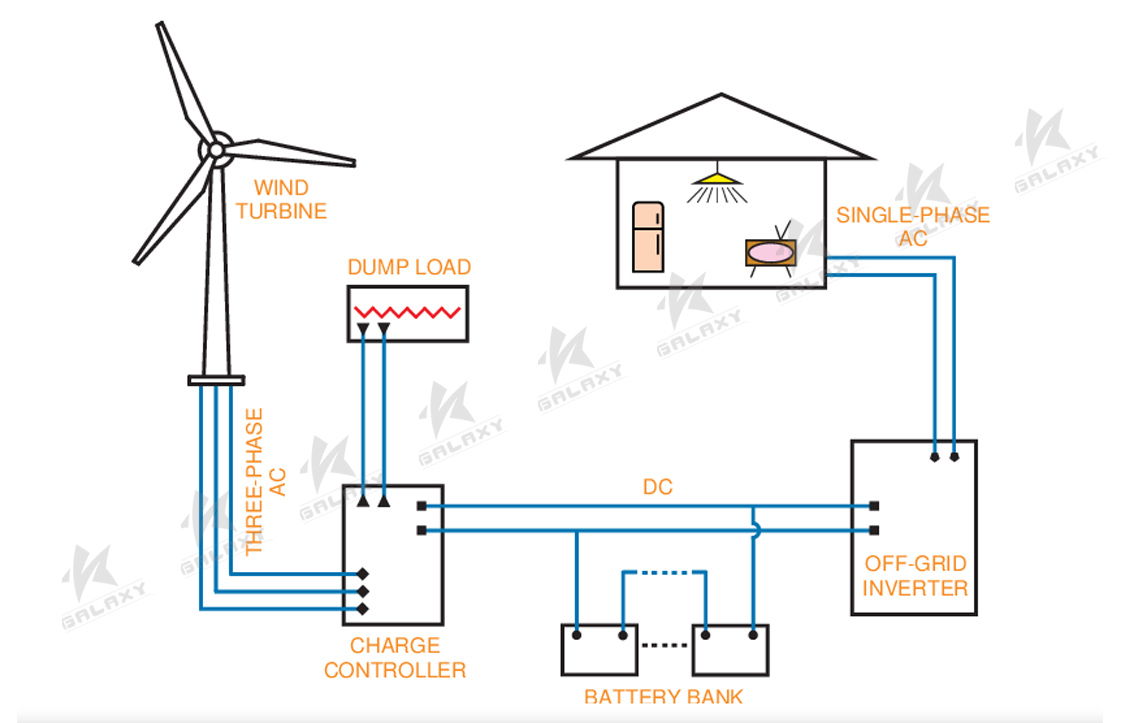
- The Anatomy of an Off-Grid Wind System: What You Need
- The Wind Turbine: Types and Considerations
- The Tower: Getting Your Turbine Up High (and Safe)
- Charge Controller: Managing the Power Flow
- Battery Bank: Storing Your Wind Harvest
- Inverter: Converting DC to AC for Your Home
- Balance of System Components
- Wind vs. Solar vs. Hybrid: Finding Your Off-Grid Sweet Spot
- The Strengths and Weaknesses of Wind for Off-Grid
- Why Solar is Often the First Choice for Off-Grid (and its limits)
- The Power of Hybrid Systems: Wind + Solar Synergy
- Sizing Your Off-Grid Wind System: A Step-by-Step Approach
- 1. Calculate Your Daily Energy Consumption (Revisited)
- 2. Determine Your Site’s Average Wind Speed (Accurately)
- 3. Factor in Days of Autonomy (Battery Sizing)
- 4. Choose the Right Turbine Size and Battery Capacity
- The True Cost of Off-Grid Wind Power: Investment & Savings
- Upfront Costs: What to Expect
- Installation Costs: DIY vs. Professional
- Maintenance and Longevity: Protecting Your Investment
- The Long-Term Savings and ROI for Off-Grid Living
- Installation & Maintenance: Keeping Your Blades Spinning
- Safety First: Critical Considerations
- Ongoing Maintenance Checklist
- Common Misconceptions About Off-Grid Wind Power
- Conclusion: Embracing Energy Independence with Wind
But let’s be real: talk of wind turbines can bring up questions about cost, reliability, and whether it’s truly practical. You might have heard stories of inconsistent winds or hefty price tags. This isn’t a sales pitch; this is your honest, comprehensive guide to understanding if wind power is the missing piece in your off-grid puzzle. We’ll cut through the noise, tell you what’s really involved, and help you determine if harnessing the wind is your next smart move toward total energy freedom.
Is Wind Power Right for YOUR Off-Grid Home? The Crucial First Steps
Before you even think about buying a turbine, you need to play detective. The success of an off-grid wind system hinges on a few fundamental truths about your home and your location.
Understanding Your Energy Needs: How Much Power Do You Really Use?
This is the bedrock of any off-grid system, wind or otherwise. You can’t size a power source if you don’t know your demand. Grab your utility bills (if you have them) or prepare for a detailed appliance audit.
- Daily kWh Usage: Add up the wattage of all your appliances and estimate how many hours per day each runs. This gives you your total daily kilowatt-hour (kWh) consumption.
- Peak Demand: What’s the highest wattage your home might draw at any one moment? This is crucial for sizing your inverter. Think about when your well pump kicks on, or if you run a microwave and a hairdryer simultaneously.
- Energy Efficiency: Seriously, before adding generation, reduce demand. Switch to LED lights, invest in energy-efficient appliances, and insulate well. Every watt saved is a watt you don’t need to generate.
Site Assessment: Does Your Location Have Consistent Wind?
This is the make-or-break factor for wind power. A turbine needs consistent, unobstructed wind to be effective. “Bare minimum wind speed isn’t going to cut it,” as one expert put it. You’re looking for an average annual wind speed of at least 7-10 mph (3.1-4.5 m/s) to make a small wind system worthwhile. Anything less, and you’re just not going to generate enough power to justify the investment.
Here’s how to assess your site practically:
- Observe Your Surroundings: Look at trees – are they uniformly wind-swept in one direction? Observe how flags or banners behave.
- Check Local Wind Data: Nearby airports, meteorological stations, or online resources (like the National Renewable Energy Laboratory’s (NREL) Wind Prospector tool) can provide historical wind speed data for your region.
- Consider Obstructions: Trees, hills, and buildings create turbulence and block wind. You’ll want your turbine tower to be at least 20 feet (6 meters) higher than any obstacle within a 300-foot (90-meter) radius.
- Use an Anemometer: For the most accurate assessment, install a temporary anemometer (wind speed meter) at the proposed turbine height for several months to a year. This provides real-world data specific to your microclimate.
- Topography: Open, elevated locations like hilltops or plains are ideal. Valleys or heavily wooded areas are generally poor sites for wind.
Local Regulations, Permitting, and Zoning: Don’t Get Blown Away
You can have the perfect site and the ideal turbine, but if your local authorities say “no,” it’s a non-starter. This is a critical step often overlooked until it’s too late.
- Permits: Small wind turbines often require building permits due to their height and structural requirements.
- Zoning Laws: Check for specific zoning ordinances regarding tower height, setbacks from property lines, and noise restrictions. Some areas may prohibit them entirely or have strict aesthetic guidelines.
- Neighbors: While not a legal requirement, discussing your plans with neighbors can prevent future disputes regarding noise or visual impact.
The Anatomy of an Off-Grid Wind System: What You Need
An off-grid wind system is more than just a turbine. It’s a symphony of components working together to capture, convert, and store energy for your home.
The Wind Turbine: Types and Considerations
This is the star of the show, but choosing the right one requires understanding the differences.
| Feature | Horizontal Axis Wind Turbines (HAWTs) | Vertical Axis Wind Turbines (VAWTs) |
|---|---|---|
| Appearance | Traditional propeller-like blades, typically 2-3 blades. | Egg-beater (Darrieus) or S-shape (Savonius) blades. |
| Efficiency | Generally more efficient (higher power output for given size). | Less efficient than HAWTs, but improving. |
| Wind Direction | Must yaw (turn) to face the wind; often have a tail vane. | Omnidirectional; doesn’t need to face the wind. |
| Cut-in Speed | Typically 6-10 mph. | Often lower cut-in speeds (4-7 mph). |
| Noise | Can be noticeable, especially at higher wind speeds. | Generally quieter due to lower tip speeds. |
| Turbulence | More sensitive to turbulent wind; prefers smooth, laminar flow. | Better performance in turbulent wind conditions (e.g., urban). |
| Maintenance | Generator and gearbox (if present) are at the top of the tower. | Generator and gearbox are at ground level, easier access. |
| Off-Grid Suitability | Excellent for open, consistently windy sites. Dominant choice for small-scale. | Good for less ideal sites with some turbulence, or where noise/aesthetics are critical. |
When selecting, consider the turbine’s rated power (e.g., 1kW, 5kW), its rotor diameter (larger means more captured wind), and its cut-in speed (the minimum wind speed required to start generating power). Also, check its furling speed or braking mechanism, which protects the turbine in high winds.
The Tower: Getting Your Turbine Up High (and Safe)
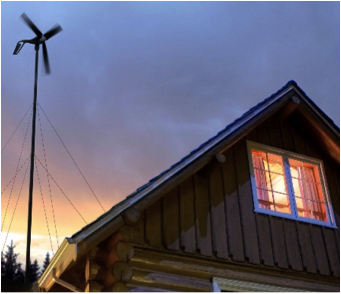
The higher your turbine, the better the wind resource. Wind speed increases with height and is less turbulent. Most off-grid small wind turbines are mounted on towers ranging from 30 to 100 feet (9 to 30 meters).
- Guyed Towers: Supported by guy wires, these are typically less expensive but require more land area for the guy wire anchors.
- Freestanding Towers: More expensive but require less land. Often preferred for sites with limited space or where aesthetics are a concern.
- Tilt-Up Towers: A type of guyed tower that can be lowered for maintenance or in severe weather, making upkeep easier and safer.
Charge Controller: Managing the Power Flow
This critical component protects your batteries from overcharging and ensures the turbine operates efficiently. It converts the variable AC output from the turbine into DC power suitable for your battery bank.
- PWM (Pulse Width Modulation) vs. MPPT (Maximum Power Point Tracking): While MPPT controllers are superior for solar, a well-matched wind charge controller is often designed specifically for the turbine’s output curve.
- Diversion Load: Many wind charge controllers include a diversion load feature. When batteries are full, excess power is routed to a resistive load (like a water heater element) instead of shutting down the turbine, which helps protect the turbine and prolong its life.
Battery Bank: Storing Your Wind Harvest
For an off-grid system, batteries are non-negotiable. They store the energy generated by the wind (and potentially solar) for use when the wind isn’t blowing.
- Types: Deep-cycle lead-acid batteries (FLA, AGM, Gel) are common due to lower upfront cost, but Lithium-ion (LiFePO4) batteries are gaining popularity for their longer lifespan, higher efficiency, and deeper discharge capabilities, despite a higher initial investment.
- Capacity Sizing: Your battery bank needs to be large enough to cover your energy consumption during periods of low or no wind. This is your “days of autonomy.”
- Depth of Discharge (DoD): The percentage of a battery’s capacity that has been discharged. LiFePO4 batteries can handle deeper discharges (e.g., 80-90%) than lead-acid (e.g., 50%) without significantly reducing their lifespan.
Inverter: Converting DC to AC for Your Home
Most home appliances run on AC power. The inverter converts the DC power stored in your batteries into usable AC electricity.
- Pure Sine Wave Inverters: Essential for sensitive electronics (computers, modern appliances) and generally recommended for all off-grid homes, as they produce clean, grid-quality power.
- Sizing: The inverter must be sized to handle your peak demand (the maximum wattage your home could draw at one time).
Balance of System Components
Don’t forget the supporting cast:
- Wiring: Properly sized and protected wiring is crucial for safety and efficiency.
- Safety Disconnects: Manual switches to safely disconnect power from the turbine, batteries, and inverter for maintenance or emergencies.
- Grounding: Essential for protecting your system and home from lightning strikes and electrical faults.
Wind vs. Solar vs. Hybrid: Finding Your Off-Grid Sweet Spot
The perennial debate for off-grid dwellers: wind or solar? The answer often isn’t one or the other, but rather how they complement each other.
The Strengths and Weaknesses of Wind for Off-Grid
Pros:
- Nighttime Generation: Unlike solar, wind turbines can generate power 24/7 as long as the wind is blowing.
- Winter Performance: Wind resources are often stronger and more consistent in winter months, precisely when solar output is diminished due to shorter days and lower sun angles.
- Consistent Windy Areas: In locations with reliable, high average wind speeds, a turbine can be a very powerful and consistent energy producer.
Cons:
- Intermittency: Wind is variable. You can have days with no wind at all.
- Higher Initial Cost Per Watt: Often, the upfront cost per watt generated can be higher for wind compared to solar, especially for smaller systems.
- Noise and Visual Impact: Turbines can be noisy (though modern designs are much quieter) and their height can be a visual concern for some.
- Specific Site Requirements: As discussed, not every location is suitable.
- Maintenance: Requires more active maintenance than a typical solar array.
Why Solar is Often the First Choice for Off-Grid (and its limits)
Solar photovoltaic (PV) systems are incredibly popular for off-grid homes, and for good reason:
- Easier Installation: Generally simpler to install and require less site-specific assessment (beyond sun exposure).
- Silent Operation: Completely silent.
- Lower Maintenance: Panels require minimal cleaning and occasional checks.
However, solar has its limits:
- No Nighttime Production: Zero power generation after sunset.
- Reduced Winter/Cloudy Day Output: Significantly less effective on short, cloudy winter days.
The Power of Hybrid Systems: Wind + Solar Synergy
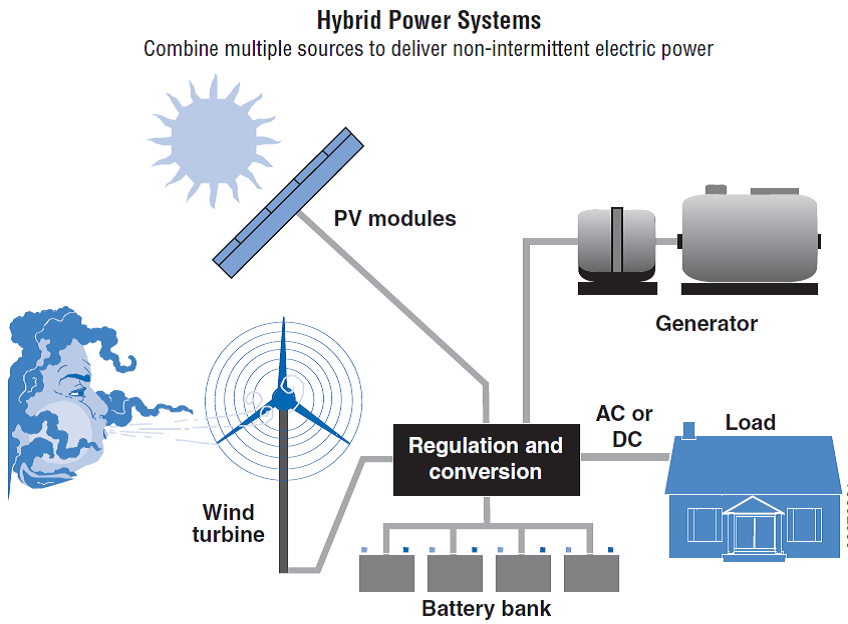
This is often the off-grid sweet spot. A hybrid wind and solar system leverages the strengths of both technologies, providing a more reliable and consistent power supply than either could achieve alone.
- Complementary Production: Wind often blows strongest at night and during winter, while solar peaks during the day and in summer. This combination smooths out energy production throughout the day and year.
- Reduced Battery Reliance: By having two primary charging sources, your battery bank isn’t subjected to as extreme charge/discharge cycles, potentially extending its lifespan and requiring a slightly smaller bank.
- Enhanced Reliability: If one resource is low (e.g., cloudy, no wind), the other can often pick up the slack, significantly reducing the need for a noisy, fuel-guzzling backup generator.
Sizing Your Off-Grid Wind System: A Step-by-Step Approach
Let’s turn those observations and calculations into a real system size.
1. Calculate Your Daily Energy Consumption (Revisited)
You’ve done the audit. Let’s say your off-grid home uses an average of 10 kWh per day. This is your target.
2. Determine Your Site’s Average Wind Speed (Accurately)
Using your anemometer data or reliable local wind maps, determine your average annual wind speed at the planned tower height. For this example, let’s assume you have a good site with an average of 12 mph (5.4 m/s).
3. Factor in Days of Autonomy (Battery Sizing)
How many days can your batteries carry you through without wind or sun? For off-grid, 3-5 days of autonomy is a common recommendation, depending on how critical your power supply is and your backup generator strategy. Let’s aim for 3 days.
- Total kWh needed from batteries: 10 kWh/day * 3 days = 30 kWh
- Account for Inverter Efficiency: Inverters are about 85-95% efficient. Let’s use 90%. So, 30 kWh / 0.90 = ~33.3 kWh needed from the battery bank itself.
- Account for Depth of Discharge (DoD): If using lead-acid at 50% DoD: 33.3 kWh / 0.50 = 66.6 kWh (usable capacity). If using LiFePO4 at 80% DoD: 33.3 kWh / 0.80 = 41.6 kWh (usable capacity). This shows why LiFePO4 is more space-efficient.
4. Choose the Right Turbine Size and Battery Capacity
Turbine manufacturers provide power curves that show how much energy their turbine generates at various wind speeds. Based on your 12 mph average wind speed, you’ll look for a turbine that can produce, on average, at least 10 kWh per day (or a proportional share if you’re going hybrid).
For example, a 1kW turbine in a 12 mph average wind environment might produce roughly 2-4 kWh per day, depending on its specific power curve and your site’s actual wind distribution. To meet 10 kWh/day, you’d likely need a larger turbine, perhaps a 3kW or 5kW unit, or combine it with solar.
Simplified Calculation Example:
nIf your goal is 10 kWh/day from wind, and your chosen 3kW turbine generates ~3.5 kWh/day at your average wind speed (check manufacturer data!), you’d need approximately three of these turbines, or you’d need to supplement significantly with solar.
The True Cost of Off-Grid Wind Power: Investment & Savings
Let’s address the elephant in the room: the cost. Off-grid wind power is an investment, but one that can pay dividends in energy independence and long-term savings.
Upfront Costs: What to Expect
The cost varies wildly based on system size, turbine type, battery chemistry, and whether you DIY or hire professionals. Here’s a general breakdown:
| Component | Small System (0.5 – 2 kW) | Medium System (3 – 5 kW) | Large System (5 – 10 kW+) |
|---|---|---|---|
| Wind Turbine | $1,500 – $6,000 | $7,000 – $18,000 | $15,000 – $40,000+ |
| Tower | $500 – $2,500 | $2,000 – $6,000 | $5,000 – $15,000+ |
| Battery Bank (Capacity Dependent) | $1,000 – $5,000 (Lead-Acid) | $3,000 – $10,000 (Lead-Acid) | $8,000 – $30,000+ (Lithium often higher) |
| Inverter | $500 – $2,000 | $1,500 – $5,000 | $4,000 – $10,000+ |
| Charge Controller & BOS | $300 – $1,000 | $800 – $2,500 | $2,000 – $5,000+ |
| Installation (DIY vs. Pro) | $0 – $5,000+ | $2,000 – $10,000+ | $5,000 – $25,000+ |
| Total Estimated Range (Excl. Tax/Permit) | $3,800 – $16,500+ | $14,300 – $41,500+ | $34,000 – $85,000+ |
BOS = Balance of System (wiring, disconnects, grounding, etc.)
These are rough estimates. Always get multiple quotes and do your own research.
Installation Costs: DIY vs. Professional
While DIY can save significantly on labor, installing a wind turbine is not a simple weekend project. It involves heavy lifting, working at heights, electrical wiring, and potentially concrete work for tower foundations. Unless you have significant construction and electrical experience, hiring professionals for at least the turbine and tower installation is highly recommended for safety and compliance.
Maintenance and Longevity: Protecting Your Investment
Wind turbines are mechanical systems with moving parts, so they require more maintenance than solar panels. Regular inspections and occasional service are crucial for longevity.
- Annual Checks: Inspect blades for damage, check bolts and guy wires for tension, lubricate moving parts (if required by manufacturer).
- Component Lifespan: Turbines themselves can last 20+ years with proper maintenance. Batteries have a finite lifespan (5-15 years depending on type and use), and inverters typically last 10-15 years. Budget for eventual replacements.
The Long-Term Savings and ROI for Off-Grid Living
The return on investment for off-grid wind isn’t always purely financial, especially if your goal is true energy independence and resilience.
- Eliminated Utility Bills: For true off-gridders, this is a massive and ongoing saving.
- Increased Property Value: A fully functional off-grid system can be a significant selling point for your property.
- Environmental Benefits: Reducing your carbon footprint is a clear, non-monetary benefit.
- Resilience and Security: You’re immune to grid outages, price hikes, and external energy policies. This peace of mind is priceless for many.
While the initial outlay can be substantial, consider it an investment in your long-term freedom and security, not just a utility bill replacement.
Installation & Maintenance: Keeping Your Blades Spinning
Once you’ve made the decision, proper installation and diligent maintenance are key to a successful, long-lasting off-grid wind system.
Safety First: Critical Considerations
Installing a wind turbine involves inherent risks. Never cut corners on safety.
- Working at Height: Falls are a serious hazard. Use appropriate safety harnesses and equipment.
- Electrical Safety: High DC voltages from batteries and AC voltages from inverters are dangerous. Ensure all power is disconnected before working on electrical components.
- Heavy Equipment: Turbines and towers are heavy. Use proper lifting techniques and equipment (cranes, gin poles) for installation.
- Weather: Never install or perform major maintenance during high winds or stormy weather.
Ongoing Maintenance Checklist
A little preventative maintenance goes a long way:
- Annually (or per manufacturer’s guidelines):
- Inspect blades for cracks, chips, or erosion.
- Check all nuts, bolts, and fasteners for tightness, especially on the tower and turbine mounting.
- Inspect guy wires (if applicable) for tension, rust, or fraying.
- Check the yaw mechanism (on HAWTs) for smooth operation.
- Inspect all electrical connections for corrosion or looseness.
- Test safety disconnects.
- Quarterly/Monthly:
- Monitor battery bank health (voltage, water levels for FLA, specific gravity).
- Check system performance via monitoring tools (if available) to ensure consistent output.
- After Storms: Visually inspect the turbine and tower for any damage or debris.
Common Misconceptions About Off-Grid Wind Power
Let’s debunk some common myths that might be holding you back:
- Myth: Small wind turbines are just toys and don’t produce real power.
Reality: While small, properly sized and sited turbines can produce significant energy for an off-grid home, especially when combined with batteries and potentially solar. A 1-5kW turbine can make a substantial contribution. - Myth: Wind turbines are incredibly noisy.
Reality: Older or poorly maintained turbines can be noisy. Modern small wind turbines are much quieter, especially VAWTs. Proper siting (away from living areas) and quality equipment minimize noise impact. - Myth: They’re too expensive and not worth it.
Reality: The upfront cost is significant, but for true off-grid living, it’s an investment in energy independence, resilience, and eliminating long-term utility costs. The ROI extends beyond just dollars. - Myth: Wind is too unreliable; it never blows consistently.
Reality: Wind is intermittent, yes, but so is sunshine. That’s why hybrid systems (wind + solar) and robust battery banks are so crucial for off-grid reliability. A good site assessment is key to determining if your wind resource is viable. - Myth: They require constant, specialized maintenance.
Reality: While more involved than solar panels, regular visual checks and annual inspections are typically sufficient. Most tasks can be learned by a handy homeowner, or you can contract a local professional.
Conclusion: Embracing Energy Independence with Wind
Moving off the grid is a journey toward self-sufficiency, and wind power can be a powerful ally on that path. It’s not for every location, and it demands careful planning and a realistic understanding of its requirements. But for those with a good wind resource and a desire for robust, year-round energy production, an off-grid wind system offers unparalleled advantages.
By conducting a thorough site assessment, understanding your energy needs, and making informed decisions about components, you can design a system that reliably powers your independent lifestyle. Imagine the satisfaction of knowing your lights, fridge, and comfort are all thanks to the clean, powerful force of the wind. That’s true energy freedom, and it’s well within your reach.
”
Frequently Asked Questions
Are small wind turbines worth it for off-grid homes?
Yes, absolutely, if you have a suitable location with consistent, adequate wind speeds (ideally averaging 7-10 mph or more). For off-grid homes, wind turbines can significantly reduce reliance on fossil fuel generators, provide power at night and during winter when solar is less effective, and contribute to overall energy independence, making the investment worthwhile.
What wind speed do I need for an off-grid turbine to be effective?
Most small wind turbines ‘cut-in’ and start generating power at around 6-10 mph. However, for an off-grid system to be truly effective and justify the investment, an average annual wind speed of at least 7-10 mph (3.1-4.5 m/s) at your proposed tower height is generally recommended. Higher average speeds mean significantly more power generation.
Can I combine wind and solar for my off-grid system?
Yes, combining wind and solar (a hybrid system) is often the ideal solution for off-grid homes. Wind and solar typically complement each other well: wind often generates more power at night and in winter, while solar excels during the day and in summer. This synergy leads to a more consistent and reliable power supply, reducing battery cycling and generator run-time.
How much does a complete off-grid wind system cost?
The cost of a complete off-grid wind system varies widely based on size, components, and installation. A small system (0.5-2 kW) might range from $3,800 to $16,500+, while a medium (3-5 kW) system could be $14,300 to $41,500+, and larger systems (5-10 kW+) can exceed $34,000 to $85,000+. These costs include the turbine, tower, batteries, inverter, charge controller, and installation.
What are the biggest challenges of using wind power off-grid?
The biggest challenges include the need for a truly good wind resource, higher upfront costs compared to solar per watt, the intermittency of wind (requiring robust battery storage or hybrid systems), potential noise and visual impact, and the need for periodic maintenance due to moving parts.
How often do wind turbines require maintenance?
Small wind turbines typically require annual maintenance checks, including inspecting blades for damage, tightening bolts and guy wires, checking electrical connections, and lubricating moving parts as per the manufacturer’s guidelines. Battery banks also require regular monitoring (monthly/quarterly), especially lead-acid types.
Do off-grid wind turbines make a lot of noise?
Modern small wind turbines are significantly quieter than older models, especially Vertical Axis Wind Turbines (VAWTs). However, some noise from blade movement and the generator is inevitable, particularly in high winds. Proper siting, ensuring the turbine is a sufficient distance from living areas, can minimize any noticeable noise impact.
