
Wind Turbine for Single-Family Home: Your Complete Guide to Residential Wind Power
Dreaming of ditching your utility bill and powering your home with clean, green wind? A wind turbine for a single-family home sounds like the ultimate step towards energy independence, right? But before you start picturing majestic blades spinning in your backyard, let’s get real. While small-scale wind energy is a viable option for some homeowners, it’s not a universal solution. It demands specific conditions, a significant investment, and a good dose of practical understanding.
Table of Contents
- Wind Turbine for Single-Family Home: Your Complete Guide to Residential Wind Power
- Is a Home Wind Turbine Right for YOU? The Crucial First Steps
- Your Home’s Energy Consumption: What Do You Really Need?
- The Golden Rule: Wind Speed is King
- Space and Zoning: Does Your Property Qualify?
- Horizontal-Axis vs. Vertical-Axis: Unpacking Residential Turbine Types
- Sizing Your System: How Much Power Do You Really Need?
- Understanding Kilowatts (kW) and Kilowatt-hours (kWh)
- Matching Turbine Size to Home Needs
- The Real Costs: Beyond the Turbine Price Tag
- Initial Investment: What to Budget For
- Ongoing Costs: Maintenance and Longevity
- Government Incentives and Rebates
- Wind vs. Solar: A Head-to-Head for Homeowners
- The Hybrid Advantage: Why Not Both?
- Navigating the Hurdles: Permits, Zoning, and HOAs
- Local Regulations: A Deep Dive into Your City and County
- Dealing with Homeowners Associations (HOAs)
- Interconnection Agreements for Grid-Tied Systems
- From Installation to Operation: What to Expect
- Choosing the Right Installer: Questions to Ask
- Site Assessment and Tower Placement
- Noise, Aesthetics, and Wildlife Concerns
- The Future is Blowing In: Innovations in Home Wind Power
- Quieter, More Efficient Designs
- Smart Grid Integration
- Making Your Decision: A Final Checklist
This guide isn’t here to sell you a turbine; it’s here to give you the unvarnished truth. We’ll walk you through everything you need to know, from assessing your property’s wind potential to understanding costs, permits, and whether wind is truly a better fit than solar for your unique situation. Let’s find out if residential wind power is just a whisper on the wind or a powerful roar for your home.
Is a Home Wind Turbine Right for YOU? The Crucial First Steps
Considering a wind turbine is a big decision, and it starts with a brutal self-assessment of your property and lifestyle. Don’t skip these steps; they’ll save you time, money, and potential frustration down the line.
Your Home’s Energy Consumption: What Do You Really Need?
Before you even think about generating power, you need to know how much you’re using. Most residential wind turbines are designed to either supplement your grid power or, in ideal scenarios, provide full self-sufficiency. Your monthly electricity bill is your best friend here – it details your kilowatt-hour (kWh) consumption. The average U.S. home uses around 900 kWh per month, but yours could be much higher or lower.
The first step to energy independence isn’t generating more; it’s consuming less. Conduct an energy audit, upgrade to LED lighting, insulate, and invest in energy-efficient appliances. Every kWh you don’t use is a kWh you don’t need to generate.
Average Monthly Electricity Consumption by U.S. State (2022)
| State | Avg. Monthly kWh | Approx. Annual kWh |
|---|---|---|
| Louisiana | 1,192 kWh | 14,304 kWh |
| Texas | 1,123 kWh | 13,476 kWh |
| Florida | 1,080 kWh | 12,960 kWh |
| California | 553 kWh | 6,636 kWh |
| New York | 598 kWh | 7,176 kWh |
| U.S. National Average | 899 kWh | 10,788 kWh |
Source: U.S. Energy Information Administration (EIA), 2022 Data
The Golden Rule: Wind Speed is King
This is arguably the most critical factor. Without sufficient, consistent wind, your turbine is just an expensive lawn ornament. Most small wind turbines need an average annual wind speed of at least 10-12 mph (4.5-5.4 m/s) to be economically viable. Less than that, and the cost-to-benefit ratio plummets.
How do you check your wind? Don’t just stick your hand out the window:
- Local Wind Maps: Check resources like the Department of Energy’s WINDExchange for regional wind maps.
- Local Airport Data: Airports often have detailed historical wind data, though it might not perfectly reflect your specific microclimate.
- On-Site Anemometer: For a truly accurate assessment, consider installing a temporary anemometer on a mast at the proposed turbine height. This can be an investment but provides invaluable data over several months.
- Terrain: Wind flows like water. Hills, valleys, and large obstructions (trees, buildings) can create turbulence and block consistent wind. An open, elevated location away from obstacles is ideal.
Space and Zoning: Does Your Property Qualify?
Even if you have abundant wind, you need physical space and legal permission. Residential turbines aren’t small. They typically require:
- Significant Land: You’ll need enough property to place the tower safely away from buildings, property lines, and power lines. Many areas require setbacks of 1.5 to 3 times the turbine’s total height from property lines.
- Tower Height: To catch stronger, less turbulent wind, turbines need to be tall – often 60 to 120 feet for a typical residential unit. Your local zoning ordinances will have strict limits on maximum structure heights.
- Aesthetics: Be honest about how a tall turbine will look on your property and how your neighbors might react.
Horizontal-Axis vs. Vertical-Axis: Unpacking Residential Turbine Types
When you picture a wind turbine, you probably imagine a traditional propeller-style design. That’s a Horizontal-Axis Wind Turbine (HAWT). But there’s another player in the residential game: the Vertical-Axis Wind Turbine (VAWT). Each has its pros and cons.
Horizontal-Axis (HAWT) vs. Vertical-Axis (VAWT) Turbines for Homes
 "Home Wind Turbines: When Do They Make Sense? | EnergySage")
| Feature | Horizontal-Axis (HAWT) | Vertical-Axis (VAWT) |
|---|---|---|
| Appearance | Classic ‘windmill’ look, propeller blades | Egg-beater (Darrieus) or rotating drum (Savonius) shapes |
| Wind Direction | Must face into the wind (requires yaw mechanism) | Omni-directional, captures wind from any direction |
| Efficiency | Generally more efficient in steady, high winds | Lower overall efficiency, but good in turbulent/gusty conditions |
| Noise Levels | Can be louder due to blade tip speed, especially larger models | Typically quieter, less mechanical noise |
| Installation | Often requires tall, sturdy towers away from obstructions | Can be mounted closer to buildings or on roofs (though not ideal due to turbulence) |
| Maintenance | Generator/gearbox usually at top of tower, requires lifting equipment | Generator/gearbox often at ground level, easier access |
| Ideal Use | Open, rural areas with consistent high winds | Urban/suburban areas with turbulent winds (though output is often lower) |
For most single-family homes aiming for significant power generation, a HAWT on a tall tower in an open location will generally be the more effective choice due to its superior efficiency. VAWTs, while appealing for their aesthetic and urban potential, often struggle to produce substantial power for a typical home’s needs.
Sizing Your System: How Much Power Do You Really Need?
Remember that energy consumption number from your electricity bill? Now it’s time to match it with a turbine. Wind turbines are rated in kilowatts (kW), which is their maximum potential power output. However, their actual energy generation is measured in kilowatt-hours (kWh) per month or year, and this depends heavily on your local wind speed.
Understanding Kilowatts (kW) and Kilowatt-hours (kWh)
- kW (Kilowatt): This is the instantaneous power output. Think of it like the horsepower of a car. A 5 kW turbine can produce 5 kilowatts of power at optimal wind speeds.
- kWh (Kilowatt-hour): This is a unit of energy, representing 1 kilowatt of power used or generated for one hour. This is what you’re billed for and what you want your turbine to produce over time.
A 5 kW turbine won’t constantly produce 5 kW. It will only hit its peak output during high winds. Its average output will be much lower, which is why calculating annual energy production (AEP) based on your specific wind resource is crucial.
Matching Turbine Size to Home Needs
Residential wind turbines typically range from 1 kW to 10 kW, though larger systems exist. A common rule of thumb is that a 1.5 kW turbine can power a home requiring 300 kWh/month in a location with a 14 mph (6.26 m/s) average annual wind speed. For a typical U.S. home using 900 kWh/month, you’d be looking at a larger system.
Typical Residential Wind Turbine Sizes & Estimated Annual Output
| Turbine Size (kW) | Rotor Diameter (Approx.) | Tower Height (Typical) | Estimated Annual Output (at 12 mph Avg. Wind) | Approx. Homes Powered (Avg. 10,788 kWh/yr) |
|---|---|---|---|---|
| 1-2 kW | 7-10 feet | 30-50 feet | 2,500 – 5,000 kWh | 0.25 – 0.5 homes |
| 5 kW | 15-20 feet | 60-80 feet | 10,000 – 15,000 kWh | 1 – 1.4 homes |
| 10 kW | 20-25 feet | 80-120 feet | 20,000 – 30,000 kWh | 1.8 – 2.8 homes |
Estimates vary widely based on actual wind resource, turbine model, and site specifics.
As you can see, achieving full energy independence for an average home often requires a 5 kW or larger turbine in a genuinely windy location. Don’t underestimate the role of wind speed; a small increase in average wind speed can lead to a disproportionately large increase in power output due (wind power is proportional to the cube of wind speed).
The Real Costs: Beyond the Turbine Price Tag
Let’s be blunt: a residential wind turbine is a significant financial commitment. This isn’t a weekend DIY project. You need to factor in not just the turbine itself, but the entire system and its installation.
Initial Investment: What to Budget For
The total cost for a grid-tied residential wind system (typically 1 kW to 10 kW) can range from $30,000 to $80,000 or more, depending heavily on the turbine size, tower height, and installation complexity. Here’s a breakdown of the components:
- Turbine Generator: This is the core component. Smaller (1-2 kW) turbines might cost $5,000-$15,000, while a 5-10 kW unit could be $20,000-$50,000+.
- Tower: Critical for performance. Prices vary based on height and type (guyed vs. freestanding). A 60-foot guyed tower might be $3,000-$8,000, while a 100-foot freestanding tower could be $10,000-$25,000+.
- Balance of System (BOS): This includes the inverter (to convert DC to AC power for your home), wiring, controls, disconnects, and grounding equipment. This can add several thousand dollars.
- Foundation: A concrete foundation for the tower is essential and can cost $2,000-$10,000 depending on soil conditions and tower size.
- Installation Labor: This is a major expense. Professional installation requires specialized equipment (cranes, lifts) and expertise. Expect $10,000-$25,000+ for labor.
- Permits & Fees: Don’t forget local building permits, electrical permits, and interconnection fees from your utility, which can add hundreds to a few thousand dollars.
- Site Assessment: Hiring an expert to evaluate your wind resource and site suitability is a wise upfront investment ($500-$2,000).
Ongoing Costs: Maintenance and Longevity
Unlike solar panels, which are largely maintenance-free, wind turbines have moving parts. They require:
- Annual Inspections: Visual checks for wear and tear, loose bolts, and corrosion.
- Scheduled Maintenance: Every few years, more in-depth service may be needed, including checking or replacing bearings, lubricants, and electrical connections. Budget a few hundred to a thousand dollars annually for maintenance, or more for larger issues.
- Lifespan: A well-maintained residential wind turbine can last 20-25 years or more, similar to solar panels. However, major components like the inverter might need replacement sooner (every 10-15 years).
Government Incentives and Rebates
The good news is that significant incentives can help offset these upfront costs:
- Federal Investment Tax Credit (ITC): Currently, a 30% federal tax credit is available for small wind energy systems installed in the U.S. This is a direct reduction of your tax liability, not just a deduction. It’s a huge benefit.
- State and Local Programs: Many states, counties, and even utility companies offer additional rebates, grants, or property tax exemptions for renewable energy installations. Check the Database of State Incentives for Renewables & Efficiency (DSIRE) for programs in your area.
- Net Metering: If your system is grid-tied, net metering allows you to sell excess electricity you generate back to the grid, earning credits on your utility bill. This is crucial for maximizing your ROI.
Wind vs. Solar: A Head-to-Head for Homeowners
For most homeowners, the choice isn’t *if they go renewable, but how*. Solar PV (photovoltaic) panels are often the first choice due to their versatility and lower barrier to entry. But when does wind make more sense, or how can they complement each other?
Residential Wind vs. Solar: Which is Right for You?
:max_bytes(150000):strip_icc()/wind-turbine-generator-on-house-roof-90967703-b9619befbf954726ae92dfb6154711f2.jpg "Is a Home Wind Turbine Right for You?")
| Feature | Small Wind Turbine | Solar PV Panels |
|---|---|---|
| Primary Resource | Consistent, high average wind speed | Direct sunlight (solar irradiance) |
| Space Requirements | Large property, tall tower (60-120 ft) away from obstructions | Roof space or ground space, unshaded |
| Ideal Environment | Rural, open areas, hilltops, coastal regions | Most residential areas with good sun exposure |
| Average Cost (installed for avg. home) | $30,000 – $80,000+ | $15,000 – $35,000+ |
| Maintenance | Annual inspections, moving parts require servicing | Very low, occasional cleaning (if desired) |
| Noise/Aesthetics | Can be a concern for neighbors, visual impact | Generally silent, visual impact on roof |
| Energy Production Pattern | Day and night, stronger in winter (often) | Daytime only, peaks around midday, stronger in summer |
The reality is, solar is generally more accessible and cost-effective for most urban and suburban homeowners. Its simpler installation, lower maintenance, and predictable daytime production make it a safer bet. However, if you live in a genuinely windy, rural location with ample land, a wind turbine can be an excellent choice, especially if your peak wind resource aligns with your energy usage patterns (e.g., strong winter winds in a region with high winter heating needs).
The Hybrid Advantage: Why Not Both?
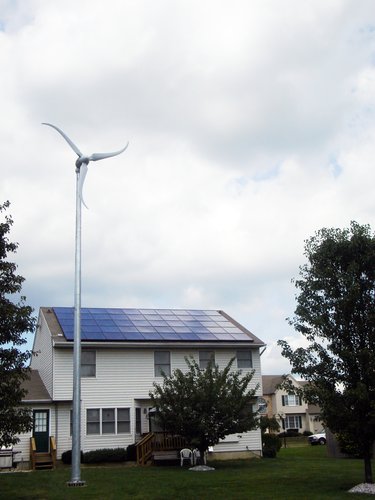
For the ultimate in energy independence, consider a hybrid wind and solar system. These systems leverage the strengths of both technologies:
- Complementary Production: Wind often produces more power at night and during winter months when solar production is lower. Solar excels during the day and in summer. Together, they create a more consistent and reliable energy supply.
- Reduced Battery Storage: A diverse generation profile can reduce the amount of battery storage needed for off-grid or grid-tied systems that aim for maximum self-consumption.
A hybrid system is more complex and expensive upfront but offers unparalleled resilience and energy security for suitable properties.
Navigating the Hurdles: Permits, Zoning, and HOAs
Even with perfect wind and a solid budget, you could be stopped by bureaucracy. This is where many residential wind projects stall.
Local Regulations: A Deep Dive into Your City and County
Every municipality has its own rules regarding structures and renewable energy. You’ll need to research:
- Zoning Ordinances: These dictate what you can build on your land. Look for sections on “accessory structures,” “height limits,” “setbacks” (distance from property lines), and “wind energy systems.” Some areas may require specific overlay zones or conditional use permits for turbines.
- Building Codes: Structural requirements for the tower and foundation.
- Electrical Codes: Safety standards for wiring and interconnection.
- Permit Process: You’ll likely need to apply for a building permit, electrical permit, and potentially a special use permit. This can involve drawings, engineering reports, and public hearings.
Pro Tip: Start with your local planning or zoning department. They can guide you through the specific requirements in your area. Be prepared for a potentially lengthy and complex process.
Dealing with Homeowners Associations (HOAs)
If your home is part of an HOA, this can be a major roadblock. HOAs often have strict rules on exterior modifications, building heights, and aesthetics. While some states have “solar rights” laws that limit an HOA’s ability to prohibit solar panels, similar protections for wind turbines are less common. You will need to:
- Review Your HOA Covenants: Understand their specific rules on structures, height, and noise.
- Submit a Proposal: Present a detailed plan to your HOA board. Be prepared to address concerns about noise, visual impact, and property values.
In many cases, an HOA might outright prohibit a wind turbine, making it a non-starter for homes in these communities.
Interconnection Agreements for Grid-Tied Systems
If you plan to connect your wind turbine to the existing utility grid (most residential systems do), you’ll need an interconnection agreement with your utility company. This ensures your system is safe and compatible with their grid. The process typically involves:
- Application and review fees.
- Safety inspections.
- Installation of a special meter (for net metering).
Your installer should be well-versed in this process, but it’s good to understand the steps involved.
From Installation to Operation: What to Expect
Once you’ve cleared the hurdles, the actual installation can be an exciting, albeit complex, phase.
Choosing the Right Installer: Questions to Ask
This is not a job for a general contractor. You need a specialized installer with experience in small wind energy systems. Look for:
- Experience: How many residential wind turbine systems have they installed? Can they provide references?
- Certifications: Are they certified by relevant industry bodies?
- Full-Service: Do they handle site assessment, permitting, installation, and interconnection?
- Warranty & Support: What kind of warranty do they offer on their work and the equipment? What’s their plan for maintenance and repairs?
- Insurance: Ensure they are fully insured and bonded.
Site Assessment and Tower Placement
A good installer will perform a detailed site assessment, confirming your wind resource and optimal tower placement. This involves considering:
- Prevailing Winds: Identifying the dominant wind direction.
- Obstructions: Ensuring the tower is high enough to clear nearby trees, buildings, and terrain features that could create turbulence. A general rule is the turbine should be at least 30 feet higher than any obstacle within a 300-foot radius.
- Access: Ease of access for installation equipment (cranes).
- Grid Connection: Proximity to your home’s electrical panel for efficient wiring.
Noise, Aesthetics, and Wildlife Concerns
These are common concerns that need to be addressed:
- Noise: Modern small wind turbines are significantly quieter than older models, but they aren’t silent. You’ll hear a hum or swishing sound, especially on windy days. Check decibel ratings and consider how close the turbine will be to your home and neighbors.
- Aesthetics: A tall turbine is a prominent feature. Be prepared for its visual impact.
- Wildlife: While large wind farms have known bird and bat mortality issues, studies on small residential turbines show minimal impact, especially with proper siting away from migratory paths or nesting areas.
The Future is Blowing In: Innovations in Home Wind Power
The residential wind market is smaller than solar, but innovation is ongoing. Companies are exploring new designs to make turbines more appealing and efficient for homeowners.
Quieter, More Efficient Designs
Researchers are developing bladeless turbines, smaller vertical-axis designs with improved aerodynamics, and new materials that reduce noise and vibration. The goal is to create turbines that are:
- More Aesthetically Pleasing: Less industrial, more integrated into residential landscapes.
- Ultra-Quiet: Minimizing sound to be acceptable in more densely populated areas.
- Lower Cut-In Speeds: Starting to generate power at very low wind speeds, increasing overall production.
Smart Grid Integration
As homes become ‘smarter,’ residential wind turbines will increasingly integrate with home energy management systems and the broader smart grid. This could allow for optimized power usage, storage, and selling excess energy back to the grid more effectively.
Making Your Decision: A Final Checklist
So, is a wind turbine for your single-family home a pipe dream or a powerful reality? Use this checklist to make an informed decision:
- Wind Resource: Do you have an average annual wind speed of 10-12 mph or more? (CRITICAL)
- Land & Space: Do you have sufficient land for a tall tower with proper setbacks?
- Energy Needs: Have you assessed your energy consumption and minimized it?
- Budget: Are you prepared for the significant upfront cost (likely $30,000-$80,000+) and ongoing maintenance?
- Permits & HOAs: Have you researched local zoning, height restrictions, and HOA rules, and are they favorable?
- Installer: Have you identified reputable, experienced small wind turbine installers?
- Alternatives: Have you thoroughly considered solar PV, or a hybrid system, as potentially more suitable options?
- Long-Term Vision: Are you committed to the long-term benefits of renewable energy, understanding the payback period?
If you’ve answered ‘yes’ to most of these questions, especially regarding wind resource and space, then a wind turbine for your single-family home could be a fantastic, empowering investment. It’s not for everyone, but for the right property, it offers a unique path to energy independence and a smaller carbon footprint. Take the next step: get a professional site assessment, and let the wind power your future.
Frequently Asked Questions
Is a wind turbine a good investment for every single-family home?
No, a wind turbine is highly dependent on specific conditions. It’s primarily a good investment for homes in open, rural areas with consistent average annual wind speeds of 10-12 mph or higher, sufficient land for a tall tower, and lenient local zoning regulations. For many suburban or urban homes, solar panels are often a more practical and cost-effective renewable energy solution.
How much does it cost to install a residential wind turbine?
The total installed cost for a grid-tied residential wind system (1 kW to 10 kW) typically ranges from $30,000 to $80,000 or more. This includes the turbine, tower, inverter, foundation, installation labor, and permits. Federal tax credits (like the 30% ITC) and state incentives can significantly reduce this upfront cost.
What size wind turbine do I need to power my home?
The size depends on your home’s energy consumption and your local wind resource. An average U.S. home uses about 900 kWh per month (10,788 kWh/year). A 5 kW turbine in a good wind location can often meet or exceed this need, producing 10,000 to 15,000 kWh annually. Smaller homes or those supplementing grid power might use 1-2 kW turbines, while larger or off-grid homes might need 10 kW or more.
Are wind turbines noisy for residential areas?
Modern small wind turbines are much quieter than older models, but they are not silent. You will typically hear a low hum or whooshing sound, especially on windy days. Noise levels are a common concern for neighbors, which is why proper siting (distance from homes) and researching specific turbine decibel ratings are crucial during planning.
What’s the difference between Horizontal-Axis (HAWT) and Vertical-Axis (VAWT) turbines for homes?
HAWTs (traditional propeller-style) are generally more efficient in steady, high winds and are typically mounted on tall towers. VAWTs (e.g., egg-beater style) are omni-directional, quieter, and can be mounted closer to the ground, making them potentially more suitable for turbulent urban environments, but they usually have lower overall efficiency and power output for the same rated power.
Can I install a wind turbine if I live in an HOA community?
It’s often challenging. HOAs typically have strict rules on exterior structures, height, and aesthetics that may prohibit or severely limit wind turbine installations. You must review your HOA covenants and submit a detailed proposal. State ‘solar rights’ laws usually do not extend to wind turbines, giving HOAs more power to deny them.
Is wind power better than solar for my home?
It depends on your specific circumstances. Solar is generally more accessible, cheaper to install, and requires less maintenance for most homeowners. Wind can be better in locations with consistent high winds, especially if those winds occur at night or during winter when solar production is lower. A hybrid wind-solar system can offer the best of both worlds for suitable properties by providing more consistent year-round generation.
