
Can a Wind Turbine Power Your Domestic House? The Honest Truth About Home Wind Energy
Picture this: you’re looking out your window, a gentle breeze rustles the trees, and you think, “What if that wind could power my home?” It’s a dream many homeowners share, envisioning energy independence and a smaller carbon footprint. But let’s be honest, the idea of a wind turbine for a domestic house often comes with a hefty dose of skepticism, confusion, and sometimes, outright misinformation.
Table of Contents
- Can a Wind Turbine Power Your Domestic House? The Honest Truth About Home Wind Energy
- The Reality Check: Is a Domestic Wind Turbine Right for You?
- Dispelling the Myths: What Home Wind Power Isn’t
- When Does Residential Wind Power Truly Shine? (Ideal Scenarios)
- How Does a Small Wind Turbine Work for Your Home?
- From Breeze to Kilowatt-Hour: The Core Mechanics
- Grid-Tied vs. Off-Grid Systems: What’s the Difference?
- Types of Wind Turbines for Domestic Use: Finding Your Match
- Horizontal Axis Wind Turbines (HAWTs): The Classic Choice
- Vertical Axis Wind Turbines (VAWTs): The Urban-Friendly Alternative?
- A Quick Comparison: HAWT vs. VAWT
- Sizing Your Home Wind Turbine: How Much Power Do You Really Need?
- Understanding Your Energy Consumption
- Estimating Turbine Output: It’s All About Wind Speed
- Typical Sizes and Their Output for Homes
- The Financial Gust: How Much Does a Home Wind Turbine Cost?
- Upfront Costs: Breaking Down the Investment
- Ongoing Costs: Maintenance and Beyond
- The Payback Period: When Does it Become Profitable?
- Government Incentives and Rebates for Home Wind Energy (USA Specific)
- Installation & Permitting: Navigating the Red Tape
- Site Assessment: Finding the Perfect Spot
- Zoning Laws and Building Codes: A Critical Step
- The Installation Process: What to Expect
- Wind vs. Solar for Homes: A Head-to-Head Battle
- When Wind Takes the Lead
- When Solar is the Clear Winner
- The Hybrid Approach: Best of Both Worlds?
- Longevity and Maintenance: Keeping Your Turbine Spinning
- Expected Lifespan of Residential Wind Turbines
- Essential Maintenance Tips for Optimal Performance
- Is a Domestic Wind Turbine Worth the Investment for Your Home?
- The Pros: Why Go Wind?
- The Cons: Realistic Challenges
- Making an Informed Decision: Your Next Steps
So, can a small wind turbine really power your home? And perhaps more importantly, does it make sense for your specific situation? I’m here to cut through the noise, give you the unvarnished truth, and help you understand if harnessing the wind is a viable, cost-effective solution for your energy needs.
The Reality Check: Is a Domestic Wind Turbine Right for You?
Before you start imagining a mini windmill in your backyard, let’s establish some ground rules. Residential wind power isn’t a one-size-fits-all solution. It’s fantastic for some, impractical for others. Understanding where you stand is your first, most crucial step.
Dispelling the Myths: What Home Wind Power Isn’t
- It’s not a magic bullet for every home: Unlike solar panels which can be installed on almost any roof, wind turbines require very specific conditions.
- It’s not always silent: While modern small turbines are quieter than older models, they do produce some noise.
- It’s not a DIY weekend project: Installation involves heavy equipment, electrical work, and often, significant permitting.
- It’s not cheap: The initial investment can be substantial, and the payback period varies greatly.
When Does Residential Wind Power Truly Shine? (Ideal Scenarios)
Alright, so who *does benefit from a domestic wind turbine? If you find yourself nodding along to these points, you might be in a prime position:
- You Live in a Genuinely Windy Location: This is the absolute paramount factor. We’re talking average wind speeds of at least 10-12 mph (4.5-5.5 m/s), ideally higher. If your flag barely flutters most days, a turbine won’t be efficient. Obstructions like tall buildings or trees can drastically reduce wind speed.
- You Own a Rural Property with Ample Space: Small wind turbines require space – not just for the turbine itself, but for the tower (which needs to be significantly taller than any nearby obstructions) and for guy wires if it’s a guyed tower. You’ll likely need at least an acre, often more.
- You Have Consistently High Electricity Bills: If your monthly electricity costs are through the roof, the economic justification for a wind turbine becomes stronger. The more power you use, the more potential savings you have.
- You Desire Energy Independence (Off-Grid or Hybrid): For those committed to reducing reliance on the utility grid, especially in remote areas where grid connection is expensive, wind can be a powerful component of an off-grid or hybrid energy system (paired with solar).
- You Have a Long-Term Perspective: The upfront costs mean that the financial benefits often accrue over many years. This isn’t a quick return on investment.
How Does a Small Wind Turbine Work for Your Home?
At its core, a small wind turbine functions similarly to its colossal utility-scale cousins. It’s about converting the kinetic energy of moving air into usable electricity. Let’s break down the basic physics.
From Breeze to Kilowatt-Hour: The Core Mechanics
When wind blows, it pushes against the aerodynamic blades of the turbine. This force causes the blades to rotate around a rotor. The rotor is connected to a main shaft, which in turn spins a generator. This generator, through electromagnetic induction, converts the mechanical energy of the spinning shaft into electrical energy – the electricity you can use in your home. An inverter then converts this electricity into the alternating current (AC) suitable for household appliances.
Think of it like a bicycle: your legs (the wind) turn the pedals (the blades), which turn a chain (the shaft), which makes the wheels spin (the generator producing electricity).
Grid-Tied vs. Off-Grid Systems: What’s the Difference?
How you connect your wind turbine to your home’s electrical system is a crucial decision:
- Grid-Tied (Grid-Interactive) Systems: This is the most common setup for homeowners. Your wind turbine generates electricity, and any excess power you don’t use is fed back into the utility grid. Most states have “net metering” policies, meaning the utility essentially buys back your excess power, crediting your account. When the wind isn’t blowing enough, you draw electricity from the grid as usual. The primary benefit here is that you don’t need expensive battery storage.
- Off-Grid (Stand-Alone) Systems: If you’re in a remote location without access to the utility grid, or if you’re aiming for complete energy independence, an off-grid system is necessary. In this setup, the turbine charges a bank of batteries, which then supply power to your home. This requires a much larger upfront investment due to the cost of batteries, a charge controller, and typically a backup generator.
- Hybrid Systems: Combining wind with other renewable sources, most commonly solar panels, is an increasingly popular and smart choice. Wind and solar often complement each other: wind tends to be stronger in winter and at night, while solar excels in summer and during the day. This creates a more consistent and reliable power supply.
Types of Wind Turbines for Domestic Use: Finding Your Match
When most people think of a wind turbine, they picture the massive, three-bladed giants dominating rural landscapes. For home use, however, you’ll be looking at much smaller versions, typically categorized into two main types.
Horizontal Axis Wind Turbines (HAWTs): The Classic Choice
These are what you usually imagine: blades rotating around a horizontal shaft, similar to an airplane propeller. HAWTs are generally more efficient at capturing wind energy because their blades are optimized for aerodynamics and they can be directed into the wind (known as yawing) for maximum capture. Most small residential turbines are HAWTs, typically mounted on tall towers to access higher, less turbulent wind. They range in size from tiny micro-turbines to larger models capable of powering an entire home.
Vertical Axis Wind Turbines (VAWTs): The Urban-Friendly Alternative?
VAWTs have blades that rotate around a vertical shaft, making them look very different from HAWTs. They can capture wind from any direction without needing to ‘yaw’ and operate effectively in more turbulent, lower wind speed environments. This can make them seem appealing for urban or suburban settings. However, VAWTs are generally less efficient at converting wind energy into electricity compared to HAWTs of the same size, and their power output is often lower. While they take up less space vertically, their footprint can be wider, and they still require significant clearance from obstructions.
:max_bytes(150000):strip_icc()/wind-turbine-generator-on-house-roof-90967703-b9619befbf954726ae92dfb6154711f2.jpg "Is a Home Wind Turbine Right for You?")
A Quick Comparison: HAWT vs. VAWT
| Feature | Horizontal Axis Wind Turbine (HAWT) | Vertical Axis Wind Turbine (VAWT) |
|---|---|---|
| Efficiency | Generally higher, better for consistent, high winds. | Generally lower, but can capture more turbulent winds. |
| Noise Level | Moderate, depends on size and quality. | Typically quieter than HAWTs of comparable output. |
| Wind Direction | Needs to yaw (turn) into the wind. | Omnidirectional, operates regardless of wind direction. |
| Installation | Requires a tall tower, often more complex. | Can be mounted lower, potentially simpler, but still needs clearance. |
| Aesthetics | Traditional windmill look. | Often more modern, sculptural appearance. |
| Common Use | Rural, open areas with consistent wind. | Sometimes considered for urban, roof-mounted, or small-scale applications, though efficiency remains a challenge. |
Sizing Your Home Wind Turbine: How Much Power Do You Really Need?
Determining the right size for your home wind turbine is critical. Too small, and you won’t meet your energy needs. Too large, and you’re over-investing in capacity you don’t use. It’s a delicate balance.
Understanding Your Energy Consumption
Before you even look at turbine specs, you need to understand your own household’s electricity usage. Grab your last 12 months of utility bills. Look for the average monthly kilowatt-hour (kWh) consumption. This will give you a baseline. A typical U.S. home uses around 900-1,000 kWh per month.
Estimating Turbine Output: It’s All About Wind Speed
Here’s where it gets a bit tricky, but it’s important to grasp. A wind turbine’s power output is exponentially related to wind speed. Double the wind speed, and you get eight times the power! This is why a consistently windy site is so vital.
- Rated Power: Turbines are advertised with a “rated power” (e.g., 1 kW, 5 kW, 10 kW). This is the maximum power they can generate at a specific, high wind speed (often around 25-30 mph). This is not* what it will produce on average.
- Average Annual Energy Output: A more realistic figure is the estimated average annual kWh output, which a reputable installer or manufacturer can provide based on your site’s average wind speed.
- Cut-in Speed: The minimum wind speed required for the turbine to start producing electricity.
- Cut-out Speed: The wind speed at which the turbine shuts down to prevent damage (e.g., during a storm).
You need to match the turbine’s potential output to your household’s actual consumption, factoring in your local wind resource. This typically requires a professional site assessment.
Typical Sizes and Their Output for Homes
Small wind turbines for domestic use generally range from under 1 kilowatt (kW) to 10 kW, with some larger models up to 100 kW for very large properties or multiple homes. Here’s a rough idea:
| Rated Power (kW) | Typical Tower Height (feet) | Annual Energy Output (kWh/year) (@ 12 mph average wind) |
Homes Served (Approx.) |
|---|---|---|---|
| 0.5 – 1 kW | 30 – 60 | 1,000 – 2,500 | Small portion of average home, or RV/cabin |
| 2 – 5 kW | 60 – 100 | 4,000 – 10,000 | Partial to full power for average home |
| 6 – 15 kW | 80 – 140 | 12,000 – 30,000+ | Full power for average to large home, or multiple buildings |
Note: These are estimates. Actual output depends heavily on specific wind conditions, turbine model, and site elevation.
The Financial Gust: How Much Does a Home Wind Turbine Cost?
This is often the sticking point for many. While the appeal of free energy is strong, the initial investment for a domestic wind turbine can be substantial. Let’s break down the costs.
Upfront Costs: Breaking Down the Investment
The total cost for a residential wind turbine system in the U.S. typically ranges from $20,000 to $80,000 or more, depending on the system size, type of tower, installation complexity, and whether you include battery storage.
- Turbine Generator: This is the heart of the system. Costs can range from $3,000 for a very small 1kW unit to $30,000+ for a 15kW unit. Quality and certification (like from the Small Wind Certification Council) play a big role.
- Tower: Arguably as important as the turbine itself. The tower needs to be robust and tall enough to get the turbine above turbulence. Costs vary significantly based on height and type (guyed lattice, freestanding monopole). Expect $5,000 – $20,000+.
- Installation: This involves site preparation, foundation work, tower erection, wiring, and connection to your home’s electrical system. This is a significant portion of the cost, often $10,000 – $30,000.
- Inverter: Converts the turbine’s DC power to usable AC power for your home. Costs $1,000 – $5,000.
- Batteries (if off-grid or hybrid): If you choose an off-grid or battery-backup system, expect an additional $5,000 – $15,000+ for a decent battery bank, plus a charge controller.
- Permitting and Site Assessment: Don’t forget these necessary expenses. A professional wind resource assessment can cost $500 – $2,000, and permits vary widely by locality but can add hundreds to thousands.
- Wiring and Electrical Components: Necessary safety and connection hardware.
Ongoing Costs: Maintenance and Beyond
Once installed, a wind turbine isn’t completely maintenance-free. While generally robust, they are mechanical systems exposed to the elements.
- Routine Inspections: Annual or bi-annual checks of blades, tower, wiring, and connections are recommended.
- Component Replacement: Over a 20+ year lifespan, components like bearings, brakes, or even blades might need replacement.
- Insurance: You’ll want to ensure your homeowner’s insurance covers the turbine.
- Cleaning: Occasional cleaning of blades can maintain efficiency.
Budget for a few hundred dollars annually for routine maintenance, with potential larger costs for major component replacements every 5-10 years.
The Payback Period: When Does it Become Profitable?
The payback period – how long it takes for your energy savings to offset the initial investment – varies wildly. It could be anywhere from 10 to 30 years. Factors influencing this include:
- Initial System Cost: Lower upfront costs mean faster payback.
- Average Wind Speed: Higher, more consistent wind leads to greater energy production and faster savings.
- Your Electricity Rates: If you pay high rates (e.g., $0.20+/kWh), the savings accumulate faster.
- Incentives and Rebates: These can significantly reduce your net cost, shortening the payback period.
Government Incentives and Rebates for Home Wind Energy (USA Specific)
The good news is that federal, state, and local governments often offer incentives to encourage renewable energy adoption. These can drastically improve the financial viability of a wind turbine.
 "Home Wind Turbines: When Do They Make Sense? | EnergySage")
- Federal Investment Tax Credit (ITC): As of my last update, a federal tax credit (often 30%) for renewable energy systems, including residential wind, is available. This is a direct reduction in your tax liability, not just a deduction. It significantly lowers the net cost.
- State and Local Programs: Many states offer their own tax credits, rebates, grants, or property tax exemptions for renewable energy. Check resources like the DSIRE (Database of State Incentives for Renewables & Efficiency) for specifics in your area.
- Net Metering: While not a direct rebate, net metering policies (discussed earlier) allow you to sell excess power back to the grid, providing ongoing financial benefit.
Always check current incentives, as they can change. A reputable installer will be knowledgeable about local programs.
Installation & Permitting: Navigating the Red Tape
Installing a wind turbine is not like installing a new appliance. It’s a significant construction project that requires careful planning, adherence to local regulations, and professional expertise.
Site Assessment: Finding the Perfect Spot
Before any money is spent, a professional site assessment is mandatory. This involves:
- Wind Resource Evaluation: Using historical wind data and potentially on-site anemometers (wind meters), an expert will determine the average wind speed and consistency at your specific property and at various heights. This is the single most important factor.
- Obstructions: Identifying any nearby buildings, trees, hills, or other features that could create turbulence or block the wind. Turbines need to be installed significantly higher than any obstructions within several hundred feet. A general rule of thumb is that the bottom of the turbine blades should be at least 30 feet higher than anything within 300 feet.
- Safety Considerations: Ensuring adequate clearance from property lines, power lines, and public spaces.
- Topography: Hills can either funnel wind or create problematic turbulence, depending on their orientation and shape.
Zoning Laws and Building Codes: A Critical Step
This is where many aspiring wind turbine owners hit a wall. Local zoning ordinances and building codes vary wildly and can be complex.
- Height Restrictions: Many localities have strict limits on building height, which can make installing a tall enough tower impossible.
- Setback Requirements: Rules dictating how far the turbine must be from property lines, roads, and other structures.
- Noise Ordinances: Some areas have limits on noise levels, which could impact turbine choice or even feasibility.
- Visual Impact/Aesthetics: While less common, some communities may have concerns about the visual impact of turbines.
- Permitting Process: Expect to apply for various permits (building, electrical, zoning) and potentially undergo public hearings. This process can be lengthy and frustrating, taking months or even over a year.
Do not bypass this step. Attempting to install a turbine without proper permits can lead to costly fines, forced removal, and legal troubles. Start by contacting your local planning department or zoning office.
The Installation Process: What to Expect
Once permits are secured, installation usually involves:
- Foundation Work: A robust concrete foundation is poured to anchor the tower.
- Tower Assembly and Erection: Depending on the type, the tower may be assembled on-site and then lifted into place, or individual sections are hoisted.
- Turbine Mounting: The turbine generator and blades are carefully attached to the top of the tower.
- Electrical Wiring: Wiring is run from the turbine down the tower to an inverter and then connected to your home’s electrical panel (and the grid, if applicable).
- System Commissioning: Testing and activation of the entire system.
This is a job for experienced professionals only. Safety is paramount due to the height and electrical components involved.
Wind vs. Solar for Homes: A Head-to-Head Battle
Often, homeowners considering renewable energy pit wind against solar. While both harness natural resources, their strengths and weaknesses differ significantly. Here’s a comparison to help you decide which might be a better fit, or if a hybrid system is ideal.
| Feature | Small Wind Turbine | Residential Solar Panels |
|---|---|---|
| Resource Dependence | Strong, consistent wind is paramount. | Ample sunlight (insolation) is key. |
| Space Requirements | Significant land area, tall tower (rural focus). | Roof space or small ground mount (urban/suburban friendly). |
| Availability | Often produces at night, in winter. | Produces during daylight hours, stronger in summer. |
| Permitting Complexity | Generally more complex due to height, noise, visual impact. | Typically simpler, common residential permit. |
| Initial Cost (Typical) | Higher (e.g., $20,000 – $80,000+) | Lower (e.g., $15,000 – $35,000 for average home) |
| Maintenance | Periodic inspections, potential component replacement. | Minimal, occasional cleaning, highly durable. |
| Aesthetics | Prominent structure, visual impact for some. | Generally blends with roof, less visually intrusive. |
When Wind Takes the Lead
Wind is often superior in locations with excellent, consistent wind resources, especially if you have ample open land and minimal shading. Wind turbines can also generate power at night and during overcast days, which solar panels cannot. For remote, off-grid locations, a robust wind resource can sometimes provide more consistent power than solar alone.
When Solar is the Clear Winner
Solar wins out in densely populated areas, or where wind resources are poor. The permitting process for solar is generally much simpler, and the visual impact is less contentious. Solar panels have very few moving parts, leading to lower maintenance costs and typically a longer warranty on the panels themselves. For most typical suburban homes in the U.S., solar is the more accessible and often more cost-effective choice.
The Hybrid Approach: Best of Both Worlds?
For those truly committed to energy independence or in areas with varied weather patterns, a hybrid wind and solar system offers compelling advantages. Wind and solar complement each other beautifully: wind often peaks in winter and at night, while solar excels in summer and during the day. This combination can provide a more reliable, year-round energy supply, reducing the need for extensive battery storage or reliance on the grid.
Longevity and Maintenance: Keeping Your Turbine Spinning
Investing in a wind turbine is a long-term commitment. Understanding its lifespan and maintenance needs is crucial for sustained performance and return on investment.
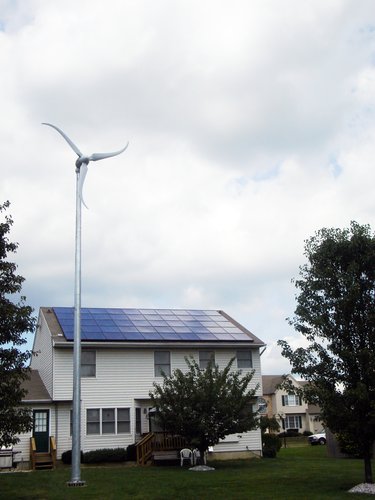
Expected Lifespan of Residential Wind Turbines
A well-maintained, high-quality small wind turbine system is designed to last for a significant period. Expect a lifespan of 20-25 years or even longer for the main components, especially the tower. The turbine generator itself might have a slightly shorter lifespan, with some components potentially needing replacement around the 10-15 year mark. Batteries in off-grid systems will likely need replacement every 5-15 years, depending on type and usage.
Essential Maintenance Tips for Optimal Performance
While small wind turbines are built to withstand harsh conditions, periodic maintenance is essential to maximize their efficiency and extend their life. Think of it like owning a car – you wouldn’t expect it to run forever without oil changes and tune-ups.
- Annual Visual Inspection: Regularly check for visible damage to blades, tower, and wiring. Look for loose connections, corrosion, or signs of wear.
- Professional Check-up (Every 1-3 Years): Have a qualified technician inspect the mechanical components (bearings, brakes), electrical connections, and overall system performance. They can identify and address minor issues before they become major problems.
- Keep the Area Clear: Ensure no new trees or structures grow or are built that might obstruct the wind or create turbulence near the turbine.
- Monitor Performance: Keep an eye on your energy production data. A sudden drop in output might indicate an issue.
- Clean Blades (If Necessary): In some environments, dirt, dust, or insect buildup on blades can slightly reduce aerodynamic efficiency. This is usually only an issue in extreme cases.
- Check Guy Wires (if applicable): For guyed towers, ensure the tension on the guy wires is correct and that they are not frayed or damaged.
Adhering to the manufacturer’s recommended maintenance schedule is the best way to ensure your turbine performs optimally for decades.
Is a Domestic Wind Turbine Worth the Investment for Your Home?
We’ve covered a lot of ground, from how they work to what they cost. So, let’s circle back to the core question: is a wind turbine a good investment for your home? The answer, as you might expect, is nuanced.
The Pros: Why Go Wind?
- True Energy Independence: For the right properties, wind offers a path to significantly reduce or eliminate reliance on the utility grid.
- Low Carbon Footprint: Once installed, wind energy is clean, renewable, and produces zero greenhouse gas emissions during operation.
- Protection Against Rising Energy Prices: By generating your own power, you hedge against volatile electricity costs.
- Power at Night: Unlike solar, wind turbines can produce electricity 24/7 as long as there’s sufficient wind.
- Financial Incentives: Federal and state programs can make the investment more attractive.
The Cons: Realistic Challenges
- High Upfront Cost: The initial investment is considerable, often more than a comparable solar system.
- Strict Siting Requirements: You absolutely need a very windy, unobstructed, and spacious property. This limits applicability for many homeowners.
- Complex Permitting: Navigating local zoning and building codes can be a significant hurdle.
- Visual and Noise Concerns: While quieter than older models, they are still a visible and audible presence.
- Intermittency: Wind isn’t constant. While better at night than solar, production fluctuates, requiring grid connection or battery storage.
- Maintenance: More moving parts than solar means more potential for wear and tear.
Making an Informed Decision: Your Next Steps
If you’re still intrigued after all this information, here’s my advice:
- Start with Energy Efficiency: Before investing in any renewable energy system, reduce your energy consumption first! Better insulation, energy-efficient appliances, and smart habits will reduce the size (and cost) of the system you need.
- Assess Your Wind Resource: Seriously, get a professional wind resource assessment. This is non-negotiable.
- Contact Your Local Planning Department: Understand the zoning laws, height restrictions, and permitting process in your specific area before getting quotes.
- Get Multiple Quotes: Talk to several reputable small wind turbine installers. They can help you determine the right size, estimate costs, and advise on incentives. Look for certified products (e.g., Small Wind Certification Council).
- Consider Hybrid Systems: Don’t rule out pairing wind with solar for a more robust and reliable energy solution.
- Evaluate Your Goals: Are you primarily driven by cost savings, environmental impact, or energy independence? Your primary motivation will help guide your decision.
While not for everyone, for the right property and the right homeowner, a domestic wind turbine can be an incredibly rewarding investment, providing clean, renewable power for decades to come. Do your homework, assess your site thoroughly, and you might just find that harnessing the wind is indeed a smart move for your home.
Frequently Asked Questions
How much does a small wind turbine cost for a home?
The total cost for a residential wind turbine system in the U.S. typically ranges from $20,000 to $80,000 or more. This includes the turbine, tower, installation, inverter, and potentially batteries for off-grid systems. Costs vary greatly based on system size, tower height, and installation complexity.
What wind speed is needed for a domestic wind turbine to be effective?
For a domestic wind turbine to be economically viable and effective, your property should have an average wind speed of at least 10-12 mph (4.5-5.5 m/s) at the planned turbine height. Wind speed is the single most critical factor, as power output increases exponentially with wind speed.
Can I install a wind turbine in my suburban backyard?
It’s highly unlikely for most suburban properties. Residential wind turbines require significant open space, often at least an acre, to avoid turbulence from obstructions like buildings and trees. Local zoning laws also often have strict height restrictions and setback requirements that typically preclude suburban installations.
Is wind energy better than solar power for a home?
Neither is inherently ‘better’; it depends on your specific circumstances. Wind excels in locations with consistent, strong wind resources (often rural), and can produce power at night. Solar is generally more suitable for urban/suburban homes due to simpler installation, lower cost, and less restrictive permitting. A hybrid wind-solar system can offer the most reliable year-round power.
What kind of maintenance does a home wind turbine require?
While robust, small wind turbines require periodic maintenance. This typically includes annual visual inspections for damage, professional check-ups every 1-3 years by a qualified technician, monitoring performance, and ensuring the area around the turbine remains clear of obstructions. Budget for a few hundred dollars annually for routine maintenance.
What incentives are available for installing a home wind turbine in the USA?
In the U.S., a significant federal investment tax credit (ITC), often 30%, is available for renewable energy systems, including residential wind. Many states also offer their own tax credits, rebates, grants, or property tax exemptions. Net metering policies allow you to sell excess power back to the grid. Always check the current programs with a local installer or resources like DSIRE.
How long does a small wind turbine system last?
A well-maintained small wind turbine system can last 20-25 years or even longer for the tower and main structure. The turbine generator itself might have a slightly shorter lifespan, with some components potentially needing replacement around the 10-15 year mark, while batteries (if used) may need replacement every 5-15 years.
