Adding a Wind Turbine to Your Solar System: The Ultimate Guide to Hybrid Power
So, you’re eyeing that trusty solar array on your roof and thinking, “What if I could supercharge this? What if I could tap into the wind when the sun calls it a day?” You’re on the right track. Combining wind and solar energy can dramatically boost your home’s energy independence and reliability, creating a true hybrid power system. But here’s the kicker: it’s not as simple as plugging one into the other. You can’t just wire a wind turbine directly into your existing solar inverter and expect magic. There’s a bit more to it, and understanding the nuances is key to harnessing these powerful forces of nature effectively.
Table of Contents
- Adding a Wind Turbine to Your Solar System: The Ultimate Guide to Hybrid Power
- Why Consider a Hybrid Wind-Solar System? (The “Why Bother?”)
- Bridging the Seasonal Gap: Complementary Generation
- Enhanced Energy Independence and Reliability
- Maximizing Off-Grid Performance
- Potential Financial Savings (Long-Term)
- Understanding the Core Challenge: Direct Integration is a No-Go
- Why You Can’t Just “Plug It In”
- The Role of the Charge Controller and Battery Bank
- The Anatomy of a Hybrid Wind-Solar System (How it Works)
- Wind Turbine: From Airflow to Amps
- Solar Panels: Sunlight’s Energy Harvesters
- Crucial Component 1: The Wind Charge Controller
- Crucial Component 2: The Solar Charge Controller
- Crucial Component 3: The Battery Bank (The Heart of the System)
- Crucial Component 4: The Inverter (DC to AC Conversion)
- Monitoring Systems: Keeping an Eye on Your Power
- Two Main Approaches to Integrating Wind into Your Solar Setup
- Approach 1: Sharing a Common Battery Bank (Most Common for Off-Grid)
- Approach 2: Grid-Tied Hybrid Systems (More Complex, Less Common for Small Scale)
- Step-by-Step Guide: Planning Your Wind Turbine Addition
- Step 1: Assess Your Site’s Wind Resource (This is Critical!)
- Step 2: Evaluate Your Existing Solar System & Energy Needs
- Step 3: Choose the Right Wind Turbine (Size, Type, Mount)
- Step 4: Select Compatible Wind Charge Controllers
- Step 5: Size or Upgrade Your Battery Bank (If Off-Grid)
- Step 6: Plan for Inverter Compatibility
- Step 7: Consider Installation Logistics (Tower, Wiring, Safety)
- Step 8: Understand Permitting and Local Regulations
- Common Challenges and Pitfalls to Avoid
- Inadequate Wind Resource
- Incorrect System Sizing
- Component Incompatibility
- Noise and Visual Impact
- Maintenance Requirements
- Is Adding a Wind Turbine Worth It? Weighing the Pros and Cons
- The Benefits Revisited (Recap)
- The Downsides: Cost, Complexity, Site Specificity
- Conclusion: Powering Forward with Hybrid Energy
This isn’t a pipe dream. Many homeowners are successfully integrating wind turbines into their solar setups, especially those living off-grid or aiming for maximum resilience. However, the success hinges on proper planning, component compatibility, and a solid grasp of how these two distinct power sources interact. Let’s break down exactly how you can add a wind turbine to your solar system, making your home a beacon of sustainable energy.
Why Consider a Hybrid Wind-Solar System? (The “Why Bother?”)
Before we dive into the ‘how,’ let’s tackle the ‘why.’ Why go through the effort of adding a wind turbine when your solar panels are already doing a great job? The answer lies in synergy and resilience. Wind and solar are, in many ways, natural complements.
Bridging the Seasonal Gap: Complementary Generation
Think about it: solar panels are at their peak performance during long, sunny summer days. But what about winter, when daylight hours shrink and clouds become more common? This is often when wind speeds pick up significantly. A well-placed wind turbine can thrive in those blustery, darker months, picking up the slack when your solar output dips.
Conversely, during calmer summer days, your solar array is likely producing more than enough power. This natural ebb and flow creates a more consistent, year-round energy supply, reducing your reliance on grid power or the need for an oversized battery bank.
Enhanced Energy Independence and Reliability
The goal for many is true energy independence. A hybrid system brings you closer to that reality. If your solar array gets covered in snow, or there’s an extended period of cloud cover, your wind turbine can keep the electrons flowing. If the wind dies down, the sun steps in. This redundancy makes your power supply far more robust and less susceptible to the whims of a single weather pattern.
Maximizing Off-Grid Performance
For those living off-grid, a hybrid system is almost a necessity. Relying solely on solar means having to heavily oversize your battery bank and panels to account for extended periods of poor weather. Adding wind allows for a smaller, more efficient system overall, as you’re constantly topping up your batteries from whichever source is performing best.
Potential Financial Savings (Long-Term)
While the initial investment in a hybrid system is higher, the long-term savings can be substantial. By generating more of your own power, you reduce your electricity bill or even eliminate it entirely if you’re off-grid. For grid-tied systems, the more consistent generation could also lead to higher net metering credits, depending on your local policies.
| Feature | Solar Power | Wind Power | Hybrid System (Wind + Solar) |
|---|---|---|---|
| Primary Resource | Sunlight | Wind Speed | Sunlight & Wind |
| Typical Peak Output | Mid-day (10 AM – 4 PM), Summer | Night-time, Winter, Stormy Weather | More consistent, year-round |
| Seasonal Performance | Stronger in Summer, weaker in Winter | Stronger in Winter, often weaker in Summer | Balanced, less seasonal fluctuation |
| Dependency | Daylight availability, clear skies | Consistent wind speeds, no obstructions | Lower dependency on single resource |
| Reliability for Off-Grid | Good, but susceptible to long cloudy periods | Good, but susceptible to long calm periods | Excellent, highly resilient |
Understanding the Core Challenge: Direct Integration is a No-Go
Okay, let’s get this out of the way upfront: you cannot, repeat, cannot just plug a wind turbine into your existing solar panel leads or your solar inverter’s input. It’s a common misconception, and attempting it could lead to damaged equipment, poor performance, or even dangerous electrical situations.
Why You Can’t Just “Plug It In”
The core reason is that wind turbines and solar panels generate electricity in fundamentally different ways, with different electrical characteristics:
- Voltage and Current Fluctuation: Solar panels produce relatively stable DC voltage and current under consistent sunlight. Wind turbines, however, produce highly variable voltage and current, directly proportional to wind speed. This variability is difficult for standard solar charge controllers or inverters to handle.
- MPPT Algorithms: Solar charge controllers use Maximum Power Point Tracking (MPPT) algorithms optimized for the specific voltage and current curves of solar panels. Wind turbines have entirely different power curves, often requiring charge controllers with dump loads to manage excess power and prevent over-speeding in high winds.
- Inverter Design: Most residential solar inverters (whether string inverters or micro-inverters) are designed to convert DC power from solar panels to AC power for the grid or home. They are not built to handle the wild fluctuations or the AC output (some turbines produce AC, others DC) of a wind turbine without a dedicated rectifier and control system.
The Role of the Charge Controller and Battery Bank
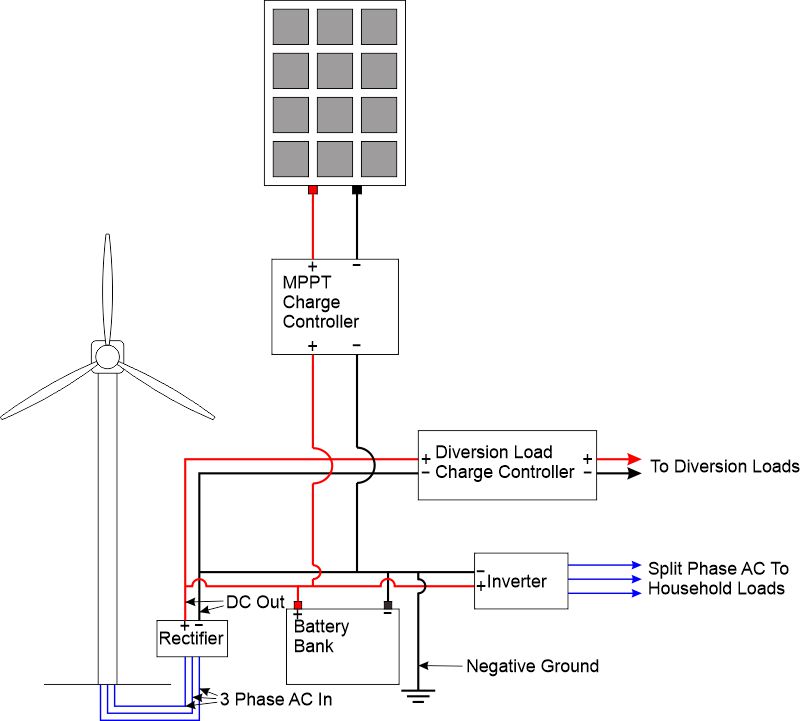
This brings us to the crucial components that make hybrid systems possible: separate charge controllers and a shared battery bank. Think of the battery bank as the common reservoir. Both your solar panels and your wind turbine will feed power into this reservoir, but they each need their own dedicated gatekeeper (charge controller) to manage the flow.
The Anatomy of a Hybrid Wind-Solar System (How it Works)
To really understand how to integrate wind, let’s look at the key players in a typical hybrid system.
Wind Turbine: From Airflow to Amps
The wind turbine itself consists of blades that capture wind energy, a generator that converts mechanical energy into electrical energy, and typically a tail fin that directs the turbine into the wind. Small residential turbines are often DC output, but some larger ones can be AC. They require a tower for optimal performance.
Solar Panels: Sunlight’s Energy Harvesters
You know these. They convert sunlight directly into DC electricity. Your existing solar array likely consists of multiple panels wired in series or parallel.
Crucial Component 1: The Wind Charge Controller
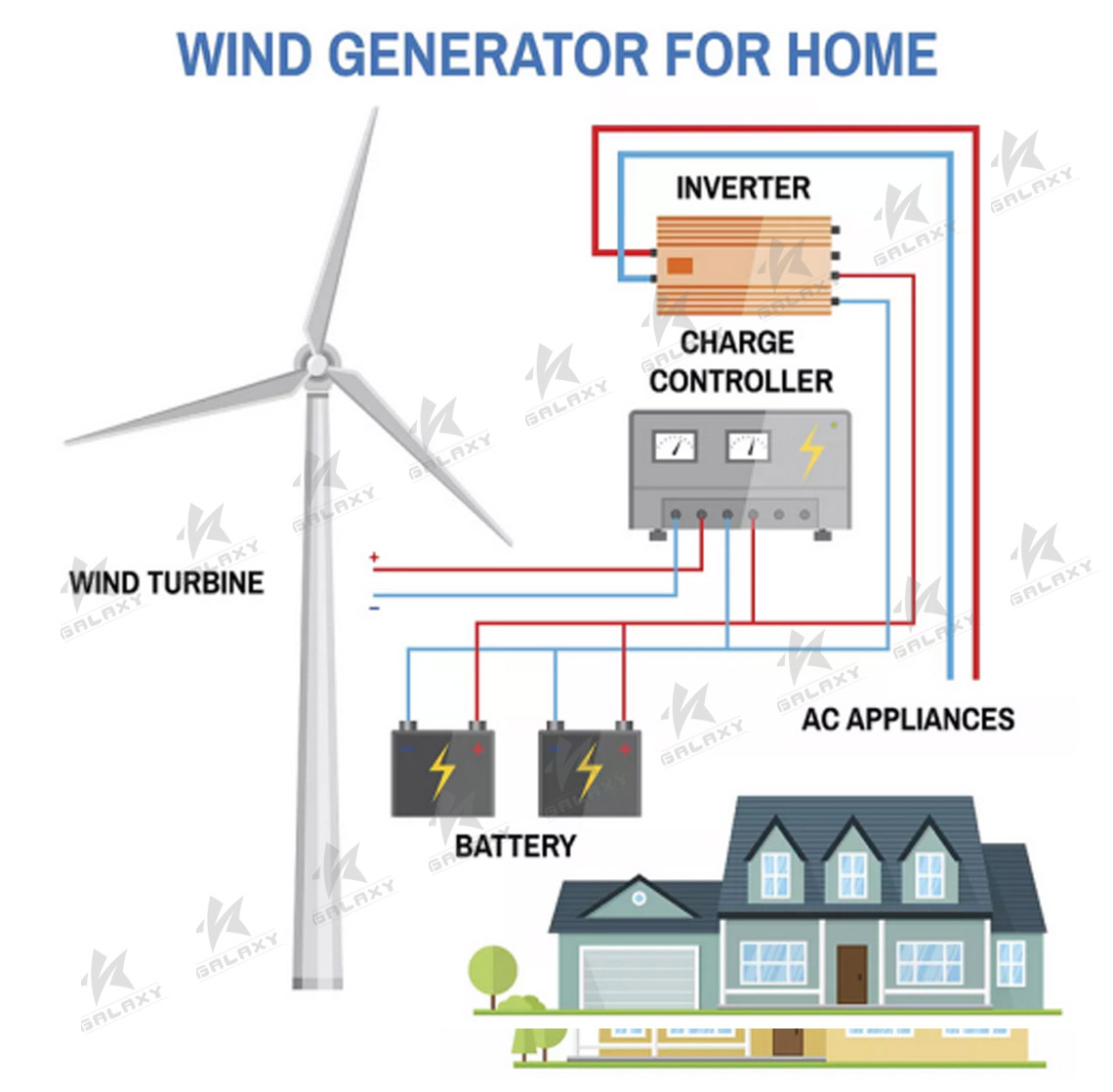
This is where the wind turbine’s power is managed. A wind charge controller is specifically designed to handle the variable output of a turbine. It does several things:
- Rectification: If your turbine produces AC, the controller will rectify it to DC to charge batteries.
- Voltage Regulation: It steps down (or up) the voltage to match your battery bank’s requirements.
- Overcharge Protection: It prevents the batteries from being overcharged by the wind turbine.
- Dump Load Control: Many wind controllers include a “dump load” feature. When the batteries are full, instead of simply stopping the turbine (which can damage it due to over-speeding), the controller diverts excess power to a resistive heater (the dump load). This keeps the turbine under load, preventing damage and efficiently dissipating excess energy.
Crucial Component 2: The Solar Charge Controller
This is already part of your existing solar system. It optimizes the power coming from your solar panels, primarily using MPPT technology, to efficiently charge your battery bank and prevent overcharging.
Crucial Component 3: The Battery Bank (The Heart of the System)
For most residential hybrid systems, especially off-grid or battery-backed grid-tied, a battery bank is essential. It acts as the central storage hub where both wind and solar power are deposited. The battery bank provides stable DC power to the inverter and stores energy for use when generation is low. Your existing battery bank might be sufficient, but you’ll need to re-evaluate its capacity with the added wind generation.
Crucial Component 4: The Inverter (DC to AC Conversion)
The inverter converts the DC power stored in your battery bank into usable AC power for your home appliances or to feed back into the grid. In a hybrid system, a single inverter typically handles the output from the shared battery bank, providing a unified power source for your home.
Monitoring Systems: Keeping an Eye on Your Power
A good monitoring system is invaluable. It allows you to track the performance of both your wind turbine and solar panels, see your battery state of charge, and understand your overall energy consumption. This data is critical for optimizing your system and troubleshooting any issues.
Two Main Approaches to Integrating Wind into Your Solar Setup
Once you understand the individual components, let’s look at how they connect.
Approach 1: Sharing a Common Battery Bank (Most Common for Off-Grid)
This is the most straightforward and common method for adding a small to medium-sized wind turbine to an existing solar system, particularly if you already have a battery bank. Here’s how it works:
- Your existing solar panels feed into your solar charge controller.
- The solar charge controller then charges your battery bank.
- You install your new wind turbine.
- The wind turbine connects to its own dedicated wind charge controller.
- This wind charge controller also connects to and charges the same battery bank.
- The inverter draws power from the battery bank to power your home or feed the grid.
In this setup, the battery bank acts as the shared energy buffer. Both charge controllers operate independently, ensuring optimal charging for their respective energy sources while preventing overcharging of the batteries. This is the most popular configuration for off-grid homes because of its simplicity and efficiency.
Approach 2: Grid-Tied Hybrid Systems (More Complex, Less Common for Small Scale)
Integrating a wind turbine into a grid-tied solar system without a substantial battery bank is more complex. While possible, it often involves specialized grid-tie wind inverters and careful consideration of local regulations for connecting multiple generation sources to the grid. For most homeowners looking to add a small turbine (under 5kW) to an existing grid-tied solar system, a small battery bank for local storage (Approach 1) might still be a more practical and cost-effective solution, even if you remain primarily grid-tied.

Larger, more commercial-grade wind turbines can directly interface with the grid through their own grid-tie inverters, but this is a different scale than what most homeowners consider when adding to an existing solar setup.
Step-by-Step Guide: Planning Your Wind Turbine Addition
Ready to make it happen? Here’s a practical guide to adding wind power to your solar system.
Step 1: Assess Your Site’s Wind Resource (This is Critical!)
This is arguably the most important step. A wind turbine needs wind – consistent, unobstructed wind – to be effective. Don’t rely on guesswork or a breezy afternoon. You need to:
- Observe and Research: Are you in a naturally windy area? Check local wind maps or talk to neighbors with turbines.
- Measure (Ideally): For serious installations, consider installing an anemometer (wind meter) at the proposed turbine height for several months to get accurate data.
- Identify Obstructions: Trees, buildings, and hills create turbulence and block wind. The general rule is that a turbine should be at least 20 feet (6 meters) higher than any obstacle within a 500-foot (150-meter) radius.
If your site doesn’t have a good wind resource, the investment simply won’t pay off.
Step 2: Evaluate Your Existing Solar System & Energy Needs
Look at your current electricity usage. How much power do you need the wind turbine to contribute? Review your solar system’s components:
- Battery Bank: If you have one, what’s its voltage (e.g., 12V, 24V, 48V)? Is its capacity sufficient to handle additional charging and discharge from the wind turbine? You may need to expand it.
- Inverter: Is it robust enough to handle your peak loads from the combined system?
- Wiring: Assess existing wiring for capacity and condition.
Step 3: Choose the Right Wind Turbine (Size, Type, Mount)
- Size: Residential turbines range from a few hundred watts to 5-10 kilowatts. Match the turbine’s expected output to your energy goals and the available wind resource.
- Type: Most small home turbines are horizontal axis wind turbines (HAWTs), like miniature versions of utility-scale turbines. Vertical axis wind turbines (VAWTs) are an alternative, often quieter and less sensitive to wind direction, but generally less efficient for power generation.
- Mount: Options include freestanding towers (guyed or lattice), pole mounts, or even roof mounts (though roof mounts often face noise and vibration issues).
Step 4: Select Compatible Wind Charge Controllers
This is crucial. Ensure your chosen wind turbine’s output voltage and current are compatible with the charge controller, and that the controller’s output matches your battery bank’s voltage (e.g., a 48V turbine needs a 48V wind charge controller for a 48V battery bank). Look for controllers with robust dump load management.
Step 5: Size or Upgrade Your Battery Bank (If Off-Grid)
If you’re going off-grid or significantly increasing your energy independence, you’ll likely need to expand your battery bank to store the combined output of both sources. Consult with a professional to properly size your bank based on your daily energy consumption and desired days of autonomy.
Step 6: Plan for Inverter Compatibility
Your inverter needs to be able to handle the voltage and current from your battery bank. If you’re upgrading your battery bank’s voltage or capacity, ensure your existing inverter can handle the new specifications. For new systems, choose an inverter that aligns with your total hybrid power output and battery voltage.
Step 7: Consider Installation Logistics (Tower, Wiring, Safety)
- Tower: Installation of a turbine tower can be complex and requires specialized equipment and safety precautions.
- Wiring: Proper wiring, including appropriate gauge wire for the distance and current, is essential.
- Safety: Always prioritize safety during installation and operation. Consider lightning protection and proper grounding.
Step 8: Understand Permitting and Local Regulations
Wind turbines, even small ones, are subject to local zoning laws, building codes, and potentially homeowners’ association rules. Research these thoroughly before purchasing any equipment. You might need permits for tower height, noise, and electrical connections. Grid-tied systems will require interconnection agreements with your utility.
Common Challenges and Pitfalls to Avoid
While the benefits are clear, there are hurdles. Being aware of them helps you navigate the process successfully.
Inadequate Wind Resource
As mentioned, this is the biggest deal-breaker. A turbine in a low-wind area is a costly lawn ornament. Verify your site’s potential rigorously.
Incorrect System Sizing
Undersizing means you won’t meet your energy goals. Oversizing leads to unnecessary expense and potentially wasted energy (if you don’t have enough storage or a robust grid-tie agreement).

Component Incompatibility
Using a solar charge controller for a wind turbine, or mismatched voltages between components, will lead to inefficiency, damage, or complete system failure. Always ensure components are designed to work together.
Noise and Visual Impact
Small wind turbines can generate some noise, and their visual presence can be a concern for some homeowners or neighbors. Research turbine models for noise ratings and consider placement carefully.
Maintenance Requirements
Unlike solar panels, which are largely ‘set it and forget it’ after installation, wind turbines have moving parts that require periodic inspection and maintenance (e.g., checking bearings, blades, and electrical connections). Factor this into your long-term commitment.
Is Adding a Wind Turbine Worth It? Weighing the Pros and Cons
Ultimately, the decision to add a wind turbine to your solar system comes down to your specific circumstances, energy goals, and budget. There’s no one-size-fits-all answer.
The Benefits Revisited (Recap)
- Consistent Power: Fills the gaps when solar is low.
- Increased Independence: Greater resilience against grid outages.
- Optimal Off-Grid: Reduced battery sizing for off-grid systems.
- Environmental Impact: Further reduces your carbon footprint.
The Downsides: Cost, Complexity, Site Specificity
- Higher Upfront Cost: Turbines, towers, and dedicated controllers add to the initial investment.
- Increased Complexity: More components mean a more complex system design and installation.
- Site Dependent: Requires a strong, unobstructed wind resource to be effective.
- Maintenance: Needs more regular checks than solar panels.
- Permitting Challenges: Local regulations can be stricter for wind turbines.
| Aspect | Pros of a Hybrid System | Cons of a Hybrid System |
|---|---|---|
| Energy Production | More consistent power output year-round; better utilization of natural resources. | Wind output is highly site-specific and can be intermittent. |
| Reliability & Independence | Significantly higher resilience against weather fluctuations; greater energy autonomy. | Requires more components, increasing potential points of failure (though often mitigated by redundancy). |
| Cost | Long-term savings on utility bills; potential for faster ROI in high-wind/poor-solar areas. | Higher upfront investment due to additional components (turbine, tower, dedicated controller). |
| Installation & Maintenance | Can be integrated with existing battery-based solar systems. | More complex installation (tower, specialized wiring); requires more regular maintenance than solar. |
| Environmental Impact | Further reduction in carbon footprint; diversifies renewable energy portfolio. | Potential visual impact and noise considerations; wildlife concerns (for larger turbines). |
Conclusion: Powering Forward with Hybrid Energy
Adding a wind turbine to your existing solar system is an ambitious yet incredibly rewarding endeavor for the right home. It transforms your renewable energy setup from a fair-weather friend into a year-round powerhouse, significantly boosting your energy independence and reliability. It’s not a simple DIY afternoon project, but with careful site assessment, proper component selection, and a clear understanding of the integration process, you can absolutely create a robust and efficient hybrid system.
Remember, the key is the dedicated wind charge controller feeding into a common battery bank, effectively creating two independent charging systems that share a single storage and inversion stage. By respecting the unique electrical characteristics of both wind and solar, you’ll be well on your way to a more resilient and sustainable energy future for your home.
Frequently Asked Questions
Can I connect a wind turbine directly to my solar inverter?
No, you cannot directly connect a wind turbine to a standard solar inverter or into your solar panel wiring. Wind turbines have highly variable voltage and current output, which differs significantly from solar panels. Each source requires its own dedicated charge controller to properly manage power output and safely charge a shared battery bank.
Do I need a battery bank for a hybrid wind-solar system?
For most residential hybrid wind-solar systems, especially if you’re aiming for energy independence or off-grid living, a battery bank is essential. It acts as a central storage unit where both the wind and solar charge controllers deposit power, ensuring a stable energy supply for your home and to your inverter.
What size wind turbine do I need for my home?
The size of the wind turbine you need depends on your average energy consumption, your specific wind resource, and how much power you want the turbine to contribute. Residential turbines typically range from a few hundred watts to 5-10 kilowatts. A professional site assessment and energy audit are crucial for proper sizing.
Is a hybrid wind-solar system more expensive than just solar?
Yes, a hybrid wind-solar system generally has a higher upfront cost than a solar-only system. This is due to the additional components required, such as the wind turbine itself, its tower, a dedicated wind charge controller, and potentially an upgraded battery bank. However, the long-term benefits in terms of consistent power and energy independence can offset this initial investment.
How do I know if my property is suitable for a wind turbine?
Assessing your site’s wind resource is critical. You need consistent, unobstructed wind. Factors to consider include average wind speed, the presence of tall buildings or trees (which create turbulence), and local zoning regulations regarding tower height and noise. Ideally, you’d perform a site-specific wind study with an anemometer.
Can I combine a wind turbine and solar panels with the same charge controller?
No, you generally cannot use a single charge controller for both wind and solar. Solar charge controllers (typically MPPT) are optimized for solar panels’ specific power curves, while wind charge controllers are designed to handle the highly variable output of turbines, often incorporating features like dump loads to manage excess power.
What maintenance does a small wind turbine require?
Unlike solar panels, which are relatively maintenance-free, small wind turbines have moving parts that require periodic inspection. This typically includes checking blades for damage, lubricating bearings, inspecting electrical connections, and ensuring the tower is secure. The frequency depends on the manufacturer and environmental conditions, but annual checks are common.