Beyond the Road: Unlocking the Potential of Car Alternators for Wind Turbines (And Why PMAs Often Win Out)
Got an old car alternator sitting around? Thinking about breathing new life into it as the heart of a DIY wind turbine? You’re not alone. The idea is tempting: repurpose readily available, robust hardware into a sustainable energy generator. It is possible, but let’s be upfront: it’s rarely a ‘plug-and-play’ solution, and often, purpose-built alternatives offer superior performance.
This isn’t about crushing your DIY dreams. It’s about giving you the straight facts, the practical modifications, and the realistic expectations you need to succeed. We’ll explore when a car alternator is a smart choice for your project, how to make it work, and when a dedicated Permanent Magnet Alternator (PMA) might be the better investment. Let’s dig in.
The Core Challenge: Why a Stock Car Alternator Isn’t Designed for Wind
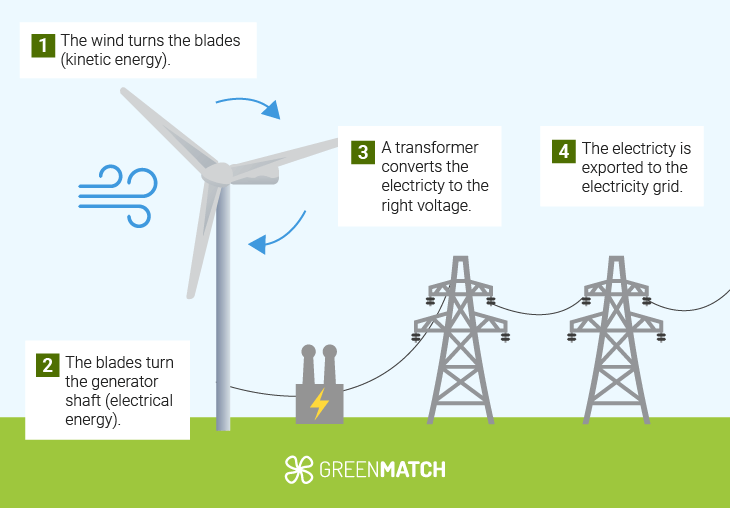
Imagine a car alternator in its natural habitat: bolted to an engine, spinning at thousands of RPMs. Now picture it atop a mast, turned by wind turbine blades. See the mismatch? Automotive alternators are engineered for a very different environment and set of demands than a typical wind power setup. Understanding these fundamental differences is crucial before you even pick up a wrench.
High RPM Requirement
This is the biggest hurdle. A standard car alternator, like the venerable Delco 10SI, needs to spin at an incredibly high speed – typically 2,000 to 18,000 RPM – just to start producing a useful charging voltage and current. Your average small wind turbine, even in a decent breeze, might only turn its blades at 100 to 500 RPM. That’s a massive difference. Without significant gearing (which introduces efficiency losses and complexity), a car alternator simply won’t generate much power at wind-driven speeds.
Field Excitation Voltage
Most automotive alternators are wound-field machines. This means they need a small amount of external electrical current (called ‘excitation current’) flowing through their rotor windings to create the magnetic field necessary for electricity generation. In a car, this excitation comes from the car’s battery once the engine starts. For a wind turbine, this poses a problem: you need power to *make power. It’s not self-starting in the same way a Permanent Magnet Alternator (PMA) is, which uses inherent magnets.
Internal Regulator Limitations
Car alternators come equipped with an internal voltage regulator. This component is designed to maintain a consistent 13.8V to 14.7V output for charging a 12V automotive battery, regardless of engine RPM fluctuations. While great for a car, this regulator is often problematic for a wind turbine. Wind power is inherently intermittent and variable. The internal regulator isn’t designed to handle the wide fluctuations in input RPM and the varying power output of a wind turbine, which can lead to inefficient charging or even damage if not properly managed.
Modifying Your Car Alternator for Wind Turbine Use: The DIY Approach
So, it’s challenging, but not impossible. The key lies in understanding what needs to change. For many DIY enthusiasts, modifying a car alternator is a rewarding project that leverages readily available parts and mechanical know-how. This section will guide you through the essential steps.
Choosing the Right Car Alternator for Conversion
Not all car alternators are created equal when it comes to modification. You want a model that’s robust, relatively simple, and offers good access for internal tweaks. Here are the characteristics to prioritize:
- Older, Externally Regulated Models: While many alternators now have internal regulators, older models (like the Delco 10SI or 12SI, as frequently mentioned in DIY circles) often have easily accessible field terminals or are simpler to bypass the internal regulator. These are workhorses from the 70s and 80s, plentiful and cheap.
- Robust Construction: Look for heavy-duty bearings and a sturdy casing. Wind turbines operate in harsh conditions and demand durability.
- External Fan: Many older alternators have external fans, which can sometimes be adapted or removed for lower RPM operation without immediate overheating concerns (though cooling is still vital).
- Ease of Disassembly: Can you easily open it up to access the stator and rotor?
Here’s a quick checklist to help you choose:
Table of Contents

- Beyond the Road: Unlocking the Potential of Car Alternators for Wind Turbines (And Why PMAs Often Win Out)
- The Core Challenge: Why a Stock Car Alternator Isn’t Designed for Wind
- High RPM Requirement
- Field Excitation Voltage
- Internal Regulator Limitations
- Modifying Your Car Alternator for Wind Turbine Use: The DIY Approach
- Choosing the Right Car Alternator for Conversion
- Disabling the Internal Regulator
- Wiring for External Excitation and Output
- Rewinding the Stator (Optional but Recommended for Low RPM)
- Permanent Magnet Conversion (The Advanced Route)
- Car Alternator vs. Permanent Magnet Alternator (PMA): A Head-to-Head Showdown
- Integrating Your Alternator into a Wind Turbine System
- Blade Design & Gearing
- Charge Controllers for Modified Alternators
- Battery Bank Sizing
- Safety & Protection
- Real-World Expectations and Limitations
- Efficiency Trade-offs
- Maintenance & Longevity
- Cost vs. Benefit
- Noise Considerations
- Is a Car Alternator Right for Your Wind Turbine Project?
| Criteria | Why It Matters for Wind Turbines |
|---|---|
| Model Type (e.g., Delco 10SI/12SI) | Known for ease of modification, common in DIY guides. |
| Brushless vs. Brushed | Brushed alternators (common car alternators) have wear parts. Brushless versions (rare in cars) are more durable. |
| Output Amperage | Higher amps mean potentially more power, but also more resistance at low RPM. |
| Field Winding Resistance | Lower resistance can make it easier to excite the field at low voltages, but draw more excitation current. |
| Physical Size & Weight | Impacts mounting, tower strength, and wind loading. |
Disabling the Internal Regulator
This is one of the first and most crucial steps. The internal regulator isn’t your friend here. You need direct control over the field current to optimize power generation for varying wind speeds. For many common alternators, this involves opening the casing and physically disconnecting or removing the internal regulator board. You’ll then identify the two wires (or terminals) that lead to the rotor’s field windings. These will become your new external field control points.
Important: Always consult a wiring diagram for your specific alternator model. Incorrect modification can damage the unit or pose safety risks.
Wiring for External Excitation and Output
Once the internal regulator is out of the picture, you’ll need an external circuit to supply and control the field current. This typically involves:
- External Voltage Regulator/Charge Controller: A dedicated charge controller for wind turbines (or a custom circuit) will provide a controlled DC voltage to the field windings. This allows you to increase or decrease the magnetic field strength, thereby controlling the alternator’s output voltage and current based on available wind speed and battery charge state.
- Rectification: Car alternators produce AC internally, which is then rectified to DC by internal diodes. You’ll use these same output terminals, but ensure they are connected to your charge controller and battery bank correctly.
Think of it this way: instead of the alternator deciding its own output, you* (or your charge controller) will tell it how hard to work by adjusting the field current.
Rewinding the Stator (Optional but Recommended for Low RPM)
This is where things get more advanced, but it can dramatically improve low-RPM performance. The stator consists of coils of wire. The number of turns in these coils dictates the voltage generated per revolution. By carefully unwinding the existing coils and rewinding them with more turns of a thinner gauge wire, you can achieve a higher voltage output at lower RPMs.
The trade-off: More turns (higher voltage at low RPM) generally mean lower maximum current capacity and increased resistance, potentially reducing overall maximum power. It’s a balance you need to strike based on your specific wind conditions and power needs. This modification is not for the faint of heart and requires patience and a good understanding of electrical windings.
Permanent Magnet Conversion (The Advanced Route)
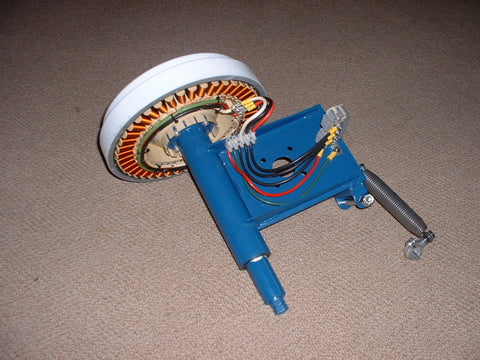
For the ultimate in low-RPM performance from a car alternator casing, some highly skilled DIYers convert the rotor from electromagnetic (field coil) to permanent magnet. This involves replacing the field windings and slip rings with powerful rare-earth magnets (like Neodymium) embedded in the rotor. The goal is to essentially turn a car alternator into a true Permanent Magnet Alternator (PMA). This is a complex machining and electrical challenge, often requiring precision work, but it eliminates the need for excitation current entirely, making the unit much more efficient at low wind speeds.
Car Alternator vs. Permanent Magnet Alternator (PMA): A Head-to-Head Showdown
Many DIY forums and experts will tell you that a purpose-built Permanent Magnet Alternator (PMA) is often superior for wind turbine applications. Why? Because they’re designed from the ground up for low-RPM, high-efficiency generation without needing external excitation. Let’s compare the two head-on so you can make an informed decision.
| Feature | Modified Car Alternator | Purpose-Built PMA |
|---|---|---|
| Initial Cost | Very Low (repurposed parts) | Moderate to High (new, specialized component) |
| Complexity of Build | Moderate to High (modifications, external control) | Low (ready to integrate) |
| Efficiency at Low RPM | Poor to Fair (even after modification/rewinding) | Excellent (designed for low-speed generation) |
| Need for Excitation Current | Yes (requires external control, energy drain) | No (permanent magnets provide field) |
| Maximum Power Output | Can be good at very high RPMs, but challenging to achieve at wind speeds. | Optimized for full power across its operating wind speed range. |
| Durability/Maintenance | Brushes wear out, designed for intermittent car use. | Often brushless, designed for continuous outdoor operation, minimal maintenance. |
| Overall System Cost | Low initial part cost, but potentially higher overall if factoring in custom controllers, gearing, and lower output. | Higher initial part cost, but potentially lower overall due to better efficiency, less complexity, and higher power yield. |
As you can see, while a car alternator might win on initial part cost, the total cost of ownership and actual energy yield often favors a PMA, especially for those seeking reliable, continuous power.
Integrating Your Alternator into a Wind Turbine System
Whether you go with a modified car alternator or a PMA, the generator is just one piece of the puzzle. Integrating it correctly into a complete wind power system is paramount for safety, efficiency, and actual usable power.
Blade Design & Gearing
This is where you bridge the gap between wind speed and alternator RPM. If you’re using a car alternator, you’ll almost certainly need a gearbox to step up the RPM from your wind turbine blades to the alternator’s operational range. This introduces mechanical losses, noise, and another point of failure. Direct-drive systems (where the blades directly spin the generator) are simpler and more efficient, but require a generator (like most PMAs) specifically designed for very low RPMs.
- Direct Drive: Blades connect directly to the generator shaft. Requires a generator that produces power at very low RPMs (e.g., purpose-built PMAs). Simpler, fewer moving parts.
- Geared System: Blades turn a large gear, which then turns a smaller gear connected to the alternator shaft, increasing RPMs. Necessary for car alternators. More complex, introduces friction, noise, and efficiency losses.
Blade design itself is a science. You need blades that are efficient at capturing wind energy and converting it into rotational force, matching the torque requirements of your chosen generator.
Charge Controllers for Modified Alternators
This is arguably the most critical component after the generator itself. For a modified car alternator, you need a charge controller that can:
- Manage Field Current: Actively adjust the excitation current to the alternator’s field windings to optimize power output based on wind speed and battery voltage. This is often done with a Pulse Width Modulation (PWM) signal.
- Rectify Output: If your alternator’s internal rectifier isn’t up to snuff, or if you’re pulling three-phase AC from a rewound stator, you might need an external rectifier.
- Regulate Voltage: Ensure the voltage sent to your battery bank is stable and safe (typically 13.8V-14.7V for 12V systems).
- Dump Load Control: When your batteries are full and the wind is still blowing, a charge controller needs a way to dissipate excess energy (prevent overcharging). This is often done by shunting the power to a resistive dump load.
- Maximum Power Point Tracking (MPPT): Advanced controllers use MPPT algorithms to extract the maximum possible power from the wind turbine across varying wind speeds. This is highly recommended for any serious wind power setup.
Don’t skimp on the charge controller. It’s the brain of your system, protecting your batteries and optimizing power harvest.
Battery Bank Sizing
Your battery bank is your energy storage. Its size should be determined by your daily energy consumption and the expected output of your wind turbine. For a DIY car alternator setup, which often has lower and more intermittent output, you might need a larger battery bank to store enough energy during windy periods to cover lulls. Deep cycle batteries (like lead-acid or lithium-ion specifically designed for solar/wind storage) are essential.
Safety & Protection
Any electrical system, especially one involving moving parts and outdoor exposure, demands safety. Incorporate these elements:
- Fuses and Circuit Breakers: Protect against overcurrents and short circuits. Place them between the alternator, charge controller, and battery bank.
- Disconnect Switches: Allow you to safely shut down the system for maintenance or in emergencies.
- Over-speed Protection (Furling/Braking): Wind turbines can over-speed in high winds, potentially destroying themselves. A furling tail (where the turbine turns out of the wind) or an electronic brake (shorting the alternator output to create drag) is crucial.
- Grounding: Properly ground your tower and electrical components to protect against lightning and stray currents.
Real-World Expectations and Limitations
Let’s be realistic. While a modified car alternator can work, it’s not a silver bullet. Understanding its limitations will help you avoid frustration and manage your project effectively.
Efficiency Trade-offs
Even after extensive modifications, a car alternator is generally less efficient as a wind generator than a purpose-built PMA. The very design of an automotive alternator (wound field, high RPM, internal cooling fan optimized for engine speed) means it will always struggle to match the energy conversion efficiency of a PMA designed for low, variable RPMs. Gearing, if used, further reduces overall system efficiency.
Maintenance & Longevity
Car alternators are designed for automotive duty cycles – periods of use interspersed with downtime, and operating in a relatively stable environment (under the hood). Continuous operation in outdoor conditions, driven by fluctuating wind, puts different stresses on components. Brushes (if present) will wear faster, bearings might fail prematurely, and internal electronics can be vulnerable to moisture and temperature extremes. PMAs, on the other hand, are often designed for continuous, maintenance-free operation in harsh environments.
Cost vs. Benefit
This is the ultimate question. If your goal is to learn about wind power, experiment with electronics, and build something with your hands for minimal initial outlay, a modified car alternator is a fantastic project. The satisfaction of generating even a small amount of power from salvaged parts is immense.
However, if your primary goal is to generate reliable, substantial amounts of power for off-grid living or to significantly offset your utility bill, the financial and labor investment in modifying a car alternator often doesn’t yield the same power per dollar as investing in a quality PMA from the start. The hidden costs can add up: the time spent on modifications, the potential need for expensive gearing, and the lower efficiency translating to less power for your effort.
Noise Considerations
If you use a geared system to boost the car alternator’s RPMs, you’re introducing more moving parts – and often, more noise. Gearboxes can whine, and even the alternator itself might be noisier at high RPMs than a smooth-running direct-drive PMA. This can be a concern for residential installations or if you value quiet operation.
Is a Car Alternator Right for Your Wind Turbine Project?
So, after all this, should you use a car alternator for your wind turbine? The answer, as with many DIY endeavors, is: it depends on your goals.
If you’re a hands-on tinkerer, eager to learn about electrical systems and mechanical modifications, and budget is your primary concern for the generator itself, then absolutely. A modified car alternator project can be incredibly educational and satisfying. You’ll gain invaluable experience in understanding power generation, voltage regulation, and system integration. It’s an excellent entry point into the world of renewable energy for hobbyists and educators.
However, if your aim is to build a reliable, efficient, and low-maintenance wind power system that contributes significantly to your energy needs, then investing in a purpose-built Permanent Magnet Alternator (PMA) is almost always the more pragmatic and ultimately more cost-effective choice in the long run. They are designed for the job, offer superior low-RPM performance, and require far less modification and specialized control.
Start small, experiment, learn from your successes and failures, and enjoy the journey of generating your own power. Whether it’s from a repurposed automotive workhorse or a dedicated wind generator, harnessing the wind is a powerful experience.
Frequently Asked Questions
Can a stock car alternator directly power a wind turbine?
No, a stock car alternator is not suitable for direct wind turbine use. It requires very high RPMs (thousands) to generate useful power, which wind turbine blades typically cannot provide. It also needs excitation current and its internal regulator is not optimized for variable wind power.
What modifications are needed to use a car alternator for a wind turbine?
Key modifications include disabling or bypassing the internal voltage regulator to allow external control of the field current. For better low-RPM performance, rewinding the stator coils with more turns is often recommended, or in advanced cases, converting the rotor to use permanent magnets.

What kind of car alternator is best for wind turbine conversion?
Older, simpler car alternators with accessible field terminals are generally preferred for modification. Models like the Delco 10SI or 12SI are popular due to their robust design and relative ease of modification, often having external fans and simpler internal components.
Why are Permanent Magnet Alternators (PMAs) often recommended over modified car alternators?
PMAs are purpose-built for low-RPM generation, offering much higher efficiency in typical wind speeds. They don’t require excitation current (reducing parasitic drain) and are generally more durable and less complex to integrate into a wind power system, leading to better overall performance and less maintenance.
Do I need a gearbox if I use a car alternator for my wind turbine?
Yes, almost certainly. Since car alternators need high RPMs and wind turbines operate at low RPMs, a gearbox is typically required to step up the rotational speed. This, however, introduces mechanical losses, complexity, and potential noise.
What kind of charge controller should I use with a modified car alternator?
You’ll need a specialized wind turbine charge controller that can manage the alternator’s field current (excitation) to optimize power output based on wind speed and battery charge. An MPPT (Maximum Power Point Tracking) controller designed for wind applications is highly recommended.