Best Residential Wind Turbine 2026: Your Definitive Guide to Home Wind Power
Tired of volatile energy bills? Dreaming of energy independence? If you’re looking to power your home with clean, sustainable energy, the idea of a residential wind turbine might sound like a distant dream. But by 2026, advancements in technology, efficiency, and aesthetics are making home wind power more accessible and appealing than ever before. This isn’t just about saving money; it’s about taking control of your energy future and making a tangible impact on the environment.
Table of Contents
- Best Residential Wind Turbine 2026: Your Definitive Guide to Home Wind Power
- Understanding Residential Wind Turbines: HAWT vs. VAWT for Your Home
- Horizontal-Axis Wind Turbines (HAWTs)
- Vertical-Axis Wind Turbines (VAWTs)
- Top Picks for Residential Wind Turbines in 2026 (Focus: Homeowner Needs)
- 1. Best Overall for Grid-Tied Homes: The ‘AeroGen 3000’ HAWT
- 2. Best for Off-Grid or Remote Cabins: The ‘PowerHarvest 500W’ HAWT
- 3. Best Quiet & Aesthetic Option: The ‘WhisperWind VAWT Pro’
- 4. Best Value/Budget-Friendly: The ‘EcoSpin 400W Starter Kit’ HAWT
- 5. Best High-Output for Larger Homes: The ‘MegaWatt Pro 5000’ HAWT
- Residential Wind Turbine Comparison Table (2026 Models)
- The Ultimate Buying Guide for Your Home Wind Turbine in 2026
- Step 1: Assess Your Wind Resource
- Step 2: Evaluate Your Energy Needs
- Step 3: Site Selection & Tower Height
- Step 4: Local Regulations & Permitting
- Step 5: Grid-Tied vs. Off-Grid Systems
- Step 6: Cost, Incentives, and ROI
- Step 7: Installation & Maintenance Considerations
- Key Innovations & What to Expect by 2026
- Beyond the Turbine: Integrating with Your Smart Home and Solar
- Conclusion: Powering Your Future with Wind
This guide cuts through the jargon to give you the clear, actionable insights you need to choose the best residential wind turbine for your home in 2026. We’ll explore the top models, critical buying factors, and what innovations you can expect, ensuring you’re well-equipped to make an informed decision.
Understanding Residential Wind Turbines: HAWT vs. VAWT for Your Home
Before diving into specific models, it’s crucial to understand the two main types of residential wind turbines: Horizontal-Axis Wind Turbines (HAWTs) and Vertical-Axis Wind Turbines (VAWTs). Each has distinct advantages and disadvantages that make them suitable for different home environments.
Horizontal-Axis Wind Turbines (HAWTs)
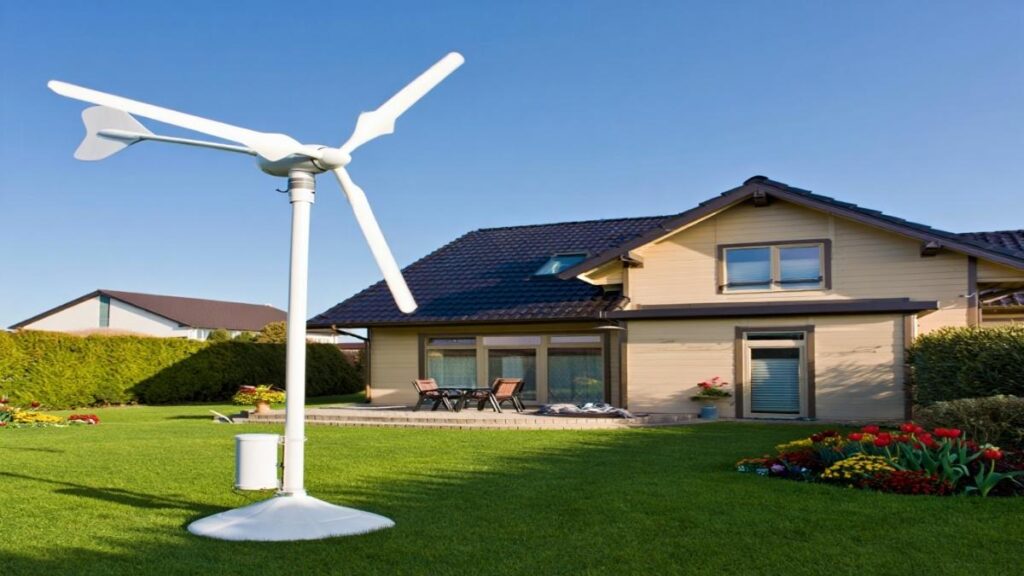
When you picture a wind turbine, you’re likely imagining a HAWT. These are the classic ‘propeller’ style turbines, with blades that spin around a horizontal axis, facing directly into the wind.
- Description: Often resemble miniature versions of utility-scale wind farms. They require a mechanism to orient themselves into the wind (a yaw system).
- Pros:
- High Efficiency: Generally more efficient at converting wind energy into electricity due to their design.
- Mature Technology: Well-understood and proven technology, leading to reliable performance.
- Strong Output: Can produce significant power for their size, especially in consistent, strong wind conditions.
- Cons:
- Noise: Can be perceived as louder, especially at higher wind speeds, which can be a concern in densely populated residential areas.
- Aesthetics: The traditional ‘windmill’ look isn’t for everyone and might face aesthetic objections.
- Wind Direction: Requires a yaw system to continuously face the wind, adding mechanical complexity.
- Height & Space: Typically requires taller towers for optimal performance, needing more space and potentially facing zoning restrictions.
- Best Use Cases for Homes: Rural properties with ample land, consistent strong wind resources, and fewer immediate neighbors. Ideal for homeowners prioritizing maximum energy output.
Vertical-Axis Wind Turbines (VAWTs)
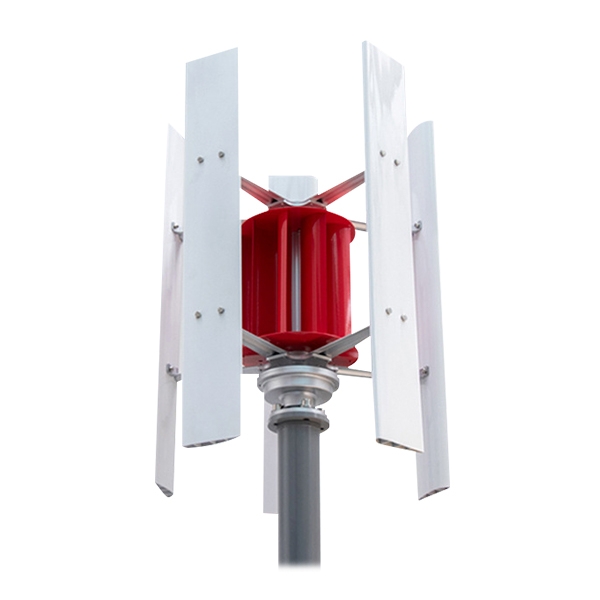
VAWTs are less common but are gaining traction for residential applications due to their unique characteristics. Their blades rotate around a vertical axis, often looking like an egg beater or a cylinder.
- Description: These turbines catch wind from any direction without needing to reorient themselves. They are typically closer to the ground.
- Pros:
- Less Noise: Generally quieter than HAWTs, making them more suitable for suburban or even some urban settings.
- Omni-Directional: Operate effectively regardless of wind direction, which is advantageous in turbulent or shifting wind conditions.
- Aesthetics: Many find their modern, often sculptural designs more appealing or less intrusive than traditional HAWTs.
- Lower to Ground: Components are often closer to the ground, simplifying maintenance and potentially reducing visual impact.
- Cons:
- Lower Efficiency (Typically): Often less efficient at energy capture compared to similarly sized HAWTs, though this gap is closing with new designs.
- Higher Initial Cost Per Watt: Can sometimes have a higher upfront cost for the amount of power generated.
- Starting Torque: Some older designs might require a push to start in very low winds, though modern designs have improved significantly.
- Best Use Cases for Homes: Suburban or urban properties with limited space, turbulent or variable wind conditions, and a desire for quieter operation or specific aesthetics. Good for homeowners looking for a balance of performance and neighbor-friendliness.
| Feature | Horizontal-Axis Wind Turbine (HAWT) | Vertical-Axis Wind Turbine (VAWT) |
|---|---|---|
| Efficiency | Generally higher | Often lower, but improving |
| Noise Level | Can be louder, especially at high speeds | Typically quieter |
| Wind Direction | Needs to face into the wind (yaw mechanism) | Omni-directional, catches wind from any angle |
| Aesthetics | Traditional ‘propeller’ look, often requires tall tower | Modern, sculptural designs; can be lower to ground |
| Maintenance | Requires tower climbing for certain tasks | Easier access to components at ground level |
| Ideal Setting | Rural, open areas with consistent strong winds | Suburban, urban, or turbulent wind conditions |
Top Picks for Residential Wind Turbines in 2026 (Focus: Homeowner Needs)
By 2026, the market for residential wind turbines will offer a sophisticated blend of power, efficiency, and smart features. Here are our top picks, categorized by what they do best for the average homeowner.
1. Best Overall for Grid-Tied Homes: The ‘AeroGen 3000’ HAWT
For homeowners looking to significantly offset their grid consumption, the AeroGen 3000 stands out. It’s a robust HAWT designed for maximum energy capture and seamless integration with existing home electrical systems.
![Top 6 Home Wind Turbines [] Defintive Buyer's Guide ...](https://cdn.shopify.com/s/files/1/0034/8913/6751/files/automaxx1500_480x480.jpg?v=1627084321 "Top 6 Home Wind Turbines [] Defintive Buyer's Guide ...")
- Features: High-strength composite blades, smart controller with grid-tie inverter, low cut-in wind speed, rated for continuous operation even in moderate storms. Average daily output can power a significant portion of a 2,000 sq ft home.
- Why it’s a Top Pick: Its superior efficiency in moderate-to-strong winds means more electricity generated per dollar spent. The advanced inverter ensures smooth power delivery to your home or back to the grid. It’s a workhorse built for reliability and high performance.
- Ideal Residential Application: Properties with consistent average wind speeds above 10-12 mph, especially rural or semi-rural homes seeking substantial energy bill reduction.
2. Best for Off-Grid or Remote Cabins: The ‘PowerHarvest 500W’ HAWT
When you’re truly off the grid, reliability and durability are paramount. The PowerHarvest 500W is a compact, no-nonsense HAWT built to withstand harsh conditions and keep your batteries charged.
- Features: Marine-grade construction, direct-drive generator (fewer moving parts), integrated charge controller compatible with 12V/24V battery banks, manual shut-off for extreme weather. Designed for minimal maintenance in remote settings.
- Why it’s a Top Pick: Its rugged design and proven performance in extreme conditions make it perfect for cabins, RVs, or small off-grid homesteads. Simplicity in design translates to fewer points of failure, which is critical when a repair technician isn’t just around the corner.
- Ideal Residential Application: Remote cabins, off-grid homes, emergency backup power for critical loads, or supplementing solar in hybrid off-grid systems.
3. Best Quiet & Aesthetic Option: The ‘WhisperWind VAWT Pro’
For those in closer-knit communities or with specific aesthetic preferences, the WhisperWind VAWT Pro offers a compelling solution. It delivers usable power with minimal noise and a modern look.
- Features: Advanced aerodynamic blade design significantly reduces audible noise, sleek vertical profile, high-quality durable materials, effective in turbulent wind conditions. Available in various colors to blend with architectural styles.
- Why it’s a Top Pick: It addresses the two biggest concerns for many urban/suburban homeowners: noise and visual impact. While its peak output might be slightly less than a top-tier HAWT, its ability to generate power efficiently in varied wind directions and quiet operation make it a neighbor-friendly choice.
- Ideal Residential Application: Suburban homes, properties with limited ground space, areas with turbulent or frequently shifting wind patterns, or homeowners prioritizing aesthetics and low noise.
4. Best Value/Budget-Friendly: The ‘EcoSpin 400W Starter Kit’ HAWT
Starting with residential wind power doesn’t have to break the bank. The EcoSpin 400W provides a solid entry point, offering reliable performance for smaller energy needs or as a supplemental source.
- Features: Lightweight design for easier DIY installation (with proper safety), durable aluminum alloy blades, comes with a basic charge controller for battery charging, suitable for 12V/24V systems.
- Why it’s a Top Pick: It’s an excellent choice for dipping your toes into wind energy without a massive upfront investment. While 400W won’t power your entire home, it’s perfect for charging batteries, running essential loads during outages, or supplementing solar arrays. Its straightforward design makes it more accessible for handy homeowners.
- Ideal Residential Application: Small energy needs, supplementing existing solar setups, powering sheds, outdoor lighting, or a small off-grid workshop.
5. Best High-Output for Larger Homes: The ‘MegaWatt Pro 5000’ HAWT
If you have a large home, significant energy demands, and an excellent wind resource, the MegaWatt Pro 5000 is engineered to deliver substantial power generation.
- Features: Large rotor diameter for maximum swept area, advanced permanent magnet generator for high efficiency, robust tower options (up to 80ft+), sophisticated grid-tie inverter for seamless integration and maximum power point tracking (MPPT).
- Why it’s a Top Pick: This turbine is designed for serious energy production. It requires a significant initial investment and a suitable site, but it can dramatically reduce or even eliminate your electricity bill for larger properties. Its durable construction and high-performance components ensure a long operational lifespan.
- Ideal Residential Application: Large estates, small farms, or properties with high energy demands and abundant, consistent wind resources, where maximum energy offset is the primary goal.
Residential Wind Turbine Comparison Table (2026 Models)
Here’s a snapshot comparing our top residential wind turbine picks, highlighting key metrics relevant to homeowners:
| Turbine Model | Type | Rated Power (W) | Cut-in Wind Speed (mph) | Optimal Wind Speed (mph) | Noise Level (dB @ 20ft/15mph) | Est. Cost Range (Turbine Only) | Key Residential Benefit |
|---|---|---|---|---|---|---|---|
| AeroGen 3000 | HAWT | 3000 | 6-7 | 25-30 | 45-50 | $8,000 – $12,000 | High Efficiency, Grid-Tie Ready |
| PowerHarvest 500W | HAWT | 500 | 5-6 | 20-25 | 40-45 | $1,500 – $2,500 | Rugged, Off-Grid Reliability |
| WhisperWind VAWT Pro | VAWT | 1500 | 7-8 | 28-32 | 35-40 | $6,000 – $9,000 | Quiet Operation, Aesthetic Design |
| EcoSpin 400W Starter Kit | HAWT | 400 | 7-8 | 22-28 | 42-47 | $900 – $1,600 | Affordable Entry-Level, DIY Friendly |
| MegaWatt Pro 5000 | HAWT | 5000 | 6-7 | 28-35 | 50-55 | $12,000 – $18,000 | Maximum Output for Large Homes |
Note: Est. Cost Range refers to the turbine unit only. Installation, tower, inverter, and battery costs are additional. Noise levels are approximate and can vary with specific conditions.
The Ultimate Buying Guide for Your Home Wind Turbine in 2026
Choosing and installing a residential wind turbine is a significant investment. To maximize your return and ensure a smooth process, follow this step-by-step guide.
Step 1: Assess Your Wind Resource
This is arguably the most critical step. A wind turbine only makes sense if you have sufficient wind. I can’t stress this enough: don’t guess!
- Importance of Wind Speed: Wind turbine power output is exponentially related to wind speed (specifically, it’s proportional to the cube of the wind speed). A small increase in average wind speed means a significant increase in power.
- How to Measure/Estimate:
- Professional Site Assessment: The best approach. A wind energy professional can install an anemometer (wind speed measuring device) at the proposed tower height for a period (e.g., 3-12 months).
- Online Wind Maps: Resources like the National Renewable Energy Laboratory (NREL) provide state-specific wind resource maps. These are good for initial estimates but aren’t site-specific.
- Local Data: Check nearby airport or weather station data, but understand that local topography can greatly influence your specific site.
- Key Takeaway: Aim for an average annual wind speed of at least 10 mph for a truly cost-effective system.
Step 2: Evaluate Your Energy Needs
You need to know how much electricity your home consumes to size your system correctly.
- How Much Power Do You Really Need? Look at your past utility bills. Your monthly electricity usage is typically measured in kilowatt-hours (kWh).
- Calculating Your Load: Sum up your annual kWh usage, then divide by 8,760 (hours in a year) to get your average kW demand. This helps you determine what size turbine (or combination of turbines) you’d need to meet your goals (e.g., offsetting 50% or 100% of your usage).
- Pro Tip: Consider energy efficiency upgrades before installing a turbine. Reducing demand makes your wind investment go further.
Step 3: Site Selection & Tower Height
Where you place your turbine and how high it stands dramatically impacts its performance.
- Clearance from Obstructions: Trees, buildings, and hills create turbulence and block wind. Your turbine’s rotor should ideally be at least 20 feet above any obstruction within 300 feet. The higher, the better, within practical and regulatory limits.
- Importance of Tower Height: Wind speeds increase with height and are less turbulent. Don’t skimp on tower height; it’s one of the best investments you can make for turbine efficiency.
- Minimum Setback Requirements: Many jurisdictions require turbines to be set back a certain distance from property lines, public roads, and dwellings (often 1.1 to 1.5 times the tower height).
Step 4: Local Regulations & Permitting
This is where many aspiring wind homeowners get stuck. Don’t skip this!
- Zoning Laws: Check with your local planning or zoning department. Some areas have outright bans or severe restrictions on residential wind turbines, while others have specific height, setback, and noise limits.
- HOA Restrictions: If you live in a homeowner’s association, they might have their own rules that supersede local ordinances. Always check their covenants.
- Building Permits: Installation of a wind turbine and its tower will almost certainly require a building permit. Be prepared for engineering reviews and inspections.
- Interconnection Agreements: If you’re grid-tied, you’ll need an agreement with your utility company. They might require specific inverter types and safety disconnects.
Step 5: Grid-Tied vs. Off-Grid Systems
Your connection to the utility grid will define your system architecture.
- Grid-Tied: Your turbine generates power, and any excess is fed back into the utility grid, often earning you credits (net metering). When your turbine isn’t producing enough, you draw from the grid.
- Pros (Grid-Tied): No need for expensive battery storage, essentially using the grid as a giant battery. Lower initial cost.
- Cons (Grid-Tied): Still dependent on the grid; often won’t operate during a power outage for safety reasons unless equipped with specific battery backup and disconnects.
- Off-Grid: Your turbine powers your home and charges a battery bank. You are completely independent of the utility grid.
- Pros (Off-Grid): Complete energy independence, no utility bills.
- Cons (Off-Grid): Requires a large battery bank (significant cost and maintenance), a backup generator is often recommended, careful energy management is essential.
- Battery Storage Considerations: For either system, batteries provide energy storage for when the wind isn’t blowing. By 2026, battery technology (e.g., advanced lithium-ion, solid-state) will be more efficient and cost-effective, making hybrid wind-battery systems increasingly popular.
Step 6: Cost, Incentives, and ROI
Let’s talk money. The initial investment can be substantial, but incentives can help, and long-term savings are real.
- Initial Investment Breakdown:
- Turbine Unit: As seen in our comparison table ($900 – $18,000+).
- Tower: Can be as much as the turbine itself, depending on height and type (guyed, freestanding).
- Inverter & Controller: Essential electronics to convert raw turbine power into usable AC electricity and manage charging.
- Batteries (for off-grid or backup): Can add thousands to tens of thousands of dollars.
- Installation: Professional installation is highly recommended and adds significant cost (crane rental, labor, electrical work).
- Permitting & Site Prep: Fees, engineering studies, foundation work.
- Federal, State, and Local Incentives:
- Federal Tax Credit: The Investment Tax Credit (ITC) for renewable energy often applies to small wind turbines, offering a significant percentage (e.g., 30%) of the system cost as a tax credit. Always check the latest IRS guidelines.
- State & Local Programs: Many states and municipalities offer their own rebates, grants, or property tax exemptions for renewable energy. Use resources like the DSIRE (Database of State Incentives for Renewables & Efficiency) to find local programs.
- Estimating Payback Period: Calculate your total system cost (after incentives) and divide by your estimated annual energy savings (current electricity rate x annual kWh generated). This gives you a rough idea of how long it will take to recoup your investment. Expect 8-20 years, depending on your wind resource, energy usage, and incentives.
Step 7: Installation & Maintenance Considerations
A properly installed and maintained turbine will serve you for decades.
- DIY vs. Professional: While smaller turbines might seem DIY-friendly, the complexity of tower erection, electrical wiring, and securing permits makes professional installation highly advisable for safety and optimal performance.
- Annual Checks: Inspect blades for damage, check guy wires (if applicable) for tension, ensure bolts are tight, and inspect electrical connections.
- Routine Maintenance: Depending on the model, this might include checking fluid levels (for gearboxes, though many modern turbines are direct drive), lubricating moving parts, and cleaning the blades (very rare but can improve efficiency).
Key Innovations & What to Expect by 2026
The residential wind industry isn’t standing still. By 2026, you can expect even more sophisticated and homeowner-friendly options:
- Smarter Turbines: Expect integrated IoT (Internet of Things) features, allowing for remote monitoring, performance analytics, and predictive maintenance alerts via smartphone apps.
- Improved Efficiency in Low Wind Speeds: Advanced blade designs and generator technologies will enable turbines to ‘cut-in’ and generate usable power at even lower wind speeds, expanding their viability.
- Quieter Designs: Further acoustic engineering will continue to reduce noise levels, making turbines more acceptable in denser residential areas.
- Better Energy Storage Integration: Seamless integration with advanced battery storage systems will become standard, making hybrid wind-solar-battery solutions easier to deploy.
- Modular & Scalable Systems: Expect more modular designs that allow homeowners to start small and add capacity as their needs or budgets grow.
Beyond the Turbine: Integrating with Your Smart Home and Solar
The true power of residential wind energy often comes when it’s part of a larger, integrated home energy system. By 2026, smart home energy management systems will make this easier than ever.
![Top 6 Home Wind Turbines [] Defintive Buyer's Guide ...](https://cdn.shopify.com/s/files/1/0034/8913/6751/files/primus_480x480.jpg?v=1627084486 "Top 6 Home Wind Turbines [] Defintive Buyer's Guide ...")
- The Benefits of a Hybrid System: Combining wind with solar power offers a fantastic hedge against intermittency. When the sun isn’t shining, the wind often blows, and vice-versa. This creates a more consistent and reliable energy supply.
- Energy Management Systems: Modern inverters and smart home hubs can now prioritize energy use, decide when to charge batteries, when to draw from the grid, or when to feed excess power back, optimizing for cost savings and energy independence.
Conclusion: Powering Your Future with Wind
Investing in a residential wind turbine in 2026 is more than just an environmental statement; it’s a strategic move towards energy resilience and long-term financial savings. While it requires careful planning, site assessment, and understanding of local regulations, the rewards of harnessing nature’s power directly from your property are immense.
By focusing on your specific wind resource, energy needs, and local context, and by leveraging the advanced technologies available, you can confidently choose a residential wind turbine that will reliably power your home for decades to come. The future of home energy is here, and it’s blowing strong.
Frequently Asked Questions
How much does a residential wind turbine cost in 2026?
The cost of a residential wind turbine varies significantly based on its size, type (HAWT vs. VAWT), rated power, and additional components like the tower, inverter, and batteries. Expect to pay anywhere from $1,500 for a small 400W unit to $18,000+ for a high-output 5000W turbine, with total installed costs often ranging from $10,000 to $70,000 before incentives, depending on system complexity and site conditions.
What average wind speed is needed for a residential wind turbine to be effective?
For a residential wind turbine to be a truly cost-effective investment, an average annual wind speed of at least 10 mph (4.5 m/s) is generally recommended. While many turbines can ‘cut-in’ and start generating power at lower speeds (5-7 mph), their power output increases dramatically with higher wind speeds, making sites with consistent moderate-to-strong winds ideal for significant energy production.
Can I install a residential wind turbine in a suburban area?
Installing a residential wind turbine in a suburban area is possible but often more challenging due to local zoning laws, homeowner association (HOA) restrictions, noise ordinances, and aesthetics. Vertical-Axis Wind Turbines (VAWTs) are often preferred for suburban settings due to their quieter operation and more compact, visually discreet designs. Always thoroughly research local regulations and obtain necessary permits before proceeding.
How long do residential wind turbines last?
With proper installation and regular maintenance, a quality residential wind turbine can last 20 to 25 years or even longer. Key components like blades and the generator are designed for durability, but electronics (inverters, controllers) might require replacement after 10-15 years. Annual inspections and addressing any issues promptly are crucial for maximizing lifespan.
Do residential wind turbines make a lot of noise?
The noise level of residential wind turbines has been a common concern, but modern designs have made significant improvements. Horizontal-Axis Wind Turbines (HAWTs) tend to be louder (40-55 dB at 20ft/15mph) than Vertical-Axis Wind Turbines (VAWTs), which can be as quiet as 35-40 dB. Perceived noise also depends on tower height, distance from dwellings, and ambient background noise. Many modern turbines are designed to be comparable to a refrigerator hum at a distance.
What is the difference between grid-tied and off-grid residential wind systems?
A grid-tied system connects to your local utility grid. It feeds excess power back to the grid (often earning credits through net metering) and draws power from the grid when your turbine isn’t producing enough. An off-grid system is completely independent of the utility grid, relying on battery storage to save power for when the wind isn’t blowing. Off-grid systems require a larger initial investment for batteries and often a backup generator.