
Choosing the Best Wind Turbine for Your Home: A Definitive Guide for US Homeowners
Dreaming of energy independence? Tired of those ever-increasing electricity bills? Imagine harnessing the invisible power of the wind, right from your own property. It sounds incredible, and for the right homeowner, it absolutely is. But let’s be real: stepping into the world of residential wind turbines can feel like navigating a complex maze of technical terms, site assessments, and dizzying options.
Table of Contents
- Choosing the Best Wind Turbine for Your Home: A Definitive Guide for US Homeowners
- Is a Residential Wind Turbine Right for YOUR Home? Start Here.
- The Critical First Step: Assessing Your Wind Resource
- Site Suitability: Location, Obstacles, and Zoning
- Your Energy Needs: How Much Power Do You Really Need?
- Understanding Your Options: Types of Residential Wind Turbines
- Horizontal Axis Wind Turbines (HAWTs): The Traditional Choice
- Vertical Axis Wind Turbines (VAWTs): The Emerging Alternative
- HAWT vs. VAWT: A Quick Comparison
- What Size Wind Turbine Do You Need? (Sizing Guide)
- Matching Turbine Output to Home Consumption
- The Importance of Cut-in Speed and Rated Power
- The Best Residential Wind Turbines: Our Top Picks & What to Look For
- Key Features to Prioritize When Choosing
- Recommended HAWT Models for Home Use
- Recommended VAWT Models for Home Use
- Budget-Friendly / DIY Options (with caveats)
- Comparative Overview of Top Residential Wind Turbines
- Beyond the Turbine: Understanding System Components & Costs
- Essential Components of a Residential Wind System
- The Real Cost: Installation, Maintenance, and ROI
- Residential Wind Power vs. Solar: A Symbiotic Relationship?
- When Wind Shines (and When Solar Does)
- Hybrid Systems: The Best of Both Worlds
- Getting Started: Your Next Steps Towards Wind Energy
- Step 1: Professional Site Assessment
- Step 2: Research Local Regulations & Incentives
- Step 3: Get Multiple Quotes from Certified Installers
- The Future of Home Wind Power: What’s Next?
You’re here because you want to know what works, what doesn’t, and crucially, what’s the best wind turbine for residential use in the US. I’m going to cut through the noise, give you the straight facts, and help you determine if home wind power is your next smart move, and if so, how to make the best choice.
Is a Residential Wind Turbine Right for YOUR Home? Start Here.
Before we dive into specific models, let’s address the elephant in the room: residential wind power isn’t for everyone. It’s a fantastic solution for many, but only under the right conditions. Let’s assess if your home is a prime candidate.
The Critical First Step: Assessing Your Wind Resource
This is arguably the most important factor. Without enough consistent wind, even the best turbine is just an expensive lawn ornament.
- What’s a Good Average Wind Speed? For a residential wind turbine to be economically viable and generate meaningful power, you generally need an annual average wind speed of at least 10-12 miles per hour (mph) (4.5 to 5.4 meters per second). Anything less, and you’ll struggle to justify the investment. Some turbines can start producing at lower speeds (cut-in speed), but their rated power is reached at much higher speeds.
- How to Measure/Estimate:
- Online Tools: The US Department of Energy’s WINDExchange website offers wind resource maps.
- Local Data: Contact local airports or weather stations for historical wind data.
- Anemometer: For the most accurate assessment, you can install an anemometer on a temporary tower for a year.
- Why Consistency Matters: A few really windy days won’t cut it. You need consistent, steady wind throughout the year for optimal energy production.
Site Suitability: Location, Obstacles, and Zoning
Even with great wind, your physical location plays a huge role.
- Rural vs. Urban/Suburban:
- Rural: Often ideal. More open space, fewer obstacles, less likely to encounter restrictive zoning laws or neighbor complaints about noise or visual impact.
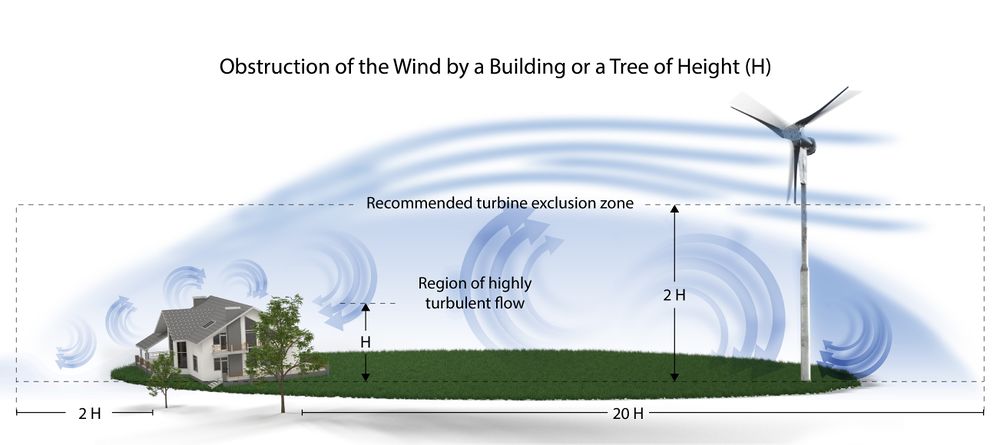
- Urban/Suburban: Challenging. You’ll likely face stringent zoning regulations regarding tower height, setbacks from property lines, and noise ordinances. Obstacles like tall buildings and trees can create turbulence, severely reducing a turbine’s efficiency. Noise can also be a significant issue for close neighbors.
- Clear Line of Sight: Wind turbines need to be installed above any nearby obstacles (trees, buildings) by at least 20-30 feet to avoid turbulence, which reduces efficiency and can increase wear and tear. A taller tower almost always means more consistent, stronger wind.
- Local Zoning Laws & Permitting: This is crucial. Before you buy anything, check with your local planning department and HOA (if applicable). Many municipalities have strict rules about wind turbine installations, including height restrictions, setback requirements, noise limits, and aesthetic guidelines. Don’t skip this step; it can be a dealbreaker.
Your Energy Needs: How Much Power Do You Really Need?
Understanding your electricity consumption helps you size the right system.
- Understanding kWh vs. kW:
- Kilowatt (kW): This is a measure of power, like how much energy a device *uses or produces* at any given moment. A 10 kW turbine produces 10 kW of power.
- Kilowatt-hour (kWh): This is a measure of energy consumed or produced over time. Your electricity bill is measured in kWh. A 1 kW turbine running for 1 hour produces 1 kWh of energy.
- Calculating Your Consumption: Look at your past electricity bills. Average your monthly kWh usage. A typical US home uses around 900-1,000 kWh per month. Knowing this helps determine if you need a small supplemental system or a larger one to significantly offset your grid usage.
- Grid-Tied vs. Off-Grid:
- Grid-Tied: Your turbine generates power, and any excess is sent back to the utility grid (often with net metering credits). When the wind isn’t blowing, you draw power from the grid. Most common residential setup.
- Off-Grid: Your turbine, along with batteries, provides all your power. Requires a more robust battery bank and often a backup generator. Common for remote cabins or truly independent living.
Understanding Your Options: Types of Residential Wind Turbines
There are two primary types of small wind turbines: Horizontal Axis and Vertical Axis. Each has its advantages and disadvantages.
)
Horizontal Axis Wind Turbines (HAWTs): The Traditional Choice
These are what most people picture: the classic ‘propeller’ style turbines with blades that rotate on a horizontal axis, facing into the wind.
- Description: They typically have 2 or 3 blades, mounted on a tall tower, and use a yaw mechanism to pivot the rotor into the wind.
- Pros:
- High Efficiency: Generally more efficient at converting wind energy into electricity, especially at higher wind speeds.
- Established Technology: A well-understood and mature technology with many reliable models available.
- Higher Power Output: Typically produce more power for their rotor size compared to VAWTs.
- Cons:
- Requires Yaw Mechanism: Needs to constantly orient itself into the wind, adding mechanical complexity.
- Noise: Can be noisier than VAWTs, especially in higher winds, which can be a concern for neighbors.
- Visual Impact: The spinning blades and tall tower can be more visually intrusive.
- Higher Cut-in Speed: Often require slightly higher wind speeds to start generating power compared to VAWTs.
- Bird Safety: While exaggerated by some, HAWTs can pose a greater risk to birds and bats than VAWTs.
Vertical Axis Wind Turbines (VAWTs): The Emerging Alternative
VAWTs have blades that rotate around a vertical axis. They look quite different, often resembling egg-beaters or helical corkscrews.
- Description: Blades can be various designs (Darrieus, Savonius, Helical) and they don’t need to point into the wind.
- Pros:
- Quieter Operation: Generally produce less noise, making them potentially more suitable for closer proximity to homes or in areas with noise concerns.
- Omni-Directional: They capture wind from any direction without needing to yaw, simplifying their mechanical design.
- Lower Cut-in Speed: Can start generating electricity at very low wind speeds, which is a big advantage in less consistently windy areas.
- Aesthetic (Subjective): Some designs are considered more visually appealing or less obtrusive.
- Safer for Birds: Their slower rotation speed and solid structure (for some designs) tend to make them less hazardous to avian wildlife.
- Easier Maintenance: Generator and gearbox are often at ground level, simplifying maintenance.
- Cons:
- Lower Efficiency (Generally): Typically less efficient at converting wind energy to electricity compared to HAWTs of a similar size, especially at higher wind speeds.
- Complex Blade Dynamics: Some designs can experience fluctuating torque, requiring careful engineering.
- More Research Needed: While improving rapidly, the technology is less mature and standardized than HAWTs.
HAWT vs. VAWT: A Quick Comparison
| Feature | HAWT (Horizontal Axis) | VAWT (Vertical Axis) |
|---|---|---|
| Efficiency | Generally higher | Generally lower |
| Cut-in Speed | Higher (e.g., 6-8 mph) | Lower (e.g., 4-6 mph) |
| Noise Levels | Can be louder | Generally quieter |
| Wind Direction | Requires yawing (pointing into wind) | Omni-directional (no yawing needed) |
| Visual Impact | More traditional, can be more prominent | Often perceived as less intrusive |
| Bird Safety | Higher risk | Lower risk |
| Maintenance Access | Often requires tower climbing | Generator often at ground level |
What Size Wind Turbine Do You Need? (Sizing Guide)
Just like you wouldn’t buy a car without knowing its purpose, don’t buy a turbine without knowing your power needs. Residential turbines typically range from a few hundred watts to 10 kilowatts (kW) or more.
Matching Turbine Output to Home Consumption
- Small (400W – 1 kW): These are generally used for supplemental power, charging battery banks for RVs, boats, small cabins, or specific appliances. They won’t power an entire modern home, but they can be a great addition to an off-grid setup or for light energy needs.
- Medium (1 kW – 5 kW): This range is where most residential systems fall. A 1.5 kW turbine, for example, can significantly offset the energy needs of a smaller home (300 kWh/month) in a good wind area. A 5 kW system could handle a substantial portion of an average US home’s electricity needs. These are often grid-tied.
- Large (5 kW – 10 kW+): These larger systems are designed to fully power larger homes, small farms, or provide significant excess power for net metering. They require excellent wind resources, substantial property, and a higher upfront investment. The Bergey Excel 10, for example, is a powerful option in this category.
The Importance of Cut-in Speed and Rated Power
- Cut-in Speed: This is the minimum wind speed required for the turbine to start producing any electricity. A lower cut-in speed means your turbine will generate power more often.
- Rated Power: This is the maximum power output the turbine is designed to produce. However, a turbine only reaches its rated power at specific, higher wind speeds (e.g., 28 mph for many models). It’s crucial to look at the turbine’s power curve (output vs. wind speed) rather than just the rated power, to understand its performance in your average wind conditions.
The Best Residential Wind Turbines: Our Top Picks & What to Look For
Alright, let’s get to the turbines! Choosing the “best” isn’t a one-size-fits-all answer. It depends entirely on your specific site, wind resource, budget, and energy goals. However, I can point you towards reputable manufacturers and popular models known for performance and reliability.
Key Features to Prioritize When Choosing
- Durability & Materials: Look for turbines built with marine-grade aluminum, stainless steel, and robust composite blades. They need to withstand extreme weather, UV radiation, and continuous operation for decades.
- Noise Levels: Check the decibel (dB) rating. Lower is better, especially if you have close neighbors. Many modern turbines are designed for quiet operation, but it’s a critical spec.
- Efficiency & Performance Curve: Don’t just look at the peak power. Review the manufacturer’s power curve chart to see how much power it generates at various wind speeds relevant to your site.
- Warranty & Support: A long warranty (5+ years for the turbine head) and accessible customer support are vital for a significant investment.
- Certifications: In the US, look for turbines certified by organizations like the Small Wind Certification Council (SWCC). This ensures independent performance and safety verification.
Recommended HAWT Models for Home Use
For homes with excellent, consistent wind resources and ample space, HAWTs often provide the best return on investment due to their higher efficiency.
- Bergey Excel 10 (10 kW)
- Overview: Often cited as a gold standard in the small wind industry, the Bergey Excel is a robust, US-made turbine with a long track record (decades, as mentioned on Facebook). It’s built for serious power generation and longevity.
- Power: Up to 10 kW rated power.
- Cut-in Speed: ~7 mph.
- Ideal for: Large homes, farms, grid-tied systems in consistently high-wind environments. Those seeking maximum output and durability.
- Pros: Extremely durable, high output, proven reliability, US-made, excellent support.
- Cons: High upfront cost, requires significant space and a tall tower, professional installation essential.
- Skystream 3.7 (1.9 kW)
- Overview: While the company has had some changes, the Skystream 3.7 remains a popular and often referenced model for residential grid-tied applications, known for its integrated inverter.
- Power: 1.9 kW rated power.
- Cut-in Speed: ~8 mph.
- Ideal for: Smaller to medium-sized homes looking for a significant grid offset.
- Pros: Relatively quiet, integrated inverter simplifies installation, good for urban-fringe or suburban areas with decent wind.
- Cons: Availability can fluctuate, not as powerful as larger HAWTs, requires consistent wind.
Recommended VAWT Models for Home Use
If you’re in a more turbulent wind environment, have noise concerns, or want a less visually intrusive design, VAWTs are worth considering.
- UGE V-Air (e.g., 1 kW – 10 kW models available)
- Overview: UGE (Urban Green Energy) is a known player in the VAWT market, offering aesthetically pleasing and relatively quiet solutions. Their V-Air series is designed for diverse environments.
- Power: Varies by model (e.g., 1 kW, 4 kW, 10 kW).
- Cut-in Speed: Often lower than HAWTs, around 4-6 mph for many VAWTs.
- Ideal for: Residential, commercial, or hybrid systems where aesthetics and lower noise are priorities. Good for areas with variable wind direction.
- Pros: Quiet, omni-directional, elegant design, suitable for more turbulent sites.
- Cons: Generally lower efficiency than comparable HAWTs, higher cost per kWh produced.
- TESUP AtlasX (7 kW)
- Overview: TESUP is a European brand with a strong online presence, offering compact and accessible VAWTs. The AtlasX is their most powerful residential model.
- Power: Up to 7 kW rated power.
- Cut-in Speed: Very low, around 3 mph.
- Ideal for: Homeowners seeking an accessible, quieter VAWT with higher output, especially in lower wind speed environments.
- Pros: Very low cut-in speed, relatively compact, ground-level generator access, sleek design.
- Cons: Newer to the US market, long-term durability compared to established brands still being evaluated by some experts, claims of 7kW might be at very high wind speeds.
Budget-Friendly / DIY Options (with caveats)
For those with a tighter budget or specific small-scale needs, there are smaller, often cheaper turbines available from brands like Happybuy, VEVOR, or generic options found on Amazon. These typically range from 400W to 1000W.
- Examples: Happybuy 400W VAWT, VEVOR 500W HAWT.
- Ideal for: Charging 12V/24V battery banks for off-grid sheds, RVs, boats, or supplemental power for specific DC appliances.
- Pros: Much lower upfront cost, good for learning, can provide basic power.
- Cons: Significantly lower power output, often lower quality components, shorter lifespan, less efficient, minimal customer support, rarely suitable for grid-tied home power. Do not expect these to power your whole house.
Comparative Overview of Top Residential Wind Turbines
| Model (Example) | Type | Rated Power (kW) | Cut-in Speed (mph) | Noise (dB) (Approx.) | Est. Turbine Cost (USD) | Ideal Use Case |
|---|---|---|---|---|---|---|
| Bergey Excel 10 | HAWT | 10 | 7 | ~55-60 | $30,000 – $50,000+ | Large homes, farms, high wind, grid-tied |
| Skystream 3.7 | HAWT | 1.9 | 8 | ~40-50 | $10,000 – $15,000 | Medium homes, grid-tied, good wind |
| UGE V-Air (e.g. 4kW) | VAWT | 4 | 5 | ~35-45 | $15,000 – $25,000 | Homes, urban-fringe, variable wind, aesthetics |
| TESUP AtlasX | VAWT | 7 | 3 | ~30-40 | $5,000 – $10,000 | Medium homes, lower wind, quiet ops, off-grid compatible |
| Happybuy 400W | VAWT/HAWT | 0.4 | 6-8 | ~50 | $200 – $500 | RV, boat, shed, battery charging, supplemental |
Note: Turbine costs are estimates and do not include tower, installation, inverter, batteries, or permitting. Prices can vary significantly based on supplier and market conditions.

Beyond the Turbine: Understanding System Components & Costs
A turbine alone won’t power your home. It’s part of a larger system, and understanding all the components is key to grasping the true cost and complexity.
Essential Components of a Residential Wind System
- Turbine: The rotor and generator that convert wind into electricity.
- Tower: Supports the turbine. This is critical for catching unobstructed wind. Options include guyed (supported by cables) or freestanding (self-supporting) towers. Taller is almost always better for performance.
- Controller/Inverter:
- Charge Controller: Manages the power from the turbine to prevent overcharging batteries in off-grid systems.
- Inverter: Converts the turbine’s DC (direct current) electricity into AC (alternating current) electricity, which is what your home appliances use and what the grid accepts. Many modern turbines have integrated inverters.
- Batteries (for off-grid or hybrid systems): Store excess power generated by the turbine for use when the wind isn’t blowing. Essential for off-grid homes, optional for grid-tied systems wanting backup power.
- Grid-Tie Equipment: For grid-connected systems, this includes disconnect switches, metering equipment, and safety devices required by your utility.
The Real Cost: Installation, Maintenance, and ROI
The turbine itself is only part of the investment.
- Total System Cost: A complete, installed residential wind system (2-10 kW) can range anywhere from $30,000 to $80,000+, depending on turbine size, tower height, system components (especially batteries), and installation complexity. The DOE estimates $3-$5 per watt for installed systems.
- Installation Costs: This often includes site preparation, foundation work, crane rental for tower erection, wiring, and labor. Professional installation is highly recommended for safety and optimal performance.
- Maintenance: Small wind turbines are generally low maintenance, but they’re not maintenance-free. Expect annual check-ups (checking bolts, wiring, blade condition) and periodic component replacement (e.g., bearings, brushes) every 5-10 years. Factor in potential costs for a professional to do this, especially for tower work.
- Incentives, Tax Credits & Rebates:
- Federal ITC: The US federal Investment Tax Credit (ITC) currently offers a 30% tax credit for small wind turbines installed on residential properties. This is a massive saving!
- State & Local Programs: Many states and local utilities offer additional rebates, grants, or performance incentives. Check the Database of State Incentives for Renewables & Efficiency (DSIRE) for programs in your area.
- Calculating Payback Period: With good wind resources and incentives, a residential wind turbine can pay for itself in 6-15 years through electricity savings. Without incentives or in marginal wind areas, the payback can be significantly longer.
Residential Wind Power vs. Solar: A Symbiotic Relationship?
It’s easy to compare wind and solar, but they often complement each other beautifully.
When Wind Shines (and When Solar Does)
- Wind’s Strengths: Wind turbines can generate power 24/7 as long as the wind blows, including at night and on cloudy, stormy days when solar panels produce little or nothing. Wind resources are often strongest in winter months when solar output is lower due to shorter days and lower sun angles.
- Solar’s Strengths: Solar panels are generally more efficient in capturing energy from the sun during daylight hours, especially in clear, sunny conditions. They have fewer moving parts, are often easier to permit in urban areas, and typically have a lower per-watt installation cost.
Hybrid Systems: The Best of Both Worlds
A hybrid wind and solar system can provide a more consistent and reliable energy supply than either technology alone. When the sun isn’t shining, the wind might be blowing, and vice-versa. This reduces reliance on the grid and can optimize energy production throughout the year, making true energy independence more attainable.
Getting Started: Your Next Steps Towards Wind Energy
Feeling clearer about whether a wind turbine is for you? Here’s how to move forward responsibly.
Step 1: Professional Site Assessment
Don’t guess. Hire a qualified small wind energy professional or consultant to conduct a thorough site assessment. They can accurately measure your wind resource, evaluate potential turbulence from obstacles, and recommend optimal tower height and turbine placement.
Step 2: Research Local Regulations & Incentives
Re-emphasizing this because it’s so important! Contact your local planning department, building department, and HOA (if applicable) early in the process. Ask about zoning ordinances, permitting requirements, setback rules, and noise restrictions. Simultaneously, investigate all available federal, state, and local incentives.
Step 3: Get Multiple Quotes from Certified Installers
Once you have an idea of suitable turbine types and sizes, get at least three detailed quotes from reputable, certified small wind turbine installers. Ensure their quotes include the turbine, tower, inverter, balance of system components, installation labor, and projected energy output.
The Future of Home Wind Power: What’s Next?
The residential wind industry is continuously innovating. We’re seeing advancements in quieter blade designs, more efficient generators, and even bladeless wind energy technologies. Urban-friendly designs and smart grid integration are also on the horizon, promising to make home wind power even more accessible and effective in the coming years. While it requires careful planning and a suitable site, for many US homeowners, harnessing the wind is a powerful step towards a sustainable, energy-independent future.
Frequently Asked Questions
How much does a residential wind turbine system cost?
A complete, installed residential wind turbine system (2-10 kW) typically ranges from $30,000 to $80,000+ in the US. This includes the turbine, tower, inverter, balance of system components, and installation labor. Smaller, DIY-focused turbines (under 1 kW) can be purchased for a few hundred to a couple of thousand dollars, but they provide significantly less power and are usually for supplemental charging, not whole-home electricity.
What is a good average wind speed for a home wind turbine?
For a residential wind turbine to be economically viable and generate meaningful power, your property generally needs an annual average wind speed of at least 10-12 miles per hour (mph) (4.5 to 5.4 meters per second). While turbines have a ‘cut-in’ speed where they start producing power (often lower), consistent higher average speeds are crucial for a good return on investment.
Are residential wind turbines noisy?
Modern residential wind turbines are designed to be much quieter than older models, but they do produce some sound. Horizontal Axis Wind Turbines (HAWTs) can produce 50-60 dB in high winds, similar to a refrigerator or quiet conversation. Vertical Axis Wind Turbines (VAWTs) are generally quieter, often ranging from 30-45 dB. Noise levels are a significant consideration, especially in suburban areas, and should be checked against local ordinances.
Do I need a battery bank with a home wind turbine?
It depends on your system type. For off-grid systems, a battery bank is essential to store energy for when the wind isn’t blowing. For grid-tied systems (the most common residential setup), batteries are optional. Without batteries, your home draws power from the grid when the wind is low, and excess power is fed back to the grid. Batteries can provide backup power during grid outages, even in grid-tied systems.
How much space does a residential wind turbine require?
A small residential wind turbine system (e.g., 5 kW) can require a tower that is 60-120 feet tall. The footprint at the base of the tower is relatively small, but you’ll need clear, unobstructed space around the tower. For guyed towers, the guy wires can extend out a distance equal to the tower’s height. Additionally, local zoning laws will dictate setback requirements from property lines and other structures, which can significantly impact the necessary plot size.
Can I install a wind turbine in a suburban area?
Installing a wind turbine in a suburban area is challenging but not impossible. Key hurdles include restrictive local zoning laws and HOA regulations concerning tower height, setbacks, and noise. Obstacles like neighboring houses and trees can create turbulence, reducing efficiency. It’s crucial to thoroughly research your local ordinances and conduct a professional site assessment to determine feasibility before making any investment.
What’s the typical lifespan of a residential wind turbine?
With proper installation and regular maintenance, a high-quality residential wind turbine from a reputable manufacturer can last 20 to 25 years or even longer. Key components like batteries and inverters may need replacement sooner (5-15 years), but the core turbine structure and generator are built for long-term durability.

