Best Windmill For Home Use: Your Ultimate Guide to Harnessing Wind Power at Home
Dreaming of slashing your electricity bills, achieving energy independence, or simply doing your part for a greener planet? A home wind turbine, often affectionately called a windmill, might be whispering your name. But let’s be honest, stepping into the world of residential wind power can feel like navigating a maze. From confusing technical jargon to countless product options, it’s tough to know where to begin. You’re probably asking: “Is this even right for my home?” “Which one is actually good?” and “How much will it really cost?”
Table of Contents
- Best Windmill For Home Use: Your Ultimate Guide to Harnessing Wind Power at Home
- Is a Home Wind Turbine Right For You? The Honest Assessment
- Understanding Your Wind Resource: The Factor
- Space & Zoning: Do You Have the Room and Permission?
- Energy Needs vs. Output: How Much Power Do You Really Need?
- Grid-Tied vs. Off-Grid vs. Hybrid: Where Does Wind Fit In?
- Horizontal Axis vs. Vertical Axis: Choosing Your Turbine Type
- Horizontal Axis Wind Turbines (HAWTs): The Classic Choice
- Vertical Axis Wind Turbines (VAWTs): The Urban-Friendly Alternative
- Which Type is Best for YOUR Home?
- The Best Home Wind Turbines: Top Picks & Comparison
- Understanding Key Specifications
- Detailed Comparison Table
- Best for Small, Supplementary Power (e.g., RVs, Sheds)
- Best for Mid-Range Home Use (Grid-Tied or Hybrid)
- Best Vertical Axis Option
- Costs & ROI: Making Sense of the Investment
- Initial Investment: What to Expect
- Long-Term Savings & Payback Period
- Incentives & Rebates: Lowering Your Upfront Costs
- Installation, Maintenance, and Longevity
- Professional Installation is Key
- Routine Maintenance for Peak Performance
- Understanding Lifetime & Warranty
- The Future of Home Wind Power: What’s Next?
- Final Considerations: Is Wind Power Your Home’s Next Big Step?
You’re in the right place. This isn’t just another generic overview. I’m going to cut through the noise and give you the definitive, no-nonsense guide to finding the best windmill for home use. We’ll explore if wind power is a viable option for your property, break down the different types of turbines, compare top models, demystify costs, and walk you through what it takes to make wind energy a reality for your home. Let’s get started on your journey to harnessing the wind!
Is a Home Wind Turbine Right For You? The Honest Assessment
Before you even think about specific models, you need to understand if your home is a good candidate for wind power. This isn’t a one-size-fits-all solution, and a clear-eyed assessment upfront will save you time, money, and frustration.
Understanding Your Wind Resource: The Factor
Listen up: wind speed is everything. Without sufficient, consistent wind, even the most expensive, high-tech turbine is just an expensive lawn ornament. Most small wind turbines need an average annual wind speed of at least 10 mph (4.5 m/s) to be economically viable, and ideally higher.
- Average Wind Speed: This is the critical threshold. You need to know your site’s annual average wind speed. Websites like the National Renewable Energy Laboratory (NREL) or local weather stations can provide data, but remember, site-specific conditions are paramount.
- Turbulence and Obstructions: Are there tall trees, hills, or large buildings nearby? These create turbulence and can dramatically reduce a turbine’s efficiency and lifespan. You want clean, uninterrupted airflow. A general rule of thumb is that the bottom of your turbine blades should be at least 30 feet higher than any obstruction within 300 feet.
- Tools for Assessment: For a truly accurate assessment, consider installing an anemometer (a wind speed measuring device) on a temporary tower at your proposed turbine height for at least a year. This provides real-world data specific to your site.
Space & Zoning: Do You Have the Room and Permission?
Wind turbines, especially horizontal axis ones, require space. A lot of it. And your local authorities might have a say in whether you can install one.
- Tower Height Requirements: To catch clean wind, turbines need to be mounted on tall towers, often 40-100 feet or more. This means you need enough clear space around the tower for installation, maintenance, and safe operation.
- Setback Rules: Most municipalities have regulations requiring wind turbines to be set back a certain distance from property lines, public roads, and sometimes even dwellings. These rules are designed for safety and to address potential noise concerns.
- Local Ordinances, HOA Restrictions: Before you buy anything, check your local zoning laws. Are wind turbines permitted in your area? Do you need a special use permit? If you live in a homeowner’s association (HOA), they might have additional restrictions or outright bans. Ignoring these can lead to costly removal orders.
- Permitting Process: Be prepared for a detailed application process, including site plans, engineering specifications, and potentially public hearings. This can add significant time and cost to your project.
Energy Needs vs. Output: How Much Power Do You Really Need?
You wouldn’t buy a mini-fridge to power a banquet, right? The same goes for wind turbines. You need to match the turbine’s output to your home’s energy consumption.
- Calculating Home Energy Consumption: Dig out your electricity bills. Look for your average monthly kilowatt-hour (kWh) usage. This is your target.
- Estimating Turbine Output: Manufacturers provide a rated power (e.g., 1 kW, 5 kW). This is the power generated at a specific wind speed (the “rated wind speed”). However, turbines rarely operate at their rated power constantly. Factors like your average wind speed, turbulence, and downtime for maintenance will reduce actual output. A 5 kW turbine might produce closer to 1,000-2,000 kWh per month in a good wind resource, not its theoretical maximum.
Grid-Tied vs. Off-Grid vs. Hybrid: Where Does Wind Fit In?
How you want to use the generated electricity will dictate your system’s design.
- Grid-Tied Systems: This is the most common for homes. Your turbine generates power, and if you produce more than you use, the excess is fed back into the utility grid, often earning you credits (net metering). If you produce less, you draw from the grid. No batteries needed, simpler setup.
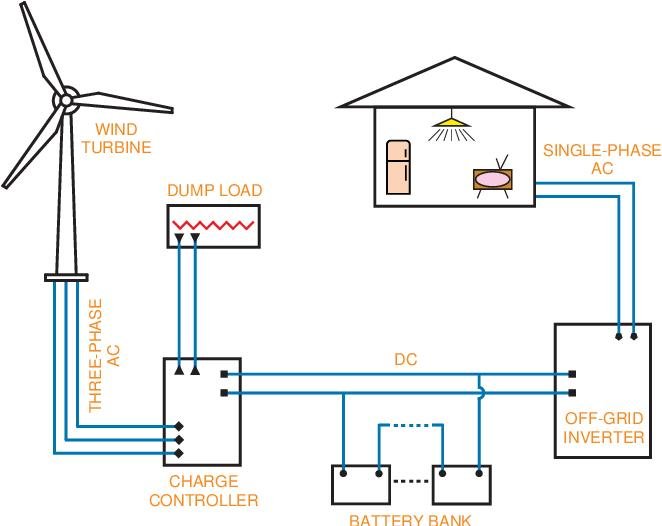
- Off-Grid Systems: For cabins, remote homes, or complete energy independence, an off-grid system stores excess power in batteries for use when the wind isn’t blowing. This requires a battery bank, charge controller, and often a backup generator. Much more complex and expensive upfront.
- Hybrid Systems: Combining wind with solar panels is an excellent strategy. Wind is often strongest in winter and at night, while solar peaks in summer and during the day. They complement each other beautifully, providing a more consistent power supply, especially for off-grid scenarios.
Horizontal Axis vs. Vertical Axis: Choosing Your Turbine Type
Just like cars come in different shapes and sizes, so do wind turbines. The two main types for residential use are Horizontal Axis Wind Turbines (HAWTs) and Vertical Axis Wind Turbines (VAWTs). Each has distinct advantages and disadvantages.
Horizontal Axis Wind Turbines (HAWTs): The Classic Choice
When you picture a wind turbine, you’re likely imagining a HAWT. They look like scaled-down versions of the giant turbines you see in wind farms, with blades that spin on a horizontal shaft, similar to an airplane propeller.

- Pros:
- High Efficiency: HAWTs are generally more aerodynamically efficient than VAWTs, meaning they convert a larger percentage of wind energy into electricity.
- Proven Technology: This design has been extensively tested and refined over decades, leading to reliable performance.
- High Power Output: For their size, HAWTs typically deliver more power, making them suitable for significant energy offset or even off-grid primary power.
- Cons:
- Tower Height: They need tall towers to access clean, less turbulent wind, which impacts installation costs and aesthetic considerations.
- Noise: While modern designs are quieter, HAWTs can still produce audible noise, especially the “whoosh” of blades, which can be a concern for neighbors.
- Directional Requirements: They must face directly into the wind, requiring a yaw mechanism to pivot the turbine, adding complexity and potential maintenance.
- Bird Impact: While often overstated for small residential turbines, there is a potential for bird and bat collisions.
Vertical Axis Wind Turbines (VAWTs): The Urban-Friendly Alternative
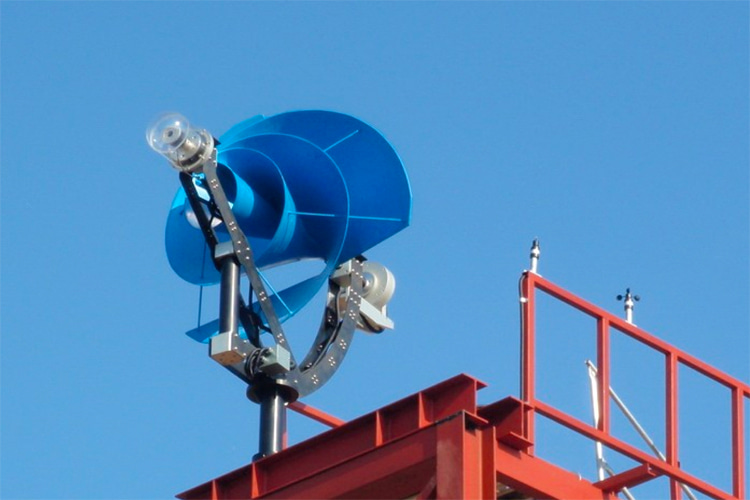
VAWTs have blades that rotate around a vertical shaft, resembling an eggbeater (Darrieus type) or an S-shape (Savonius type). They are often marketed as a more discreet and neighbor-friendly option.
- Pros:
- Quieter Operation: Generally, VAWTs are significantly quieter than HAWTs, making them more suitable for residential areas where noise is a major concern.
- Lower Start-Up Speed: Many VAWTs can start generating power at lower wind speeds, making them appealing for sites with less consistent high winds.
- Less Space: They can sometimes be mounted closer to the ground or on rooftops (though rooftop mounting has its own challenges and is often not recommended due to vibration).
- Omnidirectional: They don’t need to yaw or pivot to face the wind, simplifying their design and reducing maintenance needs.
- Less Bird Impact: Their slower rotation speed and often more solid visual profile tend to result in fewer bird collisions.
- Cons:
- Lower Efficiency: VAWTs are typically less aerodynamically efficient than HAWTs, meaning they convert less of the available wind energy into electricity.
- Less Proven for Large-Scale Home Power: While improving, the technology is still catching up to HAWTs in terms of widespread adoption and consistent, high-output residential power generation.
- Vibration: Improperly mounted VAWTs, especially on roofs, can transfer vibrations to the building structure.
Which Type is Best for YOUR Home?
- For Open, Rural Properties with Consistent High Winds: A HAWT is likely your best bet for maximum power generation and efficiency.
- For Suburban or Urban Properties with Moderate Winds and Noise Concerns: A VAWT might be a more feasible option, though its power output will likely be supplementary rather than primary.
The Best Home Wind Turbines: Top Picks & Comparison
Now that you understand the groundwork, let’s look at some of the best home wind turbines available today. Remember, the “best” turbine is the one that fits your specific wind resource, energy needs, and budget.
Understanding Key Specifications
When comparing models, pay close attention to these metrics:
- Rated Power (Watts/kW): The maximum power the turbine can produce at its rated wind speed.
- Start-up Wind Speed: The minimum wind speed required for the turbine to begin spinning and generating power. Lower is better.
- Rated Wind Speed: The wind speed at which the turbine reaches its rated power output.
- Cut-out Wind Speed: The wind speed at which the turbine automatically shuts down to prevent damage from excessively high winds.
- Blade Material: Durability and weight matter (e.g., fiberglass, carbon fiber).
- Generator Type: Typically permanent magnet synchronous generators (PMSG) for efficiency.
- Noise Level: Measured in decibels (dB) at a certain distance. Lower is better, especially for residential areas.
- Warranty: A strong warranty indicates manufacturer confidence.
Detailed Comparison Table
Here’s a snapshot of leading residential wind turbine types and their general characteristics. Specific model availability and pricing fluctuate, so treat this as a guide to what’s out there.
| Model/Type | Axis Type | Rated Power (W) | Start-up Wind Speed (m/s) | Noise (dB @ Xm) | Est. Cost (Turbine Only) | Best Use Case | Key Pros | Key Cons |
|---|---|---|---|---|---|---|---|---|
| Pikasola Wind Turbine (Example) | HAWT | 400-600 | 2.0 – 2.5 | <45 @ 10m | $300 – $800 | Small off-grid, RV, boats, supplementary power | Economical, compact, good for charging batteries | Low output, not for primary home power |
| Tumo-Int Wind Turbine (Example) | HAWT | 1000 – 1500 | 2.5 – 3.0 | <50 @ 10m | $800 – $1,500 | Mid-range off-grid, partial home offset | Better output, good for battery bank charging | Requires consistent wind, noticeable noise |
| Skystream 3.7 (Example – larger scale) | HAWT | 1,800 – 2,400 | 3.5 | <40 @ 60m | $10,000 – $15,000 | Significant grid-tied home offset, professional installation | High output, relatively quiet for its size, robust design | High upfront cost, professional siting & install critical |
| UGE V-Air (Example VAWT) | VAWT | 500 – 1000 | 1.5 – 2.0 | <35 @ 10m | $2,000 – $5,000 | Urban/suburban areas, supplementary power, hybrid systems | Very quiet, low start-up, omnidirectional, aesthetic | Lower efficiency than HAWTs, higher cost per watt |
| WindGusto VAWT-GD-4KW (Example VAWT) | VAWT | 3,000 – 4,000 | 2.0 – 2.5 | <40 @ 10m | $8,000 – $12,000 | Larger suburban homes, grid-tie, hybrid solutions | Significant output for a VAWT, quiet, good in turbulent wind | High investment, still less efficient than large HAWTs |
Best for Small, Supplementary Power (e.g., RVs, Sheds)
If you’re looking to charge a battery bank for an RV, a remote shed, or provide a small boost to an existing off-grid system, smaller HAWTs (like the Pikasola or Automaxx models up to 600W) are excellent. They are relatively inexpensive, easier to install, and designed for 12V or 24V battery charging. Don’t expect these to power your entire house, but for targeted, small-scale needs, they deliver.
Best for Mid-Range Home Use (Grid-Tied or Hybrid)
For more substantial energy offset, you’ll be looking at turbines in the 1kW to 5kW range. These are typically HAWTs that require professional installation and can either be grid-tied or integrated into a robust off-grid system with a significant battery bank. Models like the Tumo-Int 1kW or a smaller certified HAWT from a reputable brand will provide a meaningful contribution to your home’s energy needs, especially if you have a strong wind resource.
Best Vertical Axis Option
If noise, aesthetics, or restricted space are primary concerns, and you understand the trade-off in efficiency, a reputable VAWT like the UGE V-Air or a larger WindGusto model is worth considering. They excel in turbulent wind conditions often found closer to buildings and are far less visually obtrusive. While their output per dollar might be lower than a HAWT, their operational benefits can outweigh this for specific sites.
Costs & ROI: Making Sense of the Investment
Let’s talk money. A home wind turbine is a significant investment, but it can pay dividends in energy savings and environmental impact. Understanding the costs and potential return on investment (ROI) is crucial.
Initial Investment: What to Expect
The cost of a residential wind energy system goes far beyond just the turbine itself. Here’s a breakdown of typical components:
- Turbine Cost: As seen in the table, this can range from a few hundred dollars for small hobby systems to $15,000+ for a robust grid-tied unit.
- Tower: This is often the most expensive component. Expect to pay anywhere from $2,000 to $10,000+ depending on height (40-100+ feet), material (steel lattice, guyed pole), and foundation requirements.
- Inverter: Converts the turbine’s DC power into usable AC power for your home or the grid. Costs $1,000 – $4,000+.
- Batteries (if off-grid/hybrid): A significant expense, ranging from $5,000 to $20,000+ for a capable battery bank, depending on capacity and chemistry (lead-acid, lithium-ion).
- Wiring & Electrical Components: Cables, disconnects, fuses, circuit breakers.
- Installation: Professional installation is highly recommended due to the dangers of working at height and with high voltage. This can be 20-40% of the total system cost, easily $5,000 – $20,000+.
- Permitting & Site Assessment: As discussed, these have associated fees and engineering costs.
Total System Cost Range: For a complete residential system (1kW-10kW), expect a total installed cost of anywhere from $20,000 to $70,000 or more. Smaller, supplementary systems will be less, while larger, off-grid setups with substantial battery storage will be on the higher end.
:max_bytes(150000):strip_icc()/wind-turbine-generator-on-house-roof-90967703-b9619befbf954726ae92dfb6154711f2.jpg "Is a Home Wind Turbine Right for You?")
Long-Term Savings & Payback Period
The return on investment comes from the energy you *don’t* have to buy from your utility company. The financial viability largely depends on:
- Your Local Electricity Rates: If you live in an area with high electricity prices (e.g., California, New England), your savings will be greater, and your payback period shorter.
- Your Wind Resource: A consistently windy site will generate more electricity and more savings.
- System Size and Efficiency: A well-sized, efficient system will maximize output.
Calculating Annual Energy Offset: A local installer can help you estimate your annual kWh production. Multiply this by your average electricity rate to get your annual savings. Divide your total system cost by annual savings to get a rough payback period. Small wind systems typically have payback periods ranging from 10 to 30 years, significantly influenced by local conditions and incentives.
Incentives & Rebates: Lowering Your Upfront Costs
Don’t forget the financial help! Various programs can make wind power more affordable:
- Federal Investment Tax Credit (ITC): Similar to solar, homeowners can often claim a percentage (currently 30% for systems placed in service by 2032) of the cost of a new small wind energy system as a tax credit. This is a dollar-for-dollar reduction in your tax liability.
- State & Local Programs: Many states, counties, and even utilities offer their own rebates, grants, or property tax exemptions for renewable energy installations. Check the Database of State Incentives for Renewables & Efficiency (DSIRE) for programs in your area.
These incentives can dramatically reduce your upfront costs and shorten your payback period, making wind energy a much more attractive investment.
Installation, Maintenance, and Longevity
A home wind turbine isn’t a set-it-and-forget-it appliance. Proper installation and ongoing care are essential for safety, efficiency, and system lifespan.
Professional Installation is Key
Unless you’re a certified electrician and experienced tower rigger, installing a home wind turbine is not a DIY project for anything beyond very small, battery-charging units. Here’s why:
- Safety: Working at heights, handling heavy equipment, and dealing with high voltage are inherently dangerous.
- Performance: A professional installer will ensure the turbine is properly sited, wired correctly, and configured for optimal performance and grid interconnection (if applicable).
- Warranty: Many manufacturers require professional installation for warranty validity.
- Permitting: Installers are familiar with local codes and the permitting process.
Seek out certified installers with a proven track record in small wind energy systems. Ask for references and verify their credentials.
Routine Maintenance for Peak Performance
Modern wind turbines are designed for durability, but they still require periodic checks:
- Annual Inspections: Visually inspect blades for cracks or damage, check tower guy wires for tension (if applicable), look for loose bolts or connections, and ensure the yaw mechanism (on HAWTs) is functioning smoothly.
- Lubrication: Some turbine models may require lubrication of moving parts according to the manufacturer’s schedule.
- Battery Checks (if off-grid): Maintain battery banks (check water levels in lead-acid batteries, ensure terminals are clean).
- Professional Service: Consider a professional check-up every 3-5 years, especially if you notice any unusual noises or reduced output.
Good maintenance can significantly extend the life of your system and prevent costly repairs.
Understanding Lifetime & Warranty
A well-maintained home wind turbine system can last a long time. The turbine itself typically has a lifespan of 20-25 years or more. Inverters usually last 10-15 years and may need replacement. Batteries (especially lead-acid) have shorter lifespans, typically 5-15 years depending on usage and maintenance, while newer lithium-ion batteries are rated for longer cycles.

Always review the manufacturer’s warranty carefully. Look for comprehensive coverage on the turbine generator, blades, and control systems. A strong warranty provides peace of mind for your significant investment.
The Future of Home Wind Power: What’s Next?
The renewable energy landscape is constantly evolving, and home wind power is no exception. We’re seeing exciting advancements:
- Quieter Designs: Ongoing research is focused on reducing noise, making turbines more acceptable in denser residential areas.
- Smaller Footprints & Innovative Designs: Expect to see more compact, aesthetically pleasing, and perhaps even building-integrated designs, including more efficient VAWTs.
- Smarter Controls: Advanced electronics are leading to turbines that can optimize power output based on real-time wind conditions and integrate seamlessly with smart home energy management systems.
- Hybrid System Integration: The trend towards combining wind with solar and battery storage will only grow, creating more resilient and efficient home energy solutions.
While large-scale wind farms capture headlines, the innovation in small wind is steadily progressing, promising more accessible and efficient options for homeowners in the years to come.
Final Considerations: Is Wind Power Your Home’s Next Big Step?
Choosing the best windmill for home use is a complex decision, but hopefully, this guide has armed you with the knowledge to make an informed choice. It’s not about jumping on a trend; it’s about making a strategic investment that aligns with your property’s potential and your energy goals.
Take the time to assess your wind resource thoroughly, understand your local zoning, calculate your energy needs, and consider the upfront and long-term costs. While wind power might not be suitable for every home, for those with the right conditions, it offers a powerful path to energy independence, reduced utility bills, and a significant contribution to a sustainable future. Don’t let the complexity deter you; instead, let it empower you to find the perfect wind solution for your home.
Frequently Asked Questions
How much wind do I need for a home wind turbine to be effective?
For most home wind turbines to be economically viable, you need an average annual wind speed of at least 10 mph (4.5 m/s). Lower speeds may generate some power, but typically not enough to justify the investment. A thorough site assessment, often with an anemometer, is crucial.
What is the difference between Horizontal Axis (HAWT) and Vertical Axis (VAWT) wind turbines?
HAWTs (like traditional windmills) have blades that rotate horizontally, are generally more efficient for high power output, but require tall towers and can be noisier. VAWTs have blades that rotate vertically, are quieter, start at lower wind speeds, and are omnidirectional, making them potentially better for urban settings, but typically less efficient in converting wind to electricity.
How much does a complete home wind turbine system cost?
The total installed cost for a residential wind system (1kW-10kW) can range significantly, typically from $20,000 to $70,000 or more. This includes the turbine, tower, inverter, batteries (for off-grid), wiring, installation labor, and permitting fees. Smaller supplementary systems will be less, while large off-grid systems will be on the higher end.
Can a home wind turbine power my entire house?
It’s possible, especially in areas with excellent wind resources and for homes with moderate energy consumption, particularly if combined with solar. However, for many homes, a wind turbine primarily serves to significantly offset electricity consumption or to provide backup power in hybrid or off-grid systems rather than fully powering the entire house solo.
Do I need a permit to install a wind turbine on my property?
Yes, almost certainly. Wind turbine installations require local zoning approval and building permits. Regulations vary widely by municipality and homeowner’s association (HOA). It’s critical to research your local ordinances regarding setback requirements, tower height limits, and the permitting process before making any purchasing decisions.
What kind of maintenance does a home wind turbine require?
Modern turbines are designed for durability but require annual visual inspections for blade damage, loose components, and proper function of moving parts. Lubrication may be needed for some models, and off-grid systems require battery maintenance. Professional check-ups every few years are recommended to ensure longevity and optimal performance.
Are there incentives or tax credits for installing home wind turbines?
Yes. The Federal Investment Tax Credit (ITC) often provides a significant tax credit for small wind energy systems. Many states, local governments, and utilities also offer rebates, grants, or other incentives. Check resources like DSIRE (Database of State Incentives for Renewables & Efficiency) for programs available in your specific area.