
Complete Home Solar & Wind Power Systems: Your Ultimate Guide to Energy Independence
Tired of watching your utility bills climb higher and higher? Frustrated by power outages that leave you in the dark? What if you could flip the script, generating your own clean, reliable electricity right from your home? That’s the compelling promise of a complete home solar and wind power system – a powerful step towards true energy independence.
Table of Contents
- Complete Home Solar & Wind Power Systems: Your Ultimate Guide to Energy Independence
- The Promise of Home Renewable Energy: Why Go Solar, Wind, or Both?
- Beyond the Grid: Understanding Energy Independence
- Environmental Impact & Economic Benefits
- Solar Power for Your Home: Harnessing the Sun’s Energy
- Key Components of a Home Solar System
- Types of Solar Setups: Grid-Tied vs. Off-Grid
- Pros and Cons of Solar-Only Systems
- Wind Power for Your Home: Tapping into Nature’s Breeze
- Key Components of a Home Wind Power System
- Site Selection & Wind Resource Assessment
- Pros and Cons of Wind-Only Systems
- The Best of Both Worlds: Hybrid Solar-Wind Systems
- How Hybrid Systems Work Together
- Advantages of a Combined Approach
- Considerations for Hybrid System Design
- Sizing Your System: How Much Power Do You Really Need?
- Assessing Your Energy Consumption
- Calculating System Capacity (kW for Solar, kW for Wind)
- Battery Bank Sizing for Storage
- The Cost of Energy Independence: Investment & Incentives
- Initial Investment: What to Expect
- Understanding Operating Costs & Maintenance
- Government Incentives & Rebates (Federal ITC, State Programs)
- The Return on Investment (ROI)
- Installation & Maintenance: What You Need to Know
- DIY vs. Professional Installation
- Permitting and Local Regulations
- Routine Maintenance for Longevity
- Is a Complete Home Solar & Wind System Right for You?
- Ideal Scenarios for Hybrid Systems
- What to Look for in a System Provider
- Taking the Next Step Towards a Sustainable Home
It’s a bold vision, but an achievable one. We’re not talking about a flimsy backup battery here. We’re diving into integrated systems designed to significantly reduce, or even eliminate, your reliance on the traditional grid. This isn’t just about saving money; it’s about control, sustainability, and resilience.
The Promise of Home Renewable Energy: Why Go Solar, Wind, or Both?
The desire for energy independence isn’t a new concept, but the technology to achieve it at home has never been more accessible or efficient. Home renewable energy systems, particularly solar and wind, empower you to take charge of your power supply.
Beyond the Grid: Understanding Energy Independence
Imagine a home where your electricity isn’t dictated by a utility company, weather events, or fluctuating market prices. That’s energy independence. Whether you opt for a grid-tied system that feeds excess power back to the utility, or a completely off-grid setup, you’re investing in a future where you generate and control your own power.
Environmental Impact & Economic Benefits
Choosing renewable energy is a win-win. On the environmental side, you’re dramatically reducing your carbon footprint, contributing to cleaner air, and lessening demand for fossil fuels. Economically, the benefits are equally compelling:
- Reduced or Eliminated Electricity Bills: This is often the primary driver.
- Protection Against Rising Energy Costs: Lock in your energy price for decades.
- Increased Home Value: Studies show homes with solar systems sell faster and for more.
- Government Incentives: Federal tax credits and state/local rebates can significantly offset upfront costs.
- Reliable Power: Especially with battery storage, you’re buffered from grid failures.
Solar Power for Your Home: Harnessing the Sun’s Energy
Solar photovoltaic (PV) systems are the most popular home renewable energy choice, and for good reason. They’re reliable, increasingly affordable, and relatively low maintenance.
Key Components of a Home Solar System
A complete solar system is more than just panels on your roof. It’s an integrated network designed to capture, convert, and distribute electricity.
- Solar Panels (PV Modules): These are the heart of the system, converting sunlight into direct current (DC) electricity. Modern panels are highly efficient and durable.
- Inverter: The brain of the system, an inverter converts the DC electricity from your panels into alternating current (AC) electricity, which is what your home appliances use. You’ll encounter:
- String Inverters: Connects a ‘string’ of panels to one inverter.
- Microinverters: One inverter per panel, optimizing performance and monitoring.
- Hybrid Inverters: Can manage both solar power and battery charging/discharging, essential for systems with storage.
- Mounting System: Securely fastens panels to your roof or ground, ensuring optimal tilt and orientation.
- Battery Storage (Optional but Recommended): Stores excess solar energy generated during the day for use at night or during power outages. Crucial for off-grid systems and highly beneficial for grid-tied ones wanting backup.
- Monitoring System: Allows you to track your system’s performance, energy production, and consumption, often via a smartphone app.
Types of Solar Setups: Grid-Tied vs. Off-Grid
Your choice here depends on your goals and location:
- Grid-Tied (On-Grid): The most common setup. Your home remains connected to the utility grid. When your solar panels produce more electricity than you use, the excess is sent back to the grid, often earning you credits (Net Metering). When your panels aren’t producing enough (e.g., at night), you draw power from the grid. These systems typically don’t provide power during outages unless paired with a battery backup.
- Off-Grid: You are completely disconnected from the utility grid. All your power comes from your solar (and/or wind) system, with robust battery storage essential to cover periods of low production. Ideal for remote locations or those seeking absolute energy independence.
Pros and Cons of Solar-Only Systems
Let’s weigh the advantages and disadvantages:
| Pros of Solar-Only Systems | Cons of Solar-Only Systems |
|---|---|
| Widespread Availability & Proven Technology: Mature market, many installers. | Intermittent Production: No power at night, reduced power on cloudy days. |
| Low Maintenance: Generally just needs occasional cleaning. | Requires Ample Sunlight: Not suitable for shaded properties or consistently overcast regions. |
| Quiet Operation: No moving parts, no noise. | Space Requirements: Needs significant roof or ground space for panels. |
| Federal & State Incentives: Often qualify for generous tax credits. | Aesthetics: Some homeowners dislike the look of panels. |
Wind Power for Your Home: Tapping into Nature’s Breeze
While less common than solar for residential use, wind power can be an incredibly effective renewable energy source, especially in locations with consistent wind resources.
Key Components of a Home Wind Power System
Just like solar, a home wind system is a collection of interconnected parts:
- Wind Turbine: The generator that converts wind energy into electricity.
- Horizontal-Axis Wind Turbines (HAWT): The most common type, resembling traditional windmills, with blades rotating on a horizontal axis.
- Vertical-Axis Wind Turbines (VAWT): Blades rotate on a vertical axis. Often quieter and can handle turbulent wind better, but generally less efficient for large-scale power generation.
- Tower: Lifts the turbine to a sufficient height to capture unobstructed wind. Taller towers mean more consistent and stronger wind.
- Charge Controller: Regulates the power flowing from the turbine to the battery bank, preventing overcharging.
- Inverter: Converts DC power from the turbine (or batteries) into AC power for your home.
- Battery Storage (Often Essential): Wind is intermittent. Batteries store generated power for times when the wind isn’t blowing.
- Monitoring System: Tracks wind speed, power production, and battery status.
Site Selection & Wind Resource Assessment
This is arguably the most critical step for a home wind system. Not every location is suitable. You need:
- Consistent Wind: Average wind speeds of at least 10-12 mph are typically required for economical operation.
- Clear Airflow: Avoid obstructions like tall buildings, trees, or hills that can create turbulence and reduce efficiency.
- Zoning & Permitting: Local regulations regarding tower height, setbacks, and noise can be significant.
A professional wind resource assessment is highly recommended to determine if wind power is viable for your property.
Pros and Cons of Wind-Only Systems
| Pros of Wind-Only Systems | Cons of Wind-Only Systems |
|---|---|
| 24/7 Production Potential: Can generate power day or night, as long as wind blows. | Location Dependent: Requires consistently strong, unobstructed wind. |
| Often Complements Solar: Wind is often stronger in winter and at night, when solar is weaker. | Higher Upfront Cost: Turbines and towers can be expensive. |
| Excellent for Remote Locations: Where grid connection is difficult/expensive. | Noise & Visual Impact: Turbines can be noisy and visually prominent. |
| Reduces Reliance on Sunlight: Good for areas with less sun. | Maintenance: Moving parts require more regular checks than solar panels. |
The Best of Both Worlds: Hybrid Solar-Wind Systems
This is where the magic happens for true energy independence. A hybrid system combines solar panels and a wind turbine, leveraging the strengths of each to compensate for the weaknesses of the other.
How Hybrid Systems Work Together
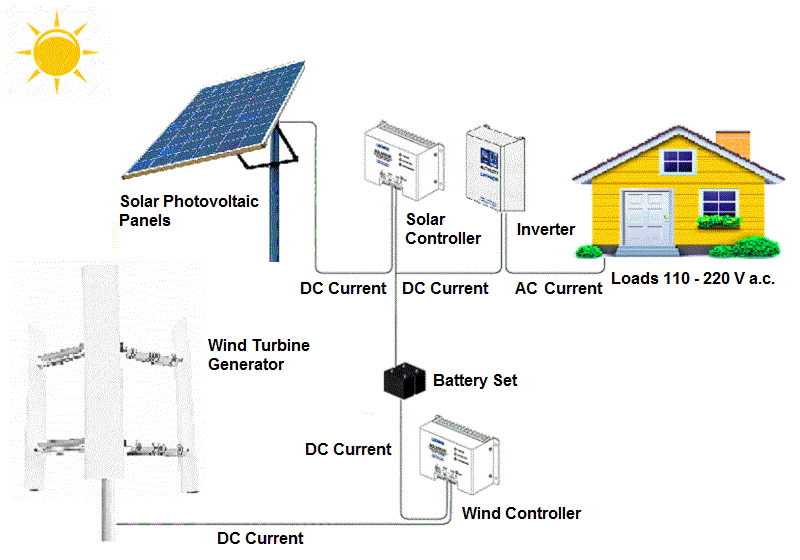
Think of it as a dynamic duo. Solar power peaks during sunny daylight hours, while wind power often ramps up at night or during cloudy, stormy weather. By integrating both, you get a more consistent and reliable power supply throughout the day and year. This reduces your reliance on a massive battery bank or frequent grid draw, optimizing efficiency and cost.
A sophisticated hybrid charge controller manages the input from both sources, prioritizing power generation and directing it to your home’s needs or to battery storage.
Advantages of a Combined Approach
- Increased Reliability: Mitigates the intermittency of a single source. If it’s cloudy, wind might be blowing. If there’s no wind, the sun might be shining.
- Optimal Resource Utilization: Maximizes energy capture across different weather conditions and seasons. Wind tends to be stronger in winter when solar is weaker.
- Reduced Battery Sizing: Because power generation is more consistent, you might need a smaller, less expensive battery bank compared to an off-grid solar-only or wind-only system.
- Enhanced Energy Independence: Closer to 100% self-sufficiency, especially for off-grid applications.
Considerations for Hybrid System Design
Designing a hybrid system requires careful planning:
- Resource Assessment: You need good solar insolation AND consistent wind. Some sites are better for one over the other.
- Component Compatibility: Ensuring your charge controllers, inverters, and batteries can seamlessly integrate both power sources.
- Space: Requires space for both solar panels and a wind turbine tower.
- Cost: While efficiency gains can offset some costs, the initial outlay for two systems is higher than for one.
Here’s a quick comparison of the three primary approaches:
| Feature | Solar-Only | Wind-Only | Hybrid Solar-Wind |
|---|---|---|---|
| Primary Fuel Source | Sunlight | Wind | Sunlight & Wind |
| Generation Profile | Daytime, clear weather | Day & night, windy conditions | More consistent, balances intermittency |
| Site Suitability | Good sun exposure, minimal shading | High average wind speeds, open space | Both good sun & wind resources |
| Noise | Virtually none | Can be noticeable, depends on turbine size/type | Minimal from solar, potential from wind |
| Maintenance | Low (cleaning, inverter checks) | Moderate (moving parts, lubrication) | Moderate to high (combines both) |
| Typical Cost (Residential) | $$ | $$$ | $$$$ |
Sizing Your System: How Much Power Do You Really Need?
This isn’t a one-size-fits-all solution. A critical first step is accurately determining your energy needs to design a system that truly works for you.
Assessing Your Energy Consumption
Grab your utility bills! Look at your monthly and annual kilowatt-hour (kWh) usage. Most bills show a breakdown or at least a total. This is your baseline. Consider any future changes: adding an EV charger, a hot tub, or new energy-efficient appliances. You’ll also need to know your peak demand (kW), which is the highest amount of power your home uses at any single moment.
Calculating System Capacity (kW for Solar, kW for Wind)
- Solar: Based on your average daily/monthly kWh consumption, local solar insolation (how much usable sunlight your area gets), and desired percentage of energy offset. A professional installer uses software to model this precisely.
- Wind: Determined by your average annual wind speed, the swept area of the turbine blades, and the desired power output. Again, a professional assessment is key.
For a hybrid system, the goal is to balance the contribution from both sources to meet your total energy demand consistently.
Battery Bank Sizing for Storage
If you’re going off-grid or want robust backup, battery storage is vital. Sizing depends on:
- Autonomy (Days of Backup): How many days can your batteries power your home without any new generation from solar or wind?
- Daily Energy Consumption: The total kWh you use in a typical day.
- Depth of Discharge (DoD): How much of the battery’s capacity you can safely use without damaging it (e.g., 80% for lithium-ion, 50% for lead-acid).
The Cost of Energy Independence: Investment & Incentives
Let’s be upfront: a complete home solar and wind system is a significant investment. However, understanding the costs, potential savings, and available incentives can make it far more achievable.
Initial Investment: What to Expect
The total cost varies widely based on system size, components chosen (e.g., battery type, inverter quality), installation complexity, and your location. Here are rough estimates for typical residential systems:
- Solar-Only System: Expect to pay anywhere from $15,000 to $30,000+ before incentives for a typical 6-10 kW system.
- Residential Wind Turbine: A 1-5 kW turbine (suitable for partial home power or supplementing solar) can range from $10,000 to $40,000+, including the tower and installation.
- Hybrid Solar-Wind System: Combining both will naturally be more expensive, likely starting from $30,000 and easily exceeding $70,000+, especially if it’s a robust off-grid setup with substantial battery storage.
- Battery Storage: Adding a home battery can add another $10,000 to $20,000+ to your total, depending on capacity.
Understanding Operating Costs & Maintenance
While fuel is free, there are still some ongoing costs:
- Solar: Very low. Occasional cleaning of panels, checking inverter performance. Inverters typically last 10-15 years and may need replacement.
- Wind: Moderate. Turbines have moving parts that require annual or bi-annual inspections, lubrication, and potential replacement of worn components every 5-10 years.
- Batteries: Lifespan varies (5-15 years for lead-acid, 10-20+ years for lithium-ion). Replacement is a significant cost.
- Monitoring: Some systems may have a small monthly fee for advanced monitoring services.
Government Incentives & Rebates (Federal ITC, State Programs)
This is where things get exciting! The U.S. federal government offers a substantial incentive:
- Federal Solar Investment Tax Credit (ITC): Currently, this provides a 30% tax credit for solar PV systems installed through 2032. Critically, battery storage installed in conjunction with a solar system also qualifies. While traditionally a ‘solar’ tax credit, some interpretations and specific state programs may extend benefits to hybrid systems, especially where the battery is charged primarily by solar. Always consult a tax professional.
- State & Local Incentives: Many states, cities, and even local utilities offer their own rebates, grants, or performance payments (e.g., SRECs – Solar Renewable Energy Credits). These can significantly reduce your net cost. Research what’s available in your specific area.
| System Type (Example 8kW) | Average Initial Cost (Before ITC) | Federal ITC (30%) | Net Cost (After ITC) | Estimated Annual Savings |
|---|---|---|---|---|
| Solar-Only (Grid-Tied) | $24,000 | $7,200 | $16,800 | $1,200 – $2,500 |
| Solar-Only (with Battery Backup) | $35,000 | $10,500 | $24,500 | $1,200 – $2,500 (+ outage protection) |
| Hybrid Solar-Wind (Off-Grid) | $60,000 | $18,000 | $42,000 | $1,500 – $3,000+ (full independence) |
Note: Costs are estimates and can vary significantly. Federal ITC applies to solar and qualifying battery storage. Consult a tax professional for eligibility.
The Return on Investment (ROI)
While the initial cost is substantial, the ROI for renewable energy systems can be excellent. Payback periods typically range from 6 to 12 years, after which you’re essentially getting free electricity for the remaining 20-30+ year lifespan of your system. When you factor in rising utility rates, increased home value, and environmental benefits, the long-term financial picture is very compelling.
Installation & Maintenance: What You Need to Know
Getting your system up and running, and keeping it that way, requires attention to detail.

DIY vs. Professional Installation
- DIY: Possible for small, simple off-grid kits (e.g., for a cabin or RV) if you have strong electrical knowledge and comfort with heights. However, for a complete home system, especially one connected to the grid, the complexities of wiring, safety, permitting, and warranty validation make it highly risky and often ill-advised for the average homeowner.
- Professional Installation: Highly recommended for complete home systems. Qualified installers ensure your system is properly sized, safely installed, meets all local codes, and qualifies for warranties and incentives. They handle the permits and grid connection paperwork.
Permitting and Local Regulations
This is a big one. You’ll need permits for electrical work, structural changes (for roof mounts or wind towers), and potentially zoning approval. Regulations vary widely by municipality. A reputable installer will be familiar with local requirements and handle this process for you.
Routine Maintenance for Longevity
- Solar: Keep panels clean (hosing them down usually suffices). Inspect for damage after severe weather. Monitor performance via your system’s app.
- Wind: More hands-on. Annual visual inspections of the turbine, blades, tower, and connections. Check for loose bolts, fraying wires. Lubrication as per manufacturer’s instructions. Professional inspection every few years is wise.
- Batteries: If you have lead-acid batteries, regular watering and terminal cleaning are necessary. Lithium-ion batteries are largely maintenance-free but require monitoring. Keep batteries in a temperature-controlled environment.
Is a Complete Home Solar & Wind System Right for You?
Taking the leap into home renewable energy is a significant decision. It’s about aligning your lifestyle with your values and investing in your future.
Ideal Scenarios for Hybrid Systems
A hybrid solar-wind system particularly shines in these situations:
- Properties with Both Good Solar and Wind Resources: Where you can truly maximize generation from both.
- Off-Grid Homes: Where reliable, 24/7 power is non-negotiable and you need robust generation regardless of the hour or season.
- Areas with Unstable Grids: Providing superior resilience against frequent power outages.
- Homeowners Seeking Maximum Energy Independence: Who want to minimize or eliminate their reliance on external power sources.
What to Look for in a System Provider
If you’re considering a complete system, choose your partners wisely:
- Experience: Look for companies with a proven track record specifically in solar, wind, and ideally, hybrid installations.
- Certifications & Licensing: Ensure they are properly licensed, bonded, and have certified technicians (e.g., NABCEP for solar).
- Customer Reviews: Check online reviews and ask for references.
- Comprehensive Service: Do they handle design, permitting, installation, and offer ongoing support and warranty?
- Transparent Pricing: Get detailed quotes that itemize all costs.
- Warranty: Understand the warranties on equipment (panels, turbines, inverters, batteries) and workmanship.
Taking the Next Step Towards a Sustainable Home
The journey to energy independence starts with a single step: research and assessment. Get a professional site evaluation. Understand your options. Compare quotes. And envision a future where your home powers itself, silently, cleanly, and reliably.
Embracing a complete home solar and wind power system isn’t just an upgrade; it’s a transformation. It’s an investment in a cleaner planet, a more resilient home, and your personal freedom from the constraints of the traditional energy grid. Are you ready to harness the power of nature for your home?
Frequently Asked Questions
What is a complete home solar and wind power system?
A complete home solar and wind power system combines photovoltaic (PV) solar panels and a wind turbine to generate electricity for your home. These systems often include battery storage for backup and can be either grid-tied (connected to the utility grid) or completely off-grid (independent of the grid).
Why would I choose a hybrid solar-wind system over just solar or just wind?
A hybrid system offers greater reliability and consistency. Solar panels produce power during sunny days, while wind turbines can generate electricity day or night, often complementing solar output during cloudy weather or winter months. This diversified approach helps mitigate the intermittency of a single source, potentially reducing the size of your battery bank and ensuring more stable power.
How much does a complete home solar and wind power system cost?
The cost varies significantly based on system size, components, and installation complexity. A typical residential hybrid system with battery storage can range from $30,000 to over $70,000 before incentives. Solar-only systems are generally less, starting around $15,000 to $30,000, while stand-alone wind systems can range from $10,000 to $40,000 for residential sizes.
Are there any incentives or rebates for installing these systems?
Yes, the U.S. federal government offers a 30% Solar Investment Tax Credit (ITC) for solar PV systems, which can also apply to qualifying battery storage. Many states and local municipalities also offer additional rebates, grants, or performance payments (like SRECs). It’s crucial to research incentives available in your specific area and consult a tax professional for eligibility.
What kind of maintenance do these systems require?
Solar panels generally require low maintenance, mainly occasional cleaning and performance monitoring. Wind turbines have moving parts, necessitating annual visual inspections, lubrication, and professional checks every few years. Batteries, especially lead-acid, may need regular watering and terminal cleaning, while lithium-ion batteries are largely maintenance-free but benefit from monitoring and proper temperature control.
How do I determine if my property is suitable for a hybrid solar-wind system?
Site suitability is critical. You need adequate, unobstructed sunlight for solar panels and consistent average wind speeds (typically 10-12 mph or more) for a wind turbine. Factors like shading, nearby buildings or trees, and local zoning regulations for turbine height and noise must be considered. A professional site assessment is highly recommended to evaluate your property’s resources.


:max_bytes(150000):strip_icc()/wind-turbine-generator-on-house-roof-90967703-b9619befbf954726ae92dfb6154711f2.jpg)