
The Hunter Coast Offshore Wind Project: A Deep Dive into Australia’s Ambitious Renewable Future (And What It Means Globally)
Thinking about the future of energy? You’re probably looking at a world powered more by renewables, right? And when it comes to massive-scale green energy, offshore wind is a colossal player. But it’s not without its complexities. Case in point: the Hunter Coast Offshore Wind Project in Australia.
Table of Contents
- The Hunter Coast Offshore Wind Project: A Deep Dive into Australia’s Ambitious Renewable Future (And What It Means Globally)
- What Exactly Is the Hunter Coast Offshore Wind Project?
- A Strategic Zone for Renewable Energy
- Why the Hunter Coast?
- The Evolving Landscape: Key Players, Proposals, and Pivots
- Early Ambitions and Major Withdrawals
- Current Momentum: BlueFloat Energy’s Vision
- The Australian Government’s Role
- Unpacking the Technology: Floating Offshore Wind
- Why Floating Turbines Matter Here
- How Floating Offshore Wind Works (Simplified)
- Opportunities and Controversies: A Balanced View
- Economic Promise: Jobs, Investment, and Energy Security
- Environmental and Community Concerns
- The Cost Factor: Is It Economically Viable?
- What Lessons Can the US Learn from the Hunter Coast?
- Navigating Regulatory Complexities
- The Importance of Stakeholder Engagement
- Adapting to Evolving Market Dynamics
- Embracing Advanced Technologies Like Floating Wind
- The Road Ahead for the Hunter Coast Offshore Wind Project
- Conclusion: A Testament to Global Renewable Ambition
This isn’t just a distant Australian endeavor. It’s a real-world crucible for some of the biggest challenges and opportunities facing offshore wind development globally, including right here in the US. From navigating environmental concerns to managing fluctuating market interest and pushing the boundaries of technology like floating wind, the Hunter Coast project offers critical insights into what it takes to bring these ambitious ventures to life.
Let’s cut through the noise and get straight to the facts about this fascinating, evolving project.
What Exactly Is the Hunter Coast Offshore Wind Project?
At its core, the Hunter Coast Offshore Wind Project refers to the development of large-scale wind farms within a designated zone off the coast of New South Wales (NSW), Australia. This isn’t one single project, but rather a strategic area earmarked for multiple potential offshore wind developments.
A Strategic Zone for Renewable Energy
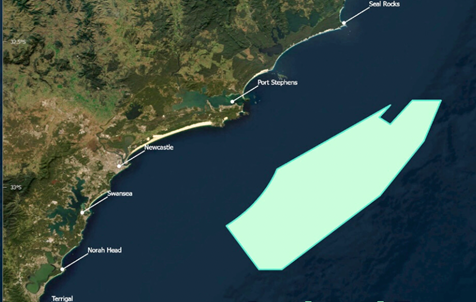
The Australian Federal Government formally declared the Hunter region as Australia’s second offshore wind zone in July 2023. This declaration followed extensive community and stakeholder consultation, signaling a strong governmental commitment to unlocking the nation’s vast offshore wind potential.
- Location: The zone stretches approximately 1,854 square kilometers (about 716 square miles) from Port Stephens in the north down to Norah Head in the south. The proposed turbines would be located at least 20 kilometers (about 12.4 miles) off the coast, ensuring they are largely out of sight from shore.
- Initial Vision & Potential Capacity: The declared area has the potential to generate up to 5 gigawatts (GW) of wind energy. To put that in perspective, 5 GW is enough clean electricity to power roughly 4.25 million homes. This could significantly contribute to Australia’s ambitious target of achieving 82% renewable energy by 2030.
Why the Hunter Coast?
The choice of the Hunter Coast wasn’t arbitrary. Several factors make it an ideal location for offshore wind development:
- Strong Wind Resources: The region boasts consistent, powerful wind speeds, which are crucial for maximizing energy generation.
- Proximity to Demand: It’s close to major population centers like Newcastle and the broader Sydney-Hunter economic region, where energy demand is high. This minimizes transmission losses and infrastructure costs.
- Existing Infrastructure & Workforce: The Hunter region has a long history as an energy hub, particularly for coal. This means existing port infrastructure and a skilled workforce – vital for the construction and operation of complex energy projects – which can be transitioned into the renewable sector.
The Evolving Landscape: Key Players, Proposals, and Pivots
The journey of the Hunter Coast project has been dynamic, marked by both high ambition and significant withdrawals. This evolution provides a crucial case study for the global offshore wind industry.
Early Ambitions and Major Withdrawals
Initial interest in the Hunter zone was strong, attracting major international energy developers:
- Oceanex: One of the earliest proponents, Oceanex proposed a $10 billion, 2 GW project expected to be located 20 kilometers off the coast. However, in late 2023, Oceanex announced its decision to pull out of the project, citing concerns about the regulatory environment, permitting timelines, and evolving market conditions.
- Equinor: The Norwegian energy giant Equinor was another significant player that had expressed interest in the Hunter zone. Like Oceanex, Equinor also decided to abandon its plans in the region. Their withdrawal was attributed to a combination of internal portfolio prioritization, global market shifts, and a perceived lack of clear regulatory certainty and project delivery pathways in the early stages of Australia’s offshore wind framework.
These withdrawals, while concerning to some, highlighted the challenging economics and regulatory complexities inherent in pioneering a new industry, even in a promising region. They underscored the need for robust government policy, streamlined approval processes, and a clear vision to attract and retain major investment.
Current Momentum: BlueFloat Energy’s Vision
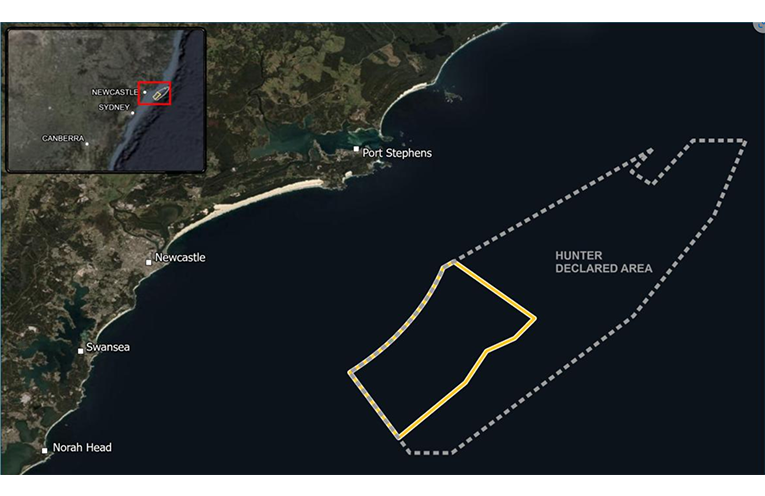
Despite the earlier setbacks, the Hunter Coast offshore wind zone continues to attract serious interest. BlueFloat Energy, a global developer specializing in floating offshore wind, is currently a key player with its Hunter Coast Offshore Wind Farm project.
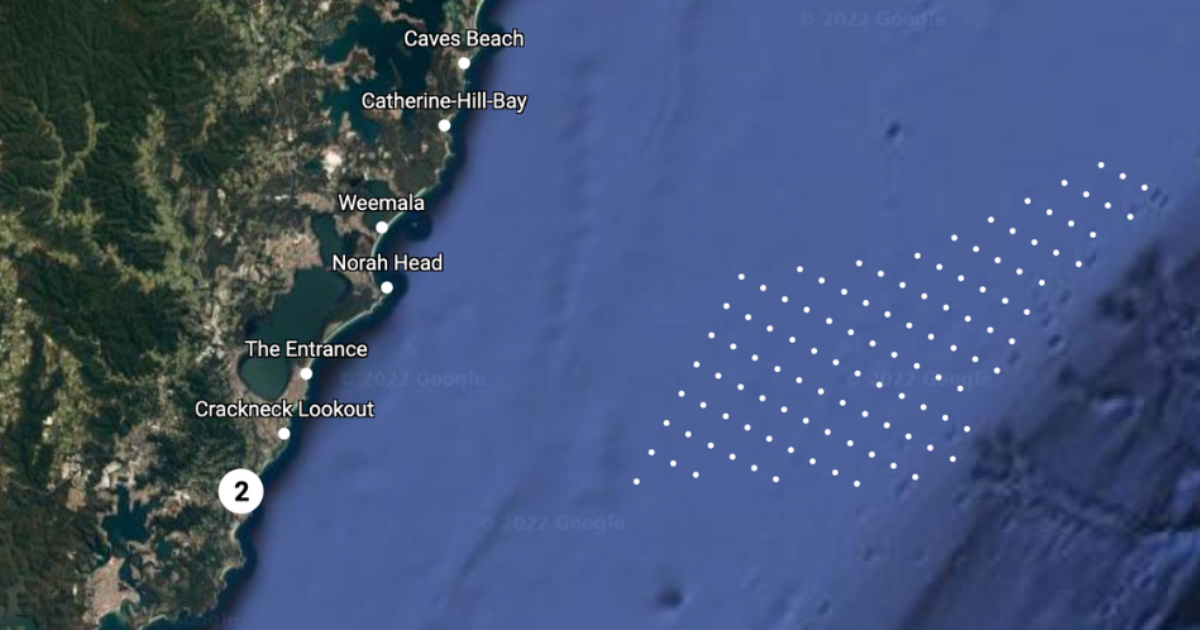
- BlueFloat’s Project: This proposal envisions a capacity of 1.65 GW, located between 20 and 50 kilometers offshore. BlueFloat is particularly focused on deploying floating offshore wind technology, a crucial differentiator for this region.
- Status: BlueFloat has been awarded one of the first feasibility licenses by the Australian government for projects in the declared zone. This license allows them to undertake detailed environmental assessments, geotechnical surveys, and community engagement necessary before construction can commence.
BlueFloat’s continued commitment demonstrates that while the path is challenging, the potential for offshore wind in the Hunter region remains compelling for developers with the right technological approach and long-term vision.
The Australian Government’s Role
The Department of Climate Change, Energy, the Environment and Water (DCCEEW) has been central to establishing the framework for offshore wind development. Their role includes:
- Zone Declaration: Identifying and declaring suitable offshore wind zones.
- Licensing Process: Managing the competitive process for granting feasibility and ultimately commercial licenses.
- Environmental Assessments: Overseeing rigorous environmental impact assessments to ensure projects meet strict protection standards.
- Policy Development: Continuously refining the regulatory framework to facilitate investment while safeguarding national interests.
The government’s commitment is pivotal in providing the stability and clarity needed for such large-scale, long-term investments.
Unpacking the Technology: Floating Offshore Wind
One of the most exciting aspects of the Hunter Coast project, particularly BlueFloat Energy’s proposal, is the emphasis on floating offshore wind technology. This represents a significant leap forward from traditional fixed-bottom turbines.
Why Floating Turbines Matter Here
Traditional offshore wind turbines are typically anchored directly to the seabed using fixed foundations. However, this is only feasible in relatively shallow waters (typically up to 60-80 meters).
- Water Depth: The continental shelf off the Hunter Coast drops off relatively quickly. Many areas within the declared zone are in waters too deep for conventional fixed-bottom turbines. This is where floating technology becomes not just advantageous, but essential.
- Advantages over Fixed-Bottom: Floating platforms open up vast new areas for offshore wind development globally that were previously inaccessible. They can be assembled largely in port, potentially reducing some offshore construction risks and costs, and causing less seabed disruption during installation.
- Challenges: While promising, floating wind is a newer technology, generally more expensive than fixed-bottom, and brings its own set of engineering and operational complexities. However, ongoing innovation is rapidly driving down costs and improving reliability.
How Floating Offshore Wind Works (Simplified)
Imagine a giant wind turbine mounted not on a rigid pole driven into the seabed, but on a massive, buoyant platform. This platform is then anchored to the seabed with mooring lines, similar to how an oil rig is tethered. Various types of floating platforms exist (e.g., semi-submersible, spar buoy, tension-leg platforms), each designed to provide stability in choppy seas and strong winds.
The electricity generated is then transported via subsea cables to an onshore substation, where it connects to the main grid.
Opportunities and Controversies: A Balanced View
Like any major infrastructure project, the Hunter Coast Offshore Wind Project comes with a mix of significant opportunities and genuine concerns. Understanding both sides is key to a balanced perspective.
Economic Promise: Jobs, Investment, and Energy Security
The economic benefits are a primary driver for supporting the project:
- Local Job Creation: Estimates suggest thousands of jobs could be created during the construction phase, and hundreds more for long-term operations and maintenance. These roles would span engineering, maritime operations, manufacturing, logistics, and skilled trades. This is particularly vital for the Hunter region, which is transitioning away from coal-based industries.
- Boosting Regional Economy: The project represents a multi-billion-dollar investment, stimulating local businesses, supply chains, and infrastructure development. It could position the Hunter as a renewable energy manufacturing and service hub.
- Contribution to Energy Security & Decarbonization: Offshore wind provides a reliable, large-scale source of clean energy, reducing reliance on fossil fuels and helping Australia meet its climate targets. Its consistent generation profile complements other renewables like solar.
Environmental and Community Concerns
Community feedback and environmental assessments have highlighted several critical areas of concern:
- Visual Impact: Despite being 20+ kilometers offshore, there are concerns about the turbines being visible from coastal areas, potentially impacting tourism and coastal amenity.
- Impact on Marine Life: This is a significant focus. Concerns include:
- Whales and Dolphins: Potential acoustic impacts during construction (piling) and operation (vessel traffic, turbine noise), and collision risk for migratory species. Environmental studies are critical to understanding and mitigating these risks.
- Birds: Collision risk for seabirds and migratory bird populations. Careful siting and design are essential.
- Habitats: Potential disruption to seabed habitats during cable laying and anchoring (for floating wind).
- Commercial Fishing Impacts: Fishermen worry about restricted access to traditional fishing grounds, potential impacts on fish stocks due to electromagnetic fields from cables or changes in marine environments around turbines, and interference with radar.
- Shipping Routes & Radar: Concerns about potential interference with existing shipping lanes and radar systems.
- Community Consultation: Ensuring genuine engagement and addressing local anxieties about change, perceived risks, and equitable distribution of benefits.
The Cost Factor: Is It Economically Viable?
Offshore wind projects are capital-intensive. The Hunter Coast project, especially given its use of floating technology, faces high upfront costs. This was a contributing factor to some early withdrawals.
- High Upfront Costs: Developing offshore wind requires massive investment in turbines, foundations, cables, installation vessels, and port infrastructure.
- Comparison with Other Energy Sources: While costs are falling rapidly, offshore wind still often requires policy support (e.g., government power purchase agreements, subsidies) to compete directly with established fossil fuel generation or even cheaper onshore renewables in some markets.
- Government Support: The long-term viability often depends on a stable policy environment and supportive market mechanisms from the government to de-risk investment and ensure a fair return.
| Aspect | Opportunities/Benefits | Challenges/Concerns |
|---|---|---|
| Energy Production | Up to 5 GW clean energy, stable power supply, reduced emissions. | High capital costs, intermittency (though less than solar), grid integration complexity. |
| Economy & Jobs | Thousands of construction jobs, hundreds of operational jobs, regional investment. | Need for skilled workforce training, potential strain on local resources. |
| Environment | Significant reduction in carbon footprint, clean air benefits. | Impact on marine life (whales, birds), seabed disruption, visual impact. |
| Technology | Advancement of floating offshore wind, access to deeper water resources. | Novel technology risks, higher manufacturing complexity. |
| Community | Energy independence, potential for community benefit schemes. | Concerns over visual amenity, fishing access, thorough consultation needed. |
What Lessons Can the US Learn from the Hunter Coast?
For us in the United States, the Hunter Coast project isn’t just an interesting story from afar; it’s a valuable case study. We’re actively pursuing our own ambitious offshore wind goals, and the challenges faced in Australia offer direct parallels and crucial insights.
Navigating Regulatory Complexities
The early withdrawals from the Hunter zone highlighted the immense importance of a clear, stable, and efficient regulatory framework. In the US, our offshore wind development also involves multiple federal and state agencies, complex permitting, and environmental reviews. The lesson is clear: streamline processes, establish clear guidelines, and provide regulatory certainty to attract and retain major investments.
The Importance of Stakeholder Engagement
Community and industry concerns in the Hunter region – from fishing impacts to visual amenity – echo sentiments heard on the US East and West Coasts. Effective, transparent, and continuous engagement with all stakeholders (fishermen, environmental groups, coastal communities, indigenous populations) is not just good practice; it’s essential for social license and project success. Ignoring or downplaying concerns can lead to significant delays and opposition.
Adapting to Evolving Market Dynamics
The Hunter project demonstrates that even with strong potential, global market conditions, supply chain issues, and economic factors can shift rapidly. US developers and policymakers must remain agile, understanding that project economics are fluid. This means having mechanisms to support projects through challenging periods, as well as fostering a robust domestic supply chain to reduce reliance on international volatility.
Embracing Advanced Technologies Like Floating Wind
The Hunter Coast’s deep waters necessitate floating offshore wind, a technology also crucial for unlocking significant offshore wind potential on the US West Coast and in parts of the Gulf of Maine. Australia’s experience in pioneering commercial-scale floating wind can provide invaluable technical and operational lessons for US projects, from platform design and mooring systems to installation techniques and grid integration.
The Road Ahead for the Hunter Coast Offshore Wind Project
While the path has been anything but straight, the Hunter Coast Offshore Wind Project is undeniably moving forward. The granting of feasibility licenses marks a critical step, allowing detailed studies to commence. This phase will involve:
- Extensive Environmental Assessments: Rigorous studies to understand and mitigate potential impacts on marine ecosystems, birdlife, and coastal environments.
- Geotechnical Surveys: Detailed seabed mapping to inform foundation design (for floating platforms, this includes anchor points and cable routes).
- Grid Connection Studies: Ensuring the proposed projects can reliably connect to and integrate with the existing electricity grid.
- Ongoing Community Engagement: Continuous dialogue with local communities, Indigenous groups, and affected industries (like fishing) to address concerns and build support.
The next few years will be crucial in determining which proposals ultimately proceed to construction and operation. Success will depend on navigating technical challenges, securing financing, and maintaining strong governmental and community support.
Conclusion: A Testament to Global Renewable Ambition
The Hunter Coast Offshore Wind Project is more than just a regional Australian energy initiative; it’s a microcosm of the global energy transition. It showcases the incredible ambition, the complex interplay of technology, economics, environment, and community, and the sheer scale of effort required to build a sustainable energy future.
For us, observing its progress offers a blueprint – both positive and cautionary – for our own offshore wind endeavors. As Australia continues its journey towards harnessing the powerful winds off its coast, the world watches, learning valuable lessons that will undoubtedly shape the future of clean energy for generations to come.
Frequently Asked Questions
What is the Hunter Coast Offshore Wind Project?
The Hunter Coast Offshore Wind Project refers to the development of multiple large-scale offshore wind farms within a designated zone off the coast of New South Wales (NSW), Australia. It’s an ambitious initiative by the Australian government to harness strong winds to generate up to 5 GW of clean energy, helping to power millions of homes and transition away from fossil fuels.
Where is the declared Hunter Coast offshore wind zone located?
The declared zone covers approximately 1,854 square kilometers (about 716 square miles) off the coast of the Hunter region in NSW, Australia. It stretches from Port Stephens in the north to Norah Head in the south, with turbines proposed to be located at least 20 kilometers (about 12.4 miles) offshore.
Are companies still interested in developing projects in the Hunter zone after some withdrawals?
Yes, while some major developers like Oceanex and Equinor have withdrawn their proposals, other companies remain actively involved. BlueFloat Energy, for example, has received a feasibility license for its 1.65 GW Hunter Coast Offshore Wind Farm project, focusing on floating offshore wind technology. The Australian government continues to support the development of the zone.
What type of wind technology is being considered for the Hunter Coast?
Due to the relatively deep waters off the Hunter Coast, floating offshore wind technology is a key consideration. This innovative approach involves mounting turbines on buoyant platforms anchored to the seabed, allowing for wind farm development in areas where traditional fixed-bottom foundations are not feasible.
What are the main environmental concerns associated with the project?
Key environmental concerns include potential impacts on marine life (such as whales, dolphins, and migratory seabirds) from noise during construction, collision risks, and habitat disruption. Concerns also exist regarding visual impacts from the coast and potential interference with commercial fishing activities. Rigorous environmental impact assessments are mandated to address these issues.
How will the project benefit the local Hunter region?
The project is expected to bring significant economic benefits to the Hunter region, including the creation of thousands of jobs during construction and hundreds of long-term operational roles. It aims to stimulate local industries, boost the regional economy, and leverage the existing skilled workforce and port infrastructure from the traditional energy sector, contributing to energy security and decarbonization.
What is the current status and timeline for the project?
The Hunter Coast offshore wind zone has been formally declared, and feasibility licenses have been granted to interested developers like BlueFloat Energy. This allows for detailed studies, environmental assessments, and community engagement to proceed. The next steps involve further technical and environmental approvals, with potential construction and operation timelines extending several years into the future.


