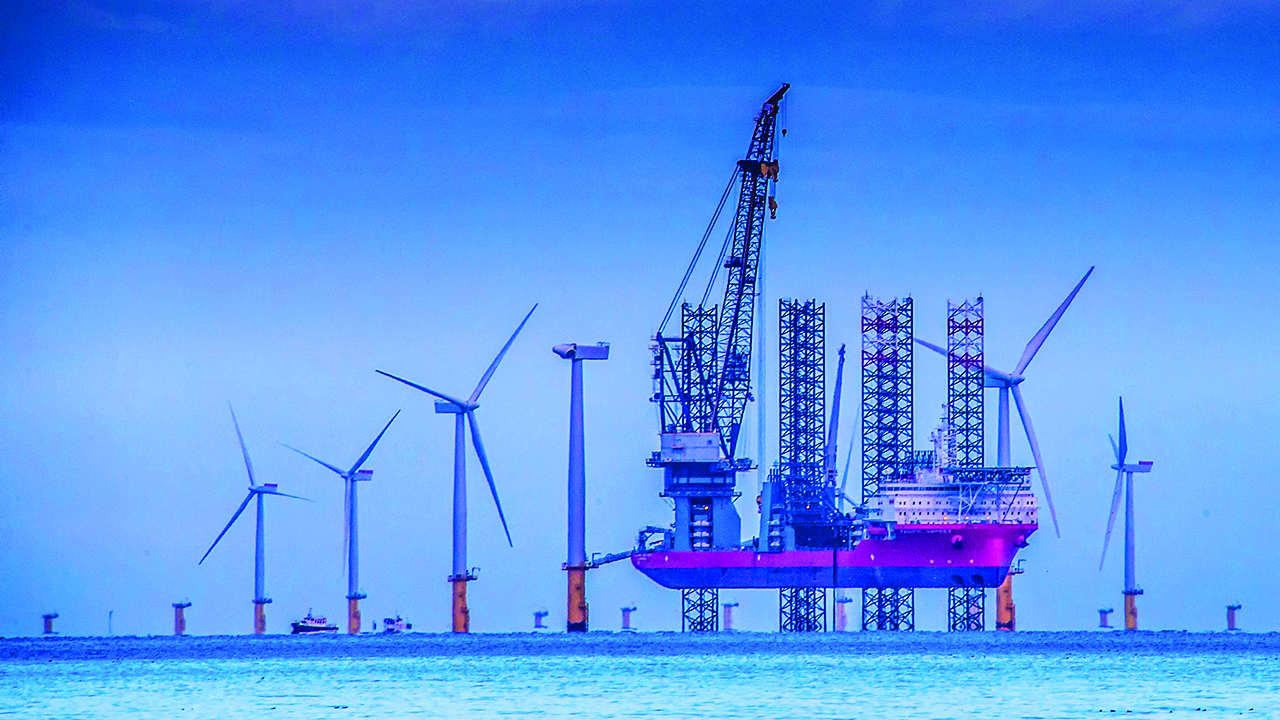
Cracking the Code: How Offshore Wind Turbines Are Installed to Power Our Future
Ever gazed out at the ocean and wondered how those colossal wind turbines end up standing majestically in the vast, unforgiving sea? It’s not just a feat of engineering; it’s a symphony of precision, power, and human ingenuity, transforming our energy landscape one giant rotation at a time.
Table of Contents
- Cracking the Code: How Offshore Wind Turbines Are Installed to Power Our Future
- The Grand Vision: Why We Build Wind Turbines at Sea
- The Unmatched Power of Offshore Winds
- Minimizing Onshore Footprint
- Scaling Up for Massive Energy Production
- Laying the Groundwork: Site Selection and Preparation
- Mapping the Seabed: Geophysical Surveys
- Understanding the Environment: Met-Ocean Data Collection
- Navigating Regulations and Permitting
- Anchoring Giants: Foundation Types and Installation
- Monopiles: The Sturdy Spikes
- Jacket Foundations: The Lattice of Strength
- Gravity Base Foundations: Weight and Stability
- Floating Foundations: The Future on the Waves
- The Assembly Line at Sea: Turbine Component Installation
- Specialized Vessels: The Workhorses of Offshore Wind
- Tower Sections: Building the Backbone
- The Nacelle: The Brain of the Turbine
- Blades: Capturing the Wind’s Embrace
- Connecting the Dots: Subsea Cables and Grid Integration
- Inter-Array Cables: The Internal Network
- Export Cables: Bringing Power Ashore
- Offshore Substations: The Heart of the Farm
- Commissioning: Bringing the Power Online
- The Herculean Challenges of Offshore Wind Installation
- Battling the Elements: Weather and Sea Conditions
- Navigating Logistics and Supply Chains
- The Cost Factor: A Multi-Billion Dollar Endeavor
- Ensuring Environmental Stewardship
- Powering the Future: Innovations and the Road Ahead
- Bigger Turbines, Deeper Waters
- Advancements in Floating Offshore Wind
- Automation and Digitalization on the High Seas
- Sustainable Installation Practices
- Beyond the Horizon: The Impact of Offshore Wind on America’s Energy Landscape
Installing wind turbines at sea is a monumental undertaking, pushing the boundaries of technology and logistics. We’re talking about structures taller than skyscrapers, built in environments that constantly challenge every plan. But the reward? A future powered by clean, abundant energy. If you’ve ever been curious about the intricate dance of vessels, foundations, and colossal components required to bring these offshore giants to life, you’re in the right place. Let’s dive deep into the fascinating process that’s literally building a cleaner tomorrow.
The Grand Vision: Why We Build Wind Turbines at Sea
Why go through all this trouble when we could just build wind farms on land? The answer lies in the sheer power and consistency of offshore winds, coupled with the ability to scale up energy production without encroaching on populated areas.
The Unmatched Power of Offshore Winds
Out in the open sea, winds are generally stronger and more consistent than on land. This isn’t just a minor advantage; it translates directly into significantly higher energy yields. Imagine a turbine that can generate power for more hours a day, at higher capacities – that’s the offshore advantage. Fewer lulls mean more stable, reliable energy fed into the grid.
Minimizing Onshore Footprint
Land-based wind farms, while effective, can face challenges with visual impact, noise complaints, and land availability. By moving offshore, we can install turbines further from shore, often beyond the horizon, dramatically reducing visual intrusion and noise for coastal communities. This opens up vast areas for energy generation that would be otherwise off-limits.
Scaling Up for Massive Energy Production
Offshore wind farms aren’t just about a few turbines; they’re often planned as massive energy hubs, sometimes comprising hundreds of turbines. This scale allows for significant contributions to national energy grids, helping countries meet ambitious decarbonization targets. These farms can power millions of homes, making them a cornerstone of future energy independence.
Laying the Groundwork: Site Selection and Preparation
Before the first piece of steel hits the water, an enormous amount of planning, surveying, and regulatory navigation takes place. This isn’t just picking a spot on a map; it’s a scientific and logistical expedition.
Mapping the Seabed: Geophysical Surveys
Think of it like an ultrasound for the ocean floor. Specialized vessels equipped with sonar and seismic equipment map the seabed with incredible detail. They look for everything: fault lines, buried boulders, unexploded ordnance from past conflicts, and the composition of the soil. Understanding the geology is crucial for selecting the right foundation type and ensuring long-term stability.
Understanding the Environment: Met-Ocean Data Collection
You can’t build something this massive without knowing what the ocean will throw at it. Met-ocean (meteorological and oceanographic) data collection involves monitoring wind speeds, wave heights, currents, and even marine life patterns over extended periods. This data informs turbine design, installation windows, and potential environmental impacts.
Navigating Regulations and Permitting
Offshore wind projects require extensive permits from numerous government agencies, covering everything from environmental protection to navigation safety and grid connection. This phase involves detailed environmental impact assessments, public consultations, and often, years of regulatory work before any construction can begin.
Anchoring Giants: Foundation Types and Installation
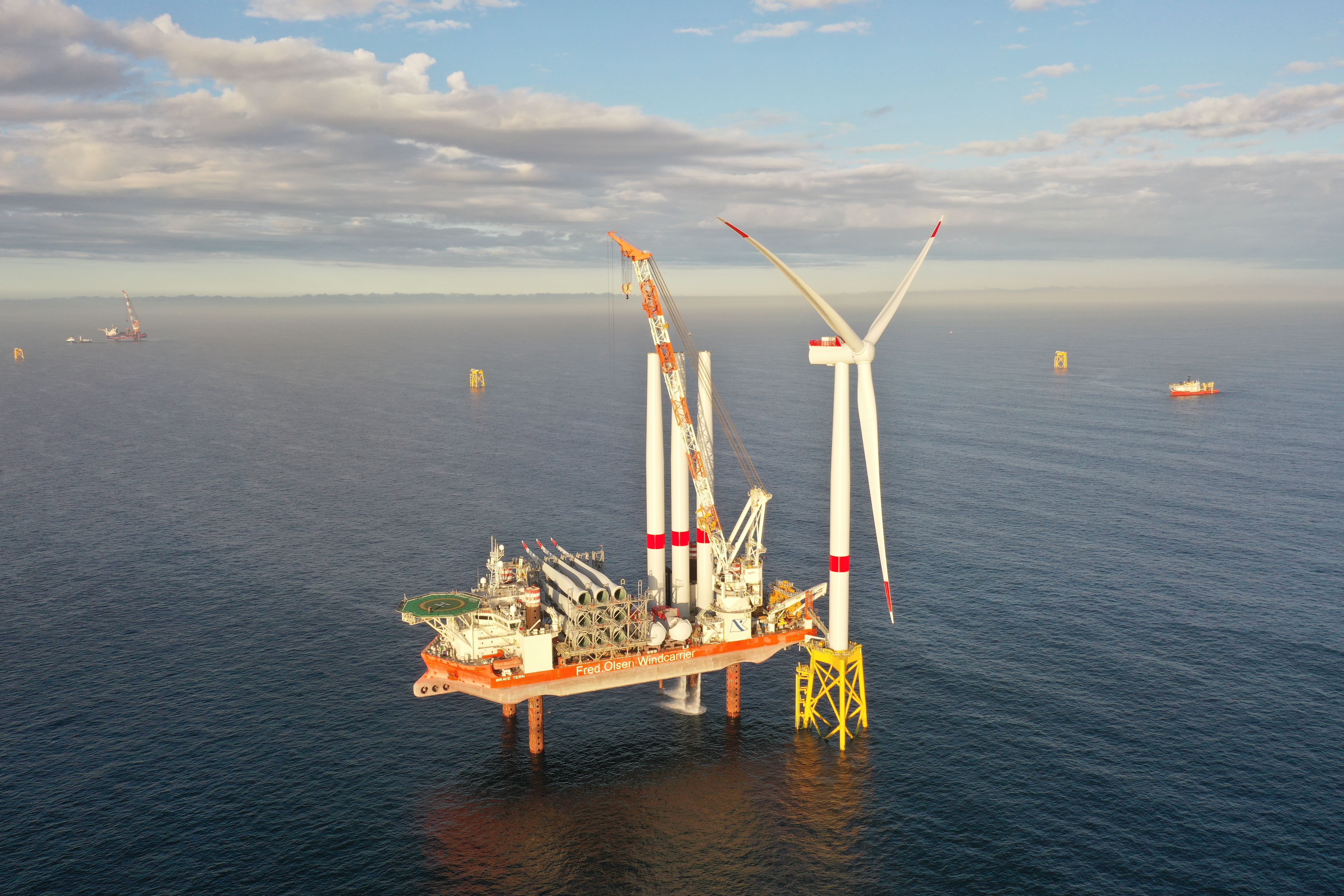
The foundation is literally the anchor of the entire operation. Choosing the right one depends heavily on water depth, seabed conditions, and cost. This is where the engineering truly shines.
Monopiles: The Sturdy Spikes
What they are: Imagine a giant steel pole, like a colossal hollow tube, driven deep into the seabed. Monopiles are the most common foundation type for water depths up to around 60 meters.
Installation: A specialized vessel transports the monopile to the site. It’s then lifted by a heavy-lift crane and carefully positioned. Large hydraulic hammers, some weighing hundreds of tons, then drive the monopile into the seabed until it’s firmly secured. Sometimes, drilling is used in harder ground conditions. A transition piece is then fitted to the top of the monopile, creating a platform for the tower.
Jacket Foundations: The Lattice of Strength
What they are: These look like miniature offshore oil rigs – a steel lattice structure with three or four ‘legs’ that are pinned to the seabed. They’re typically used in deeper waters than monopiles (around 30-80 meters) or where seabed conditions are more challenging.
Installation: Jacket foundations are pre-fabricated onshore. They are transported horizontally by barge, then carefully tilted upright and lowered to the seabed. Piles are then driven through the legs of the jacket into the seabed and grouted in place, creating a rigid connection.
Gravity Base Foundations: Weight and Stability
What they are: Massive concrete structures that sit on the seabed, relying on their sheer weight to remain stable. They often resemble a large, hollow concrete caisson.
Installation: Gravity base foundations are usually constructed in a dry dock or harbor. They are then towed to the offshore site, where they are flooded with water or filled with ballast (like sand or rocks) to sink them to the seabed. This method is less common for very deep waters due to the immense size and weight required.
Floating Foundations: The Future on the Waves
What they are: For water depths exceeding 60-80 meters, fixed-bottom foundations become economically and technically challenging. Floating foundations, as the name suggests, allow the turbine to float on the surface, anchored to the seabed by mooring lines and anchors, similar to an oil platform. There are several types: spar, semi-submersible, and tension-leg platforms.
Installation: The entire turbine (foundation, tower, nacelle, blades) can often be assembled in a port. It’s then towed to the site and connected to pre-installed mooring lines and anchors. This method drastically reduces the need for heavy-lift vessels at sea and expands the potential for offshore wind into much deeper waters.
| Foundation Type | Typical Depth Range | Key Advantages | Key Disadvantages |
|---|---|---|---|
| Monopile | 10-60 meters | Simple design, proven technology, cost-effective in shallow waters. | Limited by water depth, noise during piling. |
| Jacket | 30-80 meters | Good for challenging seabed, suitable for deeper waters than monopiles. | More complex fabrication, higher material usage. |
| Gravity Base | Up to 40 meters | Low noise installation, potential for local material sourcing. | Heavy, large footprint, sensitive to seabed quality, weather dependent for tow. |
| Floating | 60 meters+ | Unlocks vast deep-water resources, full onshore assembly possible. | Newer technology, higher cost currently, complex dynamic behavior. |
The Assembly Line at Sea: Turbine Component Installation
With the foundation secured, it’s time to build the actual wind turbine. This involves handling massive components – some blades are longer than football fields – in a dynamic marine environment.
Specialized Vessels: The Workhorses of Offshore Wind
This phase is dominated by a class of highly specialized vessels:
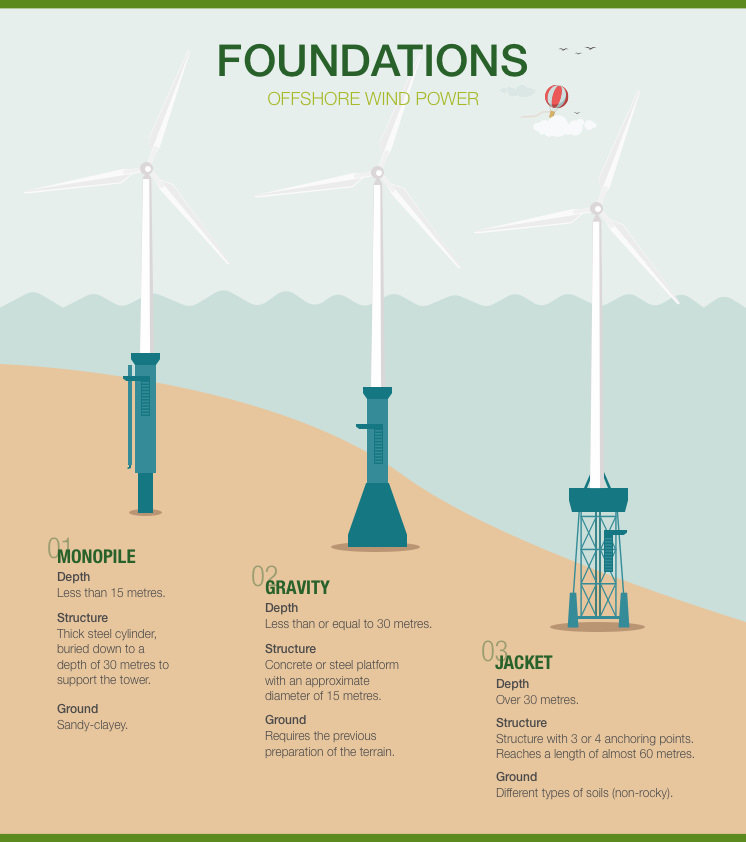
- Jack-up Vessels: These are self-elevating platforms with legs that can extend to the seabed, lifting the vessel completely out of the water. This provides a stable, land-like platform for precise heavy lifting, crucial for installing towers, nacelles, and blades.
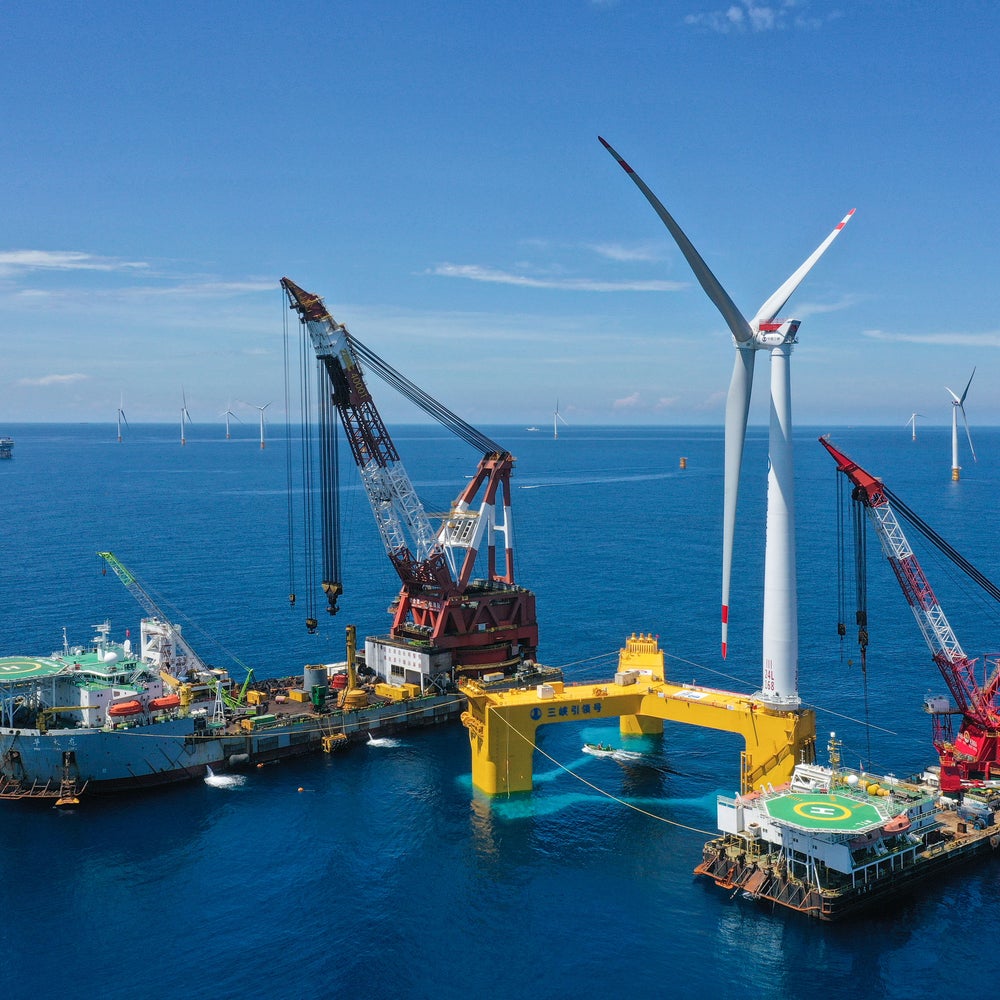
- Floating Crane Vessels: For extremely heavy lifts or when jack-up vessels aren’t suitable, massive floating cranes are used. These require calm weather windows due to their susceptibility to wave motion.
- Feeder Vessels: These transport components from the port to the installation site, efficiently shuttling towers, nacelles, and blades to keep the jack-up vessel working continuously.
Tower Sections: Building the Backbone
The turbine tower arrives in several large sections. Each section is lifted by the crane on the installation vessel and carefully bolted onto the foundation or the section below it. Precision is paramount to ensure alignment and structural integrity.
The Nacelle: The Brain of the Turbine
Once the tower is complete, the nacelle – the heart of the turbine, housing the gearbox, generator, and control systems – is lifted and bolted onto the top. This component alone can weigh hundreds of tons and requires an extremely stable lift.
Blades: Capturing the Wind’s Embrace
Finally, the massive blades are individually lifted and attached to the nacelle’s hub. This is often the most visually impressive and delicate part of the assembly, requiring calm conditions and expert crane operators. Each blade must be perfectly aligned and secured.
Connecting the Dots: Subsea Cables and Grid Integration
A wind turbine isn’t truly an energy producer until its power can reach homes and businesses. This requires an intricate network of subsea cables and substations.
Inter-Array Cables: The Internal Network
These cables connect individual wind turbines within the farm. They run along the seabed, collecting the power generated by each turbine and transmitting it to a central offshore substation. Specialized cable-laying vessels bury these cables to protect them from damage from anchors, fishing gear, and marine life.
Export Cables: Bringing Power Ashore
From the offshore substation, one or more large export cables carry the combined power from the entire wind farm to an onshore substation. These cables are typically high-voltage alternating current (HVAC) or high-voltage direct current (HVDC) to minimize power loss over long distances. Burying these is even more critical, often requiring sophisticated plows and trenching machines.
Offshore Substations: The Heart of the Farm
This is a critical piece of infrastructure, typically a large platform resembling a small offshore rig. It collects the power from all the turbines, steps up the voltage, and transforms it for efficient transmission through the export cables to the onshore grid. Offshore substations are often installed on their own jacket or monopile foundations.
Commissioning: Bringing the Power Online
Once all components are installed and connected, a rigorous testing and commissioning phase begins. Engineers thoroughly check every system – electrical, mechanical, and control – to ensure everything is functioning correctly and safely. Only then is the wind farm officially switched on, beginning its long life of power generation.
The Herculean Challenges of Offshore Wind Installation
It’s not all smooth sailing. Installing wind turbines at sea comes with a unique set of formidable challenges.
Battling the Elements: Weather and Sea Conditions
The ocean is unpredictable. High winds, rough seas, and storms can halt operations for days or even weeks. These weather windows dictate schedules, often leading to delays and increased costs. Safety for personnel is always the top priority, meaning work stops when conditions become too hazardous.
Navigating Logistics and Supply Chains
Moving multi-ton components from manufacturing plants, through ports, and out to sea requires an incredibly complex logistical ballet. A single delay in one part of the supply chain – a component arriving late, a vessel breakdown – can have a cascading effect on the entire project timeline and budget.
The Cost Factor: A Multi-Billion Dollar Endeavor
Offshore wind farms are incredibly capital-intensive. The specialized vessels, high-strength materials, deep-sea engineering, and extensive environmental assessments contribute to costs that can run into the billions of dollars for a single large project. While costs are coming down rapidly, the initial investment remains substantial.
Ensuring Environmental Stewardship
While designed to combat climate change, the installation process itself must be managed carefully to minimize impact on marine ecosystems. This includes managing noise from pile driving (which can affect marine mammals), preventing spills, and carefully routing cable paths to avoid sensitive habitats. Rigorous monitoring is conducted throughout the project lifecycle.
Powering the Future: Innovations and the Road Ahead
The offshore wind industry is still relatively young, and innovation is constant. The future promises even more efficient and widespread deployment.
Bigger Turbines, Deeper Waters
Turbine technology is advancing rapidly. We’re seeing ever-larger turbines, capable of generating more power per unit, which reduces the number of foundations and cables needed for a given capacity. This also pushes the industry into deeper waters, leveraging the floating foundation advancements.
Advancements in Floating Offshore Wind
Floating offshore wind is a game-changer. It unlocks vast new areas of the ocean, particularly off coastlines with deep continental shelves (like the US West Coast and parts of the Northeast). Research is focused on making these systems more cost-effective, durable, and easier to install and maintain.
Automation and Digitalization on the High Seas
From drone inspections to remote monitoring and AI-powered predictive maintenance, technology is making offshore operations safer, more efficient, and more reliable. Automated vessels and robotics are also beginning to play a role in installation and maintenance tasks, reducing human exposure to hazardous conditions.
Sustainable Installation Practices
The industry is continuously seeking ways to reduce its carbon footprint during the installation phase. This includes using cleaner fuels for vessels, optimizing logistics to reduce transport emissions, and developing quieter piling methods to protect marine life. It’s about building clean energy, cleanly.
Beyond the Horizon: The Impact of Offshore Wind on America’s Energy Landscape
Installing wind turbines at sea isn’t just about constructing massive machines; it’s about building a sustainable future. For the USA, it means energy independence, economic revitalization, and a cleaner environment.
The commitment to offshore wind is creating thousands of new jobs – from engineers and project managers to maritime workers and manufacturing technicians. It’s stimulating investments in port infrastructure and supply chains, fostering new industries, and driving technological innovation. The journey from initial concept to a fully operational offshore wind farm is long, complex, and incredibly challenging, but the payoff is immense: a powerful, sustainable source of energy that will light up our lives for generations to come.
| Aspect | Key Benefit for the USA |
|---|---|
| Energy Security | Reduces reliance on fossil fuels and foreign energy sources, enhancing national energy independence. |
| Job Creation | Generates thousands of high-paying jobs in manufacturing, construction, operations, and maintenance across various states. |
| Economic Growth | Stimulates billions in investment in coastal infrastructure, ports, and a domestic supply chain. |
| Climate Change Mitigation | Significantly reduces greenhouse gas emissions by replacing fossil fuel-based electricity generation. |
| Air Quality Improvement | Decreases air pollution from traditional power plants, leading to better public health outcomes. |
Frequently Asked Questions
How long does it take to install a single offshore wind turbine?
The actual installation of a single turbine, from securing the foundation to attaching the blades, can take anywhere from a few days to over a week, depending on weather conditions, water depth, foundation type, and the efficiency of the specialized vessels involved. The entire project timeline for an offshore wind farm, however, spans several years from planning to commissioning.
What are the biggest challenges in installing offshore wind turbines?
The biggest challenges include unpredictable and harsh weather conditions (high winds, rough seas), complex logistics involving the transport and assembly of massive components, the immense capital cost of projects and specialized vessels, and minimizing environmental impact on marine ecosystems during construction.
How do offshore wind turbines stay in place?
Offshore wind turbines stay in place using robust foundations anchored to the seabed. Common types include monopiles (giant steel poles driven into the seabed for shallower waters), jacket foundations (steel lattice structures pinned to the seabed for deeper waters), and gravity base foundations (heavy concrete structures resting on the seabed). For very deep waters, floating foundations are used, which are moored to the seabed with chains or cables.
Are offshore wind turbine installations harmful to marine life?
While there are potential impacts, such as noise from pile driving affecting marine mammals or disturbance during seabed preparation, extensive measures are taken to mitigate harm. These include conducting thorough environmental impact assessments, using noise-reducing technologies (like bubble curtains), carefully routing cable paths, and ongoing environmental monitoring. The long-term environmental benefits of clean energy generally outweigh the temporary, managed construction impacts.
What kind of specialized vessels are used for offshore wind installation?
Highly specialized vessels are crucial. These include ‘jack-up vessels’ which can lift themselves out of the water on legs to provide a stable platform for heavy lifting, ‘floating crane vessels’ for extremely heavy components, and ‘cable-laying vessels’ that bury subsea cables. ‘Feeder vessels’ are also used to transport components from port to the installation site.
What happens after the turbines are installed?
After installation, the turbines are connected via inter-array cables to an offshore substation, which then connects to an onshore grid via export cables. A rigorous testing and commissioning phase follows, ensuring all systems are operational and safe. Once commissioned, the wind farm begins generating electricity, entering its operational and maintenance (O&M) phase, which can last for decades.

)