
Finding the Most Efficient Small Wind Turbine for Your Home (And Making It Work!)
Dreaming of slashing your electricity bills and generating your own clean power? Small wind turbines offer an exciting path to energy independence, but let’s be honest: the world of wind energy can feel complex. You’re probably asking, "What’s the most efficient small wind turbine out there?" It’s a great question, and it’s more nuanced than a simple brand name. True efficiency isn’t just about a turbine’s theoretical power output; it’s about how effectively it captures the wind at your specific location, how robustly it’s built, and how well it integrates into your overall energy system.
Table of Contents
- Finding the Most Efficient Small Wind Turbine for Your Home (And Making It Work!)
- What Makes a Small Wind Turbine "Efficient"? Decoding the Metrics
- Understanding the Betz Limit: The Holy Grail of Wind Energy
- Rated Power (Watts/Kilowatts): More Than Just a Number
- Cut-In Wind Speed: When the Magic Starts
- Swept Area & Rotor Diameter: Capturing More Wind
- Power Curve & Capacity Factor: The Real-World Performance Story
- Airfoil Design & Blade Count: Form Meets Function
- Horizontal Axis Wind Turbines (HAWT): The Classic Workhorses
- Key Efficiency Advantages of HAWTs
- Top Picks for Efficient Small HAWTs (With Data!)
- Vertical Axis Wind Turbines (VAWT): Innovation & Aesthetics
- Key Efficiency Advantages of VAWTs (and Where They Lag)
- Top Picks for Efficient Small VAWTs (With Data!)
- Real-World Efficiency: It’s Not Just About the Turbine
- Site Assessment is Non-Negotiable: Finding Your Wind Sweet Spot
- Proper Installation & Maintenance: Keeping Efficiency High
- Grid-Tied vs. Off-Grid Systems: System Efficiency Matters
- How to Choose the Most Efficient Small Wind Turbine for Your Needs
- Step 1: Assess Your Energy Needs & Budget
- Step 2: Conduct a Thorough Site Assessment
- Step 3: Compare Turbine Types (HAWT vs. VAWT)
- Step 4: Prioritize Key Efficiency Metrics
- Step 5: Consider Noise, Aesthetics, and Local Regulations
- Step 6: Get Professional Quotes & Certifications (e.g., Small Wind Certification Council)
- Beyond Efficiency: Other Factors for Your Decision
- Durability & Warranty
- Noise Levels
- Aesthetics & Footprint
- Permitting & Zoning
- The Future of Small Wind: Emerging Innovations
- Is a Small Wind Turbine Right for You? The Honest Truth
I’m here to cut through the noise. We’ll dive deep into what truly makes a small wind turbine efficient, compare the top contenders (both horizontal and vertical axis designs), and give you the actionable steps to choose the right one for your home. By the end of this guide, you’ll have a clear understanding of what to look for, what questions to ask, and how to maximize your wind energy investment.
What Makes a Small Wind Turbine "Efficient"? Decoding the Metrics
Before we talk about specific models, we need to speak the same language about efficiency. It’s not just about a high power rating; it’s about how that power is generated under varying conditions and how much of the available wind energy is actually converted into usable electricity. Let’s break down the key terms you need to know.
Understanding the Betz Limit: The Holy Grail of Wind Energy
Here’s a crucial concept: no wind turbine, no matter how advanced, can convert more than 59.3% of the wind’s kinetic energy into mechanical energy. This is known as the Betz Limit. It’s a fundamental physical law. So, when you hear claims of incredibly high efficiency, remember this limit. Most well-designed small turbines operate in the 30-45% efficiency range relative to the Betz Limit, which is still excellent when you consider the real-world complexities.
Rated Power (Watts/Kilowatts): More Than Just a Number
You’ll see this number everywhere: 500W, 1kW, 3kW, 5kW. This is the maximum electrical power a turbine is designed to produce at a specific wind speed, usually its "rated wind speed" (e.g., 10-12 m/s or 22-27 mph). It’s a good indicator of potential, but it’s crucial to understand two things:
- Rated speed isn’t your average speed: Your site’s average wind speed is likely much lower than the rated speed.
- Power is exponential: A small increase in wind speed results in a disproportionately large increase in power output. Doubling the wind speed can increase power by eight times!
Cut-In Wind Speed: When the Magic Starts
This is the minimum wind speed required for the turbine blades to start rotating and generating power. For small wind turbines, a low cut-in speed (e.g., 2-3 m/s or 4.5-6.7 mph) is a massive advantage. Why? Because your turbine will be producing electricity more often, especially in areas with moderate wind resources. A turbine with a high rated power but a high cut-in speed might sit idle for long periods, making it less efficient in real-world terms.
Swept Area & Rotor Diameter: Capturing More Wind
The swept area is the circular area that the turbine blades rotate through. The larger the rotor diameter, the larger the swept area, and thus the more wind energy the turbine can capture. It’s simple physics: more capture area equals more potential power. A 3-meter rotor has a much larger swept area than a 1-meter rotor, leading to significantly higher energy production.
Power Curve & Capacity Factor: The Real-World Performance Story
The power curve is a graph provided by manufacturers that shows a turbine’s electrical power output at various wind speeds. This is incredibly valuable. It tells you exactly how much power you can expect at 5 mph, 10 mph, 15 mph, and so on. A good power curve shows strong output at lower-to-moderate wind speeds, not just at its peak rated speed.
The capacity factor is another critical metric. It’s the ratio of the actual energy produced by a turbine over a period (e.g., a year) to the maximum possible energy it could have produced if it ran at its full rated power constantly. A higher capacity factor (e.g., 25-40% for small wind) indicates better real-world efficiency for a given site.
Airfoil Design & Blade Count: Form Meets Function
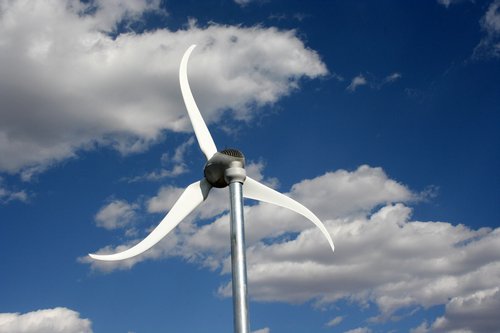
The shape of the blades (the airfoil design) is paramount. Modern blades are aerodynamically sculpted to maximize lift and minimize drag, much like an airplane wing. Superior airfoil design means more efficient energy capture. While three-bladed designs are most common and often considered the most efficient for horizontal axis turbines, some designs experiment with two or even five blades for specific performance characteristics (e.g., lower noise or better low-wind performance).
Horizontal Axis Wind Turbines (HAWT): The Classic Workhorses
When you picture a wind turbine, you’re almost certainly imagining a HAWT. These are the classic "windmill" designs, characterized by blades that rotate around a horizontal axis, typically facing into the wind. They are the most common type for both utility-scale and small-scale applications due to their proven efficiency.
Key Efficiency Advantages of HAWTs
- High Aerodynamic Efficiency: HAWTs are generally considered more aerodynamically efficient than VAWTs because their blades encounter the wind at an optimal angle of attack throughout their rotation. This allows them to capture a larger percentage of the available wind energy.
- Optimized Blade Design: The long, slender blades of HAWTs are highly optimized airfoils, designed to generate maximum lift and torque from the wind.
- Proven Technology: Decades of development and refinement mean HAWT technology is mature and highly optimized for performance.
Top Picks for Efficient Small HAWTs (With Data!)
Here are some examples of efficient small HAWTs, highlighting their typical characteristics. Remember, these are illustrative examples, and actual product specifications will vary by manufacturer and model.
| Model Type (Example) | Rated Power | Rotor Diameter | Cut-In Wind Speed | Rated Wind Speed | Est. Noise @ 10m/s | Key Efficiency Feature |
|---|---|---|---|---|---|---|
| AeroGen 1000 (1kW) | 1000W | 2.5 meters | 2.5 m/s (5.6 mph) | 11 m/s (24.6 mph) | ~40 dB | Optimized low-wind performance, direct-drive generator. |
| WindFlow 3000 (3kW) | 3000W | 3.8 meters | 3.0 m/s (6.7 mph) | 12 m/s (26.8 mph) | ~45 dB | Advanced blade pitch control, high energy yield in moderate winds. |
| EcoBreeze 5000 (5kW) | 5000W | 5.0 meters | 3.5 m/s (7.8 mph) | 12.5 m/s (28 mph) | ~50 dB | Robust design for high wind sites, variable speed operation. |
Vertical Axis Wind Turbines (VAWT): Innovation & Aesthetics
VAWTs are distinct for their vertical rotation axis, meaning their blades spin up and down rather than side to side. They come in various designs, such as Darrieus (egg-beater shape) and Savonius (S-shape). While less common than HAWTs for residential power, they offer unique advantages that are improving their efficiency.
Key Efficiency Advantages of VAWTs (and Where They Lag)
- Omnidirectional: VAWTs don’t need to yaw (turn to face the wind) because they can capture wind from any direction. This reduces complexity and improves performance in turbulent or rapidly changing wind conditions.
- Better in Turbulent Air: Their design can make them more effective in gusty, turbulent wind flows often found closer to the ground or in urban environments.
- Lower Noise and Vibration: Generally, VAWTs operate with less noise and vibration due to lower rotational speeds and fewer mechanical components in the nacelle (the housing for the generator).
- Easier Maintenance: Heavy components like the generator are often at ground level, simplifying maintenance.
Where they lag: Traditionally, VAWTs have been less aerodynamically efficient than HAWTs. Their blades generate drag for part of their rotation, and they often have a lower capacity factor. However, modern designs are significantly improving this, with some reaching HAWT-comparable efficiencies in specific conditions.
Top Picks for Efficient Small VAWTs (With Data!)
Here are some examples of efficient small VAWTs, highlighting their typical characteristics. Again, these are illustrative examples to help you understand the types of features to look for.
| Model Type (Example) | Rated Power | Rotor Height / Diameter | Cut-In Wind Speed | Rated Wind Speed | Est. Noise @ 10m/s | Key Efficiency Feature |
|---|---|---|---|---|---|---|
| HelixPower 500 (500W) | 500W | 1.5m / 1m | 1.8 m/s (4 mph) | 10 m/s (22.4 mph) | ~35 dB | Excellent low-wind capture, very quiet operation, urban-friendly. |
| UrbanVane 1500 (1.5kW) | 1500W | 2.5m / 1.5m | 2.0 m/s (4.5 mph) | 11 m/s (24.6 mph) | ~40 dB | Optimized for turbulent environments, high torque at low RPM. |
| SilentWind 2500 (2.5kW) | 2500W | 3.5m / 2m | 2.2 m/s (4.9 mph) | 12 m/s (26.8 mph) | ~42 dB | Robust construction, efficient direct-drive generator, minimal maintenance. |
Real-World Efficiency: It’s Not Just About the Turbine
Here’s a critical truth: even the most technologically advanced, theoretically efficient small wind turbine will underperform if it’s not installed correctly or if your site isn’t suitable. Your real-world energy production depends heavily on external factors.
Site Assessment is Non-Negotiable: Finding Your Wind Sweet Spot
This is arguably the most important step in ensuring your small wind turbine is efficient. Without a proper site assessment, you’re guessing, and that’s a recipe for disappointment.
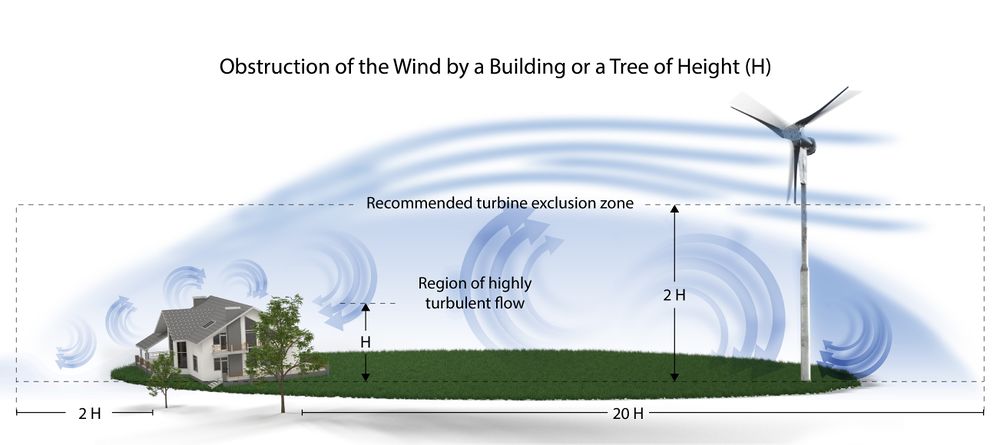
- Tower Height & Obstructions: Wind speed increases significantly with height and decreases near obstructions (trees, buildings). A general rule of thumb is that your turbine should be at least 30 feet (9 meters) higher than any obstacle within 300 feet (90 meters). The higher you can safely and legally go, the better your wind resource will be. Wind shear is a real thing!
- Local Wind Speeds & Patterns: You need to know your average annual wind speed. Many manufacturers won’t even sell you a turbine if your average wind speed is below a certain threshold (often 4-5 m/s or 9-11 mph). Historical data, wind maps, and even on-site anemometer measurements are crucial.
Proper Installation & Maintenance: Keeping Efficiency High
A poorly installed turbine can vibrate excessively, suffer premature wear, and simply not perform to its potential. Professional installation ensures:
- Correct Tower Guying/Mounting: Stability is key to safety and performance.
- Optimal Orientation (for HAWTs): Proper yaw alignment system functionality.
- Electrical Integration: Ensuring seamless connection to your home’s electrical system or battery bank.
Regular maintenance, while minimal for modern turbines, is also vital. This includes checking bolts, lubrication (if applicable), and inspecting blades for damage. Neglecting maintenance can lead to reduced output and costly repairs.
Grid-Tied vs. Off-Grid Systems: System Efficiency Matters
The overall efficiency of your wind energy system also depends on how that generated electricity is used and stored:
- Grid-Tied: These systems connect directly to your utility grid. When your turbine produces more power than you need, the excess is fed back to the grid (and you often get credits!). When it produces less, you draw from the grid. This is generally the most efficient setup as there are no storage losses.
- Off-Grid: These systems rely on batteries to store excess power. While offering true energy independence, batteries introduce efficiency losses (typically 10-20% during charging and discharging) and require careful management. For off-grid, often a hybrid wind-solar system is the most robust and efficient solution.
How to Choose the Most Efficient Small Wind Turbine for Your Needs
Okay, you’ve got the lingo, you understand the types. Now, how do you make a decision? It’s a systematic process.
Step 1: Assess Your Energy Needs & Budget
Look at your past electricity bills. How many kilowatt-hours (kWh) do you consume per month? This will give you a target. Small wind turbines typically range from 400W to 10kW for residential use. Understand that a 1kW turbine won’t power an entire large home alone. Be realistic. Also, set a budget for the turbine, tower, inverter, batteries (if off-grid), and installation.
Step 2: Conduct a Thorough Site Assessment
I can’t stress this enough. Get a professional wind resource assessment. This involves:
• Analyzing local wind data (from nearby airports, meteorological stations). • Using specialized software to model wind flow over your property. • Potentially installing an anemometer to collect on-site data over several months (the gold standard).
This assessment will tell you your average wind speed, which is crucial for predicting annual energy production (AEP).
Step 3: Compare Turbine Types (HAWT vs. VAWT)
- HAWT: Best for open, consistently windy sites, usually rural. Higher overall efficiency potential, but requires specific orientation and can be noisier.
- VAWT: Better for turbulent, gusty conditions, often found in suburban or urban fringes, or marine environments. Quieter, less visually intrusive, omnidirectional, but generally lower peak efficiency than HAWTs of comparable size.
Step 4: Prioritize Key Efficiency Metrics
Based on your site assessment, focus on what matters most:
- Low Cut-In Speed: If your average wind speed is moderate, a turbine that starts generating power sooner will be more efficient for you.
- Strong Power Curve at Your Average Wind Speed: Don’t just look at peak power. Check the power curve to see how much electricity the turbine generates at the wind speeds you *actually experience most often.
- Rotor Diameter/Swept Area: Larger is generally better for capturing more wind, assuming your site can handle it.
- Reputable Manufacturer Data: Look for transparency in power curves and efficiency ratings.
Step 5: Consider Noise, Aesthetics, and Local Regulations
Efficiency isn’t the only factor. If a turbine is too noisy for your neighborhood, or if local zoning laws prevent a tall tower, it’s not a viable option, no matter how efficient. Check local ordinances for height restrictions, setback requirements, and permitting processes early in your research.
Step 6: Get Professional Quotes & Certifications (e.g., Small Wind Certification Council)
Always get quotes from multiple reputable installers. Look for turbines certified by bodies like the Small Wind Certification Council (SWCC) or similar international standards (e.g., IEC 61400-2). Certification indicates that the turbine has been tested for performance, durability, and safety, and its advertised specs are verifiable.
Beyond Efficiency: Other Factors for Your Decision
While efficiency is paramount, a smart decision considers the full picture:
Durability & Warranty
Small wind turbines are investments. Look for robust construction, materials designed to withstand local weather conditions (ice, high winds, salt spray), and a comprehensive warranty from a reputable manufacturer. A 5-10 year warranty on major components is a good sign.
Noise Levels
HAWTs can generate more audible noise, especially larger models. VAWTs are generally quieter. This is a significant factor if your turbine will be close to your home or neighbors. Check decibel ratings at various wind speeds.
Aesthetics & Footprint
Some people find HAWTs more visually intrusive than VAWTs. If visual impact is a concern, a VAWT might be a better fit. Also consider the physical space required for the turbine, its tower, and any necessary guy wires.
Permitting & Zoning
This can be a major hurdle. Many municipalities have strict rules about turbine height, setbacks, noise, and even color. Engage with your local planning department early to understand the process and potential limitations.
The Future of Small Wind: Emerging Innovations
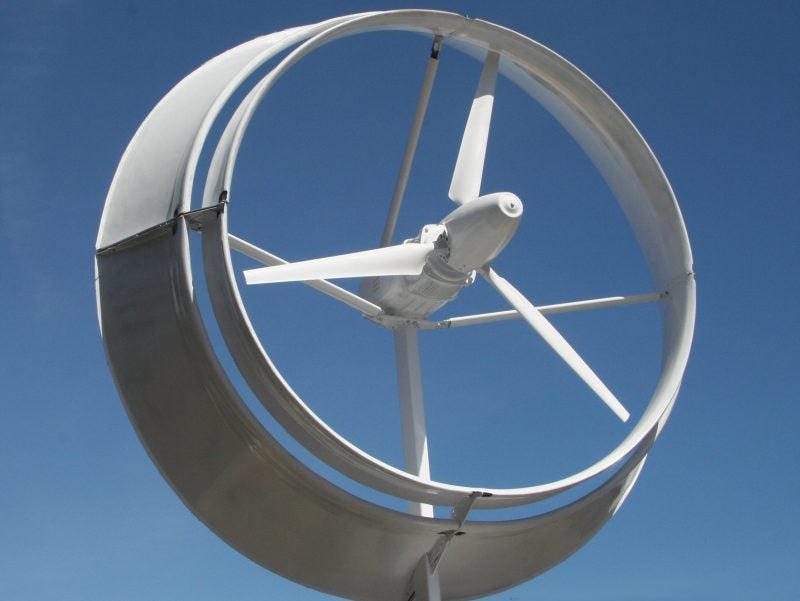
The world of small wind is constantly evolving. Researchers are developing innovative designs, like bladeless turbines (e.g., the Vortex Bladeless design), shrouded turbines that accelerate wind flow, and highly integrated hybrid wind-solar units. While many are still in the prototype or early commercial stages, they promise even quieter operation, lower visual impact, and potentially higher efficiency in specific niches. Keep an eye on these developments, as they may offer exciting new options in the coming years.
Is a Small Wind Turbine Right for You? The Honest Truth
Small wind turbines offer incredible potential for homeowners committed to renewable energy and energy independence. They can be incredibly efficient – if* you have the right conditions and make informed choices. The "most efficient" turbine isn’t a single product; it’s the turbine that is optimally suited to your specific site’s wind resource, your energy needs, and your local regulations.
If you have consistently good wind (average annual wind speeds of 4.5 m/s (10 mph) or higher), sufficient clear space for a tall tower, and are willing to invest in a quality system, a small wind turbine can be a powerful addition to your home’s energy portfolio. For those with less wind or smaller properties, a hybrid system with solar might offer a more reliable and efficient solution. Do your homework, get professional advice, and harness the power of the wind!
Frequently Asked Questions
What is the most important factor for small wind turbine efficiency?
The most important factor is your site’s average annual wind speed and the height of your turbine’s tower. Even the most advanced turbine will produce little power if it’s not exposed to sufficient, consistent wind or if it’s placed too low and obstructed by buildings or trees.
Are vertical axis wind turbines (VAWTs) more efficient than horizontal axis wind turbines (HAWTs)?
Traditionally, HAWTs have been more aerodynamically efficient due to their optimal blade design and consistent angle of attack. However, modern VAWT designs have significantly improved, offering advantages in turbulent wind conditions, lower noise, and omnidirectional capture, making them highly efficient for specific urban or suburban applications where HAWTs might struggle.
What does ‘cut-in wind speed’ mean and why is it important for efficiency?
Cut-in wind speed is the minimum wind speed at which a turbine begins to generate electricity. A lower cut-in speed (e.g., 2-3 m/s) is crucial for efficiency, especially in areas with moderate winds, because it means your turbine will be producing power more often throughout the day and year, leading to higher overall energy production.
How much power can a small wind turbine generate for a home?
Residential small wind turbines typically range from 400 watts to 10 kilowatts. A 1-2kW turbine can supplement a significant portion of a small home’s energy needs in good wind conditions, while larger 5-10kW systems can potentially offset most or all of a typical household’s electricity consumption. Actual output depends heavily on the turbine’s size, your site’s wind resource, and system efficiency.
Do I need a battery bank for a small wind turbine?
Not necessarily. If your system is ‘grid-tied’ (connected to the utility grid), excess power can be fed back, and you draw from the grid when wind is low. This is often the most efficient setup. For ‘off-grid’ systems, a battery bank is essential to store power for use when the wind isn’t blowing, though this introduces some efficiency losses from charging and discharging.
What kind of maintenance do small wind turbines require?
Modern small wind turbines are designed for low maintenance. Typically, this involves annual or bi-annual checks for wear and tear, tightening bolts, inspecting blades for damage, and sometimes lubricating moving parts (though many are direct-drive and maintenance-free). Regular checks help ensure continued optimal performance and efficiency.

:max_bytes(150000):strip_icc()/wind-turbine-generator-on-house-roof-90967703-b9619befbf954726ae92dfb6154711f2.jpg)
