Portable Wind Turbines for Campervans: Your Ultimate Guide to Off-Grid Power
Picture this: You’ve found the perfect remote camping spot, miles from the nearest hookup. Your solar panels worked great all day, but now the sun is dipping, clouds are rolling in, and you’re wondering if your batteries will last through the night. Sound familiar?
Table of Contents
- Portable Wind Turbines for Campervans: Your Ultimate Guide to Off-Grid Power
- Why Consider a Portable Wind Turbine for Your Campervan?
- The Limitations of Solar Alone
- Consistent Power Generation
- Versatility and Portability
- Backup Power Source
- Types of Portable Wind Turbines for Campervans
- Horizontal Axis Wind Turbines (HAWTs)
- Vertical Axis Wind Turbines (VAWTs)
- Kite-Based Wind Turbines
- Key Factors When Choosing a Portable Wind Turbine
- Power Output (Watts)
- Starting Wind Speed
- Maximum Wind Speed Rating
- Noise Level (dB)
- Weight and Portability
- Size and Footprint
- Durability and Build Quality
- Integration with Your Existing System
- Cost
- Top Portable Wind Turbines for Campervans: A Comparative Look
- Setting Up and Deploying Your Campervan Wind Turbine
- Choosing the Right Spot
- Mounting Options
- Cabling and Connections
- Safety First
- Integrating Wind Power with Your Campervan’s Electrical System
- Charge Controllers: The Essential Regulator
- Battery Banks: The Power Storage
- Combining with Solar: A Hybrid Approach
- Inverters: Converting DC to AC
- The Real-World Pros and Cons of Campervan Wind Power
- Pros:
- Cons:
- Maintenance and Longevity
- Regular Inspections
- Cleaning
- Storage
- Is a Portable Wind Turbine Right for Your Campervan?
For many campervan adventurers, solar power is the go-to for off-grid energy. It’s clean, quiet, and generally reliable. But what happens when the sun doesn’t cooperate? What if you’re parked under a canopy of trees, or deep into a cloudy winter trip? This is where a portable wind turbine can transform your energy independence, turning the very air around you into usable power.
This isn’t about ditching solar; it’s about building a robust, resilient power system for true freedom on the road. This guide will cut through the noise, helping you understand if a portable wind turbine is the missing piece in your campervan’s energy puzzle, and how to choose the right one.
Why Consider a Portable Wind Turbine for Your Campervan?
While solar panels are fantastic, they have their limitations. Here’s why wind power deserves a place in your off-grid strategy:
The Limitations of Solar Alone
We’ve all been there: a week of cloudy weather, shaded campsites, or those short, dark winter days that leave your batteries crying for mercy. Solar panels are entirely dependent on direct sunlight, making them less effective in certain environments or seasons. If you’re staying put for a few days in a less-than-sunny spot, your energy reserves can quickly dwindle.
Consistent Power Generation
The beauty of wind is that it often blows when the sun doesn’t. Think about coastal areas, open fields, or even just a breezy evening. A well-placed wind turbine can generate power 24/7 in suitable conditions, topping up your batteries overnight or during a cloudy day when solar is minimal or non-existent. This continuous charging capability is a game-changer for extended off-grid stays.
Versatility and Portability
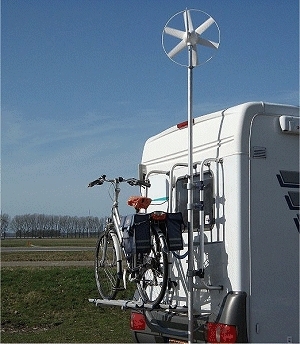
Unlike fixed solar panels, many portable wind turbines are designed for quick setup and takedown. You can deploy them only when needed, positioning them in the optimal wind path – perhaps away from your van to reduce noise, or higher up on a pole to catch stronger breezes. When it’s time to move, they pack away efficiently, often into a relatively small footprint.
Backup Power Source
Think of a portable wind turbine as a powerful complement to your existing solar setup. It acts as an excellent backup, ensuring you have a diverse energy portfolio. With both solar and wind, you’re prepared for a wider range of weather conditions, significantly boosting your overall energy resilience and reducing reliance on shore power or noisy generators.
Types of Portable Wind Turbines for Campervans
When you start looking, you’ll encounter a few main designs. Understanding these will help you choose what’s best for your campervan and travel style.
Horizontal Axis Wind Turbines (HAWTs)
These are what most people picture: the classic propeller-style turbines. They need to be pointed into the wind to operate efficiently, often using a tail fin to self-orient. HAWTs are generally very efficient at converting wind into power, especially in consistent, unidirectional winds. However, they can sometimes be noisier and more susceptible to damage from turbulent wind if not properly designed for portability.
Vertical Axis Wind Turbines (VAWTs)
VAWTs look quite different, often resembling an egg beater or a cylinder with vertical blades. Their key advantage for campervan life is that they are omnidirectional – they don’t need to be pointed into the wind. This makes them easier to set up and ideal for turbulent or shifting wind conditions often found around obstacles or in varied terrain. Many VAWTs are also designed to be quieter than HAWTs, an important consideration when camping close to others.

Kite-Based Wind Turbines
This is an emerging and exciting technology. Instead of a fixed tower, these systems use a kite or drone to reach higher altitudes where winds are stronger and more consistent. While still in early stages for personal portable use, they promise significant power output from a very compact ground unit. Keep an eye on this space for future developments, though most available options for campervans today will be traditional HAWTs or VAWTs.
Key Factors When Choosing a Portable Wind Turbine
Selecting the right wind turbine isn’t a one-size-fits-all decision. Consider these crucial factors to ensure you make an informed choice:
Power Output (Watts)
This is perhaps the most important spec. How much power do you actually need? A 50-watt turbine might trickle charge a small battery, while a 250-watt or 500-watt unit can make a significant dent in your daily energy consumption. Match the turbine’s max power output to your average daily power needs, remembering that wind isn’t constant, so sustained output will be lower than the peak.
Starting Wind Speed
A turbine’s published maximum output is often achieved in high winds. The starting wind speed is far more critical for real-world use. If a turbine needs 10 mph of wind just to start spinning, it might sit idle on many breezy days. Look for turbines with lower starting wind speeds (e.g., 5-7 mph) for better performance in typical camping conditions.
Maximum Wind Speed Rating
While you want it to start easily, you also want it to withstand strong gusts. Check the maximum wind speed the turbine can safely operate in and, importantly, survive without damage. Some turbines have a built-in braking mechanism to protect them in high winds.
Noise Level (dB)
This is a major consideration for campervan life. Turbines can produce a humming, whirring, or even a slapping sound. A noisy turbine can quickly become an annoyance for you and your neighbors, especially at night. Look for models that specify low decibel (dB) ratings, or read reviews specifically addressing noise. Generally, VAWTs tend to be quieter than HAWTs.
Weight and Portability
You’re living in a campervan, so space and weight are precious. How easy is the turbine to carry, deploy, and pack away? Does it break down into manageable components? A lightweight, compact design is usually preferred for spontaneity and ease of use.
Size and Footprint
Consider both the turbine’s dimensions when stored and its footprint when deployed. Will it fit comfortably in your storage space? When set up, how much ground space or height does it require? A large turbine might be impractical for smaller vans or tight camping spots.
Durability and Build Quality
Your turbine will be exposed to the elements: sun, rain, dust, and potentially salt spray. Look for robust materials like marine-grade aluminum, stainless steel, and UV-resistant plastics. Good build quality ensures longevity and reliability on your adventures.
Integration with Your Existing System
Most portable wind turbines produce DC power, which needs to be regulated before going into your batteries. You’ll likely need a wind charge controller (sometimes integrated). Ensure the turbine’s voltage (e.g., 12V or 24V) is compatible with your existing battery bank and electrical system. If you have solar, you might look for a hybrid solar/wind charge controller.
Cost
Portable wind turbines can range from a few hundred dollars to over a thousand. Factor in the turbine itself, mounting equipment, and any necessary charge controllers or cabling. Weigh the initial investment against the long-term benefit of consistent off-grid power and reduced reliance on other energy sources.
Top Portable Wind Turbines for Campervans: A Comparative Look
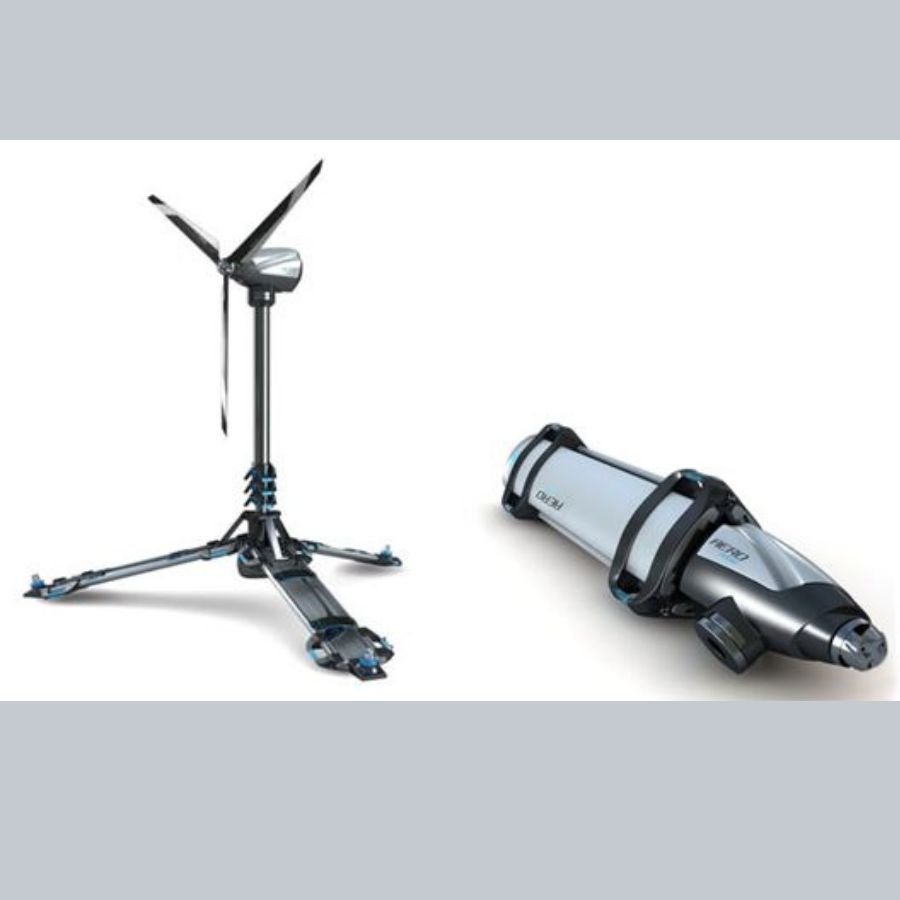
While there isn’t a single “best” turbine for every campervan, understanding the range of options and their typical specifications can guide your choice. Below is a comparative table of representative models and types you might encounter. Keep in mind that specific models and pricing can vary.
| Model / Type | Max Power (W) | Starting Wind (mph) | Weight (lbs) | Noise (dB) | Key Feature | Est. Price Range ($) |
|---|---|---|---|---|---|---|
| Shine Turbine (HAWT) | 40 | 7-8 | 3.5 | 35-40 | Ultra-portable, backpack-friendly | 350-450 |
| Windwalker 250 (HAWT) | 250 | 6-7 | 20-25 | 50-60 | RV-specific, robust build | 400-600 |
| Generic VAWT (Mid-Range) | 100-300 | 5-7 | 15-30 | 45-55 | Omnidirectional, compact footprint | 300-700 |
| Generic HAWT (Higher Power) | 300-500 | 8-10 | 30-50 | 60-70+ | High output for consistent wind | 600-1200+ |
Setting Up and Deploying Your Campervan Wind Turbine
Once you’ve chosen your turbine, proper setup is key to maximizing its performance and ensuring safety.
Choosing the Right Spot
Wind turbines need unobstructed wind flow. Avoid placing it directly behind your van, large trees, or buildings, as these create turbulent, less efficient wind. Ideally, set it up in an open area, on slightly elevated ground if possible. Think about the prevailing wind direction at your chosen campsite.
Mounting Options
- Telescoping Poles: Many portable turbines come with or are designed for telescoping poles that can extend several feet high to catch better wind. These often anchor to the ground with guy ropes.
- Hitch Mounts: Some systems offer mounts that slot into your campervan’s receiver hitch, providing a sturdy, vehicle-attached base.
- Roof Racks (Temporary): For smaller, lighter units, a temporary mount to a sturdy roof rack might be an option, but be mindful of height restrictions, noise, and vibration transferred to the van.
- Tripods: Simple, freestanding tripods are common for smaller, lightweight units, offering flexibility in placement.
Cabling and Connections
Your turbine will connect to a charge controller, then to your battery bank. Use appropriately gauged, weather-resistant wiring to minimize voltage drop, especially over longer distances. Ensure all connections are secure and protected from the elements.
Safety First
- Secure Mounting: Always ensure your turbine is firmly anchored to prevent it from toppling over in strong winds. Guy ropes are essential for pole mounts.
- Blade Protection: If it’s a HAWT, be mindful of spinning blades. Keep them away from people, pets, and anything that could get tangled.
- Avoid Obstacles: Never set up near power lines, tents, or other potential hazards.
- Disconnection: Know how to safely stop and disconnect your turbine, especially before high winds or during maintenance.
Integrating Wind Power with Your Campervan’s Electrical System
A portable wind turbine isn’t just a standalone device; it’s a part of your larger electrical ecosystem. Here’s how it fits in:
Charge Controllers: The Essential Regulator
Just like solar panels, wind turbines require a charge controller to regulate the voltage and current flowing into your batteries. This prevents overcharging and ensures your batteries are charged optimally. Some wind turbines have integrated controllers, while others require an external one. Look for controllers designed specifically for wind turbines, as they handle variable input from wind differently than solar controllers. If you’re combining solar and wind, a hybrid solar/wind charge controller can simplify your setup.
Battery Banks: The Power Storage
Your wind turbine will feed power into your campervan’s deep cycle battery bank. Ensure your batteries (whether LiFePO4, AGM, or Lead-Acid) are robust enough to handle the charging cycles and store the energy generated. Compatibility with your turbine’s voltage (e.g., 12V or 24V) is critical.
Combining with Solar: A Hybrid Approach
This is where true energy independence shines. Running a wind turbine alongside your solar panels creates a hybrid power system that covers more bases. When the sun isn’t out, the wind can pick up the slack, and vice-versa. This redundancy means greater reliability and more consistent power, regardless of the specific weather conditions you encounter. It’s often the most effective strategy for extended off-grid living.
Inverters: Converting DC to AC
Most campervan appliances run on AC (alternating current), while your batteries store DC (direct current) power. An inverter converts the DC power from your batteries (which are charged by both solar and wind) into usable AC power for your laptops, blenders, or other household electronics. Ensure your inverter’s capacity matches your highest anticipated AC power draw.
The Real-World Pros and Cons of Campervan Wind Power
Like any technology, portable wind turbines come with their own set of advantages and disadvantages. It’s important to have realistic expectations.
Pros:
- Less Dependent on Sunlight: Works day or night, cloudy or clear, as long as there’s wind.
- Can Generate Power 24/7: In consistently windy locations, it can provide continuous charging.
- Excellent for Stationary Camping: Ideal for longer stays where you can optimize placement.
- Eco-Friendly Addition: Harnesses natural, renewable energy, reducing your carbon footprint.
- Complements Solar: Fills the gaps when solar is underperforming, creating a more resilient system.
Cons:
- Noise Can Be an Issue: Even “quiet” turbines can create an audible hum or whir, which can be disruptive to you or nearby campers.
- Wind Dependency: No wind, no power. Performance fluctuates with wind speed.
- Setup/Takedown Effort: Requires manual setup and takedown each time you stop or move, unlike fixed solar.
- Space Requirements: Needs a clear area for deployment and adequate storage space when traveling.
- Vibrations: Can transmit vibrations to your campervan if mounted directly, potentially causing wear or discomfort.
- Cost vs. Watt-Hour Output: Compared to solar, the upfront cost per watt-hour produced can sometimes be higher, especially for lower-output portable units.
Maintenance and Longevity
To ensure your portable wind turbine serves you well for many adventures, a little TLC goes a long way.
Regular Inspections
Before and after each trip, or after periods of high wind, give your turbine a quick once-over. Check the blades for cracks or chips, inspect the mounting hardware for tightness, and examine all electrical connections for corrosion or fraying. Pay attention to any unusual noises during operation.
Cleaning
Dust, dirt, pollen, and even salt spray (if you’re near the coast) can accumulate on the blades and housing. A gentle wipe-down with a damp cloth can help maintain efficiency and prevent build-up that could unbalance the blades. Ensure the turbine is stopped and disconnected before cleaning.
Storage
When not in use for extended periods, especially during harsh weather or winter, store your turbine indoors in a dry, protected environment. If it’s left exposed, consider a protective cover. Disassemble components if recommended by the manufacturer to minimize wear and tear.
Is a Portable Wind Turbine Right for Your Campervan?
The decision to invest in a portable wind turbine depends heavily on your specific travel style, power demands, and typical camping environments.
Consider it a strong contender if:
- You frequently camp in windy, open locations where solar might be less effective (e.g., coastal areas, plains, mountains).
- You often find yourself in shaded campsites or experience prolonged cloudy weather.
- You need a more consistent power source than solar alone can provide.
- You stay in one spot for several days at a time, allowing for optimal turbine deployment.
- You desire maximum energy independence and a robust, redundant power system.
You might want to reconsider if:
- You primarily camp in dense forests or urban areas with minimal wind.
- You frequently move your campervan, making setup and takedown a hassle.
- Noise is a major concern for you or your camping neighbors.
- Your power needs are very low and easily met by solar or a small battery bank.
Ultimately, a portable wind turbine is an investment in unparalleled off-grid freedom. It’s not a replacement for solar, but a powerful ally that ensures your lights stay on, your fridge stays cold, and your devices stay charged, allowing you to venture further and stay longer in the wild places you love.
By carefully assessing your needs and understanding the options available, you can harness the power of the wind to truly empower your campervan adventures.
”
Frequently Asked Questions
Are portable wind turbines for campervans really worth it?
Yes, for many campervan owners, they are definitely worth it, especially if you frequently camp in windy locations, experience cloudy weather, or stay stationary for extended periods. They provide a reliable source of power when solar panels are less effective, significantly boosting your energy independence and complementing your existing power setup.
How much power can a portable wind turbine generate for a campervan?
The power generated varies widely by model and wind conditions. Smaller, ultra-portable turbines like the Shine Turbine might produce around 40 watts in ideal wind, suitable for charging small devices. Larger, more robust portable units can generate 200-500+ watts, capable of making a substantial contribution to your battery bank, similar to several solar panels.
How noisy are portable wind turbines for campervans?
Noise is a common concern. While most portable units are designed to be relatively quiet, they still produce some sound – typically a hum or whir. Vertical Axis Wind Turbines (VAWTs) are generally considered quieter than Horizontal Axis Wind Turbines (HAWTs). Look for models with decibel (dB) ratings under 50-60 dB for quieter operation, and consider placement away from your sleeping area and neighbors.
Can I combine a portable wind turbine with my existing solar setup?
Absolutely! Combining wind and solar creates a highly resilient hybrid power system. A wind turbine can charge your batteries overnight or on cloudy days when solar is inactive, ensuring a more consistent power supply. You’ll likely need a dedicated wind charge controller or a hybrid solar/wind charge controller to manage both inputs effectively.
What is the best way to mount a portable wind turbine for a campervan?
Popular mounting options include telescoping poles with guy ropes for ground deployment, hitch mounts that secure into your vehicle’s receiver, and heavy-duty tripod stands. The best method depends on your turbine’s size, weight, and your desired portability, but always prioritize stability and unobstructed wind flow.
What are the key factors to look for when buying a portable wind turbine?
Crucial factors include: power output (watts) matching your needs, low starting wind speed for practical use, durable build quality for outdoor exposure, manageable weight and size for portability, and a noise level you can live with. Also, ensure it’s compatible with your campervan’s battery voltage and charging system.