Roof-Mounted Wind Turbines for Your Home: The Definitive Guide to Real-World Feasibility, Costs, and Performance
Picture this: a sleek, silent turbine spinning atop your home, effortlessly harnessing the wind to power your lights, appliances, and even charge your EV. It’s a tempting vision of energy independence, isn’t it?
Table of Contents
- Roof-Mounted Wind Turbines for Your Home: The Definitive Guide to Real-World Feasibility, Costs, and Performance
- The Hard Truth: Are Roof-Mounted Turbines a Scam or a Solution?
- Why the Skepticism? Understanding the Challenges
- Distinguishing Between Hype and Innovation
- Types of Roof-Mounted Wind Turbines: Decoding Your Options
- Horizontal Axis Wind Turbines (HAWTs) on Roofs
- Vertical Axis Wind Turbines (VAWTs) for Residential Use
- Innovative & Shrouded Designs: A Glimpse into the Future?
- Evaluating Your Home’s Suitability: Is Your Roof a Wind Power Candidate?
- Wind Resource Assessment: Beyond a Gusty Day
- Roof Structure and Mounting Considerations
- Local Regulations and Permitting
- Costs, Savings, and Return on Investment (ROI)
- Initial Investment: What to Budget For
- Operating Costs and Maintenance
- Expected Energy Output and Savings
- Wind vs. Solar: A Practical Comparison for Homeowners
- The Future of Residential Wind: What’s Next?
- Conclusion: Making an Informed Decision About Home Wind Power
But if you’ve done even a little digging, you’ve likely encountered a different narrative: headlines screaming “scam,” warnings of “inefficiency,” and horror stories of “noisy vibrations.” So, what’s the truth? Can a roof-mounted wind turbine genuinely power your home, or is it just another expensive gimmick?
I’m here to cut through the marketing hype and the online noise. This isn’t a sales pitch; it’s a balanced, expert-driven exploration into the realistic potential, persistent challenges, and exciting innovations in residential wind power. We’ll tackle the skepticism head-on, explore the actual costs, and help you determine if your roof is truly a candidate for wind energy.
The Hard Truth: Are Roof-Mounted Turbines a Scam or a Solution?
Let’s address the elephant in the room. The online chatter isn’t entirely unfounded. Many early, poorly designed, or inappropriately installed roof-mounted wind turbines have indeed led to disappointing results for homeowners. This has fueled widespread skepticism, and for good reason.
Why the Skepticism? Understanding the Challenges
Installing a wind turbine on your roof presents unique hurdles that often aren’t present with ground-mounted systems or solar panels. These challenges directly impact performance and homeowner satisfaction:
- Wind Shear and Turbulence: The Enemy of Rooftop Efficiency. Wind isn’t uniform. Near ground level, and especially around buildings, wind flow is highly turbulent and experiences significant shear (changes in speed and direction). Your roof isn’t typically high enough to capture the smooth, consistent wind stream that makes large turbines efficient. This means drastically reduced power output compared to advertised capacities.
- Noise and Vibration: A Common Homeowner Complaint. Traditional wind turbines, especially older or cheaper models, can generate audible noise and mechanical vibrations. When mounted directly to your home’s structure, these vibrations can transfer through the building, leading to an irritating hum or rattle inside. This is a primary driver of dissatisfaction.
- Structural Integrity: Roof Damage Risks. Turbines exert forces on your roof – not just weight, but also dynamic loads from wind pushing and pulling on the structure. Improper installation or an unsuitable roof can lead to leaks, compromised structural integrity, or costly damage over time.
- Low Power Output: Often Not Matching Expectations. Many small, roof-mounted turbines simply don’t generate enough electricity to significantly offset a typical home’s energy consumption, especially once you account for turbulent wind conditions. Homeowners often expect more than these micro-turbines can realistically deliver.
Distinguishing Between Hype and Innovation
While the challenges are real, it’s crucial to understand that not all roof-mounted wind solutions are created equal. The industry has seen considerable innovation, driven by the desire to overcome these very problems.
- Early Designs vs. Modern Advancements: Many of the negative experiences stem from older, often DIY-style setups or cheap imports that didn’t account for aerodynamic complexities or structural integration. Newer designs, often backed by significant research and engineering, aim to mitigate noise, improve efficiency in turbulent conditions, and offer better structural mounting.
- The “Sweet Spot” for Wind Energy vs. Rooftop Limitations: Generally, wind turbines perform best when placed at least 30 feet above any obstacles within a 500-foot radius. Most residential roofs simply don’t meet this criterion. However, innovative designs are specifically engineered to capture and accelerate wind flow in turbulent environments, or to operate silently without moving parts, thus expanding the “sweet spot” definition for urban and suburban settings.
Types of Roof-Mounted Wind Turbines: Decoding Your Options
When you talk about “roof-mounted wind turbines,” you’re actually referring to a variety of designs, each with its own set of principles, pros, and cons. Understanding these differences is key to making an informed decision.

Horizontal Axis Wind Turbines (HAWTs) on Roofs
These are what most people visualize: the classic propeller-style turbines. They typically have two or three blades that rotate around a horizontal axis, facing into the wind. While highly efficient in open, consistent wind streams (like large wind farms), they present significant challenges for rooftop installation:
- Characteristics: Require a yawing mechanism to turn into the wind, generally higher tip speeds.
- Challenges on Roofs: Very susceptible to turbulence, leading to poor performance and increased wear. The yawing motion can be noisy. Vibration transmission to the structure is a major concern. Aesthetic impact is often significant.
- When They *Might* Work (Rarely): Only in extremely open, rural settings with consistently high wind speeds, and even then, usually on a tall mast adjacent to the house, not directly on the roof. Directly on a roof, their efficiency plummets, and noise/vibration become almost guaranteed issues.
Vertical Axis Wind Turbines (VAWTs) for Residential Use
VAWTs have blades that rotate around a vertical axis. They often look quite different from their HAWT counterparts, resembling egg-beaters, scoops, or spiraling columns. They are generally considered more suitable for urban and suburban environments due to several inherent advantages:
- Advantages:
- Omnidirectional: Don’t need to yaw to face the wind, making them better suited for turbulent, shifting winds.
- Lower Startup Speeds: Can begin generating power at lower wind speeds.
- Less Noise and Vibration: Often quieter and with fewer mechanical stress points compared to HAWTs. Their main mechanical components are usually at the base, reducing structural vibration transfer.
- Aesthetics: Many find their modern, vertical designs more visually appealing or less intrusive than traditional propellers.
- Common Designs:
- Savonius: S-shaped cups, robust but lower efficiency.
- Darrieus: Curved blades, often looking like an egg-beater, higher efficiency but less robust.
- Helical (e.g., TESUP Atlas): Twisted blades combine aesthetic appeal with improved aerodynamics and reduced noise.
- Specific Examples/Concepts: Companies like TESUP (Atlas and Magnum models) offer VAWTs designed for residential use. The “Dutch wind turbine” concept (like the Blade X1 mentioned in SERP) also falls into this category, emphasizing compactness and suitability for flat roofs or gardens.
Innovative & Shrouded Designs: A Glimpse into the Future?
Beyond traditional HAWTs and VAWTs, a new wave of designs is emerging, specifically engineered to overcome the limitations of rooftop wind capture:
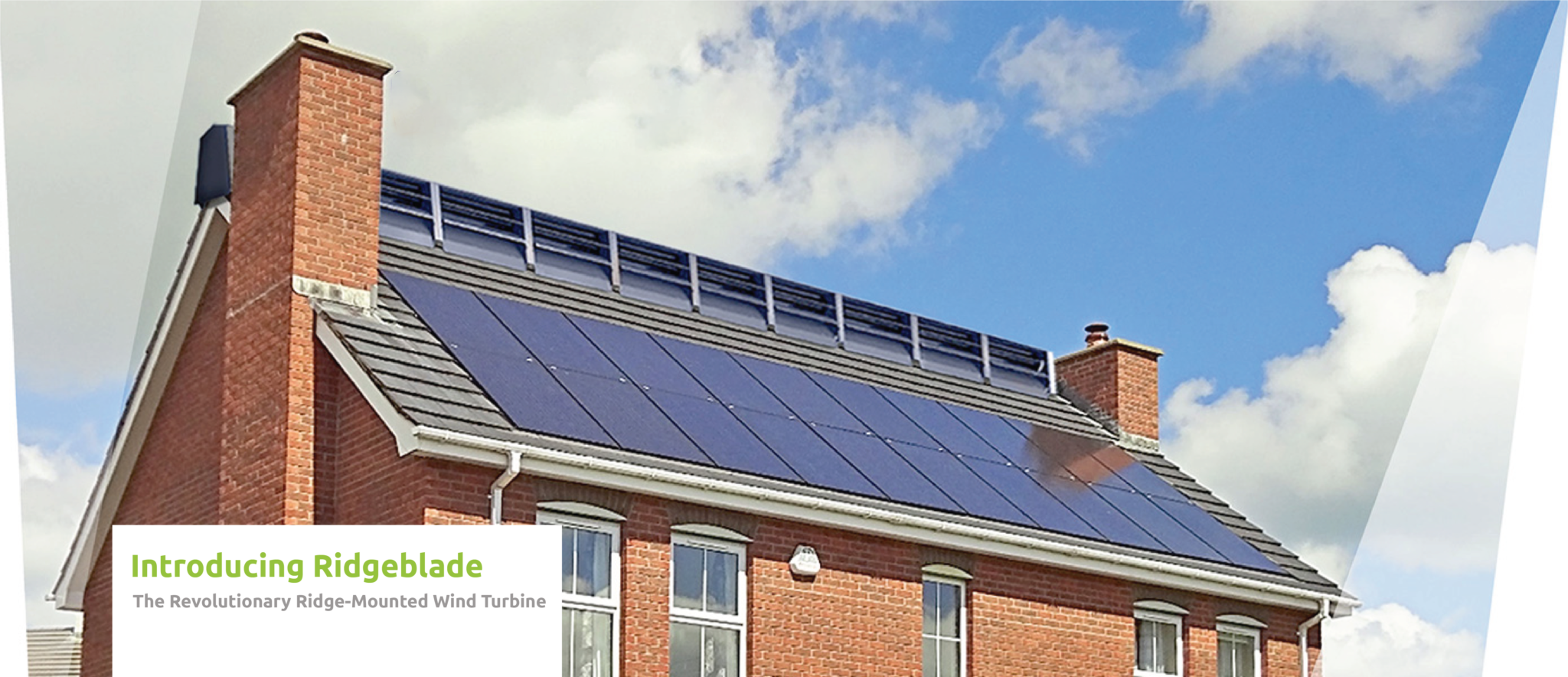
- RidgeBlade Concept: This system, as seen in the SERP, is designed to be integrated along the ridge of a roof. It harnesses the accelerated airflow that typically occurs over a building’s ridge. While not strictly a standalone “roof-mounted turbine,” it leverages the roof’s geometry to capture wind more effectively and potentially with less visual impact and noise.
- Aeromine’s “Motionless” Devices: This revolutionary approach, also highlighted in the SERP, uses a fixed aerodynamic structure (similar to spoilers on a race car) to capture and amplify wind flow, channeling it to internal small rotors. The company claims these devices operate silently, occupy less roof space, and are far more efficient in turbulent conditions because they don’t rely on external moving blades. This technology aims to redefine what a “wind turbine” can be for residential use.
- Key Differentiators: These innovative designs prioritize noise reduction (often by moving rotating parts internally or reducing external moving parts), efficiency in turbulent flow (by using aerodynamic shaping to direct and accelerate wind), and reduced visual impact.
To help you compare, here’s a breakdown of the common types:
| Type | Pros for Rooftop | Cons for Rooftop | Typical Output (Small) | Suitability for Roofs |
|---|---|---|---|---|
| Horizontal Axis (HAWT) | High efficiency in steady, open wind. | Poor performance in turbulence, significant noise/vibration risk, aesthetic issues. | 500W – 2kW (often much less on roof) | Poor (Generally not recommended) |
| Vertical Axis (VAWT) | Omnidirectional, better for turbulence, often quieter, lower startup speed. | Lower overall efficiency than HAWTs in ideal conditions, still requires wind, can be bulky. | 300W – 3kW | Fair (Better than HAWT, but site-dependent) |
| Ridge/Shrouded Designs (e.g., Aeromine, RidgeBlade) | Designed for turbulent rooftop wind, potentially silent (Aeromine), low visual impact, leverages building aerodynamics. | Newer tech, higher initial cost, limited proven long-term data for mass adoption, proprietary systems. | 1kW – 5kW+ (depending on specific tech & scale) | Promising (Best potential, but still evolving) |
Evaluating Your Home’s Suitability: Is Your Roof a Wind Power Candidate?
Before you get swept away by the idea of wind power, you need to conduct a brutally honest assessment of your home and its environment. Not every home is suitable, and pretending otherwise leads to disappointment and wasted money.
Wind Resource Assessment: Beyond a Gusty Day
The most critical factor for any wind turbine is – you guessed it – wind. But not just any wind. You need consistent, strong wind, and your roof needs to be in a position to capture it effectively.
- Average Wind Speed (Crucial Thresholds): Most small turbines require an average annual wind speed of at least 10-12 mph (4.5-5.5 m/s) to be economically viable. Below this, the power output drops dramatically, making the investment questionable. A gusty day doesn’t mean high average speeds.
- Understanding Local Wind Patterns, Obstacles (Buildings, Trees): This is where rooftop installations often fail. Nearby tall trees, neighboring buildings, and even your own roofline create complex air currents, turbulence, and wind shadows. A turbine needs clear, unobstructed access to the prevailing winds.
- Using Wind Maps and Professional Assessments: Online wind maps (e.g., NREL’s wind resource maps) can give you a general idea of your region’s wind potential. However, for a truly accurate assessment, consider a professional site evaluation. They can use anemometers to measure actual wind speeds at various heights around your property over several months, providing data specific to your microclimate.
Roof Structure and Mounting Considerations
Your roof isn’t just a platform; it’s a critical part of the system’s safety and performance.
- Weight Capacity, Vibration Transfer: Can your roof safely bear the weight of the turbine, mounting hardware, and the dynamic loads from the wind? A structural engineer’s assessment is highly recommended. As noted earlier, vibration is a major concern; a rigid, well-engineered mount is essential to minimize transfer into your living space.
- Attachment Methods, Roof Penetrations: How will the turbine be securely attached without compromising your roof’s waterproofing or structural integrity? Proper flashing and sealing around any penetrations are paramount to prevent leaks. Systems like the Adjustable Wind Turbine Roof Mount (from windandsolar.com) are designed to provide robust, adaptable attachments, but professional installation is always key.
- The Importance of Professional Installation: This isn’t a DIY project. A reputable installer will understand structural requirements, electrical codes, and proper sealing techniques, ensuring both safety and performance.
Local Regulations and Permitting
Even if your site is perfect, bureaucratic hurdles can stand in your way.

- Zoning Laws, HOA Restrictions, Noise Ordinances: Many municipalities have specific zoning laws regarding the height, setback, and type of structures allowed on roofs. Homeowner Associations (HOAs) can be notoriously strict. Noise ordinances, especially for older or noisier turbine designs, can also be a barrier.
- Building Codes, Interconnection Agreements: You’ll need building permits, and your electrical system will need to comply with local codes. If you plan to connect to the grid (which most homeowners do), you’ll need an interconnection agreement with your utility company, outlining safety standards and how your excess power is handled.
Costs, Savings, and Return on Investment (ROI)
This is often where the dream of a roof-mounted wind turbine collides with reality. While the allure of free energy is strong, the upfront costs and realistic savings need careful consideration.
Initial Investment: What to Budget For
The cost of a residential wind turbine system varies widely based on size, type, manufacturer, and installation complexity.
- Turbine Cost: Small residential turbines (1-5 kW) can range from $2,000 to $15,000. Innovative, shrouded, or “motionless” designs might be at the higher end or even exceed this.
- Mounting Hardware: The roof mount itself, crucial for stability and vibration isolation, can add $500 to $2,000+.
- Installation Labor: This is a significant portion. Professional installation, including electrical work and roof modifications, can cost $3,000 to $10,000, depending on the complexity and local labor rates.
- Electrical Components (Inverter, Batteries): If you’re connecting to the grid, you’ll need an inverter (around $1,000-$3,000). For off-grid or hybrid systems with battery storage, expect another $5,000 to $15,000+.
- Permits and Professional Assessments: Site assessments, engineering reports, and permits can add several hundred to a few thousand dollars.
Here’s an estimated cost breakdown:
| Component | Low Estimate | High Estimate | Notes |
|---|---|---|---|
| Turbine Unit (1-5 kW) | $2,000 | $15,000 | Varies greatly by type (VAWT, Shrouded, etc.) and brand. |
| Mounting System | $500 | $2,000 | Roof compatibility, vibration dampening. |
| Inverter | $1,000 | $3,000 | Converts DC to AC power for home use/grid. |
| Battery Storage (Optional) | $5,000 | $15,000 | For off-grid or backup power. |
| Installation Labor | $3,000 | $10,000 | Complexity, local rates, electrical work. |
| Permits & Assessments | $500 | $2,500 | Structural, electrical, zoning reviews. |
| Total Estimated Cost | $12,000 | $47,500 | Range for a complete residential system. |
Operating Costs and Maintenance
Wind turbines, like any mechanical system, require ongoing care.
- Routine Checks: Annual inspections are recommended to check blade integrity, bearing wear, electrical connections, and mounting hardware.
- Occasional Repairs: Bearings, inverters, and blades can wear out and require replacement over the turbine’s 20-25 year lifespan.
- Degradation Over Time: While generally robust, efficiency can slightly decrease with age and wear.
Expected Energy Output and Savings
This is where realistic expectations are paramount. A 1 kW turbine might generate anywhere from 500 kWh to 2,000 kWh per year, heavily dependent on your actual average wind speed. For reference, the average US home uses about 10,600 kWh annually.
- Realistic kWh Generation: Don’t assume maximum advertised capacity. Actual output is often significantly lower on a rooftop due to turbulent wind.
- Calculating Savings: Multiply your realistic annual kWh generation by your current electricity rate. For example, 1,500 kWh/year at $0.15/kWh saves you $225 annually.
- Grid-Tie vs. Off-Grid Considerations: Grid-tied systems allow you to sell excess power back to the utility (net metering), improving ROI. Off-grid systems require significant battery storage, increasing upfront costs but offering true energy independence.
Wind vs. Solar: A Practical Comparison for Homeowners
For most US homes, especially in suburban areas, solar power is often a more straightforward and cost-effective solution for generating renewable energy. Here’s why:
- Predictability: Sunlight is far more predictable than wind in most residential locations.
- Ease of Installation: Solar panels are static, have no moving parts (less noise/vibration), and generally have simpler structural requirements.
- ROI: Solar often offers a quicker return on investment due to lower per-watt costs, established incentives, and predictable output.
When does wind make sense over solar? As EnergySage points out, limited cases exist: very windy, rural properties with few obstructions, where solar production is low (e.g., cloudy regions), and potentially for homes with huge electricity bills needing maximum diversification. Or, in a hybrid system, combining both to cover different generation profiles (wind often strong when sun is weak, and vice versa).
The Future of Residential Wind: What’s Next?
Despite the current challenges, the drive for localized, renewable energy continues to fuel innovation in residential wind technology. We’re seeing exciting developments that could transform its viability.
- Technological Advancements:
- Material Science: Lighter, stronger, and more durable materials can lead to more efficient and quieter blades.
- Aerodynamics: Sophisticated designs that better capture and accelerate turbulent rooftop wind (like shrouded or diffuser-augmented turbines) are becoming more common.
- Direct Drive Systems: Eliminating gearboxes reduces mechanical complexity, noise, and maintenance.
- Integration with Smart Home Systems: Future turbines could be seamlessly integrated into your home energy management system, optimizing power generation and consumption based on weather forecasts, battery levels, and electricity prices.
- The Role of Hybrid Systems (Wind + Solar + Storage): The most promising path for many homes is not choosing between wind and solar, but combining them. A hybrid system, often paired with battery storage, offers greater energy resilience, balances generation profiles (wind often peaks when solar dips, and vice-versa), and maximizes self-sufficiency. This diversification makes the entire system more robust and reliable.
Conclusion: Making an Informed Decision About Home Wind Power
So, can a roof-mounted wind turbine power your home? The answer is nuanced, leaning towards “sometimes, with careful consideration and the right technology.” It’s certainly not a one-size-fits-all solution, and the history of disappointing performance for many homeowners is a stark reminder to proceed with caution.
The key takeaway is this: realistic expectations are everything. Don’t fall for exaggerated claims. If you’re genuinely interested in residential wind, especially a roof-mounted system, prioritize a professional wind resource assessment, scrutinize the specific technology (favoring VAWTs or innovative shrouded designs over traditional HAWTs for rooftops), and insist on professional installation.
For most homeowners, especially in suburban settings, solar power currently offers a more proven, predictable, and often more cost-effective path to renewable energy independence. However, for those with genuinely strong wind resources, a high tolerance for upfront costs, and an interest in cutting-edge technology, the newer generation of roof-optimized wind solutions holds real promise. Always compare all your options, get multiple quotes, and ensure your decision is based on solid data, not just the dream of a spinning turbine.
Frequently Asked Questions
Are roof-mounted wind turbines efficient for residential use?
Generally, traditional roof-mounted wind turbines (especially propeller-style HAWTs) are not highly efficient due to turbulent, inconsistent wind flow close to building structures. However, newer VAWT and innovative shrouded designs are specifically engineered to perform better in these challenging conditions, though their overall output might still be modest compared to larger, pole-mounted systems or solar panels.
How much does a roof-mounted wind turbine system cost?
A complete roof-mounted wind turbine system, including the turbine, mounting hardware, inverter, installation, and permits, can range from $12,000 to $47,500 or more, depending on the turbine’s size, type, and whether battery storage is included. Innovative technologies may command higher prices.
Do roof-mounted wind turbines cause noise or vibration?
Older or poorly designed roof-mounted turbines, particularly HAWTs, are prone to generating audible noise and vibrations that can transfer into the home. Modern VAWTs and innovative designs often aim to mitigate these issues through quieter operation and advanced mounting systems, but it remains a critical factor to research for any specific product.
Is my roof suitable for a wind turbine?
Suitability depends on several factors: your local average wind speed (ideally 10-12 mph or higher), minimal obstructions around your home (tall trees, other buildings), and your roof’s structural integrity. A professional wind resource assessment and structural engineer’s report are crucial before considering installation.
How do roof-mounted wind turbines compare to solar panels for home energy?
For most residential settings, solar panels typically offer a more predictable output, easier installation, and quicker return on investment. Wind turbines are more niche, best suited for homes in consistently windy, unobstructed locations. Many homeowners find a hybrid wind-solar-storage system to be the most comprehensive solution.
What are ‘shrouded’ or ‘motionless’ wind devices?
These are innovative designs that move beyond traditional spinning blades. Shrouded turbines use aerodynamic housings to capture and accelerate wind to smaller internal rotors, while ‘motionless’ devices (like Aeromine’s) use fixed airfoils to channel wind to unseen internal generators, aiming for silent operation and higher efficiency in turbulent environments specific to rooftops.