
Rooftop Wind Power for Homes: The Honest Truth About Harnessing the Wind Above Your Home
Picture this: a gentle breeze sweeps across your roof, not just cooling your home, but actively generating electricity, silently and efficiently. It’s a compelling vision, isn’t it? As homeowners, we’re constantly looking for smarter, greener ways to power our lives, and the idea of tapping into the wind right above our heads holds a powerful appeal.
Table of Contents
- Rooftop Wind Power for Homes: The Honest Truth About Harnessing the Wind Above Your Home
- What Exactly is Rooftop Wind Power for Homes?
- How Small Wind Turbines Work
- Types of Rooftop Wind Turbines
- The Allure vs. The Reality: Why Isn’t Rooftop Wind as Common as Solar?
- The Fundamental Challenge: Turbulent Air
- Noise Concerns: A Quiet Home is a Happy Home
- Efficiency and Output: Getting Enough Juice
- Aesthetics and Permitting: Blending In
- Cost vs. Benefit: The Economic Equation
- When Does Rooftop Wind Power ACTUALLY Make Sense for a Home?
- Ideal Home & Location Conditions
- Specific Energy Needs & Goals
- Rooftop Wind vs. Rooftop Solar: A Direct Comparison
- Complementary Partners: The Hybrid System
- Types of Rooftop Wind Turbines for Residential Use
- Vertical Axis Wind Turbines (VAWTs)
- Horizontal Axis Wind Turbines (HAWTs)
- Emerging & Innovative Designs
- Installation, Costs, and ROI: What to Expect
- Assessing Your Home’s Potential: Site Survey & Wind Resource Assessment
- Typical Installation Process
- Breaking Down the Costs
- The Payback Period: Is it Worth It?
- Living with a Rooftop Wind Turbine: Maintenance and Longevity
- Routine Maintenance Tasks
- Expected Lifespan and Warranty
- Addressing Concerns: Noise, Vibration, and Safety
- The Future of Rooftop Wind Power
- Technological Advancements
- Integration with Smart Homes and Grid
- Making Your Decision: Is Rooftop Wind Right for You?
But here’s the honest truth: while rooftop solar panels have become ubiquitous, rooftop wind turbines remain a rarity. You’re probably wondering why. If the wind is free, why aren’t more homes bristling with sleek, small turbines? You’ve landed here because you’re curious about the potential, and perhaps a little skeptical about the reality.
This isn’t a sales pitch for or against rooftop wind. This is a deep dive into whether it’s a viable, sensible, and economically sound choice for *your home. We’ll cut through the hype, tackle the real challenges, and shine a light on the conditions where this technology might* just make sense. Let’s explore the honest truth together.
What Exactly is Rooftop Wind Power for Homes?
At its core, rooftop wind power for homes involves installing small wind turbines directly onto the roof structure of a residential building. Unlike their massive utility-scale cousins dominating rural landscapes, these units are designed to be compact, operate at lower wind speeds, and integrate (at least theoretically) into a home’s existing electrical system.
How Small Wind Turbines Work
The principle is simple: wind passes over aerodynamic blades, causing them to rotate. This rotation drives a generator, which converts mechanical energy into electricity. This electricity can then be used to power your home directly, stored in batteries, or fed back into the grid, potentially earning you credits through net metering.
Types of Rooftop Wind Turbines
When we talk about small wind turbines, we primarily encounter two main types, plus some interesting newer innovations:
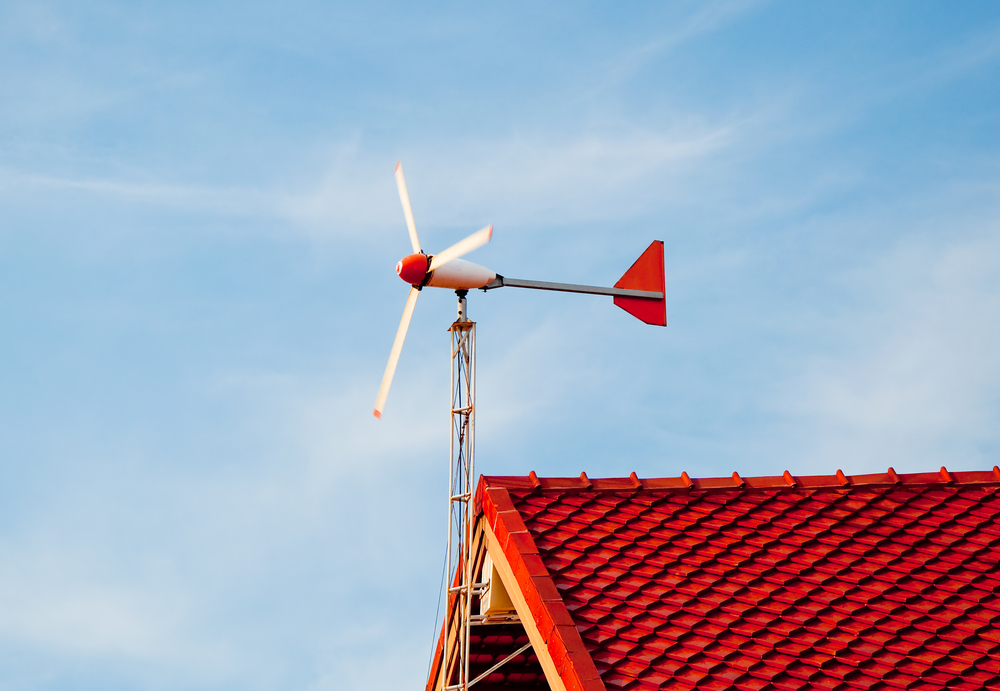
- Horizontal Axis Wind Turbines (HAWTs): These are what most people picture when they think of a wind turbine – propeller-like blades spinning around a horizontal shaft. They are often highly efficient in smooth, consistent wind, but typically require a yaw mechanism to turn into the wind.
- Vertical Axis Wind Turbines (VAWTs): These turbines have blades that rotate around a vertical shaft. They are often hailed as more suitable for urban environments because they are omni-directional (don’t need to turn into the wind) and can potentially tolerate turbulent air better. Examples include helical designs or Darrieus rotors.
- Emerging & Innovative Designs: This is where things get interesting, with companies constantly trying to overcome traditional challenges. You’ll hear about:
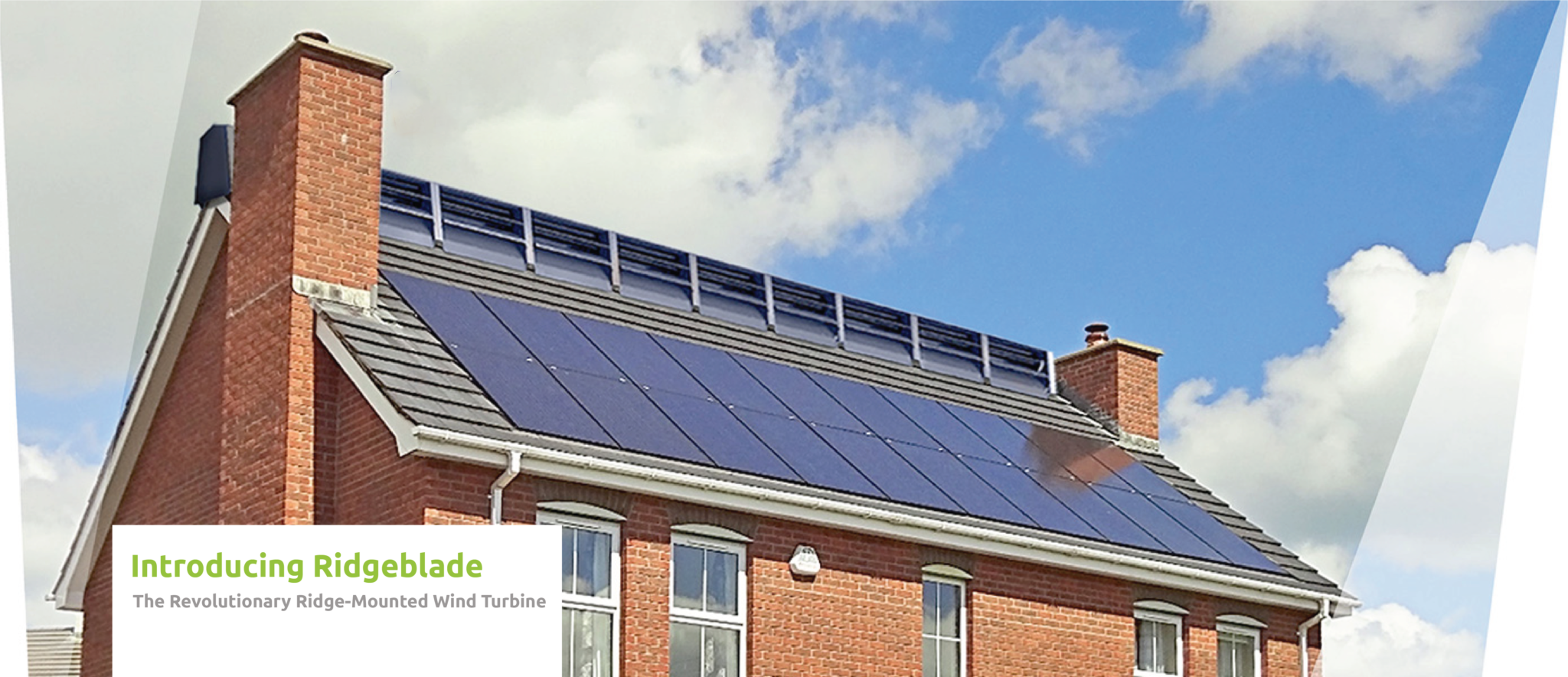
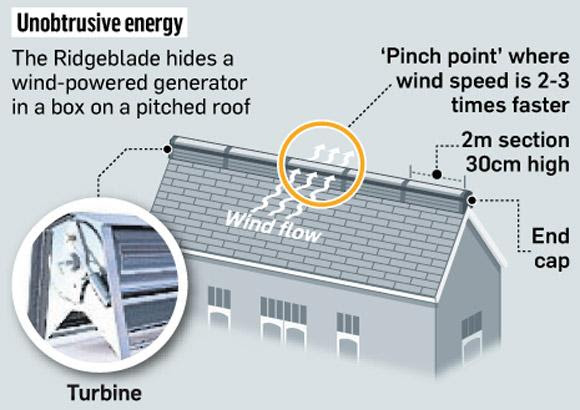
- Ridge-mounted turbines (e.g., Ridgeblade): Designed to sit on the peak of a roof, aiming to capture accelerated wind flow over the roofline.
- Shrouded or Ducted Turbines: These designs encapsulate the rotor within a housing or shroud, which can accelerate the wind passing through, potentially boosting efficiency and reducing noise. Companies like Cell Technologies with ‘The Blade’ are exploring compact, quiet designs for single-family homes.
- Building-integrated wind (BIWT): A more ambitious concept where the turbine is an integral part of the building’s architectural design, sometimes even placed within the structure itself.
The Allure vs. The Reality: Why Isn’t Rooftop Wind as Common as Solar?
This is the million-dollar question, and it’s where we get to the heart of the matter. The simple answer is that the physics and practicalities of wind power on a roof are fundamentally different, and often more challenging, than those for solar.
The Fundamental Challenge: Turbulent Air
Wind turbines, especially traditional HAWTs, thrive on smooth, laminar (non-turbulent) airflow. They need unobstructed wind streams to operate efficiently. The problem? Your roof, and the surrounding buildings, trees, and terrain, create a chaotic environment. Wind hitting your home creates eddies, swirls, and inconsistent gusts – highly turbulent air that drastically reduces a turbine’s efficiency and can even cause premature wear and tear.
This is why utility-scale wind farms are in open fields or offshore. Your rooftop is rarely an open field.
Noise Concerns: A Quiet Home is a Happy Home
While modern small turbines are much quieter than their predecessors, noise and vibration remain a significant concern for residential applications. Blades cutting through the air, gearboxes humming, and structural vibrations can transmit into the home, creating an unpleasant living environment. The closer a turbine is to living spaces, the more pronounced this issue becomes.
Efficiency and Output: Getting Enough Juice
Due to turbulent air and the inherent limitations of small-scale physics, rooftop wind turbines often struggle to generate a substantial amount of electricity compared to their cost or compared to a similarly sized solar array. You need a consistently high average wind speed for a turbine to produce meaningful power, and most residential roofs simply don’t offer that.
Aesthetics and Permitting: Blending In
Let’s be honest, a wind turbine on your roof isn’t everyone’s idea of curb appeal. While designs are improving, they are often still noticeable. This can lead to resistance from neighbors and challenges with homeowners’ associations (HOAs) or local zoning boards, making permitting a complex and lengthy process.
Cost vs. Benefit: The Economic Equation
The upfront cost of purchasing and installing a rooftop wind turbine system, including the turbine itself, inverter, mounting, and electrical work, can be substantial. When you factor in the lower-than-expected energy output in many locations, the payback period can be very long, making the return on investment (ROI) questionable for many homeowners.
When Does Rooftop Wind Power ACTUALLY Make Sense for a Home?
Despite the challenges, there are specific, limited circumstances where rooftop wind power can be a viable or even preferable option. It’s not a blanket solution, but for some, it holds real potential.
Ideal Home & Location Conditions
- Open, Unobstructed Roofline: Your home should ideally be the tallest structure in the immediate vicinity, with no tall trees, hills, or other buildings within a few hundred feet that could block or disturb wind flow.
- Consistently High Average Wind Speeds: This is non-negotiable. You need an average wind speed of at least 10-12 mph (4.5-5.5 m/s) at turbine height. Anything less, and the turbine will likely be more of a novelty than a power generator. A professional site assessment and wind resource survey are crucial.
- Rural or Semi-Rural Settings: These locations tend to have fewer obstructions and more consistent wind patterns, making them far more suitable than dense urban or suburban areas.
- Strong Grid Connection or Off-Grid Needs: If you have an unstable grid or are entirely off-grid, a small wind turbine, especially as part of a hybrid system, can provide critical power.
Specific Energy Needs & Goals
- Offsetting Specific Loads: Perhaps you have a specific, high-draw application that operates intermittently and aligns with windy periods, such as charging an EV or running a well pump.
- Hybrid Systems (Wind + Solar): This is often where wind truly shines. Solar panels are great during the day, especially on sunny days. Wind turbines can generate power at night, on cloudy days, and during winter storms when solar output is low. This complementary relationship provides a more consistent, year-round energy supply.
- Off-Grid Scenarios: For remote cabins, homesteads, or other off-grid applications, every kilowatt-hour counts. Wind can be a crucial component in maintaining battery charge and ensuring energy independence.
Rooftop Wind vs. Rooftop Solar: A Direct Comparison
It’s natural to compare the two leading residential renewable energy sources. While both aim to reduce your carbon footprint and electricity bills, they operate under different principles and excel in different conditions. Here’s a direct comparison:
| Criteria | Rooftop Wind Power | Rooftop Solar Power |
|---|---|---|
| Energy Source | Wind (Day & Night) | Sunlight (Daytime only) |
| Optimal Conditions | Consistent, non-turbulent wind (avg. 10-12+ mph) | Plenty of direct sunlight |
| Space Requirement | Requires clear, unobstructed roof area, often higher mounting for best results. | Roof space with good sun exposure, less sensitive to height. |
| Efficiency Challenges | Highly sensitive to turbulence, lower efficiency in urban settings. | Minor efficiency loss due to shading, temperature, angle. |
| Noise/Vibration | Can be a concern, especially for poorly sited or maintained units. | Essentially silent. |
| Maintenance | Potentially more moving parts, requiring periodic checks. | Minimal, occasional cleaning. |
| Aesthetics | More visually prominent, can face HOA/neighbor objections. | Generally considered more aesthetically acceptable, blends with roofline. |
| Permitting Ease | Often more complex due to noise, safety, and structural concerns. | Generally more streamlined, widely accepted. |
Complementary Partners: The Hybrid System
As the table above suggests, rooftop wind and solar are not necessarily competitors; they can be excellent partners. A hybrid renewable energy system, combining solar panels and a small wind turbine (either rooftop or freestanding pole-mounted), offers the best of both worlds. Solar covers your daytime needs, while wind can pick up the slack at night, on cloudy days, or during winter when sun exposure is lower. This combination leads to a more stable and reliable power supply, especially valuable for off-grid homes or those seeking maximum energy independence.
Types of Rooftop Wind Turbines for Residential Use
While the market for residential rooftop wind is smaller than solar, several types of turbines are designed with homeowners in mind. Understanding their characteristics is key to determining suitability.
Vertical Axis Wind Turbines (VAWTs)
Characteristics: VAWTs have blades that rotate around a vertical axis. They often have a distinctive, sometimes sculptural, appearance (think egg-beater or barrel shapes).
Pros:
- Omni-directional: They don’t need to orient themselves into the wind, making them potentially better suited for turbulent, shifting wind conditions found on roofs.
- Quieter Operation: Generally perceived as quieter than HAWTs due to lower tip speeds and different aerodynamic profiles.
- Lower Starting Speeds: Many VAWTs can start generating power at lower wind speeds.
- Easier Maintenance: Gearbox and generator are often at ground level, simplifying servicing.
Cons:
- Lower Efficiency: Typically less efficient at converting wind energy into electricity than HAWTs of comparable size.
- Less Mature Technology: The market has fewer proven, widely adopted residential VAWT designs compared to HAWTs.
- Taller Profile: Can still have a significant visual impact, depending on the design.
Horizontal Axis Wind Turbines (HAWTs)
Characteristics: These are the classic ‘propeller’ style turbines, often with 2 or 3 blades. For residential use, they are scaled-down versions of utility-grade turbines.
Pros:
- Higher Efficiency: Generally more efficient at capturing wind energy in smooth, consistent wind flows.
- Proven Technology: HAWTs have a longer history and more established track record in larger applications.
Cons:
- Needs to Yaw: Must constantly adjust to face the wind, which adds complexity and potential for wear.
- Sensitive to Turbulence: Perform poorly and wear out faster in turbulent, rooftop wind conditions.
- Potential for Noise: Blade ‘swish’ and mechanical noise can be more noticeable.
- Maintenance Difficulty: Components are typically at the top of the tower, making maintenance more challenging.
Emerging & Innovative Designs
The innovation space is vibrant, with companies attempting to solve the inherent challenges of rooftop wind. Some notable approaches include:
- Ridge-Mounted Turbines: Products like the Ridgeblade are designed to be integrated along the roof ridge, aiming to harness the accelerated wind that flows over the building’s peak. The idea is to capture this specific airflow more efficiently and discreetly.
- Shrouded or Ducted Designs: These turbines (sometimes referred to as diffuser-augmented or enclosed turbines) use a casing or shroud to funnel and accelerate wind through the rotor, increasing efficiency at lower wind speeds and potentially reducing noise. Projects like ‘The Blade’ by Cell Technologies represent this direction, focusing on compact, quiet, and efficient units for single-family homes. The concept of using shrouds has been around for centuries, and modern versions aim to optimize this effect.
- Small Footprint, High Output: The goal for many newer designs is to maximize power generation within a minimal physical and visual footprint, often by incorporating advanced aerodynamic principles and lightweight materials.
While these innovations hold promise, it’s crucial to look for independent performance data and long-term reliability for any new technology before investing.

Installation, Costs, and ROI: What to Expect
So, you’re still considering it? Great! Let’s talk about the practicalities: how do you get one, how much does it cost, and will it actually save you money?
Assessing Your Home’s Potential: Site Survey & Wind Resource Assessment
Before you do anything else, you absolutely need a professional wind resource assessment. This isn’t something you can eyeball. Experts will use anemometers (wind speed measuring devices) and sophisticated modeling software to determine the average wind speed and turbulence at your specific rooftop location over time. This data is critical for predicting potential energy output and confirming if your site is even remotely suitable.
Typical Installation Process
If your site proves viable, the installation process generally involves:
- Structural Analysis: Ensuring your roof and home can safely support the turbine’s weight and withstand its vibrations and wind loads.
- Mounting System: Installing a robust mounting pole or frame on the roof, often requiring penetrations and careful waterproofing.
- Turbine Assembly: Mounting the turbine itself onto the mast.
- Electrical Wiring: Connecting the turbine to an inverter (to convert AC to usable household power), charge controller (if using batteries), and then integrating it with your home’s electrical panel or battery bank.
- Permitting & Inspections: Navigating local building codes, electrical codes, and potentially HOA approvals.
Breaking Down the Costs
The cost of a residential rooftop wind system can vary widely based on the turbine type, size, brand, installation complexity, and location. Here’s a general breakdown:
| Component/Service | Estimated Cost Range (USD) | Notes |
|---|---|---|
| Turbine Unit (1-5 kW) | $3,000 – $15,000+ | Varies significantly by brand, type (VAWT/HAWT), and power output. |
| Inverter/Charge Controller | $1,000 – $3,000 | Converts turbine’s power to usable AC power; manages battery charging. |
| Mounting System/Tower | $1,000 – $5,000 | Specialized rooftop mounts or short towers. Structural reinforcement may be needed. |
| Installation Labor | $2,000 – $8,000+ | Highly dependent on complexity, roof type, and electrical work required. |
| Permitting & Inspection | $300 – $1,500+ | Local fees can vary greatly. |
| Battery Storage (Optional) | $5,000 – $20,000+ | Essential for off-grid or maximizing self-consumption. Adds significant cost. |
| TOTAL ESTIMATED COST (Grid-Tied) | $7,300 – $32,500+ | This excludes battery storage. |
The Payback Period: Is it Worth It?
Calculating the return on investment (ROI) and payback period for rooftop wind is complex. Factors influencing it include:
- Actual Wind Speeds: The most critical factor. Higher average wind speeds mean more generation.
- Electricity Rates: If you pay high electricity rates, the savings will be more significant.
- Government Incentives and Rebates: Federal tax credits (like the Investment Tax Credit, often 30% for renewables), state incentives, and local rebates can drastically reduce upfront costs. Check for specific small wind energy incentives in your area.
- System Longevity & Maintenance: A reliable system with low maintenance costs will have a better ROI.
For many, particularly in less-than-ideal wind locations, the payback period for rooftop wind can be 10-20+ years, sometimes even longer, making it less economically attractive than rooftop solar in most suburban and urban areas. However, for homes with excellent wind resources and high electricity costs, or strong environmental goals, the equation changes.
Living with a Rooftop Wind Turbine: Maintenance and Longevity
Just like any mechanical system, a rooftop wind turbine requires attention to ensure its long-term performance and safety. It’s not a ‘set it and forget it’ solution.
Routine Maintenance Tasks
While specific requirements vary by model, typical maintenance tasks include:
- Annual Inspections: Visual checks for wear and tear, loose bolts, cable integrity, and blade damage.
- Lubrication: For turbines with gearboxes or moving parts, periodic lubrication may be necessary.
- Blade Cleaning: To maintain aerodynamic efficiency, especially in dusty or coastal areas.
- Electrical System Checks: Ensuring all connections are secure and the inverter/charge controller is functioning optimally.
- Storm Preparation: Some turbines have braking mechanisms or can be lowered in anticipation of extreme weather.
Expected Lifespan and Warranty
A well-maintained small wind turbine can last 20 years or more, with major components (like the generator or blades) potentially needing replacement around the 10-15 year mark. Warranties typically cover 5-10 years for the turbine itself, with inverters often having shorter warranties. Always clarify what’s covered before purchase.
Addressing Concerns: Noise, Vibration, and Safety
Modern residential turbines are designed with noise reduction in mind, but it’s crucial to understand the real-world impact. Manufacturers provide decibel ratings, but these are often measured in ideal conditions. A reputable installer will help you understand potential noise impacts on your specific property.
Vibration is another concern, as it can transmit through the structure of your home. Proper mounting and isolation techniques are essential to mitigate this. Safety-wise, ensuring professional installation, regular maintenance, and adherence to all building codes are paramount. Turbines should always have automatic braking systems for high winds and overspeed protection.
The Future of Rooftop Wind Power
While rooftop wind faces an uphill battle against the ubiquity of solar, innovation continues. The drive for sustainable energy ensures that researchers and manufacturers are constantly seeking ways to improve performance, reduce cost, and enhance aesthetics.
Technological Advancements
Future advancements are likely to focus on:
- Improved Aerodynamics: Designs specifically tailored for turbulent rooftop conditions, potentially drawing inspiration from biomimicry.
- Quieter Operation: Further development in blade design and mechanical components to virtually eliminate noise and vibration.
- Enhanced Durability: More robust materials and intelligent monitoring systems to extend lifespan and reduce maintenance.
- Compact & Aesthetic Integration: Designs that blend more seamlessly into residential architecture, like the ongoing evolution of shrouded or ridge-mounted systems.
- Smart Control Systems: Turbines that can intelligently adjust to changing wind conditions, optimize output, and communicate with other smart home devices.
Integration with Smart Homes and Grid
The future of residential energy is holistic. Rooftop wind turbines, like solar, will increasingly integrate with smart home energy management systems, battery storage, and the broader grid. This will allow homeowners to optimize energy consumption, participate in demand response programs, and potentially sell excess power back to the grid more effectively.
Making Your Decision: Is Rooftop Wind Right for You?
After this deep dive, you should have a clearer picture of whether rooftop wind power is a dream or a realistic solution for your home. It’s not a simple ‘yes’ or ‘no’ answer; it’s a ‘maybe, if…’ scenario.
Rooftop wind power might be worth exploring if you:
- Live in a rural or semi-rural area with consistently high, unobstructed average wind speeds.
- Are looking to build a robust hybrid (wind + solar) off-grid system.
- Prioritize energy independence and sustainability above a rapid financial ROI.
- Are willing to invest in a thorough site assessment and a high-quality, professionally installed system.
It’s likely NOT the best option if you:
- Live in a dense urban or suburban area with lots of obstructions.
- Are primarily driven by maximizing financial returns and a quick payback period.
- Are concerned about potential noise or aesthetic impact.
- Have a roof that cannot easily accommodate the structural requirements.
The first and most critical step is to get a professional, unbiased site assessment. Don’t rely on general information; get data specific to your home. Only then can you make an informed decision that truly harnesses the power of the wind above your home, or pivot to another renewable solution like solar that might be a better fit.
Frequently Asked Questions
Are rooftop wind turbines noisy?
While modern small wind turbines are significantly quieter than older models, noise and vibration can still be a concern for residential installations, especially if not sited or installed correctly. Manufacturers often provide decibel ratings, but real-world experience can vary depending on wind conditions and proximity to living spaces. VAWTs are generally perceived as quieter than HAWTs.
How much power can a rooftop wind turbine generate?
The power output of a rooftop wind turbine depends heavily on its size, design, and critically, the average wind speed at its location. Most residential units range from 1 kW to 5 kW. In ideal, consistently windy conditions, a 2 kW turbine might generate 200-400 kWh per month, but this can drop significantly in turbulent or low-wind environments. A professional wind resource assessment is crucial for accurate predictions.
Is rooftop wind power more efficient than solar?
Generally, for typical residential settings, rooftop solar panels are often more efficient and cost-effective than rooftop wind turbines. Solar panels perform well with direct sunlight, which is abundant in many areas. Wind turbines require consistent, non-turbulent wind, which is often difficult to find at roof level. However, in specific locations with excellent wind resources and poor solar exposure, wind might be preferable or a valuable complement in a hybrid system.
What are the main drawbacks of rooftop wind turbines?
Key drawbacks include: sensitivity to turbulent air (common on rooftops), potential for noise and vibration, higher installation costs relative to power output in many locations, aesthetic concerns, and often more complex permitting requirements compared to solar. The economic payback period can also be longer for many homeowners.
How much does it cost to install a rooftop wind turbine?
The total cost for a grid-tied residential rooftop wind turbine system (1-5 kW) typically ranges from $7,300 to $32,500+, excluding optional battery storage. This includes the turbine unit, inverter, mounting system, installation labor, and permitting. Costs vary based on turbine type, size, brand, and installation complexity. Incentives can help offset these costs.
Do I need a lot of wind for a rooftop turbine to work?
Yes, consistent, strong wind is essential. Rooftop wind turbines require an average wind speed of at least 10-12 mph (4.5-5.5 m/s) at turbine height to generate meaningful power. Without sufficient, non-turbulent wind, the turbine’s output will be negligible, making the investment largely ineffective. A professional site assessment will measure your specific wind resource.
Can I combine rooftop wind with solar panels?
Absolutely! A hybrid system combining rooftop wind and solar panels is often the most effective residential renewable energy solution. Solar provides power during sunny days, while wind can generate electricity at night, on cloudy days, or during winter when solar output is lower. This combination offers a more consistent and reliable year-round energy supply, especially beneficial for off-grid homes.

:max_bytes(150000):strip_icc()/wind-turbine-generator-on-house-roof-90967703-b9619befbf954726ae92dfb6154711f2.jpg)