Rooftop Wind Power For Homes: Is It Time to Harness the Breeze?
You’ve seen solar panels blanketing rooftops across your neighborhood, silently converting sunlight into electricity. It’s an undeniable revolution. But what about wind? The idea of a personal wind turbine on your home might conjure images of massive, noisy structures more suited to open fields than suburban roofs.
Table of Contents
- Rooftop Wind Power For Homes: Is It Time to Harness the Breeze?
- The Unseen Potential: Why Rooftop Wind Is Different
- Beyond the Traditional Windmill: New Designs for Home Use
- How Rooftop Wind Turbines Actually Work (Simplified)
- Types of Rooftop Wind Turbines for Your Home: A Closer Look
- The Big Question: Rooftop Wind vs. Solar – A Head-to-Head Battle
- Advantages of Having Rooftop Wind Power
- The Realities & Challenges: Why It’s Not For Everyone (Yet)
- What Does Rooftop Wind Cost? Breaking Down the Numbers
- Is Your Home a Good Candidate? Key Factors to Consider
- The Future of Rooftop Wind: Innovations on the Horizon
- Making the Decision: Your Next Steps
Let’s be real: rooftop wind power for homes hasn’t had the same viral moment as solar. It’s often misunderstood, sometimes dismissed, and certainly surrounded by more questions than answers. But what if I told you the landscape is changing? What if there are new, innovative designs emerging that could make harnessing your home’s personal breeze a genuine possibility?
This isn’t about replacing solar; it’s about understanding a powerful, often overlooked player in the home renewable energy game. We’re diving deep into the practicality, the technology, the costs, and whether rooftop wind power could be a smart addition to your home’s energy strategy. Forget what you think you know about windmills – let’s explore the unseen potential.
The Unseen Potential: Why Rooftop Wind Is Different
For decades, residential wind power meant a tall pole in the backyard with a traditional, propeller-style turbine. While effective in the right conditions, these setups often faced challenges: large land requirements, significant noise, complex permitting, and aesthetic concerns. Rooftop wind aims to solve some of these issues by integrating directly with your home’s existing structure.
The core challenge, and often the reason for skepticism, lies in the nature of wind itself. Unlike consistent sunlight, wind near a building can be turbulent, unpredictable, and less powerful than wind at higher altitudes. This is known as wind shear. Traditional turbines struggle in these conditions, leading to poor efficiency and high maintenance. This is where innovation steps in.
Beyond the Traditional Windmill: New Designs for Home Use
Forget the classic three-bladed behemoths. The world of rooftop wind is evolving with designs specifically tailored for residential environments, often prioritizing aesthetics, low noise, and efficiency in turbulent conditions.
- Vertical-Axis Wind Turbines (VAWTs): These turbines have blades that rotate around a vertical axis. Think of an egg beater or a Savonius rotor. They are generally quieter, can capture wind from any direction without needing to yaw (turn into the wind), and often have a smaller footprint. This makes them more suitable for urban and suburban rooftops where wind direction can shift rapidly.
- Horizontal-Axis Wind Turbines (HAWTs – small scale): These are the mini versions of the classic propeller-style turbines. While generally more efficient at converting wind energy into electricity in steady, high winds, their traditional design often struggles with the turbulent wind found on rooftops. However, some smaller, optimized HAWTs are designed for lower wind speeds and reduced noise.
- Emerging Technologies: RidgeBlade, Shrouded, and Motionless Systems: This is where things get truly interesting.
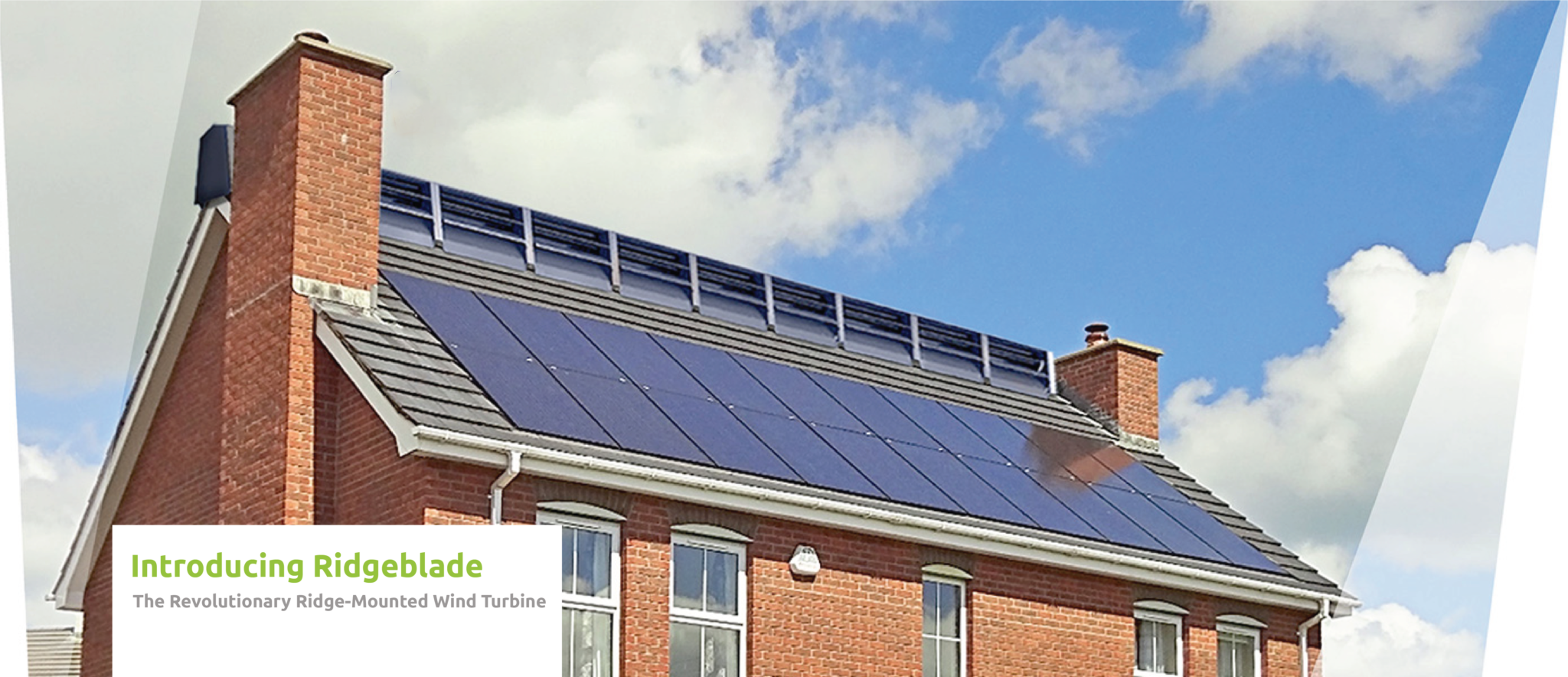
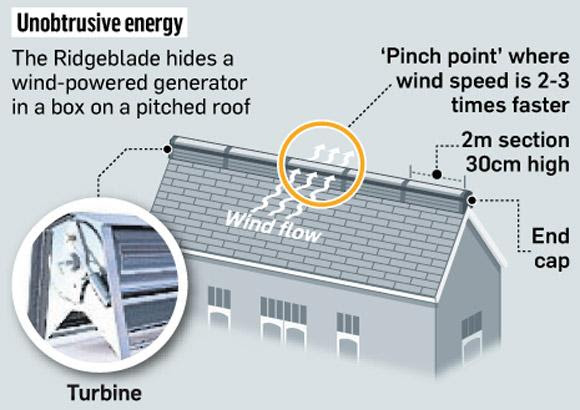
- RidgeBlade Turbines: These innovative designs are installed directly on the ridge of your roof. They are horizontal, capturing wind that flows up and over the roof, essentially accelerating the wind across the turbine’s blades. They claim high efficiency and stealthy integration.
- Shrouded (Ducted) Turbines: These systems enclose the turbine blades within a funnel-like shroud or duct. The shroud helps to accelerate the wind entering the turbine, increasing its power output, and also acts as a noise dampener. They can look more like a vent than a traditional turbine.
- Motionless Wind Energy Systems (e.g., Aeromine): Perhaps the most radical departure, these systems have no exposed moving blades. Instead, they use aerodynamics, akin to an airplane wing, to capture and amplify wind flow, directing it to internal generators. The appeal? Virtually silent operation, minimal maintenance, and a sleek, building-integrated appearance.
How Rooftop Wind Turbines Actually Work (Simplified)
At its core, a rooftop wind turbine system for your home shares principles with any wind power generator, scaled down and optimized for a residential setting. Here’s the breakdown:
- Wind Capture: The turbine blades (or aerodynamic surfaces, in the case of motionless systems) are designed to capture the kinetic energy of the wind. As wind pushes against these surfaces, it causes the rotor to spin.
- Rotation to Electricity: This mechanical rotation drives a generator. Inside the generator, magnets spin past coils of wire, inducing an electric current. This is typically AC (Alternating Current) power.
- Inversion: The raw AC power from the turbine often needs to be converted and conditioned. An inverter changes the variable AC power from the turbine into usable AC power that matches your home’s electrical system (and the grid, if you’re connected).
- Storage or Grid Connection: The electricity generated can then either be directly used by your home, stored in a battery bank for later use (especially useful for off-grid or hybrid systems), or fed back into the electrical grid, potentially earning you credits through net metering programs (if available in your area).
- Monitoring & Control: A charge controller manages the flow of electricity, protecting batteries from overcharging and ensuring the system operates safely and efficiently.
It’s a ballet of physics and engineering, all designed to turn a gust of wind into the power that runs your lights and appliances.
Types of Rooftop Wind Turbines for Your Home: A Closer Look
Choosing the right rooftop wind turbine isn’t a one-size-fits-all decision. It depends heavily on your specific location, wind conditions, aesthetic preferences, and budget. Here’s a comparison of the main types you might encounter:
| Type | Key Characteristics | Pros | Cons | Ideal Application |
|---|---|---|---|---|
| Vertical-Axis Wind Turbines (VAWTs) | Blades rotate around a vertical axis; often appear cylindrical or egg-beater shaped. | Quieter operation, omnidirectional (no yawing required), better in turbulent winds, smaller footprint, often more aesthetically pleasing. | Generally lower efficiency than HAWTs in steady winds, can be more expensive per kWh. | Urban/suburban areas with variable wind directions, where noise and aesthetics are key concerns. |
| Horizontal-Axis Wind Turbines (HAWTs – small scale) | Traditional propeller-style, blades rotate around a horizontal axis; requires a tail vane to orient into the wind. | High efficiency in steady, laminar wind flow, well-understood technology. | Can be noisy, less effective in turbulent rooftop wind, requires yawing mechanism, more visible/less aesthetically integrated. | Rural settings with clear, consistent wind resources, taller structures where turbulence is less of an issue. |
| RidgeBlade Turbines | Designed to sit directly on the apex (ridge) of a pitched roof, utilizing accelerated wind flow over the roofline. | Discreet integration with roofline, leverages natural wind acceleration, relatively quiet. | Specific roof type required (pitched), performance highly dependent on roof shape and local wind dynamics. | Homes with pitched roofs in areas with good prevailing winds and low obstructions. |
| Shrouded (Ducted) Turbines | Turbine blades enclosed within a funnel or duct, which accelerates wind and reduces noise. | Increased power output due to wind acceleration, quieter operation, more compact appearance. | Can be bulkier than open designs, potentially higher manufacturing cost, still requires moving parts. | Urban/suburban settings where efficiency boost and noise reduction are critical. |
| Motionless Wind Energy Systems | No exposed moving parts; uses aerodynamic surfaces to capture and amplify wind flow to internal generators. | Virtually silent, minimal maintenance, sleek building-integrated aesthetics, high efficiency in turbulent winds. | Newer technology, higher initial cost, limited availability, specific roof mounting requirements. | Any home where aesthetics, silence, and low maintenance are top priorities, particularly in urban environments. |
The Big Question: Rooftop Wind vs. Solar – A Head-to-Head Battle
It’s the comparison everyone wants to make. Rooftop solar is the undisputed champion of home renewable energy right now. So, how does rooftop wind stack up? It’s not a simple case of one being ‘better’ than the other; rather, they serve different, sometimes complementary, roles.
| Feature | Rooftop Wind Power | Rooftop Solar Power |
|---|---|---|
| Energy Production Profile | Can generate power day and night, whenever wind is present. Stronger in winter months in many regions. | Generates power only during daylight hours, peaking midday. Stronger in summer months. |
| Space Requirement | Requires a specific footprint for the turbine, often elevated above the roof line for optimal wind capture. | Utilizes broad, flat roof areas (or pitched roofs) with good sun exposure. |
| Maintenance | Moving parts (blades, bearings, generator) require periodic inspection and maintenance. | Minimal moving parts; occasional cleaning of panels, inspection of wiring. |
| Noise & Vibration | Can be a concern with traditional designs, though modern VAWTs and motionless systems are much quieter. | Virtually silent operation. |
| Aesthetics | Can be a visual feature, though newer designs aim for integration (e.g., RidgeBlade, motionless). | Generally considered acceptable, becoming a common sight. Can be less obtrusive when flush-mounted. |
| Cost (Initial & LCOE) | Generally higher initial cost per watt than solar. Levelized Cost of Energy (LCOE) can be higher due to less predictable output and maintenance. | Lower initial cost per watt, with established incentives. Very competitive LCOE due to predictable output and low maintenance. |
| Ideal Conditions | Consistent average wind speeds (10-12 mph+ recommended), clear wind path free from major obstructions. | Ample unobstructed sunlight, south-facing roof preferred (in Northern Hemisphere). |
| Permitting Complexity | Can be more complex due to noise ordinances, height restrictions, and structural concerns. | Generally streamlined permitting process, widely accepted. |
| Reliability | Wind is intermittent and highly localized, making output less predictable without detailed site assessment. | Sunlight is predictable based on seasons and weather, making output forecasts reliable. |
| Hybrid Synergy | Excellent complement to solar, providing power when solar panels aren’t (at night, cloudy days). | Can be paired with wind to create a more consistent year-round energy supply. |
As you can see, rooftop wind isn’t a direct competitor to solar in most cases. It’s often a different solution for different needs, or a powerful partner in a comprehensive hybrid system.
Advantages of Having Rooftop Wind Power
Despite its challenges, rooftop wind power offers several compelling benefits that make it an attractive option for the right homeowner:
- Nighttime and Cloudy Day Production: This is the standout advantage. Unlike solar, which ceases production at dusk, a wind turbine can generate electricity 24/7, as long as there’s wind. This significantly reduces reliance on grid power during off-peak solar hours.
- Complementary to Solar: When combined with solar panels, a hybrid wind-solar system can provide a more consistent and reliable energy supply throughout the year. Solar excels in summer days, wind often performs better in winter months and at night, creating a powerful synergy.
- Reduced Carbon Footprint: Like all renewables, wind power is a clean energy source. By generating your own electricity from the wind, you reduce your household’s reliance on fossil fuels and lower your overall carbon emissions.
- Potential for Energy Independence: For those seeking to reduce or eliminate their grid dependence, rooftop wind, especially when paired with battery storage, offers a path toward greater self-sufficiency.
- Lower Land Footprint: Compared to large, ground-mounted wind turbines, rooftop systems utilize existing vertical space, making them a more feasible option for homeowners with limited yard space.
- Harnessing an Underexploited Resource: In many areas, wind is an abundant, free resource that often goes untapped. Rooftop turbines allow you to capture a portion of this energy right where you need it.
The Realities & Challenges: Why It’s Not For Everyone (Yet)
It would be disingenuous to only focus on the positives. Rooftop wind power faces several significant hurdles that prevent its widespread adoption:

- Wind Availability & Consistency: This is paramount. For a turbine to be effective, you need consistent, relatively unobstructed wind. Rooftops often experience highly turbulent wind due to surrounding buildings, trees, and the roof’s own shape (wind shear). A site assessment is critical to determine if your location has a viable wind resource.
- Noise & Vibration Concerns: While modern designs are quieter, moving parts inevitably generate some noise. This can be a significant concern for homeowners and neighbors, potentially leading to local ordinance issues. Vibration transferred through the roof structure can also be a problem.
- Maintenance Requirements: Unlike solar panels, which are largely ‘install and forget’ (aside from occasional cleaning), wind turbines have moving parts that require periodic inspection, lubrication, and potential replacement over time. This adds to the long-term cost of ownership.
- Aesthetics & Zoning/Permitting: Many communities have strict rules about visible structures on roofs, especially those that generate noise or could be perceived as unsightly. Permitting for wind turbines can be more complex and time-consuming than for solar.
- Cost vs. Output: The initial investment for a rooftop wind system can be substantial, and the energy output can be less predictable and potentially lower than anticipated if wind conditions aren’t ideal. This can lead to a longer payback period compared to solar.
- Structural Integrity of the Roof: A wind turbine exerts forces (wind load, vibration) on your roof structure. Your roof needs to be able to safely support the turbine’s weight and withstand these forces, often requiring professional structural assessment and reinforcement.
What Does Rooftop Wind Cost? Breaking Down the Numbers
The cost of installing a rooftop wind power system can vary widely based on the turbine type, size, installation complexity, and whether you’re integrating battery storage. Here’s a general breakdown:
| Component | Estimated Cost Range (USD) | Key Considerations |
|---|---|---|
| Turbine Unit (1-5 kW residential) | $3,000 – $15,000+ | Price varies significantly by type (VAWT, HAWT, Motionless), power output, and manufacturer. Motionless systems can be on the higher end. |
| Installation Labor | $2,000 – $8,000+ | Includes mounting, wiring, structural reinforcement, and connection to your electrical system. Can vary based on roof type and complexity. |
| Inverter | $1,000 – $4,000 | Converts raw turbine power to usable AC power for your home/grid. Sizing depends on turbine output. |
| Battery Storage (Optional) | $8,000 – $20,000+ | Highly recommended for maximizing self-consumption and energy independence. Adds significant cost. |
| Permitting & Inspection | $200 – $1,500+ | Costs for applications, engineering reviews, and local inspections. Can vary widely by municipality. |
| Maintenance (Annual) | $100 – $500 | Covers inspections, lubrication, and potential minor repairs. More extensive repairs would be additional. |
Total Estimated System Cost (without battery): $6,200 – $28,500+
Total Estimated System Cost (with battery): $14,200 – $48,500+
These are rough estimates. It’s crucial to get multiple quotes from qualified installers after a thorough site assessment. While the initial investment might seem high, consider potential long-term savings on electricity bills, increased property value, and available incentives (like the federal solar tax credit, which sometimes applies to wind, or state/local programs).
Is Your Home a Good Candidate? Key Factors to Consider
Before you get swept away by the idea of harnessing the wind, objectively evaluate if your home is truly suited for a rooftop wind system:
- Wind Resource Assessment: This is non-negotiable. You need consistent, strong enough wind.
- Wind Maps: Start with online wind maps for your region (e.g., from the Department of Energy) to get a general idea.
- Professional Site Assessment: A qualified installer can conduct a detailed site survey, potentially using an anemometer (wind speed measuring device) to gather data specific to your roof over a period. Look for areas with an average annual wind speed of at least 10-12 mph (4.5-5.4 m/s) for conventional turbines to be economically viable. Newer, low-wind turbines might perform at slightly lower speeds.
- Obstructions: Are there tall buildings, trees, or other structures nearby that could create turbulence or block the wind path to your roof?
- Local Regulations & Permitting: Check with your local planning and zoning department. What are the height restrictions? Are there noise ordinances? Do you need special permits for wind turbines? HOAs can also have specific rules.
- Roof Structure & Space:
- Structural Integrity: Can your roof safely bear the weight and dynamic forces (wind load, vibration) of a turbine? A structural engineer’s assessment may be required.
- Available Space: Do you have enough clear roof space for the turbine, considering setback requirements from edges and other roof equipment?
- Noise Tolerance: Are you and your neighbors sensitive to noise? While modern turbines are quieter, they are rarely completely silent. Consider the impact on your living environment.
- Energy Needs: How much electricity does your household consume? A rooftop turbine is typically meant to supplement, not entirely replace, grid power for most homes, though larger systems can make a significant dent.
- Budget: As discussed, rooftop wind is an investment. Ensure you have a realistic budget for initial costs, installation, and ongoing maintenance.
The Future of Rooftop Wind: Innovations on the Horizon
While solar has had its moment, the wind industry is not standing still. Research and development are continuously pushing the boundaries of what’s possible for residential wind power:
- Smarter Designs, Quieter Operation: Engineers are constantly refining blade aerodynamics and structural designs to minimize noise and vibration while maximizing efficiency, especially in turbulent urban environments.
- Higher Efficiency in Low Winds: The focus is shifting to turbines that can effectively generate power at lower average wind speeds, broadening their applicability.
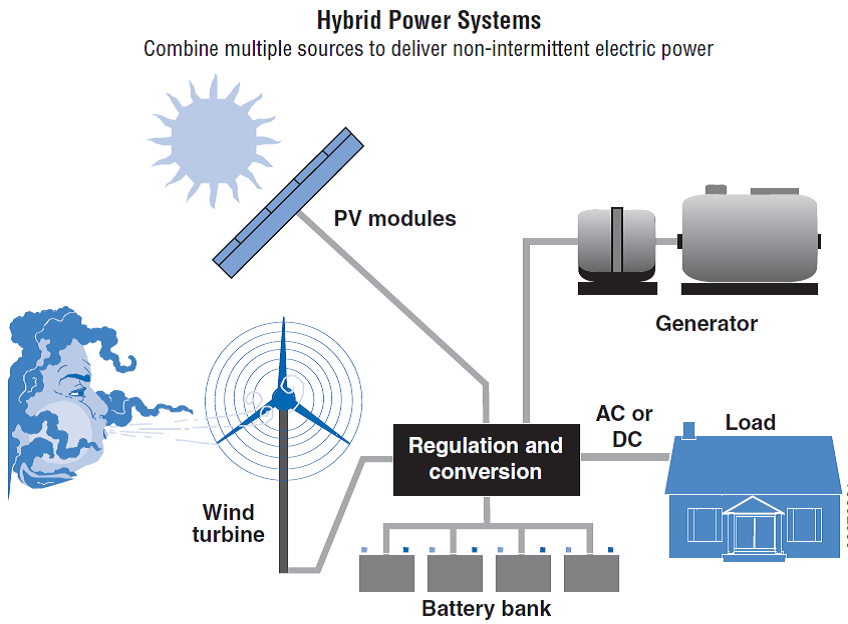
- Hybrid Systems (Wind + Solar): This is perhaps the most promising direction. Combining wind and solar, often with advanced battery storage and smart energy management systems, offers a truly resilient and consistent power supply.
- Building-Integrated Wind: The ultimate goal is often seamless integration where the wind capture mechanisms are an intrinsic part of the building’s architecture, as seen with some motionless designs or integrated ridge systems.
- Advanced Materials and Manufacturing: Lighter, stronger, and more durable materials, combined with advanced manufacturing techniques, are reducing costs and improving longevity.
The pace of innovation means that what seems impractical today could be a game-changer tomorrow. Keeping an eye on these developments is key for any homeowner interested in long-term renewable energy solutions.
Making the Decision: Your Next Steps
So, after all this, is rooftop wind power for homes right for you? It’s clear it’s not a universal solution, but for the right homeowner in the right location, it offers a distinct advantage, especially when paired with solar.
Here’s how to approach your decision:
- Educate Yourself Further: Read reviews, watch videos of various systems (especially VAWTs, RidgeBlades, and motionless systems), and understand their specific pros and cons.
- Consult Professionals: Reach out to reputable renewable energy installers in your area. Look for companies that have experience with both solar and wind, or specialize in small wind.
- Get a Site Assessment: Insist on a thorough wind resource assessment tailored to your specific property and roof. This is the single most important step.
- Understand Permitting & HOAs: Get clear on all local regulations and homeowner association rules *before* you get too far down the path.
- Consider Hybrid Options: If your property has both good sun and decent wind, explore a hybrid system. This often provides the best of both worlds, offering more consistent power generation.
- Compare Quotes: Get multiple quotes for different suitable systems. Ensure the quotes are comprehensive and detail all costs (equipment, installation, permitting, estimated annual production, warranties).
Rooftop wind power for homes is a specialized, evolving niche within residential renewable energy. It demands careful consideration and realistic expectations. While it may not be as ubiquitous as solar, for those with the right conditions and a desire to truly diversify their home’s energy production, harnessing the breeze from your roof could be a remarkably rewarding venture.
Frequently Asked Questions
Is rooftop wind power a viable option for most homes?
Rooftop wind power is a viable, though niche, option. It’s not for most homes due to the specific requirements for consistent, unobstructed wind, potential noise concerns, and structural considerations. However, for homes in areas with good wind resources and the right roof structure, especially with newer turbine designs, it can be a highly effective energy solution or a powerful complement to solar.
How much does it cost to install a rooftop wind turbine for a home?
The total cost for a residential rooftop wind system can range from approximately $6,200 to over $28,500, excluding optional battery storage. With battery storage, costs can jump to $14,200 – $48,500+. This includes the turbine unit, installation labor, inverter, and permitting. Costs vary significantly based on turbine type, size, and installation complexity.
How does rooftop wind compare to rooftop solar?
Rooftop wind generates power day and night when wind is present, often excelling in winter. Solar generates power during daylight, peaking in summer. Solar has lower maintenance and is generally quieter and more aesthetically accepted. Wind typically has higher initial costs per watt and more complex permitting. They are often best utilized together in a hybrid system for consistent year-round production.
What are the main types of rooftop wind turbines for homes?
The main types include Vertical-Axis Wind Turbines (VAWTs), Horizontal-Axis Wind Turbines (HAWTs – small scale), RidgeBlade turbines (integrated into roof peaks), Shrouded/Ducted Turbines, and innovative Motionless Wind Energy Systems. Each type has distinct characteristics, pros, and cons regarding efficiency, noise, aesthetics, and suitability for turbulent rooftop winds.
What factors determine if my home is suitable for rooftop wind power?
Key factors include: 1) A thorough wind resource assessment showing consistent average wind speeds (ideally 10-12 mph+); 2) Local regulations and permitting for height, noise, and zoning; 3) Your roof’s structural integrity and available space; 4) Your tolerance for potential noise and aesthetic impact; and 5) Your overall energy needs and budget.
Are rooftop wind turbines noisy?
Traditional propeller-style HAWTs can be noisy, especially in higher winds. However, modern VAWTs, shrouded designs, and particularly motionless wind energy systems are engineered for significantly quieter operation, making them much more suitable for residential areas where noise is a major concern. A professional site assessment should include an evaluation of potential noise impact.