Silent Wind Turbines For The Home: Your Definitive Guide to Whisper-Quiet Renewable Energy
Picture this: you’re committed to clean energy, eager to reduce your carbon footprint, and maybe even escape the relentless grip of your monthly electricity bill. You’ve considered solar, but you know that sometimes the sun doesn’t shine. What about wind? The idea of harnessing nature’s power, day or night, rain or shine, is incredibly appealing. But then the nagging thought creeps in: the noise.
Table of Contents
- Silent Wind Turbines For The Home: Your Definitive Guide to Whisper-Quiet Renewable Energy
- Understanding the Noise Factor: Why Traditional Turbines Are Loud
- The Dawn of Quiet: What Makes a Wind Turbine “Silent”?
- Vertical Axis Wind Turbines (VAWTs): The Quieter Alternative
- How They Work and Noise Reduction:
- Pros for Homes:
- Cons:
- Bladeless Wind Turbines: Revolutionary Vibration Power
- How They Work and Noise Reduction:
- Pros for Homes:
- Cons:
- Other Innovations: Enclosed and Small-Scale HAWTs with Noise Reduction
- Choosing Your Quiet Companion: A Comparative Look at Home Wind Turbines
- Real-World Performance: What Can a Home Silent Wind Turbine Really Deliver?
- Power Output & Energy Needs
- Complementing Solar: The Wind-Solar Hybrid Advantage
- Installation, Cost & ROI: Making Your Home Wind Ready
- Siting Your Turbine: Location, Location, Location
- What Does a Silent Wind Turbine System Cost?
- The Payback Period: Is It Worth The Investment?
- Navigating Regulations and Permits
- Conclusion: The Future is Quietly Green
Traditional wind turbines, even the smaller ones, can be noisy. The swish, the hum, the mechanical whir – it’s not exactly the soundtrack you want for your backyard oasis. So, you’re searching for the holy grail: a silent wind turbine for your home. Is it a pipe dream, or is this technology finally within reach? I’m here to tell you, it’s closer than you think, and it’s not just about quiet operation; it’s about smart design, innovative physics, and a fresh approach to residential renewable energy.
In this guide, we’ll dive deep into what makes a wind turbine truly quiet, explore the cutting-edge technologies making it possible, compare your best options, and give you a realistic roadmap for bringing this exciting future to your doorstep. Get ready to embrace the breeze, silently.
Understanding the Noise Factor: Why Traditional Turbines Are Loud
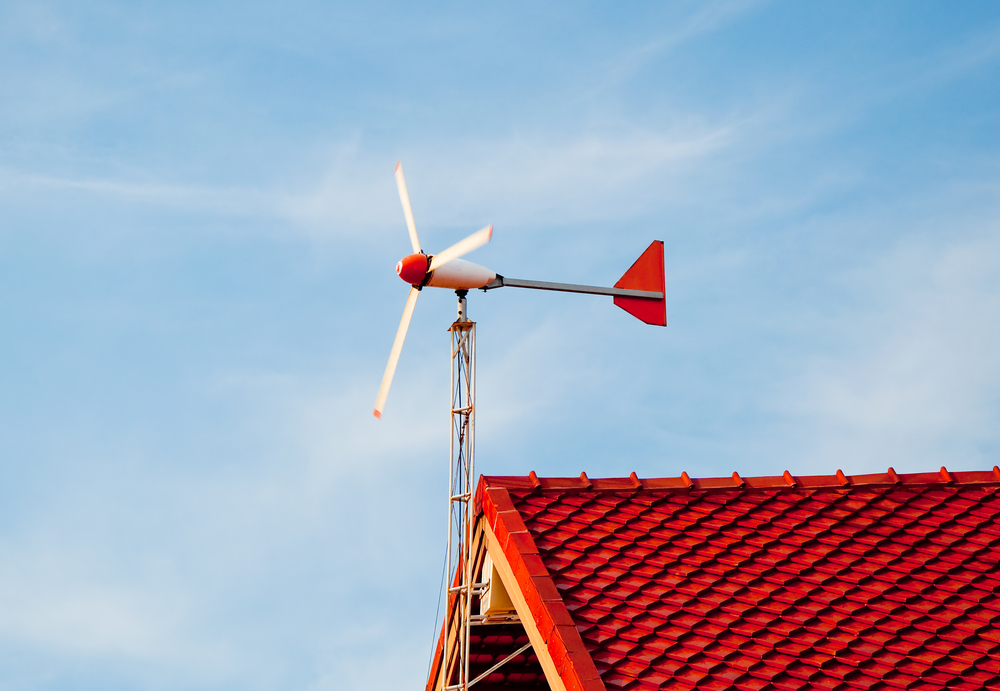
Before we explore the quiet solutions, let’s understand why their predecessors were so boisterous. The noise from traditional, propeller-style Horizontal Axis Wind Turbines (HAWTs) primarily comes from two sources:
- Aerodynamic Noise (Blade Pass Noise): This is the dominant sound. As the turbine blades slice through the air, they create turbulence and vortices, especially at the blade tips where speeds are highest. This causes a distinct “whooshing” or “swishing” sound. Think of it like a giant fan blade moving through the air. The faster the blades spin, the louder this noise becomes.
- Mechanical Noise: This includes sounds from the gearbox, generator, yaw drive (which turns the turbine into the wind), and other moving parts within the nacelle (the housing behind the blades). While often less noticeable than aerodynamic noise in larger turbines, it can contribute significantly to the overall sound profile in smaller, less refined residential units.
For large utility-scale turbines, noise is managed through careful siting away from residential areas and advanced blade designs. But for a homeowner, having one of these miniature versions in your yard or on your roof means these noise factors become a direct concern. Local ordinances often have strict noise limits, and let’s be honest, nobody wants their renewable energy solution to be a nuisance to themselves or their neighbors. This push for quiet has fueled incredible innovation in the home wind energy sector.
The Dawn of Quiet: What Makes a Wind Turbine “Silent”?
When we talk about “silent” wind turbines, we’re not implying absolute zero decibels (dB) – even a gentle breeze makes some sound. Instead, we’re talking about devices that operate at noise levels so low they are virtually imperceptible over ambient background noise, often below 35-40 dB (the sound level of a quiet library or a whispered conversation). This remarkable reduction is achieved through fundamental design changes that minimize or eliminate the primary noise sources of traditional HAWTs.
Vertical Axis Wind Turbines (VAWTs): The Quieter Alternative
VAWTs are perhaps the most recognizable alternative to traditional propeller turbines, and for good reason: they address the noise issue head-on. Instead of spinning horizontally, their blades rotate around a vertical axis. This design offers several distinct advantages for residential applications, especially concerning noise.
How They Work and Noise Reduction:
Unlike HAWTs, VAWTs capture wind from any direction, eliminating the need for a yaw mechanism (a common source of mechanical noise). More importantly, their blades typically operate at lower tip speeds and often have unique aerodynamic profiles that reduce the “blade-slap” effect common in HAWTs. Since the entire structure spins vertically, there’s less abrupt air disturbance.
Common types of VAWTs include:
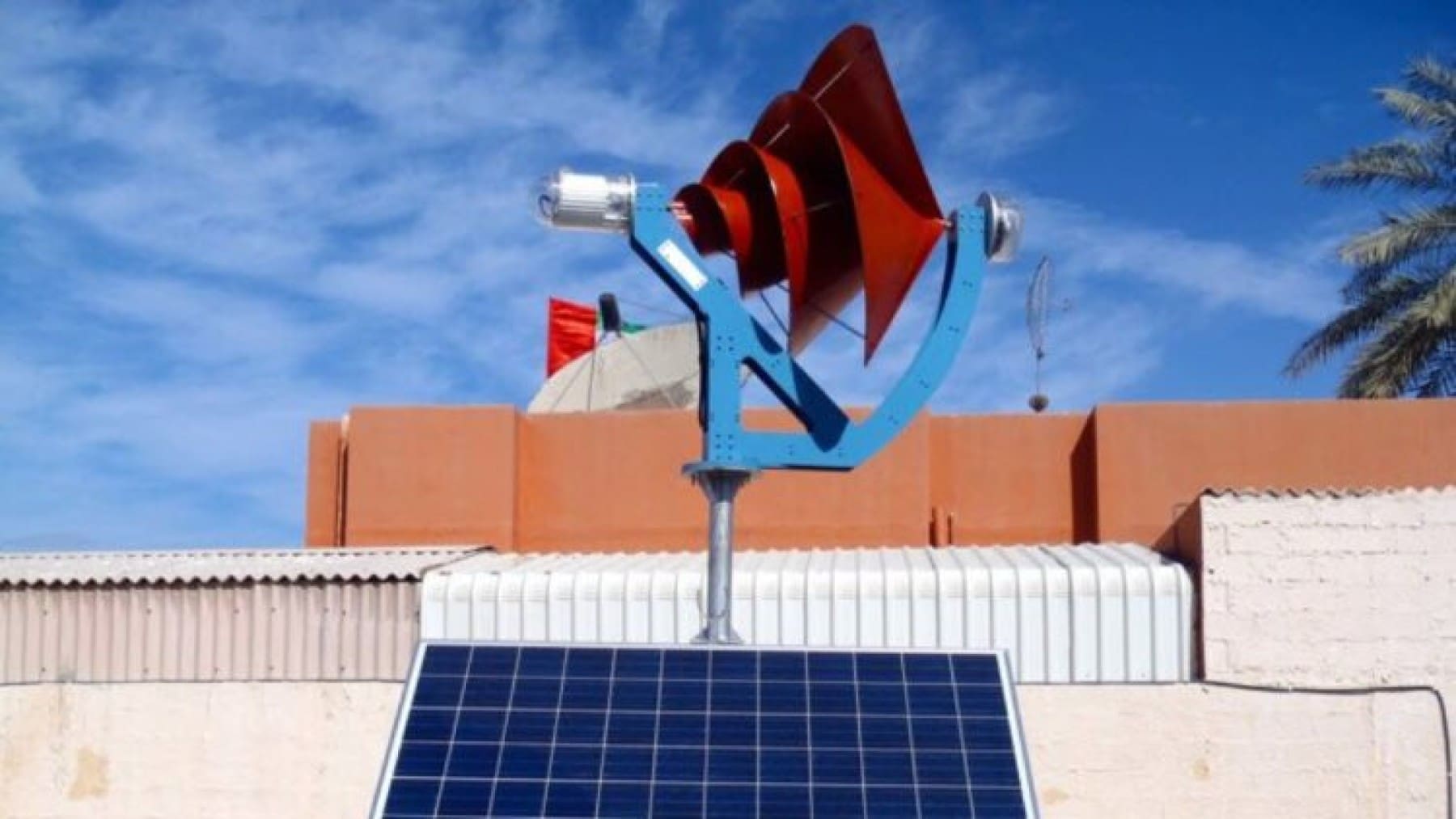
- Savonius Turbines: These are drag-type devices, often looking like cut-open barrels. They start easily in low wind but are generally less efficient. Their slow, deliberate rotation contributes to their quiet operation.
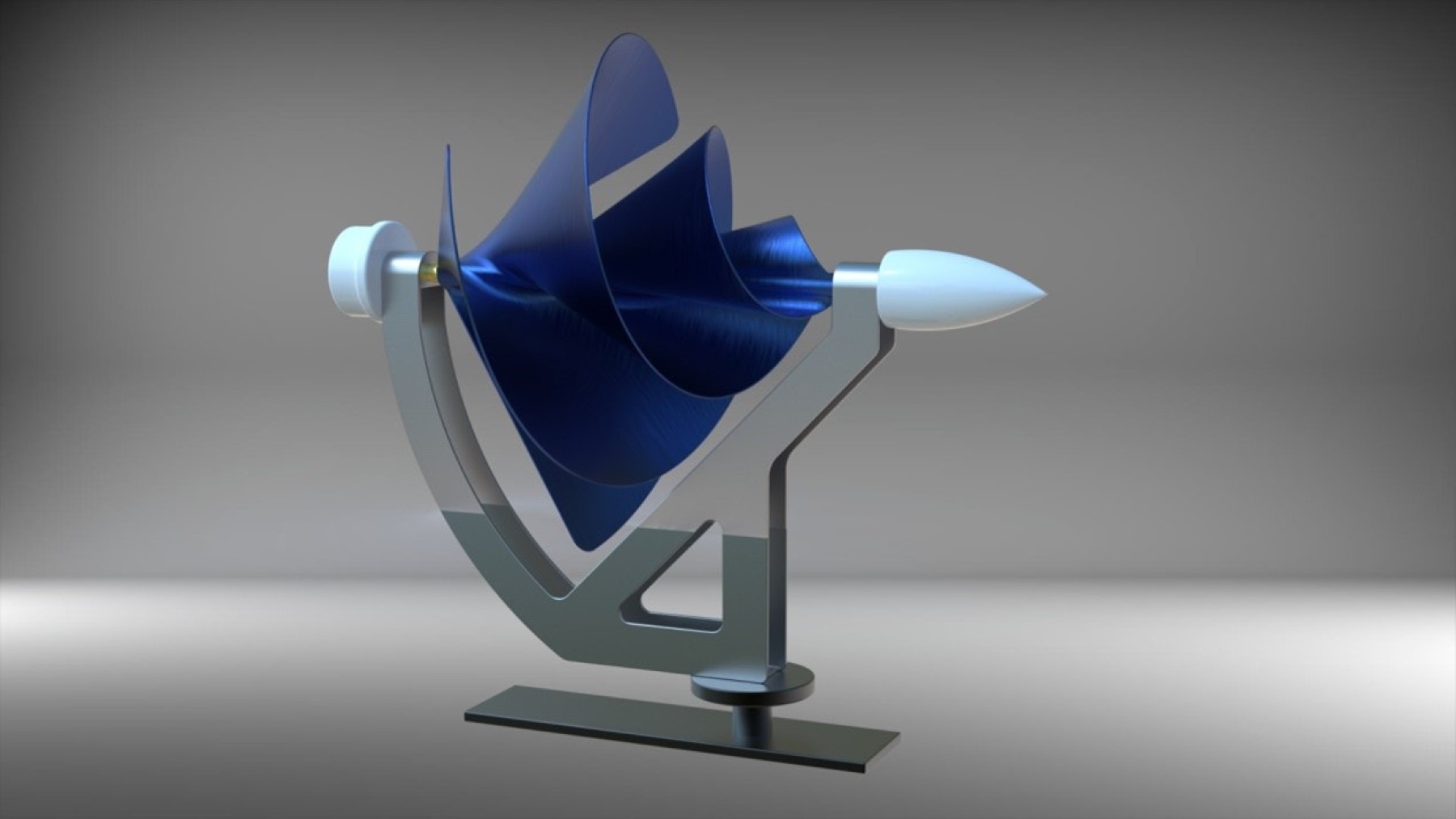
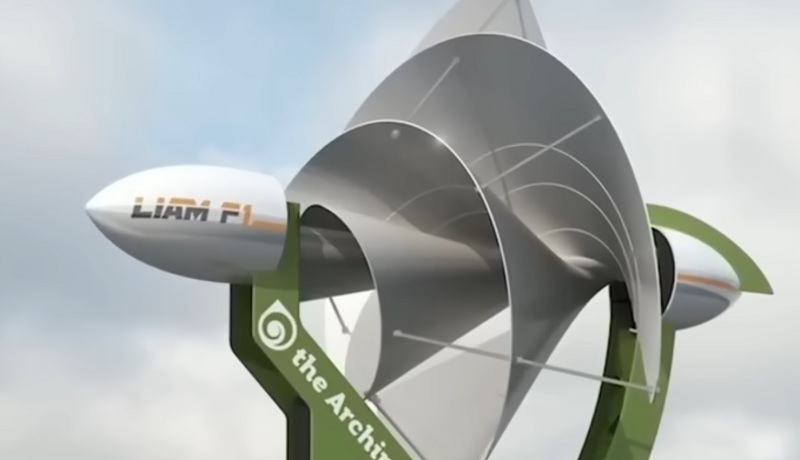
- Darrieus Turbines: These are lift-type devices, often characterized by their egg-beater or helical shapes. They are more efficient than Savonius but require an external push to start. Modern helical Darrieus designs, like some offered by TESUP, significantly reduce noise by having blades that smoothly transition through the wind, avoiding the sharp changes in angle that cause turbulence.
Pros for Homes:
- Significantly Quieter: Often operating well below 40 dB, making them ideal for residential areas.
- Aesthetics: Many find their vertical, sculptural forms more visually appealing and less intrusive than traditional propellers.
- Less Space Required: They can be mounted closer to buildings or on rooftops more easily.
- Better in Turbulent Wind: Their design makes them less sensitive to sudden changes in wind direction, which is common in urban or suburban environments.
Cons:
- Typically Lower Efficiency: While improving, VAWTs often have a lower coefficient of performance (Cp) compared to high-end HAWTs, meaning they convert less of the wind’s energy into electricity for a given swept area.
- More Complex Designs: Some high-efficiency VAWTs can involve intricate engineering, which can impact cost.
Bladeless Wind Turbines: Revolutionary Vibration Power
If VAWTs were an evolution, bladeless wind turbines are a revolution. Companies like Vortex Bladeless are at the forefront of this groundbreaking technology. As the name suggests, these devices have no rotating blades at all. Instead, they harness wind energy through a phenomenon called aeroelastic resonance or vortex shedding.
How They Work and Noise Reduction:
Imagine a flag flapping in the wind. The flag doesn’t spin; it vibrates. Bladeless turbines work on a similar principle. They consist of a tall, mast-like structure, often made of lightweight composite materials, anchored to the ground. As wind flows past this structure, it creates vortices (mini-whirlwinds) on the leeward side. When the frequency of these vortices matches the natural resonant frequency of the mast, it begins to oscillate or vibrate rapidly back and forth. This mechanical vibration is then converted into electricity using linear generators located at the base of the mast.
The beauty of this design, from a noise perspective, is profound:
- No Blades, No Blade-Slap: The primary source of noise in traditional turbines is completely eliminated.
- Minimal Moving Parts: With no gears, shafts, or bearings turning at high speeds, mechanical noise is drastically reduced, often to an almost imperceptible hum from the generator.
Pros for Homes:
- Truly Minimal Noise: These are arguably the quietest form of wind energy generation currently under development, often operating below 25-30 dB.
- Bird and Bat Friendly: Without rotating blades, the risk to wildlife is virtually eliminated.
- Low Maintenance: Fewer moving parts mean less wear and tear and simpler maintenance schedules.
- Aesthetics: Their sleek, sculptural design can be seen as an architectural feature rather than an industrial one.
Cons:
- Nascent Technology: While promising, bladeless technology is still relatively new and not yet widely available for mass residential consumption compared to VAWTs or small HAWTs. Power output per unit is also currently lower than conventional turbines of similar size.
- Space Requirement: While the footprint is small, they need space for oscillation, which could be a factor in very dense urban settings.
Other Innovations: Enclosed and Small-Scale HAWTs with Noise Reduction
Even traditional HAWT designs are evolving to be quieter for residential use. Some manufacturers are developing micro-HAWTs with:
- Optimized Blade Aerodynamics: Redesigned blades with serrated edges or unique tip shapes that minimize turbulence and reduce acoustic emissions.
- Enclosed Generators: Housing the generator and other mechanical components in sound-dampening enclosures to absorb noise.
- Direct Drive Systems: Eliminating gearboxes to reduce mechanical noise and improve reliability.
- Diffuser-Augmented Turbines: Some designs incorporate shrouds or diffusers around the blades to capture more wind and reduce tip vortex noise, though these can increase the overall footprint.
These innovations aim to bring the efficiency of HAWTs closer to residential comfort levels, offering another pathway to quiet home wind power.
Choosing Your Quiet Companion: A Comparative Look at Home Wind Turbines
With several promising technologies available or on the horizon, how do you decide which silent wind turbine is right for your home? Let’s break down the key factors in a detailed comparison.
| Feature | Standard Small HAWT | Residential VAWT (Helical/Savonius) | Bladeless Turbine (e.g., Vortex) | Low-Noise Micro-HAWT |
|---|---|---|---|---|
| Typical Noise Level (at 10m) | 45-60 dB (audible hum/whirr) | 35-45 dB (quiet hum, often masked by wind) | < 30 dB (almost imperceptible) | 38-48 dB (significantly quieter than standard HAWT) |
| Efficiency (Wind to Electricity) | Good (35-45%) | Moderate (25-35%) | Emerging (15-30% in current prototypes) | Good (30-40%) |
| Aesthetics | Traditional “propeller” look, can be visually dominant. | Modern, sculptural, less intrusive, often blends well. | Minimalist mast, unique, futuristic, often perceived as art. | More refined propeller look, sometimes with shrouds. |
| Maintenance | Moderate (blade inspection, moving parts). | Lower (fewer high-speed parts, often direct drive). | Very Low (minimal moving parts, designed for longevity). | Moderate (focused on specific noise-reducing components). |
| Typical Cost Range (Unit only) | $1,000 – $10,000+ | $2,000 – $15,000+ | Currently higher for prototypes, expect $3,000 – $20,000+ (as market matures). | $1,500 – $12,000+ |
| Best Use Case | Rural properties with strong, consistent wind, minimal noise concerns. | Suburban/urban homes, areas with turbulent wind, noise sensitivity. | High-density residential, eco-conscious, desire for cutting-edge tech. | Residential areas where HAWT efficiency is desired but noise is a factor. |
As you can see, each technology has its sweet spot. For many homeowners seeking a truly silent solution, VAWTs are the most mature and readily available option, with bladeless technology quickly gaining ground as it moves from prototype to commercialization.
Real-World Performance: What Can a Home Silent Wind Turbine Really Deliver?
Understanding the technology is one thing; knowing what it can actually do for your home is another. Let’s talk power, potential, and how wind fits into your overall energy strategy.
Power Output & Energy Needs
Residential wind turbines typically range in power output from a few hundred watts (e.g., 400W) for micro-turbines to 10 kilowatts (kW) or more for larger home systems. To put that in perspective, the average U.S. home uses about 800-900 kWh per month, or roughly 1 kW of continuous power. A single 1 kW wind turbine, operating at its rated capacity consistently, could theoretically cover a significant portion of that, but consistent operation is key.
Here’s the reality: a wind turbine’s output isn’t constant. It depends entirely on the wind speed. Turbines have a cut-in speed (when they start producing power), a rated speed (when they hit maximum output), and a cut-out speed (when they shut down for safety). For instance, a Primus Wind Power Air Silent X starts producing at wind speeds as low as 7 mph (3.13 m/s), which is great for many locations.
To accurately gauge what a silent wind turbine can deliver for *your* home, you need a wind resource assessment. This involves understanding the average wind speeds at your specific location and how frequently those optimal speeds occur. A good rule of thumb is that for residential wind to be truly effective, you ideally want an average wind speed of at least 10-12 mph (4.5-5.5 m/s) at the turbine’s hub height.
Complementing Solar: The Wind-Solar Hybrid Advantage
One of the most compelling arguments for a home wind turbine, silent or otherwise, is its ability to complement solar panels. This creates a hybrid wind-solar energy system that offers unparalleled reliability for residential power generation.
Here’s why it’s a brilliant pairing:
- Seasonal Variability: Solar panels perform best in summer when days are long and sunny. Wind resources, however, often peak in winter when cold fronts bring stronger, more consistent winds. This seasonal complementarity means you’re generating power year-round.
- Daily Cycles: Solar panels obviously only produce power during the day. Wind turbines, especially those designed for residential areas, can generate electricity 24/7, including cloudy days and nights when solar is offline.
- Increased Energy Security: By diversifying your renewable energy sources, you reduce your reliance on any single weather pattern. This means more consistent power generation and greater energy independence.
- Optimal Battery Storage Use: A hybrid system can keep your battery bank topped up more consistently, ensuring you have power even during extended periods of low wind or cloud cover.
Many homeowners are finding that a smaller, quiet wind turbine paired with a robust solar array offers the best of both worlds, leading to significantly lower electricity bills and a much smaller carbon footprint. This approach moves you closer to true net-zero or even off-grid living.
Installation, Cost & ROI: Making Your Home Wind Ready
So, you’re convinced that a silent wind turbine is a viable option. Now, let’s talk practicalities: where do you put it, how much will it cost, and when will you see a return on your investment?
Siting Your Turbine: Location, Location, Location
Even the quietest turbine won’t be effective if it’s not sited correctly. Wind is a complex resource, and its availability can vary dramatically even within a small property. Here are key considerations:
- Clear Airflow: Turbines need unobstructed wind. Trees, buildings, hills, and other structures create turbulence and wind shadows, significantly reducing a turbine’s performance. The general rule is that a turbine should be at least 30 feet (9 meters) higher than any obstacle within a 500-foot (150-meter) radius. This often means a tall tower is necessary.
- Tower Height: While some micro-turbines can be roof-mounted, most residential units perform much better on a dedicated tower. The higher you go, the stronger and less turbulent the wind generally is.
- Proximity to Home: For silent turbines, this is less about noise and more about cable runs and potential aesthetics. While they are quiet, you still need to respect property lines and local zoning.
A professional site assessment is highly recommended. They can use anemometers (wind speed measuring devices) and specialized software to model wind patterns on your property, ensuring you place your turbine for maximum efficiency.
What Does a Silent Wind Turbine System Cost?
The total cost of a silent wind turbine system can vary widely depending on the turbine’s size, type, tower height, balance-of-system components, and installation complexity. Here’s a breakdown of typical costs:
- Turbine Unit: As seen in our comparison table, a residential VAWT or low-noise micro-HAWT can range from $2,000 to $15,000+ for the turbine itself. Bladeless turbines, being newer, may initially be at the higher end or have limited availability.
- Tower: This is a significant cost. A suitable tower for a home wind turbine can range from $1,000 to $10,000+, depending on height, material, and whether it’s guyed, freestanding, or tilt-up.
- Balance of System (BOS) Components: This includes the inverter (to convert DC power to AC), charge controller (for battery systems), wiring, grounding, and safety disconnects. Expect another $1,500 – $5,000+.
- Battery Storage (Optional but Recommended for Hybrid): If you’re pairing with solar or want off-grid capability, a home battery bank can add $10,000 – $20,000+, depending on capacity.
- Installation: Professional installation can add 20-30% to the total project cost, or typically $2,000 – $8,000+ depending on complexity.
Factoring all this in, a complete, installed silent wind turbine system for a typical home could range anywhere from $8,000 to $40,000+, especially if including significant battery storage. While this seems like a hefty upfront investment, remember you’re investing in decades of reduced or eliminated electricity bills.
The Payback Period: Is It Worth The Investment?
The return on investment (ROI) for a home wind turbine isn’t always straightforward, but it can be substantial. Several factors influence your payback period:
- Local Electricity Rates: If you live in an area with high electricity rates (e.g., California, Hawaii, Northeast US), your savings will be greater, and your payback period shorter.
- Wind Resource: Consistently strong winds mean more energy production and faster savings.
- System Size and Cost: A well-sized, cost-effective system will naturally have a better ROI.
- Financial Incentives: This is where things get interesting. Look for:
- Federal Tax Credits: The U.S. federal government offers a 30% Investment Tax Credit (ITC) for residential renewable energy systems, including wind. This is a dollar-for-dollar reduction in your federal tax liability.
- State and Local Rebates/Incentives: Many states, municipalities, and even utilities offer their own incentives, grants, or property tax exemptions for renewable energy.
- Net Metering: Most states have net metering policies that allow you to send excess electricity generated by your turbine back to the grid and receive credits on your bill.
With a good wind resource and favorable incentives, the payback period for a home wind turbine system can range from 8 to 15 years. After that, your electricity is essentially free, saving you tens of thousands of dollars over the system’s 20-25+ year lifespan. Beyond the financial, many homeowners value the energy independence, environmental benefits, and increased property value that renewable energy systems provide.
Navigating Regulations and Permits
Before you commit to a home wind turbine, it’s crucial to understand the regulatory landscape. Permitting can be one of the most challenging aspects of residential wind installation:
- Local Zoning Laws: These vary widely by municipality. You’ll need to check regulations regarding structure height limits, setback requirements (distance from property lines), and specific allowances for wind energy systems. Some areas have outright bans on residential turbines, while others have streamlined processes.
- Homeowners Association (HOA) Restrictions: If you live in an HOA, be prepared for additional hurdles. Many HOAs have strict rules on exterior modifications and may require extensive approval processes or forbid turbines altogether.
- Grid Connection Requirements: If you plan to connect your turbine to the grid (for net metering), your utility company will have specific interconnection agreements and safety standards that must be met. This often involves specific inverter types and safety disconnects.
- Building Permits: Installation of a tower and the electrical work will almost certainly require building and electrical permits, ensuring your system meets safety codes.
Starting with a conversation with your local planning department and a reputable wind installer who understands local regulations is the best first step. They can guide you through the process and identify any potential roadblocks early on.
Conclusion: The Future is Quietly Green
The dream of harnessing wind power at home, without the intrusive noise, is no longer a distant fantasy. Thanks to innovative designs like Vertical Axis Wind Turbines and revolutionary bladeless technology, silent wind turbines for the home are becoming an increasingly viable and attractive option for eco-conscious homeowners across the USA. These systems offer not just a pathway to energy independence but do so with minimal impact on your peace and quiet.
By understanding the different technologies, carefully assessing your home’s wind resource, and considering a hybrid wind-solar approach, you can create a robust, resilient, and virtually silent renewable energy system. The initial investment is significant, but the long-term savings, environmental benefits, and the profound satisfaction of generating your own clean power make it a future worth investing in. The wind is calling – and now, you can answer it quietly.
Frequently Asked Questions
How
Silent wind turbines are designed to operate at noise levels significantly lower than traditional propeller turbines, often in the range of 25-45 dB. This means they are typically as quiet as a whispered conversation or a quiet library, often imperceptible over ambient background noise, especially for bladeless designs.
Are bladeless wind turbines available for purchase right now?
Bladeless wind turbine technology, like the Vortex Bladeless design, is still relatively new and moving from prototype to commercialization. While some early models might be available, they are not yet as widely distributed or mass-marketed for residential use as VAWTs or small HAWTs. Availability is expected to increase as the technology matures.
Can I power my entire home with a silent wind turbine?
Potentially, yes, but it depends on your home’s energy consumption and your local wind resource. A single residential wind turbine typically produces a few hundred watts to several kilowatts. For most homes, a single turbine might cover a significant portion, but a hybrid wind-solar system paired with battery storage offers greater reliability and a higher chance of fully meeting your energy needs, especially if aiming for off-grid living.
How much space do silent wind turbines require?
VAWTs generally have a smaller footprint than HAWTs of comparable power and can often be roof-mounted or placed closer to buildings. Bladeless turbines, while not spinning, still require sufficient space for their oscillation, usually a clear area around the mast. All wind turbines, regardless of type, need unobstructed airflow, meaning they often require a certain height above surrounding obstacles, necessitating a tower or a clear rooftop.
What is the average lifespan of a home wind turbine?
A well-maintained home wind turbine system, including silent models, typically has an operational lifespan of 20 to 25 years or even longer. Components like inverters might need replacement every 10-15 years, and batteries have their own lifespans, but the core turbine structure is built for durability.
Do silent wind turbines require a lot of maintenance?
One of the advantages of silent wind turbine designs, especially VAWTs and bladeless systems, is often reduced maintenance. With fewer high-speed moving parts or even no blades at all, there’s less wear and tear. Regular checks for wear, loose connections, and overall system health are typically recommended, but complex gearbox maintenance found in large HAWTs is generally absent.
Can I install a silent wind turbine myself?
While small, micro-turbines might be marketed as DIY-friendly, the installation of any home wind turbine system, especially those involving towers, electrical wiring, and grid connection, is complex and best handled by certified professionals. This ensures safety, compliance with local codes, optimal performance, and eligibility for warranties and incentives. A qualified installer can also assist with site assessment and permitting.