Single-Family Home Wind Turbines: Your Definitive Guide to Going Off-Grid (or Just Cutting Bills)
Dreaming of a future where your home runs on clean, renewable energy? Maybe you’ve seen those sleek wind turbines spinning gracefully in the distance and thought, “Could that work for my house?” It’s a compelling idea: harness the wind, generate your own electricity, and dramatically cut those ever-increasing utility bills. But for a single-family home, the reality of owning a wind turbine is a bit more complex than just installing a solar panel.
Table of Contents
- Single-Family Home Wind Turbines: Your Definitive Guide to Going Off-Grid (or Just Cutting Bills)
- The Unvarnished Truth: When Residential Wind Power Truly Makes Sense
- Ideal Conditions for a Home Wind Turbine
- Red Flags: When a Home Wind Turbine is Probably NOT for You
- Understanding Small Wind Turbines: Types, Sizes, and How They Work
- Horizontal-Axis Wind Turbines (HAWTs)
- Vertical-Axis Wind Turbines (VAWTs)
- Sizing Your System: What Kilowatt Do You Really Need?
- Key Components of a Home Wind System
- The Cost Factor: What Will a Home Wind Turbine Really Set You Back?
- Upfront Costs: Turbine, Tower, Installation, and More
- Ongoing Expenses: Maintenance and Unexpected Repairs
- The ROI Question: When Does it Pay Off?
- Wind vs. Solar for Single-Family Homes: A Head-to-Head Showdown
- Power Production Profile: Day vs. Night, Winter vs. Summer
- Space Requirements & Aesthetics
- Efficiency and Maintenance
- Cost Comparison & Payback Period
- Navigating the Red Tape: Permits, Zoning, and Neighborly Relations
- Local Regulations: A Deep Dive into Zoning and Permitting
- The Application Process: What to Expect
- Being a Good Neighbor: Addressing Concerns (Noise, Shadow Flicker)
- Installation and Maintenance: What to Expect After the Decision
- Finding the Right Installer: Certifications and Experience
- The Installation Process (Brief Overview)
- Keeping it Running: Essential Maintenance Tips
- Is a Hybrid Wind-Solar-Battery System the Ultimate Solution for You?
- Making an Informed Choice for Your Energy Future
So, let’s get straight to it: Is a wind turbine right for YOUR home? The answer isn’t a simple yes or no. It depends heavily on your specific location, local regulations, energy needs, and frankly, your budget and patience. In this comprehensive guide, I’m going to walk you through everything you need to know, from the ideal conditions to the hidden challenges, helping you make a truly informed decision about whether a single-family home wind turbine is your path to energy independence.
The Unvarnished Truth: When Residential Wind Power Truly Makes Sense
Before you get swept away by the romantic idea of a spinning turbine, let’s be realistic. Small wind turbines aren’t for everyone. They excel in specific environments. Understanding these conditions upfront can save you a lot of time, money, and potential headaches.
Ideal Conditions for a Home Wind Turbine
- Consistent High Wind Speeds: This is the absolute non-negotiable. If you don’t have consistent, strong winds (ideally an average of 10-12 mph or more year-round), a wind turbine simply won’t generate enough power to be economically viable. Think wide-open spaces, hilltops, or coastal areas.
- Rural or Semi-Rural Locations: You need space – not just for the turbine itself, but for the necessary setback from property lines, buildings, and other obstructions. Rural areas generally have fewer zoning restrictions and more open airspace.
- High Electricity Bills / Desire for Energy Independence: If you’re paying a fortune for electricity and want to sever ties (or at least reduce them significantly) with the utility company, wind power can be a powerful solution, especially when paired with storage.
- Specific Situations: Maybe you have an off-grid cabin where running power lines is prohibitively expensive, or you want to supplement an existing solar array for year-round energy production. Wind can be excellent in these niche scenarios.
Red Flags: When a Home Wind Turbine is Probably NOT for You
- Urban/Suburban Settings: Tight property lines, neighboring homes, and existing structures often mean insufficient space, excessive zoning restrictions, and potential noise/aesthetic complaints. Buildings create turbulence, drastically reducing efficiency.
- Low Average Wind Speeds: If a professional site assessment reveals your average wind speed is below 9-10 mph, your turbine will spend more time idle than producing, leading to a very poor return on investment.
- Budget Constraints: Residential wind turbines have a higher upfront cost per watt compared to solar panels. If your budget is tight, solar might be a more accessible entry point into home renewables.
- Nuisance Factors: Even small turbines can generate some noise and, in certain light conditions, cause ‘shadow flicker’ (the shadow of the blades passing over a fixed point). These can be deal-breakers for you or your neighbors.
Understanding Small Wind Turbines: Types, Sizes, and How They Work
Small wind turbines, generally ranging from 400 watts to 100 kilowatts, are designed to power individual homes or small businesses. Let’s break down the main types and what they entail.
Horizontal-Axis Wind Turbines (HAWTs)
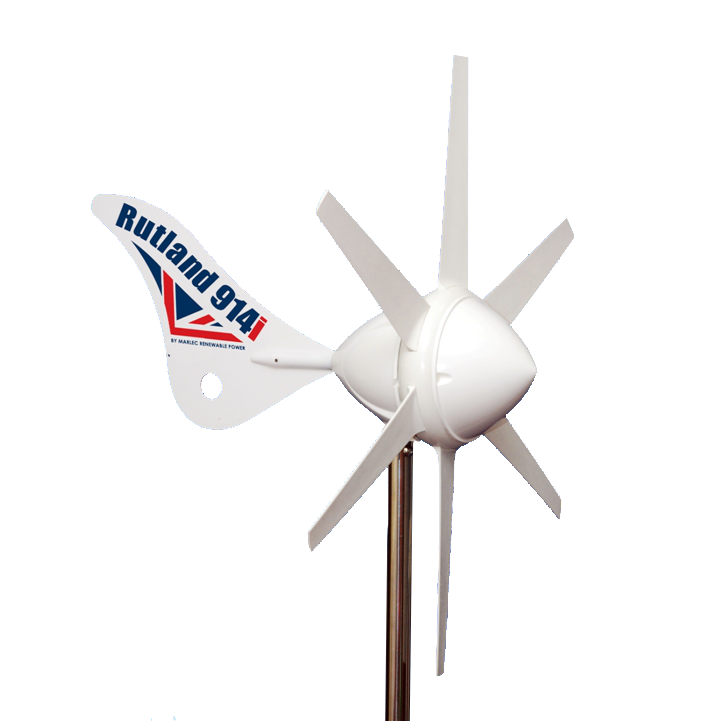
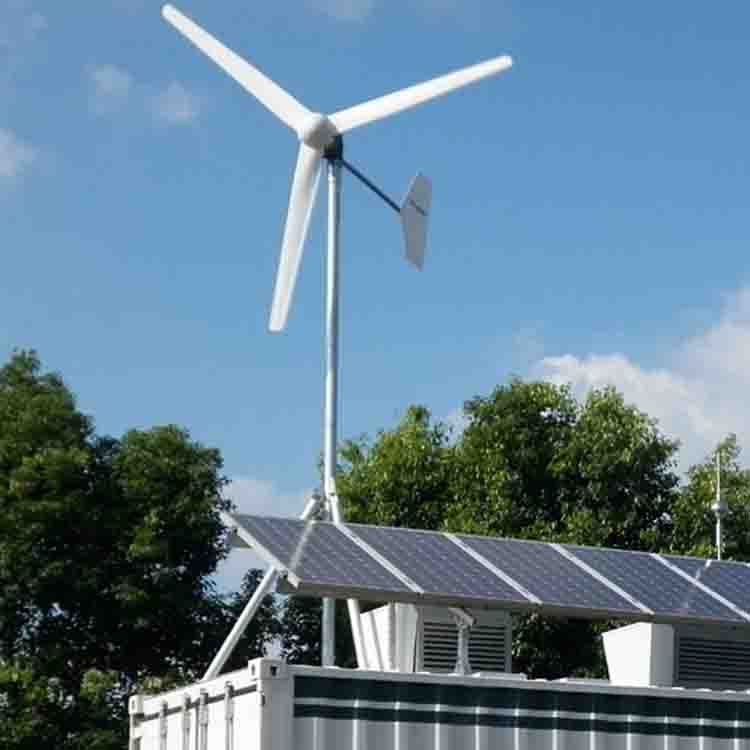
These are what most people picture: the classic ‘windmill’ design with three blades on a horizontal rotor, resembling their much larger utility-scale cousins. They need to face into the wind, often requiring a tail fin to orient them. They are generally more efficient at converting wind into electricity and are the most common type for residential use. However, they can be louder and more sensitive to shifting wind directions.
Vertical-Axis Wind Turbines (VAWTs)
VAWTs have blades that rotate around a vertical axis. They look quite different, often resembling egg beaters (Darrieus type) or scoops (Savonius type). Their main advantage is that they don’t need to be oriented into the wind, making them suitable for more turbulent or gusty conditions. They are often perceived as quieter and have a smaller footprint. However, they are typically less efficient than HAWTs per dollar invested and produce less power for a given rotor area.
Sizing Your System: What Kilowatt Do You Really Need?
Figuring out the right size wind turbine for your home is crucial. You don’t want to overspend on a system that produces too much or underspend on one that leaves you reliant on the grid. Here’s how to approach it:
- Calculate Your Average Energy Consumption: Look at your past utility bills. Most bills show your monthly kilowatt-hour (kWh) usage. Sum up a year’s worth and divide by 12 for your average monthly consumption.
- Assess Your Wind Resource: This is where a professional site assessment comes in. They’ll use anemometers to measure average wind speeds at potential turbine heights.
- Match Turbine Output: Small wind turbines are rated by their peak power output (e.g., 5 kW). However, their actual energy production (kWh/month) depends heavily on the average wind speed at your location.
Here’s a general idea of typical home energy needs and the turbine size that *might* meet them in a good wind resource (average 12+ mph):
| Home Size / Energy Needs (Average kWh/month) | Estimated Turbine Size (kW) * | Typical Tower Height (feet) |
|---|---|---|
| Small Home / Low Use (300-600 kWh) | 1-5 kW | 30-60 feet |
| Medium Home / Average Use (600-1,200 kWh) | 5-15 kW | 60-100 feet |
| Large Home / High Use (1,200+ kWh) | 15-20 kW+ | 80-120 feet |
*Disclaimer: These are rough estimates. Actual power output varies significantly with wind speed, turbine model, and site specifics. A professional assessment is essential.
Key Components of a Home Wind System
It’s more than just the turbine. A complete system involves several critical parts:
:max_bytes(150000):strip_icc()/wind-turbine-generator-on-house-roof-90967703-b9619befbf954726ae92dfb6154711f2.jpg)
- Turbine Blades & Generator: The visible part that captures wind energy and converts it into electricity.
- Tower: Lifts the turbine high enough to catch consistent, less turbulent wind. Taller towers mean more power. Common types are guyed (supported by cables) and self-supporting (freestanding) towers.
- Charge Controller: Regulates the voltage and current from the turbine to prevent overcharging batteries or overloading grid-tie inverters.
- Inverter: Converts the DC electricity generated by the turbine into AC electricity suitable for your home appliances or the utility grid.
- Battery Bank (for off-grid/hybrid): Stores excess electricity for use when the wind isn’t blowing. Essential for off-grid systems.
- Grid-Tie Equipment: For systems connected to the utility grid, special disconnects and meters are required to ensure safe operation and allow for net metering (selling excess power back to the grid).
The Cost Factor: What Will a Home Wind Turbine Really Set You Back?
Let’s talk money. This is often where the dream meets reality for many homeowners. Residential wind turbines are a significant investment, often more substantial than a similarly sized solar array.
Upfront Costs: Turbine, Tower, Installation, and More
The total cost isn’t just the price tag of the turbine itself. You need to factor in the tower, foundation, wiring, inverter, battery storage (if desired), and the labor for installation, permitting, and site preparation.
| Cost Component | Estimated Range (for 5-15 kW system) | Notes |
|---|---|---|
| Turbine & Generator | $15,000 – $50,000+ | Price increases with size and quality. |
| Tower (Guyed/Self-supporting) | $5,000 – $25,000+ | Height and type are major cost drivers. |
| Foundation & Site Prep | $3,000 – $10,000+ | Depends on soil, site access, and tower type. |
| Inverter, Controller & Electrical | $3,000 – $8,000+ | Includes wiring, safety disconnects. |
| Installation Labor | $5,000 – $15,000+ | Specialized equipment and expertise required. |
| Permitting & Engineering | $1,000 – $5,000+ | Can vary widely by jurisdiction. |
| Total Estimated Cost | $32,000 – $113,000+ | Before incentives. Does NOT include battery storage. |
As you can see, the initial investment is substantial. This is why thorough research and a professional site analysis are paramount.
Ongoing Expenses: Maintenance and Unexpected Repairs
While wind turbines are robust, they aren’t maintenance-free. Expect annual inspections, lubrication of moving parts, and potentially cleaning of blades. Over a 20-25 year lifespan, components like the inverter or batteries (if used) will need replacement. Budget around 1-3% of the initial system cost annually for maintenance.
The ROI Question: When Does it Pay Off?
The payback period for a residential wind turbine varies wildly. Factors include:
- Your Electricity Rates: Higher rates mean more savings, leading to faster payback.
- Your Wind Resource: More consistent, stronger winds mean higher energy production and quicker ROI.
- Available Incentives: The federal Investment Tax Credit (ITC) offers a 30% tax credit for small wind turbines installed through 2032. Many states and local utilities also offer rebates or incentives that can significantly reduce your upfront costs and shorten your payback period. Check the DSIRE database (Database of State Incentives for Renewables & Efficiency) for specifics in your area.
With good wind and strong incentives, a payback period of 10-15 years is achievable. Without ideal conditions or incentives, it can stretch much longer, making it less of an economic investment and more of a lifestyle choice for energy independence.
Wind vs. Solar for Single-Family Homes: A Head-to-Head Showdown
This is the question I get asked most often. Both wind and solar harness renewable energy, but they do it very differently and suit different scenarios. For residential applications, solar usually has the edge in accessibility and cost-effectiveness, but wind has its own strengths.
Power Production Profile: Day vs. Night, Winter vs. Summer
Solar panels produce power during the day when the sun is shining. Wind turbines, on the other hand, can produce power 24/7, as long as the wind is blowing. In many regions, wind resources are stronger in winter months and at night, making wind and solar highly complementary. A hybrid system often provides the most consistent power.
Space Requirements & Aesthetics
Solar panels typically sit on your roof, discreetly blending in. A wind turbine, especially one tall enough to be effective, requires a significant footprint and tower height. It will be a prominent feature on your property, which can be a point of contention for aesthetics and local regulations.
Efficiency and Maintenance
Modern solar panels are incredibly reliable with minimal moving parts, requiring little more than occasional cleaning. Wind turbines, with their moving mechanical components, require more frequent inspection and maintenance, as discussed earlier. In terms of energy conversion, solar panel efficiency is generally easier to predict and less variable than wind turbine output, which is highly sensitive to the cube of wind speed.
Cost Comparison & Payback Period
Generally, residential solar installations have a lower upfront cost per watt and often a shorter payback period than small wind turbines, especially in areas with good sun exposure. The permitting process for solar is also typically more streamlined.
 "Home Wind Turbines: When Do They Make Sense? | EnergySage")
| Feature | Residential Wind Turbine | Residential Solar Panels |
|---|---|---|
| Ideal Location | Open, rural, high average wind speeds | Sunny, unobstructed roof or ground space |
| Power Production Profile | 24/7 with wind, often stronger at night/winter | Daylight hours only, strongest in summer |
| Space Requirements | Large footprint, tall tower, significant setbacks | Roof space or small ground array |
| Aesthetics/Visibility | Prominent feature, can impact views | Generally blends with roofline, less intrusive |
| Noise Level | Some mechanical noise (can be an issue) | Virtually silent |
| Upfront Cost (per kW) | Generally higher | Generally lower |
| Maintenance | More frequent inspections, lubrication, component checks | Minimal (occasional cleaning, inverter checks) |
| Permitting Complexity | Often more complex (height, noise, setbacks) | Generally simpler for rooftop systems |
Navigating the Red Tape: Permits, Zoning, and Neighborly Relations
This is one of the biggest hurdles for residential wind turbine installations. You can have perfect wind and a hefty budget, but if you can’t get permission, it’s a non-starter. This is where the ‘fun’ of bureaucracy begins.
Local Regulations: A Deep Dive into Zoning and Permitting
Every county, city, and even some townships will have specific regulations governing small wind energy systems. You’ll need to investigate:
- Setbacks: How far must the turbine tower be from property lines, roads, and other structures? These are often significant for safety.
- Height Restrictions: There will almost certainly be limits on how tall your tower can be. This directly impacts how much wind your turbine can capture.
- Noise Ordinances: Some jurisdictions have strict noise limits that could make certain turbines unfeasible.
- Aesthetic Controls: Especially in historic districts or areas with strict architectural guidelines, approval can be challenging.
- Homeowner Associations (HOAs): If you live in an HOA, their covenants are often more restrictive than local ordinances. Check these first!
Your first step: Visit your local planning or zoning department. Ask for their specific ordinances related to ‘small wind energy systems’ or ‘accessory structures’ that might apply.
The Application Process: What to Expect
Once you understand the rules, the application process usually involves:
- Site Assessment Report: A professional wind resource assessment and detailed site plan.
- Engineering Plans: Detailed designs of the turbine, tower, foundation, and electrical connections.
- Permit Applications: Filling out forms for building permits, electrical permits, and potentially zoning variances.
- Public Hearings: For larger systems or in contentious areas, you might have to present your plans to a planning board or city council, where neighbors can voice concerns.
Being a Good Neighbor: Addressing Concerns (Noise, Shadow Flicker)
Even if you get past the bureaucracy, remember your neighbors. A tall structure that makes some noise and casts a moving shadow can be a source of frustration. Be proactive:
- Discuss Plans Early: Talk to your immediate neighbors before you even apply for permits.
- Understand Mitigation: Modern turbines are much quieter, but none are silent. Consider turbine models known for low noise. Site your turbine as far as possible from neighboring homes to minimize impact.
- Shadow Flicker: This occurs when the sun passes behind the rotating blades, casting an irritating, flickering shadow. Proper siting can help mitigate this, especially considering winter and summer sun paths.
Being transparent and addressing concerns early can prevent legal battles or strained relationships down the road.
Installation and Maintenance: What to Expect After the Decision
So, you’ve done your homework, confirmed a great wind resource, navigated the permits, and secured your funding. What happens next?
Finding the Right Installer: Certifications and Experience
This isn’t a DIY job for most homeowners. You need a contractor experienced in small wind turbine installation. Look for:
- NABCEP Certification: The North American Board of Certified Energy Practitioners (NABCEP) offers certifications for small wind installers, indicating a high level of expertise.
- References: Ask for references from previous wind turbine clients.
- Licensed and Insured: Ensure they are properly licensed for electrical and construction work and carry adequate insurance.
The Installation Process (Brief Overview)
Installation typically involves:
- Foundation Work: Pouring a concrete foundation for the tower.
- Tower Erection: This is often done with a crane, carefully lifting and securing the tower sections.
- Turbine Assembly & Mounting: The generator and blades are assembled and mounted on the top of the tower.
- Electrical Hook-up: Wiring the system to your home’s electrical panel (and the grid, if applicable).
- Testing & Commissioning: Ensuring everything is working correctly and safely.
Keeping it Running: Essential Maintenance Tips
To maximize your turbine’s lifespan (typically 20-25 years for the major components), adhere to a maintenance schedule:
- Annual Inspections: Check blades for damage, bolts for tightness, and electrical connections for corrosion.
- Lubrication: Follow manufacturer guidelines for lubricating moving parts.
- Blade Cleaning: Over time, dirt and debris can accumulate on blades, reducing efficiency.
- Inverter Checks: Ensure the inverter is functioning optimally.
Many installers offer maintenance contracts, which can be a wise investment for peace of mind.
Is a Hybrid Wind-Solar-Battery System the Ultimate Solution for You?
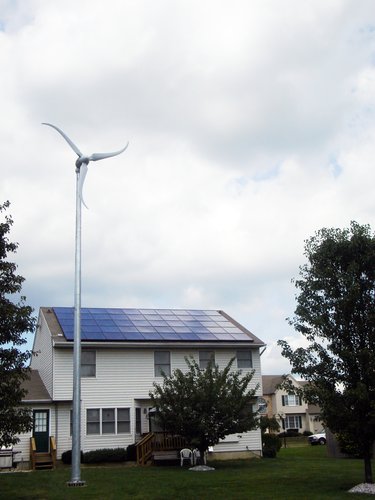
For many single-family homeowners looking for true energy independence and reliability, a hybrid system combining wind, solar, and battery storage offers the best of all worlds. Here’s why:
- Complementary Production: Solar shines during the day; wind often blows stronger at night and in different seasons. This evens out your energy production, making you less reliant on any single resource.
- Enhanced Energy Independence: With a robust battery bank, you can store excess energy from both sources, providing power during extended calm periods or cloudy days. This is crucial for resilience and reducing grid reliance.
- Optimized Grid Interaction: A smart hybrid system can automatically switch between generating, storing, and drawing from the grid, ensuring you always have power while minimizing costs.
- Increased ROI: By maximizing your self-consumption and potentially leveraging time-of-use rates, a well-designed hybrid system can offer a better long-term return on your renewable energy investment.
While more complex to design and install, a hybrid system can provide a level of energy security and self-sufficiency that neither wind nor solar can achieve alone.
Making an Informed Choice for Your Energy Future
So, should you get a wind turbine for your single-family home? As you can see, there’s no universal answer. It’s a powerful technology with incredible potential, but it’s not a plug-and-play solution like some other home improvements. The key is due diligence.
Start with a professional wind resource assessment. Understand your local zoning laws inside and out. Get multiple quotes from experienced, certified installers. And be honest with yourself about the upfront costs, ongoing maintenance, and potential impacts on your property and neighbors.
For the right homeowner in the right location, a single-family home wind turbine can be an incredibly rewarding investment, offering significant energy savings and a tangible step towards a more sustainable future. For others, exploring solar, energy efficiency upgrades, or community renewable programs might be a more practical and cost-effective starting point.
Whichever path you choose, empowering yourself with knowledge is the first and most important step towards harnessing the power of nature for your home.
Frequently Asked Questions
Are single-family home wind turbines practical for most homeowners?
No, not for most. Single-family home wind turbines are primarily practical for homeowners in rural or semi-rural areas with consistently high average wind speeds (10-12+ mph) and ample property space. Urban or suburban settings often lack sufficient wind resources, face restrictive zoning laws, and present challenges with noise and aesthetics.
How much does a small wind turbine system for a home typically cost?
A complete small wind turbine system for a single-family home (5-15 kW) can cost anywhere from $32,000 to over $113,000 before incentives. This includes the turbine, tower, foundation, electrical components, installation labor, and permitting. Costs vary significantly based on turbine size, tower height, and site complexity.
What size wind turbine do I need to power my house?
The size depends on your average monthly electricity consumption (kWh) and your site’s average wind speed. A home using 300-600 kWh/month might need a 1-5 kW turbine, while a larger home using over 1,200 kWh/month could require a 15-20 kW+ system. A professional site assessment is crucial to determine actual energy yield.
Is wind power better than solar power for a home?
Neither is universally ‘better’; they are complementary. Solar panels generally have lower upfront costs and simpler installation for residential use, producing power during the day. Wind turbines can generate power 24/7 (with wind), often stronger at night or in winter, making them excellent for hybrid systems. Your best choice depends on your specific wind and solar resources, space, and local regulations.
What are the biggest challenges with installing a residential wind turbine?
The biggest challenges include securing adequate, consistent wind resources, high upfront costs, complex zoning and permitting processes (especially regarding tower height and setbacks), potential noise and shadow flicker issues for neighbors, and the need for regular maintenance. Dealing with homeowner associations can also be a significant hurdle.
Can I connect my home wind turbine to the electrical grid?
Yes, most residential wind turbines are designed to be grid-tied. This allows you to draw power from the grid when your turbine isn’t producing enough electricity and sell excess power back to the utility company through a process called net metering. Specific grid interconnection agreements and safety equipment are required.