
Small Roof-Mounted Wind Turbines: Are They Right for Your Home? (And Do They Even Work?)
Picture this: a sleek, silent turbine spinning gracefully on your rooftop, quietly generating clean energy and slashing your electricity bills. It’s a compelling vision of energy independence, isn’t it? For many homeowners, the idea of a small roof-mounted wind turbine conjures images of a sustainable future, free from the grid’s whims.
Table of Contents
- Small Roof-Mounted Wind Turbines: Are They Right for Your Home? (And Do They Even Work?)
- The Promise vs. The Reality: Why the Skepticism?
- Early Challenges: The Legacy of Flawed Designs
- Key Concerns: Noise, Vibration, and Inefficiency
- The Critical Factor: Wind Resource Assessment
- How Small Roof-Mounted Wind Turbines Actually Work
- Basic Principles: Converting Wind to Watts
- Key Components: From Blades to Inverters
- Types of Small Wind Turbines Suitable for Roof Mounting
- Horizontal Axis Wind Turbines (HAWTs): The Classic Propeller Design
- Considerations for HAWTs on Roofs:
- Vertical Axis Wind Turbines (VAWTs): The Quieter, Space-Saving Alternative
- Advantages for Roof Mounting (Omnidirectional, Lower Noise):
- Emerging & Innovative Designs: Shrouded, Static, and Bladeless
- The REAL Pros and Cons of Roof-Mounted Wind Turbines
- Advantages: When They Can Shine
- Disadvantages: The Unvarnished Truth
- Critical Factors for Successful Roof Installation
- Wind Resource: Location, Location, Location!
- Roof Structure & Integrity: Can Your Roof Handle It?
- Noise and Vibration Mitigation
- Local Regulations and Permitting
- Performance and Power Output: What Can You Expect?
- Rated Power vs. Real-World Output
- Factors Affecting Energy Production
- Table 1: Estimated Annual Energy Production (AEP) for Small Roof-Mounted Turbines
- Cost & ROI: The Financial Picture
- Installation Costs: Breaking Down the Bill
- Maintenance and Longevity
- Payback Period & Government Incentives
- Table 2: Sample Cost & ROI Comparison for a 1kW Small Roof-Mounted Wind Turbine (US)
- Wind vs. Solar: Which Renewable is Right for Your Roof?
- Complementary Systems or Competing Technologies?
- Table 3: Wind vs. Solar: A Head-to-Head Comparison for Homes
- Alternatives to Roof-Mounted Wind Turbines
- Pole-Mounted Wind Turbines
- Ground-Mounted Systems
- Solar PV (Rooftop & Ground)
- Hybrid Systems
- Making an Informed Decision: Is a Roof Turbine for YOU?
But then, reality often hits with a dose of skepticism. You might have heard whispers, read forum posts, or even seen Reddit threads labeling them as “scams” – noisy, inefficient gadgets that cause more headaches (and roof damage) than they’re worth. So, what’s the real story? Can these pint-sized powerhouses actually deliver on their promise, or are they destined to be a costly disappointment?
I’m here to cut through the noise (pun intended) and give you the definitive, no-holds-barred guide to small roof-mounted wind turbines. We’ll explore where the skepticism comes from, what’s changed, and what you *really need to know before considering one for your home.
The Promise vs. The Reality: Why the Skepticism?
Let’s address the elephant in the room first. The skepticism around roof-mounted wind turbines isn’t entirely unfounded. Early models, often poorly designed or misapplied, certainly gave the technology a bad rap.
Early Challenges: The Legacy of Flawed Designs
Many of the negative stories stem from a period when manufacturers oversold the capabilities of rudimentary turbines. These devices were often marketed without proper consideration for real-world wind conditions on rooftops, leading to:
- Underperformance: Producing far less energy than advertised.
- Noise Complaints: Vibrations and whirring sounds irritating residents and neighbors.
- Structural Issues: Causing stress or even damage to roofs due to weight, vibration, or poor mounting.
Key Concerns: Noise, Vibration, and Inefficiency
These early issues highlighted genuine challenges. A roof is an inherently complex place for a wind turbine. Wind flow over a building is often turbulent and unpredictable, reducing efficiency. Furthermore, transmitting rotational energy directly into a building’s structure can lead to audible noise and physical vibrations within the home – a serious drawback for residential applications.
The Critical Factor: Wind Resource Assessment
Perhaps the biggest oversight has always been the failure to properly assess the available wind resource. Unlike open fields, rooftops are surrounded by obstructions. Without consistent, laminar wind flow, even the best turbine struggles to generate meaningful power. This isn’t just about how windy your area is, but how windy your specific rooftop is.
How Small Roof-Mounted Wind Turbines Actually Work
At their core, wind turbines are remarkably simple machines designed to do one thing: convert the kinetic energy of wind into usable electricity.
Basic Principles: Converting Wind to Watts
When wind hits the turbine blades, it creates aerodynamic lift and drag forces, causing the rotor to spin. This spinning motion drives a generator, which then produces electricity. This electricity can either be fed directly into your home’s electrical system (grid-tied) or stored in batteries for later use (off-grid).
Key Components: From Blades to Inverters
A typical small wind turbine system includes:
- Rotor (Blades): Catches the wind.
- Nacelle: Houses the generator, gearbox (if present), and other internal components.
- Generator: Converts mechanical energy into electrical energy.
- Tower/Mounting Structure: Elevates the turbine to capture wind. For roof-mounted systems, this is a specialized mount.
- Controller: Manages battery charging, prevents over-speeding, and ensures safe operation.
- Inverter: Converts the DC electricity from the generator or batteries into AC electricity suitable for household use.
Types of Small Wind Turbines Suitable for Roof Mounting
Not all wind turbines are created equal, especially when it comes to rooftop applications. Let’s look at the main categories.
Horizontal Axis Wind Turbines (HAWTs): The Classic Propeller Design
These are what most people visualize when they think of a wind turbine – propeller-like blades rotating around a horizontal axis. They are generally very efficient in consistent, unidirectional wind.
Considerations for HAWTs on Roofs:
- Wind Direction: HAWTs need to ‘yaw’ or pivot to face the wind, which can be challenging with rapidly shifting, turbulent rooftop winds.
- Size & Weight: Even small HAWTs can be substantial, posing structural load challenges.
- Noise: The blade tips can generate significant noise, which is amplified when mounted directly to a structure.
- Safety: Spinning blades can pose a safety hazard, especially on an accessible roof.
Vertical Axis Wind Turbines (VAWTs): The Quieter, Space-Saving Alternative
VAWTs, with their vertical rotation axis, look very different from HAWTs. Common designs include Darrieus (egg-beater shape) and Savonius (S-shape). They are often praised for their aesthetic appeal and perceived suitability for urban environments.
Advantages for Roof Mounting (Omnidirectional, Lower Noise):
- Omnidirectional: They don’t need to orient themselves into the wind, making them better suited for turbulent, multi-directional rooftop airflow.
- Lower Noise & Vibration: Generally operate quieter than HAWTs, and the generator is often at the base, reducing vibrations transmitted to the roof.
- Compact Footprint: Their vertical design can be more space-efficient on a roof.
- Safety: Slower-spinning blades can be less of a perceived hazard.
Emerging & Innovative Designs: Shrouded, Static, and Bladeless
The innovation in small wind continues, specifically addressing the challenges of roof mounting. These designs often focus on improving efficiency in turbulent wind, reducing noise, and simplifying installation:
- Shrouded Turbines: Designs like the Tulip Wind Turbine (from Flowerturbines.com) use shrouds or ducts to funnel and accelerate wind through a smaller rotor, potentially increasing efficiency and reducing noise.
- Static Wind Deflectors: Systems like Aeromine Rooftop Wind are revolutionary. They have no external moving parts; instead, they use aerodynamic structures to capture and amplify airflow, directing it to internal turbines. These promise significant power from a static, silent rooftop unit.
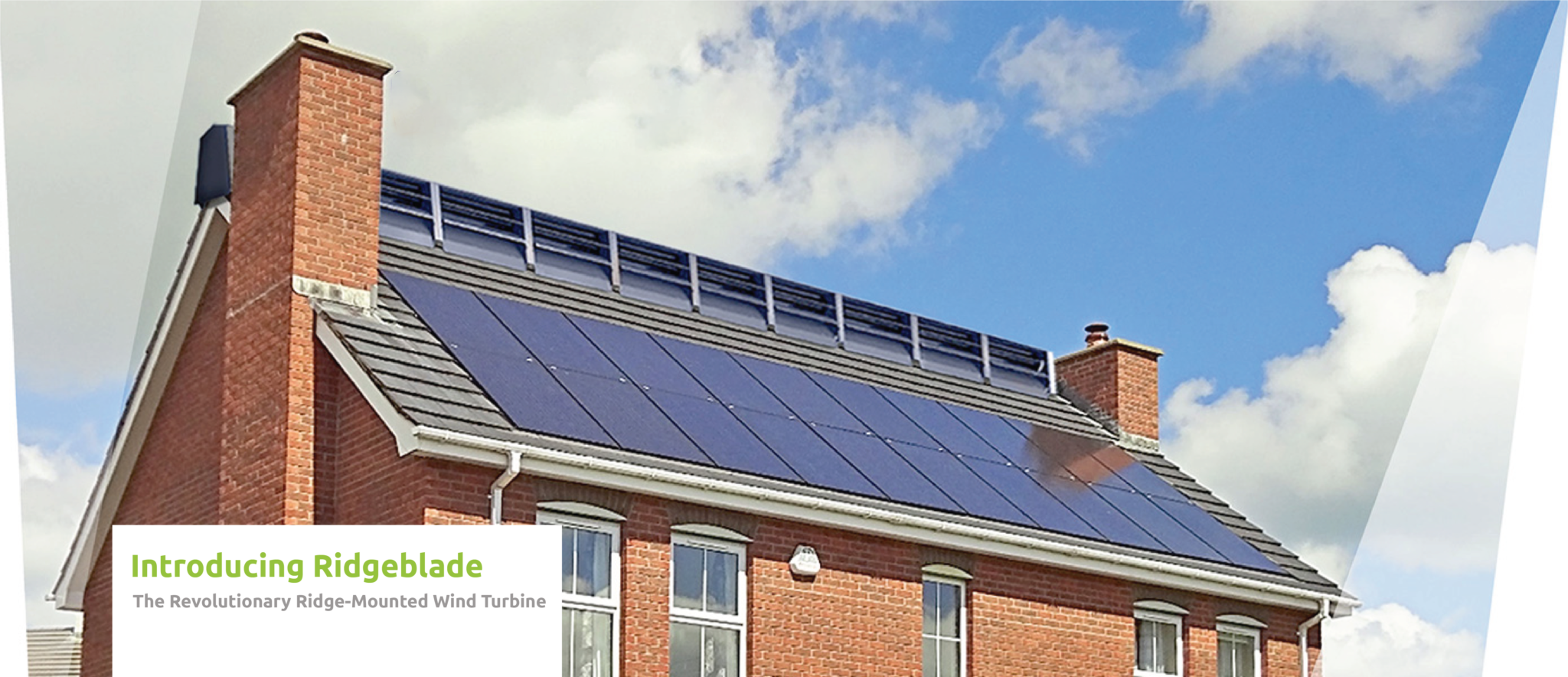
- Ridge-Mounted Turbines: The RidgeBlade Wind Turbine is an example of an innovative design specifically made to fit along the ridge of a roof, taking advantage of the accelerated airflow over this edge.
- Compact VAWTs: The Blade X1 (mentioned by Trendwatching) is a small, high-efficiency VAWT designed for flat roofs or ground level, emphasizing a small footprint.
The REAL Pros and Cons of Roof-Mounted Wind Turbines
Let’s be brutally honest. Here’s a balanced look at what you can expect.
Advantages: When They Can Shine
- Lower Installation Costs (Potentially): Compared to pole-mounted systems requiring concrete foundations and tall towers, roof mounts can sometimes be quicker and cheaper to install, especially for smaller units.
- Space Efficiency: Utilizes otherwise unused rooftop space, which is great for properties with small yards.
- Visibility: Can be less obtrusive than a tall freestanding tower, potentially easing permitting in some areas.
- Complementary to Solar: Can generate power at night or on cloudy, windy days when solar panels are less effective, creating a more consistent energy supply.
- Reduced Transmission Losses: Generating power closer to where it’s consumed minimizes energy loss in wiring.
- Symbol of Sustainability: A visible statement of your commitment to renewable energy.
Disadvantages: The Unvarnished Truth
- Turbulence: Wind flow over roofs is highly turbulent, often reducing efficiency by 20-50% compared to open-air installations.
- Noise & Vibration: This remains a significant concern. While modern designs aim to mitigate it, some level of noise or vibration is possible, especially in high winds.
- Roof Loading: The weight of the turbine, plus the dynamic loads from wind forces, can put stress on your roof structure, requiring professional assessment.
- Maintenance Access: Getting to a roof-mounted turbine for maintenance can be more difficult and hazardous than a ground-level unit.
- Reduced Wind Speed at Lower Heights: Wind speed generally increases with height. Roof-mounted turbines are inherently lower than typical pole-mounted systems, accessing a less powerful wind resource.
- Permitting Complexity: Some municipalities have strict rules regarding rooftop structures, noise, and visual impact.
- Questionable ROI (for some models): If the wind resource isn’t ideal, the energy production might not justify the initial investment, making payback periods very long.
Critical Factors for Successful Roof Installation
Thinking about putting a turbine on your roof? Here’s what you absolutely must consider.
Wind Resource: Location, Location, Location!
This is arguably the single most important factor. If your roof doesn’t get good wind, a turbine is a wasted investment.
- Urban vs. Rural Considerations: Urban environments, with their dense buildings, create highly turbulent and unpredictable wind patterns. Rural areas, especially on hilltops or open plains, offer much better conditions.
- Obstructions and Turbulence: Trees, neighboring buildings, and even your own roof’s architectural features can create ‘wind shadows’ and turbulence, significantly reducing a turbine’s performance. You need clear, unobstructed wind flow from all dominant directions.
- Professional Assessment: A qualified installer should conduct a wind resource assessment, ideally using tools like anemometers or advanced modeling, to determine if your site is viable.
Roof Structure & Integrity: Can Your Roof Handle It?
A structural engineer’s assessment is non-negotiable.
- Weight: Turbines, mounts, and any necessary ballast add significant weight.
- Vibration: Even small vibrations over time can weaken structural elements or loosen roof coverings.
- Wind Loads: The turbine itself acts like a sail, adding substantial wind loads to your roof, especially in storms. Your roof must be able to withstand these additional forces.
- Waterproofing: Any penetrations into your roof for mounting must be meticulously sealed to prevent leaks.
Noise and Vibration Mitigation
Modern turbines incorporate features to minimize noise, such as advanced blade designs, direct-drive generators (no gearbox), and vibration-dampening mounts. However, ask for decibel ratings and read reviews from actual users. Visit an existing installation if possible.
Local Regulations and Permitting
Before you buy anything, check with your local planning department and homeowners’ association (HOA). You’ll likely need permits for:
- Building and electrical work.
- Height restrictions.
- Noise ordinances.
- Aesthetic impact (visual pollution).
Performance and Power Output: What Can You Expect?
This is where the rubber meets the road. Don’t fall for exaggerated claims.

Rated Power vs. Real-World Output
A turbine’s ‘rated power’ (e.g., 1 kW, 2 kW) is its maximum output, usually achieved at optimal wind speeds (e.g., 25-30 mph). In reality, your turbine will spend most of its time operating at much lower wind speeds, producing significantly less power. What truly matters is the Annual Energy Production (AEP), measured in kilowatt-hours (kWh) per year.
Factors Affecting Energy Production
- Average Wind Speed: Even a small increase in average wind speed (e.g., from 10 mph to 12 mph) can dramatically increase energy output because power is proportional to the cube of wind speed.
- Turbine Size: Larger rotor diameters capture more wind.
- Turbine Efficiency: Design quality and technology.
- Cut-in Speed: The minimum wind speed required for the turbine to start generating power.
- Cut-out Speed: The wind speed at which the turbine shuts down to prevent damage.
- Turbulence: Reduces efficiency.
Table 1: Estimated Annual Energy Production (AEP) for Small Roof-Mounted Turbines
| Turbine Size (Rated Power) | Rotor Diameter | Avg. Wind Speed (10 mph / 4.5 m/s) | Avg. Wind Speed (12 mph / 5.4 m/s) | Approx. % of Avg. US Home Usage (10,632 kWh/year) |
|---|---|---|---|---|
| 400W (Micro) | ~3-4 ft (0.9-1.2m) | ~400-800 kWh/year | ~700-1300 kWh/year | 4-12% |
| 1kW (Small) | ~6-8 ft (1.8-2.4m) | ~1500-2500 kWh/year | ~2500-4000 kWh/year | 14-38% |
| 2kW (Medium) | ~10-12 ft (3-3.6m) | ~3000-5000 kWh/year | ~5000-8000 kWh/year | 28-75% |
Note: These are approximations for roof-mounted systems, accounting for typical rooftop turbulence and lower wind speeds. Actual performance will vary significantly based on specific site conditions and turbine model.
Cost & ROI: The Financial Picture
The bottom line for many homeowners is, “How much does it cost, and when will it pay for itself?”
Installation Costs: Breaking Down the Bill
The cost of a small roof-mounted wind turbine system can vary widely, but expect a range from $3,000 to $15,000 or more for a fully installed residential system (0.4 kW to 2 kW). This typically includes:
- Turbine Unit: $1,000 – $8,000+
- Mounting Hardware: Specialized roof mounts are crucial.
- Inverter, Controller & Wiring: Electrical components.
- Battery Bank (for off-grid or hybrid systems): Significant additional cost ($2,000 – $10,000+).
- Installation Labor: Skilled professionals are required for structural assessment, electrical work, and safe mounting.
- Permits & Inspections: Local fees.
Maintenance and Longevity
Turbines have moving parts, so regular maintenance is essential – typically once a year. This involves checking blades, bearings, and electrical connections. With proper maintenance, a good quality turbine can last 20 years or more.
Payback Period & Government Incentives
The payback period (how long it takes for energy savings to offset the initial cost) for small wind can be anywhere from 5 to 20 years, depending heavily on:
- Average Wind Speed: Higher wind = more generation = faster payback.
- Cost of Electricity: Higher utility rates mean greater savings.
- System Cost: Cheaper systems pay back faster.
- Incentives: Federal tax credits (like the Investment Tax Credit, often 30% for renewables), state programs, and local rebates can significantly reduce upfront costs. These are critical for improving ROI.
Table 2: Sample Cost & ROI Comparison for a 1kW Small Roof-Mounted Wind Turbine (US)
| Parameter | Scenario 1: Moderate Wind (10 mph avg) | Scenario 2: Good Wind (12 mph avg) |
|---|---|---|
| System Cost (Installed) | $8,000 | $8,000 |
| Federal Tax Credit (30%) | -$2,400 | -$2,400 |
| Net Cost | $5,600 | $5,600 |
| Annual Energy Production | ~2,000 kWh/year | ~3,500 kWh/year |
| Annual Savings (@ $0.18/kWh) | $360/year | $630/year |
| Estimated Payback Period | ~15.5 years | ~8.9 years |
Figures are estimates and can vary. Consult with local installers for accurate quotes and energy projections.
Wind vs. Solar: Which Renewable is Right for Your Roof?
When thinking about rooftop renewables, solar panels often come to mind first. So, how do wind and solar compare?
Complementary Systems or Competing Technologies?
While both generate clean energy, they do so under different conditions. Solar panels are most productive on sunny days. Wind turbines often generate more at night, during cloudy periods, or in winter when winds are stronger and solar output is lower. This makes them potentially complementary if you have a robust wind resource.
Table 3: Wind vs. Solar: A Head-to-Head Comparison for Homes
| Feature | Small Roof-Mounted Wind Turbine | Rooftop Solar PV |
|---|---|---|
| Primary Resource | Wind Speed & Consistency | Sunlight & Roof Orientation |
| Best Location | Open, elevated, few obstructions, consistent wind | South-facing (Northern Hemisphere), unshaded roof |
| Noise/Vibration | Potential concern (varies by model) | Silent operation |
| Maintenance | Annual checks (moving parts) | Minimal (occasional cleaning) |
| Aesthetics | Can be visually prominent, moving parts | Generally flush, static (less intrusive) |
| Permitting | Often more complex due to height, noise, vibration | Generally simpler, well-established process |
| Reliability | Dependent on consistent wind | Dependent on sunlight, very predictable |
Alternatives to Roof-Mounted Wind Turbines
If rooftop wind isn’t feasible, don’t despair! Other options exist for harnessing renewable energy.
Pole-Mounted Wind Turbines
These are often the preferred choice for small wind, as they can be elevated to 30-120 feet, getting above turbulence and into stronger, more consistent wind flows. They require more land and a substantial foundation but offer much better performance.

Ground-Mounted Systems
Similar to pole-mounted, but for areas with clear wind paths at lower heights. This also applies to ground-mounted solar panels.
Solar PV (Rooftop & Ground)
As discussed, solar is a mature and widely adopted technology. If your roof gets good sunlight and minimal shading, it’s often the most straightforward and cost-effective renewable energy solution.
Hybrid Systems
Combining solar PV and a wind turbine (either roof or pole-mounted) can offer the best of both worlds, ensuring a more consistent power supply across different weather conditions and times of day/year.
Making an Informed Decision: Is a Roof Turbine for YOU?
So, after all this, are small roof-mounted wind turbines a viable option? The answer is: it depends. They are NOT a universal solution, and the early skepticism wasn’t entirely wrong. However, with advancements in technology, particularly with innovative designs focusing on urban and turbulent environments (like static or shrouded systems), and with a genuinely strong wind resource, they can* be a powerful part of a home’s renewable energy strategy.
Here’s my advice:
- Assess Your Wind: Be realistic. If you’re in a heavily obstructed area with low average wind speeds, it’s likely not worth it. Get a professional assessment.
- Check Your Roof: Consult a structural engineer. Your roof must be able to handle the load and vibration.
- Research Local Regulations: Don’t skip the permitting process.
- Consider Newer Technologies: Look beyond traditional HAWTs. Innovative VAWTs, shrouded designs, or static rooftop systems might be better suited for your specific rooftop environment.
- Compare with Solar: Get quotes for both solar and wind (or a hybrid system) to see which offers the best return for your specific conditions and budget.
Don’t chase the dream blindly. Do your homework, ask the hard questions, and get expert advice. If the stars (and the wind) align, a small roof-mounted wind turbine could indeed be a smart, sustainable addition to your home. If not, there are plenty of other ways to go green.
Frequently Asked Questions
Are small roof-mounted wind turbines effective for residential use?
Their effectiveness varies greatly. While some innovative designs show promise, many traditional small roof-mounted turbines struggle due to turbulent rooftop wind conditions, resulting in lower-than-advertised energy production. Effectiveness depends heavily on consistent, unobstructed wind flow at your specific location.
How much does a small roof-mounted wind turbine cost to install?
Installation costs for a small roof-mounted wind turbine typically range from $3,000 to $15,000+ for a 0.4kW to 2kW system, including the turbine, mounting, inverter, and labor. Additional costs apply for battery storage in off-grid systems. Federal tax credits and local incentives can significantly reduce the net cost.
What are the main drawbacks of roof-mounted wind turbines?
Key drawbacks include potential for noise and vibration transferred to the home, structural concerns for the roof (weight, wind loads), significantly reduced efficiency due to turbulent rooftop wind, and often complex permitting processes. Initial investment and variable payback periods are also considerations.
Do roof-mounted wind turbines make a lot of noise?
Noise and vibration can be a concern, especially with older or poorly designed models. Newer Vertical Axis Wind Turbines (VAWTs) and innovative shrouded or static designs are engineered to be quieter and minimize vibration transfer, but it’s crucial to check decibel ratings and user reviews for specific models.
How do roof-mounted wind turbines compare to rooftop solar panels?
Solar panels are generally more mature and predictable, relying on sunlight. Wind turbines, while potentially complementary by generating power at different times (night, cloudy days), are much more sensitive to site-specific wind conditions and turbulence on a roof. Solar typically has simpler installation and permitting.
What kind of maintenance do small wind turbines require?
Small wind turbines have moving parts and typically require annual maintenance. This usually involves checking blades for wear, inspecting bearings, lubricating components, and verifying electrical connections. Regular maintenance ensures longevity and optimal performance.
Are there better alternatives if my roof isn’t suitable for a wind turbine?
Yes, if your roof isn’t ideal, consider pole-mounted wind turbines (for better wind capture in open areas), rooftop or ground-mounted solar panels (often a more reliable and cost-effective solution), or a hybrid system combining solar and wind to capitalize on different weather conditions.

)
:max_bytes(150000):strip_icc()/wind-turbine-generator-on-house-roof-90967703-b9619befbf954726ae92dfb6154711f2.jpg)