
Small Scale Wind Turbines For Homes: The Definitive Guide to Powering Your Property
Let’s be honest: when you think about a home wind turbine, you probably picture either a massive industrial structure or a flimsy, inefficient gadget barely spinning in your backyard. You’ve likely heard the whispers (or shouts, if you’ve been on Reddit) that small wind turbines “suck” and are a waste of money for homeowners. And for many, that sentiment holds true.
Table of Contents
- Small Scale Wind Turbines For Homes: The Definitive Guide to Powering Your Property
- Are Small Wind Turbines Really Worth It for Homes? Dispelling the Myths
- The Truth About Small Wind’s Potential
- When Small Wind Doesn’t Make Sense (and Why)
- How Do Small Wind Turbines Work? The Basics You Need to Know
- Horizontal Axis Wind Turbines (HAWTs)
- Vertical Axis Wind Turbines (VAWTs)
- Grid-Tied vs. Off-Grid Systems
- Assessing Your Home’s Wind Power Potential: A Step-by-Step Guide
- Step 1: Evaluate Your Location and Wind Resource
- Step 2: Clear Airflow and Tower Height Considerations
- Step 3: Local Regulations, Zoning, and Permitting
- What Size Wind Turbine Do You Need? Matching Power to Your Consumption
- Calculating Your Energy Needs
- Estimating Turbine Output (and the Challenges)
- The Cost of Small Wind Power: What to Expect and How to Save
- Breaking Down Installation Costs
- Federal Tax Credits & State Incentives (Inflation Reduction Act)
- Understanding Payback Periods & ROI
- Small Wind vs. Solar: Which Renewable is Right for Your Home?
- Complementary Power Sources
- When Wind Shines (Literally)
- When Solar Takes the Lead
- Key Components of a Home Wind System
- The Turbine Itself (Blades, Nacelle, Generator)
- The Tower: The Unsung Hero
- Balance of System (Inverters, Controllers, Batteries)
- Choosing the Right Small Wind Turbine: Features and Factors
- Durability and Warranty
- Noise Considerations
- Maintenance Requirements
- Certification and Reputable Manufacturers
- The Future of Home Wind Energy: Innovations on the Horizon
- Is a Small Wind Turbine Right for Your Home? A Final Checklist
But here’s the thing: while small wind turbines aren’t for everyone, for the right home in the right location, they can be an incredibly powerful, sustainable, and financially smart investment. They’re not a magic bullet, but they’re far from useless. The trick is knowing if your property is a good fit and understanding the real potential – and limitations – before you invest.
This isn’t a sales pitch. This is a pragmatic, no-nonsense guide to help you cut through the noise. We’ll explore when small wind makes sense, what it costs, how it compares to solar, and exactly what you need to consider to make an informed decision for your home.
Are Small Wind Turbines Really Worth It for Homes? Dispelling the Myths
The skepticism around residential wind power is understandable. Many early models were underpowered, noisy, and didn’t deliver on their promises. This led to a widespread belief that they’re simply not viable. But technology has evolved, and realistic expectations are key.
The Truth About Small Wind’s Potential
When conditions are right, a small wind turbine can offer significant benefits:
- Consistent Power Generation: Unlike solar, which only produces electricity during daylight hours, wind turbines can generate power 24/7, as long as there’s sufficient wind. This means they can be a fantastic complement to a solar system, especially in areas with good nighttime or winter winds.
- Energy Independence: For rural homes, off-grid cabins, or those looking to severely reduce reliance on utility companies, small wind provides a pathway to greater energy self-sufficiency.
- Reduced Electricity Bills: Generating your own power means buying less from the grid. Over the lifespan of a properly sized and installed turbine, this can lead to substantial savings.
- Environmental Benefits: Like all renewables, wind power produces clean electricity without greenhouse gas emissions, contributing to a smaller carbon footprint.
- Federal Tax Credits: Thanks to the Inflation Reduction Act of 2022, small wind turbines are eligible for a 30% federal tax credit, significantly reducing the upfront cost.
When Small Wind Doesn’t Make Sense (and Why)
It’s crucial to be realistic. Small wind turbines are NOT for every home. Here’s when they’re likely not a good fit:
- Suburban or Urban Areas: Buildings, trees, and other structures create turbulence, blocking consistent wind flow. Low wind speeds and turbulent air dramatically reduce a turbine’s efficiency, rendering it ineffective. Zoning laws are also often prohibitive.
- Properties with Low Wind Speeds: If your average annual wind speed is consistently below 10-12 mph (4.5-5.5 m/s), a small turbine will likely struggle to produce enough power to justify its cost.
- Limited Space or High Obstructions: You need clear, unobstructed access to the wind, often requiring a tall tower. If your property is small or surrounded by tall trees or hills, you won’t get the necessary airflow.
- Ignoring Local Regulations: Many municipalities have strict zoning, setback, and height restrictions for wind turbines. Failing to investigate these can lead to expensive non-compliance.
How Do Small Wind Turbines Work? The Basics You Need to Know
At its core, a wind turbine is remarkably simple: wind turns blades, which spin a shaft connected to a generator, creating electricity. But there are different configurations to understand.
Horizontal Axis Wind Turbines (HAWTs)
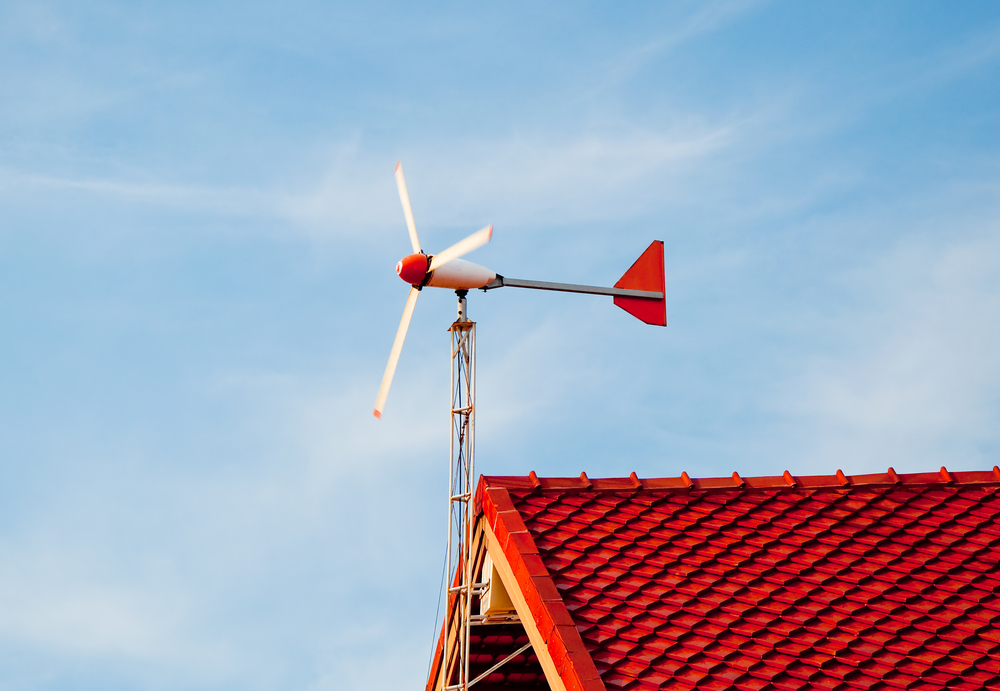
These are what most people visualize: propeller-like blades mounted on a horizontal axis. They are generally more efficient at capturing wind energy in areas with consistent, unidirectional wind, but they require a yaw mechanism to turn into the wind. Residential HAWTs typically have 2-3 blades.
Vertical Axis Wind Turbines (VAWTs)
VAWTs have blades that rotate around a vertical axis. They are often praised for being less sensitive to wind direction, potentially quieter, and aesthetically less obtrusive. However, they are typically less efficient than HAWTs for the same swept area and usually require higher start-up wind speeds. They are becoming more common in urban/suburban micro-applications where space is a concern, but their output is often minimal for whole-home power.
Grid-Tied vs. Off-Grid Systems
- Grid-Tied (Grid-Connected): Most residential systems are tied into the existing utility grid. When your turbine produces more power than you need, the excess can be fed back into the grid, often earning you credits (net metering). When your turbine isn’t producing enough, you draw power from the grid. This setup eliminates the need for expensive battery storage for daily use.
- Off-Grid (Stand-Alone): For remote homes or those seeking complete energy independence, an off-grid system is necessary. This requires a robust battery bank to store excess energy for use when the wind isn’t blowing, along with a charge controller and inverter. Off-grid systems are generally more complex and significantly more expensive due to battery costs.
Assessing Your Home’s Wind Power Potential: A Step-by-Step Guide
Before you even think about turbine models, you need to understand if your property is a viable candidate. This requires diligent research.
Step 1: Evaluate Your Location and Wind Resource
This is the single most critical factor. Start by:
- Online Wind Maps: Use resources like the Department of Energy’s WINDExchange website or other online wind atlases. Look for your specific area’s average annual wind speed at a typical turbine height (e.g., 30-50 meters).
- Local Weather Data: Review historical wind data from nearby weather stations.
- Professional Site Assessment: The most reliable method is to hire an experienced installer or wind energy professional to conduct a detailed site assessment. They can use anemometers to measure actual wind speeds at various heights on your property over a period of time, accounting for local topography.
Rule of Thumb: You generally need an average annual wind speed of at least 10 mph (4.5 m/s) to make a small wind turbine economically feasible for significant power production.
Step 2: Clear Airflow and Tower Height Considerations
Turbulence is the enemy of wind turbines. Obstructions like buildings, trees, and hills create swirling, inconsistent air currents that reduce efficiency and can even damage blades. To minimize this, your turbine needs to be mounted on a tower that extends well above these obstructions.
- General Guideline: The bottom of the turbine blades should be at least 30 feet higher than any obstruction within a 300-foot radius. This often means tower heights of 60 to 120 feet for residential systems.
- Tower Types: Common options include guyed towers (cheaper, require more land for guy wires) and freestanding (self-supporting) towers (more expensive, smaller footprint).
Step 3: Local Regulations, Zoning, and Permitting
This is where many aspiring wind power enthusiasts hit a wall. Local governments have varying rules:
- Zoning Ordinances: Check your county and municipal zoning laws. Some areas prohibit wind turbines entirely, while others have strict limits on height, noise, setbacks (distance from property lines), and aesthetics.
- Permitting Process: Even if allowed, you’ll likely need building permits, electrical permits, and possibly environmental reviews. This process can be time-consuming and costly.
- Homeowners Associations (HOAs): If you live in an HOA-governed community, review their covenants carefully. Many have rules against exterior structures like wind turbines.
What Size Wind Turbine Do You Need? Matching Power to Your Consumption
Small wind turbines for homes typically range from 400 watts (W) to 20 kilowatts (kW). Sizing is crucial for maximizing your investment and meeting your energy goals.
Calculating Your Energy Needs
Before you can size a turbine, you need to know how much electricity your home uses. Look at your past utility bills. Most bills show your monthly consumption in kilowatt-hours (kWh).
- Example: If your home uses 800 kWh per month, that’s roughly 26.7 kWh per day (800 kWh / 30 days).
- Energy Efficiency First: Before investing in any renewable energy system, make your home as energy-efficient as possible. Insulate, seal leaks, upgrade appliances – every kWh you save is one you don’t need to generate.
Estimating Turbine Output (and the Challenges)
Turbine manufacturers provide a power curve, which shows how much power a turbine generates at different wind speeds. However, these are often for ideal, non-turbulent conditions. Actual output will vary based on your specific site’s wind resource and efficiency.
A rough estimate for a small turbine’s annual energy output can be calculated using its rated power and your average wind speed, but it’s best to consult with an installer who can model this for your specific site.
| Typical Home Size/Consumption | Approx. Daily kWh Need | Suggested Turbine Size Range (kW) | Comments |
|---|---|---|---|
| Small Home / Minimal Use | 5-15 kWh | 0.4 – 1 kW | Supplemental power, off-grid cabins, charging stations. |
| Medium Home / Average Use | 15-30 kWh | 1 – 5 kW | Can offset significant portion of electricity bill. |
| Large Home / High Use | 30-50+ kWh | 5 – 15 kW | Can potentially meet most or all household needs. |
Remember, this table is a generalization. Your actual needs and turbine output will vary based on many factors.
The Cost of Small Wind Power: What to Expect and How to Save
This is often the biggest hurdle. Small wind turbine systems are a significant investment, but understanding the breakdown helps.
Breaking Down Installation Costs
The total cost for a residential wind turbine system can range widely, typically from $10,000 to $70,000+, depending on the turbine size, tower height, installation complexity, and whether it’s grid-tied or off-grid.
:max_bytes(150000):strip_icc()/wind-turbine-generator-on-house-roof-90967703-b9619befbf954726ae92dfb6154711f2.jpg "Is a Home Wind Turbine Right for You?")
- Turbine Itself: 30-50% of the total cost. (e.g., a 5 kW turbine might cost $10,000 – $25,000)
- Tower: 15-30% of the total cost. Tall, sturdy towers are essential but expensive.
- Balance of System (BOS): Inverters, controllers, wiring, safety disconnects. 10-20%.
- Installation Labor: Site preparation, foundation, tower erection, wiring. Can be 20-40%.
- Permits & Interconnection Fees: Can add several hundred to a few thousand dollars.
- Batteries (for off-grid): Add another $5,000 – $20,000+ to the cost.
| Turbine Size (kW) | Estimated System Cost (Installed) | Estimated Annual kWh Production (Avg. Wind) |
|---|---|---|
| 1 kW | $10,000 – $25,000 | 1,500 – 3,000 kWh |
| 5 kW | $25,000 – $50,000 | 7,500 – 15,000 kWh |
| 10 kW | $40,000 – $70,000+ | 15,000 – 30,000 kWh |
Note: These are broad estimates. Actual costs vary significantly by location, specific components, and installer.
Federal Tax Credits & State Incentives (Inflation Reduction Act)
This is a game-changer for many homeowners. The Inflation Reduction Act (IRA) of 2022 extended and modified the Residential Clean Energy Credit (formerly the Investment Tax Credit).
- 30% Federal Tax Credit: For systems installed between 2022 and 2032, you can claim a credit equal to 30% of the cost of a new, qualified small wind energy property for your home. This is a dollar-for-dollar reduction of your tax liability, not just a deduction. There’s no cap on the credit amount.
- State & Local Incentives: Many states, counties, and even utility companies offer additional incentives, rebates, or property tax exemptions for renewable energy systems. Check the DSIRE (Database of State Incentives for Renewables & Efficiency) website for specifics in your area.
Understanding Payback Periods & ROI
With incentives, the payback period for a small wind turbine can range from 5 to 15 years, depending heavily on your initial cost, average wind speeds, electricity rates in your area, and the amount of power your system generates. High electricity rates and excellent wind resources will lead to faster payback.
It’s important to view this as a long-term investment. Turbines are designed to last 20-25 years or more, meaning you could enjoy many years of free or heavily reduced electricity after the system has paid for itself.
Small Wind vs. Solar: Which Renewable is Right for Your Home?
Often, homeowners consider small wind and solar as competing technologies. In reality, they can be complementary.
Complementary Power Sources
Solar panels typically perform best during long, sunny summer days. Wind turbines often perform well in winter months and at night when solar output is low. Combining the two can create a more stable, year-round energy supply, reducing reliance on the grid and potentially shrinking the size of a required battery bank for off-grid systems.
When Wind Shines (Literally)
- Consistently Windy Locations: Open rural areas, coastal regions, or hilltops with minimal obstructions are ideal for wind.
- High Winter Energy Demand: If your electricity consumption peaks in winter (e.g., electric heating), and you have good winter winds, a wind turbine can be highly effective.
- Limited Roof Space: If your roof isn’t suitable for solar panels due to shading, orientation, or structural issues, a ground-mounted wind turbine might be an alternative.
- Year-Round Power: For off-grid scenarios, wind’s ability to generate at night and during cloudy weather makes it a stronger stand-alone option than solar for continuous power.
When Solar Takes the Lead
- Urban/Suburban Settings: Solar panels are generally much easier to permit and install in built-up areas with less space and more wind obstructions.
- Abundant Sunshine, Low Wind: If your area gets a lot of sun but has low average wind speeds, solar is the obvious choice.
- Lower Upfront Cost (Generally): Dollar-for-dollar, a well-placed solar system often has a lower upfront cost and a faster payback in average residential scenarios compared to a small wind turbine, especially in areas with moderate wind resources.
- Less Maintenance: Solar panels require very little maintenance beyond occasional cleaning.
| Feature | Small Wind Turbine | Solar Panels |
|---|---|---|
| Primary Resource | Wind Speed & Consistency | Sunlight Hours & Intensity |
| Power Generation | 24/7 (with wind) | Daylight hours only |
| Ideal Location | Rural, open, high wind areas | Most areas with good sun exposure |
| Space Requirements | Significant (for tower setback) | Roof or ground area |
| Noise | Can be a factor; modern turbines are quieter | Silent |
| Maintenance | Moderate (annual checks, lubrication) | Low (occasional cleaning) |
| Permitting | Often complex, height/setback rules | Generally simpler, common in many areas |
Key Components of a Home Wind System
Understanding the parts helps you appreciate the system as a whole.
The Turbine Itself (Blades, Nacelle, Generator)
- Blades: Designed to capture wind energy. Material quality and aerodynamic design are crucial for efficiency and durability.
- Rotor: The assembly of blades and the hub that connects them.
- Nacelle: The housing at the top of the tower that contains the generator, gearbox (if present), and control electronics.
- Generator: Converts mechanical energy from the spinning blades into electrical energy.
The Tower: The Unsung Hero
A well-chosen and properly installed tower is as critical as the turbine itself. It lifts the turbine above ground-level turbulence, allowing it to access stronger, more consistent winds.
Balance of System (Inverters, Controllers, Batteries)
- Charge Controller: Manages the power flow from the turbine, especially important for off-grid systems to prevent battery overcharging.
- Inverter: Converts the DC (direct current) electricity generated by the turbine into AC (alternating current) electricity, which is what your home appliances use and what the grid accepts.
- Batteries: Essential for off-grid systems to store excess energy. For grid-tied systems, they are optional but can provide backup power during outages.
- Wiring & Safety Equipment: Conduits, cables, disconnect switches, and grounding systems are all critical for safe and reliable operation.
Choosing the Right Small Wind Turbine: Features and Factors
Once you’ve determined that your site is suitable, selecting the right turbine is the next step.
Durability and Warranty
Invest in a turbine from a reputable manufacturer with a proven track record. Look for robust construction, materials designed to withstand local weather conditions, and a strong warranty (e.g., 5-10 years on major components). Read reviews and seek out independent performance data.
Noise Considerations
Modern small turbines are significantly quieter than older models, but they are not silent. Pay attention to the manufacturer’s stated noise levels (in decibels) at various wind speeds. Consider your proximity to neighbors and local noise ordinances. VAWTs are often marketed as quieter, but performance trade-offs exist.

Maintenance Requirements
Like any mechanical system, wind turbines require maintenance. This typically includes annual inspections, lubrication of moving parts, checking bolt tightness, and ensuring electrical connections are secure. Factor in the cost and effort of maintenance, especially if it requires specialized equipment or professionals for tower climbing.
Certification and Reputable Manufacturers
Look for turbines that are certified by recognized bodies like the Small Wind Certification Council (SWCC) or international standards (e.g., IEC 61400-2). Certification indicates that the turbine has met specific performance and safety standards.
The Future of Home Wind Energy: Innovations on the Horizon
The small wind market, though niche, is seeing exciting innovations. We’re seeing:
- Improved Aerodynamics: Designs that capture more energy at lower wind speeds and reduce noise.
- Smarter Control Systems: Advanced electronics for optimizing output and better integration with smart home systems and grid services.
- Modular and Lighter Designs: Easier installation and reduced material costs.
- Hybrid Systems: Better integration packages that combine wind with solar and battery storage right out of the box.
While these innovations are promising, always prioritize proven technology for your primary home energy needs.
Is a Small Wind Turbine Right for Your Home? A Final Checklist
To recap, ask yourself these critical questions:
- Do I live in a truly windy location? (Average annual wind speed > 10-12 mph)
- Do I have sufficient clear, unobstructed space for a tall tower? (30+ feet above surrounding obstacles within 300 feet)
- Are local zoning laws and permitting requirements favorable?
- Am I prepared for a significant upfront investment, even with incentives?
- Am I seeking energy independence, or do I have high electricity bills that make a long-term investment worthwhile?
- Am I comfortable with the potential noise levels and routine maintenance?
- Have I explored energy efficiency and solar as alternatives or complements?
If you can confidently answer “yes” to most of these, then a small-scale wind turbine might just be the powerful, sustainable solution your home has been looking for. Don’t let the naysayers deter you without doing your own thorough research. For the right property, the hum of your own renewable energy generation can be a truly satisfying sound.
Frequently Asked Questions
How much does a small wind turbine for a home cost?
The installed cost for a small residential wind turbine system typically ranges from $10,000 to $70,000+, depending on the turbine’s size (from 1kW to 15kW), tower height, installation complexity, and whether it’s grid-tied or off-grid (which adds battery costs). This figure does not include the 30% federal tax credit available under the Inflation Reduction Act.
Can I install a small wind turbine in my backyard?
Installing a small wind turbine in your backyard depends heavily on several factors: your local wind resource (you need consistently strong, unobstructed wind), available clear space for a tall tower (often 60-120 feet), and local zoning laws and permitting regulations. Suburban and urban areas often have prohibitive rules and too much wind turbulence.
Are small wind turbines noisy?
Modern small wind turbines are significantly quieter than older models, but they are not entirely silent. Noise levels vary by manufacturer and wind speed. Most are designed to operate below common ambient noise levels at typical residential distances, but it’s crucial to check specific decibel ratings and consider your property’s proximity to neighbors.
How do I know if my home has enough wind for a turbine?
The most important step is a professional site assessment. A qualified installer can measure actual wind speeds at your property over time. You can also start by checking online wind maps (like the Department of Energy’s WINDExchange) for your area. Generally, an average annual wind speed of at least 10-12 mph (4.5-5.5 m/s) is needed for economic feasibility.
Do small wind turbines work at night?
Yes, small wind turbines can generate electricity 24 hours a day, as long as there is sufficient wind. This is a key advantage over solar panels, which only produce power during daylight hours. This continuous generation can make them a valuable asset, especially in areas with good nighttime or winter wind resources.
What is the federal tax credit for small wind turbines?
Under the Inflation Reduction Act of 2022, homeowners installing qualified small wind energy property between 2022 and 2032 are eligible for a 30% federal tax credit. This credit directly reduces your income tax liability by 30% of the total system cost, with no maximum cap.


