Small Wind Turbines for Domestic Use: Your Definitive Guide to Home Wind Power
Tired of rising electricity bills? Dreaming of energy independence? The idea of harnessing the wind right in your backyard is incredibly appealing. Small wind turbines for domestic use promise a greener, more self-sufficient home. But here’s the honest truth: it’s not a ‘one-size-fits-all’ solution. While immensely rewarding for the right homeowner, there are critical factors to consider before you invest.
Table of Contents
- Small Wind Turbines for Domestic Use: Your Definitive Guide to Home Wind Power
- Is a Small Wind Turbine Right for Your Home? (The Honest Truth)
- Assessing Your Wind Resource: Location, Location, Location
- Your Energy Needs: How Much Power Do You Really Use?
- Space and Zoning: Before You Even Think About It
- Grid-Tied vs. Off-Grid: What’s Your Goal?
- Understanding Small Wind Turbine Types: HAWT vs. VAWT
- Horizontal Axis Wind Turbines (HAWT)
- Vertical Axis Wind Turbines (VAWT)
- Key Differences at a Glance
- What Size Wind Turbine Do You Actually Need?
- Calculating Your Home’s Energy Consumption
- Matching Turbine Capacity to Demand (kW vs. kWh)
- Factors Influencing Output
- The Cost of Going Wind: Investment, Incentives & ROI
- Initial Purchase & Installation Costs
- Unpacking the Federal Tax Credit and Other Incentives
- Maintenance, Longevity, and Expected Lifespan
- When Does a Small Wind Turbine Pay For Itself? (ROI Discussion)
- Small Wind vs. Solar: A Head-to-Head Comparison
- Complementary or Competitive?
- Key Differentiators
- The Installation Process: What to Expect
- Site Assessment and Permitting
- Component Selection and Sourcing
- Professional Installation: Why it’s Crucial
- Grid Interconnection (for Grid-Tied Systems)
- Common Concerns & Myth Busting
- Noise Levels: Is Your Home Going to Sound Like an Airport?
- Aesthetics: Blending into Your Landscape
- Wildlife Impact: A Balanced Perspective
- Is “Small” Wind Really Worth It? Addressing Efficiency Doubts
- Making the Decision: Is Small Wind Power for You?
- Small Wind Turbines for Domestic Use: Your Definitive Guide to Home Wind Power
- Is a Small Wind Turbine Right for Your Home? (The Honest Truth)
- Assessing Your Wind Resource: Location, Location, Location
- Your Energy Needs: How Much Power Do You Really Use?
- Space and Zoning: Before You Even Think About It
- Grid-Tied vs. Off-Grid: What’s Your Goal?
- Understanding Small Wind Turbine Types: HAWT vs. VAWT
- Horizontal Axis Wind Turbines (HAWT)
- Vertical Axis Wind Turbines (VAWT)
- Key Differences at a Glance
- What Size Wind Turbine Do You Actually Need?
- Calculating Your Home’s Energy Consumption
- Matching Turbine Capacity to Demand (kW vs. kWh)
- Factors Influencing Output
- The Cost of Going Wind: Investment, Incentives & ROI
- Initial Purchase & Installation Costs
- Unpacking the Federal Tax Credit and Other Incentives
- Maintenance, Longevity, and Expected Lifespan
- When Does a Small Wind Turbine Pay For Itself? (ROI Discussion)
- Small Wind vs. Solar: A Head-to-Head Comparison
- Complementary or Competitive?
- Key Differentiators
- The Installation Process: What to Expect
- Site Assessment and Permitting
- Component Selection and Sourcing
- Professional Installation: Why it’s Crucial
- Grid Interconnection (for Grid-Tied Systems)
- Common Concerns & Myth Busting
- Noise Levels: Is Your Home Going to Sound Like an Airport?
- Aesthetics: Blending into Your Landscape
- Wildlife Impact: A Balanced Perspective
- Is “Small” Wind Really Worth It? Addressing Efficiency Doubts
- Making the Decision: Is Small Wind Power for You?
This guide cuts through the noise. We’re going to explore everything you need to know, from assessing your property’s wind potential to understanding costs, types of turbines, and common pitfalls. My goal is to equip you with the knowledge to make an informed decision, ensuring your journey into home wind power is a breeze, not a whirlwind of frustration.
Is a Small Wind Turbine Right for Your Home? (The Honest Truth)
Before you get excited about spinning blades, we need to talk practicality. Not every home is a good candidate for a small wind turbine. Success hinges on a few non-negotiable elements:
Assessing Your Wind Resource: Location, Location, Location
This is arguably the single most important factor. A wind turbine is only as good as the wind it captures. You need a consistent, strong wind resource.
- Average Wind Speed: What’s considered good? The U.S. Department of Energy (DOE) suggests a minimum annual average wind speed of 10 mph (4.5 m/s) for small wind to be economically viable, with 14 mph (6.26 m/s) being ideal for a typical home. Below that, your returns diminish significantly.
- How to Find Your Data: Don’t guess!
- Check online wind maps (many government and university sites offer these).
- Look at local airport data or meteorological stations.
- For the most accurate assessment, a professional site assessor can use anemometers to measure wind speeds directly on your property over a period.
- Obstructions Matter: Trees, hills, and buildings create turbulence and ‘wind shadow’ effects, drastically reducing a turbine’s efficiency. Your turbine needs to be significantly taller than any obstruction within a 500-foot radius to capture clean, laminar airflow. Think 20-30 feet above the tallest object.
Your Energy Needs: How Much Power Do You Really Use?
A small wind turbine should complement or significantly offset your energy consumption. It’s crucial to understand your current usage.
- Review Your Electricity Bills: Look for your average monthly kilowatt-hour (kWh) usage. This will give you a baseline. A typical U.S. home uses around 900 kWh per month.
- Matching Turbine Output: Small wind turbines are rated in kilowatts (kW) of peak power. This translates to kWh production over time, depending heavily on wind speed. A 1.5-kW turbine in a 14 mph average wind speed area might produce around 300 kWh per month, according to the DOE. You need to size your turbine appropriately – too small, and you won’t meet your needs; too large, and you’ve overinvested.
Space and Zoning: Before You Even Think About It
These practical considerations often trip up potential buyers early on.
- Minimum Land Requirements: You’ll need enough space for the turbine, its tower, and to ensure proper setback from property lines and structures. While compact VAWTs might fit in smaller spaces, HAWTs typically require more room, often needing at least an acre or more for optimal placement and safety.
- Tower Height: As mentioned, height is key for clear wind. Residential towers can range from 30 to 120 feet. This isn’t a small structure!
- Local Regulations and Permits: This is critical. Zoning laws, building codes, and homeowners’ association (HOA) rules can be major hurdles. Many municipalities have restrictions on tower height, noise levels, and aesthetic impact.
- Actionable Step: Before doing anything else, contact your local planning department and HOA (if applicable). Ask about specific ordinances related to wind energy systems. This step alone can save you significant time and money.
Grid-Tied vs. Off-Grid: What’s Your Goal?
Your goal determines the system’s complexity and cost.
- Grid-Tied Systems: The most common setup for domestic use. Your turbine feeds power into your home, and any excess is often sent back to the utility grid (net metering). When the wind isn’t blowing, you draw power from the grid. This requires an inverter and grid-tie equipment.
- Off-Grid Systems: Complete energy independence. Your turbine (often combined with solar) charges a battery bank, which then powers your home. This is more expensive due to batteries and requires careful management of energy consumption. Ideal for remote locations where grid connection is prohibitively expensive.
Understanding Small Wind Turbine Types: HAWT vs. VAWT
Small wind turbines primarily come in two flavors, each with distinct characteristics:
Horizontal Axis Wind Turbines (HAWT)
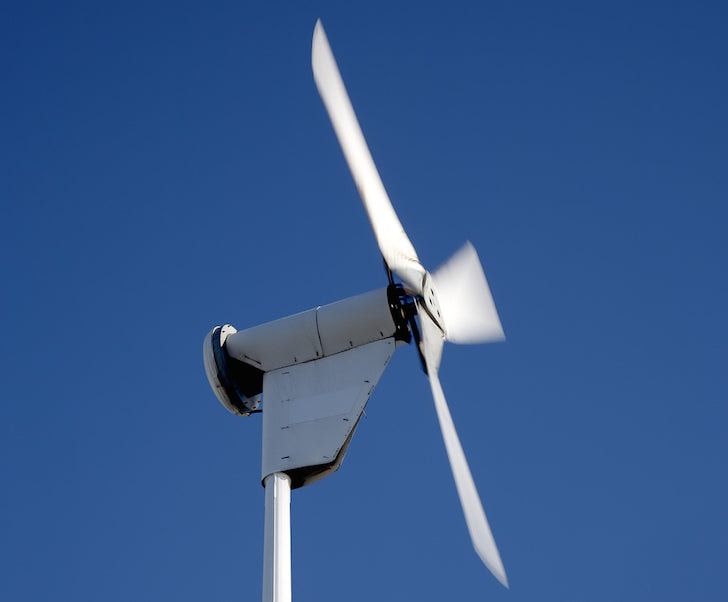
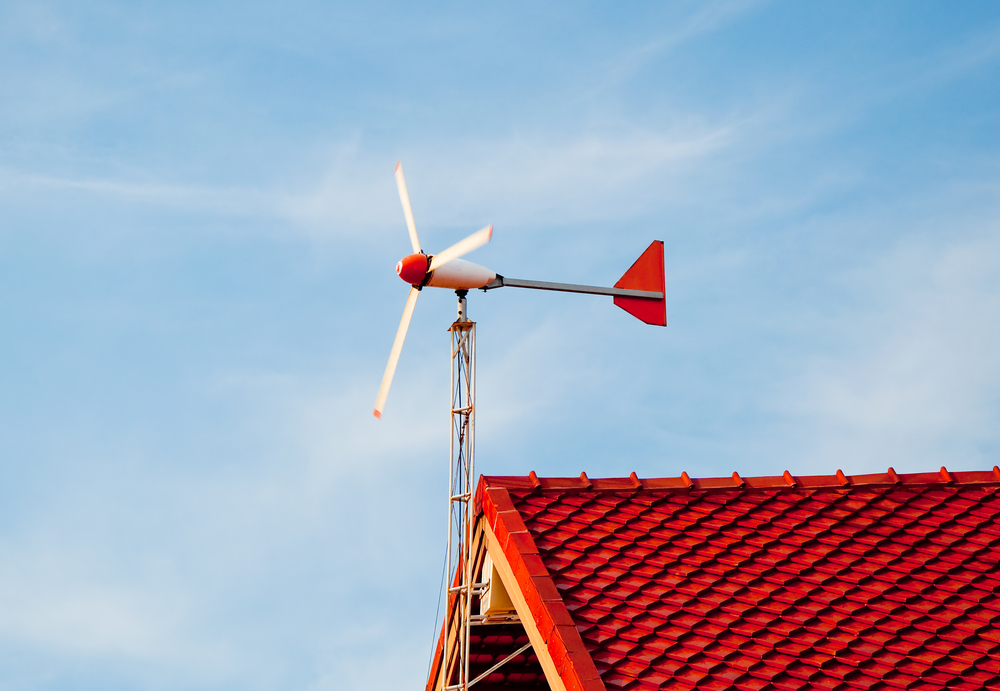
These are what most people picture: blades spinning around a horizontal shaft, resembling miniature versions of the large wind farm turbines. They are the most common and generally most efficient type for residential use.
- Description: Features 2 or 3 propeller-like blades that face into the wind.
- Pros:
- Higher Efficiency: Generally more efficient at converting wind energy into electricity.
- Proven Technology: Well-understood and widely available.
- Good for Steady Winds: Perform best in locations with consistent, strong, and relatively clean (non-turbulent) wind.
- Cons:
- Requires Yawing: Needs to turn into the wind, often with a tail fin or motor.
- Higher Cut-in Speed: Typically requires higher wind speeds to start generating power.
- Tower Height Critical: Must be mounted on tall towers to avoid ground turbulence.
- Noise & Aesthetics: Can be perceived as louder and more visually intrusive due to their height and rotating blades.
Vertical Axis Wind Turbines (VAWT)
VAWTs have blades that rotate around a vertical shaft, often resembling egg-beaters or Savonius rotors. They’re often marketed as more ‘urban-friendly.’
- Description: Blades arranged vertically, rotating independently of wind direction.
- Pros:
- Omnidirectional: Don’t need to turn into the wind, making them effective in turbulent or shifting wind conditions.
- Lower Cut-in Speed: Can start generating power at lower wind speeds.
- Quieter Operation: Often perceived as quieter than HAWTs, making them potentially more suitable for residential areas where noise is a concern.
- Easier Maintenance: Generator and gearbox are usually at ground level, simplifying maintenance.
- Aesthetics: Some designs are considered less visually intrusive.
- Cons:
- Lower Efficiency: Generally less efficient than HAWTs for the same swept area.
- Torsional Stresses: Can experience more stress on components due to varied wind forces.
- Less Common for Primary Home Power: Often seen in smaller, niche applications or as supplementary power.
Key Differences at a Glance
| Feature | Horizontal Axis Wind Turbine (HAWT) | Vertical Axis Wind Turbine (VAWT) |
|---|---|---|
| Efficiency | Generally higher (30-50% of Betz limit) | Generally lower (10-30% of Betz limit) |
| Wind Direction | Needs to face into the wind (yaw mechanism) | Omnidirectional (no yawing needed) |
| Cut-in Speed | Typically higher (e.g., 8-10 mph) | Typically lower (e.g., 5-7 mph) |
| Noise Output | Can be noticeable, especially at high speeds | Generally quieter |
| Aesthetics | Traditional ‘windmill’ look, often on tall towers | Various designs, some blend better into landscapes |
| Maintenance Access | Requires climbing tower or lowering system | Generator often at ground level, easier access |
| Best Use Case | Open, rural areas with consistent strong wind | Urban/suburban areas with turbulent or variable wind, supplementary power |
What Size Wind Turbine Do You Actually Need?
Sizing your turbine correctly is crucial for maximizing your investment and meeting your energy goals. It’s not about getting the biggest one; it’s about getting the *right one.
Calculating Your Home’s Energy Consumption
As mentioned, your electricity bill is your best friend here. Look for your average monthly kWh usage. You might also want to track seasonal variations. For example, if you have high AC usage in summer, your demand will spike.
Let’s say your home uses 900 kWh per month. To get an hourly average, divide 900 kWh by approximately 720 hours (30 days x 24 hours). That’s 1.25 kW of continuous power demand. Your turbine needs to match or exceed this average production over time.
Matching Turbine Capacity to Demand (kW vs. kWh)
Turbines are typically rated by their peak power output in kilowatts (kW) – for example, a 5 kW turbine. But this is the maximum it can produce under ideal wind conditions. The actual energy it generates (kWh) depends heavily on the average wind speed at your specific site.
- A 1.5 kW turbine might generate 100-400 kWh/month depending on wind resources.
- A 5 kW turbine might generate 300-1500 kWh/month depending on wind resources.
- For a typical U.S. home (900 kWh/month), you’re likely looking at a 5-15 kW turbine if it’s your sole power source, or smaller if supplementing other renewables or the grid.
Factors Influencing Output
- Average Wind Speed: The relationship between wind speed and power is exponential. Double the wind speed, and you get eight times the power! A small increase in average wind speed can dramatically increase your turbine’s output.
- Turbine Height: Taller towers access stronger, less turbulent wind. This is why height is so critical.
- Turbine Efficiency: Blade design, generator efficiency, and proper maintenance all contribute to how effectively the turbine converts wind into electricity.
The Cost of Going Wind: Investment, Incentives & ROI
Let’s talk dollars and cents. Investing in a small wind turbine is a significant financial decision, but one that can pay dividends over time.
Initial Purchase & Installation Costs
The total cost can vary widely based on turbine size, type, tower height, installation complexity, and whether it’s grid-tied or off-grid. A range of $10,000 to $70,000 is a realistic expectation for a residential system, with most falling between $30,000 and $50,000.
- Turbine Itself: This is a major component, ranging from a few thousand for a micro-turbine to tens of thousands for a larger residential unit.
- Tower: The cost of the tower and its foundation can be substantial, often accounting for 20-30% of the total cost.
- Balance of System (BOS): This includes the inverter (to convert DC to AC power), wiring, controllers, safety disconnects, and potentially a battery bank for off-grid or hybrid systems.
- Installation Labor: Skilled professionals are required for proper and safe installation, especially for tower erection and electrical work.
- Permitting & Site Assessment: Don’t forget these administrative costs.
Unpacking the Federal Tax Credit and Other Incentives
Here’s where things get more attractive!
- The Federal Clean Energy Tax Credit (ITC): Under the Inflation Reduction Act of 2022, small wind turbines are eligible for a generous 30% federal tax credit. This is a dollar-for-dollar reduction in your income tax liability, not just a deduction. This applies to the total cost of the installed system, including equipment and labor.
- State and Local Incentives: Many states, municipalities, and even local utilities offer additional incentives, such as rebates, property tax exemptions, or performance-based incentives. Research programs specific to your location. Database of State Incentives for Renewables & Efficiency (DSIRE) is an excellent resource (though I can’t link it directly, you know where to look!).
- Net Metering: For grid-tied systems, net metering allows you to send excess electricity you generate back to the grid and receive credits on your utility bill. This effectively turns your meter backward and can significantly reduce your costs.
Maintenance, Longevity, and Expected Lifespan
A well-maintained small wind turbine can be a long-term investment.
- Expected Lifespan: Most quality small wind turbines are designed to last 20-25 years or more with proper maintenance.
- Maintenance Requirements:
- Routine Checks: Annual visual inspections for loose bolts, frayed wires, or blade damage.
- Lubrication: Gearing and bearings may require lubrication every few years.
- Blade Cleaning: In some environments, blades might need cleaning to maintain efficiency.
- Component Replacement: Over time, parts like inverters, batteries (if applicable), or even blades might need replacement.
- Cost of Maintenance: Typically low, perhaps 1-3% of the initial system cost per year, but can vary. Factor this into your long-term financial planning.
When Does a Small Wind Turbine Pay For Itself? (ROI Discussion)
Return on Investment (ROI) for a small wind turbine can vary dramatically. It’s influenced by:
- Initial Cost (after incentives): Lower upfront cost means faster payback.
- Your Electricity Rates: If you pay high rates, the savings are greater, and payback is quicker.
- Your Wind Resource: Excellent wind speeds mean higher energy production, leading to more savings.
- Net Metering Policies: Favorable net metering accelerates ROI.
Payback periods can range from 5-15 years in ideal scenarios (high wind, high electricity rates, strong incentives) to much longer in less favorable conditions. It’s crucial to get a detailed financial analysis from a reputable installer.
Small Wind vs. Solar: A Head-to-Head Comparison
Often, homeowners considering renewable energy pit wind against solar. The reality is, they can be complementary.
Complementary or Competitive?
In many regions, wind and solar resources are complementary: wind often blows more at night and during winter, while solar peaks during sunny days in summer. A hybrid system can offer greater energy stability and independence.
Key Differentiators
| Feature | Small Wind Turbine | Solar Panels (PV) |
|---|---|---|
| Energy Production | Often higher at night, winter, and during storms. Requires consistent wind. | Daytime peak production, strongest in summer. Requires sunlight. |
| Space Requirements | Needs open land, tall tower, minimal obstructions. | Rooftop or ground-mount space, minimal shading. |
| Moving Parts | Many moving parts (blades, gearbox, generator). | No moving parts (except tracking systems, which are rare for residential). |
| Noise | Can generate audible noise, especially HAWTs. | Virtually silent. |
| Aesthetics | Highly visible structure. | Can integrate well into rooflines. |
| Maintenance | More active maintenance required (lubrication, checks). | Minimal; occasional cleaning. |
| Permitting Complexity | Often more complex due to height, noise, and zoning. | Generally simpler, well-established processes. |
The Installation Process: What to Expect
Once you’ve done your homework and decided a small wind turbine is viable for your property, what does the installation process look like?
Site Assessment and Permitting
This initial phase is critical. A qualified installer will conduct a thorough site assessment, confirming your wind resource, identifying optimal turbine placement, and evaluating foundation requirements. They should also assist with navigating the complex world of local permits, zoning ordinances, and utility interconnection agreements. This isn’t a DIY job for permitting!
Component Selection and Sourcing
Based on your energy needs and site assessment, the installer will help select the appropriate turbine (HAWT or VAWT), tower type, inverter, and any necessary battery storage or grid-tie equipment. It’s important to choose certified equipment from reputable manufacturers.
Professional Installation: Why it’s Crucial
Installing a wind turbine is not a weekend project. It involves heavy machinery for tower erection, complex electrical wiring, and strict safety protocols. Always use certified and insured professionals who specialize in wind energy systems. Incorrect installation can lead to safety hazards, poor performance, and costly repairs.
Grid Interconnection (for Grid-Tied Systems)
If you’re connecting to the grid, your utility company will need to approve the system and inspect the installation to ensure it meets their safety and technical standards. This can sometimes be a lengthy process, so factor it into your timeline.
Common Concerns & Myth Busting
Let’s tackle some common questions and misconceptions directly.
Noise Levels: Is Your Home Going to Sound Like an Airport?
This is a major concern for many. Modern small wind turbines are significantly quieter than older models. While you’ll hear some noise, especially on windy days, it’s typically a soft ‘whoosh’ or ‘whirring’ sound. HAWTs tend to be noisier than VAWTs due to their higher tip speeds. Proper placement (far enough from living areas) and quality turbine design can mitigate noise concerns. If you’re comparing it to the roar of a jet engine, you’re off the mark.
Aesthetics: Blending into Your Landscape
A tall turbine tower is a dominant feature. Some find the sight of a spinning turbine beautiful, a symbol of clean energy. Others view it as an eyesore. Consider the visual impact on your property and neighbors. VAWTs, often shorter and with different designs, can sometimes be less intrusive. Aesthetics are subjective, but important for community acceptance.
Wildlife Impact: A Balanced Perspective
While large wind farms have had documented impacts on birds and bats, the effect of small domestic turbines is generally much lower. Still, it’s a consideration. Proper siting, away from known migratory paths or sensitive habitats, is important. Modern turbines are also designed with features to minimize wildlife interaction.
Is “Small” Wind Really Worth It? Addressing Efficiency Doubts
You might hear critics say small wind turbines aren’t efficient enough. It’s true they face challenges that large utility-scale turbines don’t (like ground turbulence). However, for the right location with an excellent wind resource and appropriate sizing, they can absolutely be worth it. The key is realistic expectations and a thorough site assessment. It’s not about replacing all your energy needs for every home, but providing significant contributions or complete independence for those with suitable conditions.
Making the Decision: Is Small Wind Power for You?
Hopefully, this guide has given you a clearer picture. Small wind turbines for domestic use are a powerful, sustainable option for specific homeowners. They offer incredible benefits in terms of energy independence, reduced carbon footprint, and long-term savings on electricity bills.
However, success hinges on meeting crucial criteria: a strong, consistent wind resource, adequate space, favorable local regulations, and a realistic budget. If you tick these boxes, and are ready for a significant investment with a long-term vision, then exploring small wind power further is an exciting prospect.
Your next step? Get a professional site assessment. Talk to multiple reputable installers. Crunch the numbers based on your specific situation, including all available incentives. This is how you move from dreaming about wind power to truly harnessing it for your home.
”
}
{ “content”: “
Small Wind Turbines for Domestic Use: Your Definitive Guide to Home Wind Power
Tired of rising electricity bills? Dreaming of energy independence? The idea of harnessing the wind right in your backyard is incredibly appealing. Small wind turbines for domestic use promise a greener, more self-sufficient home. But here’s the honest truth: it’s not a ‘one-size-fits-all’ solution. While immensely rewarding for the right homeowner, there are critical factors to consider before you invest.
This guide cuts through the noise. We’re going to explore everything you need to know, from assessing your property’s wind potential to understanding costs, types of turbines, and common pitfalls. My goal is to equip you with the knowledge to make an informed decision, ensuring your journey into home wind power is a breeze, not a whirlwind of frustration.
 "Home Wind Turbines: When Do They Make Sense? | EnergySage")
Is a Small Wind Turbine Right for Your Home? (The Honest Truth)
Before you get excited about spinning blades, we need to talk practicality. Not every home is a good candidate for a small wind turbine. Success hinges on a few non-negotiable elements:
Assessing Your Wind Resource: Location, Location, Location
This is arguably the single most important factor. A wind turbine is only as good as the wind it captures. You need a consistent, strong wind resource.
- Average Wind Speed: What’s considered good? The U.S. Department of Energy (DOE) suggests a minimum annual average wind speed of 10 mph (4.5 m/s) for small wind to be economically viable, with 14 mph (6.26 m/s) being ideal for a typical home. Below that, your returns diminish significantly.
- How to Find Your Data: Don’t guess!
- Check online wind maps (many government and university sites offer these).
- Look at local airport data or meteorological stations.
- For the most accurate assessment, a professional site assessor can use anemometers to measure wind speeds directly on your property over a period.
- Obstructions Matter: Trees, hills, and buildings create turbulence and ‘wind shadow’ effects, drastically reducing a turbine’s efficiency. Your turbine needs to be significantly taller than any obstruction within a 500-foot radius to capture clean, laminar airflow. Think 20-30 feet above the tallest object.
Your Energy Needs: How Much Power Do You Really Use?
A small wind turbine should complement or significantly offset your energy consumption. It’s crucial to understand your current usage.
- Review Your Electricity Bills: Look for your average monthly kilowatt-hour (kWh) usage. This will give you a baseline. A typical U.S. home uses around 900 kWh per month.
- Matching Turbine Output: Small wind turbines are rated in kilowatts (kW) of peak power. This translates to kWh production over time, depending heavily on wind speed. A 1.5-kW turbine in a 14 mph average wind speed area might produce around 300 kWh per month, according to the DOE. You need to size your turbine appropriately – too small, and you won’t meet your needs; too large, and you’ve overinvested.
Space and Zoning: Before You Even Think About It
These practical considerations often trip up potential buyers early on.
- Minimum Land Requirements: You’ll need enough space for the turbine, its tower, and to ensure proper setback from property lines and structures. While compact VAWTs might fit in smaller spaces, HAWTs typically require more room, often needing at least an acre or more for optimal placement and safety.
- Tower Height Critical: As mentioned, height is key for clear wind. Residential towers can range from 30 to 120 feet. This isn’t a small structure! Your turbine needs to be significantly taller than any obstruction within a 500-foot radius to capture clean, laminar airflow. Think 20-30 feet above the tallest object.
- Local Regulations and Permits: This is critical. Zoning laws, building codes, and homeowners’ association (HOA) rules can be major hurdles. Many municipalities have restrictions on tower height, noise levels, and aesthetic impact.
- Actionable Step: Before doing anything else, contact your local planning department and HOA (if applicable). Ask about specific ordinances related to wind energy systems. This step alone can save you significant time and money.
Grid-Tied vs. Off-Grid: What’s Your Goal?
Your goal determines the system’s complexity and cost.
- Grid-Tied Systems: The most common setup for domestic use. Your turbine feeds power into your home, and any excess is often sent back to the utility grid (net metering). When the wind isn’t blowing, you draw power from the grid. This requires an inverter and grid-tie equipment.
- Off-Grid Systems: Complete energy independence. Your turbine (often combined with solar) charges a battery bank, which then powers your home. This is more expensive due to batteries and requires careful management of energy consumption. Ideal for remote locations where grid connection is prohibitively expensive.
Understanding Small Wind Turbine Types: HAWT vs. VAWT
Small wind turbines primarily come in two flavors, each with distinct characteristics:
Horizontal Axis Wind Turbines (HAWT)
These are what most people picture: blades spinning around a horizontal shaft, resembling miniature versions of the large wind farm turbines. They are the most common and generally most efficient type for residential use.
- Description: Features 2 or 3 propeller-like blades that face into the wind.
- Pros:
- Higher Efficiency: Generally more efficient at converting wind energy into electricity.
- Proven Technology: Well-understood and widely available.
- Good for Steady Winds: Perform best in locations with consistent, strong, and relatively clean (non-turbulent) wind.
- Cons:
- Requires Yawing: Needs to turn into the wind, often with a tail fin or motor.
- Higher Cut-in Speed: Typically requires higher wind speeds to start generating power.
- Tower Height Critical: Must be mounted on tall towers to avoid ground turbulence.
- Noise & Aesthetics: Can be perceived as louder and more visually intrusive due to their height and rotating blades.
Vertical Axis Wind Turbines (VAWT)
VAWTs have blades that rotate around a vertical shaft, often resembling egg-beaters or Savonius rotors. They’re often marketed as more ‘urban-friendly.’
- Description: Blades arranged vertically, rotating independently of wind direction.
- Pros:
- Omnidirectional: Don’t need to turn into the wind, making them effective in turbulent or shifting wind conditions.
- Lower Cut-in Speed: Can start generating power at lower wind speeds.
- Quieter Operation: Often perceived as quieter than HAWTs, making them potentially more suitable for residential areas where noise is a concern.
- Easier Maintenance: Generator and gearbox are usually at ground level, simplifying maintenance.
- Aesthetics: Some designs are considered less visually intrusive.
- Cons:
- Lower Efficiency: Generally less efficient than HAWTs for the same swept area.
- Torsional Stresses: Can experience more stress on components due to varied wind forces.
- Less Common for Primary Home Power: Often seen in smaller, niche applications or as supplementary power.
Key Differences at a Glance
| Feature | Horizontal Axis Wind Turbine (HAWT) | Vertical Axis Wind Turbine (VAWT) |
|---|---|---|
| Efficiency | Generally higher (30-50% of Betz limit) | Generally lower (10-30% of Betz limit) |
| Wind Direction | Needs to face into the wind (yaw mechanism) | Omnidirectional (no yawing needed) |
| Cut-in Speed | Typically higher (e.g., 8-10 mph) | Typically lower (e.g., 5-7 mph) |
| Noise Output | Can be noticeable, especially at high speeds | Generally quieter |
| Aesthetics | Traditional ‘windmill’ look, often on tall towers | Various designs, some blend better into landscapes |
| Maintenance Access | Requires climbing tower or lowering system | Generator often at ground level, easier access |
| Best Use Case | Open, rural areas with consistent strong wind | Urban/suburban areas with turbulent or variable wind, supplementary power |
What Size Wind Turbine Do You Actually Need?
Sizing your turbine correctly is crucial for maximizing your investment and meeting your energy goals. It’s not about getting the biggest one; it’s about getting the right one.
Calculating Your Home’s Energy Consumption
As mentioned, your electricity bill is your best friend here. Look for your average monthly kWh usage. You might also want to track seasonal variations. For example, if you have high AC usage in summer, your demand will spike.
Let’s say your home uses 900 kWh per month. To get an hourly average, divide 900 kWh by approximately 720 hours (30 days x 24 hours). That’s 1.25 kW of continuous power demand. Your turbine needs to match or exceed this average production over time.
Matching Turbine Capacity to Demand (kW vs. kWh)
Turbines are typically rated by their peak power output in kilowatts (kW) – for example, a 5 kW turbine. But this is the maximum it can produce under ideal wind conditions. The actual energy it generates (kWh) depends heavily on the average wind speed at your specific site.
- A 1.5 kW turbine might generate 100-400 kWh/month depending on wind resources.
- A 5 kW turbine might generate 300-1500 kWh/month depending on wind resources.
- For a typical U.S. home (900 kWh/month), you’re likely looking at a 5-15 kW turbine if it’s your sole power source, or smaller if supplementing other renewables or the grid.
Factors Influencing Output
- Average Wind Speed: The relationship between wind speed and power is exponential. Double the wind speed, and you get eight times the power! A small increase in average wind speed can dramatically increase your turbine’s output.
- Turbine Height: Taller towers access stronger, less turbulent wind. This is why height is so critical.
- Turbine Efficiency: Blade design, generator efficiency, and proper maintenance all contribute to how effectively the turbine converts wind into electricity.
The Cost of Going Wind: Investment, Incentives & ROI
Let’s talk dollars and cents. Investing in a small wind turbine is a significant financial decision, but one that can pay dividends over time.
Initial Purchase & Installation Costs
The total cost can vary widely based on turbine size, type, tower height, installation complexity, and whether it’s grid-tied or off-grid. A range of $10,000 to $70,000 is a realistic expectation for a residential system, with most falling between $30,000 and $50,000.
- Turbine Itself: This is a major component, ranging from a few thousand for a micro-turbine to tens of thousands for a larger residential unit.
- Tower: The cost of the tower and its foundation can be substantial, often accounting for 20-30% of the total cost.
- Balance of System (BOS): This includes the inverter (to convert DC to AC power), wiring, controllers, safety disconnects, and potentially a battery bank for off-grid or hybrid systems.
- Installation Labor: Skilled professionals are required for proper and safe installation, especially for tower erection and electrical work.
- Permitting & Site Assessment: Don’t forget these administrative costs.
Unpacking the Federal Tax Credit and Other Incentives
Here’s where things get more attractive!
- The Federal Clean Energy Tax Credit (ITC): Under the Inflation Reduction Act of 2022, small wind turbines are eligible for a generous 30% federal tax credit. This is a dollar-for-dollar reduction in your income tax liability, not just a deduction. This applies to the total cost of the installed system, including equipment and labor.
- State and Local Incentives: Many states, municipalities, and even local utilities offer additional incentives, such as rebates, property tax exemptions, or performance-based incentives. Research programs specific to your location. Database of State Incentives for Renewables & Efficiency (DSIRE) is an excellent resource (though I can’t link it directly, you know where to look!).
- Net Metering: For grid-tied systems, net metering allows you to send excess electricity you generate back to the grid and receive credits on your utility bill. This effectively turns your meter backward and can significantly reduce your costs.
Maintenance, Longevity, and Expected Lifespan
A well-maintained small wind turbine can be a long-term investment.
- Expected Lifespan: Most quality small wind turbines are designed to last 20-25 years or more with proper maintenance.
- Maintenance Requirements:
- Routine Checks: Annual visual inspections for loose bolts, frayed wires, or blade damage.
- Lubrication: Gearing and bearings may require lubrication every few years.
- Blade Cleaning: In some environments, blades might need cleaning to maintain efficiency.
- Component Replacement: Over time, parts like inverters, batteries (if applicable), or even blades might need replacement.
- Cost of Maintenance: Typically low, perhaps 1-3% of the initial system cost per year, but can vary. Factor this into your long-term financial planning.
When Does a Small Wind Turbine Pay For Itself? (ROI Discussion)
Return on Investment (ROI) for a small wind turbine can vary dramatically. It’s influenced by:
- Initial Cost (after incentives): Lower upfront cost means faster payback.
- Your Electricity Rates: If you pay high rates, the savings are greater, and payback is quicker.
- Your Wind Resource: Excellent wind speeds mean higher energy production, leading to more savings.
- Net Metering Policies: Favorable net metering accelerates ROI.
Payback periods can range from 5-15 years in ideal scenarios (high wind, high electricity rates, strong incentives) to much longer in less favorable conditions. It’s crucial to get a detailed financial analysis from a reputable installer.
Small Wind vs. Solar: A Head-to-Head Comparison
Often, homeowners considering renewable energy pit wind against solar. The reality is, they can be complementary.
:max_bytes(150000):strip_icc()/wind-turbine-generator-on-house-roof-90967703-b9619befbf954726ae92dfb6154711f2.jpg "Is a Home Wind Turbine Right for You?")
Complementary or Competitive?
In many regions, wind and solar resources are complementary: wind often blows more at night and during winter, while solar peaks during sunny days in summer. A hybrid system can offer greater energy stability and independence.
Key Differentiators
| Feature | Small Wind Turbine | Solar Panels (PV) |
|---|---|---|
| Energy Production | Often higher at night, winter, and during storms. Requires consistent wind. | Daytime peak production, strongest in summer. Requires sunlight. |
| Space Requirements | Needs open land, tall tower, minimal obstructions. | Rooftop or ground-mount space, minimal shading. |
| Moving Parts | Many moving parts (blades, gearbox, generator). | No moving parts (except tracking systems, which are rare for residential). |
| Noise | Can generate audible noise, especially HAWTs. | Virtually silent. |
| Aesthetics | Highly visible structure. | Can integrate well into rooflines. |
| Maintenance | More active maintenance required (lubrication, checks). | Minimal; occasional cleaning. |
| Permitting Complexity | Often more complex due to height, noise, and zoning. | Generally simpler, well-established processes. |
The Installation Process: What to Expect
Once you’ve done your homework and decided a small wind turbine is viable for your property, what does the installation process look like?
Site Assessment and Permitting
This initial phase is critical. A qualified installer will conduct a thorough site assessment, confirming your wind resource, identifying optimal turbine placement, and evaluating foundation requirements. They should also assist with navigating the complex world of local permits, zoning ordinances, and utility interconnection agreements. This isn’t a DIY job for permitting!
Component Selection and Sourcing
Based on your energy needs and site assessment, the installer will help select the appropriate turbine (HAWT or VAWT), tower type, inverter, and any necessary battery storage or grid-tie equipment. It’s important to choose certified equipment from reputable manufacturers.
Professional Installation: Why it’s Crucial
Installing a wind turbine is not a weekend project. It involves heavy machinery for tower erection, complex electrical wiring, and strict safety protocols. Always use certified and insured professionals who specialize in wind energy systems. Incorrect installation can lead to safety hazards, poor performance, and costly repairs.
Grid Interconnection (for Grid-Tied Systems)
If you’re connecting to the grid, your utility company will need to approve the system and inspect the installation to ensure it meets their safety and technical standards. This can sometimes be a lengthy process, so factor it into your timeline.
Common Concerns & Myth Busting
Let’s tackle some common questions and misconceptions directly.
Noise Levels: Is Your Home Going to Sound Like an Airport?
This is a major concern for many. Modern small wind turbines are significantly quieter than older models. While you’ll hear some noise, especially on windy days, it’s typically a soft ‘whoosh’ or ‘whirring’ sound. HAWTs tend to be noisier than VAWTs due to their higher tip speeds. Proper placement (far enough from living areas) and quality turbine design can mitigate noise concerns. If you’re comparing it to the roar of a jet engine, you’re off the mark.
Aesthetics: Blending into Your Landscape
A tall turbine tower is a dominant feature. Some find the sight of a spinning turbine beautiful, a symbol of clean energy. Others view it as an eyesore. Consider the visual impact on your property and neighbors. VAWTs, often shorter and with different designs, can sometimes be less intrusive. Aesthetics are subjective, but important for community acceptance.
Wildlife Impact: A Balanced Perspective
While large wind farms have had documented impacts on birds and bats, the effect of small domestic turbines is generally much lower. Still, it’s a consideration. Proper siting, away from known migratory paths or sensitive habitats, is important. Modern turbines are also designed with features to minimize wildlife interaction.
Is “Small” Wind Really Worth It? Addressing Efficiency Doubts
You might hear critics say small wind turbines aren’t efficient enough. It’s true they face challenges that large utility-scale turbines don’t (like ground turbulence). However, for the right location with an excellent wind resource and appropriate sizing, they can absolutely be worth it. The key is realistic expectations and a thorough site assessment. It’s not about replacing all* your energy needs for every home, but providing significant contributions or complete independence for those with suitable conditions.
Making the Decision: Is Small Wind Power for You?
Hopefully, this guide has given you a clearer picture. Small wind turbines for domestic use are a powerful, sustainable option for specific homeowners. They offer incredible benefits in terms of energy independence, reduced carbon footprint, and long-term savings on electricity bills.
However, success hinges on meeting crucial criteria: a strong, consistent wind resource, adequate space, favorable local regulations, and a realistic budget. If you tick these boxes, and are ready for a significant investment with a long-term vision, then exploring small wind power further is an exciting prospect.
Your next step? Get a professional site assessment. Talk to multiple reputable installers. Crunch the numbers based on your specific situation, including all available incentives. This is how you move from dreaming about wind power to truly harnessing it for your home.
Frequently Asked Questions
How much does a small wind turbine cost for a home?
The total cost for a residential small wind turbine system typically ranges from $10,000 to $70,000, with most systems for a typical home falling between $30,000 and $50,000. This includes the turbine, tower, balance of system components, and professional installation.
Is a home wind turbine worth it?
A home wind turbine can be highly worthwhile for properties with consistent, strong wind resources (an annual average of 10-14 mph or more), sufficient space, and favorable local zoning. High electricity rates and available federal or state incentives (like the 30% federal tax credit) can significantly improve the return on investment and make it a financially sound decision over its 20-25 year lifespan.
How much power can a small wind turbine generate?
The power generated varies greatly by turbine size and wind speed. A 1.5 kW turbine in a good wind area (14 mph average) might produce around 300 kWh per month, while a 5-15 kW turbine could generate 300-1500 kWh per month. Always match the turbine’s expected output to your home’s average electricity consumption, found on your utility bills.
What’s the ideal wind speed for a domestic turbine?
The U.S. Department of Energy suggests an annual average wind speed of at least 10 mph (4.5 m/s) for economic viability, with 14 mph (6.26 m/s) being ideal. Below 10 mph, the energy production might not justify the investment.
Are there tax credits for residential wind turbines?
Yes! Under the Inflation Reduction Act of 2022, small wind turbines for domestic use are eligible for a 30% federal tax credit, which is a direct reduction in your income tax liability. Additional state, local, or utility incentives may also be available.
Do small wind turbines make a lot of noise?
Modern small wind turbines are much quieter than older models. While some noise (a ‘whoosh’ or ‘whirring’) is present, especially on windy days, it’s generally not disruptive, particularly if the turbine is sited appropriately far from living areas. Vertical Axis Wind Turbines (VAWTs) tend to be quieter than Horizontal Axis Wind Turbines (HAWTs).
How long do home wind turbines last?
With proper installation and regular maintenance, a quality small wind turbine system can last 20-25 years or even longer. Key components like inverters and batteries (for off-grid systems) may require replacement within that timeframe.