Small Wind Turbines for Your Home: The Definitive Guide to Harnessing Wind Power
Dreaming of energy independence? Imagining a quiet turbine spinning gracefully on your property, powering your home with clean, renewable energy? The idea of a small wind turbine for your home is compelling, but let’s be honest: you’ve probably also heard the skepticism. “Do they really work?” “Are they worth the cost?” “Isn’t solar just better?”
Table of Contents
- Small Wind Turbines for Your Home: The Definitive Guide to Harnessing Wind Power
- Are Small Wind Turbines Right for Your Home? Unpacking the Reality
- The Ideal Homeowner Profile: When Wind Makes Sense
- Dispelling Myths: What Small Wind Turbines Aren’t
- Types of Small Wind Turbines for Residential Use
- Horizontal Axis Wind Turbines (HAWTs)
- Vertical Axis Wind Turbines (VAWTs)
- Sizing Your Small Wind Turbine: How Much Power Do You Really Need?
- Calculating Your Energy Needs
- Understanding Wind Resource Assessment
- Turbine Power Output Explained (Watts vs. kWh)
- The Real Cost of a Residential Wind Turbine System
- Breaking Down the Components: What You’re Paying For
- Installation & Permitting Costs
- Long-Term Costs: Maintenance & Longevity
- Installation & Permitting: Navigating the Red Tape
- Zoning Laws and Ordinances
- The Permitting Process: A Step-by-Step Guide
- Finding Qualified Installers
- Integrating Your Wind Turbine with Your Home Energy System
- Grid-Tied Systems: Net Metering Explained
- Off-Grid Systems: The Role of Battery Storage
- Hybrid Systems: Wind + Solar Synergy
- Maximizing Your Wind Turbine’s Performance and Lifespan
- Optimal Siting and Tower Height
- Regular Maintenance Checklist
- Monitoring Your System
- The Wind of Change: Is It Blowing for Your Home?
You’re right to ask these questions. The truth is, small wind turbines aren’t a one-size-fits-all solution. But for the right home in the right location, they can be an incredibly powerful, sustainable, and even economically smart investment, often complementing solar power beautifully. This guide will cut through the noise, dispelling myths and providing you with the honest, actionable information you need to decide if harnessing the wind is right for you.
Are Small Wind Turbines Right for Your Home? Unpacking the Reality
Before you get swept away by the allure of a spinning turbine, let’s ground ourselves in reality. Small wind energy isn’t for everyone, but for a specific profile of homeowner, it can be a game-changer. Is that you?
The Ideal Homeowner Profile: When Wind Makes Sense
A small wind turbine shines brightest under certain conditions. Consider if these describe your situation:
- Rural Location with Consistent High Winds: This is non-negotiable. If you’re in a city or a sheltered valley with inconsistent breezes, a wind turbine likely won’t produce enough power to justify the investment. Think wide-open spaces, hilltops, or coastal areas.
- Ample Property & Clear Airflow: You need enough land for setbacks from property lines and buildings, and critically, a tall enough tower to get above turbulence caused by trees, hills, or structures.
- High Electricity Bills: If your monthly electricity consumption is consistently high, the financial payback period for a wind turbine system becomes more attractive.
- A Desire for Energy Independence: For those looking to reduce reliance on the grid, or even go completely off-grid, wind power offers a reliable source, especially when paired with solar.
- Complementary to Solar? Absolutely! Wind and solar are often described as complementary because they frequently produce power at different times. Wind tends to be stronger in winter and at night, while solar excels in summer days. A hybrid system can provide more consistent year-round generation.
Dispelling Myths: What Small Wind Turbines Aren’t
Let’s clear up some common misconceptions right away:
- Not for Urban/Suburban Areas: Most residential areas lack the consistent, unobstructed wind resources and the necessary zoning permits for a cost-effective system.
- Not a “Set It and Forget It” Solution: Like any mechanical system, wind turbines require occasional maintenance and monitoring to ensure optimal performance and longevity.
- Not Always Cheaper Than Grid Power Immediately: The initial investment can be significant. The economic benefit comes over the long term through reduced or eliminated electricity bills and potential incentives.
- Not a Magic Bullet for Low Wind: A turbine in a low-wind area is simply an expensive ornament. It needs a sustained average wind speed of at least 10-12 mph (4.5-5.5 m/s) to be genuinely effective.
To help you weigh the options, here’s a quick comparison:
| Factor | Small Wind Turbine Suitability | Solar Panel Suitability |
|---|---|---|
| Location Type | Rural, open land, coastal, mountain ridge | Urban, suburban, rural (good roof space or open land) |
| Key Resource Needed | Consistent average wind speed (10-12 mph+) | Unobstructed sunlight (south-facing, minimal shading) |
| Space Requirements | Large property for tower setbacks, clear airspace | Roof space or ground space |
| Typical Generation Pattern | Often stronger at night and during winter months | Strongest during daytime hours, especially summer |
| Noise Concern | Can be a factor; modern turbines are much quieter | Minimal to none |
| Visual Impact | Prominent tower and blades | Panels on roof or ground; can blend in or be noticeable |
Types of Small Wind Turbines for Residential Use
When you start looking into small wind turbines, you’ll primarily encounter two main designs: Horizontal Axis Wind Turbines (HAWTs) and Vertical Axis Wind Turbines (VAWTs). Each has distinct characteristics that make them suitable for different applications.
Horizontal Axis Wind Turbines (HAWTs)
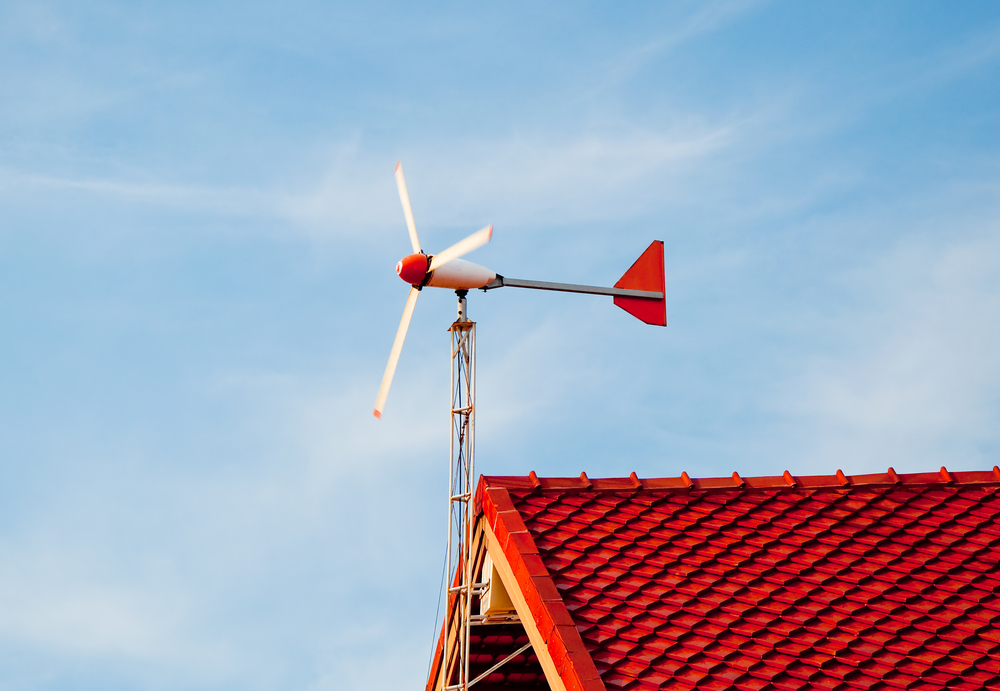
These are what most people picture when they think of a wind turbine – propeller-like blades rotating around a horizontal shaft, similar to large utility-scale turbines. Most residential HAWTs have two or three blades.
- Pros:
- Higher Efficiency: Generally more efficient at converting wind energy into electricity, especially in consistent, high winds.
- Proven Technology: A well-established design with a long track record.
- Better Power Output: Typically produce more power per swept area compared to VAWTs.
- Cons:
- Require Yaw Mechanism: Must orient themselves into the wind, often with a tail fin or motor, adding complexity.
- Can Be Noisier: Though modern designs are much quieter, the fast-moving blades can generate more aerodynamic noise than VAWTs.
- Higher Tower Height Needed: To capture the best wind, they usually need to be mounted on taller towers, which increases installation costs and visual impact.
- Blade Rotation Speed: Faster tip speeds can pose a greater risk to birds (though small turbines are less impactful than large ones).
- Common Applications: Ideal for rural properties with consistent, strong, and unobstructed wind resources.
Vertical Axis Wind Turbines (VAWTs)
VAWTs have blades that rotate around a vertical shaft, making them look quite different from HAWTs. Common designs include Darrieus (eggbeater shape) and Savonius (S-shaped cups).
- Pros:
- Omnidirectional: Don’t need to turn to face the wind, making them effective in turbulent or shifting wind conditions.
- Quieter Operation: Generally quieter due to slower tip speeds and different blade dynamics.
- Lower Mounting Height: Can operate closer to the ground, potentially on rooftops (though caution is needed due to vibration and turbulence).
- Easier Maintenance: Generator and gearbox are typically at ground level, simplifying maintenance access.
- Aesthetics: Some find their design more visually appealing or less intrusive.
- Cons:
- Lower Overall Efficiency: Often less efficient than HAWTs, especially at higher wind speeds.
- Self-Starting Issues: Some VAWT designs require an initial push to start spinning.
- Less Proven for Large-Scale Residential: While improving, they haven’t reached the same widespread adoption or efficiency levels as HAWTs for significant home power generation.
- Niche Applications: Suited for areas with variable wind directions, urban environments (with careful siting), or where lower noise and visual impact are priorities, often as supplemental power.
Here’s a quick comparison of the two types:
| Feature | Horizontal Axis (HAWT) | Vertical Axis (VAWT) |
|---|---|---|
| Efficiency | Generally higher | Generally lower |
| Wind Direction Req. | Needs to face wind (yaw mechanism) | Omnidirectional (no yaw needed) |
| Noise Level | Can be louder due to faster tip speeds | Typically quieter |
| Ideal Siting | Tall tower, unobstructed airflow | Can operate closer to ground, in turbulent areas |
| Visual Impact | More traditional, prominent windmill look | Unique, sometimes considered more aesthetic |
| Maintenance Access | Requires tower climbing for generator/gearbox | Components often at ground level |
Sizing Your Small Wind Turbine: How Much Power Do You Really Need?
This is where the rubber meets the road. Getting the right size turbine is crucial for cost-effectiveness and meeting your energy goals. Too small, and you won’t generate enough. Too big, and you’ve overspent.
Calculating Your Energy Needs
The first step is to understand your current electricity consumption. Dig out your past year’s electricity bills. Look for your average monthly kilowatt-hour (kWh) usage. This is the unit you pay for and what your turbine needs to generate. For example, a typical American home might use around 900 kWh per month.
If you’re aiming to go completely off-grid, you’ll also need to do an energy audit of every appliance and device in your home to precisely calculate daily and peak loads.
Understanding Wind Resource Assessment
Once you know how much energy you need, you need to know how much wind you *actually have. This is perhaps the most critical factor for a successful wind energy system. You can’t just guess:
- Local Wind Maps: Government agencies (like the National Renewable Energy Laboratory – NREL) and some manufacturers offer regional wind maps. These are a good starting point, but they’re generalized.
- On-Site Anemometer Data: The gold standard. Installing a temporary wind mast with an anemometer for at least a year (or ideally longer) at the proposed turbine height provides precise, site-specific data. This measures average wind speed, wind direction, and seasonal variations.
- Obstructions: Be aware of nearby trees, buildings, and hills. These create turbulence and reduce wind speed. A good rule of thumb is that your turbine’s tower should be at least 20 feet (6 meters) higher than any obstacle within 500 feet (150 meters).
Turbine Power Output Explained (Watts vs. kWh)
Turbines are rated in watts (W) or kilowatts (kW) – this is their maximum instantaneous power output at a specific, often high, wind speed (e.g., a 10 kW turbine). However, the actual energy you’ll get is measured in kilowatt-hours (kWh) per month or year.
Factors affecting actual output:
- Wind Speed: Turbine output is exponentially related to wind speed. If wind speed doubles, power output increases by eight times! This is why a consistent, strong wind resource is paramount.
- Blade Size (Swept Area): Larger blades capture more wind.
- Tower Height: Higher towers access stronger, less turbulent wind.
- Turbine Efficiency: How well the turbine converts wind energy into electricity.
Example Calculation: Let’s say your home uses 900 kWh per month (roughly 30 kWh/day). If you have an average wind speed of 12 mph (5.4 m/s), a typical 5 kW residential turbine might* produce between 300-600 kWh per month, depending on its specific power curve and local wind consistency. This indicates you’d likely need a larger turbine or multiple turbines, or a hybrid system with solar, to meet 100% of that demand.
This is where professional assessment is critical. They can take your energy needs, match them against your specific wind resource, and recommend the appropriate turbine size and tower height.
The Real Cost of a Residential Wind Turbine System
The price tag on a small wind turbine system can be a significant barrier for many. It’s not just the turbine itself; there are numerous other components and services that contribute to the overall cost. Understanding these helps you budget realistically.
Breaking Down the Components: What You’re Paying For
A complete small wind system involves more than just the blades and generator:
- The Turbine Unit: This includes the blades, rotor, generator, and nacelle (the housing for the mechanical components). Prices range widely based on power output (e.g., 1 kW to 20 kW). Micro-turbines (under 1 kW) can be a few hundred to a couple thousand dollars. Residential turbines (1 kW – 10 kW) typically cost anywhere from $3,000 to $20,000+.
- The Tower: This is a major expense. Towers can be guyed (supported by cables) or self-supporting (freestanding). Guyed towers are less expensive but require more land. Self-supporting towers are more costly but have a smaller footprint. Tower height impacts price significantly, with costs ranging from $2,000 to $15,000+.
- Inverter: Converts the DC (direct current) electricity generated by the turbine into AC (alternating current) suitable for your home and the grid. Costs vary, but expect $1,000 to $5,000.
- Charge Controller: Manages the power flow from the turbine, especially important for battery charging in off-grid or hybrid systems. $300 to $1,500.
- Batteries (for off-grid or hybrid systems): A significant expense if you’re storing energy. A robust battery bank for a home can easily cost $5,000 to $20,000+, depending on capacity.
- Wiring, Controls & Safety Disconnects: All the electrical components to safely connect the system. $500 to $2,000.
Installation & Permitting Costs
This is where a substantial portion of your budget will go, and it’s often underestimated:
- Professional Installation: Unless you’re an experienced electrician and rigger, professional installation is a must for safety and proper functioning. This can range from $5,000 to $20,000+, depending on system size, tower type, and site complexity.
- Site Assessment & Engineering: Hiring experts for wind resource assessment, soil testing for the foundation, and structural engineering for the tower. $500 to $3,000.
- Permits & Zoning Appeals: Application fees, legal costs if you need to appeal zoning decisions, environmental impact studies. These vary widely by locality, from a few hundred to several thousand dollars.
- Utility Interconnection Fees: If you’re connecting to the grid, your utility company may have fees for interconnection studies and equipment. $100 to $1,000+.
Long-Term Costs: Maintenance & Longevity
Small wind turbines are built to last, often 20-30 years, but they aren’t maintenance-free:
- Routine Checks: Annual visual inspections are recommended.
- Component Replacement: Blades (due to hail or wear), bearings, and electronics may need replacement over time. This could be $100 to $1,000+ every few years or longer.
- Insurance: Factor in potential increases in homeowner’s insurance.
Total System Cost Estimate: For a grid-tied residential system (5-10 kW) without batteries, expect a total installed cost ranging from $15,000 to $50,000+. Off-grid systems with battery storage will be significantly higher.
| Component/Service | Estimated Cost Range (USD) | Notes |
|---|---|---|
| Turbine Unit (1-10 kW) | $3,000 – $20,000+ | Depends heavily on size and brand |
| Tower (Guyed or Freestanding) | $2,000 – $15,000+ | Height and type are major factors |
| Inverter | $1,000 – $5,000 | Converts DC to AC power |
| Charge Controller | $300 – $1,500 | Essential for battery systems |
| Battery Bank (Optional) | $5,000 – $20,000+ | For off-grid or backup storage; significant cost |
| Installation Labor | $5,000 – $20,000+ | Site prep, foundation, tower erection, wiring |
| Site Assessment & Engineering | $500 – $3,000 | Wind study, soil test, tower design |
| Permits & Fees | $100 – $5,000+ | Varies widely by jurisdiction |
| Miscellaneous (Wiring, Safety, etc.) | $500 – $2,000 | Essential small parts for system integrity |
| Estimated Total (Grid-Tied, No Battery) | $15,000 – $50,000+ | Broad range; consult experts for precise quotes |
Don’t forget to investigate federal, state, and local incentives! The federal Investment Tax Credit (ITC) for renewable energy often applies to wind systems, offering a significant percentage back on your total system cost. Many states and utilities also offer rebates or other programs.
Installation & Permitting: Navigating the Red Tape
Installing a small wind turbine isn’t like putting up a garden shed. It involves significant structural and electrical work, and critically, navigating a maze of local regulations. This phase requires patience and due diligence.

Zoning Laws and Ordinances
This is often the biggest hurdle. Before you invest a dime, research your local zoning laws. Key restrictions often include:
- Height Restrictions: There are typically limits on how tall structures can be, and your turbine tower will likely exceed these. You may need a variance.
- Setbacks: Turbines usually must be a certain distance from property lines, existing structures, and public roads.
- Noise Limits: While modern small turbines are quieter, some localities have strict noise ordinances that could impact your project.
- Aesthetics: Some communities, particularly those with homeowners’ associations (HOAs) or historical districts, may have rules regarding visual impact.
- Permitted Uses: Ensure that a wind turbine is a permitted accessory use in your zoning district.
Start by contacting your local planning department or zoning board. They can provide you with the relevant codes and application forms.
The Permitting Process: A Step-by-Step Guide
Once you understand the zoning, here’s a general idea of the permitting process:
- Initial Inquiry: Contact your local building department to determine required permits (e.g., building, electrical, environmental).
- Site Plan Submission: Provide detailed drawings of your property, showing the proposed turbine location, tower height, setbacks, and utility connections.
- Engineering & Structural Plans: You’ll likely need stamped engineering plans for the turbine foundation and tower, ensuring it can withstand local wind loads.
- Electrical Plans: Detailed wiring diagrams showing how the turbine connects to your home’s electrical system and/or the grid.
- Public Hearings (Potentially): If you need a variance for height or other exemptions, you may have to present your case to a zoning board or planning commission, often involving public notice to neighbors.
- Inspections: Once permits are granted and installation begins, various stages will require inspection (e.g., foundation, electrical, final).
This process can take months, so factor that into your timeline.
Finding Qualified Installers
This isn’t a DIY project for most. You need experienced professionals who understand both renewable energy systems and local building codes. Look for:
- NABCEP Certification: The North American Board of Certified Energy Practitioners (NABCEP) offers certifications for small wind installers. This is a strong indicator of expertise.
- Licensed Electricians: Ensure your installer has licensed electricians on staff.
- Local References: Ask for local projects they’ve completed and speak to those homeowners.
- Insurance & Warranties: Verify they are fully insured and offer comprehensive warranties on their work and the equipment.
Integrating Your Wind Turbine with Your Home Energy System
How your wind turbine delivers power to your home depends on whether you’re grid-tied, off-grid, or somewhere in between.
Grid-Tied Systems: Net Metering Explained
Most residential wind systems in the US are grid-tied. This means your turbine is connected to both your home’s electrical system and the local utility grid. Here’s how it works:
- Supplying Your Home: When the wind blows, your turbine generates electricity, which is converted to AC by the inverter and used directly by your home.
- Selling Excess: If your turbine produces more power than your home is using, the excess is sent back to the utility grid.
- Net Metering: Under net metering policies (available in many states), your utility credits you for the electricity you send to the grid. Your meter essentially runs backward. You only pay for your “net” consumption (utility power used minus turbine power sent back).
- Drawing from Grid: When the wind isn’t blowing enough, or your usage exceeds your turbine’s output, you draw power from the grid as usual.
Benefits: No need for expensive batteries, full use of generated power, financial credit for excess. Downside: You’re still connected to and reliant on the grid, so a power outage on the grid means your turbine will automatically shut down for safety reasons (anti-islanding protection).
Off-Grid Systems: The Role of Battery Storage
For true energy independence, an off-grid system is required. This means you are completely disconnected from the utility grid. For wind, this almost always involves batteries:
- Battery Bank: The heart of an off-grid system. When the turbine generates power, it charges the batteries. When your home needs power, it draws from the batteries.
- Charge Controller: Manages the charging and discharging of the batteries, preventing overcharging or deep discharging.
- Inverter: Converts DC power from the batteries into AC for your home.
- Backup Generator (Often): Most off-grid homes include a fossil fuel generator as a backup for extended periods of low wind or high demand, especially in winter.
Benefits: Complete energy independence, no electricity bills, no reliance on utility infrastructure. Downside: High upfront cost (especially for batteries), requires careful energy management, and often needs a backup generator.
Hybrid Systems: Wind + Solar Synergy
This is often the most robust and practical approach for maximizing renewable energy in a home. By combining wind and solar, you benefit from their complementary nature:
- Day vs. Night: Solar produces during the day, wind can produce day and night.
- Seasonal Variation: Solar is strong in summer, wind is often stronger in winter.
- Weather Buffering: A cloudy, calm day will limit both, but often one resource can compensate for the other.
A hybrid system typically involves a shared battery bank (for off-grid or grid-tied with storage) and a single inverter system capable of handling input from both sources.
Maximizing Your Wind Turbine’s Performance and Lifespan
Once your small wind turbine is installed, you’ll want to ensure it operates at peak efficiency and lasts for decades. This involves smart siting and consistent, though often minimal, maintenance.

Optimal Siting and Tower Height
We touched on this earlier, but it’s worth reiterating: location, location, location.
- Get Above Obstacles: The single most important factor. Trees, buildings, and even slight changes in terrain create turbulence. Your tower should be at least 20 feet (6 meters) higher than any obstacle within a 500-foot (150-meter) radius. The higher the tower, the better the wind resource, and the more electricity generated.
- Clear Airflow: Avoid valleys or areas surrounded by dense woods. Look for open, elevated areas.
- Prevailing Wind Direction: While HAWTs yaw to face the wind, understanding your prevailing wind direction helps with initial placement.
Regular Maintenance Checklist
Small wind turbines are robust, but a little preventative care goes a long way:
- Annual Visual Inspection: From the ground, check for loose wires, rust, cracks in blades, or unusual noises. If your tower is tilt-up, this is easier.
- Blade Inspection: Periodically inspect blades for damage (nicks, cracks from hail or debris). Minor damage can impact efficiency and potentially lead to larger issues.
- Moving Parts: Some turbines require lubrication of bearings in the gearbox or yaw mechanism. Follow the manufacturer’s recommendations carefully.
- Electrical Connections: Ensure all wiring connections are secure and free of corrosion.
- Tower Guy Wires (if applicable): Check tension annually and ensure they are free of corrosion or damage.
- Battery Maintenance (for off-grid/hybrid): If you have flooded lead-acid batteries, check electrolyte levels regularly. Otherwise, ensure your charge controller is functioning correctly for sealed or lithium batteries.
- Wildlife: Occasionally check for bird or insect nests that might interfere with components.
Most modern residential turbines are designed for minimal maintenance, often requiring professional service only every 3-5 years. Always refer to your turbine’s specific owner’s manual for its recommended maintenance schedule.
Monitoring Your System
Many modern turbines come with monitoring systems or can be retrofitted with them. This allows you to track:
- Real-time Power Output: See how much electricity your turbine is generating.
- Total Energy Production: Track kWh generated over time.
- Wind Speed: Monitor current and average wind speeds at the turbine.
- System Status: Get alerts for any faults or issues.
Monitoring helps you understand your system’s performance, identify potential issues early, and confirm that you’re getting the energy production you expect.
The Wind of Change: Is It Blowing for Your Home?
Small wind turbines for homes are not a universal solution, nor are they a cheap one. But for the homeowner with the right blend of geography, energy needs, and a genuine desire for sustainable power, they represent a powerful opportunity.
By understanding the types of turbines, accurately assessing your wind resource, calculating realistic costs, navigating the permitting process, and committing to proper maintenance, you can transform the dream of home wind power into a tangible, energy-generating reality. The key is thorough research, realistic expectations, and partnering with knowledgeable professionals. The wind is waiting; will you harness it?
Frequently Asked Questions
How much does a small wind turbine for a home cost?
The total installed cost for a grid-tied residential wind turbine system (1-10 kW), excluding batteries, typically ranges from $15,000 to $50,000+. This includes the turbine, tower, inverter, installation labor, site assessment, engineering, and permitting fees. Off-grid systems with battery storage will be significantly more expensive.
Are small wind turbines worth it for residential use?
Small wind turbines are worth it for specific residential applications, primarily in rural areas with consistent, strong, and unobstructed wind resources. They are most beneficial for homeowners with high electricity bills, a desire for energy independence, or as a complement to a solar energy system. They are generally not suitable for urban or suburban homes due to insufficient wind and zoning restrictions.
How much energy can a residential wind turbine generate?
The energy generated (measured in kilowatt-hours, kWh) by a residential wind turbine depends heavily on its size (kW rating), the average wind speed at the installation site, and the turbine’s efficiency. A typical 5 kW residential turbine might produce 300-600 kWh per month in an area with an average wind speed of 12 mph (5.4 m/s), but this can vary widely.
Can I install a small wind turbine in my backyard?
While technically possible, installing a small wind turbine in a typical backyard is often impractical and subject to strict regulations. Most residential zoning laws have height restrictions and setback requirements that make it difficult. More importantly, urban and suburban backyards rarely have the consistent, unobstructed wind resources necessary for a turbine to be cost-effective. Rural properties with ample land are much better suited.
Is wind power better than solar power for homes?
Neither is inherently ‘better’; they are often complementary. Solar excels during sunny days, especially in summer, while wind power can generate electricity day and night, and is often stronger in winter. The ‘better’ option depends on your specific location’s resources (sun vs. wind), property size, energy needs, and local regulations. A hybrid wind-solar system often provides the most consistent year-round renewable energy.
What kind of maintenance do small wind turbines require?
Small wind turbines are generally low maintenance but require periodic checks. This includes annual visual inspections for damage or loose components, occasional lubrication of moving parts (as per manufacturer), and ensuring all electrical connections are secure. For off-grid systems, battery maintenance is also crucial. Most modern turbines are designed for professional service every 3-5 years.
What is the difference between HAWT and VAWT for home use?
Horizontal Axis Wind Turbines (HAWTs) are the traditional propeller-style turbines; they are generally more efficient in consistent, high winds but require a yaw mechanism and taller towers. Vertical Axis Wind Turbines (VAWTs) have blades that rotate around a vertical shaft; they are quieter, don’t need to face the wind, and can operate closer to the ground, but are typically less efficient overall for substantial power generation.

)