Power Your Shed with the Wind: The Ultimate Guide to Small Wind Turbines
Imagine your shed – not just a storage space, but a fully functional workshop, an off-grid office, or a cozy retreat. Now, imagine it powered by the clean, free energy of the wind. No more long extension cords. No more noisy, fuel-guzzling generators. Just independent, sustainable power, right where you need it.
Table of Contents
- Power Your Shed with the Wind: The Ultimate Guide to Small Wind Turbines
- Is a Small Wind Turbine Right for Your Shed? Unpacking the Pros and Cons
- The Pros: Your Shed’s Path to Independence
- The Cons: Realities of Wind Power
- Understanding Your Shed’s Power Needs: What Do You Want to Run?
- Assess Your Loads: The Appliance Audit
- Calculate Watt-Hours: Your Daily Power Budget
- Choosing Your Blade: Types of Small Wind Turbines for Sheds
- Horizontal Axis Wind Turbines (HAWTs)
- Vertical Axis Wind Turbines (VAWTs)
- Sizing It Up: How Powerful a Turbine Does Your Shed Need?
- Matching Output to Demand
- Wind Speed is King
- Beyond the Blades: Essential Components of a Small Wind System
- Location, Location, Location: Optimizing Your Shed Turbine Placement
- Wind Resource Assessment: Avoid Turbulence
- Tower Height: Getting Above the Airflow
- Safety & Noise: Consider Your Neighbors
- The Hybrid Advantage: Combining Wind and Solar for Ultimate Shed Power
- Why Go Hybrid? Complementary Power Generation
- System Integration & Benefits
- Installation Insights: Getting Your Shed Turbine Up Safely
- DIY vs. Professional: Know Your Limits
- Permitting & Zoning: Do Your Homework
- Mounting Options for Sheds: Stability is paramount
- Wiring Basics: Safety First
- Cost Considerations: Investing in Your Shed’s Energy Independence
- Initial Equipment Costs (DIY Focus)
- Maintenance Costs
- Maintenance and Longevity: Keeping Your Turbine Spinning
- The Final Spin: Is a Small Wind Turbine Right for Your Shed?
You’re here because you’re envisioning this freedom. But how does a small wind turbine actually work for a shed? What size do you need? What are the costs? And is it truly practical for your unique setup? This guide cuts through the noise, giving you the practical, actionable answers to confidently decide if a small wind turbine is your shed’s next essential upgrade.
Is a Small Wind Turbine Right for Your Shed? Unpacking the Pros and Cons
Before investing, let’s weigh the advantages and challenges of harnessing wind power for your shed.
The Pros: Your Shed’s Path to Independence
- Off-Grid Freedom: Sever ties with the grid for your shed. Perfect for remote locations or simply reducing your utility bill for that one building.
- Eco-Friendly: Generate clean, renewable electricity, reducing your carbon footprint.
- 24/7 Potential: Unlike solar, wind turbines can generate power at night and on cloudy days, offering consistent energy production when conditions are right.
- Low Running Costs: Once installed, the ‘fuel’ (wind) is free. Maintenance is minimal.
The Cons: Realities of Wind Power
- Initial Investment: Turbines, towers, batteries, and inverters require an upfront cost. View it as a long-term investment.
- Wind Dependence: Consistent, sufficient wind speeds are crucial. Not ideal for habitually calm areas.
- Noise & Vibration: Modern turbines are quieter, but noise and vibration can be concerns, especially if mounted directly on the shed or near living spaces.
- Permitting & Zoning: Local regulations might apply regarding turbine height and placement. Always check with your municipality.
- Installation Complexity: While smaller units can be DIY, larger systems or those requiring tall towers may warrant professional help.
Understanding Your Shed’s Power Needs: What Do You Want to Run?
This is the foundational step. Accurately assessing your power needs prevents overspending or constant frustration from insufficient power.
Assess Your Loads: The Appliance Audit
List every electrical item you intend to use in your shed. Be precise about usage frequency and duration.
- Lighting: LED bulbs are far more efficient than incandescent.
- Tools: Drills, charging power tool batteries, Dremels.
- Electronics: Charging phones, laptops, tablets (often via USB).
- Comfort: A small fan. Avoid high-wattage heaters, as they consume massive power.
- Specialty: Mini-fridge, radio, security camera, Wi-Fi repeater.
Calculate Watt-Hours: Your Daily Power Budget
For each item, find its wattage (W) and estimate daily usage in hours. Multiply W by hours to get Watt-hours (Wh). Sum these for your total daily Wh consumption.
| Appliance/Use | Approx. Wattage (W) | Est. Daily Use (Hours) | Daily Wh Consumption |
|---|---|---|---|
| LED Light (10W) | 10 | 4 | 40 |
| Laptop Charging (60W) | 10 | 2 | 120 |
| Phone Charging (10W) | 10 | 1 | 10 |
| Small Power Tool (e.g., Drill) (300W) | 300 | 0.5 | 150 |
| Small Fan (50W) | 50 | 3 | 150 |
| TOTAL DAILY CONSUMPTION | – | – | 470 Wh |
For a daily consumption of 470 Wh, you’d target a turbine capable of consistently generating this amount over 24 hours, accounting for battery charging and inverter efficiency losses.
Choosing Your Blade: Types of Small Wind Turbines for Sheds
Small wind turbines primarily come in two types, each suited to different conditions.
Horizontal Axis Wind Turbines (HAWTs)
These are the classic ‘propeller’ style turbines. They rotate around a horizontal axis and are highly efficient when directly facing the wind.
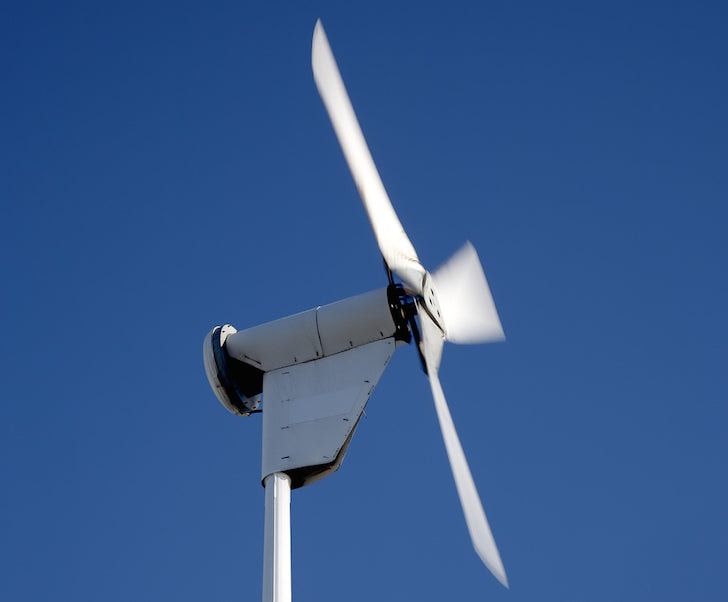
- Pros: High efficiency, established technology, strong output in consistent winds.
- Cons: Require ‘yawing’ (turning) into the wind, can be noisier, need taller towers to avoid ground turbulence.
Vertical Axis Wind Turbines (VAWTs)
VAWTs have blades that rotate around a vertical axis (like an eggbeater). They are less common for large-scale power but have distinct advantages for sheds.
- Pros: Omnidirectional (no yawing needed), generally quieter, better in turbulent or gusty conditions, can be mounted lower or on shed roofs.
- Cons: Less efficient than HAWTs for the same swept area in steady wind, typically generate less power per dollar.
| Feature | HAWT (Horizontal Axis Wind Turbine) | VAWT (Vertical Axis Wind Turbine) |
|---|---|---|
| Appearance | Propeller-like | Eggbeater or cylinder-like |
| Wind Direction | Needs to face wind | Omnidirectional |
| Efficiency | Higher in steady wind | Lower overall, better in turbulent wind |
| Noise Level | Potentially louder | Typically quieter |
| Mounting | Requires taller towers | Can be mounted lower, including on shed roofs (with care) |
| Best for Sheds | Clear, consistent wind, space for taller pole. | Turbulent wind, limited space, noise/aesthetics are concerns. |
Sizing It Up: How Powerful a Turbine Does Your Shed Need?
Your calculated daily Wh consumption guides your turbine size. Small wind turbines are rated by their maximum power output in Watts (W).
Matching Output to Demand
For most sheds, you’ll look at micro to small categories:
- Micro Turbines (50-200W): For basic needs like a few LED lights, phone charging.
- Small Turbines (200W-1kW): Common for powering tools, laptops, more significant lighting – a good balance for most workshops.
A turbine’s wattage is its *peak* output. Actual daily output will be lower due to fluctuating wind and system losses. Aim for a turbine that can generate 1.5 to 2 times your average daily Wh consumption, considering average wind speeds.
Wind Speed is King
A 500W turbine in a 10 mph average wind area produces far more power than the same turbine in a 5 mph area.
Crucial: Research your local average wind speeds (e.g., Department of Energy’s WINDExchange). Don’t guess!
| Turbine Size (Rated Power) | Typical Daily Wh Production (Avg. 10-12 mph wind) | Best For (Shed Applications) |
|---|---|---|
| 50-100 Watts | ~100-250 Wh | Minimal lighting, phone charging, security cameras. |
| 200-300 Watts | ~400-750 Wh | LED lighting, laptop/tool charging, small fan, radio. |
| 400-500 Watts | ~800-1200 Wh | Extensive lighting, frequent tool use, off-grid office. |
| 600-1000 Watts | ~1500-2500 Wh | Heavy-duty workshop, full-time off-grid office, multiple appliances. |
Beyond the Blades: Essential Components of a Small Wind System
A turbine is just one part. A complete system needs several components working together.
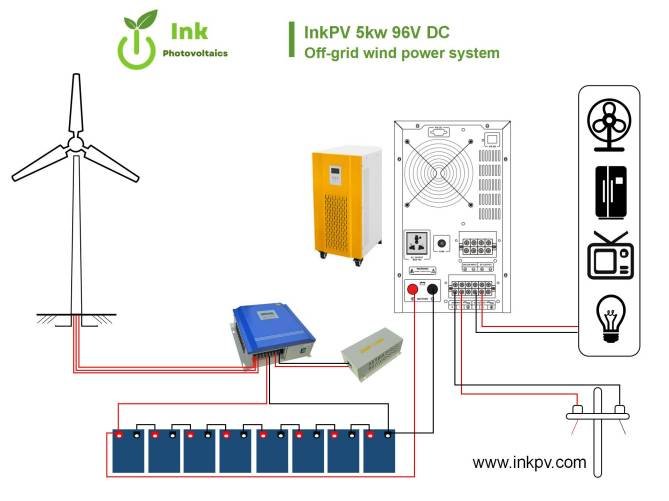
- The Turbine Itself: Blades capture wind, generator converts energy to DC electricity.
- Charge Controller: Regulates voltage to prevent battery overcharging. Often includes a ‘dump load’ for excess power and a braking mechanism for high winds.
- Batteries: Deep-cycle batteries store generated energy. Crucial for consistent power during calm periods. Sizing your battery bank is key.
- Inverter: Converts DC power from batteries into usable AC power for standard appliances. Choose a ‘pure sine wave’ inverter for sensitive electronics.
- Wiring and Cabling: Proper gauge wiring, secure, weatherproof connections are essential for safety and efficiency.
- Mounting System: How the turbine is affixed.
- Pole Mount: Standalone pole in concrete, often guyed. Best for getting above turbulence.
- Shed Roof Mount: Possible for very small VAWTs, but requires significant structural reinforcement and consideration of vibration/noise.
Location, Location, Location: Optimizing Your Shed Turbine Placement
Turbine placement significantly impacts performance. Maximize clean, unobstructed wind capture.
Wind Resource Assessment: Avoid Turbulence
Trees, buildings, and hills create wind turbulence – air that swirls rapidly, reducing efficiency, increasing wear, and generating more noise. Your turbine needs a clear path.
- Rule of Thumb: Aim for the turbine to be at least 20 feet (6 meters) higher than any obstruction within a 500-foot radius. This is often challenging for shed setups, making careful site observation critical.
Tower Height: Getting Above the Airflow
Wind speed increases with height and becomes less turbulent. Even raising your turbine 10-20 feet above your shed roof or nearby trees can drastically improve performance.
Safety & Noise: Consider Your Neighbors
Placement near homes or common areas needs careful thought. While quieter, turbines aren’t silent. A standalone pole mount, away from living spaces, helps mitigate noise and vibration.
The Hybrid Advantage: Combining Wind and Solar for Ultimate Shed Power
Pairing a small wind turbine with solar panels creates a robust, highly reliable power system.
Why Go Hybrid? Complementary Power Generation
Wind and solar naturally complement each other:
- Wind: Often strongest in winter (when sun is weaker), at night, or on cloudy/stormy days.
- Solar: Strongest in summer (when wind might be lighter), during the day, on clear days.
This combination smooths your power generation, reducing reliance on single weather conditions and ensuring more consistent battery charging.
System Integration & Benefits
A hybrid charge controller manages inputs from both sources. The battery bank and inverter are shared components, simplifying the system. Benefits include increased reliability, optimized battery charging (extending lifespan), and potentially needing smaller individual components.
| Feature | Wind Only | Solar Only | Hybrid (Wind + Solar) |
|---|---|---|---|
| Primary Resource | Wind Speed | Sunlight Intensity | Wind & Sunlight |
| Generation Times | Day/Night, windy days | Daytime, sunny days | More consistent, both day/night, varied weather |
| Reliability | Variable (wind dependent) | Variable (sun dependent) | Highest reliability, greater energy independence |
| Initial Cost | Moderate to High | Moderate to High | Potentially higher, but better long-term value |
Installation Insights: Getting Your Shed Turbine Up Safely
Installation requires planning, especially for safety and optimal performance.
DIY vs. Professional: Know Your Limits
Very small turbines might be DIY-friendly. However, with taller towers, complex wiring, or structural shed modifications, professional installation is strongly recommended for safety and code compliance.
Permitting & Zoning: Do Your Homework
Before any digging or construction, contact your local city or county planning department. Inquire about:
- Permits: Building permits for the tower or turbine.
- Zoning Restrictions: Height limits, setback requirements, noise ordinances.
- HOA Rules: Check specific bylaws if you have a Homeowners Association.
Ignoring these can lead to costly issues.
Mounting Options for Sheds: Stability is paramount
- Ground-Mounted Pole: Safest and most effective. A sturdy metal pole in concrete, often guyed. This achieves necessary height without stressing the shed.
- Shed Roof Mount: Only for very small, lightweight VAWTs.
Critical: Your shed’s structure MUST handle the weight, vibration, and wind loads. Consult a structural engineer. Often, a separate pole adjacent to the shed is better to isolate vibration.
Wiring Basics: Safety First
If DIY wiring, understand DC/AC principles. Use appropriate circuit breakers/fuses. Always disconnect power at the source before work. When in doubt, hire a qualified electrician.
Cost Considerations: Investing in Your Shed’s Energy Independence
System costs vary based on size, complexity, and installation method. Here’s an estimate:
:max_bytes(150000):strip_icc()/wind-turbine-generator-on-house-roof-90967703-b9619befbf954726ae92dfb6154711f2.jpg "Is a Home Wind Turbine Right for You?")
Initial Equipment Costs (DIY Focus)
- Turbine: $400 – $3,000+ (50W to 1kW).
- Charge Controller: $100 – $400 (higher for hybrid/MPPT).
- Batteries: Significant expense. $150-$500 per deep-cycle battery; expect $500-$2,000 for a typical shed bank.
- Inverter: $100 – $600 (pure sine wave recommended).
- Tower/Mounting: $200 – $1,500 (pole, guyed tower, foundation).
- Wiring & Misc.: $50 – $200 (cables, fuses, connectors).
Professional installation can add $500-$2,000+ in labor.
Maintenance Costs
Generally low. Routine checks of blades, wiring, and battery terminals. Batteries are the main recurring cost, needing replacement every 3-10 years.
| System Component | Estimated Cost Range (USD) | Notes |
|---|---|---|
| Small Wind Turbine (200-500W) | $400 – $1,500 | Higher wattage = higher cost. |
| Charge Controller | $100 – $400 | MPPT for hybrid systems can be higher. |
| Deep-Cycle Batteries (100-200Ah, 12V x 2-4) | $500 – $2,000 | Lifespan 3-10 years; a recurring cost. |
| Pure Sine Wave Inverter (500-1500W) | $150 – $600 | Essential for sensitive electronics. |
| Mounting Pole/Tower & Foundation | $200 – $1,500 | Varies by height and robustness. |
| Wiring, Fuses, Connectors | $50 – $200 | Don’t compromise on safety or quality. |
| TOTAL ESTIMATED DIY COST RANGE | $1,400 – $6,200 | Excludes professional installation labor. |
Maintenance and Longevity: Keeping Your Turbine Spinning
Small wind turbines require relatively low maintenance, but routine checks ensure long-term performance.
- Routine Checks: Inspect blades for damage, especially after storms. Check all wiring connections for corrosion or looseness. Verify tower stability and guy wire tension.
- Battery Care: Keep terminals clean, inspect for corrosion. For flooded lead-acid batteries, check electrolyte levels regularly. Avoid over-discharging.
- Weather Preparedness: Understand your turbine’s limits. Some have manual brakes or automatic furling for extreme winds or ice. Follow manufacturer guidelines.
With proper installation and care, a quality small wind turbine can last 15-20 years, with batteries needing replacement every 3-10 years.
The Final Spin: Is a Small Wind Turbine Right for Your Shed?
Powering your shed with a small wind turbine isn’t just a dream – it’s an accessible reality offering energy independence, reduced environmental impact, and reliable power for your projects. While there’s an initial investment and careful planning is essential, the benefits often far outweigh these considerations.
By accurately assessing your power needs, understanding your local wind resource, and choosing the right system – potentially a powerful wind-solar hybrid – you can transform your shed into a beacon of sustainable power. The freedom of off-grid energy for your shed awaits.
Frequently Asked Questions
How much power can a small wind turbine generate for a shed?
Small wind turbines typically range from 50 watts to 1 kilowatt (1000 watts). For a typical shed running lights, small tools, and charging electronics, a 200-500 watt turbine is often sufficient, especially when paired with batteries and potentially solar panels. Actual generation depends heavily on average wind speed at your location.
Are small wind turbines noisy?
Modern small wind turbines are significantly quieter than older models, but they are not silent. Horizontal Axis Wind Turbines (HAWTs) can be louder than Vertical Axis Wind Turbines (VAWTs). Noise levels are a key consideration for placement, especially near homes or neighbors. Proper mounting and tower height can help mitigate sound.
Can I combine a small wind turbine with solar panels for my shed?
Yes, a hybrid wind-solar system is often the most reliable solution for off-grid sheds. Wind and solar power generation complement each other perfectly: wind often produces power when the sun isn’t shining (night, cloudy days), and solar works best during sunny days when wind might be lighter. A specialized charge controller manages both inputs.
What are the main components needed for a shed wind power system?
Beyond the wind turbine itself, you’ll need a charge controller (to regulate power to batteries), deep-cycle batteries (to store energy), an inverter (to convert DC battery power to AC for standard appliances), and a robust mounting system (pole or tower). Proper wiring and safety devices like fuses are also critical.
Do I need a permit to install a small wind turbine for my shed?
Permit requirements vary greatly by local municipality and Homeowners Association (HOA) rules. You may need a building permit for the tower or turbine, and there might be zoning restrictions on height, setbacks from property lines, or noise. Always check with your local planning department and HOA before beginning installation.
How do I determine the right size turbine for my shed?
Start by listing all electrical items you plan to use in your shed, noting their wattage and estimated daily usage to calculate your total daily Watt-hour (Wh) consumption. Then, research your average local wind speeds. You’ll want a turbine rated to produce at least 1.5 to 2 times your daily Wh consumption in your average wind conditions to ensure consistent power.