Powering Your Home: The Ultimate Guide to Solar and Wind Energy Systems
Tired of rising electricity bills? Worried about power outages? Or perhaps you’re simply ready to take control of your energy future and reduce your carbon footprint. You’re not alone. More homeowners than ever are looking to harness the incredible power of the sun and wind right from their own property.
Table of Contents
- Powering Your Home: The Ultimate Guide to Solar and Wind Energy Systems
- Why Consider Both? The Synergy of Solar and Wind for Home Energy
- The Problem with Just One: Intermittency Explained
- The Power of Two: How Hybrid Systems Deliver Consistent Energy
- Understanding the Core Components of a Hybrid System
- Solar Panels (Photovoltaic Arrays): Harnessing the Sun
- Wind Turbines: Capturing the Breeze
- Battery Storage: Your Energy Reservoir
- Hybrid Inverters & Charge Controllers: The Brains of the Operation
- Mounting Systems & Cabling: The Foundation
- Solar vs. Wind: A Direct Comparison for Homeowners
- The Hybrid Advantage: Benefits and Challenges of Combining Solar and Wind
- Unpacking the Benefits: Why Go Hybrid?
- Addressing the Challenges: What to Consider
- Is a Solar-Wind Hybrid System Right for YOUR Home? A Decision-Making Framework
- Step 1: Assess Your Energy Needs & Consumption
- Step 2: Evaluate Your Property: Sun, Wind, and Space
- Step 3: Understand Local Regulations & Incentives
- Step 4: Budgeting for Your Hybrid System
- Installation & Maintenance: What to Expect
- The Installation Process
- Maintaining Your Hybrid System for Longevity
- The Future of Home Energy: Hybrid Systems Leading the Charge
But here’s the kicker: many assume it’s an either/or decision – solar or wind. What if I told you the real game-changer for residential energy independence often lies in combining them? This isn’t just about saving money; it’s about creating a resilient, reliable, and truly sustainable power source for your home. Let’s dive deep into how these incredible technologies work together to deliver consistent, clean energy, and whether a hybrid system is the smart move for your household.
Why Consider Both? The Synergy of Solar and Wind for Home Energy
Imagine a clear, sunny day. Your solar panels are buzzing, converting sunlight into a steady stream of electricity. Great, right? But what happens when clouds roll in, or night falls? That’s where the sun’s limitations become clear. Now, picture a blustery day, grey skies, maybe even some rain. Your solar panels are underperforming, but your wind turbine is spinning enthusiastically, generating ample power. See the connection?
The Problem with Just One: Intermittency Explained
Both solar and wind energy are fantastic, but they suffer from a common drawback: intermittency. Solar panels are highly productive when the sun is shining brightly, but output drops significantly on cloudy days and ceases entirely at night. Wind turbines, conversely, require sufficient wind speed to generate power, and their output fluctuates with the wind’s strength. There will be calm days when the blades don’t spin much at all.
Relying solely on one source means you’re vulnerable to its inherent limitations. You might have excess power at certain times and a deficit at others, forcing you to draw heavily from the grid or rely on expensive battery storage to bridge the gaps.
The Power of Two: How Hybrid Systems Deliver Consistent Energy
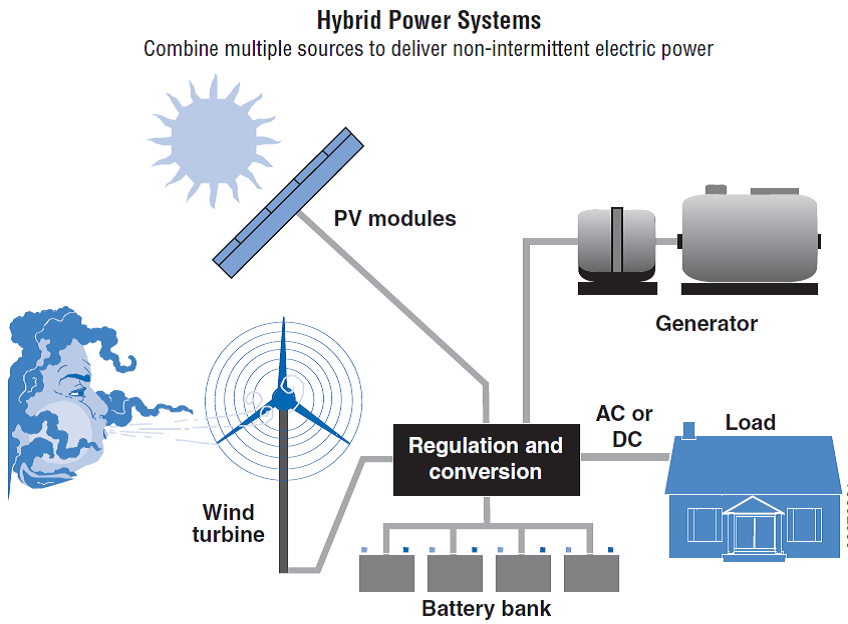
This is where the magic of a solar and wind hybrid system comes in. By combining both technologies, you create a far more stable and reliable energy supply. Think about it: often, when it’s cloudy (reducing solar output), it’s also windy (boosting wind turbine output). And many regions experience strong winds at night, precisely when solar panels are inactive.
A hybrid system leverages these complementary patterns:
- Daytime Complement: Solar panels excel during sunny hours.
- Nighttime Complement: Wind turbines often generate power at night when winds pick up.
- Weather Complement: Cloudy, stormy days might dampen solar production, but they’re often excellent for wind generation.
This synergy helps mitigate the intermittency of each individual source, leading to a more consistent power supply for your home and potentially reducing your reliance on grid electricity or requiring less battery storage than a single-source system for similar reliability.
Understanding the Core Components of a Hybrid System
Building a robust solar and wind energy system for your home involves several key components, each playing a crucial role. Understanding them will help you make informed decisions.
Solar Panels (Photovoltaic Arrays): Harnessing the Sun
These are the familiar flat panels typically installed on rooftops or ground mounts. Made from semiconductor materials (most commonly silicon), they convert sunlight directly into direct current (DC) electricity through the photovoltaic effect. Modern solar panels are increasingly efficient, durable, and come with impressive warranties, often guaranteeing 80% or more of their original power output after 25 years.
Wind Turbines: Capturing the Breeze
For residential use, you’re generally looking at small wind turbines, ranging from 400 watts to 20 kilowatts (kW). They consist of blades that capture wind energy, a rotor that turns a shaft, and a generator that converts this mechanical energy into electricity (DC or AC). There are two main types:
- Horizontal-Axis Wind Turbines (HAWTs): These are what most people visualize – propellers mounted on a tower, similar to large utility-scale turbines. They are generally more efficient for their size but require more space and clear, unobstructed wind flow.
- Vertical-Axis Wind Turbines (VAWTs): These have blades that rotate around a vertical axis. They are often quieter, less visually intrusive, and perform better in turbulent wind conditions, making them potentially suitable for more constrained urban or suburban environments, though typically less efficient than HAWTs of comparable size.
Placement is critical for wind turbines, needing significant height and an area free from obstructions to catch consistent, laminar (smooth) wind.
Battery Storage: Your Energy Reservoir
This is the unsung hero of any off-grid or hybrid renewable energy system. Batteries store excess electricity generated by your solar panels and wind turbine when production exceeds demand. This stored energy can then be used when generation is low (e.g., at night, during calm periods, or on very cloudy days) or during grid outages. Common types for home use include:
- Lead-Acid Batteries: Traditional, reliable, but heavier and require more maintenance.
- Lithium-Ion Batteries: More compact, lighter, longer lifespan, and higher efficiency, but also more expensive upfront. They are rapidly becoming the preferred choice for modern home energy storage.
Hybrid Inverters & Charge Controllers: The Brains of the Operation
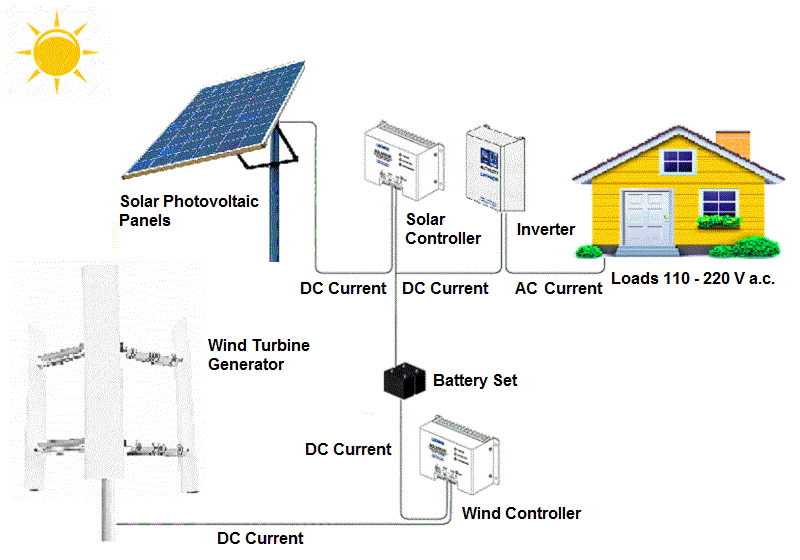
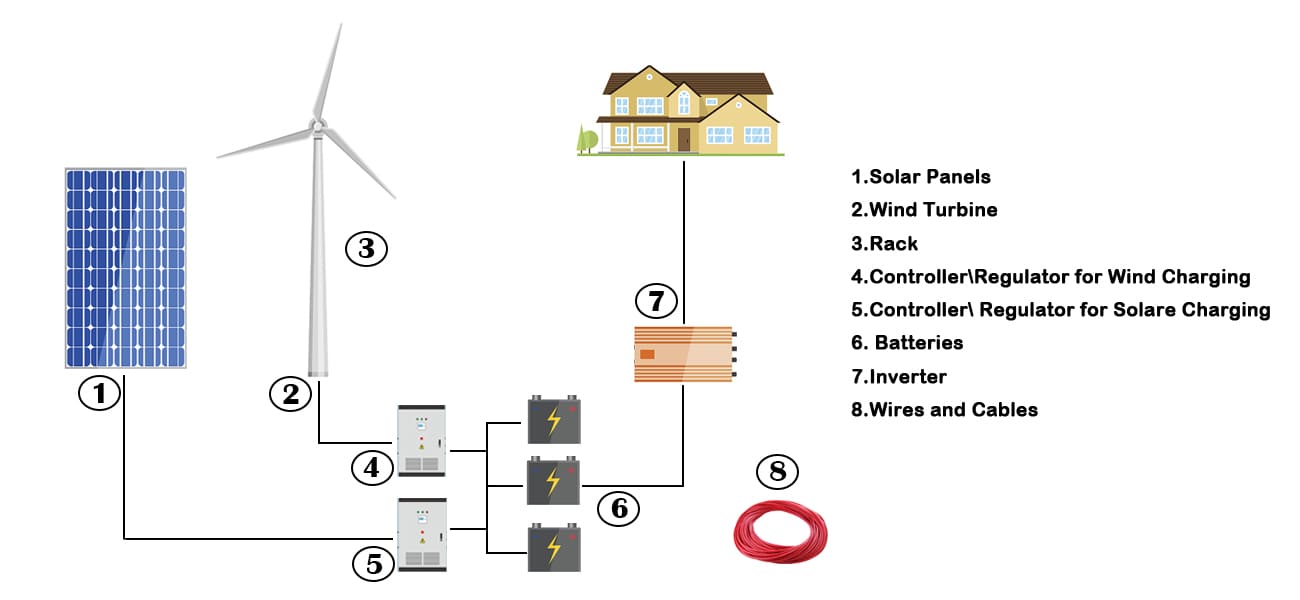
- Charge Controller: This device regulates the voltage and current coming from your solar panels and wind turbine to the batteries. It prevents overcharging, which can damage batteries, and ensures optimal charging for longevity. In a hybrid system, you’ll often have separate controllers for solar and wind, or a specialized hybrid controller.
- Hybrid Inverter: This is the central hub. It takes the DC electricity from your solar panels, wind turbine, and batteries and converts it into alternating current (AC) electricity – the type used by most household appliances. A ‘hybrid’ inverter can manage power flow from multiple sources (solar, wind, battery, grid), optimizing where power is drawn from or sent to. Some hybrid inverters also have grid-tie capabilities (allowing you to send excess power back to the grid) and backup power functions during outages.
Mounting Systems & Cabling: The Foundation
These are the structural elements that safely secure your solar panels (typically roof or ground mounts) and wind turbine (a sturdy tower) in place. High-quality cabling connects all components, ensuring efficient and safe transmission of electricity throughout the system.
Solar vs. Wind: A Direct Comparison for Homeowners
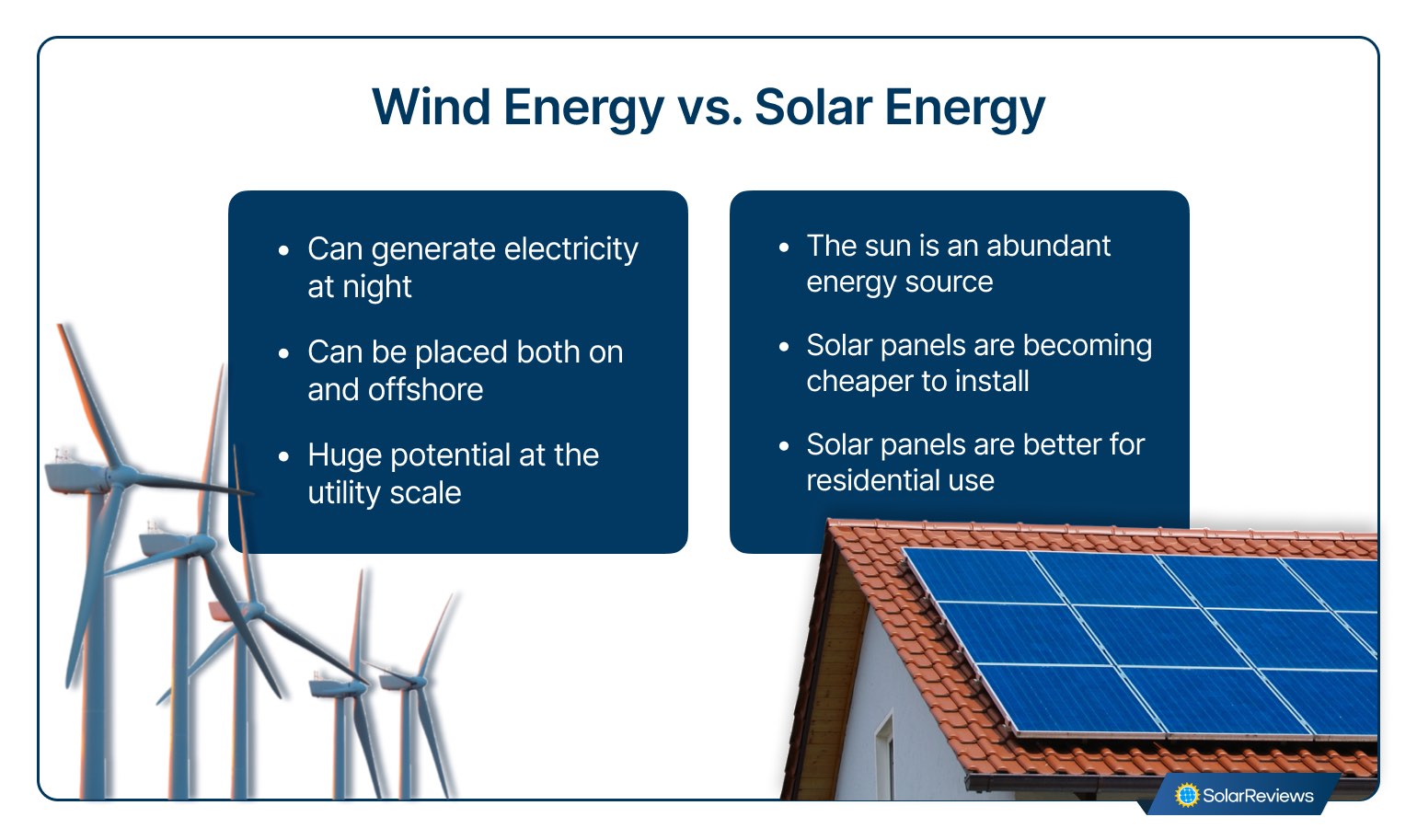
Before considering a hybrid, let’s look at the individual strengths and weaknesses of solar and wind for residential applications. This comparison will highlight why combining them often makes so much sense.
| Feature | Solar Energy (PV) | Wind Energy (Small Turbine) |
|---|---|---|
| Ideal Conditions | Consistent sunlight, minimal shading, south-facing roof/land. | Average wind speeds >10-12 mph, unobstructed open area, tall tower. |
| Space Requirements | Roof space (approx. 100-200 sq ft per 1kW) or ground mount. Flexible. | Larger footprint for tower and safe zone (setbacks). Less flexible. |
| Cost (per kW installed, avg.) | $2,500 – $4,000 (decreasing) | $3,000 – $8,000 (more variable based on turbine size/tower) |
| Efficiency/Output Consistency | Highly predictable during daylight; zero at night, reduced on cloudy days. | Variable with wind speed; potential for 24/7 output if wind is consistent. |
| Maintenance | Low; occasional cleaning, inverter checks. | Moderate to high; blade inspection, lubrication, gearbox checks (less frequent but more complex). |
| Permitting/Regulations | Generally simpler for rooftop installations. | Often more complex due to height, noise, and zoning restrictions. |
| Environmental Impact | Very low during operation. | Very low during operation; potential for minor bird/bat impact (less for small turbines) and noise concern (minimal for quality residential units). |
The Hybrid Advantage: Benefits and Challenges of Combining Solar and Wind
So, you’ve seen the individual strengths. Now, let’s explore why putting them together might be the ultimate solution for your home.
Unpacking the Benefits: Why Go Hybrid?
- Consistent Power Output: This is the primary advantage. When the sun isn’t shining, the wind might be blowing, and vice-versa. This natural complementarity reduces the dips in power generation, leading to a much more stable and predictable energy supply throughout the day and night, across seasons.
- Reduced Reliance on the Grid: With a more consistent power source, you can significantly reduce your dependence on utility companies, especially if you incorporate sufficient battery storage. For remote homes, a hybrid system can provide complete energy independence.
- Environmental Impact: By generating a larger percentage of your own electricity from renewable sources, you dramatically lower your home’s carbon footprint, contributing to a cleaner, greener planet.
- Potential for Financial Savings: While the initial investment is higher, the long-term savings on electricity bills can be substantial. In areas with high utility rates or unreliable grids, the payback period can be surprisingly attractive. Furthermore, net metering policies (where available) allow you to sell excess power back to the grid, further enhancing your savings.
- Enhanced Energy Security: A hybrid system with battery backup provides peace of mind during grid outages. Your home can continue to operate independently, keeping essential appliances running.
Addressing the Challenges: What to Consider
No system is without its drawbacks. It’s important to be realistic about the hurdles before committing to a hybrid setup.
- Higher Initial Cost: Combining two distinct generation technologies naturally means a higher upfront investment compared to installing just solar or just wind. You’re buying more components, requiring more complex installation.
- Space Requirements: Solar panels need roof or ground space, and wind turbines demand a clear, tall tower location, often with significant setback requirements from property lines or buildings. You need enough suitable space for both. Rural properties generally have an easier time meeting these demands.
- Permitting & Regulations: Installing both solar and wind components can mean navigating more complex local zoning laws and permitting processes, especially for wind turbines, which may have height restrictions, noise ordinances, and aesthetic concerns in some communities.
- Maintenance Complexity: While solar panels are relatively low maintenance, wind turbines require periodic checks (e.g., blade inspection, lubrication, gearbox checks). A hybrid system means maintaining two distinct generation technologies, potentially increasing the overall maintenance burden.
- System Design Complexity: Integrating solar, wind, battery storage, and potentially grid connection requires careful design and engineering to ensure optimal performance and safety. It’s not a DIY project for most homeowners.
Is a Solar-Wind Hybrid System Right for YOUR Home? A Decision-Making Framework
This is the million-dollar question. To answer it, you need to conduct a thorough self-assessment. Here’s how to approach it:
Step 1: Assess Your Energy Needs & Consumption
Start by understanding your current electricity usage. Look at your utility bills for the past 12-24 months. Note your average monthly kWh consumption and your peak demand times. This data is crucial for sizing any renewable energy system. Are you aiming for partial offset, or true energy independence (off-grid)? Your goals will heavily influence the system’s size and cost.
Step 2: Evaluate Your Property: Sun, Wind, and Space
This is perhaps the most critical step for a hybrid system.
- Sunlight Exposure:
- Shading: Are there tall trees, neighboring buildings, or other obstructions that shade your roof or potential ground mount locations during different times of the day or year?
- Roof Space/Orientation: Do you have sufficient unshaded roof space, ideally facing south (in the Northern Hemisphere), with an appropriate pitch? Or do you have ample land for ground-mounted panels?
- Wind Resource:
- Local Wind Speed Data: This is paramount. Average wind speeds of at least 10-12 mph (4.5-5.5 m/s) are generally required for residential wind turbines to be economically viable. You can often find wind maps or data for your region online (e.g., from the National Renewable Energy Laboratory – NREL).
- Turbulence & Obstructions: Wind flow near the ground and around buildings is often turbulent and less powerful. For a wind turbine to perform well, it needs to be installed on a tall tower (often 30-80 feet high for residential) that clears nearby obstructions by at least 20 feet. Rural, open properties are typically far more suitable than suburban or urban settings.
- Available Land/Roof Space: Do you have enough physical space for both solar panels (and their mounting structure) and a wind turbine (with its tower and required setbacks)? Remember, a wind turbine isn’t just the turbine itself but the entire area it needs for safe operation and installation.
Step 3: Understand Local Regulations & Incentives
This varies wildly by location, so do your homework!
- Permitting & Zoning: Contact your local planning department. What are the rules for solar panels? What about wind turbines (height restrictions, noise limits, setbacks)? Some municipalities make it very difficult to install residential wind turbines.
- Net Metering Policies: If you plan to remain connected to the grid, research your utility’s net metering program. This allows you to sell excess electricity back to the grid, offsetting your bill. Policies vary, and some are becoming less favorable.
- Federal, State, and Local Incentives: The U.S. federal government offers a substantial Investment Tax Credit (ITC) for solar and often includes wind. Many states and even local municipalities offer additional rebates, grants, or tax incentives. These can significantly reduce your upfront costs.
Step 4: Budgeting for Your Hybrid System
The cost is a major factor. While prices fluctuate and depend heavily on system size, component quality, and installation complexity, here’s a general idea for a typical residential hybrid system (e.g., 5-8 kW solar array + 1-3 kW wind turbine with battery storage).
| Component/Service | Estimated Cost Range (USD) | Notes |
|---|---|---|
| Solar Panels (5-8 kW) | $15,000 – $28,000 | Includes panels, inverter, racking, wiring. |
| Wind Turbine (1-3 kW) | $8,000 – $25,000 | Includes turbine head, tower (often the largest cost for wind), controller. |
| Battery Storage (10-20 kWh) | $10,000 – $20,000+ | Lithium-ion batteries. Varies greatly by capacity. |
| Hybrid Inverter & BOS (Balance of System) | $3,000 – $7,000 | Circuit breakers, wiring, safety disconnects, monitoring. |
| Installation & Labor | $5,000 – $15,000 | Expert labor, permitting, system design, electrical work. |
| Total Estimated Cost (Pre-Incentives) | $41,000 – $95,000+ | A significant investment, but with substantial long-term returns. |
Remember, these are rough estimates. Get multiple quotes from reputable installers specializing in hybrid systems.
Installation & Maintenance: What to Expect
Once you’ve decided a hybrid system is right for you, what happens next?
The Installation Process
This is definitely not a DIY project for most. You’ll work with qualified professionals who will:
- Site Assessment: A detailed evaluation of your property’s solar and wind resources, structural integrity, and electrical infrastructure.
- System Design: Engineers will design a customized system, sizing panels, turbine, batteries, and inverters to meet your specific energy needs and local conditions.
- Permitting: They’ll handle all necessary permits and ensure compliance with local regulations.
- Installation: This involves mounting solar panels, erecting the wind turbine tower and head, installing batteries, inverters, and connecting all electrical components safely and efficiently.
- Commissioning: The system is thoroughly tested and brought online, ensuring everything operates as designed.
Maintaining Your Hybrid System for Longevity
While modern systems are designed for durability, some maintenance is required to ensure optimal performance and extend their lifespan:
- Solar Panels: Generally low maintenance. Occasional cleaning (especially if dusty or in snowy areas) and visual inspections for damage.
- Wind Turbines: Require more attention. Annual or bi-annual checks of blades for wear, tower stability, lubrication of moving parts, and electrical connections.
- Batteries: Modern lithium-ion batteries are largely maintenance-free, but it’s good practice to monitor their performance via your inverter’s monitoring system. Lead-acid batteries require periodic water checks.
- Inverters & Wiring: Regular monitoring through your system’s app or display can alert you to any issues. Professional checks every few years are recommended to ensure all electrical components are functioning safely and efficiently.
The Future of Home Energy: Hybrid Systems Leading the Charge
The path to true energy independence and a sustainable future for your home is clearer than ever. Solar and wind energy systems, particularly when combined, offer a powerful solution to intermittent energy generation, rising costs, and environmental concerns. While the initial investment is significant, the long-term benefits of consistent power, reduced utility bills, and a smaller carbon footprint make hybrid systems an increasingly attractive and viable option for homeowners committed to a greener, more resilient energy future. By carefully assessing your needs and partnering with expert installers, you can harness the abundant power of nature and create a home that’s truly powered by you.
Frequently Asked Questions
What is a solar and wind hybrid energy system for homes?
A solar and wind hybrid energy system combines photovoltaic (PV) solar panels and a small wind turbine to generate electricity for a home. This setup leverages the complementary nature of sun and wind – often, when one source is less productive (e.g., solar at night or on cloudy days), the other can compensate (e.g., wind speeds often pick up at night or during stormy weather), leading to a more consistent and reliable power supply than using either source alone.
How much does it cost to install a solar and wind hybrid system for a home?
The cost of a residential solar and wind hybrid system can vary significantly, typically ranging from $40,000 to over $90,000+ before incentives. This includes components like solar panels (5-8 kW), a wind turbine (1-3 kW), battery storage (10-20 kWh), hybrid inverters, and professional installation. The final price depends on the system size, quality of components, complexity of installation, and local labor rates. Federal, state, and local incentives can help offset these upfront costs.
Are residential wind turbines really effective for homes?
Residential wind turbines can be very effective, but their viability heavily depends on location. They require an average wind speed of at least 10-12 mph (4.5-5.5 m/s) and an unobstructed area to be economically worthwhile. They often perform best in rural settings on tall towers (30-80 feet) that clear nearby obstacles. In urban or suburban areas, turbulent wind and zoning restrictions often make them less practical than solar, which is why they are typically best utilized as part of a hybrid system to supplement solar in suitable locations.
What are the main benefits of combining solar and wind for home energy?
The main benefits include a significantly more consistent power supply due to the complementary nature of solar and wind (reducing intermittency), enhanced energy independence and security (especially with battery storage), lower long-term electricity bills, and a reduced carbon footprint. This synergy makes the system more resilient to weather fluctuations and can provide power 24/7 if properly sized.
What are the key components of a home solar and wind hybrid system?
A complete hybrid system typically includes solar panels (to convert sunlight), a wind turbine (to convert wind), a battery bank (to store excess energy), a charge controller (to regulate power to batteries), a hybrid inverter (to convert DC to AC electricity for home use and manage power flow), and appropriate mounting structures (racking for solar, tower for wind) and cabling.
How do I know if my home is suitable for a hybrid solar and wind system?
To determine suitability, you need to assess your energy consumption, available roof/land space, and crucially, your local solar and wind resources. This involves checking average wind speeds for your area and evaluating sunlight exposure (avoiding excessive shading). Additionally, research local zoning laws and permitting requirements for both solar panels and wind turbines, as these can significantly impact feasibility, especially for wind components. Consulting with a qualified renewable energy installer for a site assessment is highly recommended.