
Powering Your Home: The Definitive Guide to Solar Panels and Wind Turbines (And Hybrid Systems!)
Tired of unpredictable electricity bills? Dreaming of energy independence and a smaller carbon footprint? You’re not alone. Many homeowners are looking for ways to harness nature’s power to fuel their lives, and the options often come down to solar panels, wind turbines, or a smart combination of both.
Table of Contents
- Powering Your Home: The Definitive Guide to Solar Panels and Wind Turbines (And Hybrid Systems!)
- Solar vs. Wind: A Head-to-Head Battle for Your Home’s Energy
- The Sunny Side: Advantages of Home Solar Panels
- The Windy Side: Advantages of Home Wind Turbines
- Where the Sun Doesn’t Shine & The Wind Doesn’t Blow: Disadvantages
- Solar Panel Disadvantages:
- Wind Turbine Disadvantages:
- Why Go Hybrid? The Smart Choice for Balanced Home Power
- How a Solar-Wind Hybrid System Works Its Magic
- The Synergy: Benefits of Combining Solar and Wind
- When a Hybrid System Makes the Most Sense for You
- Decoding the Core Components of Your Home Renewable System
- Power Generators: Panels and Turbines
- The Brain: Inverters and Charge Controllers
- The Reservoir: Battery Storage Solutions
- The Grid Connection: On-Grid vs. Off-Grid Systems
- The Real Numbers: Cost, Savings, and ROI for Home Renewables
- Breaking Down Installation Costs: What to Expect
- Understanding Operating and Maintenance Expenses
- Unlocking Incentives: Tax Credits, Rebates, and Grants (USA Focus)
- The Long-Term Payoff: Calculating Your Return on Investment
- Making the Right Choice: A Decision Framework for Homeowners
- Assess Your Energy Needs: How Much Power Do You Really Use?
- Evaluate Your Property: Space, Sun, and Wind Resources
- Local Regulations and Permitting: What You Need to Know
- Budget and Financing: What Can You Afford?
- Finding the Right Installer: Tips for Vetting Professionals
- Installation & Maintenance: What to Expect After the Decision
- The Installation Process: A Quick Overview
- Keeping Your System Healthy: Essential Maintenance Tips
- Conclusion: Your Path to a Sustainable, Self-Sufficient Home
Choosing the right renewable energy system for your home can feel overwhelming. You’re likely weighing upfront costs against long-term savings, debating aesthetic impact, and trying to decipher technical jargon. Don’t worry. This guide is designed to cut through the confusion, helping you understand the real potential of solar panels and wind turbines, both individually and as powerful hybrid systems, so you can make an informed decision for your home.
Solar vs. Wind: A Head-to-Head Battle for Your Home’s Energy
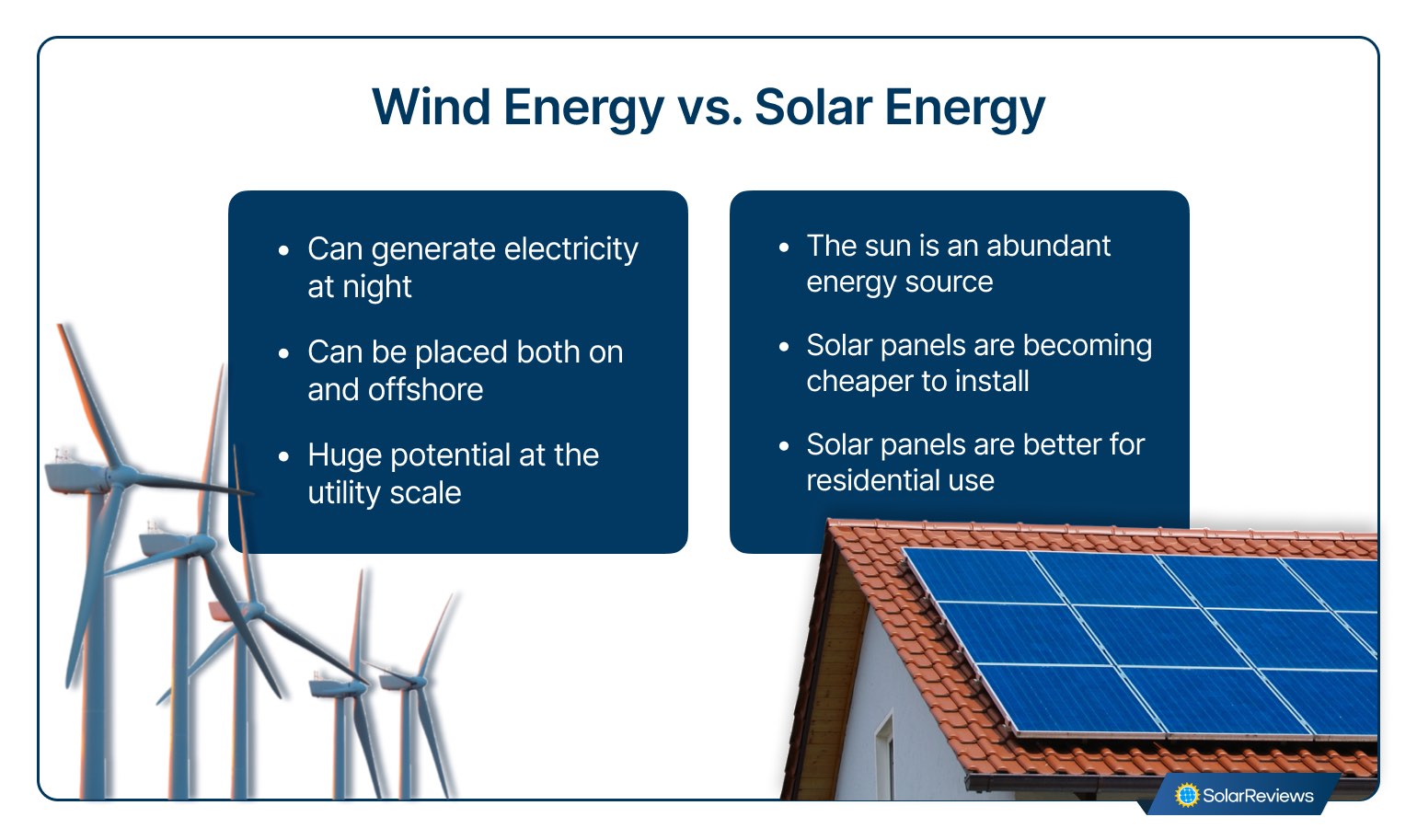
Let’s dive right into the core comparison. Both solar panels and wind turbines convert natural phenomena into usable electricity, but they do it in fundamentally different ways, each with distinct advantages and disadvantages for residential use.
The Sunny Side: Advantages of Home Solar Panels
Solar photovoltaic (PV) panels are, without a doubt, the most popular choice for home renewable energy in the USA, and for good reason:
- Ubiquitous Resource: If you have a roof that gets decent sunlight, you likely have a viable solar site. Sunlight is readily available across most of the USA.
- Quiet Operation: Solar panels operate silently. You won’t even know they’re there, apart from the lower electricity bills.
- Low Maintenance: Beyond occasional cleaning (especially after heavy dust or snow), solar panels require very little upkeep. There are no moving parts to lubricate or wear out.
- Relatively Easy Installation: For experienced installers, rooftop solar systems are a straightforward process, typically completed in a few days.
- Scalability: You can start small and add more panels later if your energy needs grow or your budget allows.
- Financial Incentives: Generous federal tax credits (like the Investment Tax Credit), state incentives, and local rebates can significantly reduce the net cost of installation.
The Windy Side: Advantages of Home Wind Turbines
While less common for urban or suburban homes, small-scale wind turbines offer a compelling alternative, especially in specific environments:
- 24/7 Potential: Unlike solar, which only produces during daylight hours, wind turbines can generate electricity day and night, as long as there’s sufficient wind.
- High Power Output: A well-sized wind turbine in a consistently windy location can generate a substantial amount of electricity, often more per square foot than solar panels.
- Winter Performance: Wind turbines often perform very well in colder temperatures and can be particularly effective during winter months when solar output is naturally lower due to shorter days and lower sun angles.
- Diversified Energy: For those in areas with good wind resources but intermittent sun, wind can provide a valuable, complementary power source.
Where the Sun Doesn’t Shine & The Wind Doesn’t Blow: Disadvantages
No system is perfect. Understanding the downsides is crucial for making the right choice:
Solar Panel Disadvantages:
- Intermittency: No sun, no power. Output drops significantly on cloudy days and ceases entirely at night, necessitating battery storage or grid connection.
- Space Requirements: While rooftops are common, a full home system can require substantial roof space, which might not be available or suitable on all homes.
- Efficiency Drop in Heat: While panels need sunlight, extreme heat can slightly reduce their efficiency (though modern panels are designed to mitigate this).
- Aesthetics: Some homeowners dislike the visual appearance of panels on their roof.
Wind Turbine Disadvantages:
- Site Specificity: This is the biggest hurdle. You need consistent, unobstructed wind – which means open land, typically away from tall buildings or trees, and often a tall tower. Many residential properties simply aren’t suitable.
- Noise: While modern small turbines are much quieter than older models, they still produce a low hum and mechanical noise, which can be an issue for close neighbors.
- Aesthetics: A tall turbine tower is a significant structure and can be a point of contention for homeowners associations or neighbors.
- Maintenance: Turbines have moving parts that require more regular inspection and maintenance than static solar panels.
- Upfront Cost: Generally, small wind turbines have a higher per-watt upfront cost compared to solar panels, especially when factoring in tower and foundation costs.
- Permitting Complexity: Zoning regulations and permitting for wind turbines can be far more complex and restrictive than for solar panels.
To summarize, here’s a quick comparison of key factors:
| Feature | Solar Panels (Photovoltaic) | Wind Turbines (Small-Scale) |
|---|---|---|
| Primary Resource | Sunlight | Wind |
| Space Requirement | Rooftop (ideal), Ground-mount | Open land, unobstructed airflow, tall tower |
| Operation Noise | Silent | Can have low hum, some mechanical noise |
| Aesthetics | Generally blend with roof, less intrusive | Visible structure, can be an eyesore for some |
| Maintenance | Low (cleaning, occasional inspection) | Moderate (moving parts, lubrication, inspection) |
| Best Use Case | Sunny regions, limited ground space, urban areas | Windy regions, open rural land, consistent winds |
| Energy Output | Consistent during daylight, lower on cloudy days | Intermittent (wind speed dependent), 24/7 potential |
| Cost (per watt, avg.) | Lower upfront (avg. $2.50-$3.50) | Higher upfront (avg. $4-$8) |
Why Go Hybrid? The Smart Choice for Balanced Home Power
While choosing between solar and wind is a valid approach, a growing number of homeowners are discovering the power of combining these two technologies into a single, integrated hybrid system. This isn’t just about having more gadgets; it’s about creating a more reliable, efficient, and resilient energy supply.
How a Solar-Wind Hybrid System Works Its Magic
A hybrid system harnesses the strengths of both solar and wind to overcome their individual limitations. Imagine this:
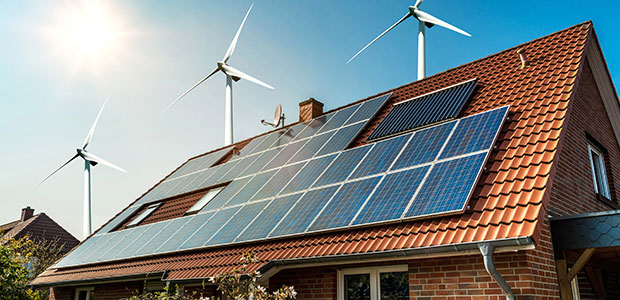
- During the day, especially on sunny, still days, your solar panels are hard at work, generating maximum power.
- As the sun sets, or on a cloudy, blustery day, your wind turbine kicks into action, ensuring a continuous flow of electricity.
- Both sources feed into a central charge controller, which optimizes the power flow to your home and to a battery bank for storage.
- An inverter then converts this stored energy (DC) into usable household electricity (AC).
This synergistic approach means your home is less vulnerable to the whims of a single weather pattern. If it’s not sunny, it might be windy, and vice-versa, significantly increasing the consistency and reliability of your renewable energy generation.
The Synergy: Benefits of Combining Solar and Wind
The advantages of a hybrid system extend beyond simple redundancy:
- Enhanced Reliability: This is the biggest win. You’re less reliant on a single resource, meaning more consistent power generation throughout the day and year. When solar output dips (e.g., winter, cloudy days), wind can compensate, and vice versa.
- Optimized Energy Capture: You capture energy whenever it’s available, maximizing your overall renewable energy production.
- Reduced Battery Needs (Potentially): By having two complementary sources, the demand on your battery storage might be spread out, potentially allowing for a slightly smaller (or longer-lasting) battery bank compared to relying on just one intermittent source.
- Greater Energy Independence: For off-grid applications, a hybrid system provides a robust solution for continuous power, reducing reliance on fossil fuel generators.
- Increased Property Value: Homes with integrated, reliable renewable energy systems are often more attractive to buyers.
When a Hybrid System Makes the Most Sense for You
A hybrid solar-wind system isn’t for everyone, but it’s an ideal solution for:
- Homes in Remote or Off-Grid Locations: Where grid connection is expensive or unavailable, a hybrid system provides the most reliable self-sufficient power.
- Properties with Variable Weather: If your region experiences both sunny and windy periods, a hybrid system can smooth out energy production fluctuations.
- Homeowners Seeking Maximum Energy Security: If you want to minimize dependence on the grid and ensure power during outages, a hybrid setup with robust battery storage is a top-tier solution.
- Rural Homes with Ample Land: Where there’s space for a wind turbine and a sunny spot for panels, you can leverage both resources effectively.
Decoding the Core Components of Your Home Renewable System
Whether you choose solar, wind, or a hybrid setup, several key components work in concert to convert natural energy into usable electricity for your home. Understanding these parts is essential to appreciating how your system functions.
Power Generators: Panels and Turbines
- Solar Panels (PV Modules): These rectangular units contain photovoltaic cells that convert sunlight directly into direct current (DC) electricity. The more panels, the more power.
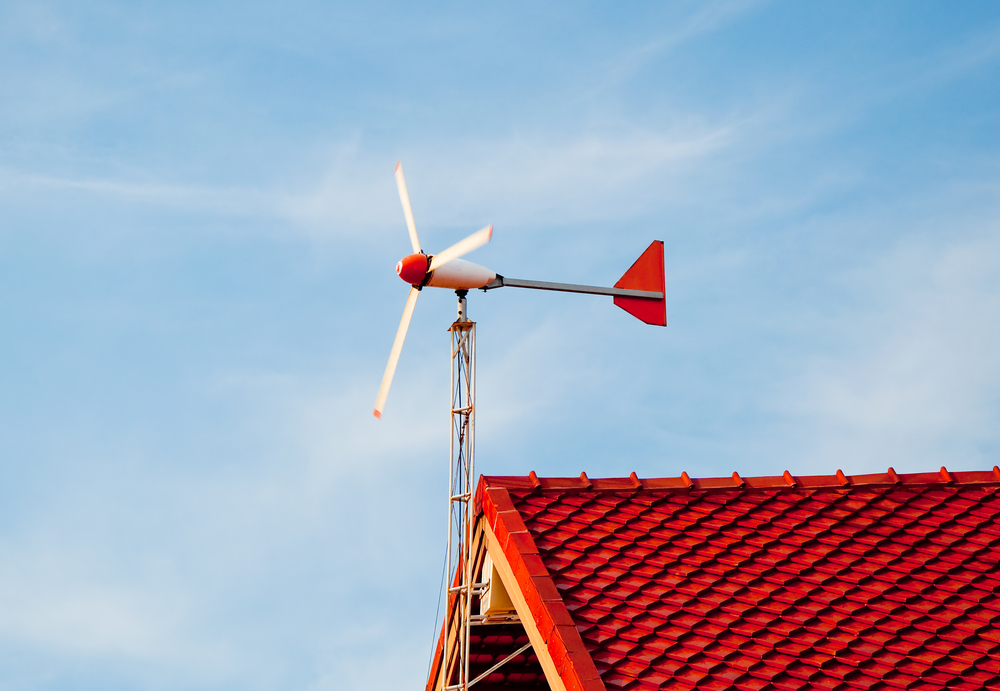
- Wind Turbines: Small-scale residential turbines typically have two or three blades that rotate when wind passes through them. This rotation spins a generator, producing DC electricity. They come in various sizes (from 400W to 10kW for homes).
The Brain: Inverters and Charge Controllers
- Charge Controller: This crucial component regulates the voltage and current coming from your solar panels and/or wind turbine to safely charge your batteries. It prevents overcharging and excessive discharging, prolonging battery life.
- Inverter: Your home appliances run on alternating current (AC) electricity. Solar panels and wind turbines produce DC power. The inverter’s job is to convert DC power from your panels/turbine/batteries into AC power that your home can use or that can be fed into the grid.
- Hybrid Inverter (for Hybrid Systems): For combined systems, a hybrid inverter acts as a central command unit, intelligently managing power flow from both solar and wind, directing it to the home, battery, or grid as needed.
The Reservoir: Battery Storage Solutions
Batteries are the heart of any off-grid system and an increasingly popular addition to grid-tied systems for backup power and energy management. They store excess energy generated during peak production times (e.g., sunny midday) for use when generation is low (e.g., at night, during a lull in wind, or during a power outage).
- Types: Lead-acid batteries (traditional, lower cost, heavier, shorter lifespan) and lithium-ion batteries (modern, higher cost, lighter, longer lifespan, more efficient).
- Capacity: Measured in kilowatt-hours (kWh), this determines how much energy your battery bank can store.
The Grid Connection: On-Grid vs. Off-Grid Systems
- On-Grid (Grid-Tied) Systems: Most common for residential use. Your renewable energy system is connected to the public utility grid. When you produce more power than you use, the excess is sent to the grid (often earning you credits through net metering). When you need more power than your system generates, you draw from the grid.
- Off-Grid Systems: Completely independent from the utility grid. These systems require robust generation (often hybrid), significant battery storage, and often a backup generator to ensure continuous power. They are complex but offer true energy independence.
The Real Numbers: Cost, Savings, and ROI for Home Renewables
Let’s talk money. This is often the biggest factor for homeowners considering renewable energy. While the upfront investment can seem substantial, understanding the true costs, potential savings, and available incentives is key.
Breaking Down Installation Costs: What to Expect
The cost of a renewable energy system varies widely based on size, location, equipment quality, and whether it’s grid-tied or off-grid. Here’s a general breakdown:
- Solar Panels: For a typical 5-10 kW residential solar system in the USA, expect costs anywhere from $15,000 to $30,000 before incentives. This includes panels, inverter, racking, wiring, and installation labor.
- Small Wind Turbines: A 1-10 kW residential wind turbine can range from $20,000 to $80,000 or more. This higher cost is due to the turbine itself, the tower (which can be 30-100+ feet tall), foundation, and specialized installation.
- Hybrid Systems: A combination system will naturally be more expensive than a single source, but it also offers greater reliability. Expect anywhere from $35,000 to $70,000+ for a comprehensive grid-tied hybrid system, and potentially more for a robust off-grid setup with extensive battery storage.
- Battery Storage: Adding battery backup can add another $10,000 – $20,000+ depending on capacity and chemistry.
Remember, these are rough estimates. A professional site assessment is necessary for accurate quotes.
Understanding Operating and Maintenance Expenses
The good news is that operating costs for solar and wind are generally low:
- Solar: Very low. Occasional cleaning, especially if you live in a dusty area. Inverters may need replacement after 10-15 years ($2,000 – $4,000).
- Wind: Moderate. Turbines have moving parts, so they require annual or biennial inspections, lubrication, and potential replacement of wear parts (blades, bearings) over their 20+ year lifespan.
- Batteries: If you have batteries, they will eventually need replacement. Lead-acid batteries typically last 5-15 years, while lithium-ion can last 10-20+ years.
Unlocking Incentives: Tax Credits, Rebates, and Grants (USA Focus)
This is where the numbers get really interesting! The USA offers significant incentives to make renewable energy more accessible:
- Federal Solar Investment Tax Credit (ITC): Currently, homeowners can claim a 30% tax credit for the cost of installing eligible solar PV systems and certain battery storage. This is a direct reduction of your federal income tax liability, not just a deduction. Wind turbines also often qualify for this credit.
- State and Local Incentives: Many states, counties, and even cities offer additional rebates, property tax exemptions, sales tax exemptions, and grant programs. These vary widely by location, so check with your local energy office or a reputable installer.
- Net Metering: This policy allows grid-tied system owners to receive credit for the excess electricity they feed back into the grid. It effectively turns your utility meter backward, reducing your monthly bill.
These incentives can dramatically reduce your net out-of-pocket costs, making renewable energy more affordable than you might think.
The Long-Term Payoff: Calculating Your Return on Investment
Calculating ROI involves comparing your initial investment (after incentives) with your lifetime savings on electricity bills. Factors like rising electricity rates, system lifespan, and potential increases in property value all contribute to a positive ROI.
- Payback Period: This is the time it takes for your energy savings to equal your upfront investment. For solar, this can range from 6-12 years in many parts of the USA, often shorter with strong incentives. Wind turbines can have longer payback periods due to higher initial costs and site-specific performance.
- Lifetime Savings: Over the 25-30+ year lifespan of a solar system (and similar for wind), you could save tens of thousands of dollars on electricity, protecting you from future utility rate hikes.
Here’s a snapshot of estimated installation costs for various systems (before incentives):
| System Type | Average Cost Range (Installation + Equipment) | Typical System Size (kW) | Notes |
|---|---|---|---|
| Solar Panels (Grid-tied) | $15,000 – $30,000 | 5 – 10 kW | Varies by location, incentives significantly reduce. |
| Solar Panels (Off-grid w/ storage) | $25,000 – $50,000+ | 5 – 10 kW | Higher due to battery bank and complex inverter. |
| Small Wind Turbine | $20,000 – $80,000 | 1 – 10 kW | Varies greatly by tower height, turbine size, foundation. |
| Hybrid Solar-Wind (Grid-tied) | $35,000 – $70,000+ | 7 – 15 kW (combined) | Cost efficiency improved with shared components, but still higher total. |
| Hybrid Solar-Wind (Off-grid) | $50,000 – $100,000+ | 7 – 15 kW (combined) | Highest due to redundant generation and robust storage. |
Making the Right Choice: A Decision Framework for Homeowners
With all this information, how do you decide what’s best for *your* home? Here’s a practical framework to guide your decision-making process.
Assess Your Energy Needs: How Much Power Do You Really Use?
Start by looking at your current electricity bills. They will show your monthly kWh (kilowatt-hour) consumption. This is the baseline for sizing any renewable energy system. Consider:
- Average Monthly Usage: What’s your typical kWh?
- Peak Usage: When do you use the most electricity? (e.g., A/C in summer, heating in winter).
- Future Plans: Are you planning to add an EV charger, switch to electric heating, or expand your home? Factor in future energy demands.
An energy audit can pinpoint areas where you can reduce consumption, making any renewable system more effective and potentially smaller (and cheaper).
Evaluate Your Property: Space, Sun, and Wind Resources
This is critical for determining feasibility:
- Solar Potential: Look at your roof. Does it face south (in the Northern Hemisphere)? Is it shaded by trees or neighboring buildings? Is there enough clear space? Ground-mount solar is an option if roof space is insufficient. Online tools and solar assessment services can help.
- Wind Potential: This is trickier. You need an open area, free from obstructions, with consistent average wind speeds of at least 10-12 mph (miles per hour). Turbines need to be installed on tall towers to capture stronger, less turbulent wind. A professional wind resource assessment is highly recommended. Urban and suburban areas are rarely suitable due to turbulence and zoning restrictions.
- Local Regulations: Check with your local planning department for zoning ordinances regarding structure height, setbacks, noise, and aesthetic guidelines, especially for wind turbines. Homeowners’ associations (HOAs) can also have restrictions.
Local Regulations and Permitting: What You Need to Know
Permitting is a necessary step. It ensures your installation is safe and compliant with local building codes. Requirements vary significantly:
- Solar: Generally more streamlined, but still requires electrical and building permits.
- Wind: Often much more complex, potentially involving special use permits, height variances, and more extensive environmental reviews due to noise, visual impact, and safety concerns.
A reputable installer will handle the permitting process for you, but it’s good to be aware of the complexities.
Budget and Financing: What Can You Afford?
Determine your realistic budget and explore financing options:

- Cash Purchase: Lowest long-term cost, maximizes ROI.
- Solar Loans: Many financial institutions offer specialized loans for renewable energy systems, often with favorable terms.
- Leases or Power Purchase Agreements (PPAs): These allow you to get solar with little to no upfront cost, paying a fixed monthly rate for the power or the system itself. While you don’t own the system, you benefit from lower electricity rates. Note: PPAs and leases typically do not qualify for federal tax credits directly.
Finding the Right Installer: Tips for Vetting Professionals
This is arguably the most important step. A good installer will guide you through the entire process, from assessment to activation.
- Look for Experience: Choose companies with a proven track record specifically in residential solar, wind, or hybrid systems.
- Certifications: Ask for NABCEP (North American Board of Certified Energy Practitioners) certification for solar professionals.
- References and Reviews: Check online reviews and ask for customer references.
- Transparent Quotes: Ensure quotes are detailed, breaking down equipment, labor, and all associated fees.
- Warranty: Understand equipment warranties (panels, turbines, inverters, batteries) and workmanship warranties.
- Permitting Expertise: Confirm they handle all necessary permits and inspections.
Installation & Maintenance: What to Expect After the Decision
Once you’ve made your decision and chosen your installer, what happens next? Knowing the general process and what ongoing care your system will need can set realistic expectations.
The Installation Process: A Quick Overview
- Site Assessment: Professionals will visit your property to finalize designs, assess structural integrity (for roofs), and confirm resource availability (sun/wind).
- Permitting: Your installer will submit all necessary paperwork to local authorities. This can take weeks to months.
- Equipment Delivery: Once permits are approved, your panels, turbine, inverter, batteries, and other components will be delivered.
- Physical Installation: This is where the heavy lifting happens. Panels are mounted on racks, turbines are erected on their towers, and electrical components are wired. For solar, this might be a few days; for wind, it could take longer due to tower assembly and foundation work.
- Electrical Hookup & Inspection: The system is wired to your home’s electrical panel and potentially the grid. Local inspectors will verify compliance with codes.
- Utility Interconnection (for Grid-Tied): Your utility company will install a new meter (if needed) and give final permission to operate.
- Activation: Flip the switch! Your home is now generating its own clean energy.
Keeping Your System Healthy: Essential Maintenance Tips
While modern renewable energy systems are designed for durability, some proactive maintenance ensures optimal performance and longevity.
- Solar Panels:
- Cleaning: Annually or as needed, especially after dry spells or heavy pollen. A hose with plain water is often sufficient; avoid abrasive cleaners.
- Inspections: Periodically check for physical damage, loose wiring, or signs of pests (birds nesting under panels).
- Shading: Trim any growing trees that begin to cast new shadows on your panels.
- Wind Turbines:
- Annual Check-ups: Professional inspection of blades for cracks, tower stability, guy wire tension, lubrication of moving parts, and generator health.
- Cleaning: Keep blades clear of debris.
- Monitor Performance: Pay attention to any unusual noises or reductions in output.
- Batteries:
- Temperature Control: Keep batteries in a stable, temperate environment (e.g., basement, garage) to extend their life.
- Monitoring: For lead-acid, check electrolyte levels and specific gravity. For lithium-ion, monitor charge cycles via your system’s app.
- Inverters: Generally maintenance-free, but ensure they are in a well-ventilated area and keep an eye on performance metrics from your monitoring system.
Conclusion: Your Path to a Sustainable, Self-Sufficient Home
Embarking on the journey to power your home with solar panels, wind turbines, or a dynamic hybrid system is more than just an investment in infrastructure; it’s an investment in your future, your finances, and the planet. You have the power to reduce your carbon footprint, gain independence from fluctuating utility rates, and secure a reliable energy source for decades to come.
By carefully assessing your energy needs, property resources, budget, and understanding the options and incentives available, you can confidently choose the right path. Whether it’s the silent efficiency of solar, the robust power of wind, or the balanced reliability of a hybrid setup, the tools are now at your fingertips to build a more sustainable and self-sufficient home.
Frequently Asked Questions
Can I really power my entire home with solar and wind?
Yes, it is possible to power your entire home with a properly sized solar, wind, or hybrid system, especially when combined with battery storage. For off-grid scenarios, accurate sizing, robust battery banks, and often a backup generator are essential. For grid-tied systems, you can achieve near-zero electricity bills by generating all the power you consume.
How much space do I need for a home wind turbine?
A home wind turbine requires significant open space, typically at least an acre, to ensure consistent, unobstructed wind flow. The turbine also needs to be mounted on a tall tower (often 30-100+ feet) to reach higher, less turbulent winds. Urban and suburban properties are rarely suitable due to space constraints, obstructions, noise, and zoning regulations.
Are hybrid solar-wind systems more expensive than just one system?
Generally, yes, a hybrid solar-wind system has a higher upfront cost than installing just solar panels or just a wind turbine. This is because you are purchasing components for two generation methods. However, the combined system offers greater reliability and more consistent power generation, which can lead to better long-term savings and energy independence, especially in off-grid situations.
Do I still need to be connected to the grid with these systems?
Most residential solar and wind systems in the USA are ‘grid-tied’ or ‘on-grid.’ This means your system is connected to the utility grid, allowing you to draw power when your system isn’t generating enough and feed excess power back for credits (net metering). ‘Off-grid’ systems are completely independent but require substantial battery storage and often a backup generator for complete energy independence.
What kind of maintenance do solar panels and wind turbines require?
Solar panels require very low maintenance, mainly occasional cleaning to remove dust or debris, and periodic visual inspections for damage or shading. Wind turbines require more moderate maintenance due to their moving parts, including annual or biennial professional inspections, lubrication, and checking for wear on blades and bearings. Batteries also require maintenance or replacement over time, depending on their type.
How do I know if my property is suitable for a wind turbine?
Determining suitability for a wind turbine involves assessing average wind speeds, identifying any obstructions (trees, buildings), and checking local zoning laws. You need consistent average wind speeds of at least 10-12 mph. A professional wind resource assessment is crucial. Generally, properties in open, rural areas with ample land and no nearby tall structures are the most suitable.
What are the main incentives available for installing these systems in the USA?
The primary incentive is the Federal Solar Investment Tax Credit (ITC), currently offering a 30% tax credit for eligible solar PV and certain wind systems, plus battery storage. Many states and local municipalities also provide additional rebates, property tax exemptions, sales tax exemptions, or grant programs. Net metering policies allow grid-tied system owners to get credit for excess electricity fed back to the grid.

)