Solar Panels & Wind Turbine Home Kits: The Definitive Guide to Hybrid Energy Freedom
Dreaming of a home that powers itself, untethered from fluctuating utility bills and grid vulnerabilities? You’re not alone. The idea of energy independence is more appealing than ever, and a solar panel and wind turbine home kit might just be your ticket to achieving it. These hybrid systems promise a robust, reliable, and sustainable power source, combining the strengths of two powerful renewables.
Table of Contents
- Solar Panels & Wind Turbine Home Kits: The Definitive Guide to Hybrid Energy Freedom
- Understanding Hybrid Home Energy Systems: The Best of Both Worlds
- Comparing Hybrid vs. Standalone Solar or Wind Systems
- Are Solar & Wind Kits Right for Your Home? Key Factors to Consider
- Energy Needs Assessment: How Much Power Do You Really Need?
- Location, Location, Location: Sunlight and Wind Resources
- Grid-Tied vs. Off-Grid: What’s Your Goal?
- Budget & Return on Investment (ROI)
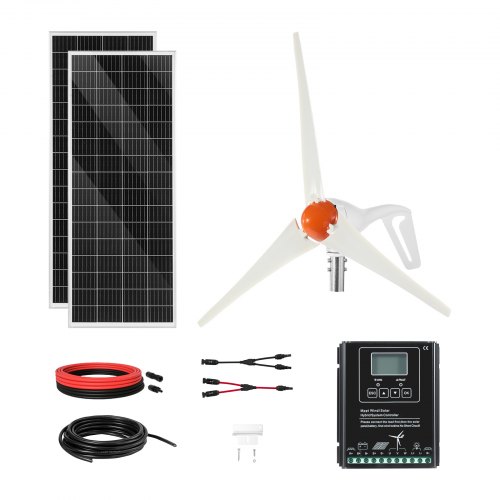
- What’s Inside a Solar Panel Wind Turbine Home Kit? Components Explained
- Solar Panels (PV Modules)
- Wind Turbine Generator
- Hybrid Charge Controller
- Battery Bank (Energy Storage)
- Inverter
- Mounting Hardware & Wiring
- Choosing the Right Kit: Sizing, Specs, and Suppliers
- Matching Your Needs to Kit Capacity
- Evaluating Kit Quality and Certifications
- DIY vs. Professional Installation: What to Expect
- Installation & Maintenance: Keeping Your System Running Smoothly
- Basic Installation Overview (What’s Involved)
- Ongoing Maintenance Tips
- Troubleshooting Common Issues
- Conclusion: Embracing Your Hybrid Energy Future
But let’s be real: navigating the world of home renewable energy can feel like deciphering a foreign language. Watts, inverters, charge controllers, off-grid, grid-tied – it’s a lot to take in. That’s why I’ve put together this comprehensive guide. We’re going to cut through the jargon and give you the straightforward information you need to understand, choose, and even install a hybrid solar-wind system for your home. By the end, you’ll have a clear picture of whether this innovative energy solution is the right fit for your unique situation.
Understanding Hybrid Home Energy Systems: The Best of Both Worlds
First things first, what exactly are we talking about when we say “solar panel and wind turbine home kit”?
What is a Solar & Wind Hybrid System?
Simply put, it’s an integrated power system that generates electricity using both solar panels and a wind turbine. Instead of relying on a single energy source, it intelligently combines two to provide a more consistent and reliable power supply, especially for homes that aren’t connected to the main electrical grid (off-grid) or those looking to supplement their grid connection (grid-tied).
Why Combine Solar and Wind? The Synergy of Renewable Power
This is where the magic happens. Both solar and wind energy have their individual strengths and weaknesses:
- Solar panels shine brightest on clear, sunny days. But they produce nothing at night and significantly less on cloudy days or during winter when the sun is lower.
- Wind turbines thrive when the wind blows. They can generate power 24/7, including at night or on overcast days when solar output is low. However, they’re useless on calm days.
By combining them, you create a powerful synergy. When the sun isn’t shining, the wind might be blowing. When the wind is calm, the sun might be out in full force. This complementary relationship leads to:
- Increased Reliability: Your home is less likely to experience power shortages due to the intermittent nature of a single renewable source.
- Higher Overall Energy Output: You can generate more electricity over an entire year than with either system alone in many locations.
- Optimal for Off-Grid Living: For homes truly seeking energy independence, a hybrid system significantly reduces the need for noisy, polluting backup generators.
Comparing Hybrid vs. Standalone Solar or Wind Systems
To help you weigh your options, let’s look at how a hybrid system stacks up against going with just solar or just wind:

| Feature | Hybrid Solar-Wind System | Standalone Solar System | Standalone Wind System |
|---|---|---|---|
| Reliability | Very High (compensates for intermittency of each) | Moderate (reliant on daylight/sun) | Moderate (reliant on consistent wind) |
| Ideal Use Cases | Off-grid homes, locations with varying sun/wind, critical loads. | Sunny climates, grid-tied homes, rooftop installations. | Windy locations, open land, supplemental power. |
| Initial Cost | Higher (more components) | Moderate | Moderate |
| Space Requirements | Higher (panels + turbine tower) | Moderate (roof or ground space for panels) | Moderate (open, elevated space for turbine) |
| Maintenance | Moderate (routine checks for both systems) | Low (mainly cleaning panels) | Moderate (moving parts, lubrication) |
| Complexity | Higher (integration of two systems) | Moderate | Moderate |
Are Solar & Wind Kits Right for Your Home? Key Factors to Consider
Before you get swept away by the dream, it’s crucial to assess if a hybrid system genuinely aligns with your needs and environment. Here’s what you need to consider:
Energy Needs Assessment: How Much Power Do You Really Need?
This is your starting point. You can’t choose a kit if you don’t know your target. Here’s how to figure it out:
- Calculate Daily Energy Consumption (kWh): Look at your past utility bills. They usually show your monthly kWh usage. Divide that by 30 to get an average daily usage.
- Load Profiling: For off-grid systems, you need a more precise inventory. List every appliance and light fixture you use, its wattage, and how many hours per day you use it. Multiply wattage by hours to get daily Watt-hours (Wh) for each, then sum them up. Don’t forget peak loads (e.g., when your well pump and microwave are on simultaneously).
Knowing your energy demand is paramount. Oversizing a system wastes money; undersizing leaves you in the dark.
Location, Location, Location: Sunlight and Wind Resources
A hybrid system is only as good as the resources it harnesses. You need both sun and wind:
- Assessing Average Wind Speed: This is critical. Small home wind turbines typically need a minimum average wind speed of 6-8 mph (about 3-3.6 m/s) to be efficient. Websites like the National Renewable Energy Laboratory (NREL) or state energy offices offer wind maps. Better yet, consider renting or buying an anemometer to measure actual wind speeds at your proposed turbine height for a few months. Obstructions like trees and buildings can drastically reduce wind resources.
- Solar Insolation: This refers to the amount of solar radiation your location receives. Sunnier climates obviously yield more solar power. Check online solar maps or calculators that provide average peak sun hours for your area. Crucially, identify any potential shading issues from trees, hills, or other buildings throughout the day and year.
- Zoning and Permitting Considerations: Before investing, contact your local planning department. There might be height restrictions for wind turbines, noise ordinances, or specific requirements for solar panel installations. Homeowner Association (HOA) rules can also be a factor.
Grid-Tied vs. Off-Grid: What’s Your Goal?
Your connection to the utility grid will significantly influence your kit choice:
- Off-Grid Systems: These are completely independent of the utility grid. They require a robust battery bank for energy storage and often a generator for backup. They offer complete energy freedom but come with a higher initial cost and require meticulous sizing.
- Grid-Tied Systems: These systems remain connected to the utility grid. When your renewables produce more power than you need, the excess can be fed back into the grid (often earning you credits through net metering). When your system produces less, you draw power from the grid. This offers reliability and can reduce the need for large battery banks, though some grid-tied systems include battery backup for outages.
Budget & Return on Investment (ROI)
Let’s talk money. Hybrid systems are an investment:
- Initial Investment Ranges: Home hybrid kits vary wildly depending on size and components. Expect to pay anywhere from $5,000 to $30,000+ for a comprehensive kit before installation. Installation costs can add another 20-50% depending on complexity and whether you DIY.
- Potential Savings and Payback Period: Your savings will come from reduced or eliminated electricity bills. The payback period (how long it takes for your savings to equal your initial investment) can range from 5 to 15 years, depending on electricity rates, system efficiency, and incentives.
- Incentives, Tax Credits, and Rebates: The U.S. federal government offers a Solar Investment Tax Credit (ITC) that can apply to hybrid systems. Many states and local utilities also offer rebates or other incentives. Research these thoroughly, as they can significantly reduce your net cost.
What’s Inside a Solar Panel Wind Turbine Home Kit? Components Explained
A typical hybrid kit isn’t just panels and a turbine; it’s a carefully orchestrated system of components working together. Understanding each part is key to making an informed decision:
Solar Panels (PV Modules)
These are the workhorses of your solar generation.
- Types: You’ll commonly see monocrystalline (highest efficiency, more expensive, sleek black), polycrystalline (good efficiency, more affordable, blue hue), and sometimes thin-film (lower efficiency, flexible, less common for residential kits).
- Efficiency and Wattage: A panel’s wattage (e.g., 100W, 300W) indicates its power output under ideal conditions. Efficiency tells you how much sunlight it converts into electricity. Higher efficiency means more power from a smaller footprint.
Wind Turbine Generator
This captures the wind’s kinetic energy.
- Horizontal Axis (HAWT) vs. Vertical Axis (VAWT): HAWTs (the classic windmill look) are generally more efficient and common for home use. VAWTs are quieter, less sensitive to wind direction, and have a smaller footprint but often lower efficiency.
- Rated Power and Cut-in Speed: The rated power (e.g., 400W, 1000W) is the maximum output under optimal wind conditions. The cut-in speed is the minimum wind speed required for the turbine to start generating electricity. Lower cut-in speeds are better for less windy locations.
Hybrid Charge Controller
This is the brain that manages the incoming power.

- Role: It regulates the voltage and current coming from both the solar panels and wind turbine, ensuring your batteries aren’t overcharged or damaged.
- MPPT Technology: Many modern controllers use Maximum Power Point Tracking (MPPT) for solar, which optimizes the power harvest from your panels, especially in varying light conditions.
Battery Bank (Energy Storage)
Essential for off-grid systems and backup power.
- Types: Common options include deep-cycle lead-acid (affordable but require maintenance, shorter lifespan) and lithium-ion (higher initial cost, longer lifespan, maintenance-free, better depth of discharge).
- Capacity (Ah, kWh) and Depth of Discharge (DoD): Capacity tells you how much energy the battery can store. DoD refers to how much of that capacity you can use without damaging the battery. Lithium batteries typically allow a much higher DoD (e.g., 80-100%) compared to lead-acid (e.g., 50%).
Inverter
The bridge between your DC power and AC appliances.
- Converting DC to AC: Solar panels, wind turbines, and batteries all produce Direct Current (DC) power. Your home appliances run on Alternating Current (AC). The inverter converts DC to AC.
- Pure Sine Wave vs. Modified Sine Wave: Pure sine wave inverters produce clean, grid-quality power, suitable for all electronics. Modified sine wave inverters are cheaper but can damage sensitive electronics and cause issues with motors. Always opt for pure sine wave for home use.
Mounting Hardware & Wiring
The structural and electrical backbone.
- Mounting: This includes racking for solar panels (roof or ground mount) and a tower for the wind turbine (guyed or free-standing). These must be robust enough to withstand local weather conditions.
- Wiring: Proper gauge wiring, connectors, and safety disconnects are crucial for efficiency and, more importantly, safety.
| Component | Function | Key Considerations |
|---|---|---|
| Solar Panels | Convert sunlight into DC electricity. | Efficiency, wattage, monocrystalline vs. polycrystalline, warranty. |
| Wind Turbine | Convert wind into DC electricity. | Rated power, cut-in speed, HAWT vs. VAWT, noise levels, tower height. |
| Hybrid Charge Controller | Regulates charging of batteries from both sources. | MPPT (for solar), surge protection, voltage compatibility. |
| Battery Bank | Stores excess DC electricity for later use. | Capacity (Ah/kWh), chemistry (Lead-Acid/Lithium-ion), Depth of Discharge (DoD). |
| Inverter | Converts DC battery power to AC power for appliances. | Rated power, surge capacity, pure sine wave (essential!), efficiency. |
| Mounting Hardware | Secures panels and turbine in place. | Material quality, wind rating, compatibility with roof/ground type, ease of assembly. |
| Wiring & Connectors | Connects all components safely and efficiently. | Proper gauge for current, UV resistance, safety certifications. |
Choosing the Right Kit: Sizing, Specs, and Suppliers
With a clear understanding of your needs and the components, you’re ready to look at actual kits. This is where many people get overwhelmed, but it doesn’t have to be complicated.
Matching Your Needs to Kit Capacity
Remember that energy assessment we did earlier? This is where it pays off. Look for kits that explicitly state:
- Combined kW/W ratings for solar and wind: This gives you an idea of their maximum generation potential.
- Battery bank sizing in kWh or Ah: This indicates how much energy can be stored. Aim for a battery bank that can provide at least 1-3 days of your average energy consumption, especially for off-grid systems, to cover periods of low sun or wind.
Don’t just pick the cheapest or most powerful. Choose a kit that aligns with your calculated energy needs and local resource availability. For example, if you have excellent wind resources but limited sun exposure due to trees, you might prioritize a kit with a larger wind turbine component relative to its solar capacity, and vice-versa.
Evaluating Kit Quality and Certifications
Not all kits are created equal. Focus on quality to ensure longevity and safety:
- Reputable Brands: Stick to well-known manufacturers for solar panels, wind turbines, inverters, and charge controllers. Research reviews and track records.
- Warranties: Good kits will come with substantial warranties. Solar panels often have 25-year performance warranties, while inverters and turbines might have 5-10 year product warranties. Understand what’s covered.
- Certifications: Look for certifications like UL (Underwriters Laboratories) for electrical components, which indicates they meet safety standards.
DIY vs. Professional Installation: What to Expect
Many kits are marketed as “DIY-friendly,” and while that’s true for some, it’s essential to be realistic about the undertaking:
- Complexity of Wiring and Tower Erection: Installing solar panels can be done by a handy homeowner, but wiring a complete hybrid system, especially with battery banks and inverters, requires a solid understanding of electrical principles and safety. Erecting a wind turbine tower (which can be 20-50+ feet tall) is a significant engineering challenge and often requires specialized equipment and multiple people.
- Safety Aspects: Working with electricity, heights, and heavy components carries inherent risks. Improper wiring can lead to fires or electrocution.
- When to Call an Expert: For most homeowners, professional installation or at least expert consultation for critical electrical connections and turbine erection is highly recommended. It ensures the system is safe, efficient, and compliant with local codes, and can often preserve warranties.
Installation & Maintenance: Keeping Your System Running Smoothly
Getting your system up and running is just the beginning. Like any other home infrastructure, it needs care.
Basic Installation Overview (What’s Involved)
While I can’t provide a full step-by-step guide here, knowing the general process helps manage expectations:
- Site Preparation: Clearing land for the turbine tower and ensuring appropriate access for panels.
- Mounting: Securely fastening solar panel racks to your roof or ground, and constructing/erecting the wind turbine tower.
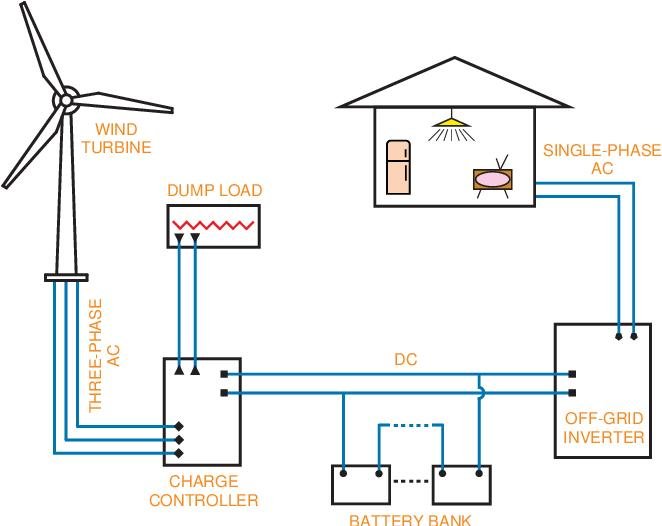
- Wiring: Connecting panels to the charge controller, turbine to the charge controller, charge controller to the battery bank, and battery bank to the inverter, then the inverter to your home’s electrical panel (or a dedicated off-grid panel).
- Grounding & Safety: Installing proper grounding for all components and ensuring all safety disconnects are in place.
- Testing: Commissioning the system to ensure all components are working correctly and safely.
Ongoing Maintenance Tips
Routine maintenance extends the life and efficiency of your system:
- Panel Cleaning: Periodically clean your solar panels to remove dirt, dust, pollen, and debris that can reduce efficiency. A hose and a soft brush are usually sufficient.
- Turbine Inspection: Annually inspect the wind turbine blades for damage, check for loose bolts, and ensure the rotation mechanism is free. Some turbines require periodic lubrication of bearings.
- Battery Care: For lead-acid batteries, check electrolyte levels and top up with distilled water as needed. Keep terminals clean and free of corrosion. Lithium-ion batteries are generally maintenance-free.
- Controller and Inverter Checks: Periodically check for error codes or unusual noises. Ensure proper ventilation around these components.
- Vegetation Management: Trim trees or bushes that might start shading your panels or obstructing wind flow to your turbine as they grow.
Troubleshooting Common Issues
Knowing some basic troubleshooting can save you a service call:
- Low Power Output: Check for shading on panels, dirty panels, or calm wind conditions. Ensure all connections are secure. If batteries aren’t charging, check the charge controller for fault codes.
- Battery Problems: If batteries aren’t holding a charge, check voltage levels, look for corrosion on terminals, or consider if they’re reaching the end of their lifespan.
- Inverter Issues: Many inverters have display screens that show error codes. Consult your manual for their meaning. Often, a simple reset can resolve minor glitches.
Conclusion: Embracing Your Hybrid Energy Future
Investing in a solar panel and wind turbine home kit is a significant step towards a more sustainable and independent lifestyle. It’s not just about cutting down your electricity bills; it’s about taking control of your energy future, reducing your carbon footprint, and enhancing your home’s resilience against power outages.
While the initial research and investment might seem daunting, the long-term benefits of a well-planned and properly installed hybrid system are profound. With the right knowledge, a clear understanding of your needs, and perhaps a little help from the pros, you can harness the abundant power of the sun and wind to power your home for decades to come. Embrace the freedom, embrace the future!
Frequently Asked Questions
Are solar panel and wind turbine home kits really worth it?
Yes, for many homeowners, especially those in remote or off-grid locations, hybrid solar-wind kits offer significant value. They provide increased energy reliability by compensating for the intermittency of each source, leading to greater energy independence and long-term savings on utility bills. The worth depends on your specific energy needs, local renewable resources, and available incentives.
How do I size a hybrid solar-wind kit for my home?
Sizing begins with calculating your total daily energy consumption in kWh (kilowatt-hours) by listing all appliances, their wattage, and daily usage hours. For off-grid systems, factor in a few days of autonomy for battery storage. Reputable kit suppliers or energy consultants can help you match your energy load to the appropriate combined wattage of solar panels, wind turbine, and battery bank capacity.
Can I install a hybrid solar-wind kit myself, or do I need a professional?
Some basic kits are marketed for DIY installation, but the complexity increases with system size and components. While handy individuals might manage solar panel mounting, the electrical wiring, integration of multiple components, and especially the erection of a wind turbine tower often require professional expertise. Safety is paramount, and improper installation can void warranties or create hazards. It’s often best to consult or hire certified professionals for critical stages.
What are the main components I should look for in a hybrid kit?
A complete hybrid kit typically includes solar panels (PV modules), a wind turbine generator, a hybrid charge controller (to manage power from both sources), a battery bank (for energy storage), an inverter (to convert DC to AC power for home use), and necessary mounting hardware and wiring. Ensure all components are high-quality, compatible, and come with good warranties.
How much maintenance do these systems require?
Maintenance is generally moderate. Solar panels require occasional cleaning (especially in dusty areas) to maintain efficiency. Wind turbines need annual inspections for blade damage, lubrication of moving parts (for some models), and checking for loose connections. Battery banks, particularly lead-acid types, may need regular electrolyte level checks. Overall, routine checks and proactive care will ensure your system runs smoothly and extends its lifespan.
Do hybrid systems work well in all locations?
Hybrid systems are most effective in locations with a balance of decent solar insolation (sunlight) and consistent wind resources. Areas with highly fluctuating weather patterns (e.g., cloudy and windy, or sunny and calm at different times) often benefit most from the complementary nature of solar and wind. Locations with extremely low wind speeds or significant shading may find a standalone system more suitable or require a larger capacity from the dominant renewable source.
What’s the typical cost range for a solar and wind turbine home kit?
The cost of solar panel and wind turbine home kits can vary significantly, ranging from approximately $5,000 for smaller, basic systems to over $30,000 for larger, more comprehensive setups, excluding installation. Professional installation can add another 20-50% to the total cost. Factors influencing price include the system’s power capacity, battery type and size, component quality, and brand reputation.