
Choosing Your Home’s Wind Turbine: A Comprehensive Guide to Residential Types
Ever looked at your electricity bill and wished you could harness the power of nature to bring it down? You’re not alone. For many homeowners, the dream of generating their own clean energy is becoming a tangible reality, and wind turbines are a powerful part of that equation. But if you’ve started looking into them, you’ve probably quickly realized it’s not as simple as just ‘buying a wind turbine.’ There are different types, each with its own strengths and weaknesses. So, how do you choose the right one for your home?
Table of Contents
- Choosing Your Home’s Wind Turbine: A Comprehensive Guide to Residential Types
- Is a Home Wind Turbine Right for You? Why Residential Wind Power Matters
- The Promise of Personal Power
- Key Considerations Before Diving In
- The Two Core Pillars: Horizontal-Axis (HAWTs) vs. Vertical-Axis (VAWTs)
- Horizontal-Axis Wind Turbines (HAWTs): The Classic Choice
- Pros of HAWTs for Homes:
- Cons of HAWTs for Homes:
- Ideal Scenarios for HAWTs:
- Vertical-Axis Wind Turbines (VAWTs): The Urban & Flexible Alternative
- Pros of VAWTs for Homes:
- Cons of VAWTs for Homes:
- Ideal Scenarios for VAWTs:
- HAWT vs. VAWT: A Quick Comparison for Homeowners
- Beyond the Basics: Other & Emerging Wind Turbine Types for Residential Use
- Rooftop Wind Turbines: Practicality vs. Performance
- Hybrid Wind-Solar Systems: Maximizing Efficiency
- Emerging Designs & Micro-Turbines: What’s Next?
- Sizing Your Home Wind Turbine: Finding the Perfect Fit
- Estimating Your Energy Needs
- Matching Turbine Size to Power Output
- The Role of Wind Speed & Site Assessment
- Essential Factors When Choosing Your Home Wind Turbine
- Wind Resource Assessment: Don’t Guess, Measure!
- Space Availability & Tower Height
- Noise Considerations
- Local Regulations & Permitting
- Cost & Return on Investment (ROI)
- Maintenance & Longevity
- The Installation Journey: What to Expect
- Site Preparation
- Foundation & Tower Assembly
- Electrical Wiring & Grid Connection (or Off-Grid Setup)
- Professional Installation: A Must-Have
- Empowering Your Home’s Future
This guide will cut through the jargon and show you exactly what types of wind turbines are available for residential use, helping you understand their pros, cons, and most importantly, which one makes the most sense for your unique property and energy needs. Let’s demystify home wind power together.
Is a Home Wind Turbine Right for You? Why Residential Wind Power Matters
The Promise of Personal Power
Imagine generating a significant portion, or even all, of your electricity right on your property. That’s the promise of a home wind turbine. It’s about more than just saving money; it’s about energy independence, reducing your carbon footprint, and investing in a sustainable future. With rising energy costs and growing environmental concerns, residential wind power offers a compelling alternative to traditional grid reliance.
Key Considerations Before Diving In
Before we dive into the specific types, it’s crucial to understand that not every home is an ideal candidate for a wind turbine. You need a consistent wind resource, adequate space, and an understanding of local regulations. But if you meet these fundamental criteria, the benefits can be immense.
The Two Core Pillars: Horizontal-Axis (HAWTs) vs. Vertical-Axis (VAWTs)
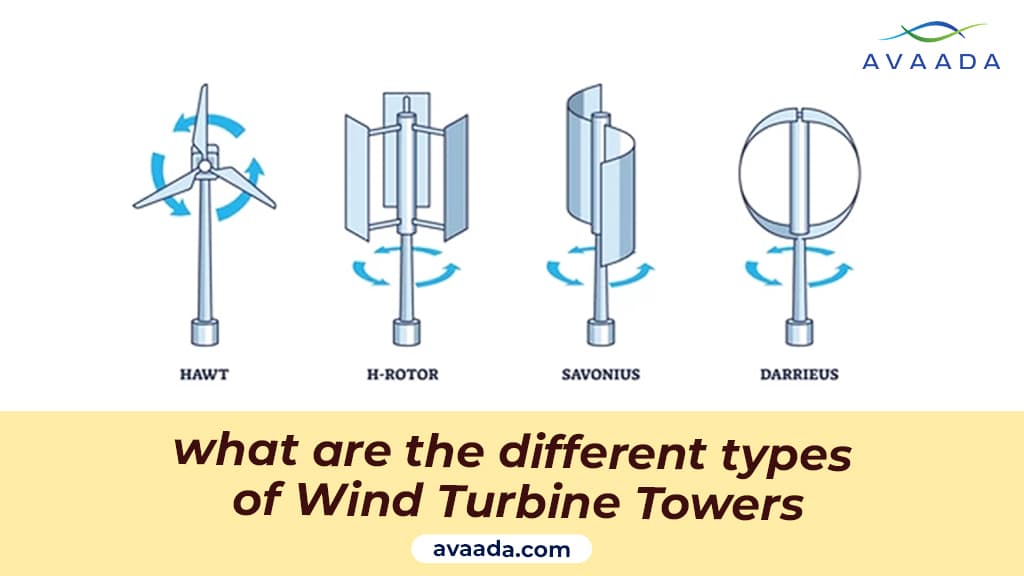
When it comes to home wind turbines, the vast majority fall into one of two categories: Horizontal-Axis Wind Turbines (HAWTs) or Vertical-Axis Wind Turbines (VAWTs). These are the fundamental designs you’ll encounter, and understanding their differences is key to making an informed decision.
Horizontal-Axis Wind Turbines (HAWTs): The Classic Choice
When you picture a wind turbine, you’re likely imagining a HAWT. These are the familiar, propeller-like structures you see in large wind farms, scaled down for residential use. They are efficient and reliable when sited correctly.
- What They Are: HAWTs feature blades that rotate on a horizontal axis, parallel to the ground. They look much like aircraft propellers mounted on a tall tower.
- How They Work: The blades are designed to capture wind energy head-on. A ‘yaw’ mechanism continuously orientates the turbine to face the wind direction for optimal performance.
Pros of HAWTs for Homes:
- High Efficiency: Generally more efficient at converting wind energy into electricity compared to VAWTs, especially in consistent, steady winds.
- Proven Technology: A well-established and understood technology with decades of development.
- Higher Power Output: Typically generate more power for their size than VAWTs, given ideal wind conditions.
- Optimal for Open Spaces: Excel in unobstructed areas with steady, laminar wind flow.
Cons of HAWTs for Homes:
- Directional Dependence: Requires a yaw system to turn into the wind, meaning less efficient in highly turbulent or rapidly changing wind conditions.
- Higher Cut-in Speed: Often need higher wind speeds to start generating power.
- Noise Concerns: Can be noisier than VAWTs, especially larger residential models, which might be an issue for neighbors.
- Taller Towers: To avoid ground-level turbulence, HAWTs usually require taller towers, impacting aesthetics and potentially increasing installation complexity and cost.
- Wildlife Impact: Blades can pose a risk to birds and bats.
Ideal Scenarios for HAWTs:
HAWTs are best suited for rural or semi-rural properties with ample open space, minimal obstructions (like tall buildings or trees), and a reliably consistent wind resource. Think wide-open fields or coastal areas where the wind is strong and unidirectional.
Vertical-Axis Wind Turbines (VAWTs): The Urban & Flexible Alternative
VAWTs offer a different approach to wind capture, often characterized by their unique, sometimes artistic, designs. They are gaining popularity for urban and suburban applications where HAWTs might not be suitable.
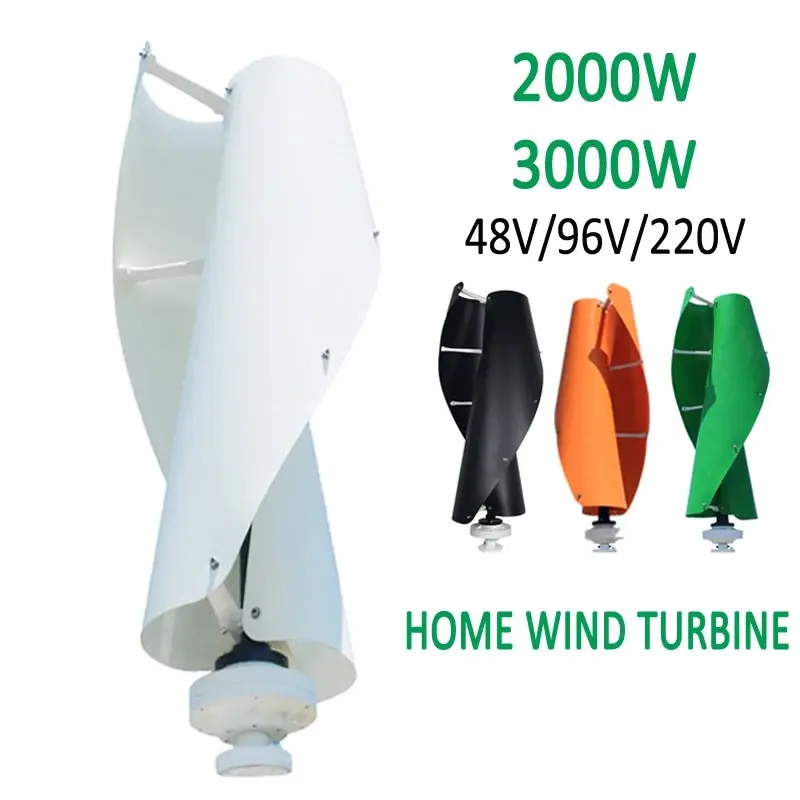
- What They Are: VAWTs have blades that rotate around a vertical axis, perpendicular to the ground. Common designs include the ‘egg-beater’ Darrieus type or the ‘scoop’ Savonius type.
- How They Work: VAWTs are omni-directional, meaning they can capture wind from any direction without needing to orient themselves. They typically have a lower center of gravity.
Pros of VAWTs for Homes:
- Omni-Directional: Can capture wind from any direction, making them highly effective in turbulent or gusty conditions common in urban environments. No yaw mechanism needed.
- Lower Cut-in Speed: Often start generating power at lower wind speeds than HAWTs.
- Quiet Operation: Generally much quieter than HAWTs, making them more neighbor-friendly.
- Easier Installation & Maintenance: Components are often closer to the ground, simplifying installation and maintenance.
- Reduced Wildlife Impact: Slower blade rotation and more visible designs can reduce bird and bat strikes.
- Aesthetics: Some designs are considered more visually appealing and blend better into certain landscapes.
Cons of VAWTs for Homes:
- Lower Efficiency: Typically less efficient at converting wind energy to electricity than HAWTs, especially at higher wind speeds.
- Less Mature Technology: While improving rapidly, VAWT technology for residential use is generally less developed than HAWTs.
- Potential Vibration: Some designs can experience vibration, which needs to be managed during installation.
- Larger Footprint for Equivalent Power: May require a larger physical footprint to generate the same amount of power as a HAWT.
Ideal Scenarios for VAWTs:
VAWTs shine in urban, suburban, or cluttered environments where wind direction is inconsistent and turbulence is high. They are a good choice for smaller properties, rooftop installations (with careful structural assessment), or areas where noise is a significant concern.

HAWT vs. VAWT: A Quick Comparison for Homeowners
Here’s a snapshot to help you quickly weigh the core differences between these two primary types for residential use:
| Feature | Horizontal-Axis Wind Turbine (HAWT) | Vertical-Axis Wind Turbine (VAWT) |
|---|---|---|
| Appearance | Traditional ‘propeller’ on a tall tower | ‘Egg-beater’ or ‘scoop’ designs, often lower profile |
| Wind Direction | Requires consistent direction, needs yaw mechanism to turn | Omni-directional, captures wind from any direction |
| Efficiency (General) | Higher, especially in steady, high-speed winds | Lower, but performs better in turbulent wind |
| Cut-in Wind Speed | Typically higher (e.g., 7-9 mph) | Typically lower (e.g., 4-6 mph) |
| Noise Level | Can be noisier, especially at higher wind speeds | Generally much quieter |
| Ideal Environment | Open, rural areas with consistent, laminar wind flow | Urban/suburban areas with turbulent, variable wind; smaller plots |
| Maintenance | Requires tower climbing; components further from ground | Often easier access to components near ground level |
| Wildlife Impact | Higher risk due to faster, less visible blades | Lower risk due to slower, more visible blades |
Beyond the Basics: Other & Emerging Wind Turbine Types for Residential Use
While HAWTs and VAWTs dominate the residential market, innovation continues. Let’s look at some other considerations and future possibilities.
Rooftop Wind Turbines: Practicality vs. Performance
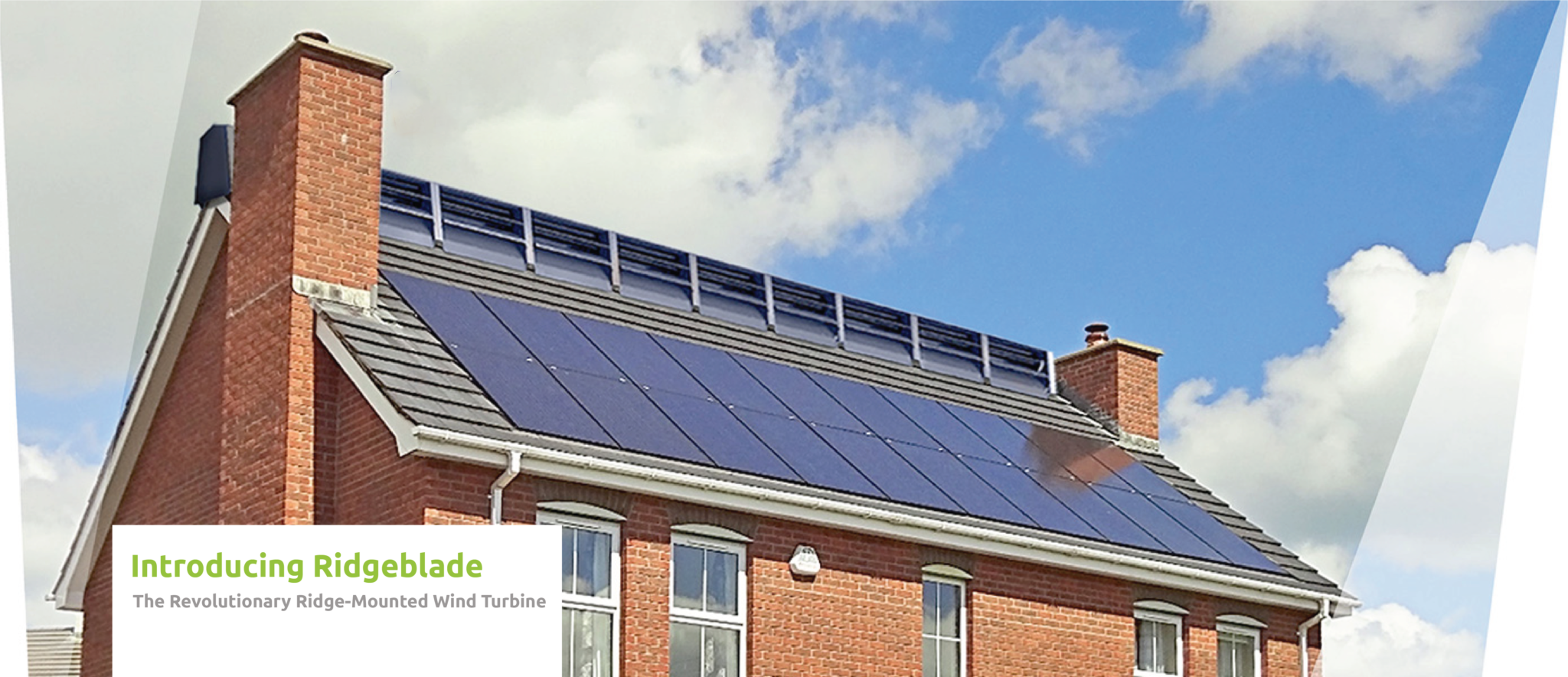
The idea of mounting a small wind turbine directly on your roof is appealing for its space-saving potential. Typically, these are small VAWTs. However, there are significant caveats.
- Turbulence: Rooftops are often subject to highly turbulent, inconsistent wind due to the building’s structure. This significantly reduces a turbine’s efficiency.
- Vibration & Noise: A turbine mounted directly on a roof can transmit noise and vibration into the home, causing discomfort. Structural integrity is also a concern.
- Limited Power: Most rooftop units are very small and primarily suited for supplemental power, charging batteries, or specific applications like lighting, rather than powering an entire home.
While some specialized rooftop units exist, they generally offer lower power output and face greater challenges than ground-mounted systems. A thorough site assessment is even more critical here.
Hybrid Wind-Solar Systems: Maximizing Efficiency
Why choose between wind and solar when you can have both? A hybrid renewable energy system combines wind turbines with solar panels. This strategy is particularly effective because wind and solar resources often complement each other: typically, wind speeds are higher in winter months and at night, while solar production peaks in summer and during the day.
- Consistent Power: Provides a more consistent and reliable power supply throughout the year and across different times of day.
- Reduced Storage Needs: Can reduce the need for extensive battery storage, as one source might compensate when the other is low.
- Grid Independence: Ideal for off-grid living, offering robust power generation regardless of specific weather patterns.
Emerging Designs & Micro-Turbines: What’s Next?
The field of small wind is constantly evolving. Researchers are developing novel designs that aim to be quieter, more efficient in turbulent winds, or have a smaller footprint. Examples include bladeless turbines (which generate power from vortex-induced vibrations) or highly compact micro-turbines. While many are still in early stages, they represent the future of residential wind power, potentially offering solutions for even more challenging urban environments.
Sizing Your Home Wind Turbine: Finding the Perfect Fit
Choosing the right type of turbine is only half the battle; selecting the appropriate size and power output is equally critical. You want a system that meets your energy needs without being excessively large or too small to make a meaningful impact.
Estimating Your Energy Needs
The first step is to understand your household’s electricity consumption. Look at past electricity bills. Most bills show your monthly kilowatt-hour (kWh) usage. Multiply this by 12 to get an annual average. A typical U.S. home uses around 900 kWh per month, or 10,800 kWh per year, but yours could be higher or lower.
Matching Turbine Size to Power Output
Residential wind turbines are typically rated in kilowatts (kW) for their peak power output. The actual energy produced (kWh) will depend heavily on the wind resource at your specific site.
| Turbine Size (kW) | Rotor Diameter (Approx.) | Annual Energy Output (kWh/year @ avg 12 mph wind) | Typical Home Usage Matched | Estimated Cost Range (Installed) |
|---|---|---|---|---|
| 0.5 – 1 kW | 1-2 meters (3-6 feet) | 800 – 1,800 kWh | Partial power for small loads, supplemental charging | $3,000 – $8,000 |
| 2 – 5 kW | 3-5 meters (10-16 feet) | 3,000 – 8,000 kWh | Significant portion for average home, or full for efficient home | $10,000 – $25,000 |
| 6 – 15 kW | 5-8 meters (16-26 feet) | 9,000 – 25,000 kWh | Full power for average to larger homes, or farms | $30,000 – $75,000 |
| 15+ kW | 8+ meters (26+ feet) | 25,000+ kWh | Multiple homes, large agricultural operations | $75,000 – $150,000+ |
Note: Annual energy output is an estimate and varies greatly with actual wind speed, turbine efficiency, and local conditions. Installation costs can vary significantly based on tower height, foundation requirements, and local labor rates.
The Role of Wind Speed & Site Assessment
It cannot be stressed enough: wind speed is the single most critical factor influencing a wind turbine’s performance. The power generated by a wind turbine is proportional to the cube of the wind speed (P = ½ ρ A v³). This means if you double the wind speed, you get eight times the power! A professional site assessment, ideally involving wind mapping and even temporary wind measurement equipment, is essential to determine the average wind speed at your proposed turbine height. Don’t rely on general regional data; your specific microclimate matters immensely.
Essential Factors When Choosing Your Home Wind Turbine
Beyond the technical specifications, several practical considerations will guide your final decision.
Wind Resource Assessment: Don’t Guess, Measure!
As mentioned, this is paramount. Work with an expert to assess the average wind speed and turbulence at your site. This will determine if a wind turbine is even viable and what type will perform best. Don’t be swayed by anecdotal evidence of “it’s always windy here.”
Space Availability & Tower Height
- HAWTs: Require clear, unobstructed space for optimal wind flow and typically need taller towers to get above turbulence.
- VAWTs: Can tolerate more turbulence and often require less open space, making them suitable for smaller lots or urban settings. Consider setbacks from property lines and structures.
Noise Considerations
While modern turbines are much quieter than older models, noise can still be a concern, especially for HAWTs. Consider your neighbors and local regulations. VAWTs generally have a lower noise profile.
Local Regulations & Permitting
This is a major hurdle for many. You’ll need to research zoning laws, building codes, and any specific ordinances related to height restrictions, setbacks, noise limits, and aesthetic impacts. Some communities are very wind-friendly, others are not. Be prepared for a potentially lengthy permitting process.
Cost & Return on Investment (ROI)
The upfront cost of a home wind turbine system can be significant. However, federal, state, and local incentives (like the federal Investment Tax Credit) can substantially reduce this. Calculate your potential energy savings over time to determine your ROI. Factors like your current electricity rates and the lifespan of the turbine (20-25 years is common) will play a big role.
Maintenance & Longevity
Like any mechanical system, wind turbines require maintenance. This typically involves annual inspections, lubrication, and occasional component replacement. Factor these ongoing costs into your long-term budget. A well-maintained turbine can provide clean energy for decades.
The Installation Journey: What to Expect
Once you’ve chosen your turbine type and size, the physical installation begins. This is not a DIY project and requires specialized expertise.
Site Preparation
This involves clearing the chosen location, preparing access for equipment, and ensuring the ground is stable for foundation work.
Foundation & Tower Assembly
A robust concrete foundation is essential to support the weight and withstand the forces on the turbine tower. The tower itself is then assembled, often in sections, and erected using cranes.
Electrical Wiring & Grid Connection (or Off-Grid Setup)
Certified electricians will handle the wiring from the turbine to your home’s electrical panel. If you’re connecting to the grid (a ‘grid-tied’ system), there will be an inverter to convert the turbine’s DC power to AC, and potentially a net metering agreement with your utility. For off-grid systems, batteries and charge controllers are integrated.
Professional Installation: A Must-Have
Always use certified and experienced wind turbine installers. Their expertise ensures safety, compliance with codes, and optimal performance of your system. They can also navigate the complex permitting processes.
Empowering Your Home’s Future
Choosing the right wind turbine for your home is a significant decision, but an incredibly rewarding one. Whether you opt for the proven efficiency of a HAWT in an open rural setting or the urban-friendly versatility of a VAWT, you’re making a powerful statement about your commitment to sustainability and energy independence. By understanding the types, assessing your site carefully, and working with professionals, you can harness the wind to power your home for decades to come. The future of your energy bill, and the planet, will thank you.
”
Frequently Asked Questions
What are the main types of wind turbines for residential use?
The two main types are Horizontal-Axis Wind Turbines (HAWTs) and Vertical-Axis Wind Turbines (VAWTs). HAWTs look like traditional propellers and are very efficient in steady winds. VAWTs have vertical blades (like an egg-beater) and perform better in turbulent, varied wind conditions, often found in urban areas.
Which type of wind turbine is best for my home?
The ‘best’ type depends entirely on your specific site. HAWTs are generally more efficient in open, rural areas with consistent, strong winds, requiring taller towers. VAWTs are often better suited for suburban or urban environments with turbulent wind, smaller spaces, and where noise is a concern, due to their omni-directional design and quieter operation.
How much does a home wind turbine typically cost?
Residential wind turbine systems can range from $3,000 for very small supplemental units to over $75,000 for larger systems capable of powering an entire home. The cost depends on the turbine’s size (kW), tower height, installation complexity, and local labor rates. Federal tax credits and other incentives can significantly reduce the upfront cost.
Can I install a wind turbine on my roof?
While some small VAWTs are marketed for rooftop installation, it’s generally not recommended for primary home power. Rooftops experience highly turbulent wind, reducing efficiency. More importantly, turbines can transmit noise and vibration into the home, and structural integrity is a significant concern. Ground-mounted systems are typically more effective and less problematic.
How do I know if my property has enough wind for a turbine?
The most critical step is a professional wind resource assessment. This involves evaluating your property’s average wind speed and turbulence at the proposed turbine height. Don’t rely on general regional data; obstructions like trees and buildings can drastically alter local wind conditions. A qualified installer can conduct this assessment.
Are home wind turbines noisy?
Modern home wind turbines are much quieter than older models, but noise can still be a factor. HAWTs tend to be noisier, especially at higher wind speeds, due to blade rotation. VAWTs are generally much quieter, making them a better choice for residential areas where noise pollution is a concern. Local noise ordinances should always be considered.
How much maintenance do home wind turbines require?
Like any mechanical system, wind turbines require routine maintenance. This typically includes annual inspections, lubrication of moving parts, and checking electrical connections. A professional installer or technician should perform these checks to ensure the system operates safely and efficiently for its 20-25 year lifespan.

:max_bytes(150000):strip_icc()/wind-turbine-generator-on-house-roof-90967703-b9619befbf954726ae92dfb6154711f2.jpg)