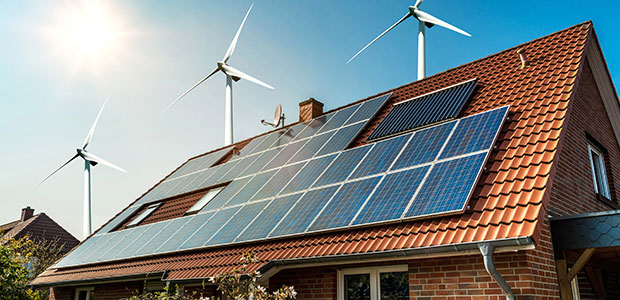
Harnessing the Wind: The Definitive Homeowner’s Guide to Residential Wind Energy
Ever gazed at towering wind turbines in the distance and wondered if that powerful, clean energy could work for your own home? You’re not alone. The idea of generating your electricity, freeing yourself from fluctuating utility bills, and shrinking your carbon footprint is incredibly appealing. But for homeowners, the path to residential wind power isn’t always as clear as switching on a light.
Table of Contents
- Harnessing the Wind: The Definitive Homeowner’s Guide to Residential Wind Energy
- Is Residential Wind Power Right for YOUR Home? Understanding the Core Factors
- The Unbreakable Rule: Wind Resource Assessment
- Space and Siting: More Than Just a Pretty View
- Your Energy Needs: How Much Power Do You Really Use?
- Demystifying Small Wind Turbines: Types, Sizes, and How They Work
- Horizontal-Axis Wind Turbines (HAWTs): The Classic Choice
- Vertical-Axis Wind Turbines (VAWTs): The Urban Alternative
- Sizing Your System: Matching Power to Consumption
- The Financial Gust: Costs, Savings, and Incentives
- Breaking Down the Installation Costs
- Unlocking Savings: Lowering Your Electricity Bill
- Tapping into Incentives: Tax Credits and Rebates
- The Installation Journey: From Site Assessment to Spinning Blades
- Step 1: Professional Site Assessment & Wind Resource Evaluation
- Step 2: Navigating Zoning Laws and Permitting
- Step 3: System Design and Component Selection
- Step 4: Installation by Certified Professionals
- Step 5: Grid Interconnection and Commissioning (for Grid-Tied Systems)
- Wind vs. Solar: Complementary, Not Always Competitive
- The Future of Residential Wind Energy: Smaller, Smarter, Quieter
- Is Home Wind Power Right for YOU? A Decision Checklist
- Final Thoughts: Embracing the Wind for a Greener Home
It’s true, residential wind energy isn’t a plug-and-play solution for every property. Unlike solar panels that can grace almost any sunny roof, wind turbines demand specific conditions and careful consideration. So, let’s cut through the marketing hype and get down to brass tacks: what does it really take to power your home with the wind?
I’m here to equip you with the unfiltered truth, the essential data, and the actionable insights you need to determine if residential wind energy is not just a dream, but a practical reality for your household. We’ll explore everything from wind speeds to turbine types, costs to tax credits, and the critical steps from assessment to installation. Consider this your go-to resource for making an informed, confident decision.
Is Residential Wind Power Right for YOUR Home? Understanding the Core Factors
Before you even think about turbine models or installation crews, you need to answer a fundamental question: Is your home a good candidate for wind energy? This isn’t about desire; it’s about physics, logistics, and local regulations. Let’s break down the critical elements.
The Unbreakable Rule: Wind Resource Assessment
This is arguably the single most important factor. Wind turbines are powered by kinetic energy, and without consistent, strong wind, they simply won’t generate enough electricity to be worthwhile. Most residential systems need an average annual wind speed of at least 10-12 miles per hour (mph) to be economically viable. Higher speeds are always better.
- Why it matters: A slight increase in wind speed can dramatically boost power output. If the wind speed doubles, the power generated increases by eight times!
- How to assess your site:
- Online Data: Tools from the Department of Energy’s WINDExchange or state meteorological resources can provide preliminary wind maps for your area.
- Local Knowledge: Talk to neighbors, farmers, or local airports. They often have a good sense of prevailing winds.
- Professional Assessment: For serious consideration, a professional site assessment using an anemometer (wind speed measuring device) placed at your proposed turbine height for several months is invaluable. This provides the most accurate data specific to your microclimate.
Space and Siting: More Than Just a Pretty View
Unlike rooftop solar, wind turbines need space – and often a lot of it. The optimal location for a wind turbine is typically on a tall tower, away from obstructions, to capture uninterrupted airflow.
- Minimum Land Requirements: While smaller turbines exist, a general rule of thumb suggests at least an acre of land, sometimes more depending on the desired system size and local setback requirements.
- Obstructions: Trees, other buildings, hills, or even subtle changes in topography can create turbulence, reducing a turbine’s efficiency and potentially causing damaging vibrations. Your turbine’s rotor should ideally be at least 20-30 feet above anything within 500 feet.
- Noise Considerations: Modern small wind turbines are significantly quieter than older models, but they do produce some sound. Siting needs to consider proximity to your home and neighbors.
Your Energy Needs: How Much Power Do You Really Use?
Before investing in any renewable energy system, understanding your current electricity consumption is crucial. Why? Because the cheapest energy is the energy you don’t use.
- Calculating kWh Consumption: Look at your past utility bills. Most show your average monthly (or annual) kilowatt-hour (kWh) usage. This number directly dictates the size of the wind turbine you’d need.
- Energy Efficiency First: Before sizing a turbine, consider reducing your energy footprint. Upgrading to LED lighting, energy-efficient appliances, better insulation, and smart thermostats can significantly lower your demand, meaning you’d need a smaller, less expensive wind system.
- Grid-Tied vs. Off-Grid:
- Grid-Tied: Most residential systems are connected to the existing utility grid. You use turbine power first, and if you generate more than you use, the excess goes back to the grid (often earning you credits via net metering). If you need more power than your turbine generates, you draw from the grid. This is typically more cost-effective.
- Off-Grid: For remote properties, an off-grid system means you’re completely independent of the utility company. This requires battery storage to cover periods of low wind, significantly increasing costs and complexity.
Demystifying Small Wind Turbines: Types, Sizes, and How They Work
Not all wind turbines are created equal. For residential applications, you’ll primarily encounter two main types, each with its own advantages and ideal use cases.
Horizontal-Axis Wind Turbines (HAWTs): The Classic Choice
These are the iconic, propeller-style turbines you typically envision. They’re highly efficient at converting wind into electricity, especially at higher wind speeds.
)
- Description: Features blades (usually 2 or 3) that rotate around a horizontal axis, mounted on a tall tower. They pivot to face the wind (yawing) for optimal performance.
- Efficiency: Generally more efficient than VAWTs at capturing energy from strong, steady winds.
- Applications: Best suited for open, rural areas with consistent high wind resources and sufficient space for tall towers.
Vertical-Axis Wind Turbines (VAWTs): The Urban Alternative
VAWTs, with their egg-beater or Darrieus designs, have a more unique look and some distinct advantages in certain residential settings.
- Description: Blades rotate around a vertical axis. They don’t need to yaw to face the wind, making them effective in turbulent or constantly shifting wind conditions.
- Lower Wind Speed Capabilities: Can sometimes start generating power at lower wind speeds than HAWTs.
- Aesthetic & Siting: Often considered more aesthetically pleasing for urban/suburban environments due to their lower height and often sleeker design. Easier to install on rooftops (though vibration is a concern) or shorter towers.
Here’s a quick comparison:
| Feature | Horizontal-Axis Wind Turbine (HAWT) | Vertical-Axis Wind Turbine (VAWT) |
|---|---|---|
| Appearance | Classic ‘propeller’ shape on a tall tower | ‘Egg-beater’ or ‘H-rotor’ shape, often shorter |
| Efficiency | Generally higher, especially in steady, strong winds | Lower overall, but can perform well in turbulent conditions |
| Wind Direction | Must yaw (rotate) to face the wind | Omnidirectional; works regardless of wind direction |
| Noise Level | Can be noticeable, particularly blade ‘whoosh’ | Generally quieter, less ‘whoosh’ sound |
| Siting | Requires tall towers, clear open space | More versatile, potentially for rooftops or shorter towers |
| Maintenance | Some components (gearbox) higher up, more complex access | Generator often at ground level, easier access |
Sizing Your System: Matching Power to Consumption
Turbines are rated in kilowatts (kW), representing their maximum instantaneous power output. However, your home consumes kilowatt-hours (kWh) over time. The key is to match the turbine’s *annual energy production to your annual energy consumption*.
- kW vs. kWh: A 5 kW turbine produces 5 kW of power at optimal wind speeds. How many kWh it produces annually depends entirely on the average wind speed at its location.
- Turbine Power Ratings: Residential turbines typically range from 1 kW to 10 kW.
- Factors Influencing Output:
- Wind Speed: The most critical factor.
- Rotor Diameter: Larger blades sweep more area, capturing more wind.
- Turbine Efficiency: How well the turbine converts wind energy into electricity.
Here’s a general idea of what different turbine sizes might provide (assuming good wind resources ~12-14 mph average):
| Turbine Size (Rated Power) | Typical Annual Output (kWh) | Homes It Could Power (Approx. Average Use) |
|---|---|---|
| 1 kW | 1,000 – 2,500 kWh | Small cabin, supplemental power for a very efficient home |
| 3 kW | 3,000 – 7,500 kWh | Small to medium-sized efficient home |
| 5 kW | 5,000 – 12,500 kWh | Average-sized home with moderate consumption |
| 10 kW | 10,000 – 25,000 kWh | Larger homes, small farms, or homes with high energy demand |
Note: These are estimates. Actual output varies significantly based on your specific wind resource.
The Financial Gust: Costs, Savings, and Incentives
Let’s be blunt: installing a residential wind turbine is a significant investment. Understanding the costs and potential returns is essential for making an informed decision.
Breaking Down the Installation Costs
The total cost isn’t just the turbine itself. You’re paying for a complete energy generation system and its installation. A typical small residential wind system (1 kW to 10 kW) can range from $20,000 to $80,000 or more, before incentives.
- Turbine: The cost of the turbine unit itself varies widely by size, manufacturer, and type (HAWT vs. VAWT).
- Tower: A critical component. Taller towers cost more but access better wind. Costs vary based on height and type (e.g., guyed, freestanding, tilt-up).
- Inverter: Converts the turbine’s raw electricity into usable AC power for your home or the grid.
- Balance of System (BOS) Components: Wiring, controls, safety disconnects, grounding equipment.
- Battery Bank (for off-grid/hybrid): This can add thousands of dollars and requires regular maintenance/replacement.
- Installation Labor: Erecting towers and wiring systems requires specialized skills and equipment.
- Site Assessment & Permitting: Essential upfront costs that vary by location.
Unlocking Savings: Lowering Your Electricity Bill
The primary financial benefit of a residential wind turbine is reducing or eliminating your monthly electricity bill. This saving is amplified if your utility offers net metering.
- Net Metering: Allows grid-tied system owners to send excess electricity generated by their turbine back to the grid. The utility credits you for this power, effectively spinning your meter backward. This is crucial for maximizing savings and accelerating your payback period. (Always check your local utility’s net metering policies – they vary widely!)
- Payback Period: This is the time it takes for your energy savings to offset the initial installation cost. It can range from 5-15 years depending on wind resource, electricity rates, system cost, and available incentives. In areas with high electricity prices and excellent wind, the payback can be faster.
Tapping into Incentives: Tax Credits and Rebates
This is where significant savings can come into play, making residential wind more financially attractive.
- Federal Investment Tax Credit (ITC): As of my last update, the federal ITC for small wind turbines (systems up to 100 kW) offers a 30% tax credit for systems placed in service by 2032. This is a dollar-for-dollar reduction in your federal income tax liability, not just a deduction. It then steps down in subsequent years. (Always verify current federal incentives with a tax professional or official government sources like Energy.gov.)
- State and Local Programs: Many states, counties, and even local utilities offer their own incentives, including rebates, grants, property tax exemptions, or favorable loan programs. The best place to find these is the DSIRE (Database of State Incentives for Renewables & Efficiency) website, which provides a comprehensive, regularly updated list for every state. These can significantly reduce your out-of-pocket costs.
The Installation Journey: From Site Assessment to Spinning Blades
Installing a residential wind turbine is a multi-step process that requires careful planning, professional expertise, and adherence to local regulations.
:max_bytes(150000):strip_icc()/wind-turbine-generator-on-house-roof-90967703-b9619befbf954726ae92dfb6154711f2.jpg "Is a Home Wind Turbine Right for You?")
Step 1: Professional Site Assessment & Wind Resource Evaluation
I cannot stress this enough: do not skip this step. A qualified professional will:
- Analyze your property for optimal turbine placement, considering wind flow, obstructions, and safety zones.
- Potentially install a temporary anemometer to gather precise wind data specific to your site.
- Evaluate soil conditions for tower foundation.
Step 2: Navigating Zoning Laws and Permitting
This can be the most challenging hurdle. Wind turbines are often subject to strict local regulations:
- Height Restrictions: Many areas have limits on how tall structures can be.
- Setback Rules: Turbines must be a certain distance from property lines, roads, and other buildings.
- Noise Ordinances: Regulations may exist regarding permissible sound levels.
- Homeowners’ Association (HOA) Rules: If you live in an HOA, they often have their own restrictive covenants regarding exterior structures.
- Permits: You’ll need building permits, electrical permits, and potentially environmental reviews. Be prepared for a potentially lengthy process and engage with local planning departments early.
Step 3: System Design and Component Selection
Based on your energy needs, wind resource, and budget, an installer will design a system, recommending the appropriate turbine size, tower type, inverter, and if necessary, battery storage. Always insist on certified equipment (e.g., from small wind turbine certification bodies) to ensure safety and performance.
Step 4: Installation by Certified Professionals
This is not a DIY project. Installing a wind turbine involves working with heavy equipment, high voltages, and potentially dangerous heights. Certified and experienced installers ensure:
- Proper foundation and tower erection.
- Safe electrical wiring and grid interconnection.
- Correct turbine assembly and commissioning.
Step 5: Grid Interconnection and Commissioning (for Grid-Tied Systems)
Once installed, the utility company will inspect the system to ensure it meets their safety and technical requirements for interconnection. After approval, your system will be commissioned, and you can start generating your own clean power.
Wind vs. Solar: Complementary, Not Always Competitive
Often, homeowners compare wind and solar, but it’s important to view them as complementary technologies. Each has its strengths:
- Solar: Peaks during sunny daylight hours, typically performs best in summer. Requires direct sunlight.
- Wind: Often performs well at night, on cloudy days, and during winter months when cold fronts bring stronger winds. It can be a great complement to solar, providing power when the sun isn’t shining.
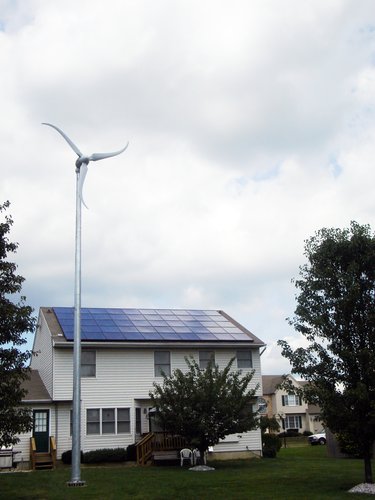
For some homes, a hybrid wind-solar system offers the best of both worlds, providing a more consistent and reliable energy supply throughout the day and year, reducing reliance on the grid even further.
The Future of Residential Wind Energy: Smaller, Smarter, Quieter
While residential wind has faced challenges, innovation continues. The future holds promise for systems that are:
- Smaller and More Aesthetic: Companies are developing compact, quieter, and visually appealing turbines, including advanced VAWT designs and even bladeless options.
- Smarter: Integrated with smart home energy management systems, optimizing energy usage and storage.
- More Accessible: Easier to install with reduced siting requirements and improved grid integration technologies.
- Cost-Effective: Continued advancements, coupled with ongoing incentives, could make these systems more affordable for a broader range of homeowners.
Is Home Wind Power Right for YOU? A Decision Checklist
To summarize, here’s a quick checklist to help you decide if residential wind energy is a viable option for your home:
- Do you have a consistent, strong wind resource? (Average annual wind speed of 10-12 mph or higher.)
- Do you have ample, unobstructed space on your property for a turbine and its required setback? (Typically 1+ acre, away from trees/buildings.)
- Are local zoning laws and HOA regulations favorable to wind turbine installation? (Crucial to investigate early.)
- Are your energy bills high enough to justify the initial investment, or are you prioritizing energy independence?
- Are you prepared for the potentially significant upfront costs, even with incentives?
- Have you first explored energy efficiency improvements for your home?
- Are you willing to work with certified professionals through the entire assessment, permitting, and installation process?
If you answered ‘yes’ to most of these questions, then exploring residential wind energy further is definitely worth your time. If not, it might be more challenging, but advancements could still make it viable in the future.
Final Thoughts: Embracing the Wind for a Greener Home
Residential wind energy offers a powerful and sustainable way to generate your own electricity, reduce reliance on fossil fuels, and contribute to a cleaner environment. It’s a journey that requires research, patience, and a solid wind resource, but the rewards—financial and environmental—can be substantial.
While not a universal solution, for the right homeowner in the right location, harnessing the wind can transform your property into a beacon of energy independence. Take the first step by assessing your wind resource and engaging with local experts. The future of your home’s energy might just be blowing in the wind.
Frequently Asked Questions
What is the minimum average wind speed required for a residential wind turbine to be practical?
For a residential wind turbine to be economically practical and generate sufficient electricity, your property should ideally have an average annual wind speed of at least 10-12 miles per hour (mph). Higher average speeds (e.g., 14+ mph) will significantly increase the system’s output and shorten its payback period.
How much does a residential wind turbine system typically cost?
The installed cost for a small residential wind system (1 kW to 10 kW) can range significantly, from $20,000 to $80,000 or more, before incentives. This includes the turbine, tower, inverter, balance of system components, installation labor, and permitting. Costs vary based on turbine size, tower height, site complexity, and whether battery storage is included for off-grid operation.
Are there tax credits or incentives available for installing residential wind turbines?
Yes, homeowners can often benefit from incentives. The federal Investment Tax Credit (ITC) for small wind turbines offers a significant percentage (e.g., 30% as of recent legislation) of the system cost as a tax credit. Many states and local utilities also offer additional rebates, grants, or property tax exemptions. It’s crucial to check current federal incentives and consult the DSIRE database for state-specific programs.
What’s the difference between Horizontal-Axis (HAWT) and Vertical-Axis (VAWT) wind turbines for homes?
HAWTs (the classic ‘propeller’ style) are generally more efficient in steady, strong winds and require tall towers in open spaces. VAWTs (like ‘egg-beaters’) are often quieter, work well in turbulent or shifting winds, and can be more suitable for properties with less open space or where aesthetics are a concern, though typically with lower overall efficiency.
Can I install a residential wind turbine in a suburban or urban area?
Installing a residential wind turbine in suburban or urban areas is generally more challenging. Key hurdles include sufficient wind resource (often blocked by buildings/trees), stringent local zoning laws regarding height, setbacks, and noise, and potential objections from homeowners’ associations. While smaller, quieter VAWTs are being developed, open, rural areas with consistent wind remain the most ideal locations.
How do residential wind turbines compare to solar panels?
Wind and solar are complementary. Solar panels produce power during sunny daylight hours, while wind turbines often generate power at night, on cloudy days, and during colder, windier seasons. A hybrid wind-solar system can provide a more consistent year-round energy supply. Both reduce utility bills, but wind requires more specific siting and higher average wind speeds to be effective.
What are the most critical steps before deciding on a residential wind turbine?
The most critical steps are a thorough professional wind resource assessment specific to your property, a deep dive into local zoning laws, permitting requirements, and any HOA restrictions, and a clear understanding of your household’s energy consumption. These factors will determine the feasibility and economic viability of a system before you commit to significant investment.