
Harnessing the Wind: Your Definitive Guide to Home Wind Power Electricity
Tired of soaring electricity bills? Dreaming of energy independence, a life less reliant on the grid? You’re not alone. Many homeowners are eyeing renewable energy, and while solar often steals the spotlight, the whispers of the wind hold incredible potential. But here’s the burning question: Is wind power electricity for your home a realistic, cost-effective dream, or just a breezy fantasy?
Table of Contents
- Harnessing the Wind: Your Definitive Guide to Home Wind Power Electricity
- Is Residential Wind Power Right for YOUR Home? The Quick Answer
- Key Factors for Feasibility
- Ideal Scenarios for Home Wind Turbines
- How Do Home Wind Turbines Actually Work? (The Basics)
- From Breeze to Kilowatt-Hour
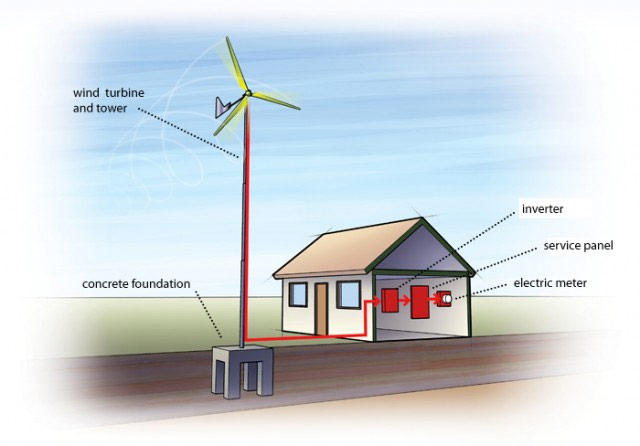
- Essential Components of a Small Wind System
- Types of Wind Turbines for Residential Use
- Horizontal Axis Wind Turbines (HAWTs)
- Vertical Axis Wind Turbines (VAWTs)
- Sizing Your Home Wind System: How Much Power Do You Need?
- Calculating Your Energy Consumption
- Matching Turbine Output to Your Home’s Demands
- Practical Example/Rule of Thumb
- The Real Cost of Residential Wind Power
- Initial Investment: What to Budget For
- Ongoing Costs & Maintenance
- Incentives and Financial Payback
- Wind Power vs. Solar Power for Your Home: A Head-to-Head
- When Wind Shines (and Blows)
- When Solar Takes the Lead
- Navigating the Hurdles: Permits, Zoning, and Neighbor Relations
- Local Regulations are King
- Understanding the Environmental Impact
- Mitigating Noise Concerns
- Grid-Tied vs. Off-Grid: Which System is Right For You?
- Grid-Tied Systems (Net Metering)
- Off-Grid Systems (Battery Storage)
- The Future is Bright (and Windy) for Residential Power
- The Role of Hybrid Systems (Wind + Solar)
- Is It Time to Go With the Wind?
This isn’t a simple yes or no answer. Small wind turbines, designed for residential use, can be a game-changer for the right property, offering consistent power generation day and night, rain or shine (or, more accurately, wind or no wind). But they come with their own set of considerations, from initial investment and local regulations to the crucial factor of your home’s unique wind resource.
In this comprehensive guide, we’ll cut through the marketing hype and get down to brass tacks. We’ll explore how home wind turbines work, what they cost, how they compare to solar, and most importantly, help you determine if riding the wind current is the smart move for your energy future. Let’s find out if your home is a prime candidate for harnessing the power of the wind.
Is Residential Wind Power Right for YOUR Home? The Quick Answer
Before diving into the mechanics or the money, let’s address the most critical question first: Is your home even suitable for a wind turbine? Unlike solar panels which can be installed on almost any sunny roof, wind turbines require specific environmental conditions to be effective.
Key Factors for Feasibility
- Wind Resource Assessment: This is non-negotiable. Without consistent, strong winds, a turbine is little more than an expensive lawn ornament. You need an average annual wind speed of at least 10-12 mph (4.5-5.5 m/s) to justify the investment. Factors like local topography, nearby buildings, and trees can significantly impact wind flow.
- Space Requirements: Wind turbines need space, and lots of it. Not just for the tower and blades, but for proper wind capture without obstruction. They typically require a tower well above surrounding obstacles, often 30-100 feet tall. Local setback regulations (distance from property lines, other structures) can further limit placement.
- Local Regulations: Zoning laws, building codes, and permitting processes vary wildly by municipality. Some areas welcome wind turbines; others prohibit them or impose strict height, noise, or aesthetic restrictions. This can be your biggest hurdle.
- Energy Needs & Consumption: How much electricity do you actually use? A typical U.S. home consumes around 877 kWh per month. Your turbine size will depend directly on your consumption and your local wind resource. If you have low energy needs, a smaller turbine might suffice, or perhaps even no turbine at all if the economics don’t align.
Ideal Scenarios for Home Wind Turbines
While not every home is a fit, certain properties are perfectly positioned to benefit:
- Rural or Remote Properties: Away from urban clutter and tall buildings, rural homes often have clearer, stronger wind access. They also tend to have more land to meet setback requirements.
- Areas with Consistent High Wind Speeds: Coastal regions, open plains, and elevated sites often experience reliable wind patterns, making them prime locations for wind energy.
- Homes with High Electricity Bills: If you’re paying a premium for grid electricity, the financial incentives for generating your own power become much stronger.
- Off-Grid Aspirations: For those looking for complete energy independence, especially in remote areas where grid connection is expensive or impossible, wind power (often combined with solar) is an excellent solution.
How Do Home Wind Turbines Actually Work? (The Basics)
At its core, a wind turbine is remarkably simple, yet ingeniously effective. It’s all about converting movement into electricity.
From Breeze to Kilowatt-Hour
Here’s the simplified process:
- Kinetic Energy Capture: The wind blows, hitting the turbine blades. These blades are aerodynamically designed (like airplane wings) to create lift and cause the rotor to spin.
- Mechanical to Electrical Conversion: The spinning rotor turns a shaft, which is connected to a generator. Inside the generator, magnets spin past coils of wire, inducing an electrical current.
- Power Conditioning: The raw electricity from the generator is often in the form of AC (alternating current) but may need its voltage and frequency adjusted, or be converted to DC (direct current) if stored in batteries. This is handled by an inverter and charge controller.
- Power Delivery: The conditioned electricity can then be used directly by your home’s appliances, stored in batteries for later use (especially in off-grid systems), or fed back into the main utility grid (in grid-tied systems with net metering).
Essential Components of a Small Wind System
While it seems complex, a small wind system consists of a few main parts:
- Rotor (Blades): These are the visible, spinning parts that capture the wind’s energy. Most residential turbines have two or three blades, made from lightweight, durable materials like fiberglass or carbon fiber.
- Nacelle: This is the housing behind the blades that contains the generator, gearbox (which increases the rotational speed for the generator), and other control mechanisms.
- Tower: Arguably as important as the turbine itself, the tower elevates the blades to where the wind is strongest and least turbulent. Common types include guyed lattice towers (less expensive, requires more land) and freestanding monopole towers (more expensive, less land). The higher the tower, generally, the more power you’ll generate.
- Balance of System (BOS): This encompasses all the other equipment that makes the system functional:
- Inverter: Converts DC power from the generator (or batteries) into AC power usable by your home and the grid.
- Charge Controller: Manages the flow of electricity to and from batteries, preventing overcharging or deep discharging.
- Wiring and Electrical Connections: Safely connects all components.
- Batteries (Optional): Essential for off-grid systems to store excess power, and increasingly popular in grid-tied systems for backup power or to optimize energy usage.
Types of Wind Turbines for Residential Use
When you picture a wind turbine, you likely envision the giant ones dotting the landscape. But for homes, there are two main types, each with its own advantages and disadvantages.
)
Horizontal Axis Wind Turbines (HAWTs)
These are the most common design, resembling miniature versions of utility-scale turbines. Their blades rotate on a horizontal axis, parallel to the ground.
- Description: Feature propeller-like blades that face into the wind. They typically require a yaw mechanism to turn the rotor into the wind direction.
- Pros: Generally more efficient at converting wind energy into electricity (higher capacity factor). Well-understood and proven technology.
- Cons: Can be aesthetically intrusive. Often produce more noise than VAWTs. Require a taller tower and ample clear space. Can be sensitive to turbulent wind.
Vertical Axis Wind Turbines (VAWTs)
VAWTs have blades that rotate around a vertical axis. They are often less common but have unique benefits.
- Description: Designs like Darrieus (egg-beater shape) or Savonius (S-shaped scoops). They can capture wind from any direction without needing to orient themselves.
- Pros: Operate well in turbulent, gusty conditions (e.g., urban environments, lower heights). Quieter operation and generally lower visual impact. Easier to access generator and gearbox for maintenance as they are at ground level.
- Cons: Typically less efficient than HAWTs for the same swept area. Higher starting wind speeds can be required for some designs.
| Feature | Horizontal Axis (HAWT) | Vertical Axis (VAWT) |
|---|---|---|
| Efficiency | Generally higher (better power production for wind speed) | Lower overall efficiency, but good in turbulent winds |
| Noise Level | Can be noticeable, especially at higher wind speeds | Typically quieter, less mechanical noise |
| Aesthetics | More traditional wind turbine look, can be imposing | Often perceived as more modern or less intrusive |
| Wind Direction Dependence | Must orient into the wind for optimal performance | Omnidirectional; captures wind from any direction |
| Installation Height | Requires significant height for clear, laminar wind | Can operate effectively at lower heights, in gusty conditions |
| Cost (per kW) | Mid to High | Generally lower for smaller units, but efficiency trade-off |
| Maintenance | Requires tower climbing for major components | Easier access to key components at ground level |
Sizing Your Home Wind System: How Much Power Do You Need?
Getting the right size wind turbine is critical. Too small, and you won’t meet your energy goals; too large, and you’ve overspent. It’s a delicate balance of your consumption, local wind resources, and budget.
Calculating Your Energy Consumption
Your utility bill is your best friend here. Look for your average monthly kilowatt-hour (kWh) usage over the past year. This number fluctuates seasonally, so an annual average gives you the most accurate picture. As a reminder, the average US home uses about 877 kWh per month (or roughly 10,520 kWh annually).
Consider:
- Future Needs: Are you planning to add an electric vehicle, hot tub, or other major appliances? Factor those in.
- Energy Efficiency Improvements: Conversely, if you plan to upgrade to more efficient appliances or better insulation, your consumption might drop.
Matching Turbine Output to Your Home’s Demands
A turbine’s rated power (e.g., 5 kW) is its maximum output in ideal, strong wind conditions. Its actual energy production (kWh/month or kWh/year) is what truly matters, and that depends almost entirely on your specific site’s average wind speed. A 5 kW turbine in a low-wind area might produce less annual energy than a 2 kW turbine in a consistently windy location.
- Wind Speed is Paramount: Turbine output is roughly proportional to the cube of the wind speed. This means if you double the wind speed, you get eight times the power! This highlights why accurate wind assessment is so crucial.
- Power Curve: Manufacturers provide a ‘power curve’ for their turbines, which shows how much power the turbine will generate at various wind speeds. This data, combined with your site’s measured wind speeds, allows for a more accurate estimate of annual energy production.
Practical Example/Rule of Thumb
For an average U.S. home with consistent winds (12-14 mph average), a turbine in the 5 to 15 kW range is often recommended. However:
- A 1.5 kW turbine in a location with a 14 mph annual average wind speed could meet the needs of a home requiring 300 kWh per month.
- A 5 kW turbine in a good wind location might produce 500-1000 kWh per month, potentially offsetting a significant portion of an average home’s consumption.
Always get a professional site assessment to determine the optimal turbine size for your specific location.
The Real Cost of Residential Wind Power
Let’s be blunt: home wind power is an investment. The costs can vary significantly, but understanding the breakdown will help you budget effectively.
Initial Investment: What to Budget For
The total cost for a residential wind system can range anywhere from $10,000 to $70,000+, largely depending on the turbine size, tower height, and installation complexity.
- Turbine Unit Cost: Small turbines (1-10 kW) can range from $3,000 to $20,000, while larger ones (10-20 kW) might be $25,000 to $50,000+. This is often quoted per kilowatt (kW).
- Tower and Foundation: This is a significant expense, often 20-30% of the total. Guyed towers are cheaper but require more land. Freestanding towers are more expensive but use less land.
- Installation Labor: Erecting a tower and turbine requires specialized equipment (cranes) and skilled labor, adding significantly to costs.
- Balance of System (BOS) Components: Inverters, charge controllers, wiring, and potentially batteries (for off-grid or backup) add another layer of cost.
- Permits and Engineering: Don’t forget the administrative costs of site assessment, engineering studies, permits, and inspections.
| Component/Service | Estimated Cost Range (5kW System) | Estimated Cost Range (15kW System) |
|---|---|---|
| Turbine Unit | $8,000 – $15,000 | $25,000 – $40,000 |
| Tower & Foundation | $5,000 – $10,000 | $10,000 – $25,000 |
| Inverter & Balance of System (BOS) | $2,000 – $5,000 | $5,000 – $10,000 |
| Installation Labor | $5,000 – $10,000 | $10,000 – $20,000 |
| Permitting & Engineering | $1,000 – $3,000 | $2,000 – $5,000 |
| Total Estimated Initial Cost | $21,000 – $43,000 | $52,000 – $100,000 |
Ongoing Costs & Maintenance
Unlike solar panels which are largely set-and-forget, wind turbines have moving parts that require periodic maintenance:
- Routine Checks: Annual or bi-annual inspections of blades, tower, and electrical connections.
- Potential Repairs: Over their 20-25 year lifespan, components like bearings, gearboxes, or even blades might need repair or replacement.
- Battery Replacement: If you have a battery bank (especially for off-grid), batteries will need replacement every 5-15 years, depending on the type.
Incentives and Financial Payback
The good news is that various incentives can significantly offset the upfront cost:
- Federal Tax Credits: The U.S. federal government offers a 26% Investment Tax Credit (ITC) for small wind turbines installed by the end of 2032 (reducing to 22% in 2033). This is a direct reduction of your tax liability.
- State and Local Programs: Many states, counties, and even utilities offer their own rebates, grants, or performance payments (like SRECs for solar, sometimes available for wind). Research programs specific to your area.
- Net Metering Policies: If you’re grid-tied, net metering allows you to send excess electricity you generate back to the grid and receive credits on your bill, effectively making the grid your battery.
- Return on Investment (ROI): The payback period for a residential wind turbine varies widely, from 6-20 years, depending on your local wind resource, electricity rates, installed costs, and available incentives. In areas with high electricity prices and excellent wind, the ROI can be very attractive.
Wind Power vs. Solar Power for Your Home: A Head-to-Head
It’s the classic renewable energy showdown! Many homeowners consider both. Here’s how they stack up:
When Wind Shines (and Blows)
- Nighttime/Cloudy Day Generation: Wind turbines generate electricity whenever the wind blows, including at night or on cloudy days when solar panels are inactive. This can lead to more consistent, 24/7 power output in good wind locations.
- Higher Capacity Factor in Good Locations: In prime wind spots, turbines can achieve higher capacity factors (actual output divided by maximum possible output) than solar panels, meaning they produce closer to their rated capacity more often.
- Less Rooftop Space Needed: While a large footprint on the ground is needed for the tower, wind turbines don’t demand valuable roof space, which might be limited or shaded.
When Solar Takes the Lead
- Wider Applicability: Good solar resources (sunlight) are much more common across the U.S. than excellent wind resources. Most homes can install solar; fewer can effectively install wind.
- Lower Average Installed Cost per Watt: Solar panels generally have a lower installed cost per watt and often a quicker payback period, especially with robust federal and state incentives.
- Fewer Moving Parts, Less Noise: Solar panels are static, quiet, and require very little maintenance beyond occasional cleaning. Wind turbines have moving parts and can generate some noise.
- Aesthetics: Many find solar panels less visually obtrusive than a tall wind turbine.
| Feature | Small Wind Power | Rooftop Solar Power |
|---|---|---|
| Energy Source | Wind (kinetic energy) | Sunlight (photons) |
| Generation Pattern | 24/7 potential; dependent on wind speed | Daytime only; dependent on sunlight intensity |
| Land/Space Footprint | Requires significant ground area for tower and setbacks | Primarily roof space, less ground footprint |
| Visual Impact | Tall structure, noticeable | Flush-mounted on roof, generally less intrusive |
| Noise | Can produce audible noise, especially HAWTs | Virtually silent operation |
| Maintenance | Periodic checks, potential component replacement due to moving parts | Very low; occasional cleaning |
| Average Cost (per kW installed) | Higher (e.g., $4-$8/watt) | Lower (e.g., $2.50-$3.50/watt) |
| Ideal Conditions | Rural properties with high, consistent average wind speeds | Homes with unshaded, south-facing roof space |
| Grid Connection | Commonly grid-tied with net metering, or off-grid with batteries | Most commonly grid-tied with net metering, increasingly with battery storage |
Navigating the Hurdles: Permits, Zoning, and Neighbor Relations
This is often where the rubber meets the road. Even if you have perfect wind, local regulations can stop your project dead in its tracks.
Local Regulations are King
Before you even buy a turbine, consult your local planning and zoning department. Key areas they’ll scrutinize include:
- Setback Requirements: How far must your turbine be from property lines, roads, or other structures? These are for safety and to mitigate nuisance.
- Height Restrictions: There are often limits on how tall structures can be, particularly in residential zones. This can directly impact your turbine’s efficiency, as higher means more wind.
- Noise Ordinances: While modern turbines are quieter, they are not silent. Some localities have strict limits on noise levels, especially at night.
- Permitting Process: Expect to navigate multiple departments: planning (for zoning), building (for structural integrity), and electrical (for grid connection and safety). This can be time-consuming and require professional drawings and assessments.
- Aesthetic Controls: In some communities, visual impact is a concern, leading to restrictions on turbine design or color.
Understanding the Environmental Impact
While wind power is clean, it’s not without some environmental considerations:
- Bird and Bat Safety: While utility-scale wind farms have had issues, properly sited small turbines with appropriate bird-friendly designs generally pose a minimal threat. Still, it’s a concern to be aware of.
- Visual Impact: A tall tower and spinning blades are a significant visual change to a landscape.
Mitigating Noise Concerns
Modern residential turbines are designed to be quieter than their predecessors. However, some audible noise is inherent. Proper siting (away from habitable structures, especially neighbors’) and choosing a quieter VAWT design can help. Open communication with neighbors early in the process can also preempt potential conflicts.
Grid-Tied vs. Off-Grid: Which System is Right For You?
Your connection to the utility grid will define how your wind system functions.
Grid-Tied Systems (Net Metering)
The most common and often most cost-effective option for residential wind power, especially if you’re already connected to the grid.
- Description: Your wind turbine is connected to the utility grid. When you generate more electricity than you use, the excess is sent back to the grid, and you receive credits on your bill (net metering). When your turbine isn’t producing enough, you draw power from the grid.
- Pros: No need for expensive battery storage. The grid acts as your virtually limitless battery, balancing your supply and demand. Can lead to significantly reduced or even zero electricity bills.
- Cons: Still reliant on the grid; if the grid goes down, your system typically shuts off for safety reasons (unless you have a battery backup with an islanding inverter). Net metering policies vary and can change.
Off-Grid Systems (Battery Storage)
For true energy independence, off-grid is the way to go, but it comes with a higher price tag and more complexity.
:max_bytes(150000):strip_icc()/wind-turbine-generator-on-house-roof-90967703-b9619befbf954726ae92dfb6154711f2.jpg "Is a Home Wind Turbine Right for You?")
- Description: Your home is completely disconnected from the utility grid. All generated power must either be used immediately or stored in a battery bank for later use. Often combined with solar for a hybrid system to ensure consistent power supply.
- Pros: Complete energy independence. No monthly electricity bills. Ideal for remote properties where grid extension is prohibitively expensive.
- Cons: Requires a significant battery bank, which adds considerable cost and requires maintenance/replacement. Must be meticulously sized to meet all energy needs, including periods of low wind. Higher upfront cost and more complex system management.
The Future is Bright (and Windy) for Residential Power
While small wind technology hasn’t seen the same explosive growth as solar, it’s continually evolving. Manufacturers are developing more efficient, quieter, and aesthetically pleasing designs. Research into innovative blade materials and aerodynamic improvements promises even better performance.
The Role of Hybrid Systems (Wind + Solar)
Perhaps the most promising future for residential wind power lies in its integration with solar. Wind and solar often complement each other perfectly: wind tends to be stronger in winter and at night, while solar excels in summer and during the day. A hybrid wind-solar system, especially with battery storage, offers remarkable reliability and energy independence, ensuring a consistent power supply regardless of the hour or season.
Is It Time to Go With the Wind?
Choosing to power your home with wind electricity is a significant decision, a commitment to a more sustainable and independent lifestyle. It’s clear that it’s not a universal solution; a successful home wind system hinges on a few crucial factors: a strong, consistent wind resource, sufficient land, a willingness to navigate local regulations, and the financial readiness for the upfront investment.
But for the right homeowner in the right location, the rewards are immense: dramatically reduced or eliminated electricity bills, a smaller carbon footprint, increased property value, and the deep satisfaction of knowing you’re generating your own clean power. If you’ve read through this guide and feel your property checks the boxes, the next step is to consult with a qualified small wind energy professional. They can conduct a precise site assessment, evaluate your specific needs, and help you determine if riding the wind is truly your path to a greener, more self-sufficient home.
Frequently Asked Questions
What average wind speed is needed for a residential wind turbine to be effective?
For a residential wind turbine to be economically viable and effective, your property should ideally have an average annual wind speed of at least 10-12 miles per hour (4.5-5.5 meters per second). Wind speeds below this often result in insufficient power generation to justify the initial investment.
How much does it cost to install a home wind turbine?
The total installed cost for a home wind turbine system typically ranges from $21,000 for a 5kW system up to $100,000+ for a 15kW system. This includes the turbine unit, tower, foundation, inverter, balance of system components, installation labor, and permitting/engineering fees. Costs vary significantly based on turbine size, tower height, and local installation conditions.
Are there tax credits or incentives for home wind power?
Yes, homeowners can benefit from the U.S. federal Investment Tax Credit (ITC), which currently offers a 26% tax credit for eligible small wind turbines. Many states and local utilities also provide additional rebates, grants, or net metering programs, which can significantly reduce the net cost and improve the return on investment.
How does home wind power compare to solar power?
Wind power can generate electricity 24/7 whenever the wind blows, including at night, and often has a higher capacity factor in good locations. Solar panels generate power during daylight hours but are generally less expensive per watt, easier to install on most homes, quieter, and require less land. Hybrid wind-solar systems often offer the best of both worlds.
What are the common challenges with installing a residential wind turbine?
Key challenges include securing sufficient land, meeting local zoning laws and height restrictions, obtaining necessary permits, mitigating potential noise concerns, and ensuring your property has a genuinely strong and consistent wind resource. Professional site assessment and local regulatory research are crucial early steps.
Can a small wind turbine power an entire house off-grid?
Yes, a properly sized small wind turbine, often combined with a battery bank and sometimes supplemented by solar panels (a hybrid system), can power a house entirely off-grid. However, this requires careful energy load calculation, robust battery storage, and often a higher initial investment compared to a grid-tied system.

